Andres Serrano
Andres Serrano, Sacred Provocateur of Our Time
Artist Spotlight · The Collection Editorial
“I am not a religious artist but I am an artist who works with religion. They are very different things.”
Andres Serrano, interview with Aperture Foundation
In 2023, a large scale Cibachrome print by Andres Serrano sold at auction for a figure that confirmed what serious collectors have long understood: this is an artist whose place in the canon is not debated but secured. Institutions from the Musée d'Art Moderne de la Ville de Paris to the Brooklyn Museum have mounted significant presentations of his work, and his photographs continue to appear in major international fairs alongside the most recognized names in contemporary photography. The renewed appetite for Serrano among collectors reflects a broader cultural reckoning with the questions his work has always asked, questions about faith, mortality, race, class, and the American body, questions that feel no less urgent in the present moment than they did when he first raised them in the 1980s. Andres Serrano was born in New York City in 1950 to a Cuban father and an Afro Honduran mother, a biography that positioned him from the beginning at the intersection of multiple cultural currents.
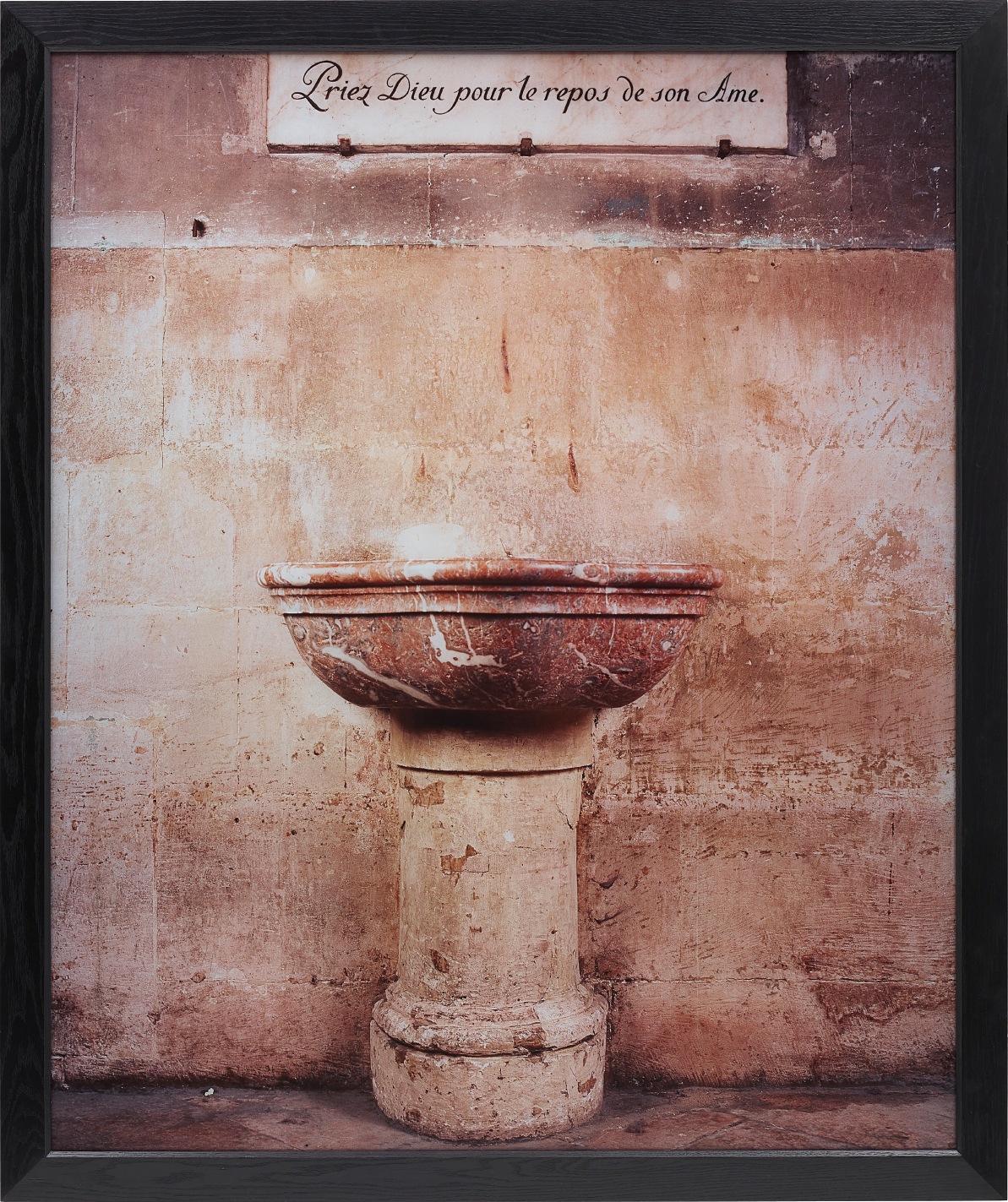
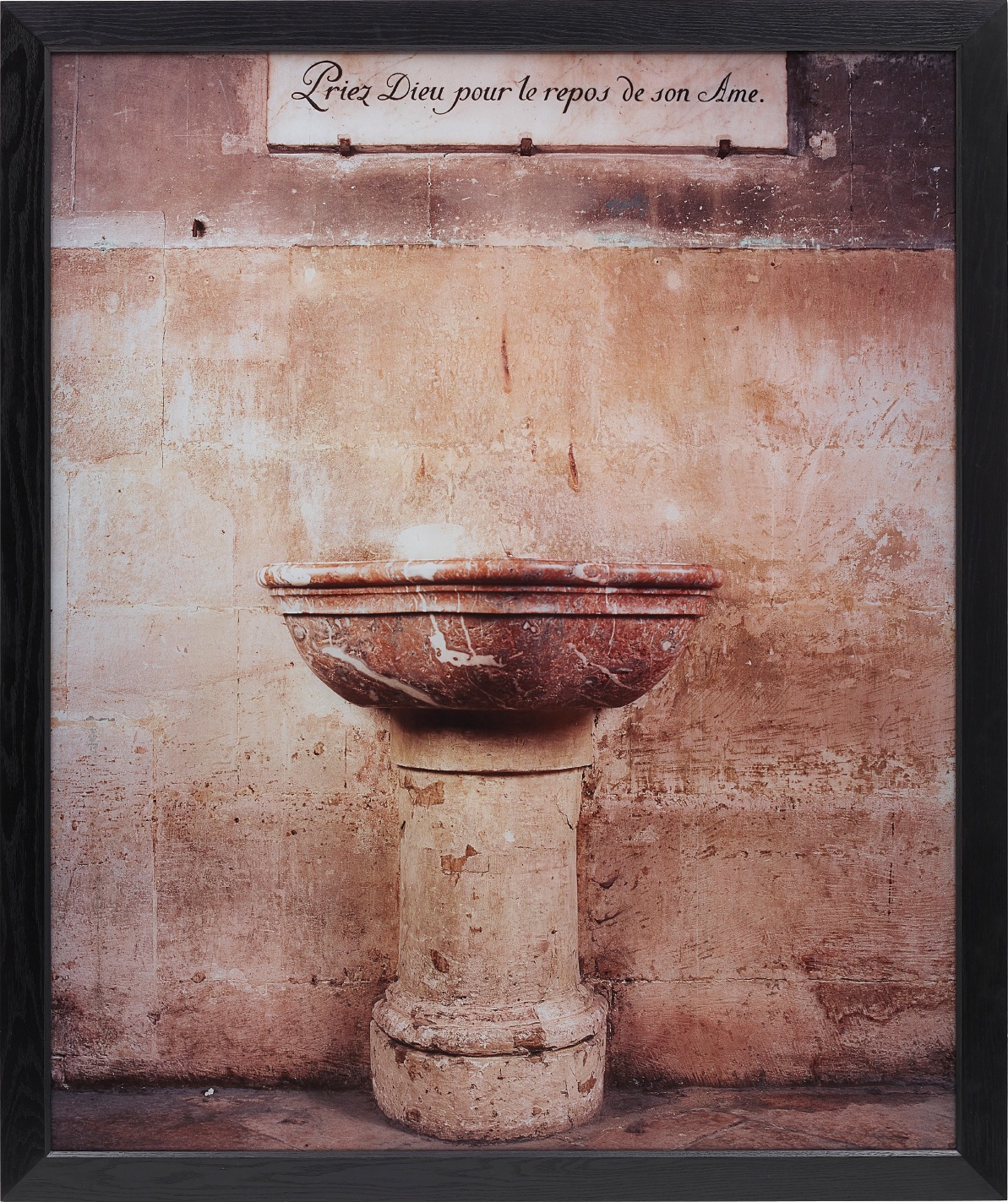
Andres Serrano
The Church (St. Eustache V), 1991
He grew up in the East New York neighborhood of Brooklyn, a Catholic household surrounded by the imagery of devotion, saints in plaster, votive candles, the drama of the Mass. He studied at the Brooklyn Museum Art School in the late 1960s, an education grounded in craft and observation, but it was his self directed immersion in the history of art, particularly the Baroque masters such as Caravaggio and Velázquez, that gave his later photography its unmistakable visual weight. Color, light, and the charged relationship between the viewer and the subject would become his abiding concerns. Serrano's emergence as a significant voice in American art coincided with the culture wars of the late 1980s, a period of fierce public argument over the role of government funding in the arts and the limits of acceptable expression.
His 1987 work Immersion (Piss Christ), a photograph of a crucifix submerged in the artist's own urine and suffused in warm amber light, drew congressional condemnation and made him a flashpoint in a national debate about art, religion, and public morality. What his critics rarely acknowledged was the image's genuine beauty, its almost medieval luminosity, and its complex ambivalence toward the faith it depicted. Serrano, who has consistently described himself as a believer, was not mocking Christianity but interrogating it, asking what it means to hold something sacred in a culture that commodifies everything. The controversy around Immersion (Piss Christ) could have defined and confined a lesser artist.
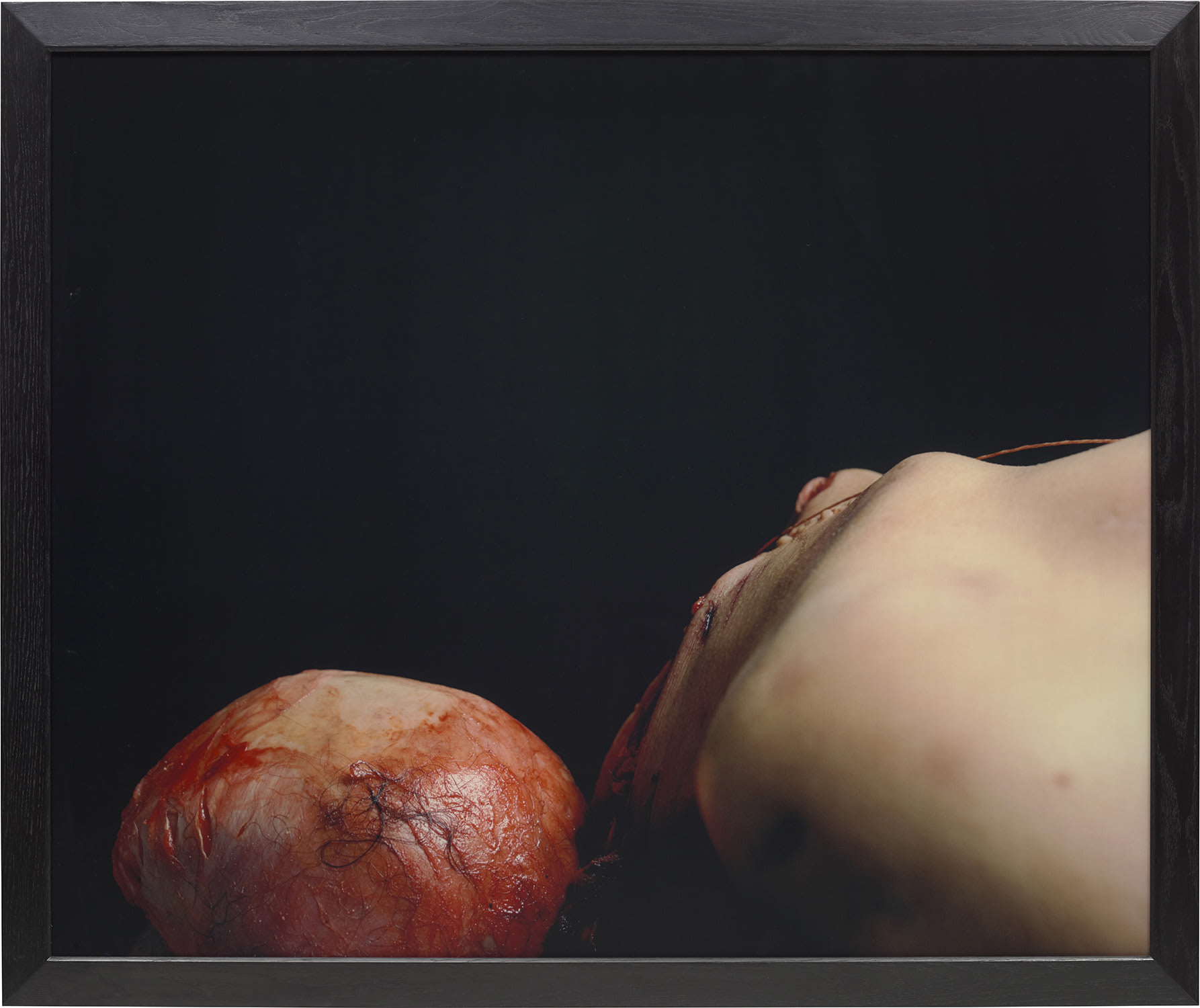
Andres Serrano
The Morgue (Broken Bottle Murder II), 1992
Instead, Serrano used the attention as fuel for a practice that grew steadily more expansive and formally rigorous. His series The Church, begun in 1991, brought him into Catholic sanctuaries across Europe, including the churches of St. Eustache and St. Clotilde in Paris, rendering their interiors and their figures in monumental photographic tableaux of extraordinary stillness.
“I believe in God and I believe in good art. I don't think the two have to be mutually exclusive.”
Andres Serrano, The Guardian interview
The series demonstrated his command of large format photography as a vehicle for the contemplative rather than the merely sensational. In the same year, he turned his camera toward the subjects he encountered among New York's unhoused population in his Nomads series, from which works such as Payne from Nomads emerge with a dignity that refuses sentimentality. Perhaps no body of work better illustrates Serrano's fearlessness as an artist than The Morgue, produced in 1992. Working with the cooperation of a New York City medical examiner's office, he photographed the bodies of those who had died from violence, disease, and misadventure, always in extreme close up, always with a formal precision that transforms the clinical into something approaching the sublime.
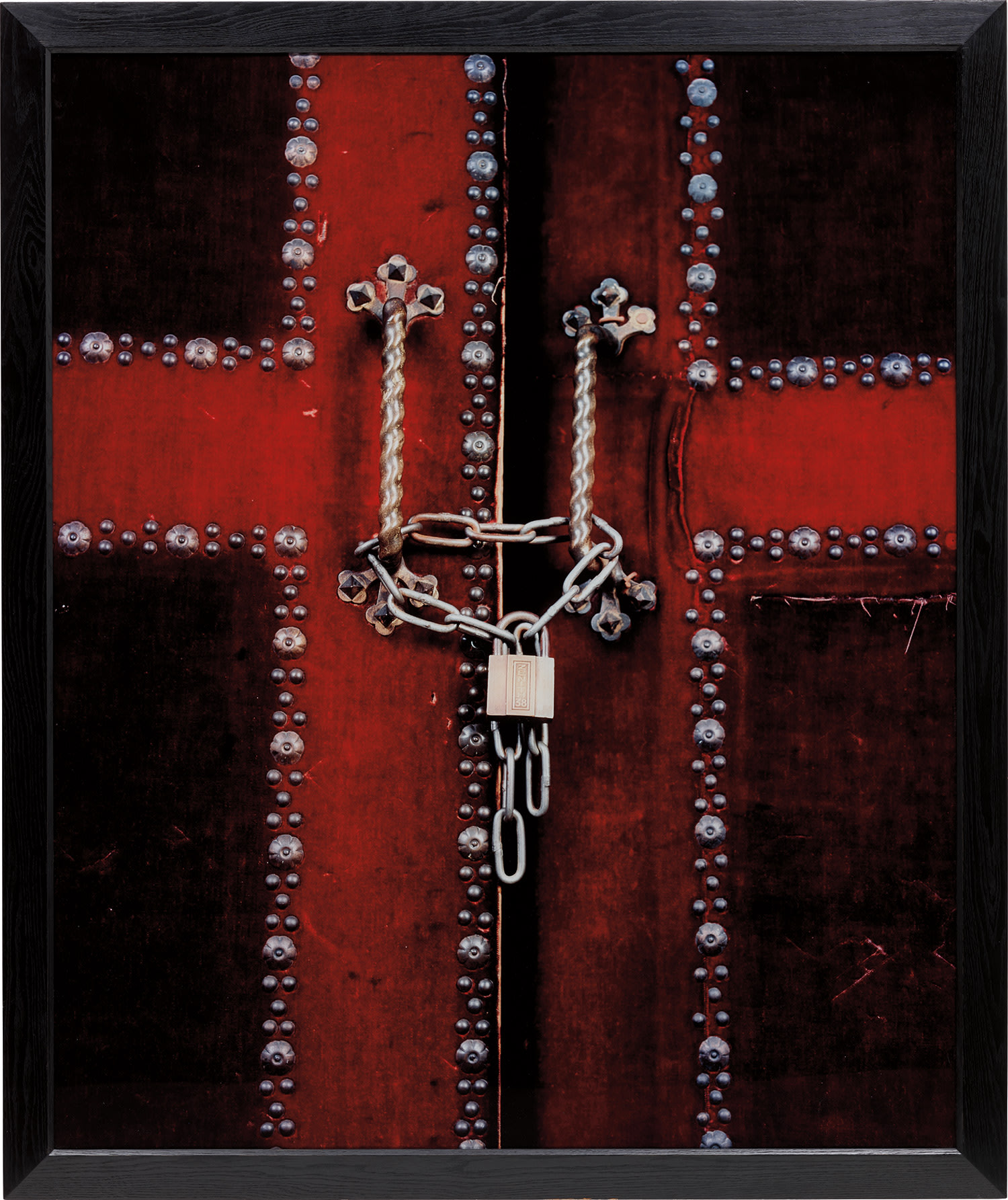
Andres Serrano
The Church (St Clotilde II, Paris), 1991
Works such as The Morgue (Broken Bottle Murder II) and The Morgue, Death Unknown confront the viewer with mortality not as spectacle but as fact, as the shared condition that underlies all social distinction. The series draws a direct line from the tradition of European vanitas painting and from the memento mori imagery that runs through Western art history, placing Serrano firmly within a lineage that includes Hans Holbein and Francisco de Zurbarán alongside his contemporaries. Throughout his career Serrano has returned repeatedly to the subjects of race and American identity with a frankness that distinguishes him from many of his peers. Works such as Black Baby Jesus and Cabeza de Vaca, the latter a chromogenic print from 1984, reflect his engagement with the politics of representation and the layered complexity of his own mixed Latin American heritage.
In his Klan series and his America series, he photographed members of the Ku Klux Klan and ordinary Americans with equal attention and equal aesthetic seriousness, a strategy that provoked discomfort precisely because it refused the easy reassurance of condemnation. His portrait Thinker from 1988 and his dye destruction print Piss Elegance, face mounted to Plexiglas with the cool refinement that has become his signature, show an artist equally at home with iconoclasm and with beauty. For collectors, Serrano's work offers a remarkable combination of art historical weight and continued critical relevance. His prints are produced in limited editions and have been acquired by major institutional collections including the Whitney Museum of American Art, the Museum of Contemporary Art in Los Angeles, and the Centre Pompidou in Paris.
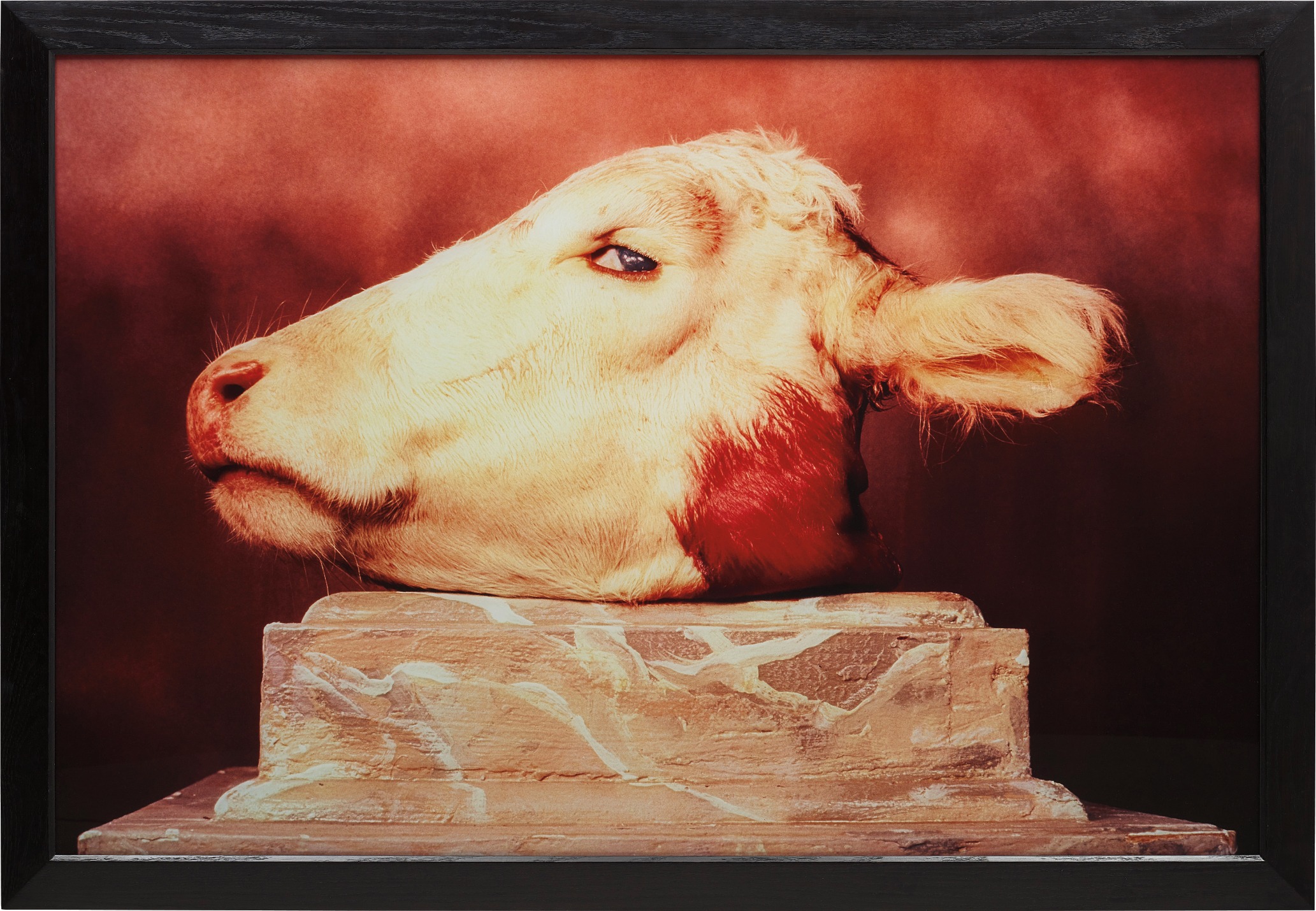
Andres Serrano
Cabeza de Vaca, 1984
The dye destruction print, also known as the Cibachrome or Lambda print, is the medium most closely associated with his mature practice, and works in this format, particularly those face mounted to Plexiglas or Diasec as seen in pieces such as Gray Moses I and II and Black Baby Jesus, carry the greatest collector interest. Condition and edition number are the primary considerations in the secondary market, and works from the key series of the late 1980s and early 1990s command the strongest prices. Serrano occupies a position in the history of American photography that invites comparison with figures such as Robert Mapplethorpe, with whom he shared both an era and an appetite for the transgressive, and with Cindy Sherman, whose work similarly interrogates American identity through the lens of the staged image. His Latin American heritage and his Catholic formation link him to broader conversations in contemporary art about diaspora, faith, and the politics of the body, conversations that include artists such as Kara Walker and Adrian Piper.
What sets Serrano apart is the sustained intensity of his commitment to the image as a site of revelation, his insistence that a photograph can carry the moral and spiritual force once reserved for altarpieces. More than three decades after the storm that surrounded Immersion (Piss Christ), Andres Serrano remains one of the most consequential and uncompromising voices in contemporary art. His work does not comfort, but it does something rarer: it asks the viewer to remain present in the face of what is difficult, to find in the beautiful something that is also true. For collectors who believe that art should matter beyond the walls of a gallery, and for institutions committed to the full complexity of American cultural life, there is no more essential artist working today.
Explore books about Andres Serrano
Andres Serrano: Works 1983-1993
Andres Serrano, Arthur C. Danto
Andres Serrano
Paul Taylor
Andres Serrano: Body and Spirit
Andres Serrano
Andres Serrano: A History of Sex
Andres Serrano, Germano Celant
Andres Serrano: The Morgue
Andres Serrano