André Giroux
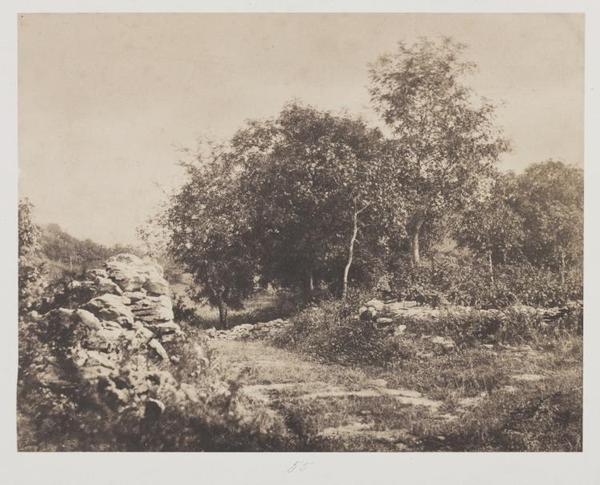
André Giroux, Light Made Perfectly Still
Artist Spotlight · The Collection Editorial
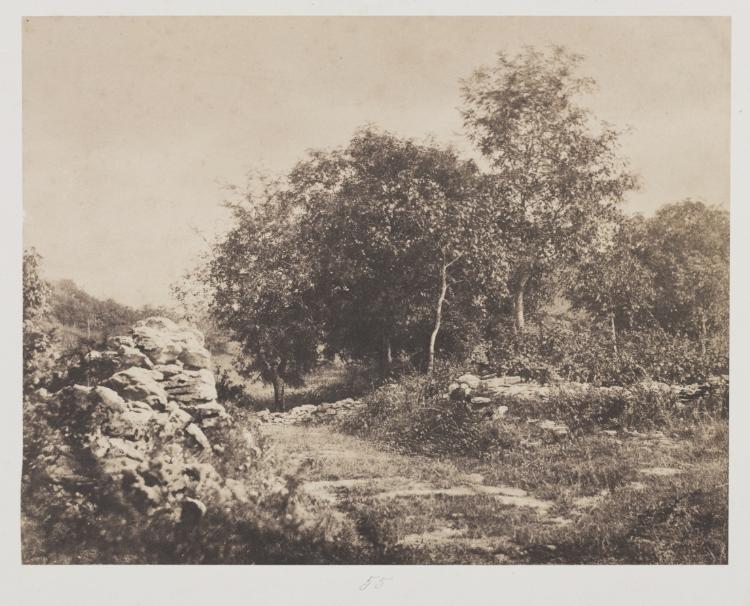
There is a particular quality of morning light in the Forest of Fontainebleau, the kind that filters through oak canopy and settles onto the forest floor like something solid and warm. André Giroux understood this light with rare intimacy. His 1853 salted paper print from a waxed paper negative, a quiet and luminous scene of Fontainebleau, captures that atmosphere with a fidelity that feels almost impossible for its era. It is the work of a man who had spent decades learning to see, first through the eyes of two of the most formidable painters in French history, and then through the lens of one of the newest and most revolutionary technologies of the nineteenth century.
André Giroux
Untitled (Scene of Fontainebleau), 1853
Giroux was born in Paris in 1801, into a family already embedded in the world of art and craft. His uncle, Alphonse Giroux, was among the early Parisian manufacturers associated with the production and sale of photographic equipment, a connection that would prove quietly prophetic for the younger man's life and career. Growing up in an environment shaped by aesthetic enterprise and material ingenuity, André Giroux came of age at precisely the right moment, when French culture was wrestling between the classical ideals of the previous century and the surging naturalist impulse that would eventually give birth to Impressionism. He was, in every sense, a man of the threshold.
His formation as a painter was extraordinarily privileged. He studied under two masters whose influence on French art is immeasurable and whose approaches could not have been more different from one another. Jacques Louis David, the great architect of Neoclassicism, instilled in Giroux a devotion to discipline, composition, and the moral weight of image making. Jean Baptiste Camille Corot, perhaps the most beloved landscape painter of nineteenth century France, gave him something else entirely: permission to be tender, to be present, to let the natural world breathe within a canvas.
André Giroux
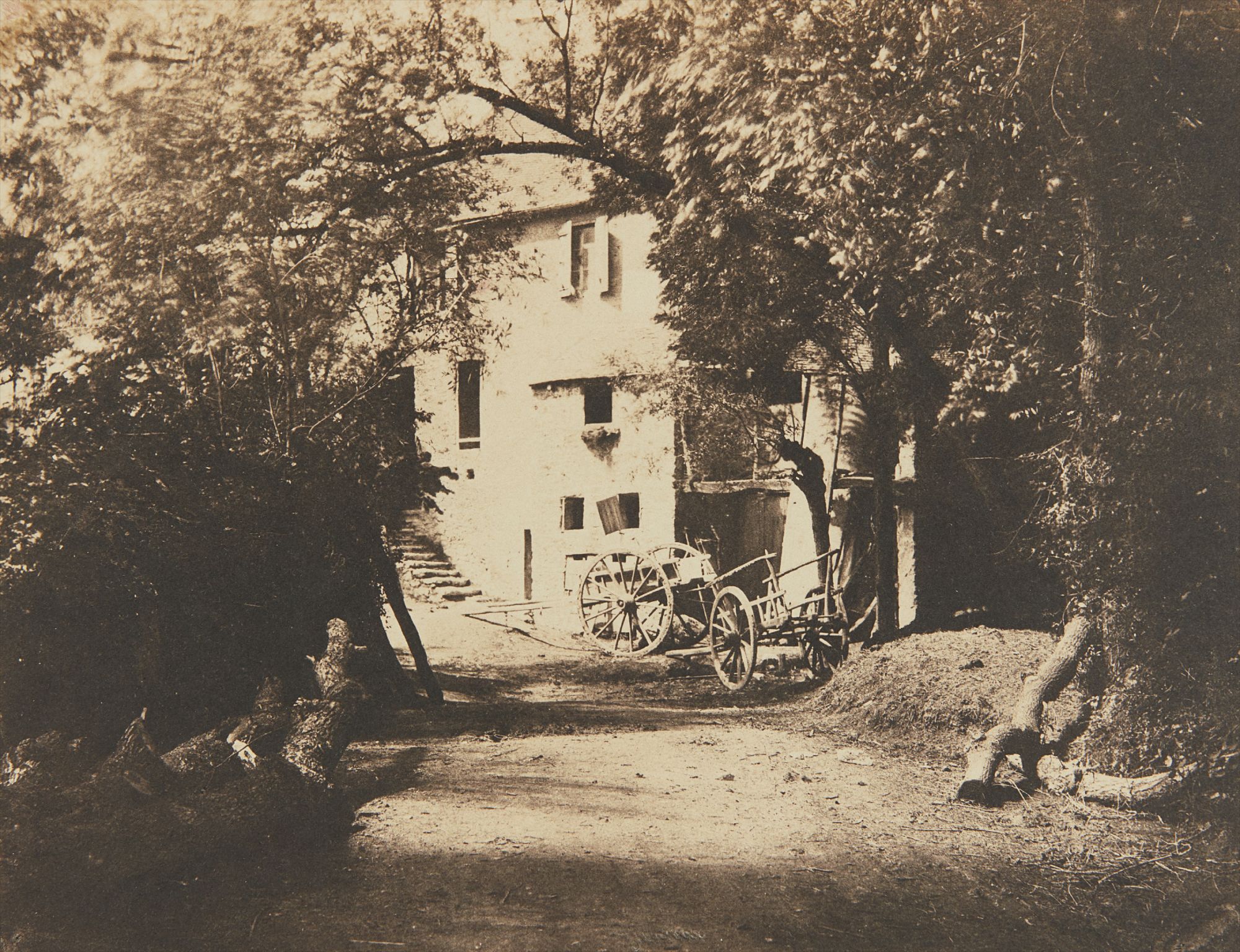
circa 1854
These were not merely teachers. They were worldviews in conversation, and Giroux spent his career negotiating between them with quiet intelligence. His landscape practice placed him firmly within the tradition of plein air painting that flourished in and around the forests and hills of central France and the Roman campagna. The École de Barbizon, with which Corot was loosely affiliated, provided the broader cultural context for Giroux's sensibility, though he remained his own distinct presence within that world.
Working outdoors, painting from direct observation, Giroux developed a luminosity in his work that bridged the structured clarity of academic painting with the atmospheric immediacy of naturalism. His views of the Roman and French countryside are marked by a gentleness of attention that feels personal rather than programmatic. These are not grand statements. They are sustained observations, full of affection for the particular.
When the daguerreotype was announced to the world in 1839, Giroux's life was irrevocably altered. His family's connection to the emerging technology and his own highly developed visual sensibility made him a natural early adopter. He took to photography not as an abandonment of painting but as an extension of the same deep curiosity about how light falls on the world. His photographs, particularly his calotypes and salted paper prints from waxed paper negatives, reveal a painterly eye at work.
The circa 1854 works that survive show a man who understood framing, tonal depth, and the drama of stillness long before photography had developed its own critical vocabulary. Giroux was making art with the camera at a moment when most practitioners were still marveling that the camera could make images at all. The 1853 Fontainebleau salted paper print is the kind of work that rewards patient looking. The process itself, involving a negative made from paper treated with wax to increase translucency, produces a softness that is entirely unlike the hard precision of the daguerreotype.
Giroux understood this and worked with it rather than against it. The resulting image has a dreamlike solidity, a scene held in amber, that connects his photographic practice to the meditative quality of his paintings. It is not a document. It is an experience.
For collectors who care about the origins of photography as a fine art, this print is a genuinely important object. In terms of the market, Giroux occupies a fascinating and underexplored position. Nineteenth century French landscape painting is a well established collecting category, with Corot commanding significant prices at major auction houses and the Barbizon painters consistently attracting serious institutional and private interest. Giroux, as a direct student of both Corot and David, and as a figure who bridges painting and early photography, represents an opportunity that more specialized collectors have begun to recognize.
Works by early practitioners of photography on paper, particularly those with clear artistic lineage and documented provenance, have become increasingly sought after as the market for nineteenth century photography has matured. Giroux sits at the intersection of two conversations, painting and photography, that museums and collectors are increasingly eager to bring together. Those drawn to kindred spirits in the history of art will recognize Giroux as a natural companion to figures like Gustave Le Gray, Charles Nègre, and Henri Le Secq, French photographer artists of the same generation who brought painterly ambition to the camera with similar seriousness. He is also naturally discussed alongside the broader Barbizon circle, including Théodore Rousseau and Charles François Daubigny, men who shared his devotion to observed landscape and his respect for the particular over the general.
Understanding Giroux within these networks enriches both the individual works and the sense of his place in a genuinely transformative moment in visual culture. What makes Giroux matter today is something beyond biography and historical context, though both are rich. He matters because he reminds us that the boundary between painting and photography was never as firm as later art history sometimes suggested. He was moving across it naturally, guided by curiosity and a love of light, at the very moment those categories were being invented.
For collectors building thoughtful collections rooted in the nineteenth century, his work offers rarity, beauty, and the particular satisfaction of acquiring an artist whose significance is still being fully understood. To hold a Giroux is to hold a piece of the conversation that made modern visual art possible.
Explore books about André Giroux
André Giroux: Catalogue Raisonné
Pierre Rosenberg
André Giroux and Nineteenth-Century French Landscape Painting
Michel Melot
The Drawings of André Giroux
Arlette Sérullaz
Giroux: Life and Art
Thérèse Burollet