André Brasilier
André Brasilier, Painter of Luminous Dreams
Artist Spotlight · The Collection Editorial
There is a particular quality of afternoon light in the paintings of André Brasilier that collectors describe as almost physically felt, a warmth that seems to radiate from the canvas rather than merely sit upon its surface. Now in his mid nineties and still regarded as one of the most cherished living figures in French figurative painting, Brasilier has enjoyed a sustained period of global recognition, with his works held in private collections across Europe, Asia, and North America, and his market remaining notably active at auction houses including Christie's and Sotheby's. Exhibitions of his paintings have drawn devoted audiences in Paris, Tokyo, and New York, affirming that his vision of a tender, music filled world has lost none of its ability to move people deeply. To encounter his work for the first time is to understand immediately why collectors return to him again and again.
André Brasilier
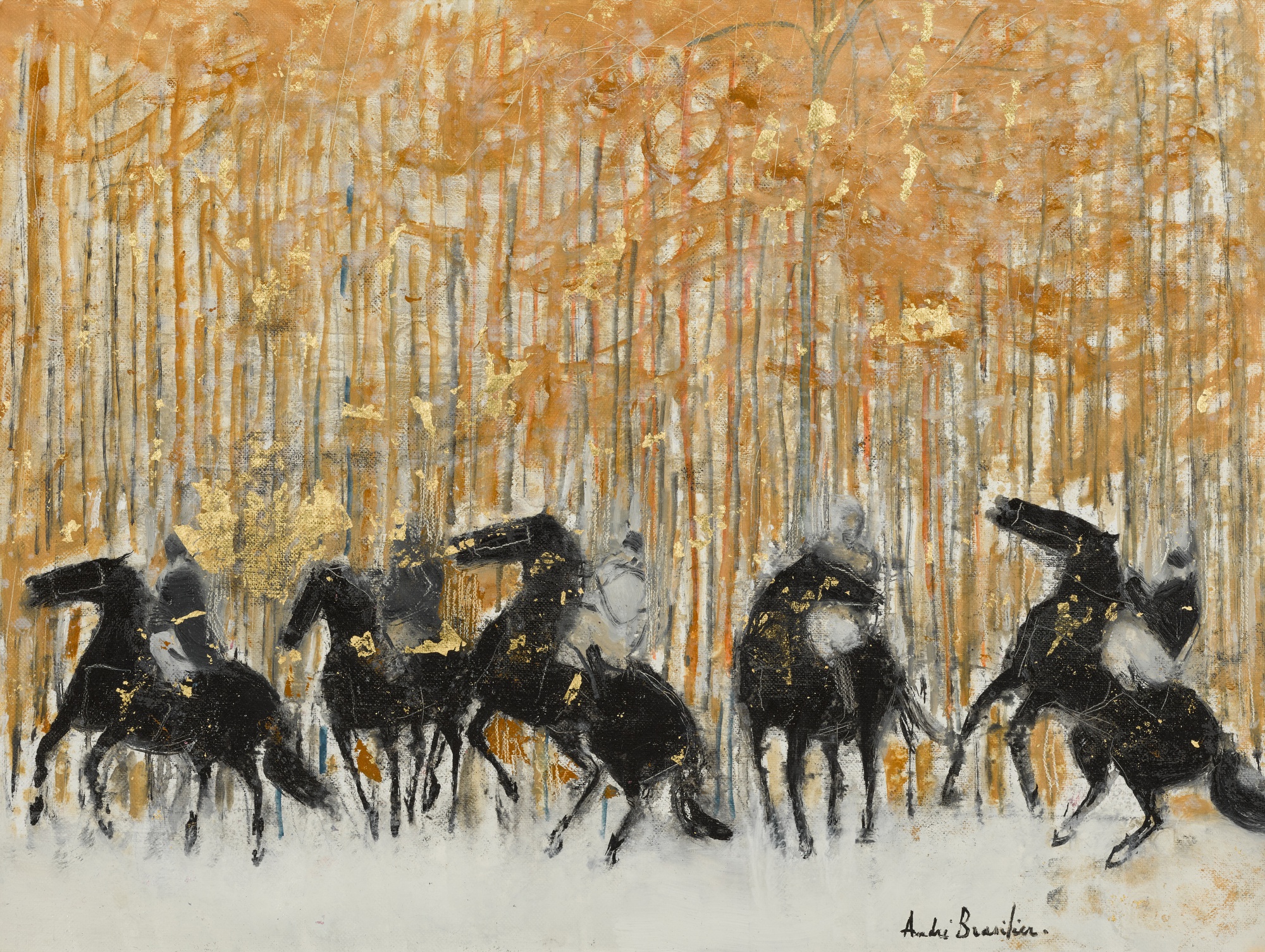
Petite chevauchée au parc, 2013
Brasilier was born in 1929 into a family already steeped in artistic tradition. His father, Jacques Émile Brasilier, was himself a painter, and the young André grew up in an atmosphere where looking carefully at the world, and then reimagining it with feeling, was simply the way life was lived. He entered the École des Beaux Arts in Paris, studying under the painter Maurice Brianchon, whose lyrical approach to color and form left a lasting impression on his student. The formation was rigorous, grounded in the long tradition of French painting, yet it never suppressed the distinctive poetic sensibility that would come to define Brasilier's mature voice.
The pivotal early recognition came when Brasilier won the Prix de Rome in 1953, an honor that placed him among the most promising painters of his generation and sent him to the Villa Medici in Rome for several formative years. Italy deepened his sense of classical harmony and expanded his palette, introducing him to the luminous skies and golden landscapes that would later become hallmarks of his visual language. He returned to France not as an imitator of the past but as an artist who had absorbed its lessons and transformed them into something entirely his own. By the late 1950s and through the 1960s, his reputation in Paris was growing steadily, supported by galleries and collectors who recognized in his work a rare combination of technical mastery and emotional sincerity.
André Brasilier
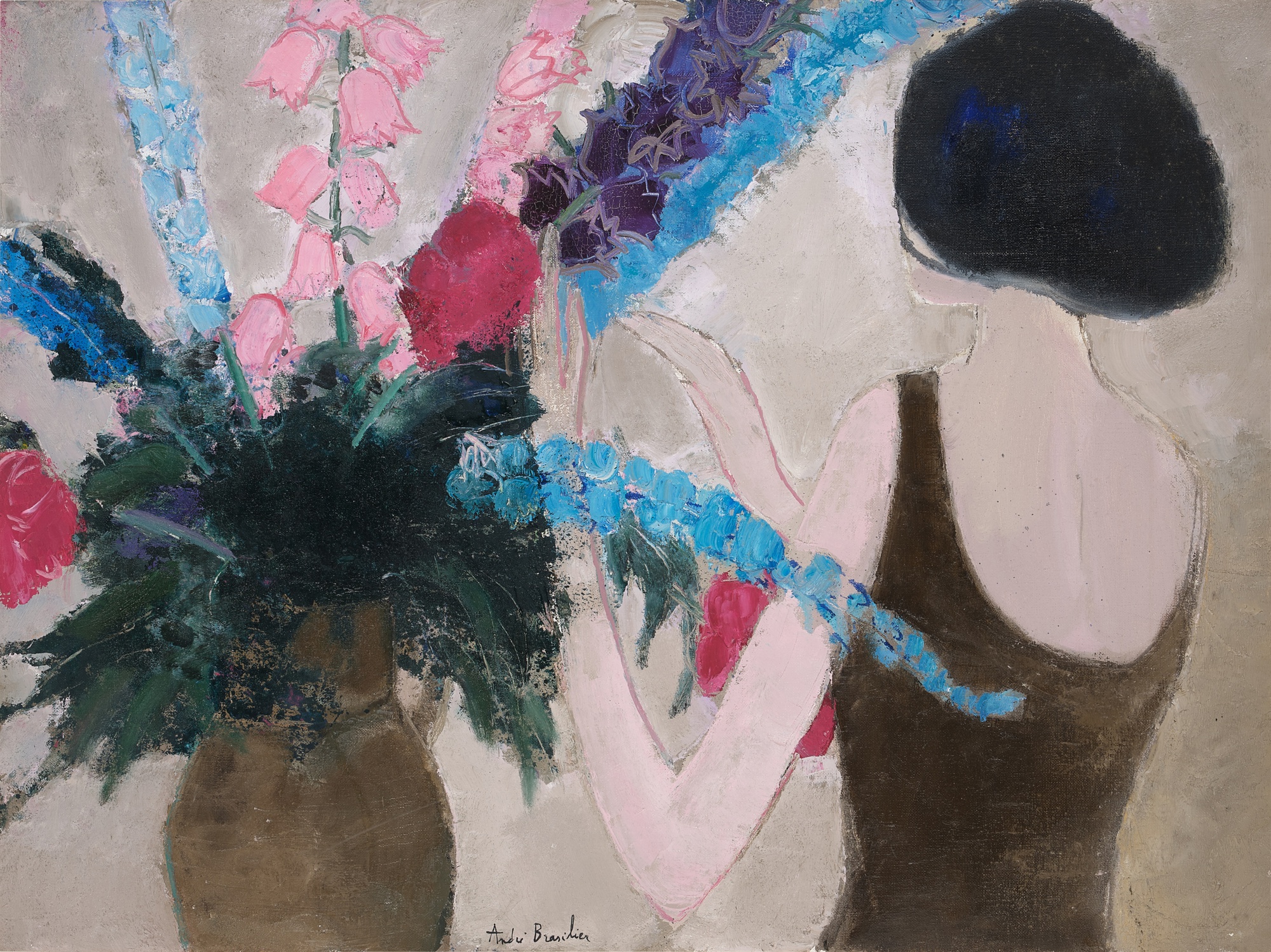
Chantal au bouquet, 1964
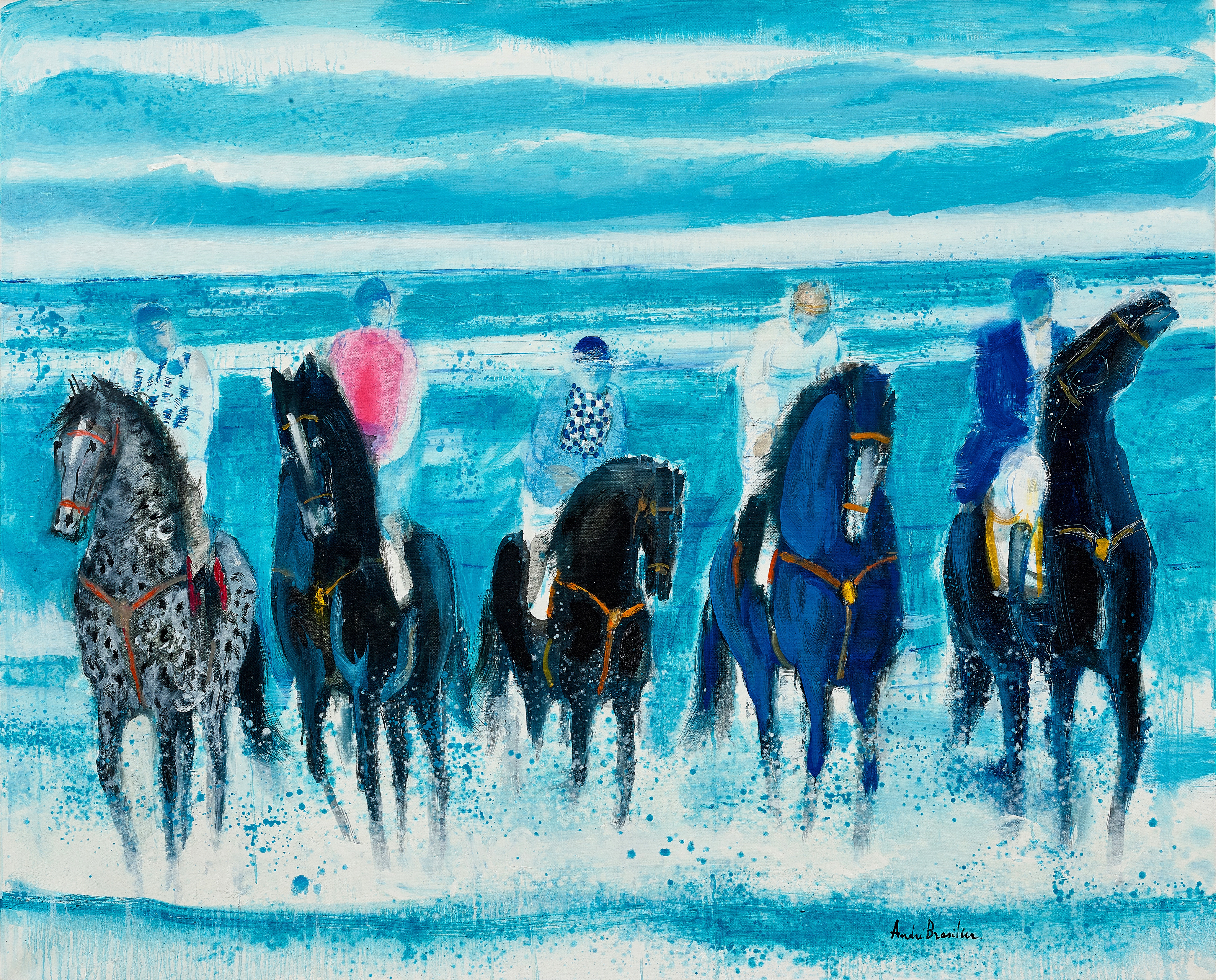
Brasilier's artistic vocabulary is immediately recognizable and yet endlessly various. Horses move through his canvases with a grace that feels both observed and mythologized, their forms simplified into shapes that hover between representation and pure lyrical invention. Music appears as a recurring theme, with figures playing instruments or simply inhabiting spaces charged with the suggestion of sound, as though the paintings themselves are compositions to be heard as much as seen. Women in pastoral landscapes, bouquets caught in the light of open windows, vast skies over quiet valleys: these are the subjects he has returned to across seven decades, never exhausting them because he finds within each one a new emotional register to explore.
The 1963 canvas "Le Cheval de cirque" is an early demonstration of this gift, its subject transformed through Brasilier's color sense into something closer to lyrical poetry than reportage. The 1964 portrait "Chantal au bouquet" reveals his ability to imbue intimate, domestic moments with a timeless elegance, the figure and her flowers existing in a world apart from the noise of modern life. Among his most celebrated later works, "Petite chevauchée au parc" from 2013, which incorporates oil and gold gilt on canvas, exemplifies the refinement his practice achieved over the decades. The addition of gold gilt is not mere decoration but a meditative choice, connecting his vision of the world to the luminous traditions of medieval manuscript painting and Byzantine iconography, filtered through a thoroughly modern sensibility.
André Brasilier
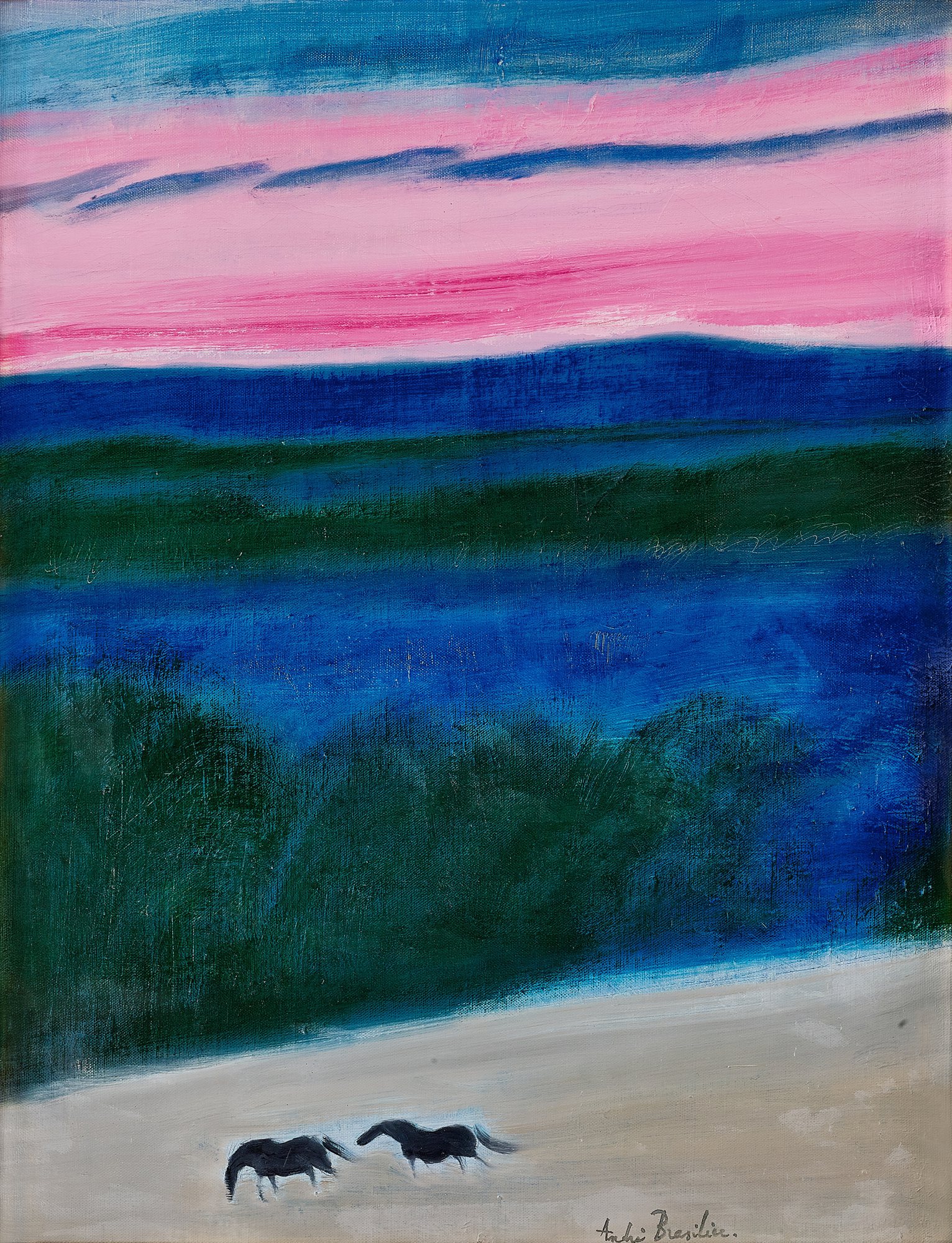
Soir sur la Vallee, 1988
"Méditerranée" from the same year captures the particular blue intensity of southern light with a confidence that only a lifetime of looking can produce. Works such as "Fenêtre sur le parc" from 1987 and "Le Grand ciel rose" from that same year show the painter at a moment of particular richness, his color harmonies fully matured, his compositions achieving a breathtaking openness and calm. The wetland landscape "Les marais de Loupeigne" from 1991 demonstrates that his engagement with specific French places and light was as deep and sustained as his engagement with the more archetypal subjects of horse and figure. For collectors, Brasilier represents a genuinely compelling proposition.
His works have appreciated steadily over the decades, supported by a loyal international following and a body of work with clear art historical coherence and depth. Collectors in Japan in particular have long held him in exceptional regard, drawn to a poetic sensibility in his work that resonates with aesthetic traditions emphasizing harmony, restraint, and the beauty of transient natural moments. When approaching his work at auction or through galleries, collectors tend to seek out canvases where his color is at its most expansive and his compositional confidence most fully expressed, particularly those from the rich periods of the 1960s and the late 1980s. Works on canvas with bold, confident figure and horse compositions command the strongest interest, though his landscapes offer an equally rewarding depth for those who look carefully.
André Brasilier
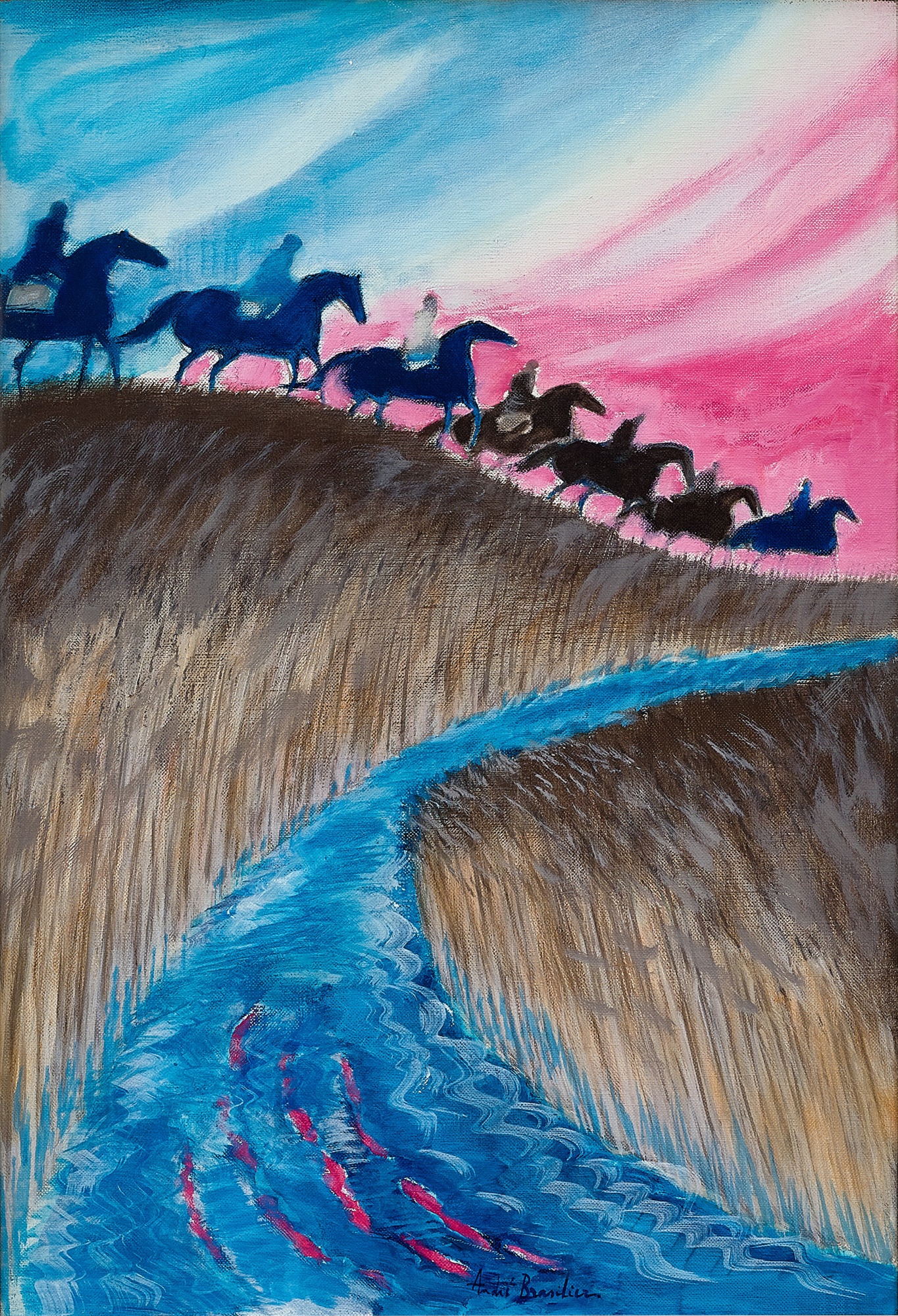
湧浪騎手, 2014
In the context of twentieth century French figurative painting, Brasilier occupies a distinguished and somewhat singular position. He came of age in a Parisian art world shaped by the aftermath of Fauvism and the legacies of Bonnard and Vuillard, painters whose commitment to color as an expressive force rather than merely a descriptive one left a clear impression on his developing sensibility. His contemporaries in lyrical figuration, painters such as Bernard Buffet, Jean Carzou, and Paul Aïzpiri, shared something of his distance from the dominant abstractions of the mid century, though Brasilier's work is distinguished from all of them by its particular quality of serene, almost otherworldly light. He belongs to a tradition that runs from the Impressionists through Bonnard and forward, one that insists on painting as a vehicle for sensory and emotional experience rather than conceptual argument.
What makes Brasilier matter today is precisely what has always made him matter: the sincerity and consistency of a vision entirely his own. In an art world that has cycled through decades of irony, deconstruction, and spectacle, his quiet insistence on beauty, on the tenderness of human and animal life, on the redemptive power of color and light, feels not nostalgic but necessary. To live with a Brasilier is to live with a daily reminder that the world contains grace, and that painting at its best can make that grace visible. For collectors building a collection with emotional as well as historical depth, his work remains among the most rewarding of any French painter of the twentieth and twenty first centuries.