André Lhote
André Lhote: The Master Who Taught Modern Vision
Artist Spotlight · The Collection Editorial
“Painting is the art of giving life to surfaces through the arrangement of colored forms.”
Traité du paysage, 1939
There is a moment, standing before André Lhote's 1912 canvas 'Le Port de Bordeaux,' when the entire ambition of early twentieth century French painting seems to crystallize into something both rigorous and deeply humane. The harbor shimmers with fractured planes of color, the geometry of Cubism pressed gently but firmly against the warmth of observed life. It is a painting that knows exactly what it wants to be: intellectually alive, visually generous, rooted in a specific place and time. More than six decades after his death, Lhote's work continues to reward exactly this kind of sustained attention, and the renewed appetite among collectors for disciplined, idea driven figuration has brought his canvases back into sharp focus across European and American markets alike.
André Lhote
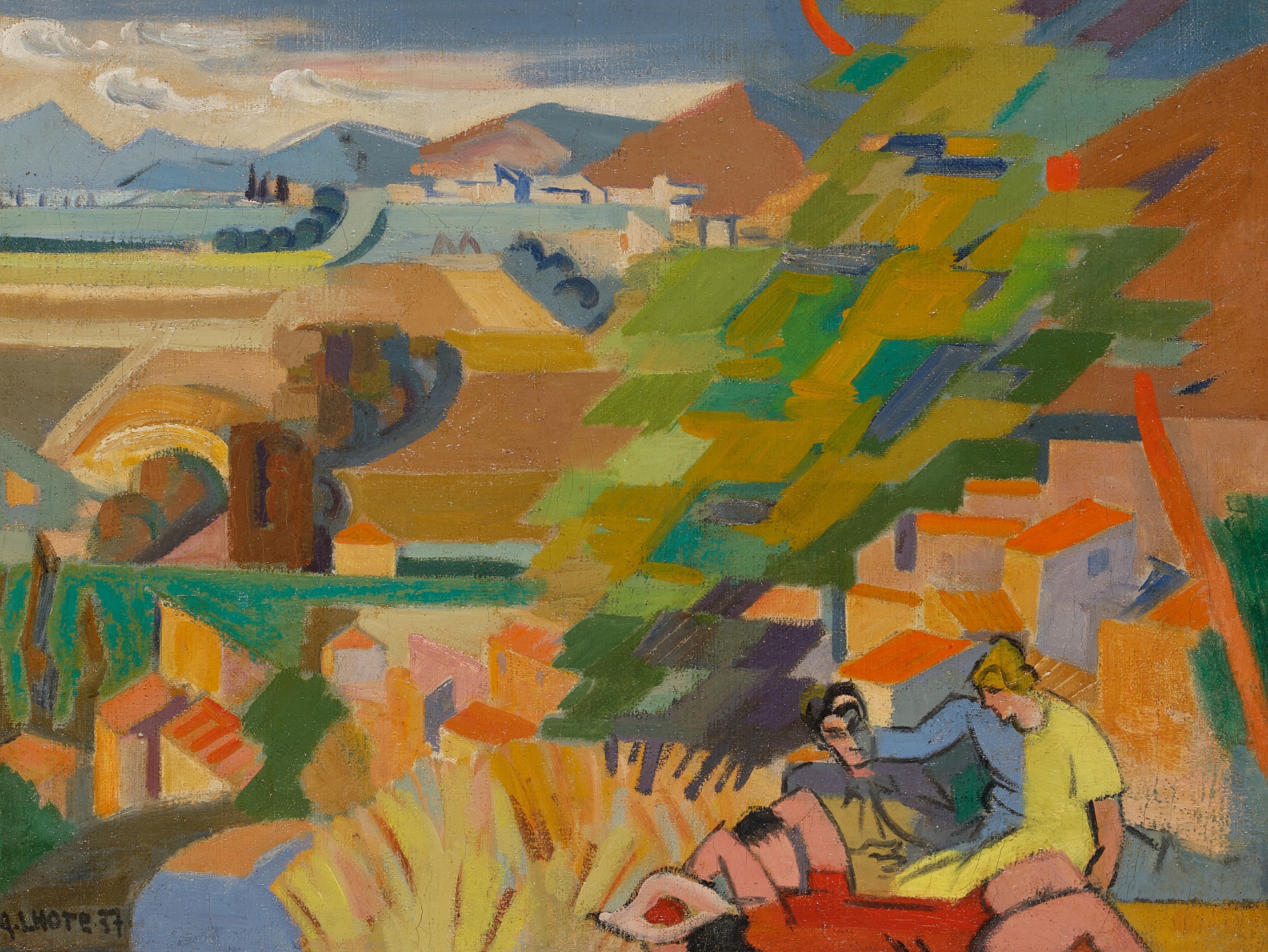
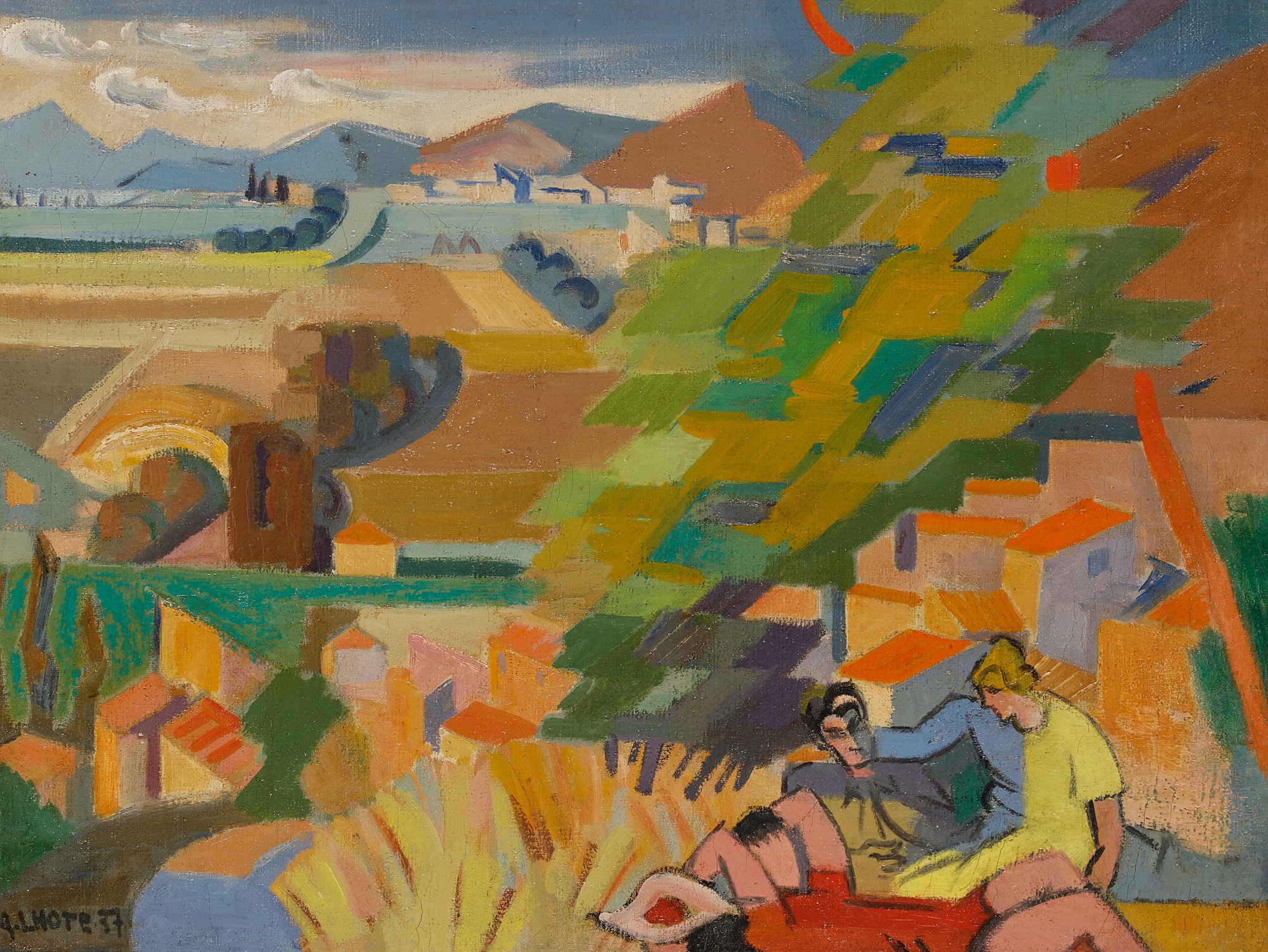
La Vallée du Rhône vue de Ciousclat, ou Pique-nique à Mirmande, 1937
André Lhote was born in Bordeaux in 1885, and the southwestern city left its mark on him in ways that would prove indelible. He trained initially as a decorative sculptor, apprenticed to a Bordeaux woodcarver from the age of twelve, and this early immersion in craft instilled in him a respect for material intelligence and formal structure that would underpin everything that followed. He moved to Paris in 1906, arriving at a moment of almost incomprehensible creative ferment. Cézanne had just died, leaving behind a body of work that was rapidly being absorbed and debated by an entire generation of young painters.
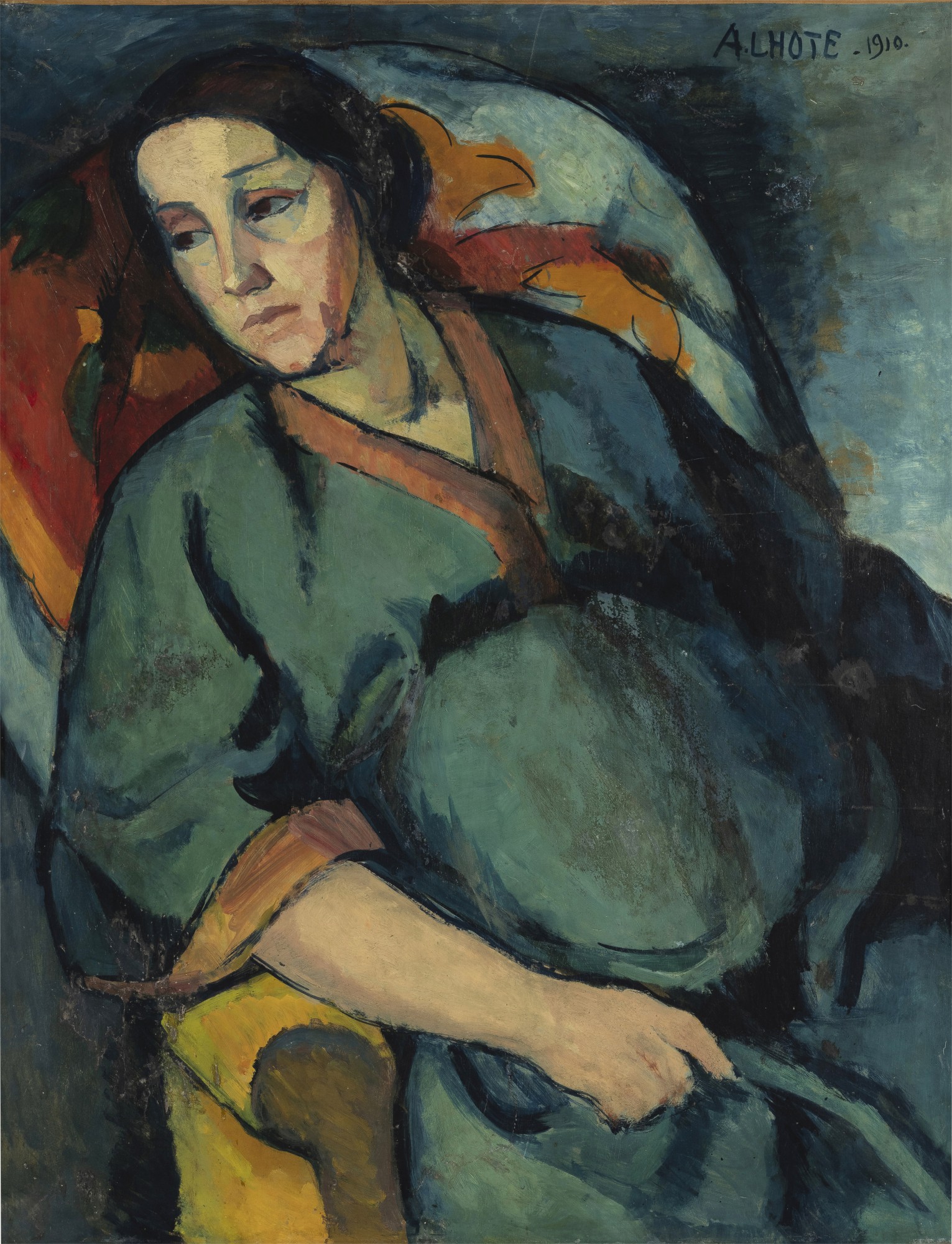
Picasso and Braque were in the early stages of dismantling the conventions of pictorial space. Lhote threw himself into this world with characteristic seriousness, studying, arguing, and painting with relentless energy. His first significant exhibition came at the Salon d'Automne in 1910, where he showed work that already demonstrated his ability to synthesize the structural lessons of Cézanne with a sustained commitment to recognizable subject matter. Unlike some of his contemporaries who pursued abstraction to its logical extreme, Lhote always maintained that geometry must serve life, not replace it.
André Lhote
Le Repos (Madame Lhote assise), 1910
He became associated with the Cubist movement but occupied a distinctive and in many ways more approachable position within it, one that emphasized legibility, craft, and the pleasures of the visible world. His friendship and dialogue with artists including Juan Gris, Roger de La Fresnaye, and Albert Gleizes placed him at the center of the movement's theoretical conversation. He contributed to the landmark 1912 Section d'Or exhibition alongside many of these figures, a gathering that helped define the broader Cubist project for an international audience. The works produced across the first two decades of the twentieth century represent Lhote at his most formally adventurous.
“Cézanne opened a window through which we could see the construction hidden beneath appearances.”
André Lhote, writings on painting
'La Bacchante ou Nu allongé dans la campagne' from 1911 shows a reclining figure dissolved into the landscape around her through a dialogue of interlocking planes, the body and the earth rendered as participants in the same geometric logic. 'Nu allongé sur la plage' from 1920 pursues a related sensibility with greater economy and confidence. These figurative nudes demonstrate how thoroughly Lhote had internalized Cubist principles while refusing to surrender either the sensuality of the painted body or the warmth of natural light. Throughout the 1930s and into the postwar decades, he turned increasingly to the landscapes of southern France, particularly the villages and valleys of Drôme and the Lot, regions he returned to again and again.
André Lhote
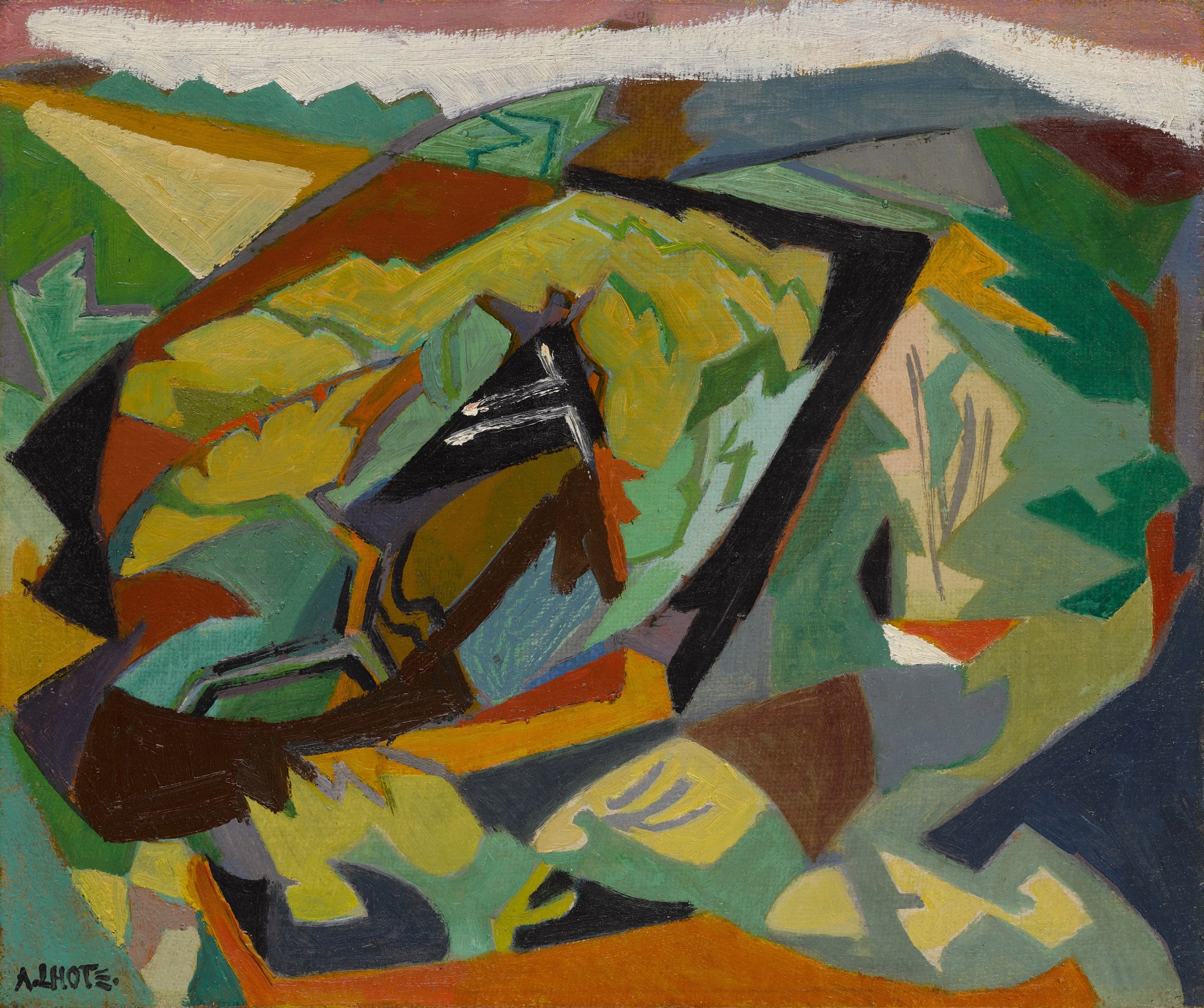
Sainte Trinide, 1956
'La Vallée du Rhône vue de Ciousclat, ou Pique nique à Mirmande' from 1937 is among the most celebrated works of this period, a canvas in which the terraced hillsides of the Drôme are organized into an almost musical sequence of planes, the picnicking figures becoming part of the land's own rhythm. Lhote was also, remarkably, one of the most influential art teachers of the twentieth century. He founded his own academy in Paris in 1922, the Académie Lhote, which attracted students from across Europe and the Americas over the following four decades. Among those who passed through his atelier were Tamara de Lempicka, who absorbed his structural clarity and carried it into her own distinctive idiom, as well as the Brazilian painter Tarsila do Amaral, who brought Lhote's Cubist methods back to São Paulo and helped catalyze the Brazilian modernist movement.
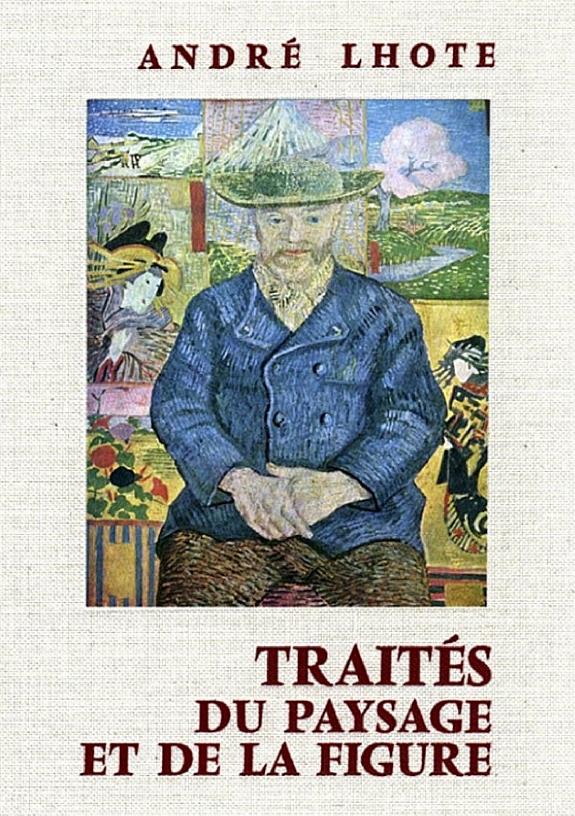
The British painter Paul Hogarth and numerous other significant figures also count him as a formative influence. Lhote was not merely a practitioner but a theorist, publishing extensively on the principles of painting, and his two major theoretical texts, 'Traité du paysage' in 1939 and 'Traité de la figure' in 1950, remain touchstones for anyone seeking to understand the intellectual architecture of mid century French painting. For collectors, Lhote's work occupies a particularly appealing position in the market. He is genuinely important to art history, present at the founding moments of Cubism and connected to a remarkable network of influence, yet his work has not always commanded the prices of his most famous contemporaries.
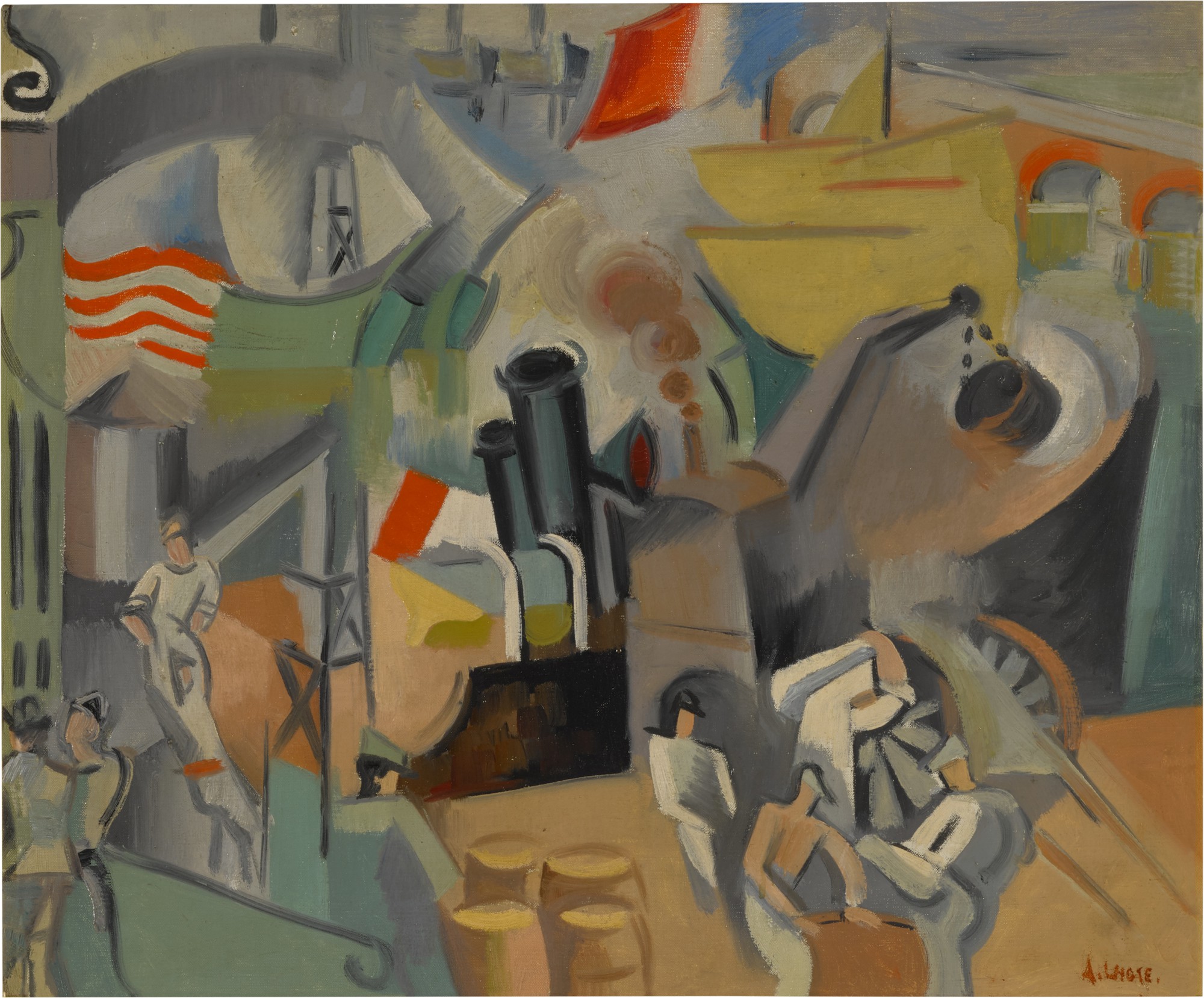
André Lhote
Le Port de Bordeaux, 1912
This creates a genuine opportunity. Works on paper, including pastels such as the luminous 'La Jeune fille' from 1961, offer an accessible entry point and showcase the draftsmanship that underpinned everything he made. Oil paintings from his mature landscape periods, particularly those depicting Mirmande and the villages of the Lot, such as 'L'église De Mirmande' from 1959 and the 1912 'La Vallée du Célé ou Paysage du Lot,' represent exceptional value for works of this historical significance. Auction results in recent years at houses including Christie's and Sotheby's have reflected a steady and growing appreciation, particularly for well documented works with clear provenance.
To understand Lhote properly is to understand that the history of modernism is not a single heroic line but a rich ecology of practices and philosophies. He belongs in conversation with Fernand Léger, with Robert Delaunay, with the entire tradition of what might be called rational or classical modernism, a strain of French art that sought to reconcile the discoveries of the avant garde with the longstanding values of pictorial craft and human presence. His late works, with their gentle, luminous rendering of the southern French landscape, show an artist who had fully integrated a lifetime of thought and practice into something serene and authoritative. At a moment when collectors and institutions are reconsidering the breadth of modernism beyond its most canonical names, André Lhote stands as one of the great figures waiting to be more fully appreciated.
Explore books about André Lhote