André Butzer
André Butzer Paints the Future Joyfully
Artist Spotlight · The Collection Editorial
Something stirred in the international contemporary art world when André Butzer's paintings began appearing simultaneously in major institutional surveys and fiercely contested auction rooms. His canvases, with their dense impasto surfaces and cartoon inflected figures rendered in blazing yellows, reds, and electric blues, have come to feel urgently relevant in a moment when painting itself is being reassessed and celebrated. Works from his ongoing series now hang in the permanent collections of the Museum of Modern Art in New York and the Hamburger Bahnhof in Berlin, two institutions that rarely agree on anything, which tells you something about the reach and ambition of this singular artist. Butzer was born in Stuttgart in 1973, and his formative years in postwar West Germany shaped everything that followed.
André Butzer
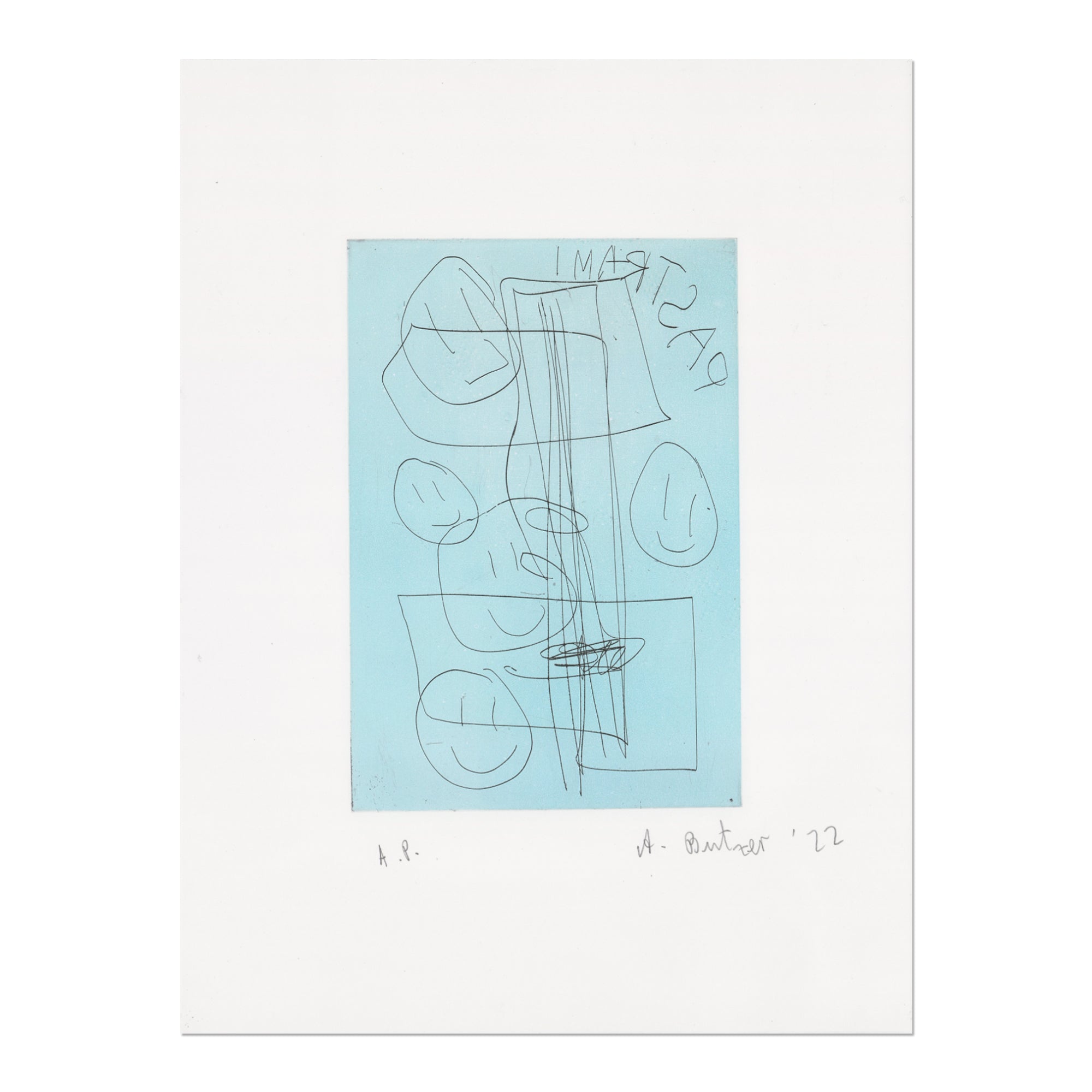
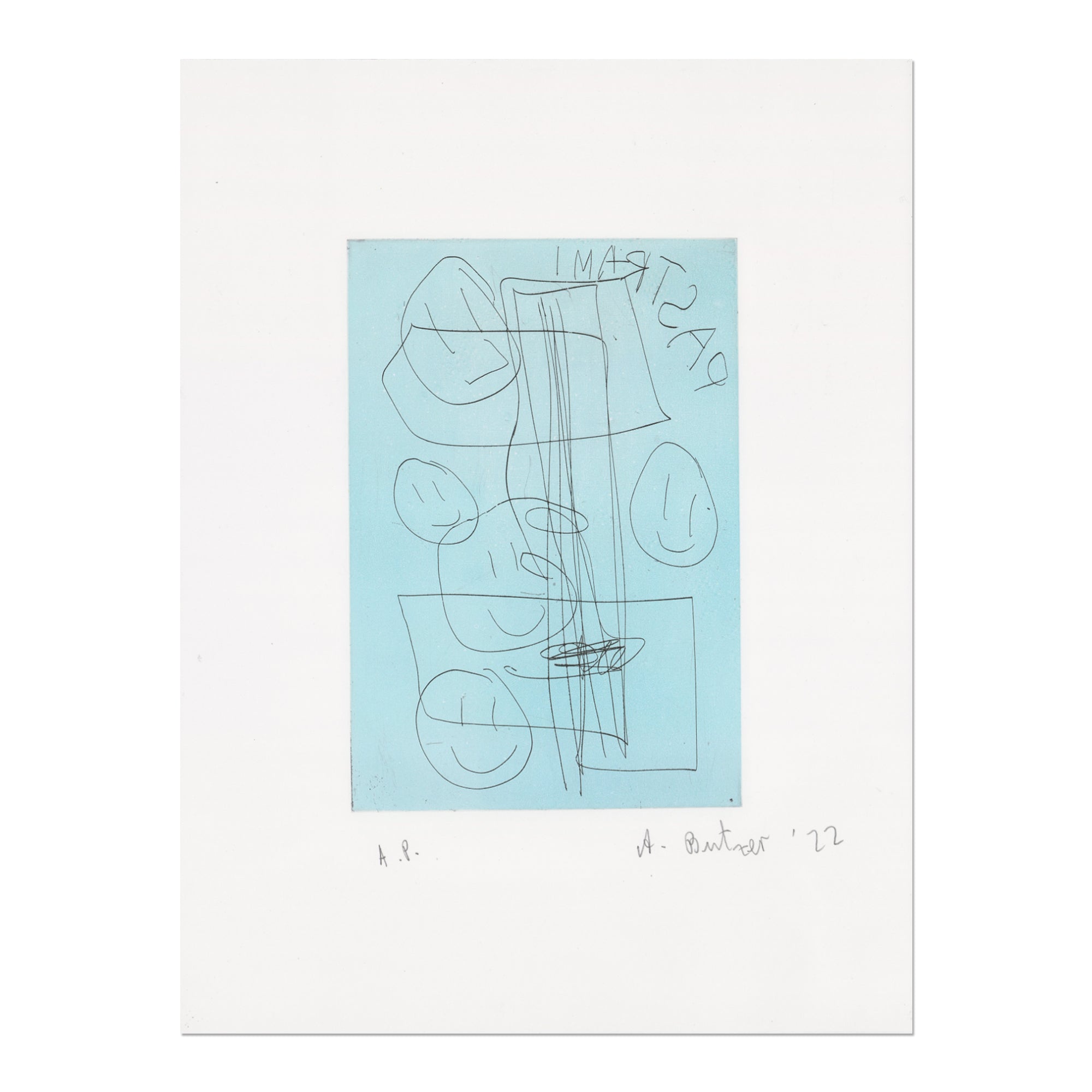
Pastrami, 2019
Growing up in a country still negotiating its relationship with its own recent history, he absorbed the contradictions of a society that had built consumer abundance over the ruins of catastrophe. Stuttgart, an industrial city with a serious cultural life, gave him access to both the legacy of German Expressionism and the saturated visual language of American popular culture that flooded into Europe through television and advertising. These two inheritances, one heavy with historical weight and the other almost aggressively cheerful, became the defining tension in his work. He studied in Los Angeles in the 1990s, a period that proved transformative.
California gave him direct contact with the American vernacular that had fascinated him from afar: fast food packaging, Hanna Barbera cartoons, roadside signage, the particular flatness of mass produced imagery. But rather than simply appropriating these sources the way earlier Pop artists had done, Butzer began cooking them together with the loaded brushwork and psychological intensity of the German Expressionist tradition. He coined his own term for the result: Science Fiction Expressionism. It is a phrase that captures something real about his practice, a painting language that feels at once ancient and futuristic, earthly and completely invented.
André Butzer
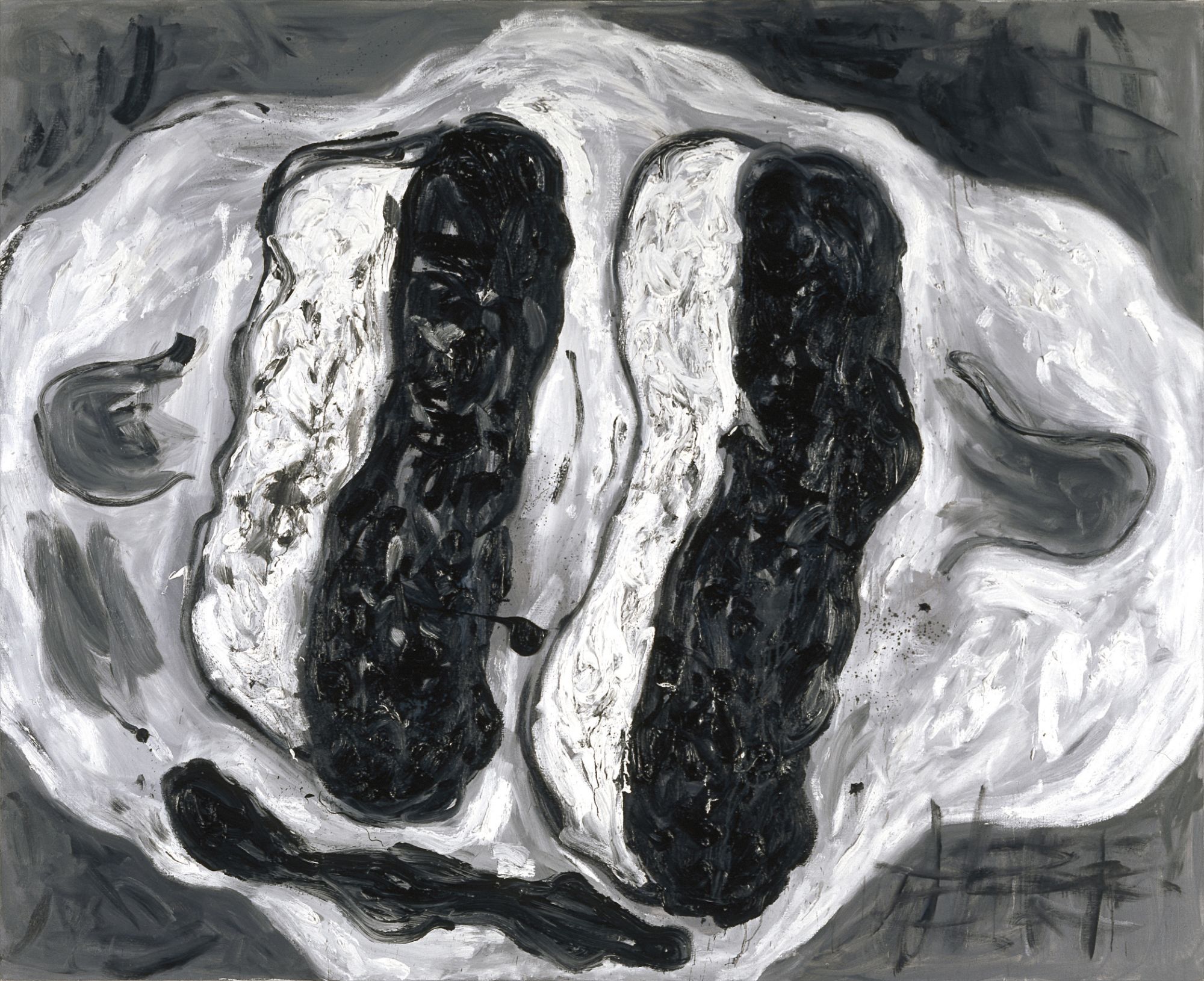
Friedens-Siemens XVII
The figures that populate Butzer's canvases are among the most instantly recognizable presences in contemporary painting. His so called Wanderers and Friedens Siemens characters, the name Friedens Siemens meaning roughly Peace Siemens, a deliberate collision of utopian longing and corporate industrial association, inhabit swirling fields of pigment applied with urgency and physical force. These figures are not quite human and not quite cartoon. They possess bulbous heads, simplified features, and expressions that hover between bliss and bewilderment.
They feel like survivors of something, or perhaps inhabitants of a world that has not quite arrived yet. A work like Friedens Siemens XVII demonstrates this perfectly, the figure emerging from a ground of thickly worked paint as though struggling toward or away from something just out of frame. The 2004 painting Frau Josef Blösche hat alle ihre Pfannenkuchen im Hause is one of the more politically charged works in Butzer's catalog, its title alone dense with historical implication. Josef Blösche was a notoriously brutal SS officer photographed during the Warsaw Ghetto Uprising, and Butzer's decision to invoke this figure within a domestic, almost absurdist context reflects his consistent interest in how violence and normality coexist in the German national memory.
André Butzer
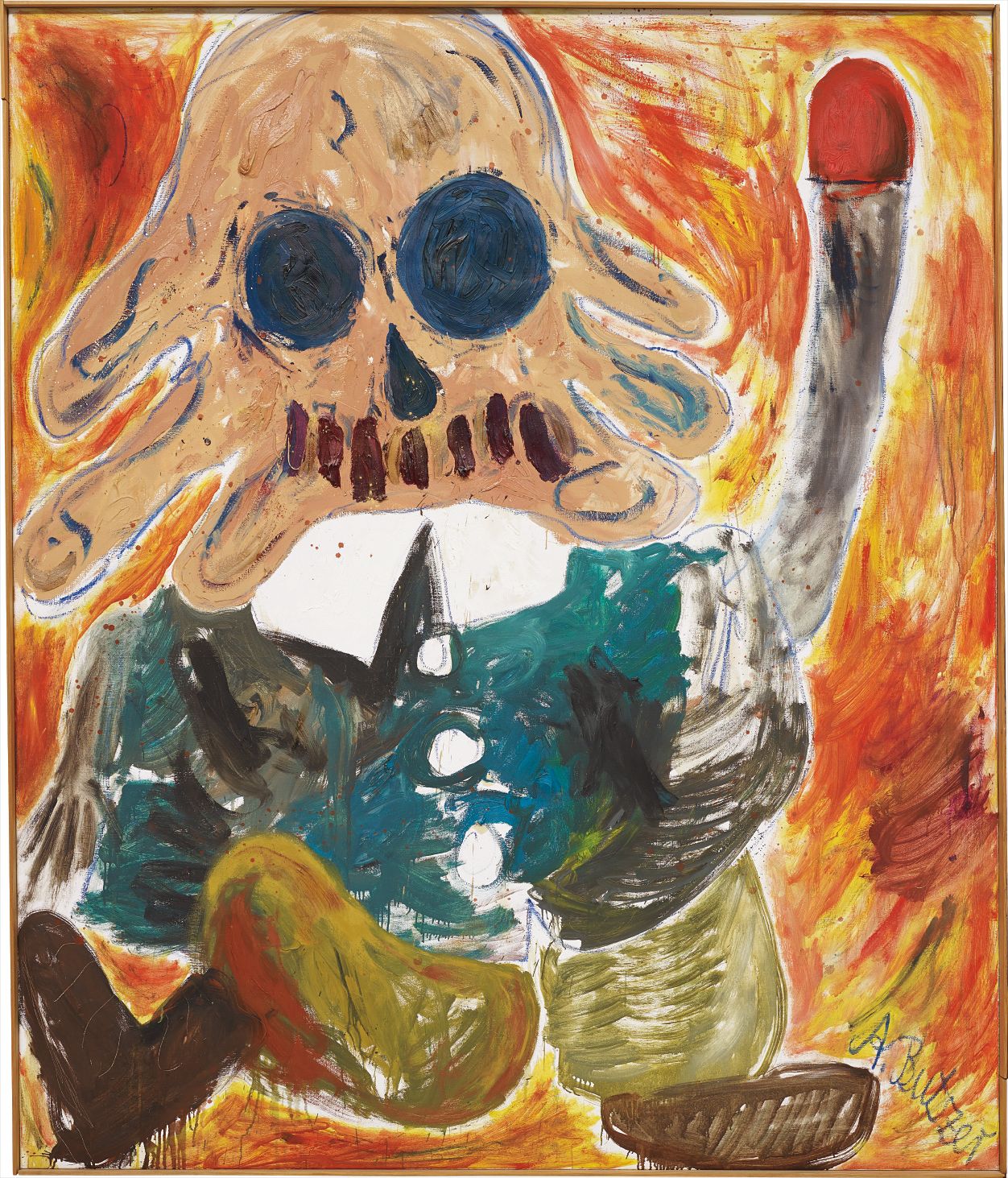
Gruss aus Pomm-Pomm
This is not comfortable art, even when it is visually exhilarating. Butzer insists on holding horror and humor in the same frame, which is precisely what gives his best work its emotional complexity and staying power. The 2007 canvases, including several Ohne Titel works in oil, show the same commitment to this unresolved tension, rendered with a physical confidence that marks them as fully mature statements. For collectors, Butzer represents an unusual combination of critical seriousness and visual pleasure.
His paintings reward sustained looking: what registers first as bold graphic energy gradually reveals layers of art historical reference, from the legacy of Emil Nolde and Ernst Ludwig Kirchner to the flat color fields of American abstraction and the commercial imagery of postwar consumer culture. The prints, including the 2019 work titled Pastrami, demonstrate that his sensibility translates beautifully across media, and they offer collectors a way into his world at a different scale and price point. The 2019 oil and acrylic on canvas English Muffins shows how he continued evolving his practice in recent years, the food titles functioning as wry anchors that ground his cosmic imagery in the absurdly mundane. Within the broader context of contemporary painting, Butzer sits in productive conversation with a generation of artists who have reasserted the importance of figuration and expressive mark making.
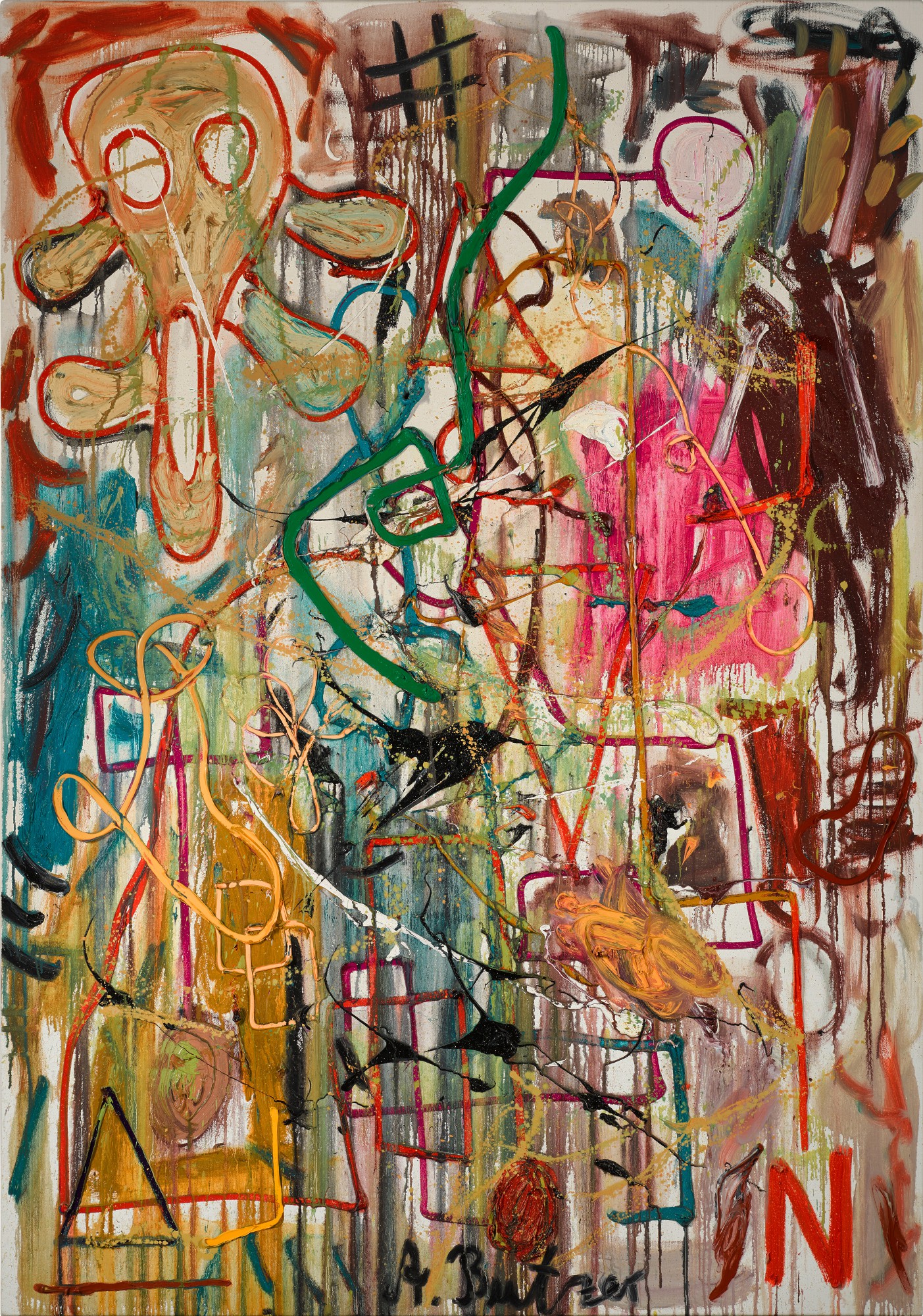
André Butzer
Untitled (12)
His work rhymes in interesting ways with that of Peter Doig, whose own figures haunt landscapes saturated with psychological atmosphere, and with Neo Rauch, whose dreamlike East German scenes similarly invoke historical trauma through surreal figuration. There are also clear affinities with the American tradition of Philip Guston, particularly the later Guston who abandoned abstraction for crude, cartoony figures burdened with moral weight. Butzer has acknowledged these inheritances without being constrained by them, which is the mark of a genuinely original sensibility. What makes Butzer matter in 2024 and beyond is precisely his refusal to choose between pleasure and difficulty, between the utopian and the dystopian impulse.
In a cultural moment that tends to demand clarity and sides, his paintings insist on sitting with contradiction. The Wanderers wander. The Friedens Siemens figures persist in their strange peace. The colors shout with joy even when the subject matter insists on gravity.
Collectors who live with these works report that they continue to shift and surprise over time, which is the truest measure of a painting's worth. With institutional recognition firmly established and a market that reflects genuine critical consensus, André Butzer stands as one of the essential painters of his generation, a visionary who built his own genre and populated it with unforgettable inhabitants.