Anastasia Egeli
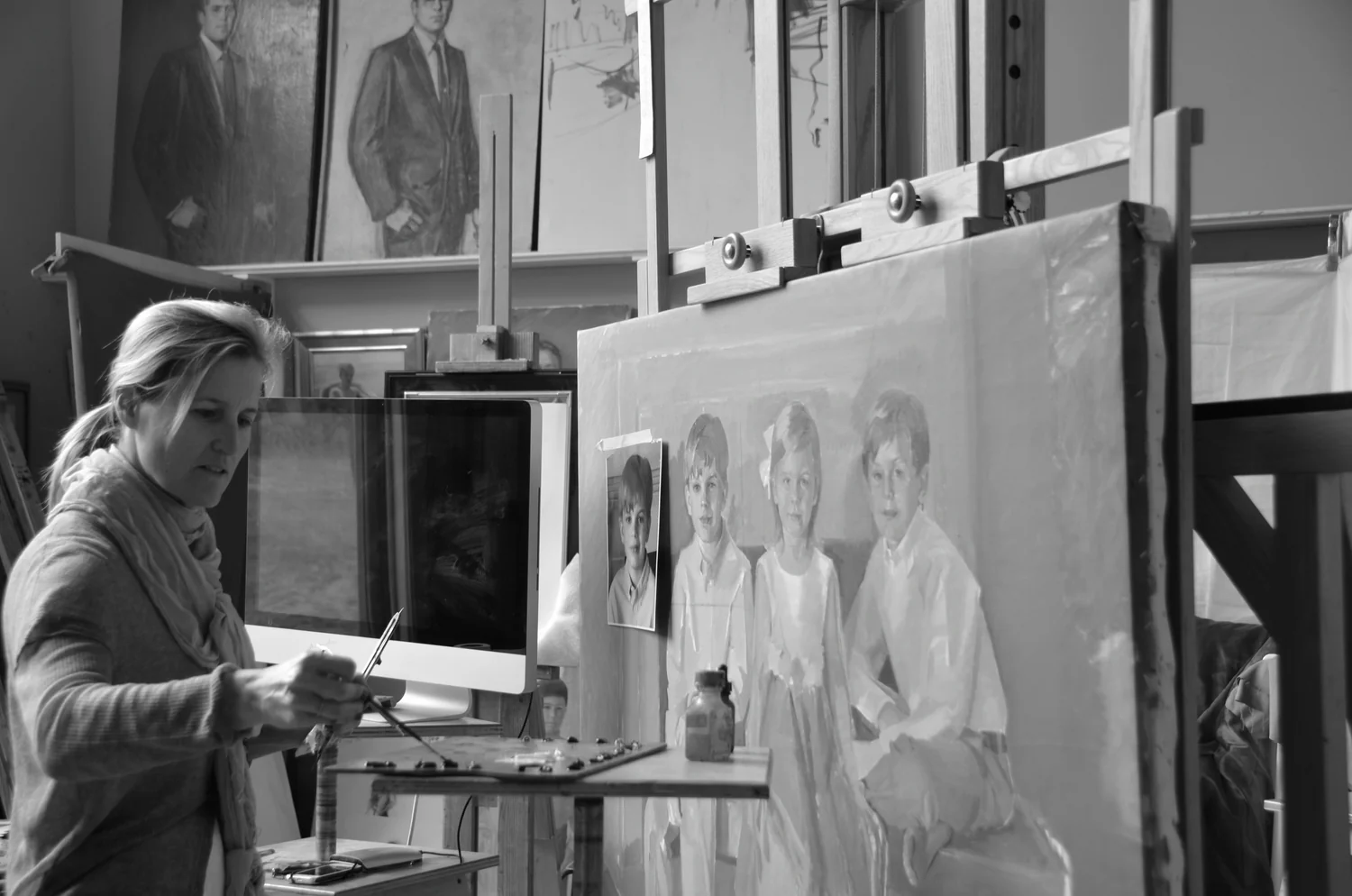
Anastasia Egeli Paints the Living World
Artist Spotlight · The Collection Editorial
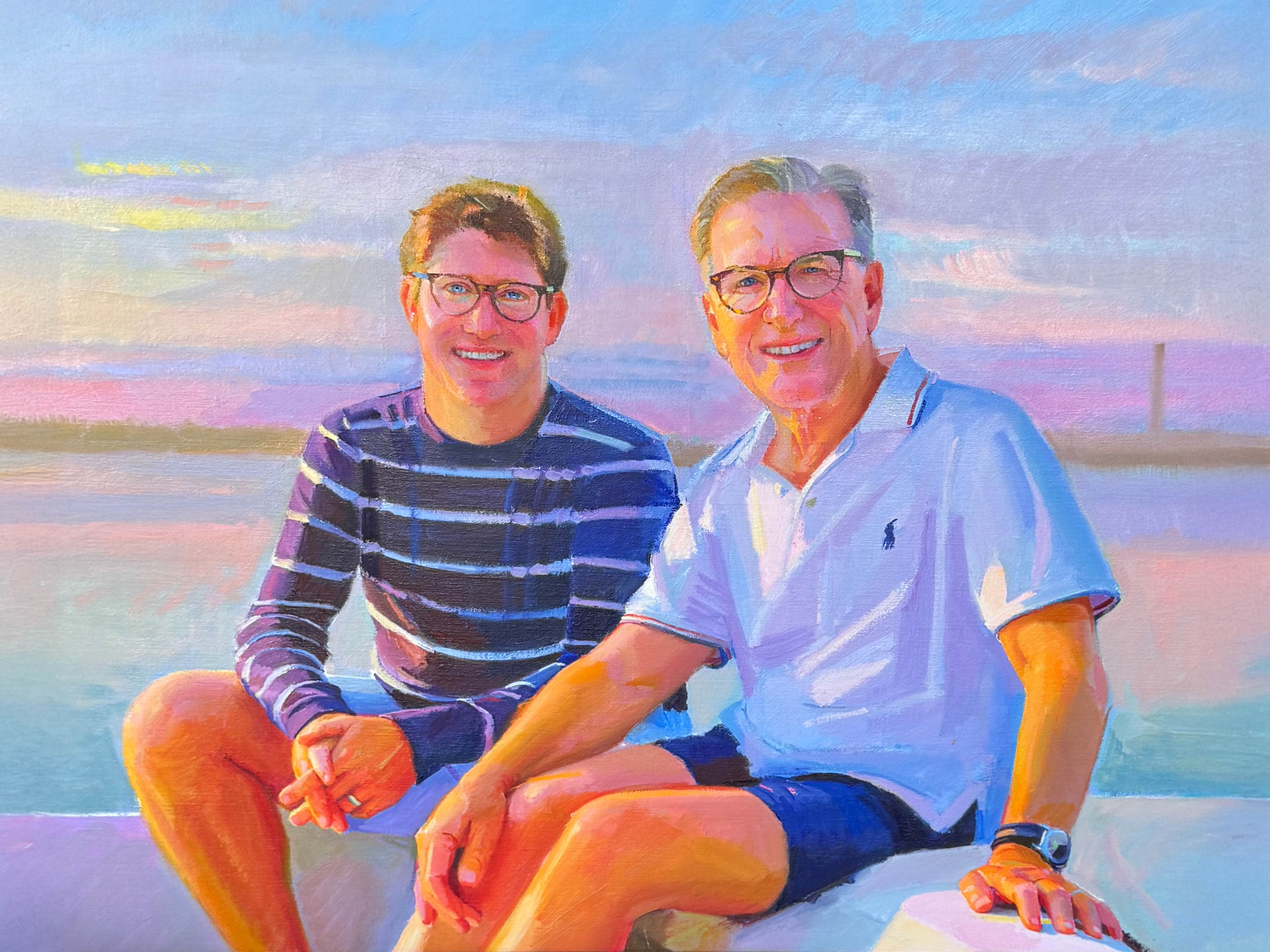
There is a particular quality of attention that distinguishes a portrait made with genuine devotion from one made merely with skill. In Anastasia Egeli's studio, those two things are inseparable. Her 2024 oil on canvas "Alex and Brian in Provincetown" arrived as a quiet reminder of what contemporary figurative painting can do when it refuses to choose between rigorous tradition and tender modernity. The work places two figures in the luminous coastal light of Provincetown, Massachusetts, a place long consecrated by American artists, and it does so with an ease that belies the depth of preparation behind every brushstroke.
Anastasia Egeli
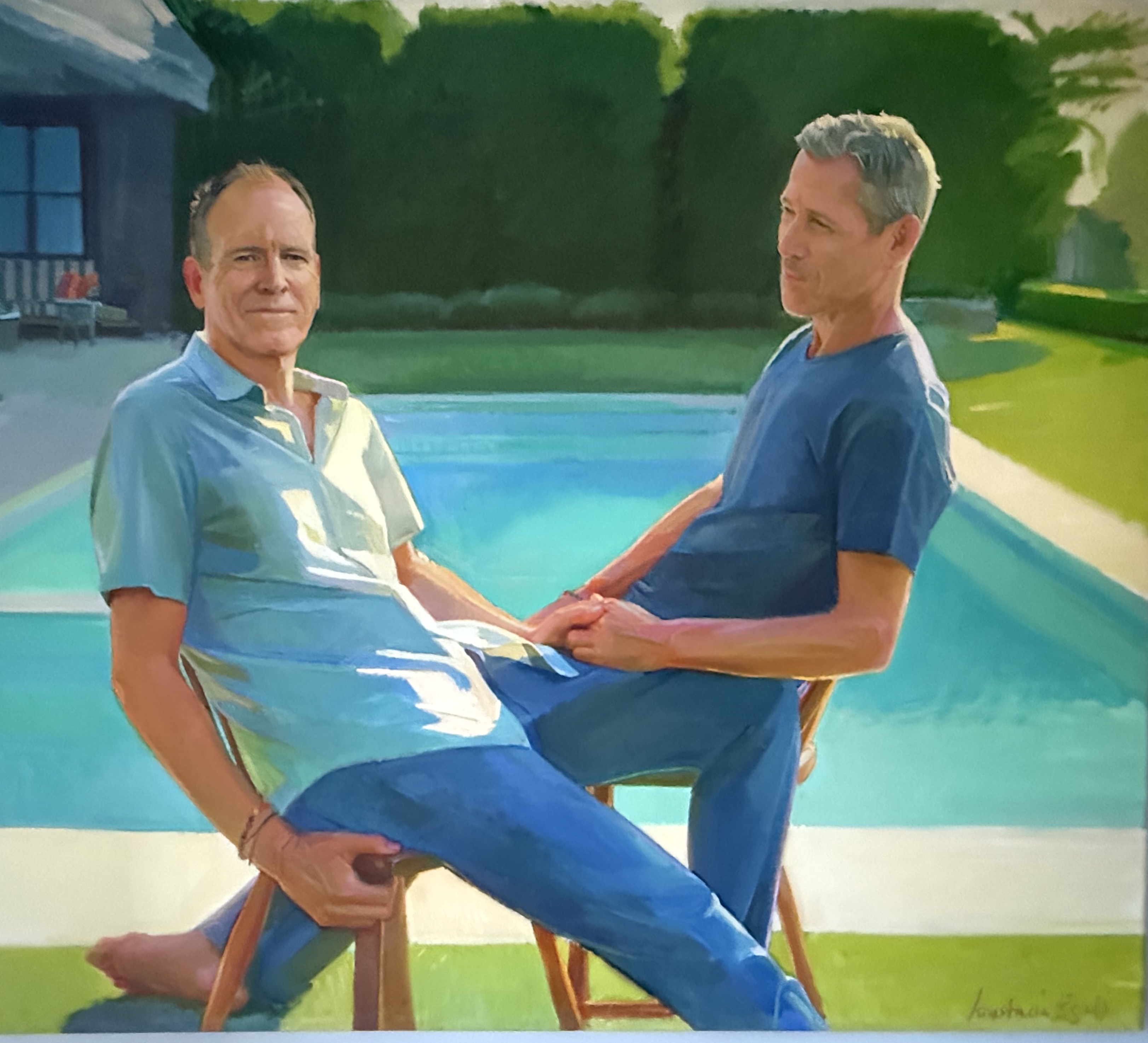
Jon and Harvey, 2021
Egeli is a painter who has earned her confidence, and right now, that confidence is very much on display. To understand Anastasia Egeli is to understand that she did not arrive at portraiture as a choice so much as an inheritance she chose to claim with full intention. She is the daughter of portrait painter Cedric Egeli and the granddaughter of Bjorn Egeli, a Norwegian American artist whose commissions included portraits of figures at the highest levels of American public life. Growing up inside a family where the observation of the human face was considered both vocation and virtue, Anastasia absorbed an understanding of representational painting that most artists spend decades trying to construct from scratch.
The dinner table conversation, one imagines, ran toward color temperature and likeness rather than abstraction and theory. Her formal training reinforced what her upbringing had already cultivated. Egeli pursued the kind of classical academic instruction that grounds a painter in the long history of European realism, studying the management of light across form, the architecture of a composition, and the particular challenge of capturing psychological presence within the constraints of a static image. This foundation aligned her with a lineage that runs from the great portrait traditions of the seventeenth century Dutch and Flemish masters through the bravura realism of John Singer Sargent and the searching American figurative painters of the twentieth century.
Anastasia Egeli
Alex and Brian in Provincetown, 2024
She learned the rules thoroughly enough to know precisely what she is doing when she bends them. What has emerged from that training and that inheritance is a practice that feels genuinely her own. Egeli's portraits are classically structured but not cold. They carry a warmth in their handling and an intimacy in their subject matter that signals a contemporary sensibility fully awake to the emotional possibilities of the genre.
Her 2021 oil on linen "Jon and Harvey" is a particularly strong example of this balance. The choice of linen as a support is itself a statement of seriousness, its texture lending a richness to the paint surface that canvas alone rarely achieves, and the work deploys that richness in the service of two subjects rendered with obvious affection and unflinching clarity. These are not formal likenesses designed to flatter. They are encounters.
The subject matter Egeli selects is worth pausing over. Portraiture has historically been a genre oriented around power, commissioned by those with status and resources to commemorate themselves and their families for posterity. Egeli participates in that tradition but expands it deliberately. Her figures are painted with the same gravity and care that court painters once reserved for nobility, but the dignity she extends is democratic in its instinct.
In this sense she connects to a broader movement within contemporary figurative painting, one that includes artists such as Bo Bartlett, Kehinde Wiley in his own very different register, and the quieter realist painters working today who believe that the act of careful looking is itself a moral stance. To paint someone well is to insist on their significance. From a collecting perspective, Egeli represents exactly the kind of opportunity that experienced collectors recognize and newer collectors often discover only in retrospect. She works within a tradition that has demonstrated consistent and growing critical regard over the past two decades, as contemporary realism and figurative painting have moved from the margins back toward the center of serious art world attention.
Her pedigree is exceptional and verifiable, her technique is mature and her output is deliberate rather than prolific, which means individual works carry genuine weight. Collectors drawn to artists such as Odd Nerdrum, Antonio López García, or the American realist painters shown at venues like the Rehs Galleries in New York or the Arcadia Contemporary program will find in Egeli a painter working at a comparable level of commitment and craft. What distinguishes Egeli within the field of contemporary portraiture is ultimately her ability to make the viewer feel the presence of her subjects as people rather than as pictorial problems to be solved. This is rarer than it sounds.
The history of academic realism is full of technically accomplished portraits that leave the viewer cold, works in which the painter's relationship to the sitter never quite ignites. Egeli's paintings do not have that problem. Whether the light is the cool, salt edged brightness of a Cape Cod afternoon or the more interior warmth of a studio sitting, her figures inhabit their painted worlds with a completeness that is the true measure of a portraitist's gift. The technique serves the feeling rather than announcing itself.
As a living mid career American artist working in oil, Egeli stands at a genuinely interesting moment in her professional trajectory. The conversation around figurative painting, representation, and the enduring human need to see ourselves reflected in art is louder and more urgent than it has been in a generation. She has the training to engage that conversation at the highest level and the lineage to contextualize it within American art history in ways that are both personal and substantial. Her grandfather painted the powerful.
She paints the living world with the same seriousness and a great deal more range. That is not a small thing. It is, in fact, the whole point.