Analía Saban
Analía Saban Remakes Painting From Within
Artist Spotlight · The Collection Editorial
In the years since her work entered the permanent collection of the Hammer Museum in Los Angeles, Analía Saban has become one of the most quietly riveting figures in contemporary conceptual art. Her practice has earned the sustained attention of curators and collectors who recognize in her something rare: an artist who does not simply make paintings but instead interrogates the very conditions that allow painting to exist. Recent years have seen her work appear in group exhibitions at LACMA and across international art fairs, reinforcing what her most devoted admirers have long known. Saban is not on the periphery of the conversation about materiality and process in contemporary art.
Analía Saban
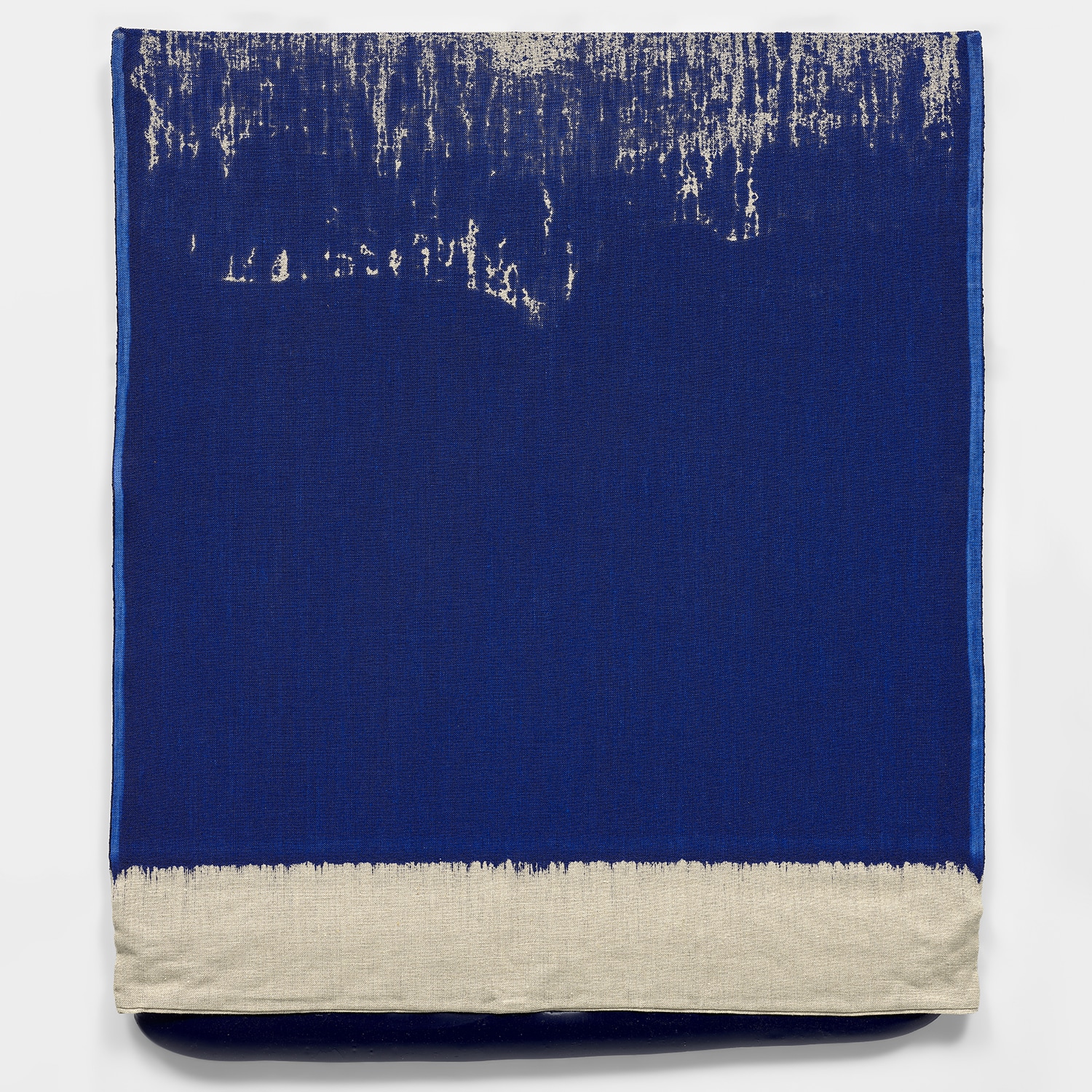
Pressed Paint (Ultramarine Blue)
She is at its center. Born in Buenos Aires in 1980, Saban grew up in Argentina before relocating to the United States to pursue her artistic education. She earned her MFA from the University of California, Los Angeles, a program renowned for producing artists with a rigorous conceptual foundation and a deep engagement with the histories of the medium they enter. Los Angeles itself became a formative influence, a city whose light, whose culture of fabrication and technology, and whose pluralistic art scene gave Saban both permission and provocation.
The Argentine sensibility she brought with her, attentive to systems and structures, merged productively with the experimental freedoms of the West Coast. The result is a practice that feels both intellectually serious and physically immediate. Saban's artistic development can be understood as a sustained act of disassembly. Where most painters build up surfaces, she pulls them apart.
Analía Saban
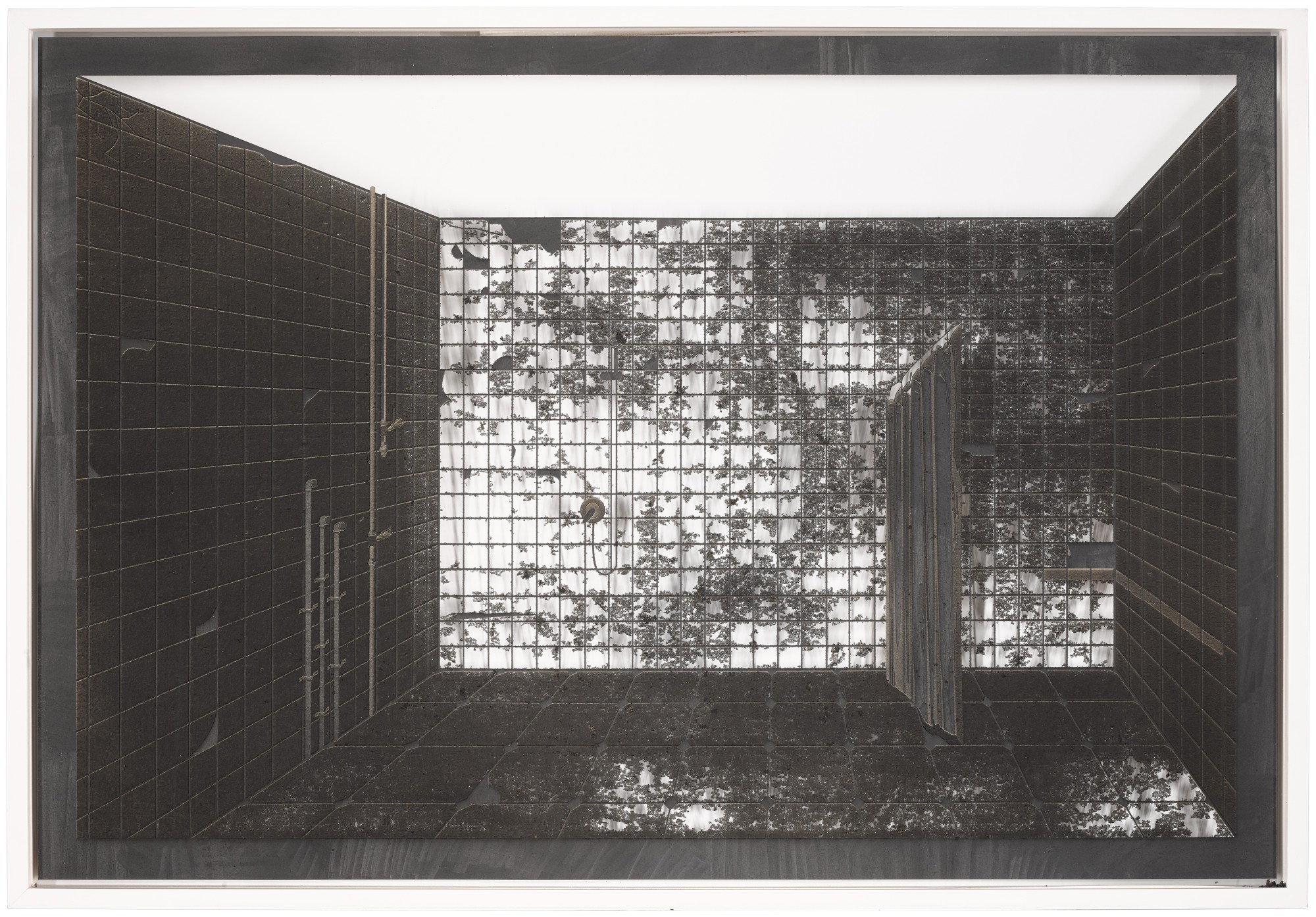
Erosion (Changing Room), 2013
Her early engagement with the canvas as an object rather than a support led her to develop labor intensive methods of unweaving, pressing, and restructuring the materials that conventional painting takes for granted. She began treating acrylic paint not as a fluid medium to be applied but as a physical substance to be shaped, removed, cut, and rewoven. This was not destructive for its own sake. It was a way of asking what painting actually is when you strip away its assumptions, and of discovering that the answers are far stranger and more beautiful than tradition suggests.
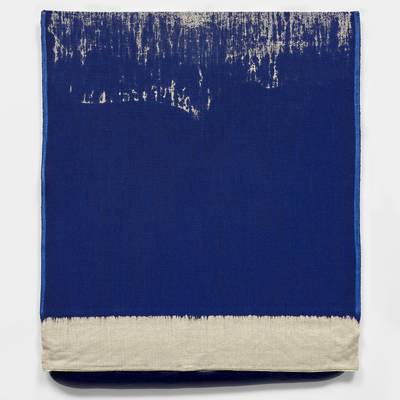
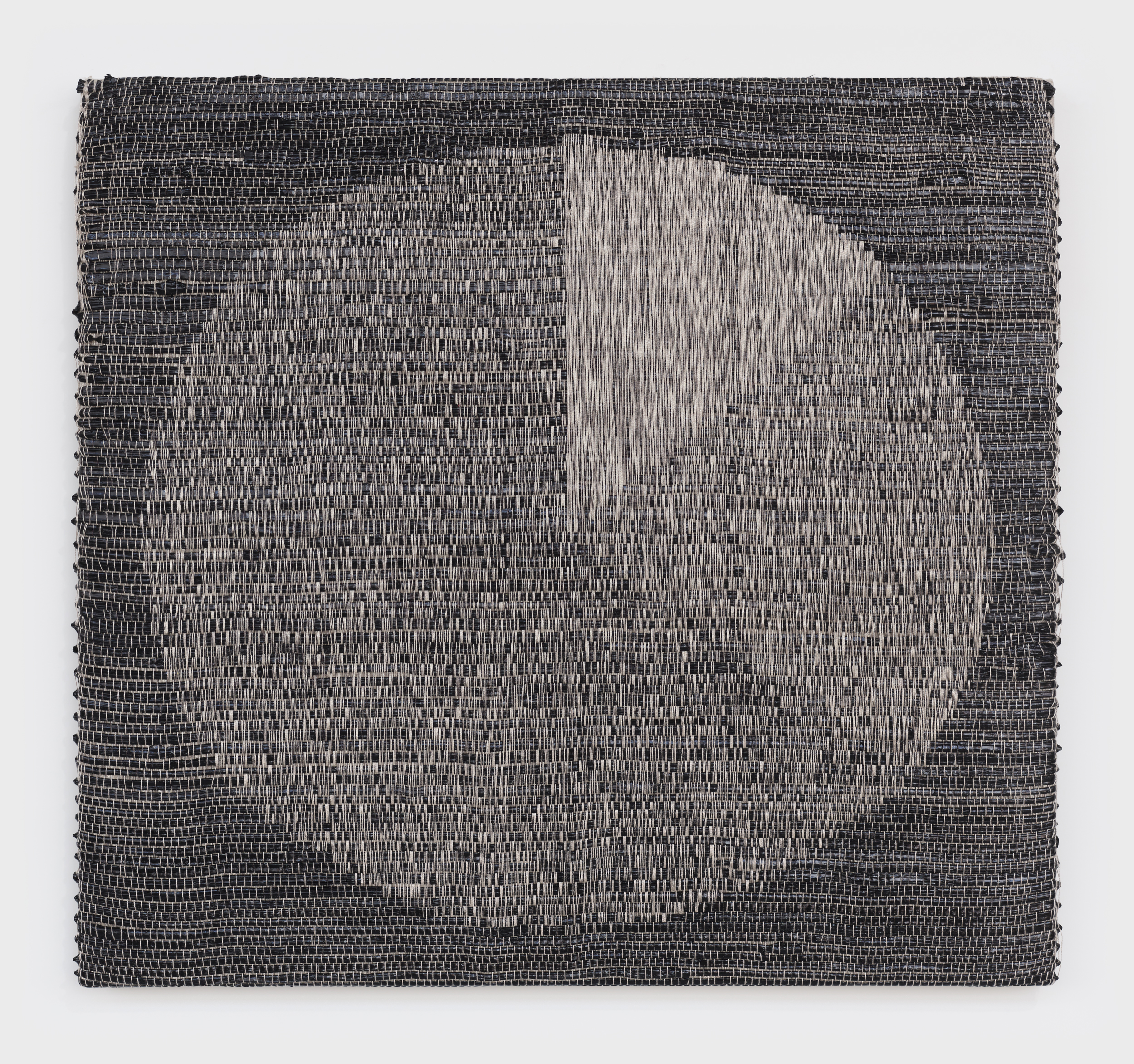
Among her most celebrated bodies of work are the Pressed Paint series, in which dried acrylic paint is pressed into linen, creating objects that occupy the space between painting, sculpture, and textile. Works such as Pressed Paint in Ultramarine Blue carry an almost geological presence, as if the color itself has been fossilized. Her woven works, including Composition for Pie Chart from 2022, demonstrate her ongoing fascination with systems of measurement and categorization, translating data structures into physical acts of making through acrylic paint and linen thread on panel. The Erosion series, which includes works such as Erosion Changing Room from 2013 in graphite on paper and Erosion Kitchen in laser sculpted acrylic on canvas, brings the language of time and wear into her investigation of domestic space and architectural surface.
Analía Saban
Composition for Pie Chart (15%, 20%, 65%), 2022
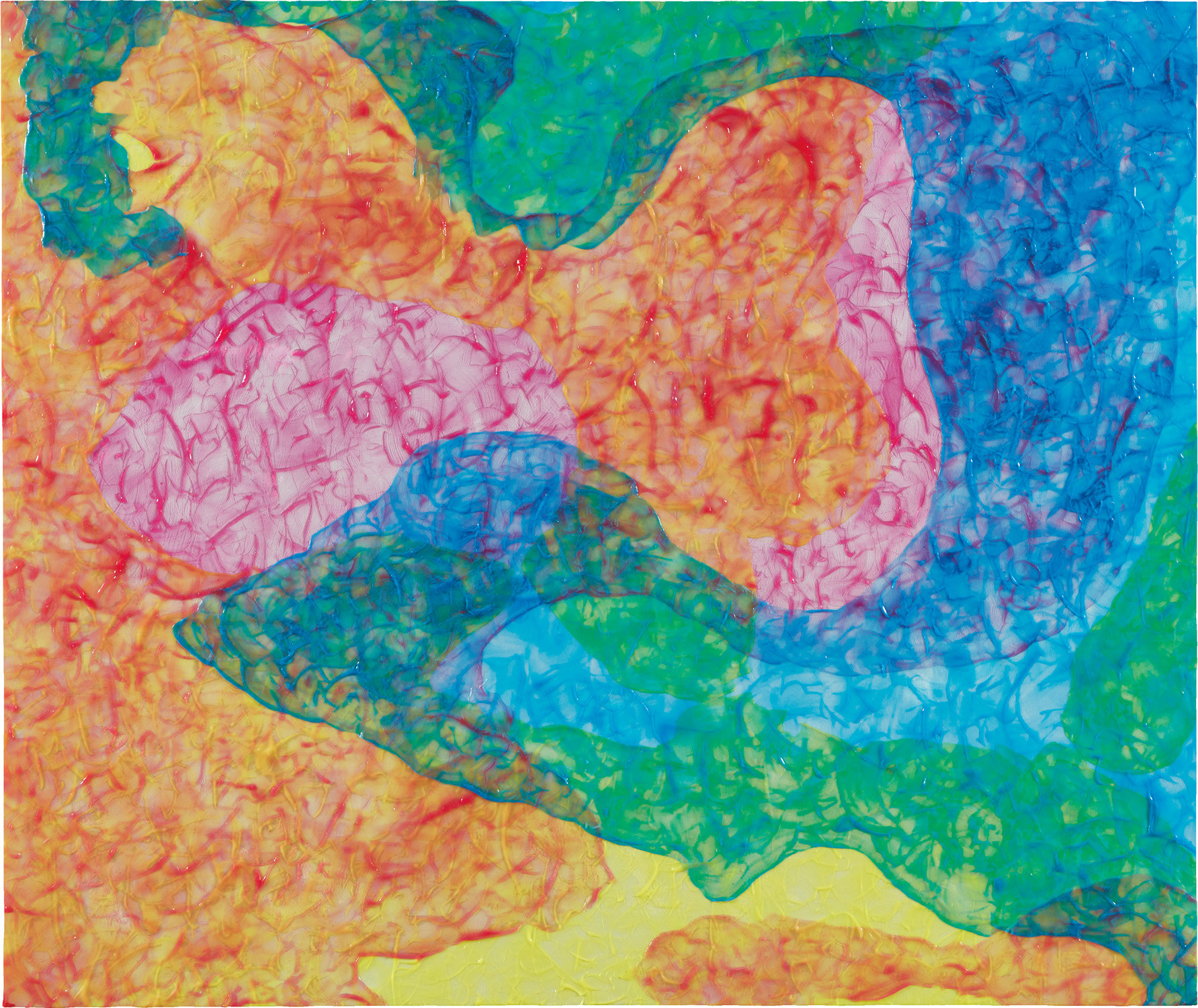
These are works that hold their complexity lightly, inviting the eye before revealing the depth of thought behind them. The Layer Painting series offers another window into her practice. Layer Painting in CMY, the Still Life with Three Fish and One Vase in an abstract register from 2009, uses acrylic and silkscreen ink on canvas to explore how images accumulate and dissolve across time, referencing the history of printing and color theory simultaneously. Her print works, including the archival inkjet pieces with hand coloring in crayon on Hahnemühle Museum Etching paper, show the same sensibility operating across different surfaces.
Even her Painting with Brush, in which an actual plastic brush is embedded in acrylic on canvas, transforms the tool of painting into a subject of painting. This reflexivity is never merely clever. It is generative, producing genuine visual pleasure alongside conceptual rigor. For collectors, Saban's work represents a compelling proposition at the intersection of process art, conceptual art, and material investigation.
Analía Saban
Layer Painting (CMY): Still Life with Three Fish and One Vase (Abstract), 2009
Her practice shares intellectual territory with artists such as Rosemarie Trockel, whose interrogation of textiles and gender inflected labor has been widely collected, and with figures like Tauba Auerbach and Sam Gilliam, both of whom have challenged the physical conventions of the painted surface. Saban's Argentine background also connects her to a tradition of geometric and conceptual experimentation that runs through South American modernism, from the Madí movement through to the international recognition of artists like Adriana Varejão. Institutional interest in her work has continued to grow, and pieces from her major series are increasingly sought after by collectors who understand that her practice is both historically grounded and genuinely forward looking. The market for Saban's work reflects the seriousness with which the field regards her.
Her works on paper, including the Paint Cross Sections from King Tut to Judy Chicago from 2015 in digital print collage and color pencil on paper mounted to museum board, offer accessible entry points into a practice that scales impressively across formats. The larger woven and pressed paint works carry the kind of material authority that holds up across decades. Collectors drawn to artists who operate at the boundary of painting and sculpture, or who are building collections organized around process and material investigation, will find that Saban's work speaks fluently to both concerns while remaining distinctly her own voice. What makes Saban matter today, beyond the pleasure her objects give and the institutions that have recognized her, is the quality of the question she keeps asking.
At a moment when the art world periodically announces the death or the revival of painting as though these were the only two options, Saban has been quietly doing something more interesting: she has been showing that painting is a technology, a set of conventions with a history and a physics, and that within those conventions there is still enormous room for discovery. Her work is a reminder that the most radical act is sometimes not to abandon a tradition but to understand it deeply enough to transform it from the inside. That is a contribution that will endure.