Ana Mendieta
Ana Mendieta, Earth, Body, Eternal Presence
Artist Spotlight · The Collection Editorial
“I have been carrying on a dialogue between the landscape and the female body, based on my own silhouette.”
Ana Mendieta, artist statement
In 2023, the Hayward Gallery in London staged a sweeping survey of feminist art practices that placed Ana Mendieta's Silueta works at its symbolic center, a confirmation that her vision has never felt more urgent or more alive. Around the same time, major institutions from the Guggenheim Bilbao to the Whitney Museum continued to feature her photographs and films in their permanent collection rotations, drawing long, contemplative crowds. Auction results have reflected this growing institutional reverence: chromogenic prints from her Silueta Series now regularly achieve six figure results at Christie's and Sotheby's, with collectors competing fiercely for the rare lifetime prints and estate stamped editions that bring her practice closest to its original, elemental fire. Mendieta's place in the canon is no longer a matter of debate.
Ana Mendieta
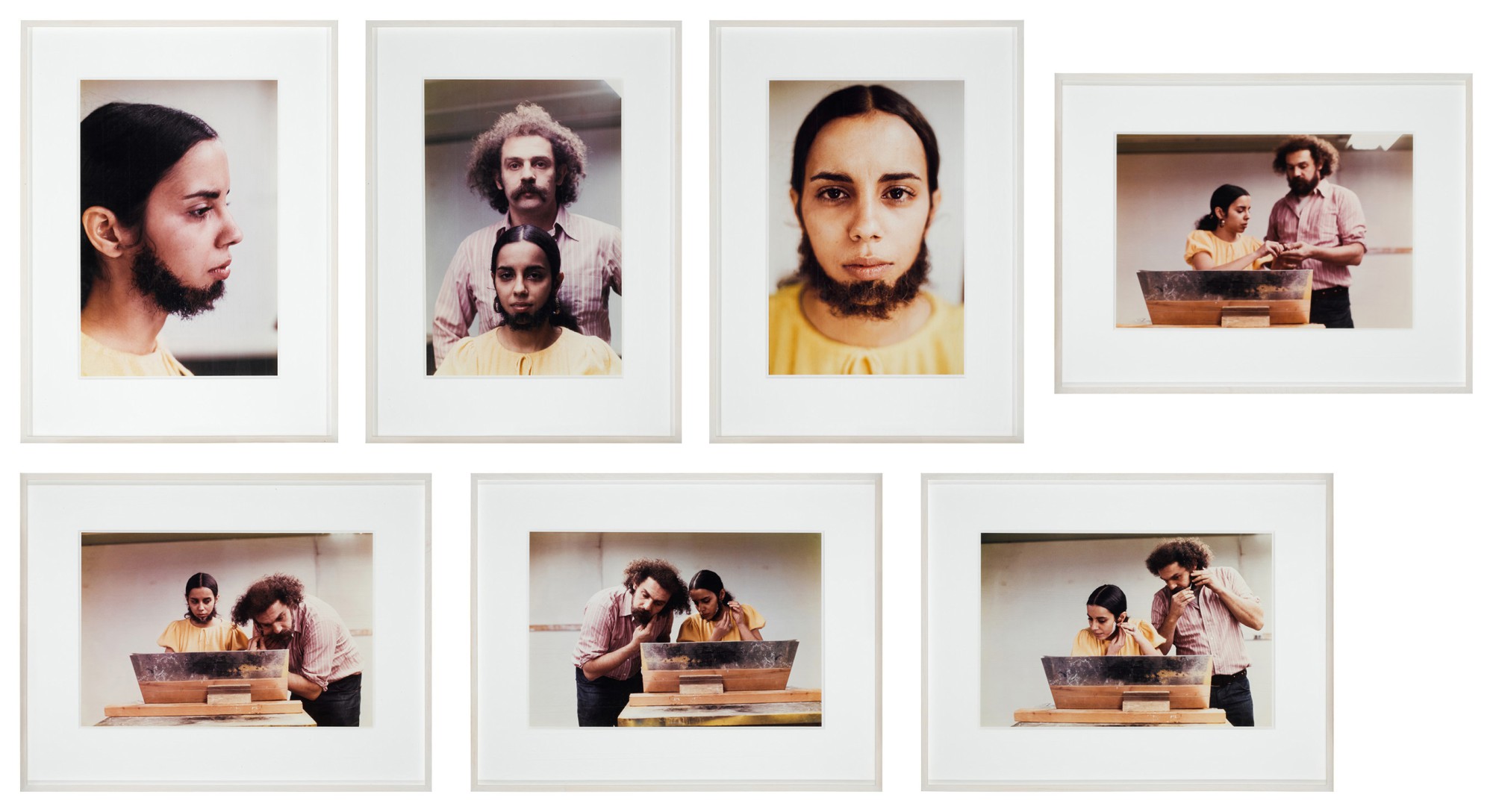
'Untitled (Facial Hair Transplants) (7 works)', 1972
It is a matter of devotion. Ana Mendieta was born in Havana, Cuba, in 1948, into a family whose political convictions would reshape the entire trajectory of her life. When Fidel Castro consolidated power, her parents made the devastating decision to send Ana and her sister Raquelin to the United States through Operation Peter Pan, the Catholic Church program that relocated thousands of Cuban children in the early 1960s. Ana was twelve years old.
She passed through orphanages and foster homes in Iowa, experiencing displacement, cultural alienation, and the particular grief of a child separated from her homeland at the moment she most needed it. These early wounds did not harden her. They opened her. The themes that would define her entire artistic practice, belonging, exile, the body as territory, the earth as mother, were not chosen abstractly.
Ana Mendieta
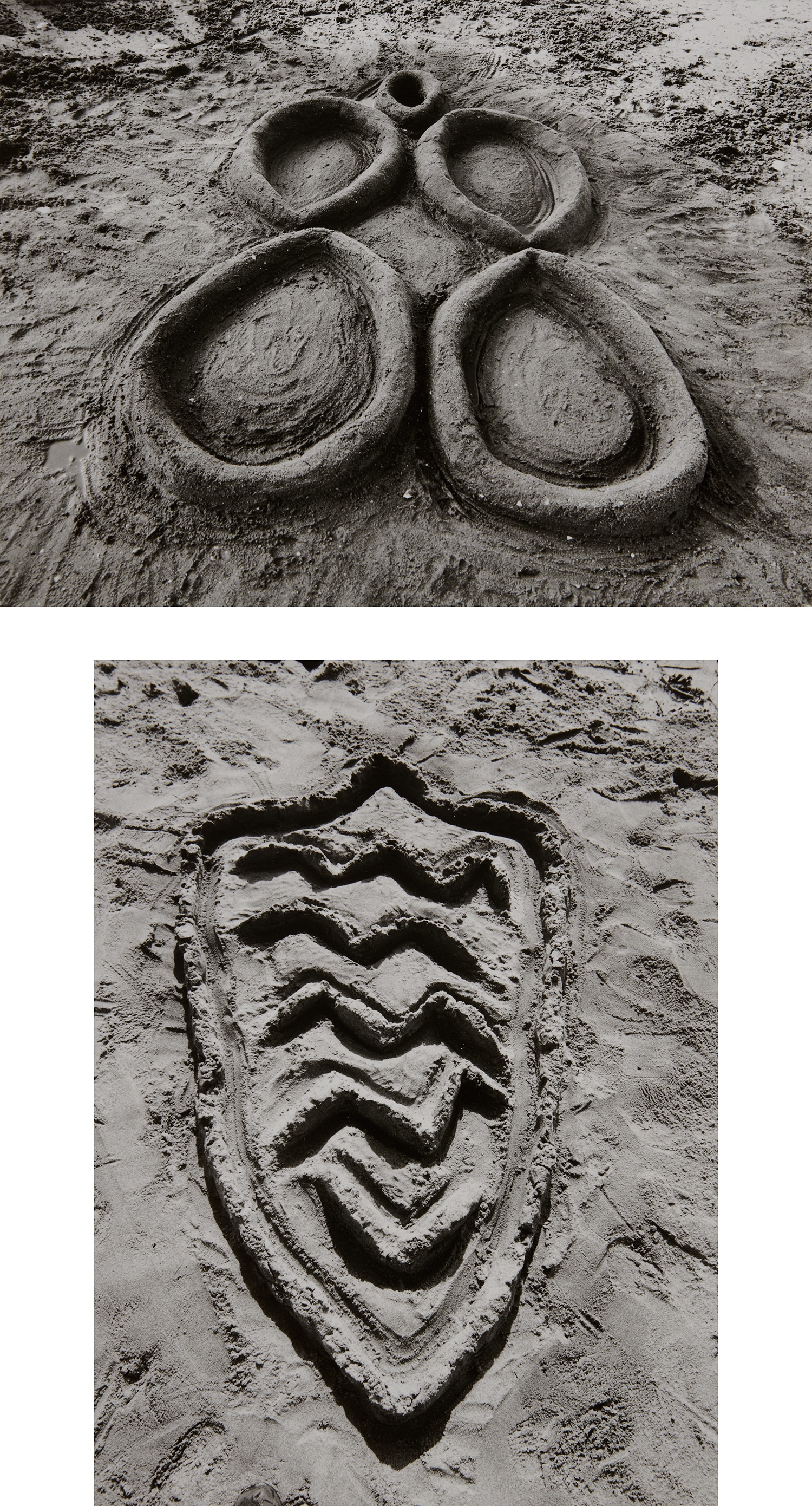
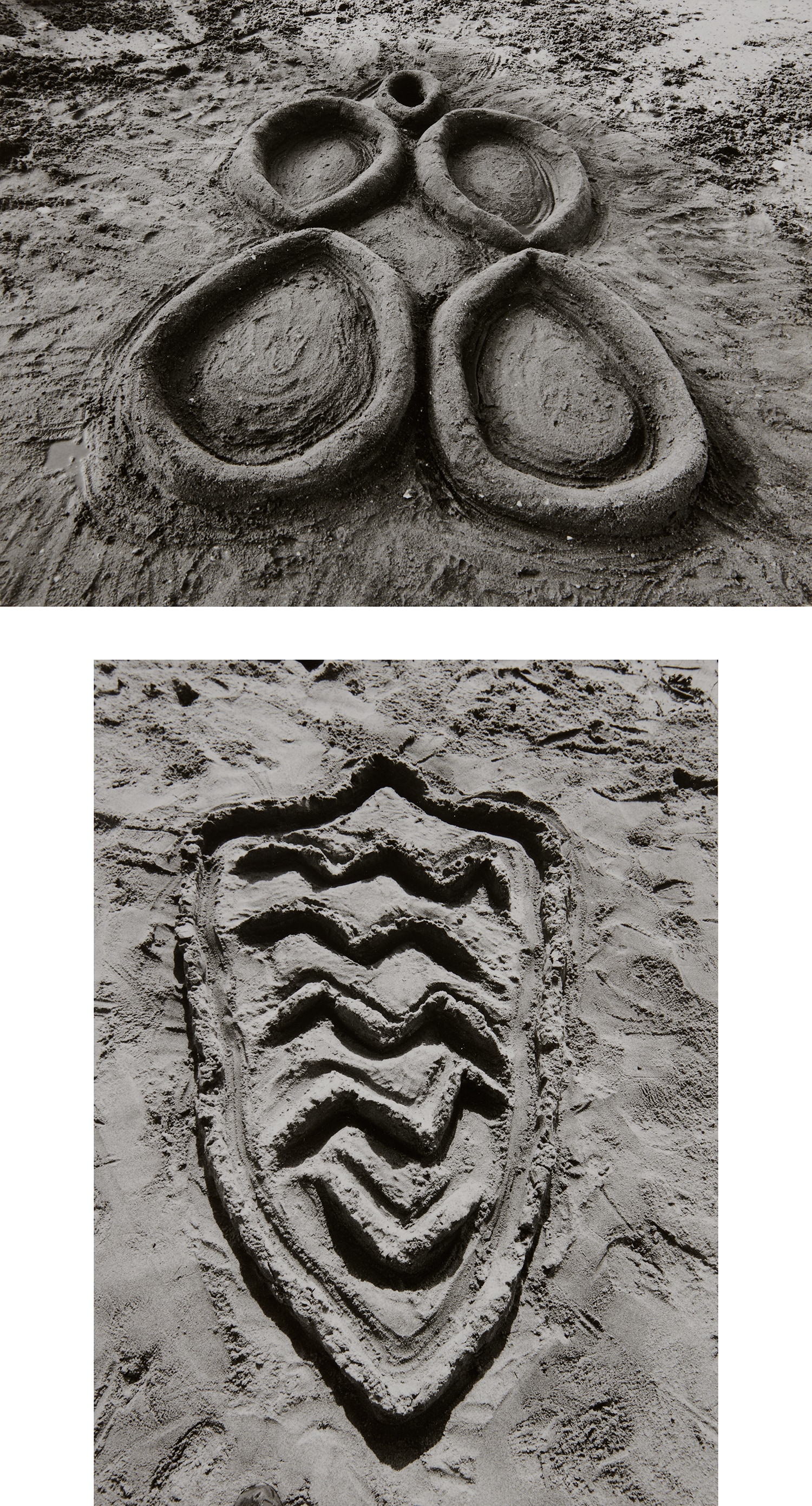
Sandwomen, Miami
They were lived. Mendieta pursued her formal education at the University of Iowa, where she enrolled in the Intermedia program, one of the few graduate programs in the country at that time willing to treat performance, video, and earth art as legitimate disciplines. She studied under Hans Breder, whose interdisciplinary approach gave her the freedom to move between media without hierarchy. Iowa was also where she first pressed her body into mud, sand, and grass, beginning what would become the most sustained and recognizable body of work in her career.
“My art is the way I reestablish the bonds that unite me to the universe.”
Ana Mendieta, artist statement
The landscape of the American Midwest, flat, wide, and utterly foreign to her Caribbean origins, became the paradoxical site where she began to negotiate her relationship with the earth. She would later travel to Mexico, particularly Oaxaca, where ancient sites and indigenous spiritual traditions deepened her practice and gave it a new archaeological gravity. The Silueta Series, produced across Iowa and Mexico throughout the 1970s and into the 1980s, stands as one of the most singular achievements in postwar art history. Mendieta carved her silhouette into riverbanks, packed her outline with flowers, ignited gunpowder around her body's impression in soil, and submerged her form in shallow water.
Ana Mendieta
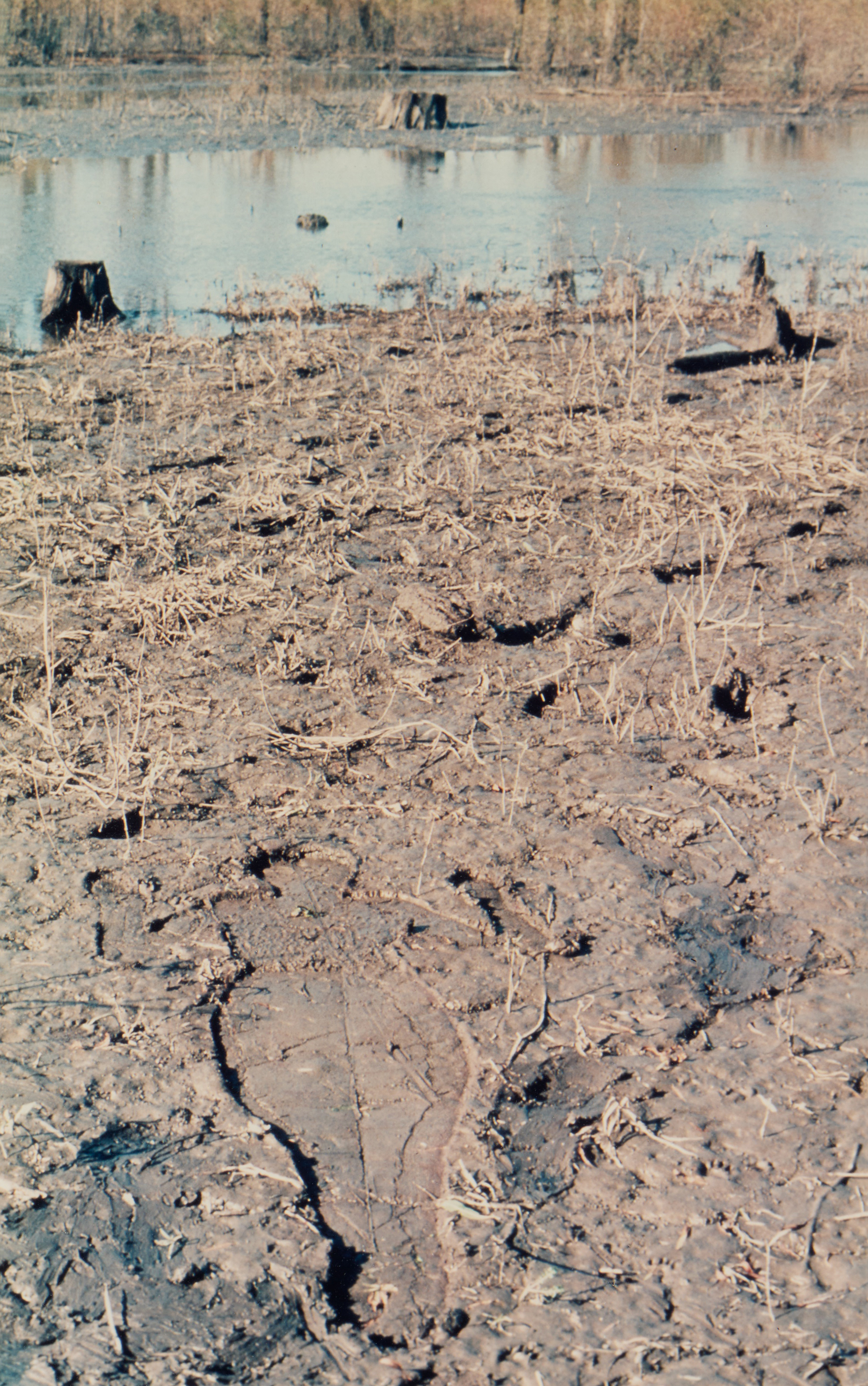
Untitled (Silueta Series, Iowa), 1976
The resulting photographs and Super 8 films capture these acts in their aftermath or mid transformation, the body present through its absence, the landscape marked and then slowly reclaiming itself. Works such as Untitled: Silueta Series, Iowa from 1976 and the Oaxaca pieces from 1980, annotated in her own hand with notes about scale and material, carry an intimacy that feels almost like correspondence. She is writing to the earth, and the earth is writing back. The series drew on Afro Cuban religious traditions, particularly Santeria, and on her reading of pre Columbian art, synthesizing personal mythology with collective spiritual memory in a way that no other artist of her generation attempted with such consistency.
Beyond the Silueta works, Mendieta's practice was startlingly broad. Her early performance works at the University of Iowa in the late 1960s and early 1970s confronted violence, identity, and the vulnerability of women's bodies with a directness that shocked even progressive audiences. The 1972 Untitled (Facial Hair Transplants) series, a suite of chromogenic prints in which she applied a fellow student's facial hair to her own face and documented the transformation, is a foundational work in the history of gender and identity based art. It predates much of what we now call queer aesthetics and body politics by decades.
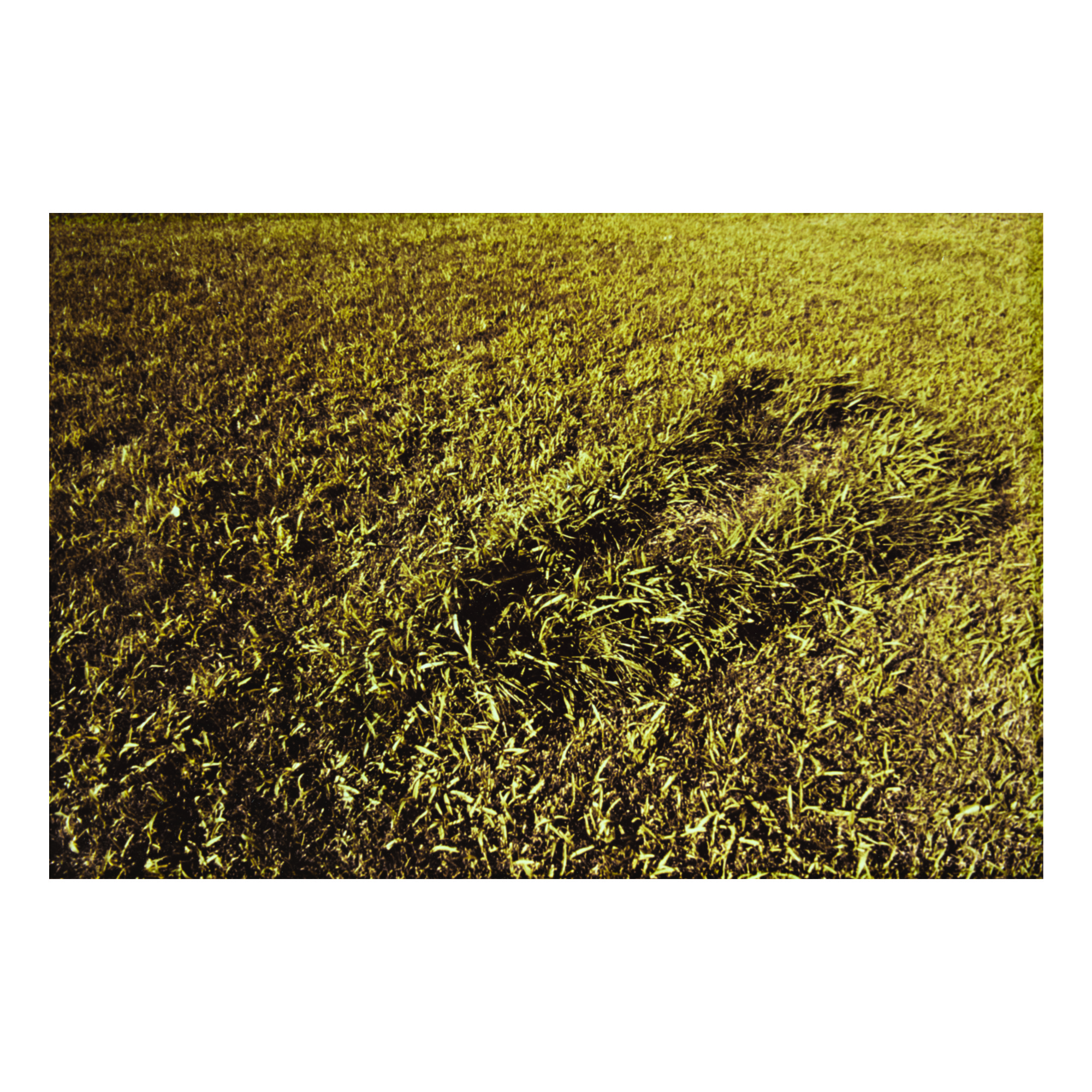
Ana Mendieta
Untitled: Silueta Series, 1978
Her Encantación a Olokún Yemayá from 1977, a lifetime chromogenic print documenting a ritual performance, demonstrates her commitment to honoring Afro Cuban spiritual traditions not as exotic material but as living inheritance. These works remind collectors and viewers alike that Mendieta was never a single note artist. She was a full orchestra. For collectors, Mendieta's market presents a compelling combination of art historical significance and genuine scarcity.
Her lifetime prints are exceptionally rare, as her practice prioritized the ephemeral act over the collectible object, and many of her most important photographic works exist in small editions with estate stamps issued posthumously by the Estate of Ana Mendieta Collection, LLC. The Sandwomen, Miami works, available as gelatin silver prints, and the Iowa and Long Island earth work documentation series represent the range of her photographic output across different decades and geographies. What distinguishes a Mendieta acquisition is not simply the investment case, though that case is strong and growing stronger, but the experience of living with images that are simultaneously ancient and absolutely contemporary. Collectors who have spent time with these works consistently describe a quality of presence that is unusual even among major postwar artists.
Mendieta belongs to a constellation of artists who were reinventing the relationship between body, land, and political identity in the late twentieth century. Her peers and contemporaries include Carolee Schneemann, whose body based performance work shared her feminist urgency, and Agnes Denes, whose land interventions engaged ecological and philosophical questions with comparable seriousness. In the Latin American context, she stands alongside Lygia Clark and Hélio Oiticica as an artist who refused the passive object and insisted on art as embodied experience. She was also, briefly and intensely, the partner of sculptor Carl Andre, and her death in 1985 at the age of thirty six remains a source of grief and unresolved legal history that the art world continues to reckon with.
What matters most, however, is what she left behind: a body of work that grows in meaning with every passing year. Ana Mendieta's legacy is the legacy of someone who refused to be erased. She made her mark in mud and fire and flowers, in sacred sites and university studios, in the Midwest and in Oaxaca, always insisting that her body, her Cuban body, her woman's body, her exiled body, belonged to the earth and that the earth belonged to her. Institutions, scholars, and collectors are only now beginning to fully understand the depth of what she achieved in fewer than four decades of life.
To acquire a work by Mendieta is to participate in that understanding, to become a steward of one of the most original and necessary artistic visions of the twentieth century.
Explore books about Ana Mendieta

Ana Mendieta: A Retrospective
Olga M. Viso
Ana Mendieta: Pain of America
Petra Barreras del Rio and John Perreault
Ana Mendieta: Traces
Ramírez, Mari Carmen
Ana Mendieta: The Artist Book
Gloria Moure
Ana Mendieta: Fuego/Fire
Barreras del Rio, Petra

Ana Mendieta: Eight Performance Works
Various Contributors