An Egyptian Wood Mummy Mask
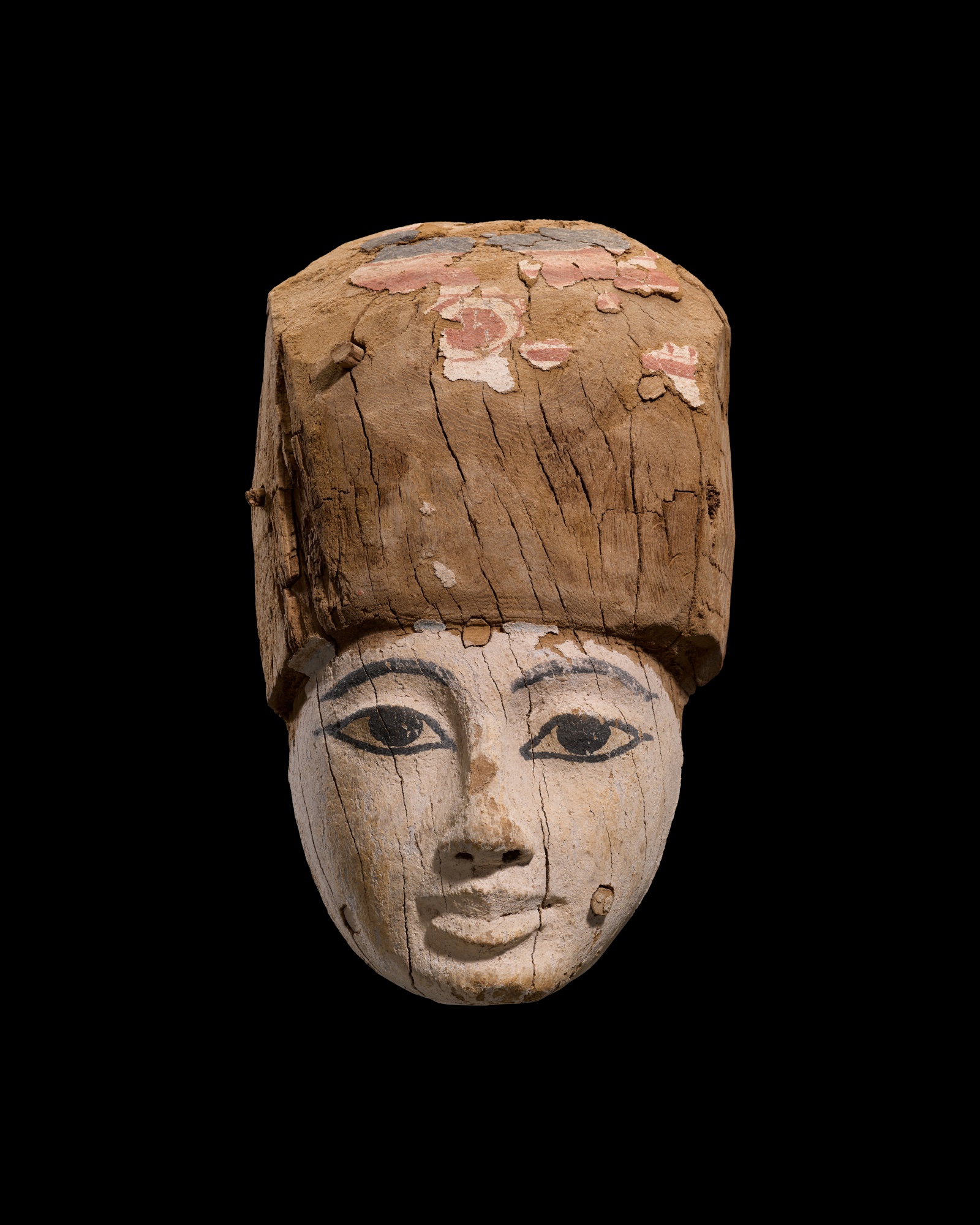
Ancient Faces, Forever Radiant and Alive
Artist Spotlight · The Collection Editorial
In the spring of 2023, the Metropolitan Museum of Art in New York mounted a quietly stunning reinstallation of its Egyptian galleries, drawing renewed attention to the funerary arts of the Nile Valley and reminding visitors why these objects continue to arrest the eye and stir the imagination. Alongside the grand sarcophagi and painted coffin boards, it was often the smallest faces that stopped people in their tracks: carved wooden mummy masks, their features composed in serene authority, their pigments still vivid after three millennia. The world has never stopped looking at these objects, and right now, across auction houses, private collections, and museum galleries from London to Cairo, the Egyptian wood mummy mask is experiencing a remarkable moment of renewed scholarly and collecting interest. To understand the Egyptian wood mummy mask, one must first understand the civilization that created it, a culture for whom the afterlife was not a hope but a certainty, and for whom the preservation of the physical body was a sacred obligation.
An Egyptian Wood Mummy Mask
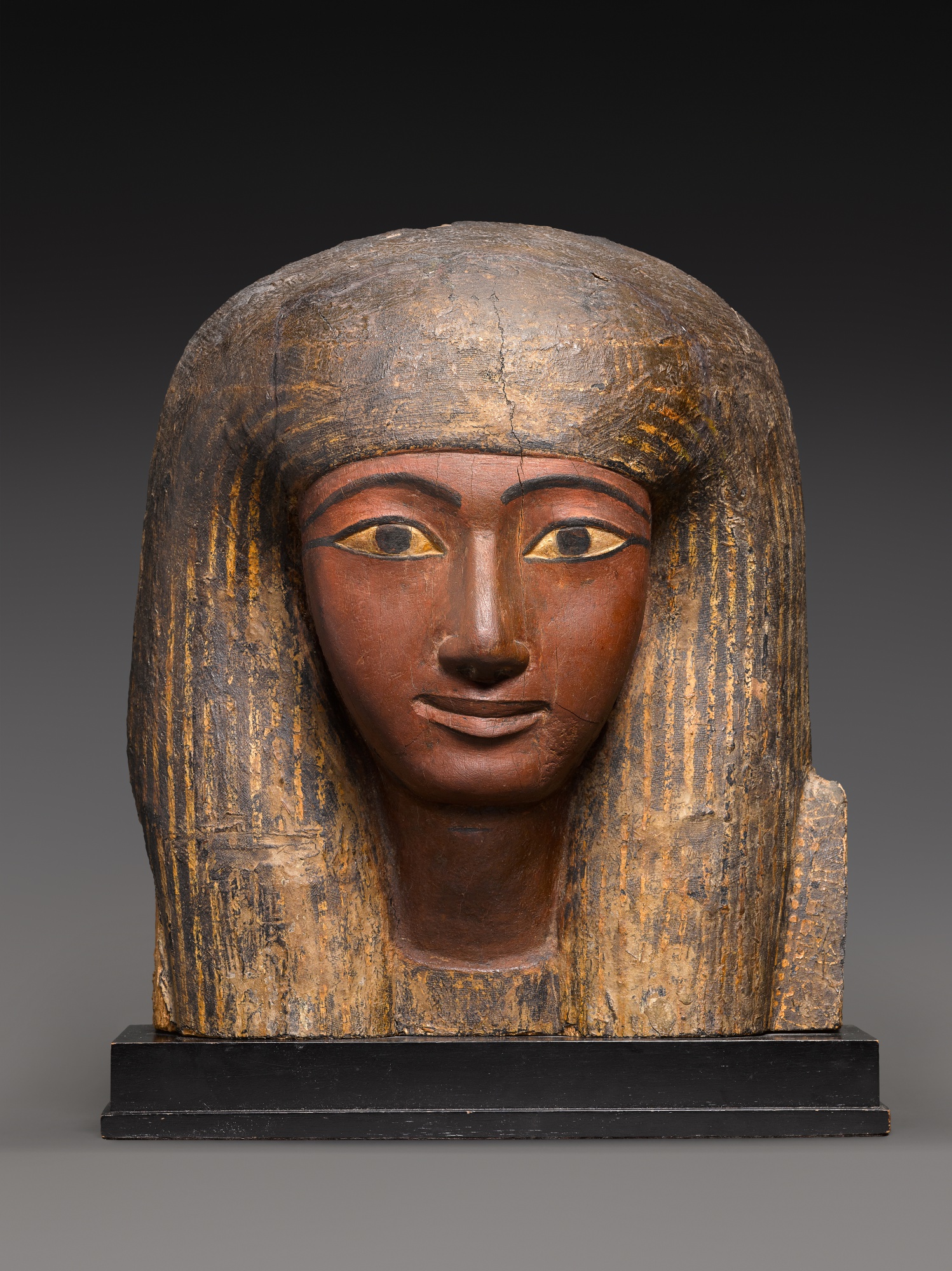
An Egyptian Wood Mummy Mask, 22nd Dynasty, 944-716 B.C.
Ancient Egyptian funerary practice was grounded in the belief that the soul, or ka, required a recognizable physical form to return to after death. The mask served a precise theological function: it stood as a surrogate face, an anchor for the soul, ensuring that the spirit could locate and inhabit its former vessel. This was not decoration in any casual sense. Every carved line, every painted eye, every carefully mortised joint was an act of devotion as deliberate and considered as any prayer.
The wood masks produced across the span of Egyptian dynastic history reveal both the consistency of this spiritual intent and the remarkable range of craft traditions that gave it expression. The earliest examples from the New Kingdom period, including those attributed to the 20th Dynasty between roughly 1190 and 1075 B.C., already demonstrate a sophisticated understanding of carved form and pigment application.
An Egyptian Wood Mummy Mask
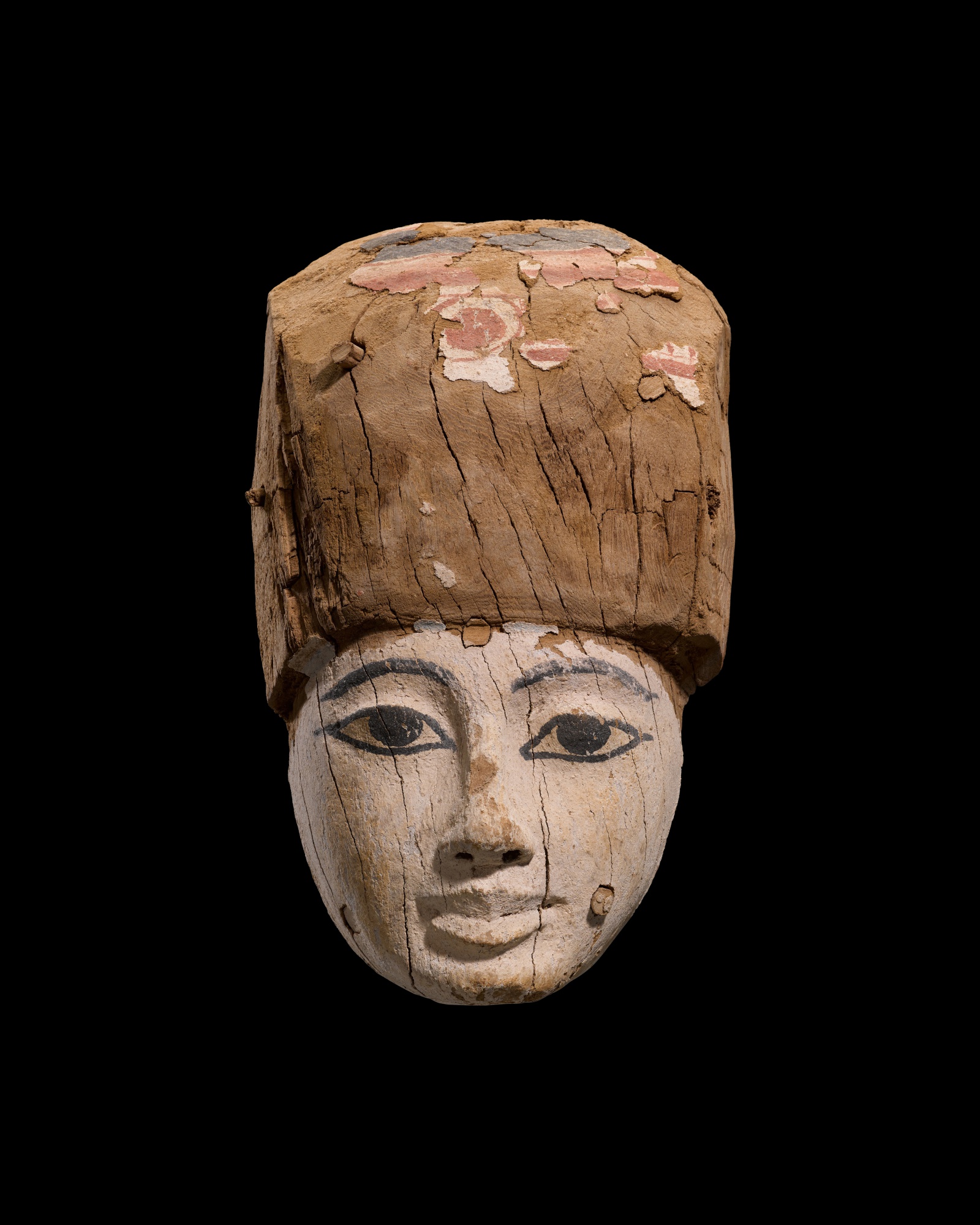
An Egyptian Wood Mummy Mask, 22nd/26th Dynasty, 944-525 B.C.
Workshops along the Nile had developed highly refined techniques for shaping dense hardwoods, some of which appear to be ebony or close relatives of that material, into faces of uncanny presence. The carvers who produced these objects were not anonymous artisans in any diminished sense of the word. They were specialists, trained over years, working within a tradition of exacting standards. The 21st and 22nd Dynasties, spanning from approximately 1075 to 716 B.
C., represent one of the most productive and technically accomplished periods for wood funerary masks. It is during this era that we see the full flowering of the form. Masks from this period frequently feature finely arched eyebrows, eyes formerly detailed with rich black pigment, and lips outlined with a precision that suggests both portraiture and idealization working in careful balance.
An Egyptian Wood Mummy Mask
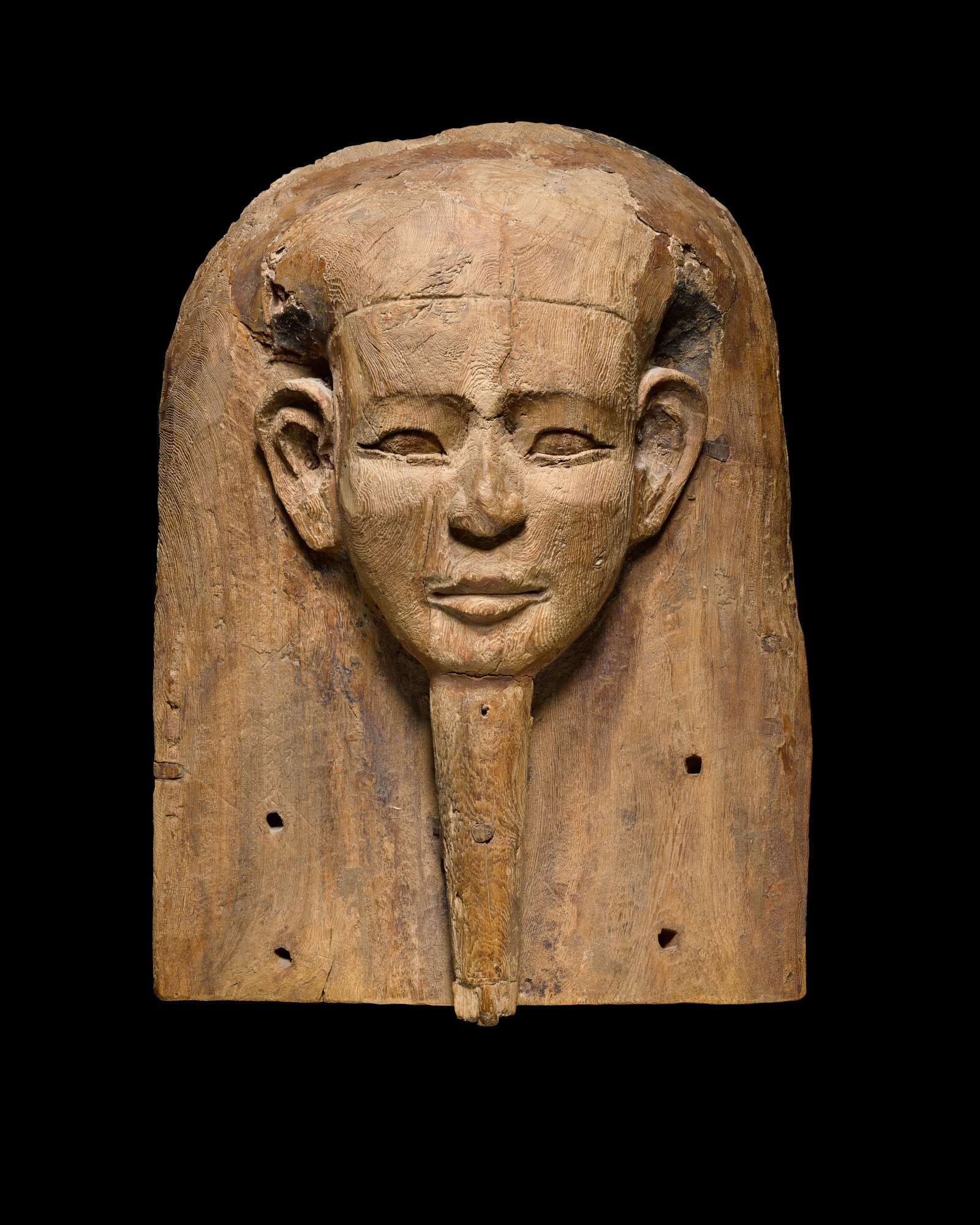
An Egyptian Wood Mummy Mask, 26th/30th Dynasty, 664-342 B.C.
The structural ingenuity of these objects is equally impressive. Many examples include a square mortise beneath the chin designed for the insertion of a carved beard, while rectangular mortises at the back allowed for secure attachment within the layered architecture of the inner coffin. These are objects engineered as much as they are sculpted, and the engineering itself is a testament to the sophistication of the tradition. By the time of the 22nd and 26th Dynasties, roughly 944 to 525 B.
C., wood mask production had absorbed new influences while retaining its essential formal vocabulary. Some of the most visually compelling examples from this period feature remains of polychrome linen applied to portions of the wig, a detail that speaks to the multi material complexity of Egyptian funerary assemblage. Wide set eyes painted in fine black lines, straight noses of elegant proportion, and the characteristic tripartite wig rendered in careful relief: these are the signatures of a mature tradition at the height of its expressive confidence.
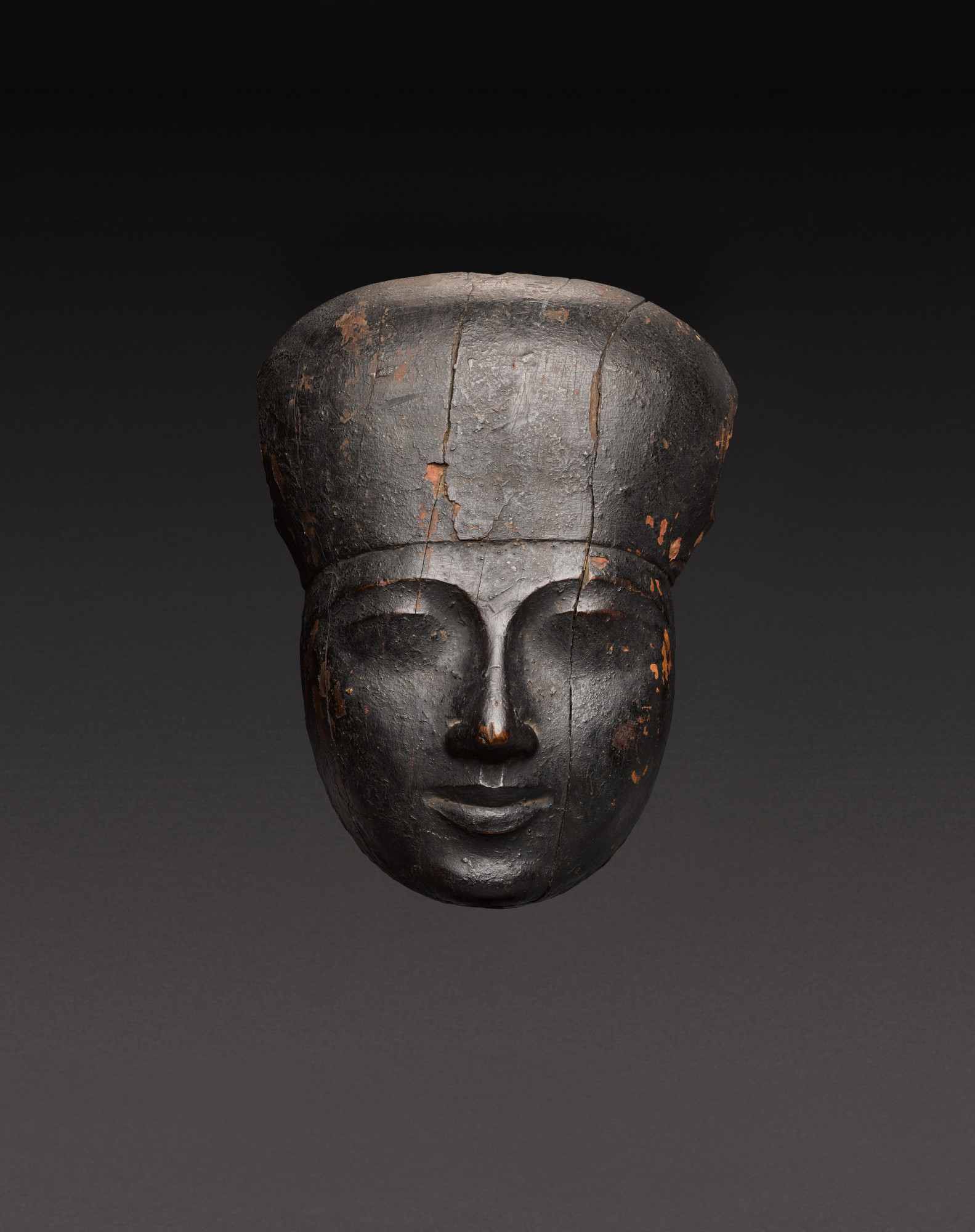
An Egyptian Wood Mummy Mask
An Egyptian Wood Mummy Mask, 21st/22nd Dynasty, 1075-716 B.C.
The Late Period, encompassing the 26th through 30th Dynasties from 664 to 342 B.C., brought yet another refinement, a tendency toward greater formalism and a kind of monumental calm that places these later masks in close visual dialogue with the great temple sculpture of the same era. For collectors, Egyptian wood mummy masks occupy a category of ancient art that rewards both connoisseurship and patience.
The market for authentic, well provenanced examples has remained consistently strong across the major international auction houses, including Christie's, Sotheby's, and Bonhams, where exceptional pieces regularly achieve prices that reflect both their rarity and their cultural weight. What distinguishes the finest examples in any collector's view is the survival of original surface: intact pigment, original wood pins still in place, evidence of the polychrome linen or other applied materials that once animated the mask within the context of the full burial assemblage. Condition in this sense is not merely a market consideration but a window into the original intention of the makers. The more of the original surface that survives, the closer the collector stands to the ancient workshop and the hands that worked there.
Within the broader sweep of ancient art history, Egyptian wood mummy masks sit in illuminating relationship to other funerary portrait traditions. The Fayum mummy portraits, produced under Roman influence between roughly the first century B.C. and the third century A.
D., take up many of the same questions about likeness, identity, and the preservation of the self against death, but answer them through painted panel rather than carved wood. Greek funerary stele and Roman death masks pursue analogous concerns through entirely different formal means. To collect Egyptian wood masks is to engage with one of the oldest and most persistent questions that art has ever addressed: how do we keep a face alive.
The legacy of the Egyptian wood mummy mask is inseparable from the legacy of Egyptian civilization itself, which is to say it is effectively boundless. These objects have shaped the visual imagination of every subsequent culture that encountered them, from the Hellenistic world to the Renaissance antiquarians who first began systematically collecting Egyptian antiquities to the modernists who found in their formal economy a kind of proto abstraction. Today, as questions of cultural heritage, repatriation, and the ethics of collecting ancient art occupy an increasingly prominent place in public discourse, the Egyptian wood mummy mask also invites collectors to engage thoughtfully with questions of provenance and responsibility. The finest collections approach these objects not as trophies but as custodianships, a disposition that the ancient Egyptians themselves, with their profound sense of sacred obligation, would surely have recognized and honored.