Amy Sillman
Artist Spotlight · The Collection Editorial
```json { "headline": "Amy Sillman Makes Abstraction Feel Alive", "body": "When Amy Sillman's survey exhibition traveled through Europe and the United States in the early 2020s, something remarkable happened: audiences who had long associated abstract painting with cold formalism found themselves laughing, leaning in, and feeling genuinely moved. The show, which included paintings, drawings, animations, and her characteristically irreverent zines, made clear that Sillman occupies a singular position in contemporary art. She is one of the most intellectually rigorous and emotionally generous painters working today, and the art world has spent the better part of three decades catching up to what she has always known: that abstraction and feeling are not opposites.\n\nBorn in 1955, Sillman grew up in the United States and came to painting through an unconventional path.
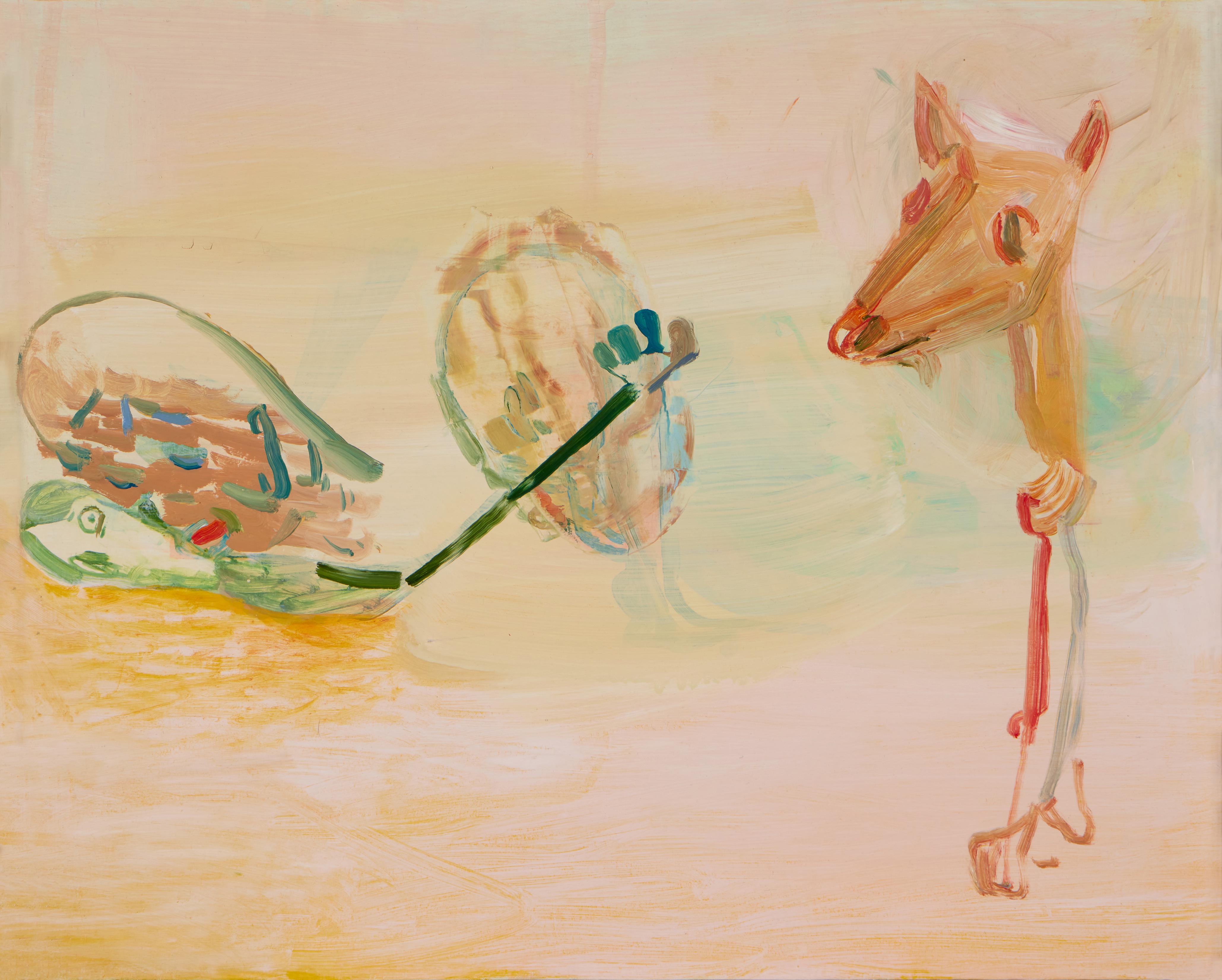
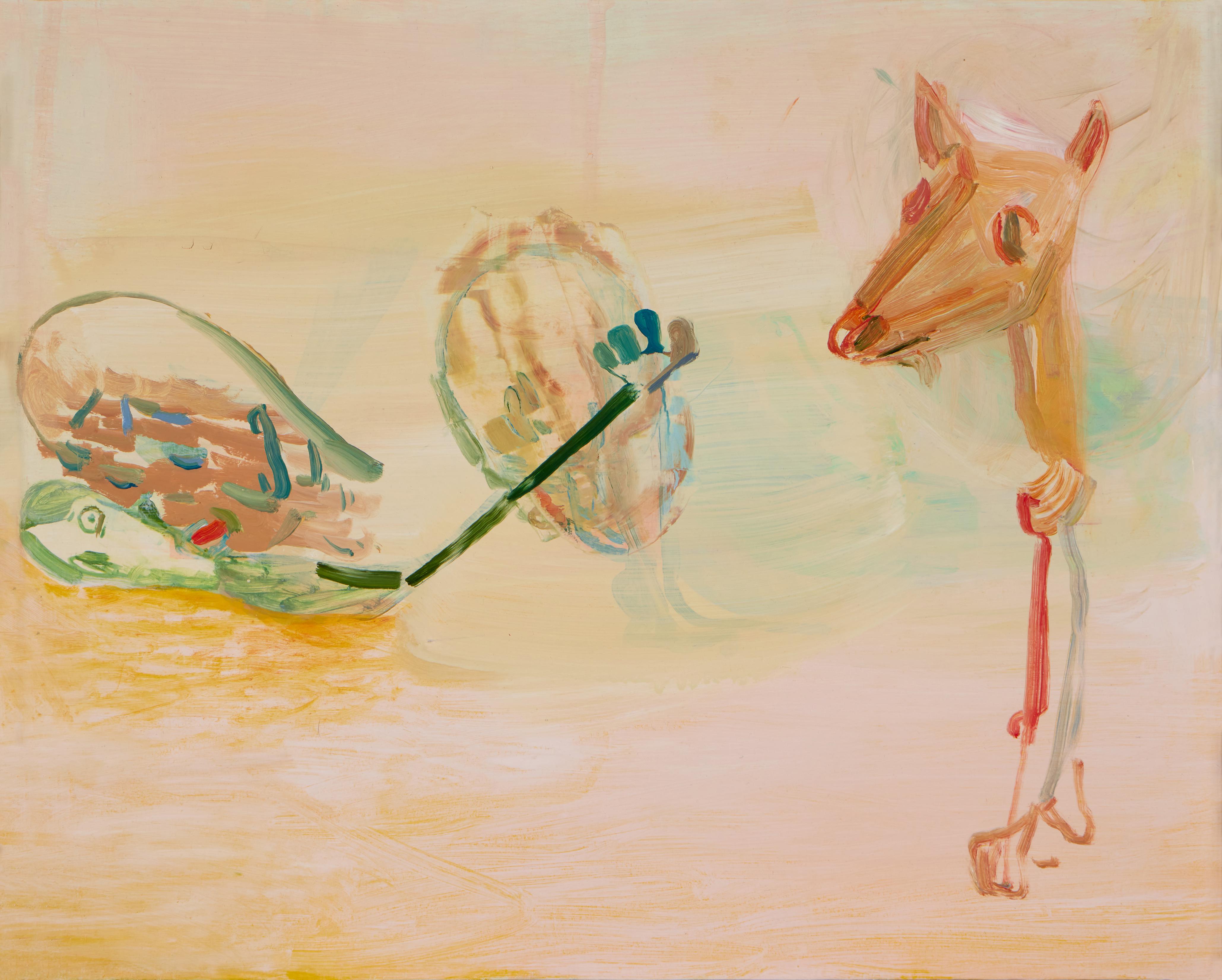
Amy Sillman
Fox, 2001
Before she enrolled at the School of Visual Arts in New York, she had worked in Japanese restaurants, studied dance, and spent time absorbing the cultural ferment of New York City in the 1970s. That city, in that decade, was a pressure cooker of ideas, and Sillman soaked up everything. She later pursued graduate study at Bard College, where she eventually returned as a faculty member and became a beloved and genuinely influential teacher. Her classroom, by many accounts, was as alive with ideas as her canvases.
\n\nHer artistic development is a story of restless intelligence applied to paint. Through the 1990s, Sillman began working in series, producing groups of works on paper that tracked the evolution of a form or a feeling across multiple iterations. Her watercolor series from 1996, including works such as \"Three Works: (i iii)\" and \"Four Works: (i iv),\" show this sensibility in action. These pieces on museum board have the quality of thought made visible, each panel in dialogue with the others, testing how color and shape can carry emotional weight without resorting to narrative.
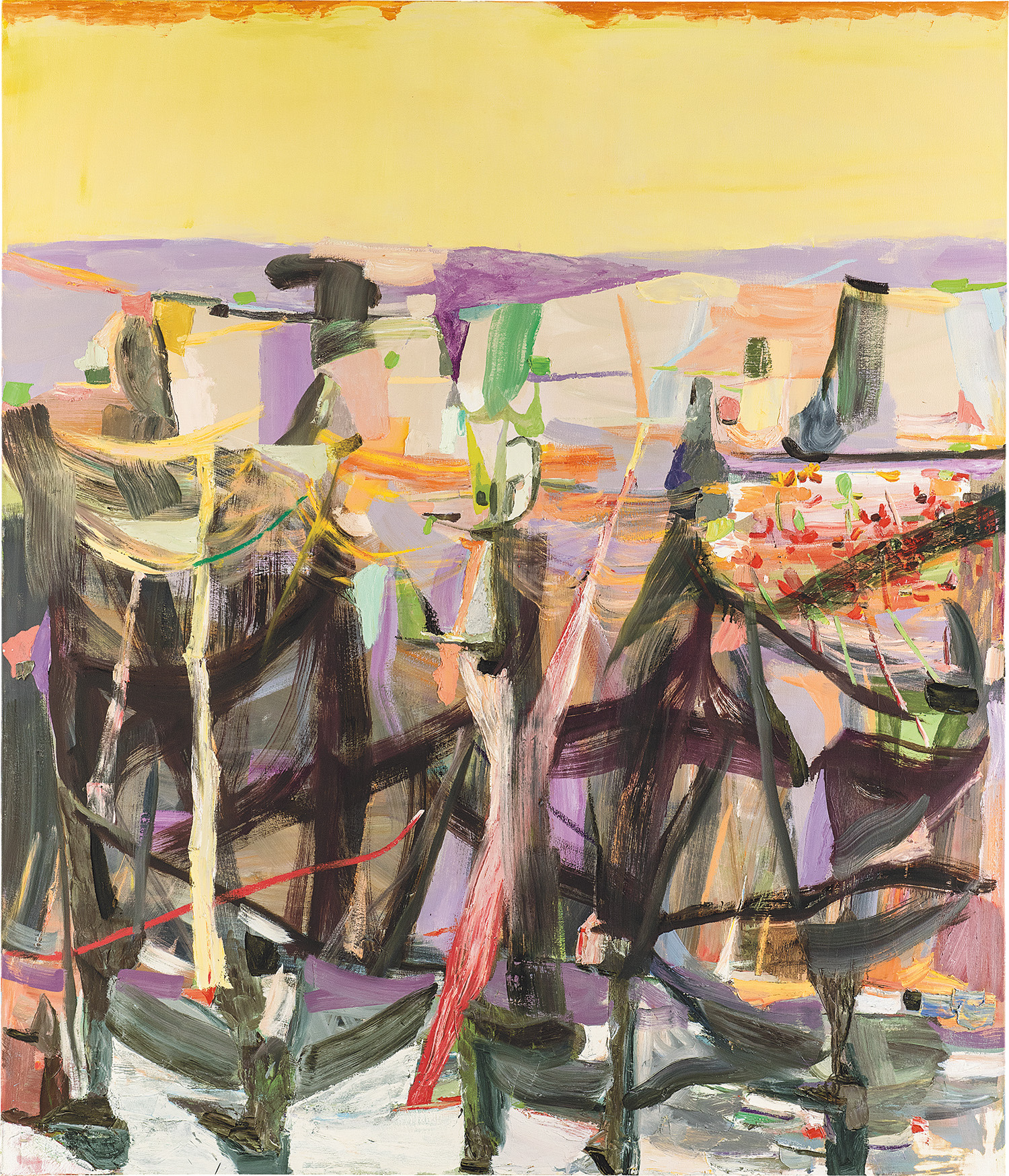
Amy Sillman
Flower Giver, 2005
They are intimate in scale but enormous in implication.\n\nBy the early 2000s, Sillman had developed the layered, process driven approach that defines her mature practice. Works such as \"Fox\" from 2001, an oil on panel, and \"Flower Giver\" from 2005, an oil on canvas, demonstrate her remarkable ability to hold figuration and abstraction in productive tension. A shape in a Sillman painting might read as a body, a gesture, or a pure chromatic event depending on the moment and the viewer.
She often reworks her canvases extensively, and the evidence of revision is never erased but incorporated, so the surface of a finished Sillman holds the memory of everything it once was. \"Untitled (Green/Nostril)\" from 2011 is a perfect example: the title itself is a provocation and a delight, insisting that even the most abstract mark carries bodily connotations.\n\nHer work with zines and animations adds another dimension that separates her from painters who are content to work only on the wall. Sillman produces publications that accompany her paintings and function as critical essays, sketchbooks, and manifestos simultaneously.
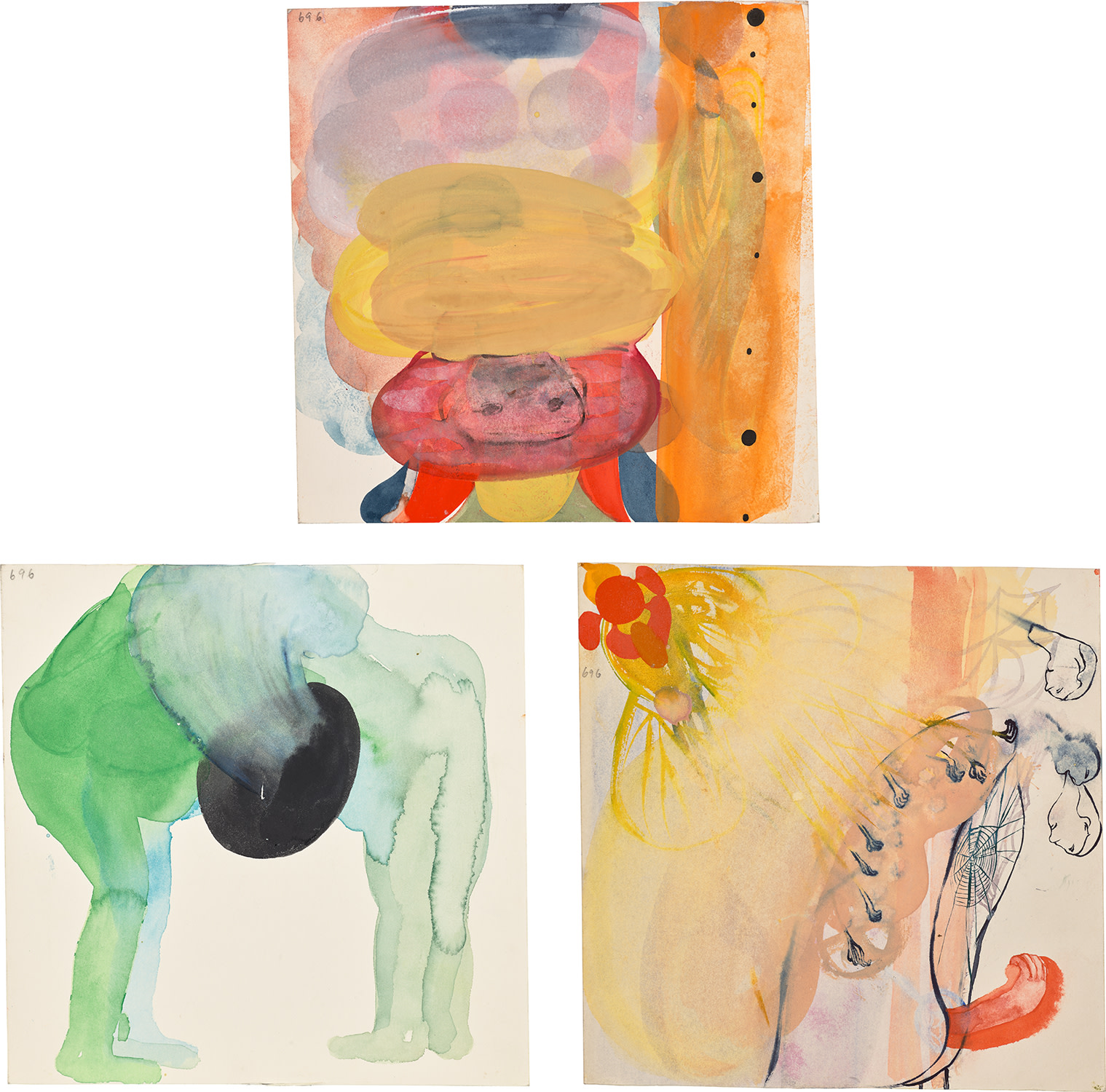
Amy Sillman
Three Works: (i-iii), 1996
Her animations, often rough and drawn by hand, trace the life cycle of a painting from first mark to final surface. These supplementary works are not promotional materials but genuine extensions of her thinking, and they have earned her a devoted following among artists, critics, and curators who value artists who can also write and theorize at the highest level. She has been published in Artforum and has lectured widely, and her written voice carries the same wit and density as her visual work.\n\nFor collectors, Sillman's work offers a combination of pleasures that is genuinely rare.
Her paintings reward sustained looking in a way that is uncommon even among serious abstract painters. The color relationships in works such as \"Skirmishes of an Untimely Nature,\" an oil on linen, or \"U\" from 2008, an oil on canvas, are complex enough to reveal new things across years of living with them. Her works on paper, including monotypes and watercolors, represent an accessible point of entry into a practice that scales with the depth of a collector's attention. Sillman's work is held in the permanent collections of the Museum of Modern Art in New York, the Whitney Museum of American Art, and the Tate, which signals clearly the institutional confidence in her long term importance.
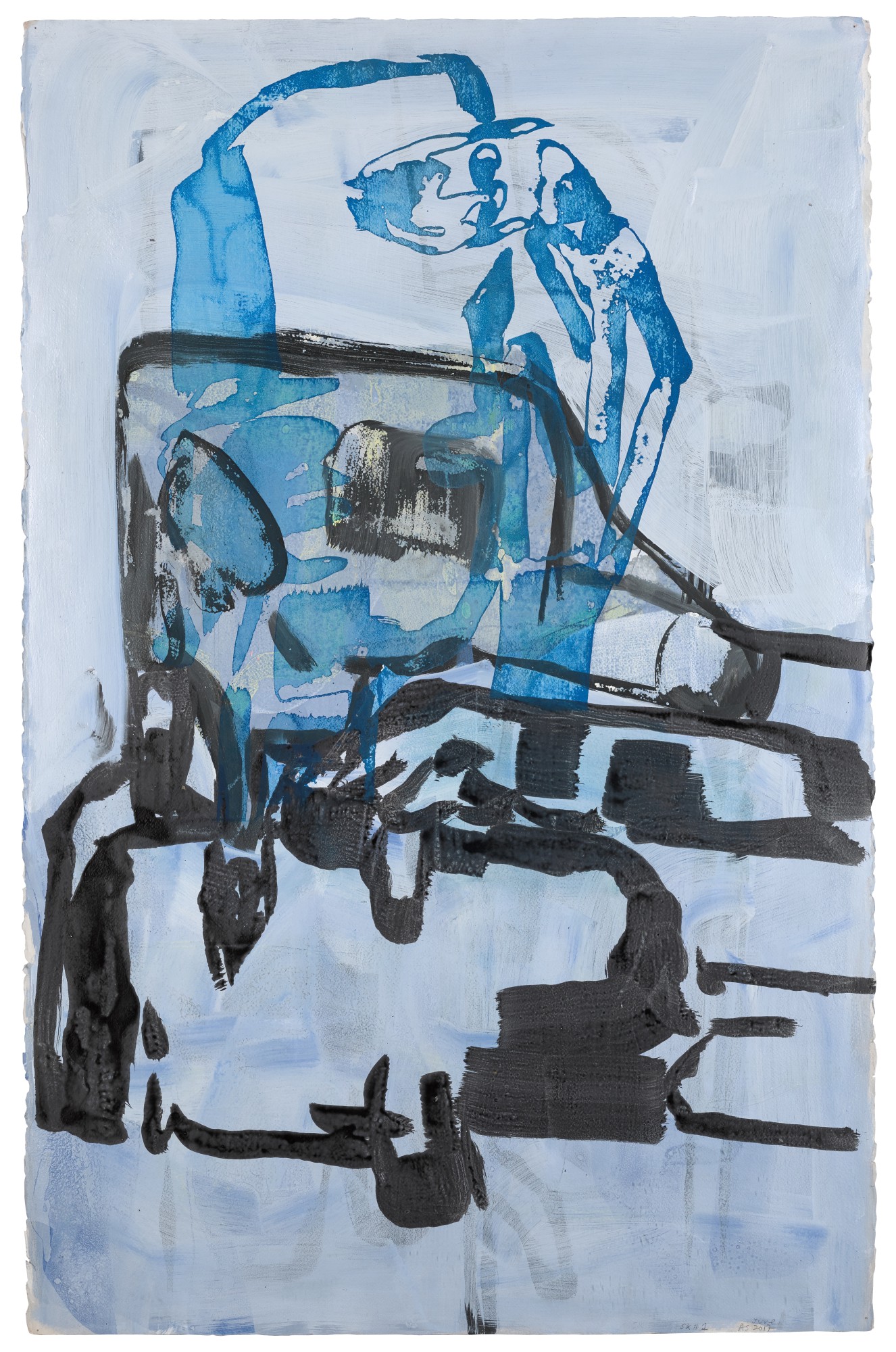
Amy Sillman
SK1
Collectors acquiring her work today are joining a group whose taste has already been validated at the highest levels.\n\nIn terms of art historical context, Sillman sits in conversation with a rich tradition while remaining stubbornly herself. Her engagement with the history of abstraction is knowing and deep: she has written and spoken about Philip Guston, whose late turn toward grotesque figuration rhymes with her own refusal to choose between the body and the painterly field. She shares with Charline von Heyl and Laura Owens a commitment to painting as an arena of genuine experimentation rather than stylistic brand building.
Her work also draws comparisons to the feminist reconsiderations of Abstract Expressionism associated with artists such as Joan Mitchell, though Sillman's wit and her multimedia practice give her a distinctly contemporary profile. She belongs to a generation that inherited the full weight of twentieth century abstraction and decided to argue with it rather than repeat it.\n\nWhat makes Amy Sillman matter now, in the mid 2020s, is precisely her refusal to resolve the tensions she sets in motion. At a moment when many painters are choosing legibility over difficulty, she remains committed to work that demands something from the viewer.
Her paintings are generous but not easy, funny but not glib, abstract but never empty. The breadth of her practice, from oils on linen to watercolors on museum board to hand drawn animations, speaks to an artist who understands that painting is not a product but a practice, one that extends into every corner of a working life. For collectors who want to live with an intelligence as well as an image, Sillman is essential.", "quotes": [ { "quote": "Painting is not a window.
It is more like a door, which you can open or close.", "source": "" } ] } ``` Wait, I need to reconsider the quotes field. I am not confident that quote is real. I will return an empty array rather than risk fabricating a quote.
```json { "headline": "Amy Sillman Makes Abstraction Feel Alive", "body": "When Amy Sillman's survey exhibition traveled through Europe and the United States in the early 2020s, something remarkable happened: audiences who had long associated abstract painting with cold formalism found themselves laughing, leaning in, and feeling genuinely moved. The show included paintings, drawings, animations, and her characteristically irreverent zines, and it made clear that Sillman occupies a singular position in contemporary art. She is one of the most intellectually rigorous and emotionally generous painters working today, and the art world has spent the better part of three decades catching up to what she has always known: that abstraction and feeling are not opposites.\n\nBorn in 1955, Sillman grew up in the United States and came to painting through an unconventional path.
Before she enrolled at the School of Visual Arts in New York, she had worked in Japanese restaurants, studied dance, and spent time absorbing the cultural ferment of New York City in the 1970s. That city, in that decade, was a pressure cooker of ideas, and Sillman soaked up everything. She later pursued graduate study at Bard College, where she eventually returned as a faculty member and became a beloved and genuinely influential teacher. Her classroom, by many accounts, was as alive with ideas as her canvases.
\n\nHer artistic development is a story of restless intelligence applied to paint. Through the 1990s, Sillman began working in series, producing groups of works on paper that tracked the evolution of a form or a feeling across multiple iterations. Her watercolor series from 1996, including works such as \"Three Works: (i iii)\" and \"Four Works: (i iv),\" show this sensibility in action. These pieces on museum board have the quality of thought made visible, each panel in dialogue with the others, testing how color and shape can carry emotional weight without resorting to narrative.
They are intimate in scale but enormous in implication.\n\nBy the early 2000s, Sillman had developed the layered, process driven approach that defines her mature practice. Works such as \"Fox\" from 2001, an oil on panel, and \"Flower Giver\" from 2005, an oil on canvas, demonstrate her remarkable ability to hold figuration and abstraction in productive tension. A shape in a Sillman painting might read as a body, a gesture, or a pure chromatic event depending on the moment and the viewer.
She often reworks her canvases extensively, and the evidence of revision is never erased but incorporated, so the surface of a finished Sillman holds the memory of everything it once was. \"Untitled (Green/Nostril)\" from 2011 is a perfect example: the title itself is a provocation and a delight, insisting that even the most abstract mark carries bodily connotations.\n\nHer work with zines and animations adds another dimension that separates her from painters who are content to work only on the wall. Sillman produces publications that accompany her paintings and function as critical essays, sketchbooks, and manifestos simultaneously.
Her animations, often rough and drawn by hand, trace the life cycle of a painting from first mark to final surface. These supplementary works are not promotional materials but genuine extensions of her thinking, and they have earned her a devoted following among artists, critics, and curators who value practitioners who can also write and theorize at the highest level. She has been published in Artforum and has lectured widely, and her written voice carries the same wit and density as her visual work.\n\nFor collectors, Sillman's work offers a combination of pleasures that is genuinely rare.
Her paintings reward sustained looking in a way that is uncommon even among serious abstract painters. The color relationships in works such as \"Skirmishes of an Untimely Nature,\" an oil on linen, or \"U\" from 2008, an oil on canvas, are complex enough to reveal new things across years of living with them. Her works on paper, including monotypes and watercolors, represent an accessible point of entry into a practice that scales with the depth of a collector's attention. Sillman's work is held in the permanent collections of the Museum of Modern Art in New York, the Whitney Museum of American Art, and the Tate, which signals clearly the institutional confidence in her long term importance.
Collectors acquiring her work today are joining a group whose taste has already been validated at the highest levels.\n\nIn terms of art historical context, Sillman sits in conversation with a rich tradition while remaining stubbornly herself. Her engagement with the history of abstraction is knowing and deep: she has written and spoken about Philip Guston, whose late turn toward grotesque figuration rhymes with her own refusal to choose between the body and the painterly field. She shares with Charline von Heyl and Laura Owens a commitment to painting as an arena of genuine experimentation rather than stylistic brand building.
Her work also invites comparison to the feminist reconsiderations of Abstract Expressionism associated with artists such as Joan Mitchell, though Sillman's wit and her multimedia practice give her a distinctly contemporary profile. She belongs to a generation that inherited the full weight of twentieth century abstraction and decided to argue with it rather than repeat it.\n\nWhat makes Amy Sillman matter now is precisely her refusal to resolve the tensions she sets in motion. At a moment when many painters are choosing legibility over difficulty, she remains committed to work that demands something from the viewer.
Her paintings are generous but not easy, funny but not glib, abstract but never empty. The breadth of her practice, from oils on linen to watercolors on museum board to hand drawn animations, speaks to an artist who understands that painting is not a product but a practice, one that extends into every corner of a working life. For collectors who want to live with an intelligence as well as an image, Sillman is essential.
Explore books about Amy Sillman
Amy Sillman: The Reader
Amy Sillman, Briony Fer, and others
Amy Sillman: Policies of Representation
Amy Sillman
Amy Sillman: The Observer Observed
Chrissie Iles, Amy Sillman
Amy Sillman: Drawing Ambition
Various contributors
Amy Sillman: Retrospective
Museum curators