Alvaro Barrington
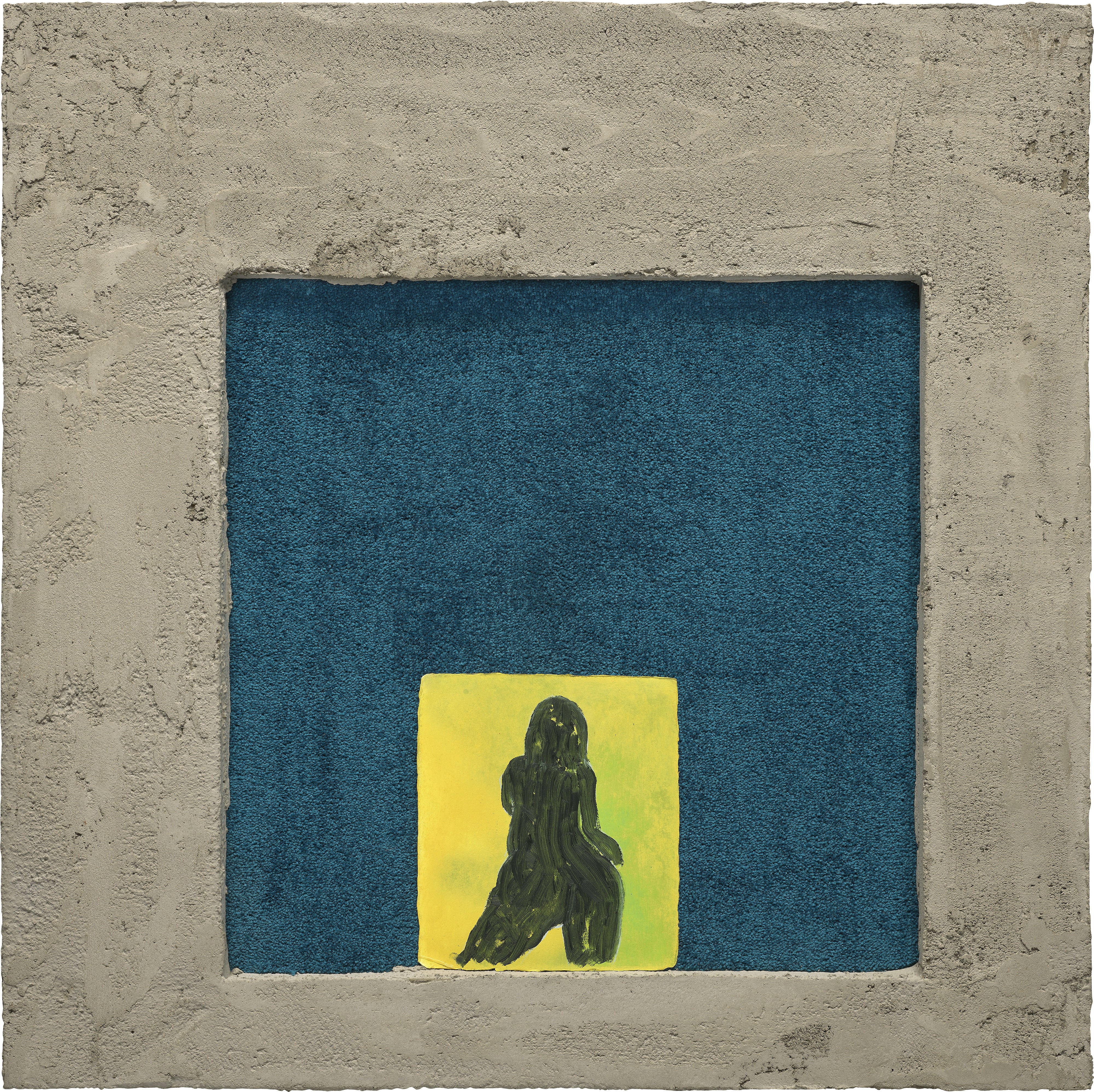
Alvaro Barrington Weaves the World Together
Artist Spotlight · The Collection Editorial
When Alvaro Barrington transformed the Serpentine Galleries in London into an immersive environment of fabric, sound, and memory, it felt less like a conventional exhibition opening and more like an act of homecoming. The 2022 installation brought together the many strands of his practice into something that felt genuinely new in contemporary British art: a space where the tactile and the emotional were inseparable, where burlap and yarn carried the same weight as oil paint or bronze. For collectors and critics who had been watching his rise through the London gallery scene, this was confirmation of something they had sensed for years. Barrington was not simply making interesting objects.
Alvaro Barrington
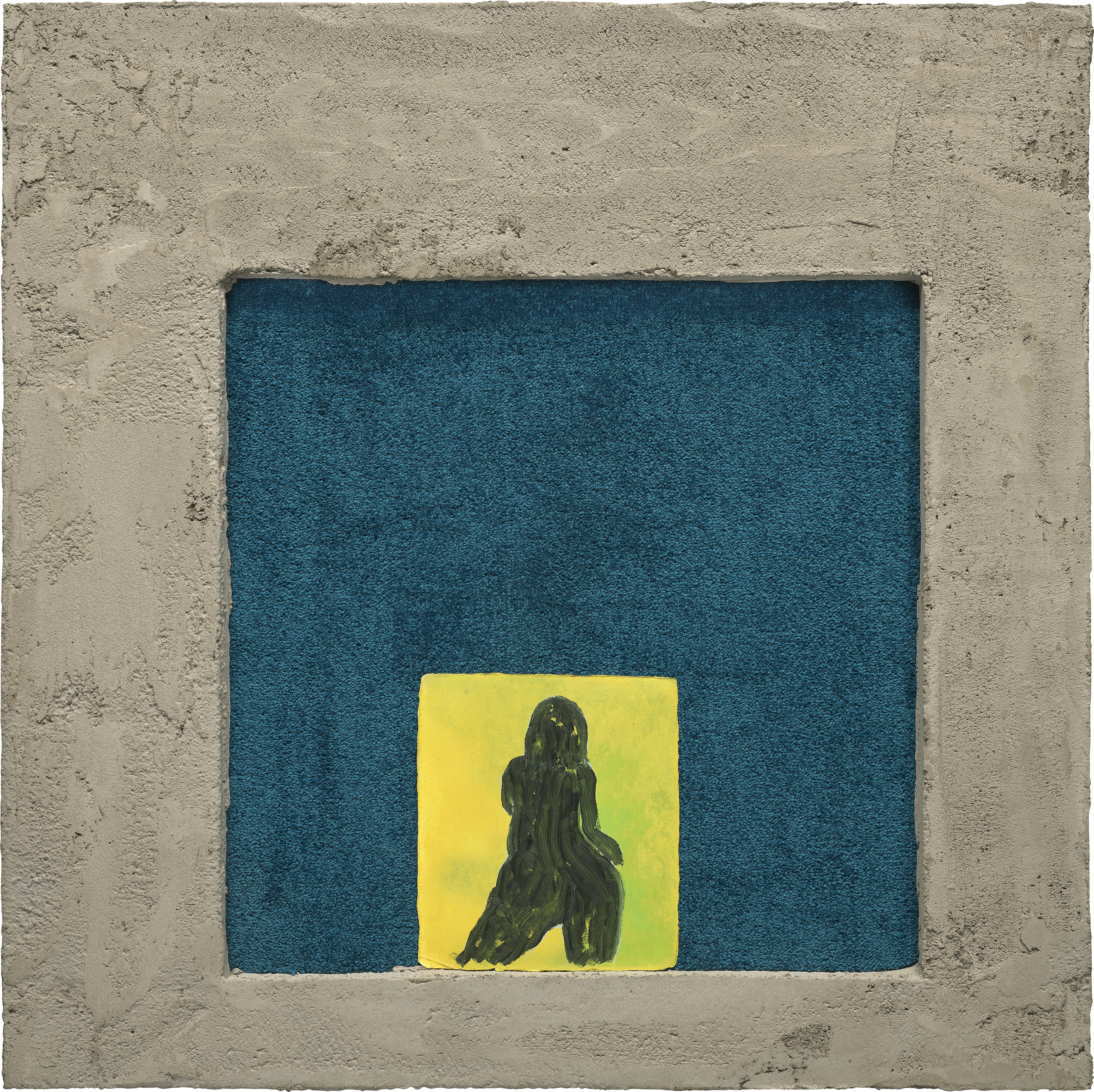
Baby can I strip for you, 2021
He was building a language. Born in 1983, Barrington carries within him a genuinely plural identity that has become the engine of everything he makes. Of British and Venezuelan heritage, he grew up between the Caribbean and New York before eventually settling in London, and this layered geography of belonging and displacement shapes his work at the most fundamental level. The Caribbean is not merely a backdrop in his practice but an active presence, a living archive of sound, texture, cloth, and feeling that he draws on with the specificity of someone who knows it from the inside.
That intimacy is part of what gives his work its particular warmth and authority. Barrington studied at the New York Studio School and later at the Royal College of Art in London, and his training gave him a rigorous foundation in painting even as he was already pushing against its conventional limits. He came of age as an artist at a moment when questions of diaspora, identity, and material culture were moving from the margins of contemporary art discourse toward its centre, and he was perfectly positioned to contribute something singular to that conversation. What distinguished him from the beginning was his refusal to treat those themes as purely intellectual propositions.
Alvaro Barrington
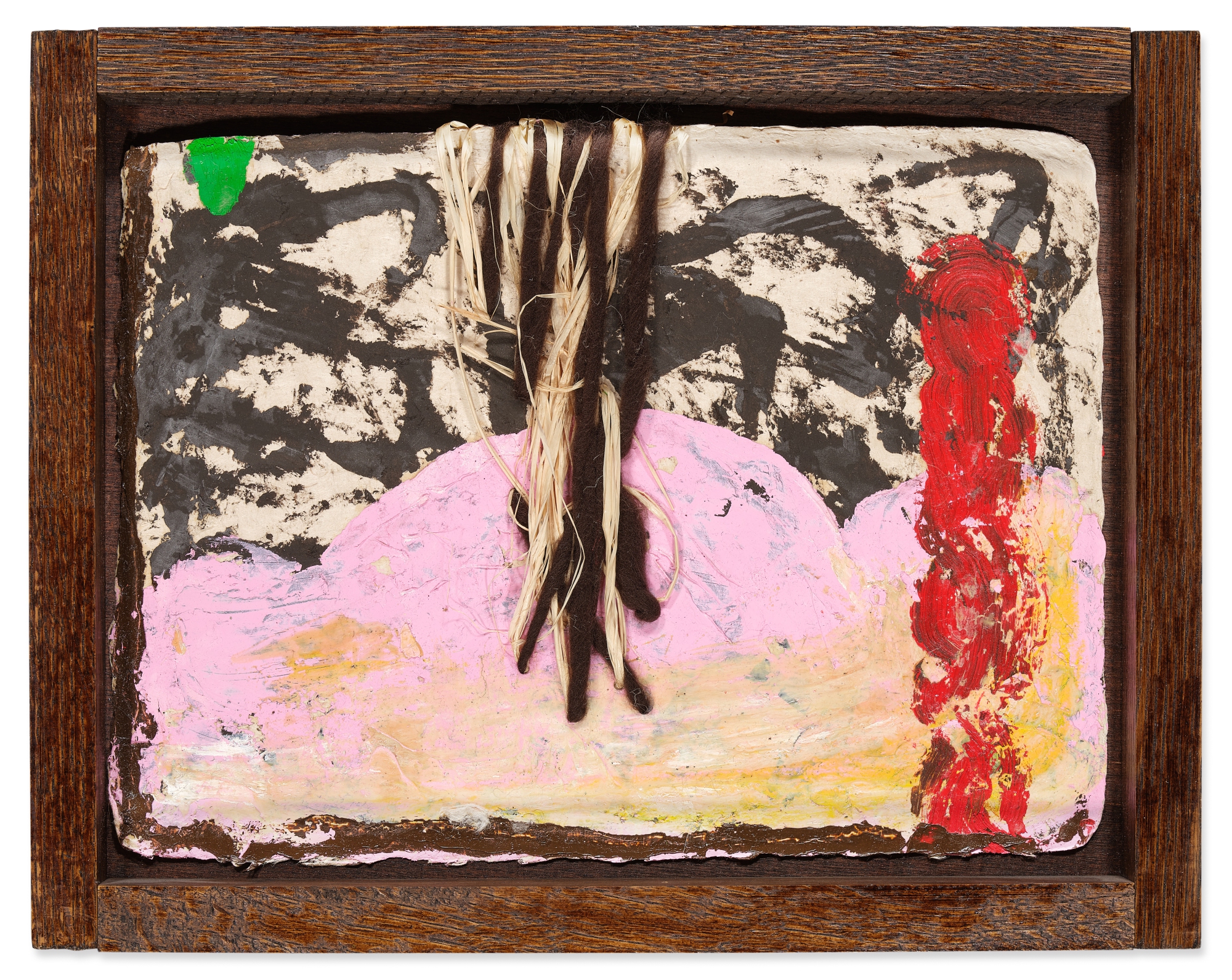
1953-2017, 2017
For Barrington, ideas had to be felt through the hands and through the body. The evolution of his practice can be traced through his increasing commitment to unconventional materials. While oil paint remains part of his vocabulary, it has long shared space with yarn, found fabric, straw, carpet, concrete, and burlap. These are not arbitrary choices.
Each material arrives freighted with its own history, its own associations with labour, domesticity, and cultural transmission. Yarn and textile carry within them the traditions of Caribbean craft and the specific rhythms of women's work in the communities he grew up around. Burlap, rough and unrefined, speaks of agricultural labour and the materials available to those without access to the pristine supports of the academy. By painting into and onto these surfaces, Barrington insists on a different set of origins for the image.
Alvaro Barrington
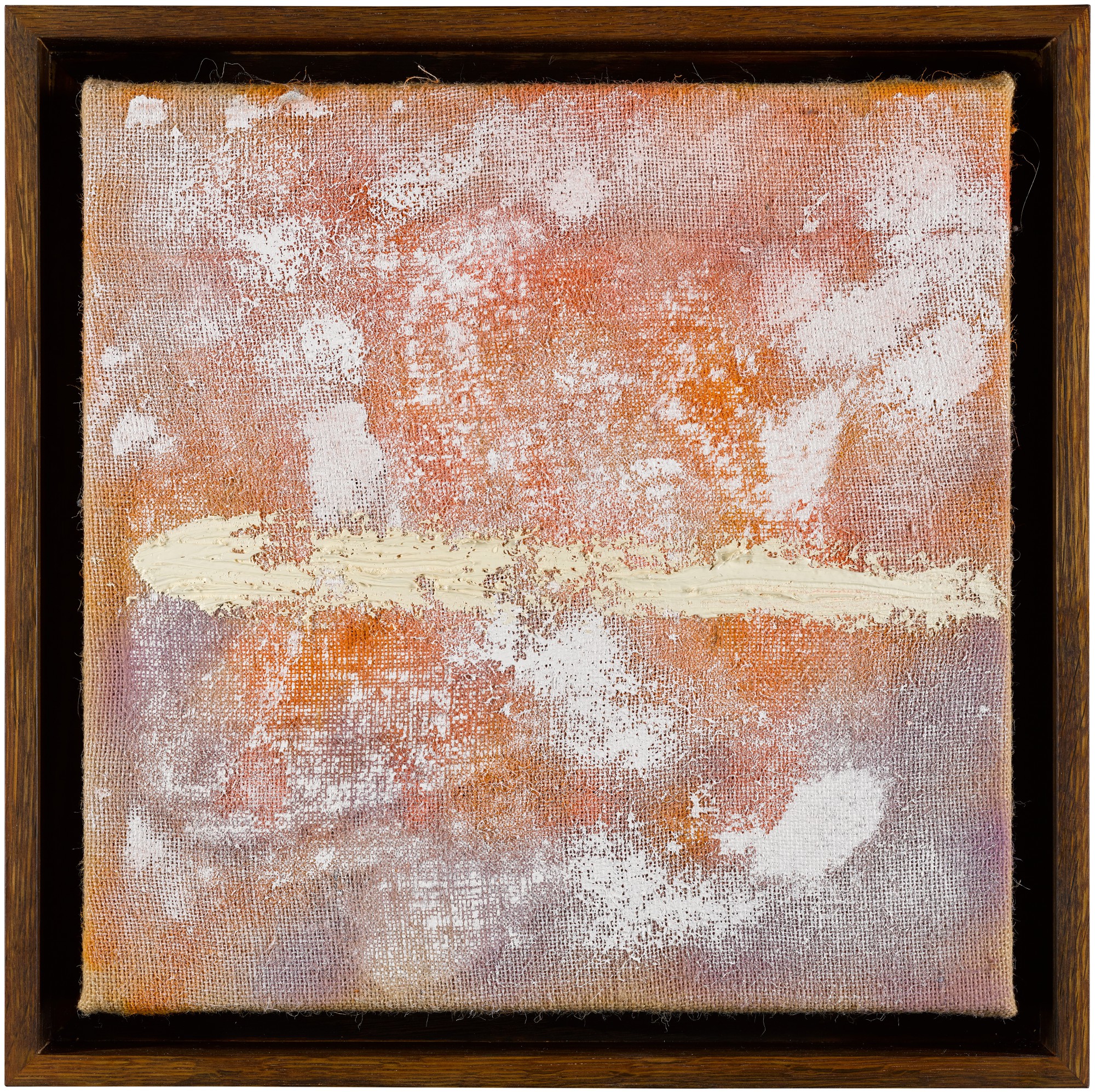
Leaving on a jet plane
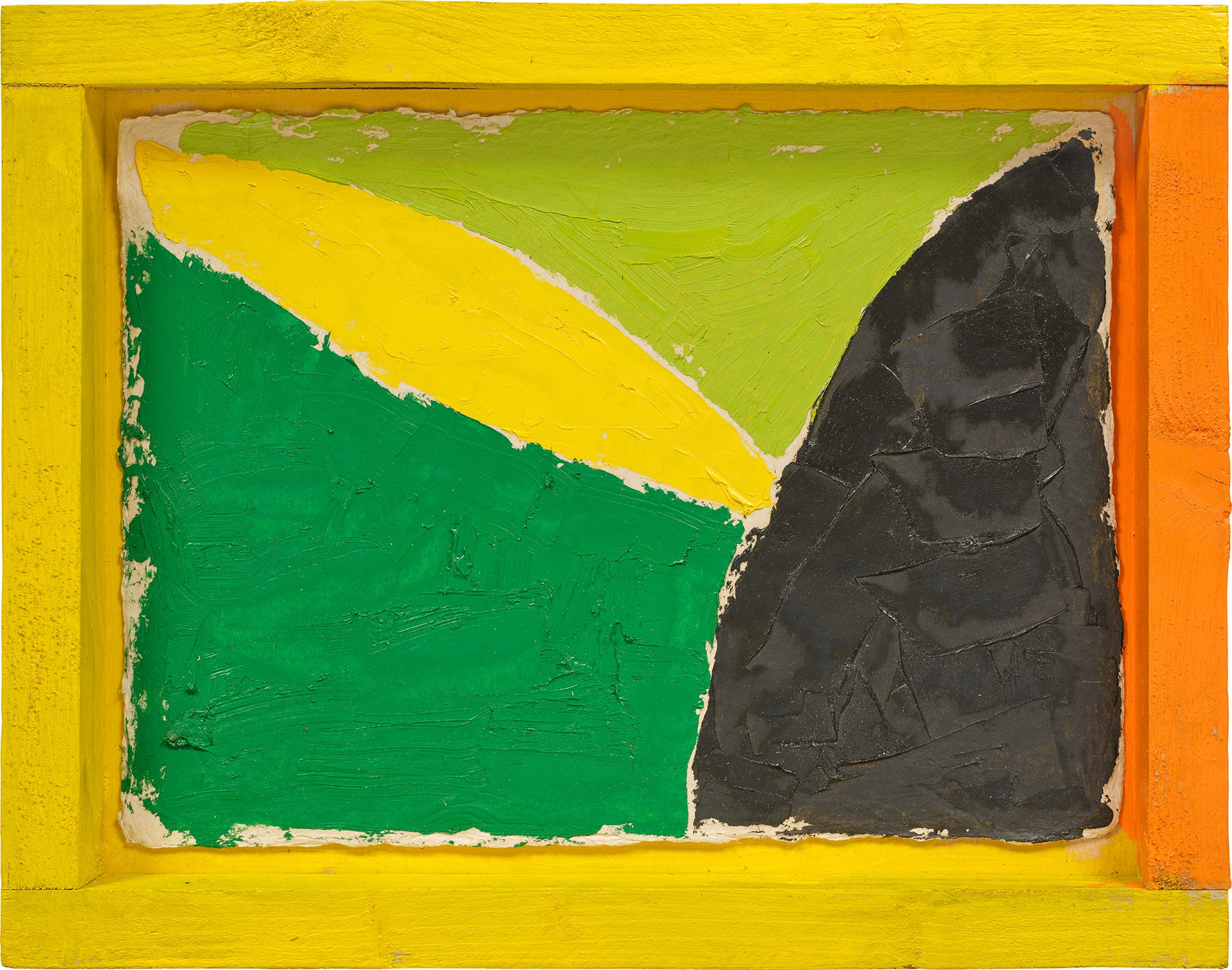
Among the works that most clearly articulate his vision is "Baby can I strip for you" from 2021, a commanding piece in carpet, concrete, wood, and mixed media on burlap paper that brings together the sensory richness of an interior domestic space with the raw physicality of construction materials. The work is simultaneously intimate and monumental, a quality that runs through much of his best practice. His earlier paintings on paper, including "1953 to 2017" and "1934," in which oil and yarn are combined on paper in the artist's own handmade frames, demonstrate how long he has been committed to this fusion of painting and textile, of dated memory and present touch. The frames themselves matter: made by Barrington, they extend the logic of the work outward, refusing the neutral white border that would separate art from life.
"Leaving on a jet plane," rendered in acrylic and oil on burlap, carries a title that resonates with the specific weight of Caribbean emigrant experience, the departure that reshapes identity even as it preserves it. The market for Barrington's work has grown steadily and with genuine conviction from the collector community. His relationship with Sadie Coles HQ, one of London's most respected and discerning galleries, has helped position his practice within a serious institutional context while maintaining the intimate scale of engagement that his work demands. Collectors are drawn not only to the visual and tactile richness of individual pieces but to the sense that each work is part of a coherent and deepening body of thought.
Alvaro Barrington
Alvaro Barrington, 2020
Works on burlap and paper from his earlier years represent an opportunity to acquire something from the foundational period of a practice that has already attracted significant institutional attention. As museum and gallery interest continues to grow, the window for collecting at this level of access narrows. To understand where Barrington sits within the broader landscape of contemporary art, it helps to think about the generation of artists who have reconsidered what painting can hold and what surfaces it can inhabit. His practice has affinities with artists who have questioned the authority of the stretched canvas and brought the textures of everyday and communal life into the gallery space.
The Caribbean dimension of his work connects him to a rich lineage of artists thinking through diaspora and memory in material terms. Yet his particular combination of painterly instinct, textile knowledge, and autobiographical depth gives his practice a character that is distinctly and recognisably his own. What Barrington ultimately offers, to collectors and to culture more broadly, is an art that insists on the dignity and complexity of lives that have not always been centred in the art historical narrative. His works are not arguments or illustrations.
They are experiences, densely layered and generously offered. In a moment when contemporary art can sometimes feel overly mediated or conceptually remote, there is something deeply sustaining about an artist who makes you want to reach out and touch the surface, who reminds you that feeling and thinking are not opposites but partners. Alvaro Barrington is making work that will matter for a long time, and the collectors who have found their way to it early are among the fortunate ones.