Allison Zuckerman
Allison Zuckerman Remixes the Canon Beautifully
Artist Spotlight · The Collection Editorial
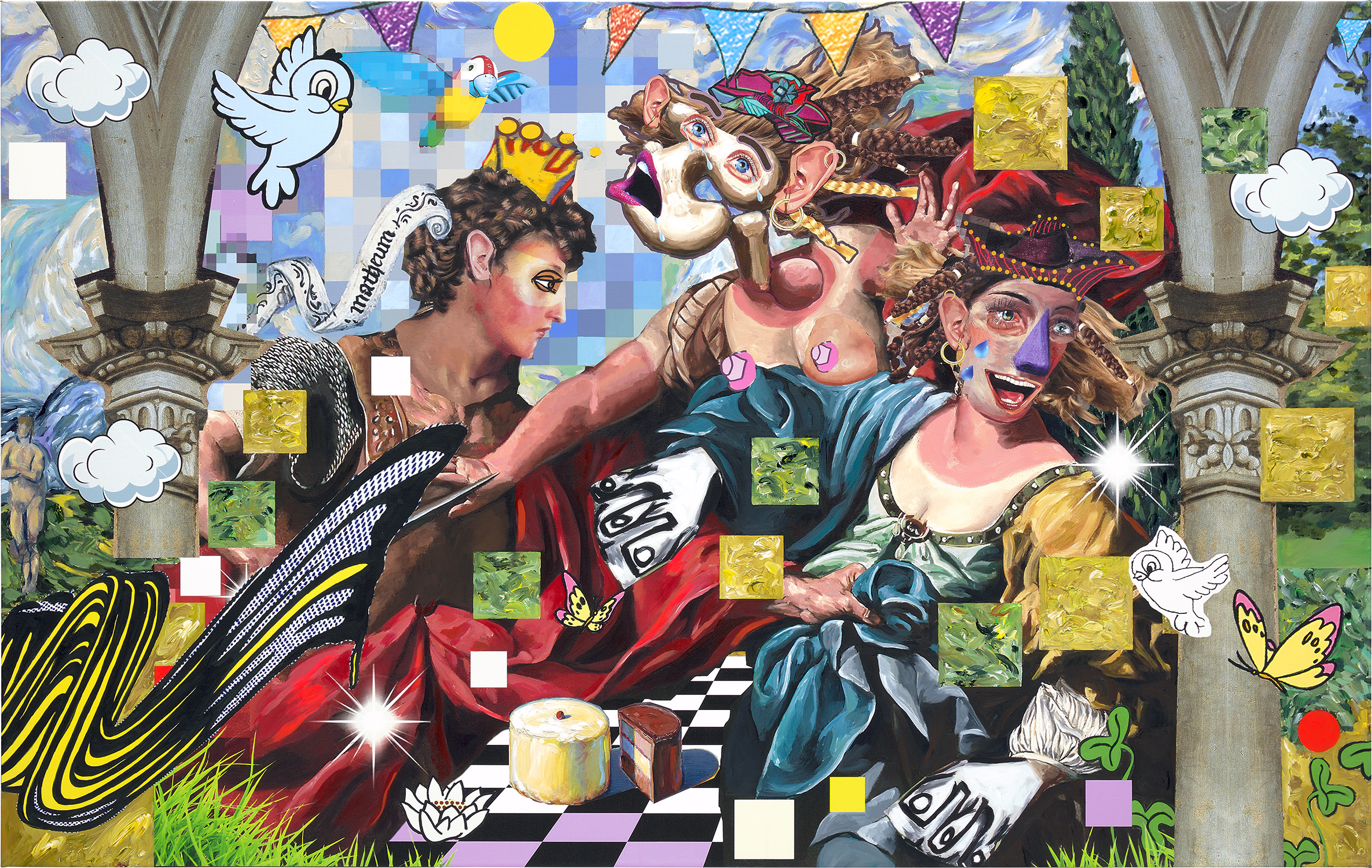
Something electric is happening in contemporary painting, and Allison Zuckerman is at the center of it. The New York based artist has spent the past several years building a body of work that feels simultaneously ancient and urgent, pulling from centuries of Western art history and colliding those references with the visual language of anime, meme culture, and the hyper saturated world of the internet. Her paintings have drawn serious attention from collectors and curators alike, with exhibitions across galleries in New York and beyond cementing her reputation as one of the most intellectually rigorous and visually thrilling painters working today. Zuckerman was born in 1990, and came of age at a moment when the boundaries between analog and digital experience were dissolving in real time.
Allison Zuckerman
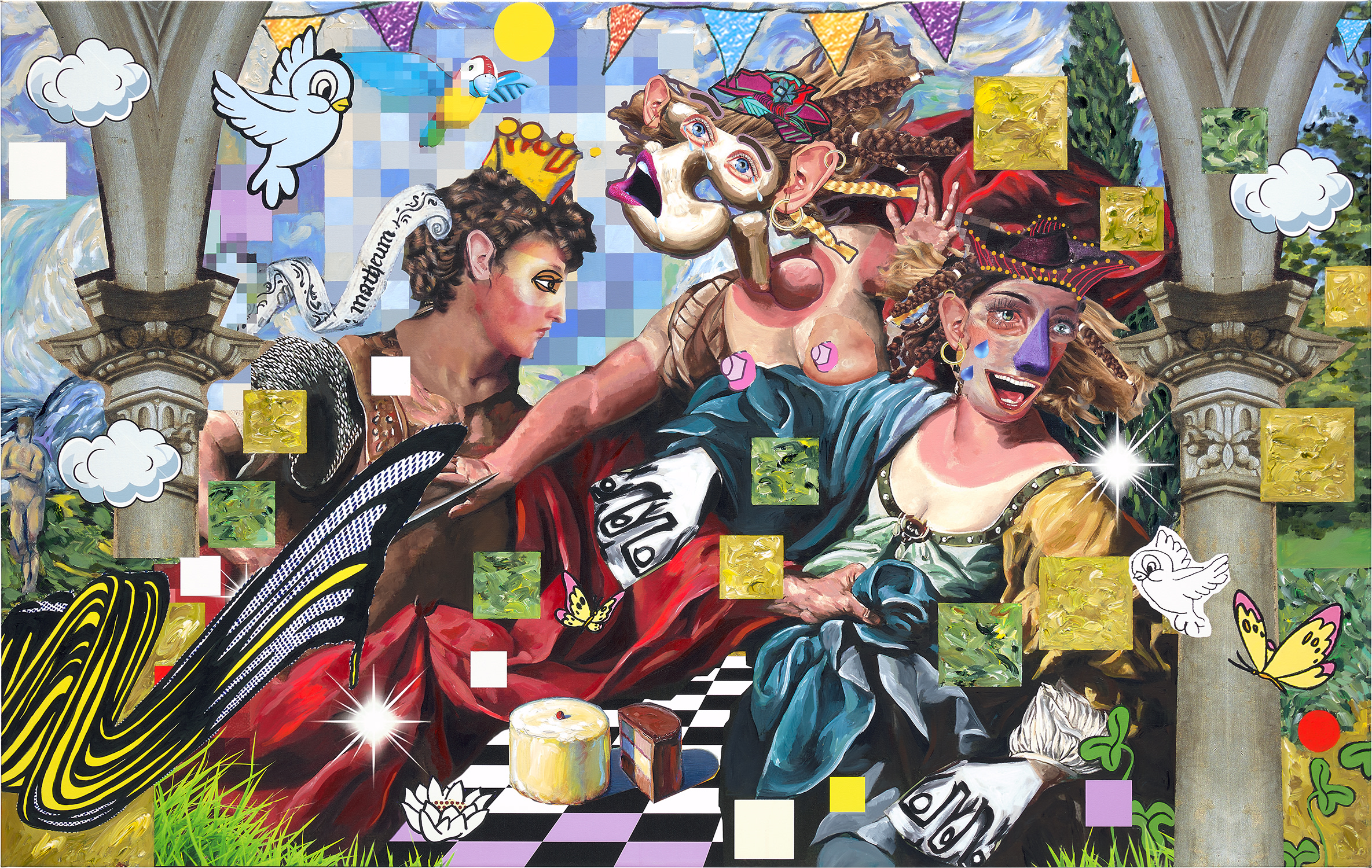
Abduction, 2019
That biography is embedded in her work in the most direct way possible. She grew up absorbing both the great image archive of art history and the infinite, accelerating scroll of online visual culture, and rather than treating those two worlds as separate or opposed, she understood early on that they were always in conversation. That instinct, to see the Baroque and the GIF as fellow travelers, became the foundation of an entire artistic philosophy. Her process is genuinely hybrid in the most meaningful sense of that word.
Zuckerman begins by digitally sampling and manipulating images drawn from an extraordinarily wide range, spanning Old Masters, Renaissance altarpieces, Rococo confections, and contemporary sources including anime and pop iconography. She layers and distorts these images in the digital realm before translating them, with great care and skill, into large scale oil and acrylic paintings on canvas. The resulting works carry the tactile weight of traditional painting while bearing the visual logic of collage and digital manipulation, a combination that feels entirely of our moment without being merely trendy. Among her most celebrated works, the 2019 painting "Abduction" stands as a powerful example of her ability to charge familiar imagery with new meaning.
Allison Zuckerman
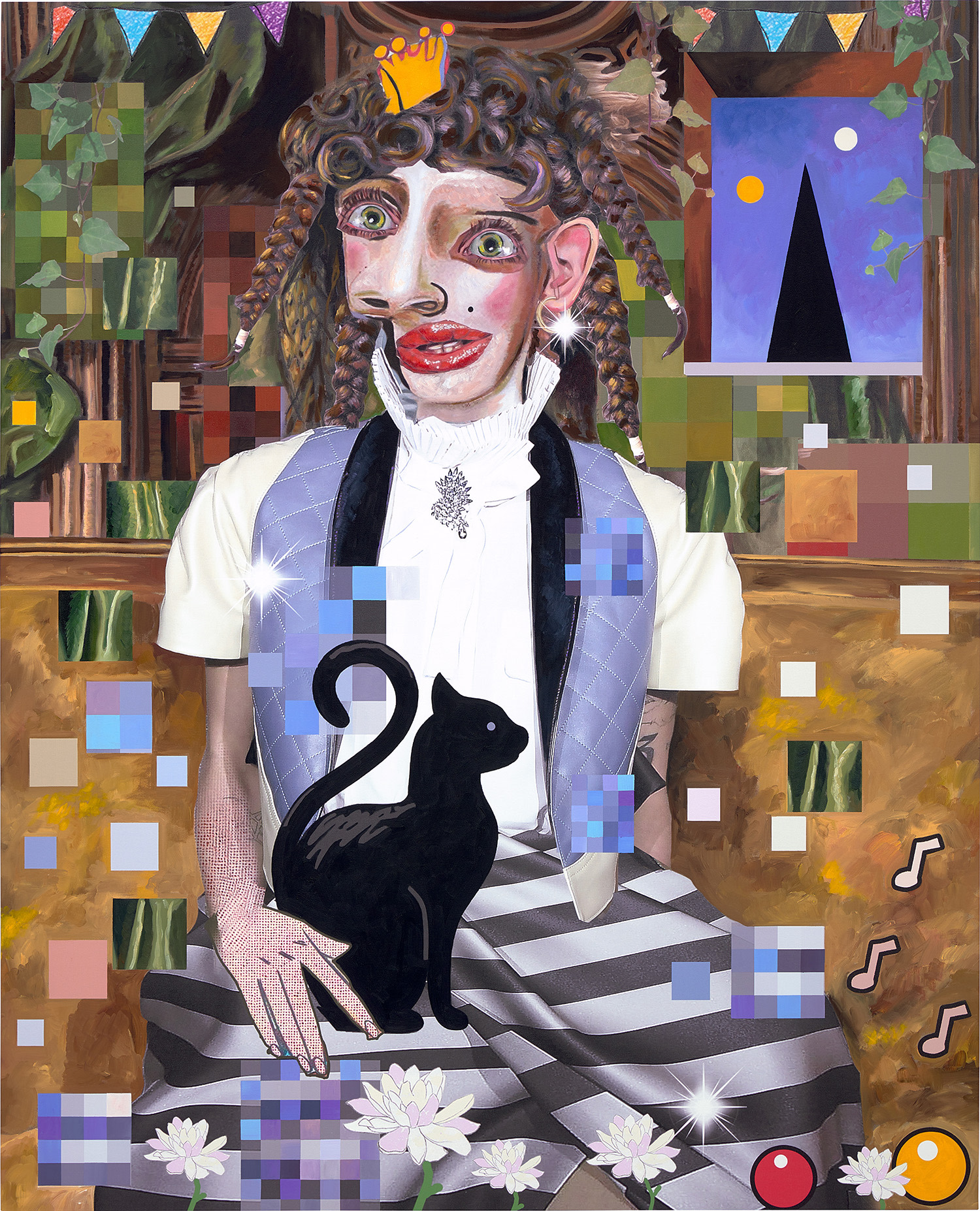
The Craft, 2019
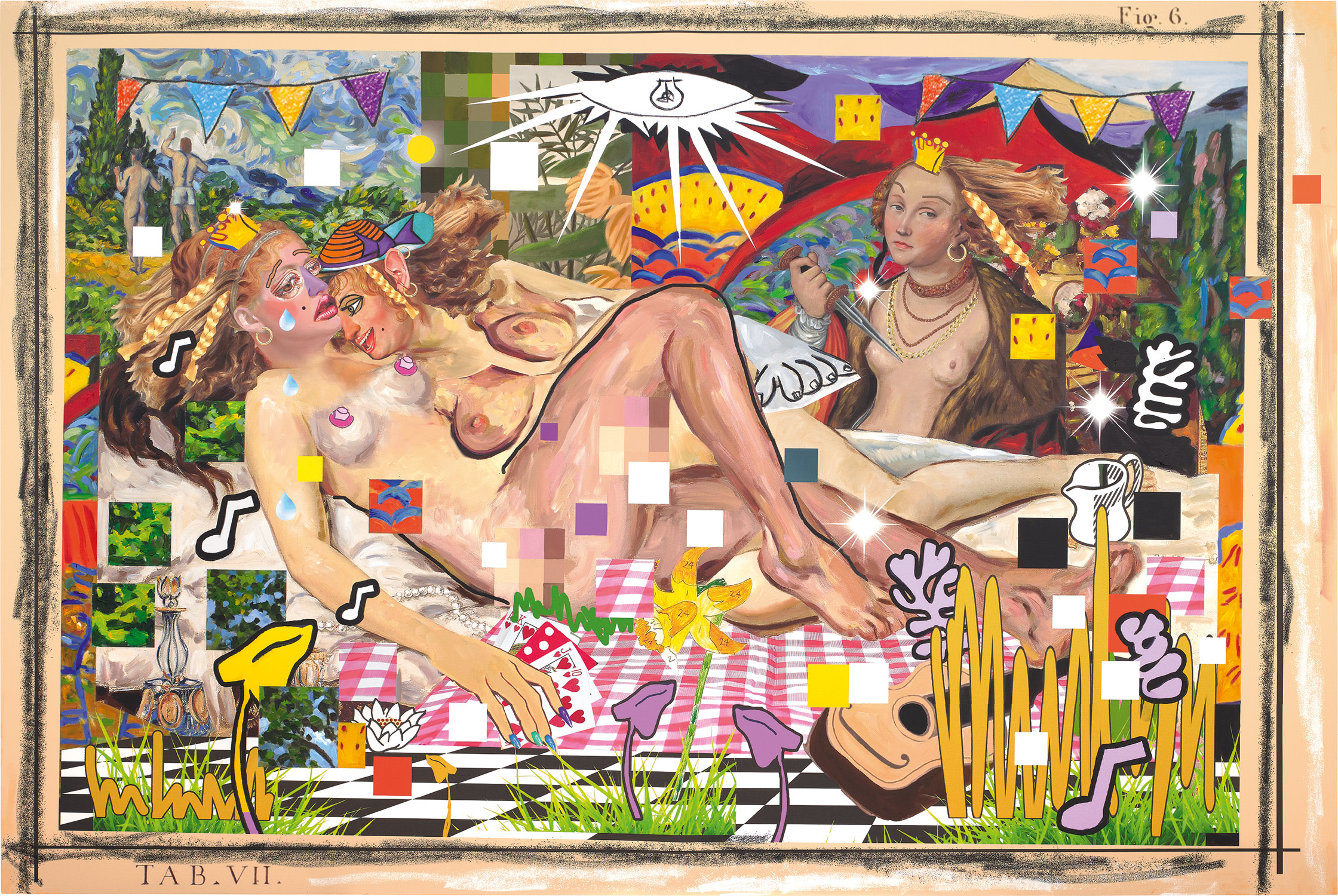
Working with archival CMYK ink and acrylic on canvas, Zuckerman takes the classical mythology of abduction and reconfigures its power dynamics entirely. Similarly, "The Craft" from the same year uses the vocabulary of genre imagery to explore female agency and collective power, while "A Great Dormir" from 2020, executed in oil, acrylic, and archival CMYK ink, brings a dreamy, layered sensibility to the question of how women have been pictured in states of passivity or repose throughout Western art. Each of these works is a feminist act performed through compositional intelligence rather than didactic statement. By 2022, works like "Stealing the Show," which incorporates crystal rhinestones alongside oil, acrylic, and archival ink, demonstrated an expanding material vocabulary and a willingness to let glamour and criticality coexist on the same surface.
What makes Zuckerman's practice so compelling to collectors and curators is its refusal of easy categorization. She is a painter in the most committed sense, someone who has clearly studied the history of the medium deeply and loves it. But she is also a digital native whose compositional thinking owes as much to sampling and remix culture as it does to studio training. Her feminist perspective is not applied to her work from the outside but is structural, built into the way she crops, layers, and reframes the images she inherits.
Allison Zuckerman
A Great Dormir, 2020
A figure borrowed from a Baroque hunting scene becomes, in Zuckerman's hands, something entirely different: "Huntress and Scholar" from 2017 is a work that thinks seriously about who gets to occupy which roles in the Western pictorial tradition. From a collecting standpoint, Zuckerman represents a compelling proposition. She works at the intersection of several categories that are drawing sustained institutional and market attention: feminist art, digitally informed painting, and the ongoing critical reassessment of art historical canons. Her works on canvas, including both unique paintings and her carefully produced prints such as "Intergalactic," a signed and numbered edition of ten with two artist proofs, offer collectors entry points at different levels.
The large scale unique paintings carry the weight and presence that serious collections demand, while her editioned works allow a broader range of collectors to engage with her vision. Her prices have risen steadily as her profile has grown, and those who acquired early works have seen the value of that judgment affirmed. Zuckerman belongs to a generation of painters who have collectively reimagined what feminist art can look like in the twenty first century. Where an earlier generation of feminist artists often worked through text, performance, or explicitly political imagery, Zuckerman and her contemporaries operate through the image archive itself, rerouting the Western tradition from within.
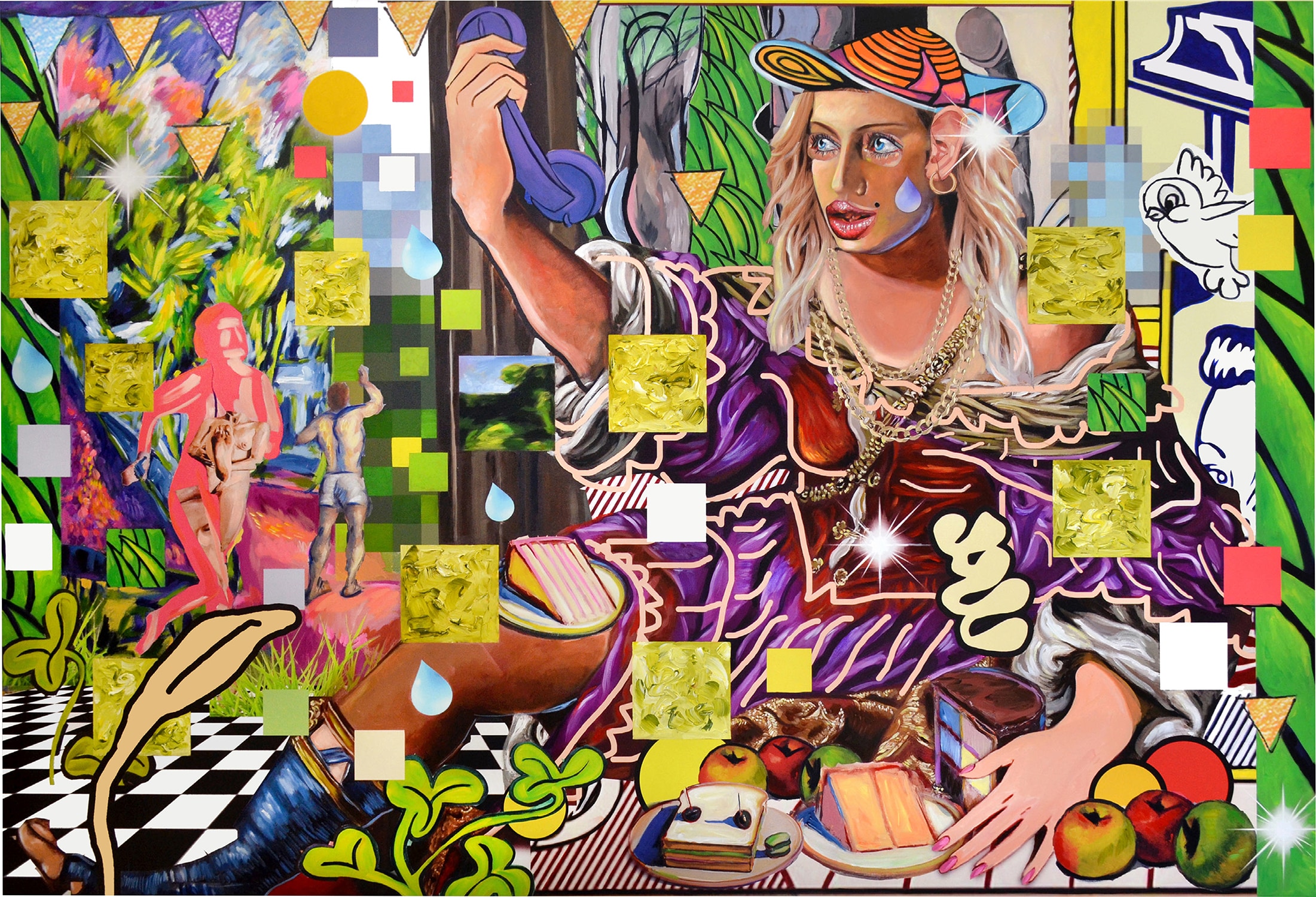
Allison Zuckerman
Green Gardens, 2019
Her work invites comparison to artists like Cecily Brown, whose paintings similarly interrogate the art historical figure of woman while remaining fully committed to the pleasures of painting, and to artists like Amy Sherald and Jordan Casteel, who have brought renewed attention to questions of representation and the politics of the painted body. Zuckerman's particular contribution is the digital collage methodology, which gives her paintings a layered, almost palimpsestic quality that is entirely her own. The deeper question Zuckerman's work asks is one of inheritance. What does a painter do with centuries of images that were made largely without her, largely about bodies like hers, and largely in service of a gaze she has no interest in perpetuating?
Her answer is neither to reject the tradition nor to accept it, but to cut it up, remix it, translate it through her own sensibility, and put it back on the wall larger and louder and more alive than it was before. That is a genuinely important artistic project, and it is one she pursues with a rigor and a joy that makes her work a pleasure to spend time with. As her career continues to develop, and as institutions and collectors increasingly recognize the significance of what she is building, Allison Zuckerman stands as one of the most necessary voices in contemporary painting.