Allison Katz
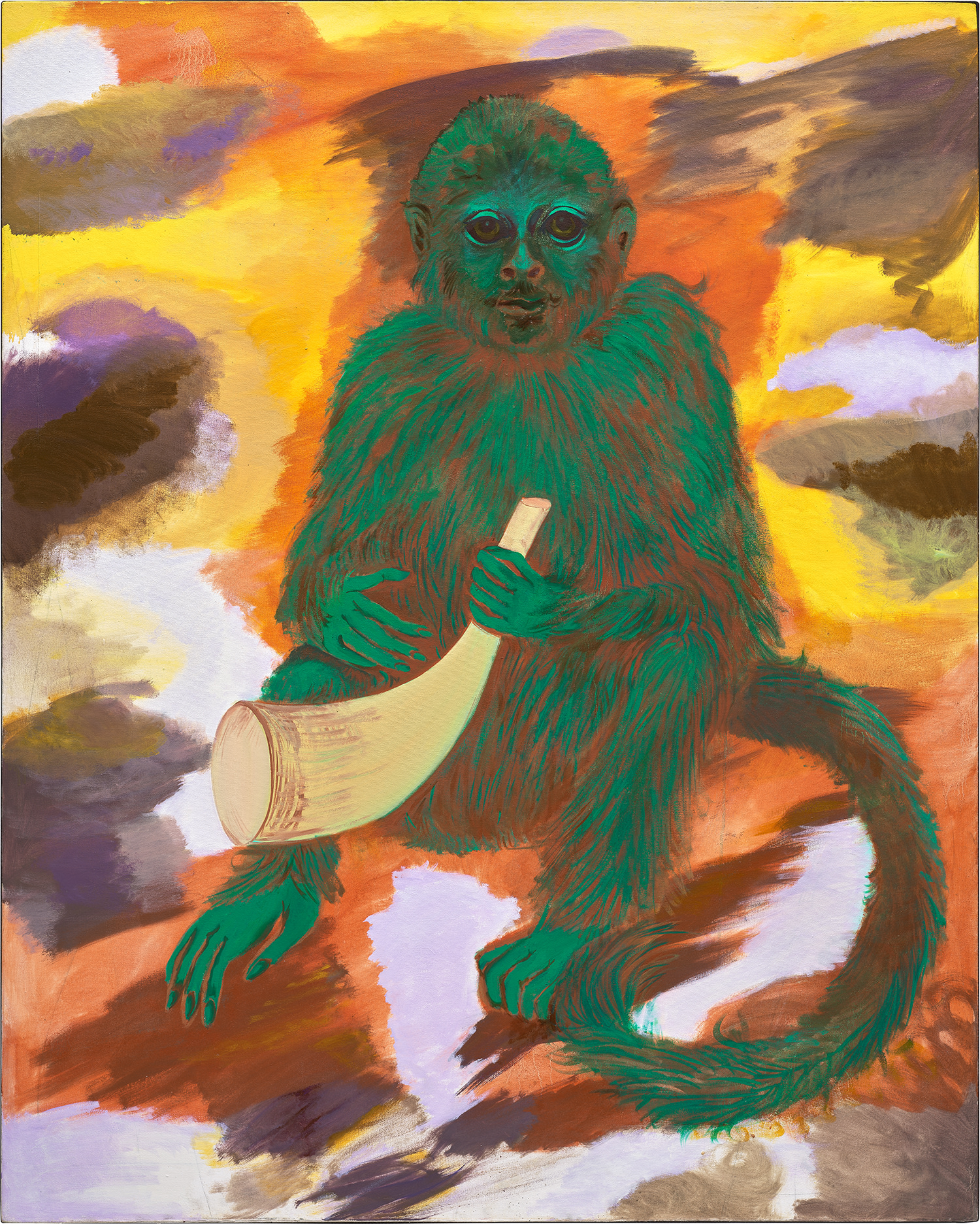
Allison Katz Paints the World Sideways
Artist Spotlight · The Collection Editorial
Something is shifting in the way serious collectors think about painting that plays with language, and Allison Katz sits at the very center of that conversation. Her recent exhibitions at major institutions across Europe and North America have confirmed what a close circle of admirers has known for years: that her work operates on a frequency all its own, simultaneously funny and erudite, visually seductive and philosophically demanding. Galleries that represent her, including Tanya Leighton in Berlin, have watched the appetite for her paintings grow steadily and with genuine conviction from collectors who want something that will continue to surprise them for decades. Katz was born in Canada in 1984, and her formation as an artist took shape across multiple continents and disciplines before she settled into the London scene that now claims her as one of its most distinctive voices.
Allison Katz
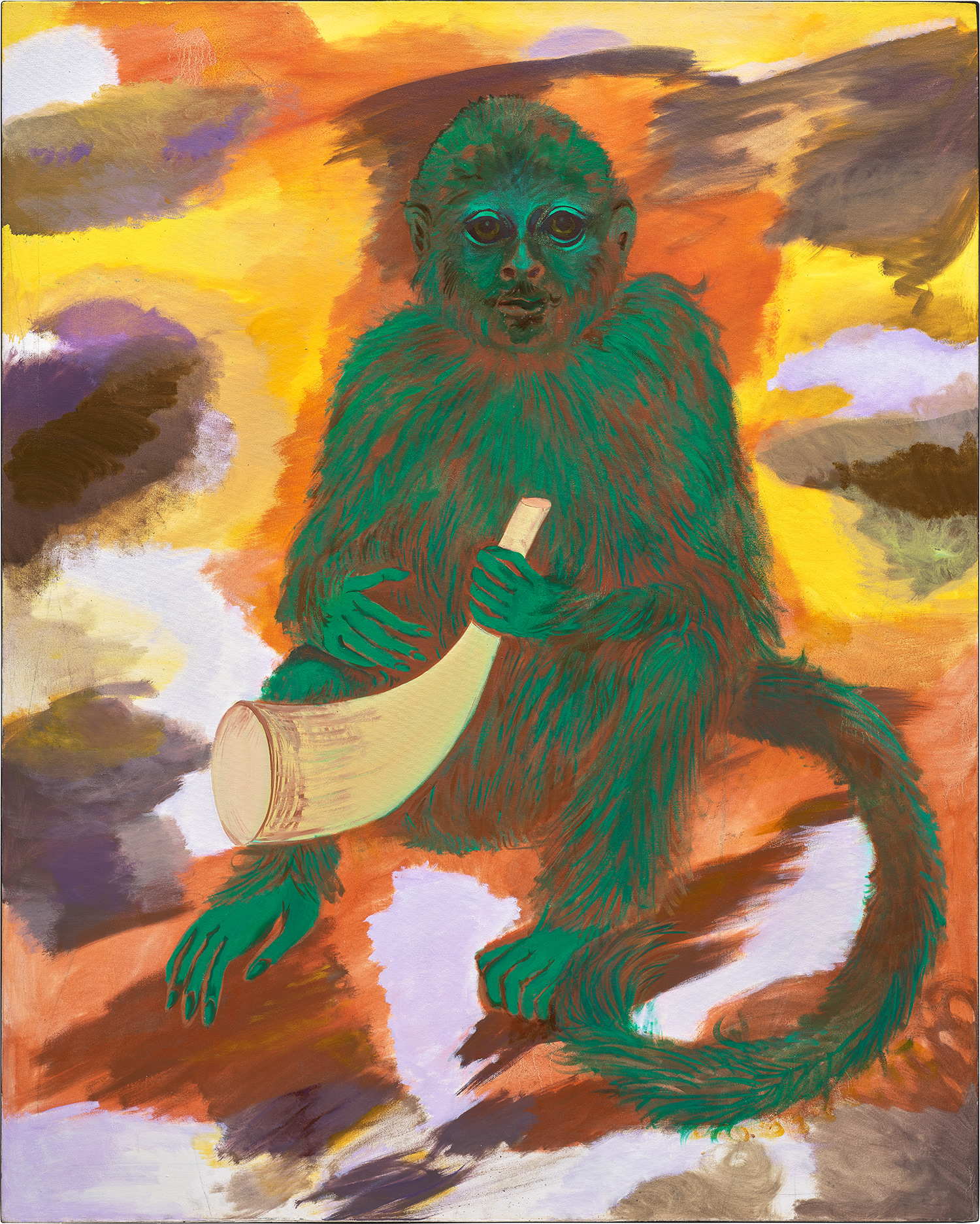
IQ, 2015
She studied at McGill University in Montreal and later at the Slade School of Fine Art in London, an institution with a long tradition of producing painters who think rigorously about what painting is and what it can do. That dual inheritance, the conceptual openness of a North American education combined with the craft seriousness of a British fine art program, left visible marks on everything she would go on to make. What emerged from those formative years was not a single coherent style so much as a commitment to a particular kind of restlessness. Katz has always worked across painting, writing, and performance, treating these not as separate disciplines but as different registers of a single ongoing inquiry.
The question she keeps returning to is deceptively simple: what happens when an image and a word occupy the same space and begin to undermine each other? Her canvases are populated by figures, animals, objects, and fragments of text that seem to arrive from different directions and collide without resolving into a single unified message. The result is work that rewards extended looking in the way a poem rewards rereading. Among her most discussed works is "IQ," an oil on canvas from 2015 that exemplifies her ability to hold contradiction steady without forcing a resolution.
Allison Katz
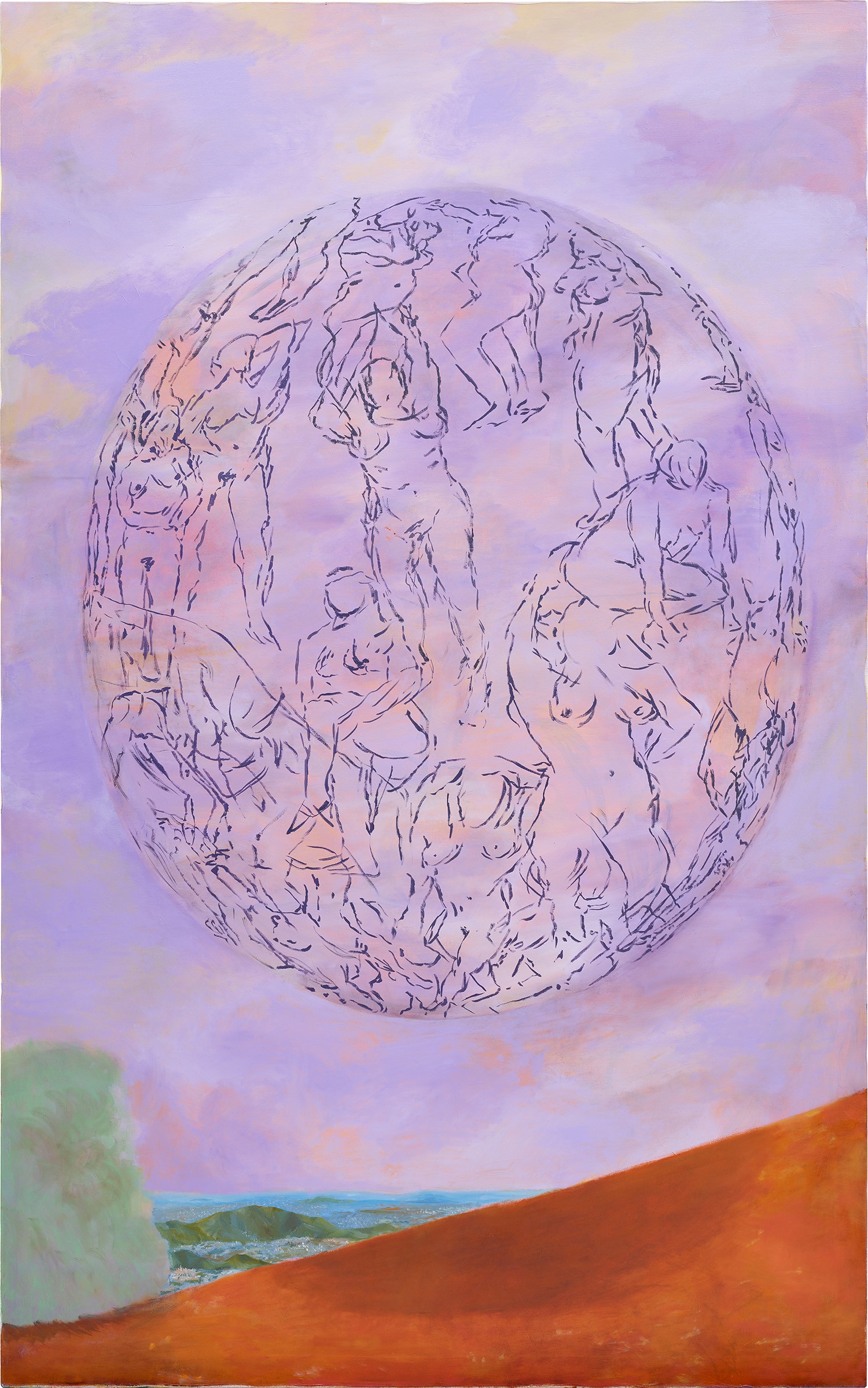
Belo Horizonte, 2015
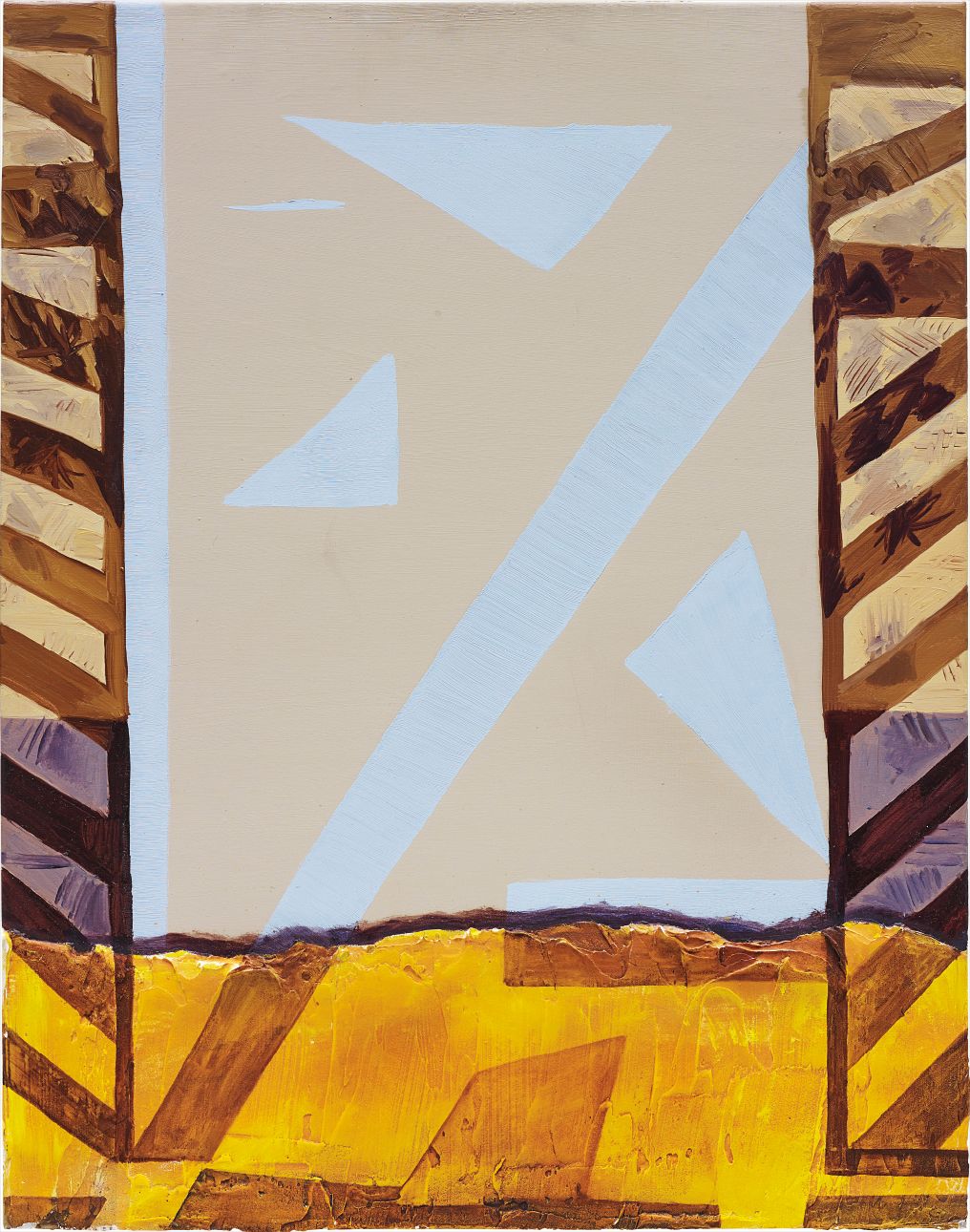
Around the same period, "Belo Horizonte," also from 2015 and executed in oil on canvas, showed her engaging with place and language in ways that resist straightforward narrative. The title, the name of a Brazilian city that translates loosely as beautiful horizon, becomes a kind of pun folded into a visual field that refuses to simply illustrate that meaning. Earlier works like "Augur" from 2009, made with acrylic and plaster on canvas, reveal a younger artist already interested in texture and surface as carriers of meaning, the plaster introducing a material thickness that complicates the flatness we expect from painting. "Stehli's Gentlemen Prefer Blondes" from 2011 shows her in dialogue with cinema and popular culture, lifting a reference from the classic film and putting it under pressure through the specificity of paint.
Perhaps the work that has drawn the most sustained attention from collectors in recent years is "Cabbage (and Philip) No. 27" from 2020, oil on linen, which belongs to an ongoing series that plays the mundane vegetable against a proper name with such deadpan commitment that the effect is genuinely strange and genuinely moving. The series as a whole is a good example of how Katz uses seriality not as a formal exercise but as a way of letting meaning accumulate and shift over time. Each new entry in the series changes the ones that came before it.
Allison Katz
Augur, 2009
Collectors who own a work from the series find themselves in possession of something that is in conversation with all the others, a quality that gives the work an unusual kind of living quality on a wall. From a collecting perspective, Katz occupies an interesting position in the current market. She is not so established that her works have become inaccessible, but she is sufficiently recognized at the institutional level that collecting her now carries the pleasure of confirmed good taste rather than pure speculation. Her work appears in significant private collections across Europe and North America, and the galleries that represent her have been careful stewards of her market, ensuring that works find homes with collectors who genuinely engage with them.
Those considering an entry point into her practice might look for works on linen, which she has favored in more recent years, and for pieces that include text or title puns, since these tend to be the most characteristic expressions of her sensibility. In terms of art historical context, Katz belongs to a generation of painters who came of age after the so called death of painting debates had exhausted themselves and who felt free to use the medium without defensiveness or irony for its own sake. She shares an intellectual sensibility with artists like Amy Sillman and Laura Owens, painters who bring a serious relationship to language and theory into the studio without letting that relationship suffocate the visual pleasure of the work itself. She is also in conversation with a longer tradition of painters who used puns and linguistic slippage as formal tools, including Marcel Duchamp and René Magritte, though her work never feels like homage.
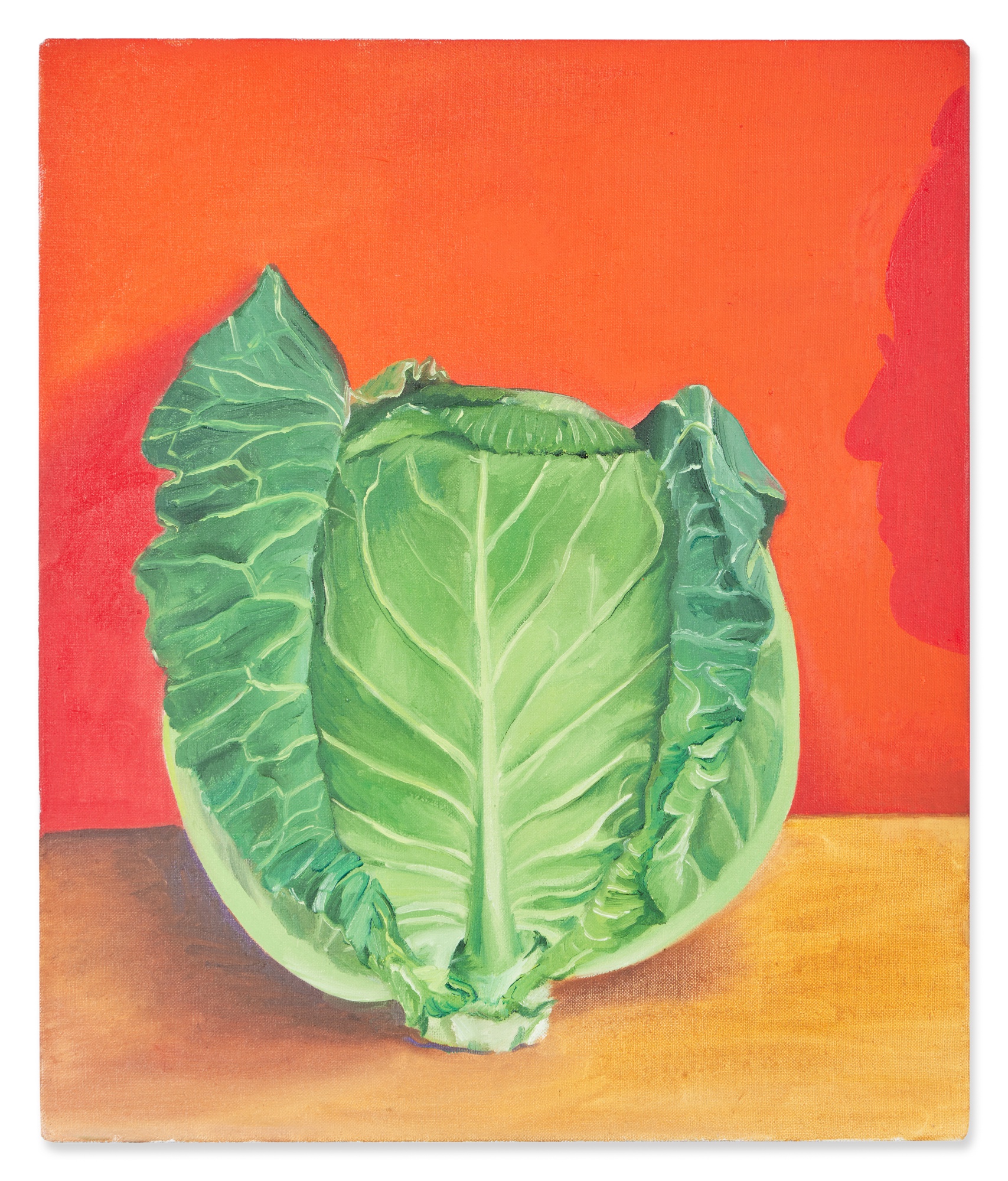
Allison Katz
Cabbage (and Philip) No. 27, 2020
It feels like inheritance used freely. What makes Katz matter today is precisely the quality that can be hardest to name in an artist: she has found a way to make paintings that are genuinely funny without being glib, and genuinely serious without being solemn. In a moment when so much ambitious painting announces its intentions loudly, her work has the confidence to stay a little mysterious, to let the pun do some work, to let the surface breathe. Collectors who live with her paintings report that they continue to find new things in them, that the works seem to think differently on different days.
That is a rare quality, and it is the quality that marks an artist whose place in the conversation is not temporary.