Allen Ruppersberg
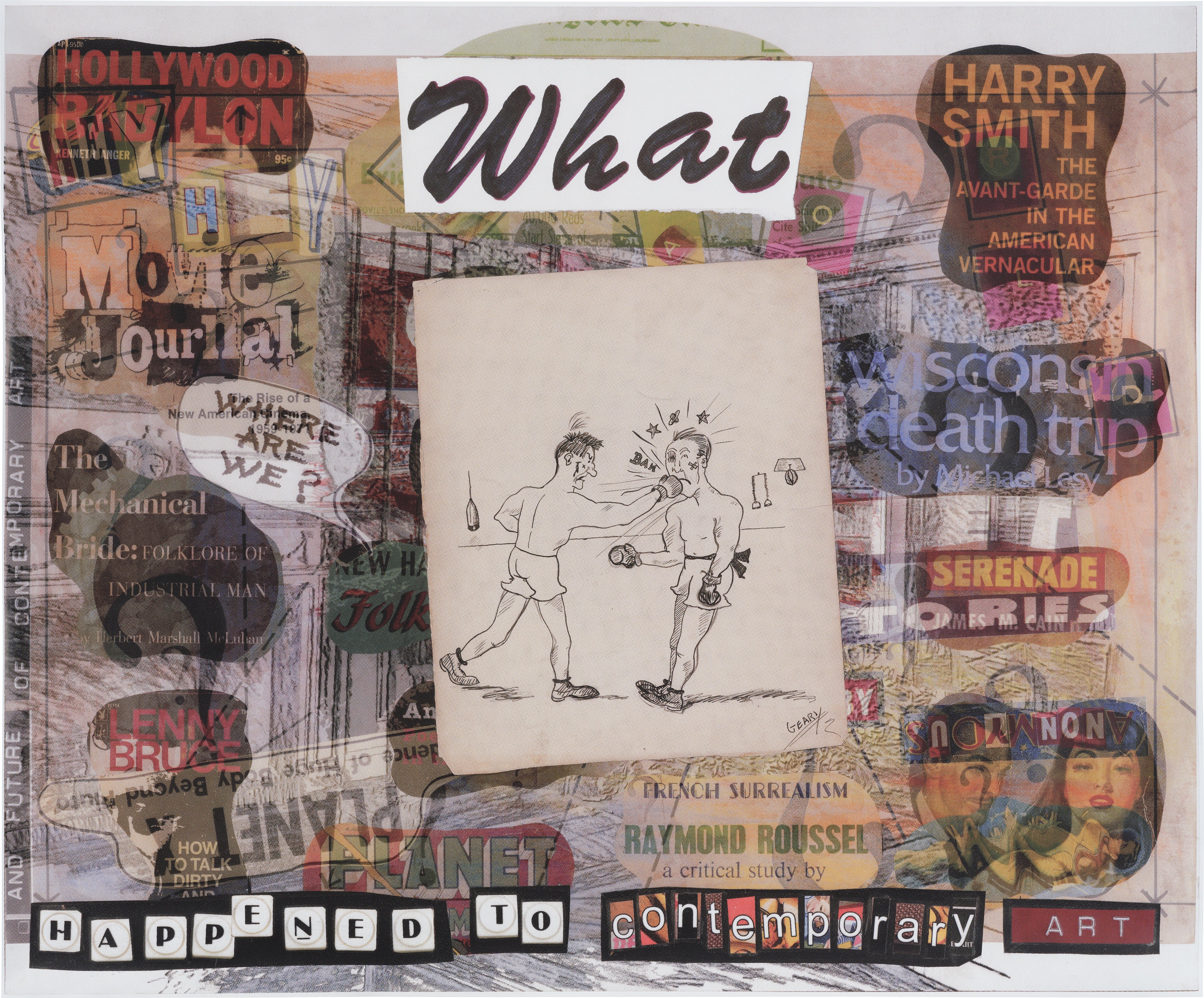
Allen Ruppersberg, America's Beloved Conceptual Storyteller
Artist Spotlight · The Collection Editorial
“Everything I do is about telling a story. The question is always what story and how to tell it.”
Allen Ruppersberg
There is a particular kind of excitement that circulates through the contemporary art world when a major institution decides to take stock of an artist whose influence has quietly shaped decades of practice. Allen Ruppersberg, the Los Angeles and New York based conceptual artist born in Cleveland, Ohio in 1944, has been the subject of sustained institutional attention in recent years, with retrospective surveys and solo presentations at venues including the Museum of Contemporary Art Los Angeles and the Greene Naftali Gallery in New York reminding a new generation just how radical and tender his vision has always been. His work sits at a fascinating crossroads of wit, melancholy, pop culture, and philosophical inquiry, and it rewards sustained looking in ways that few of his contemporaries can match. Ruppersberg grew up in the American Midwest before relocating to Los Angeles in the 1960s to attend the Chouinard Art Institute, which later became the California Institute of the Arts.
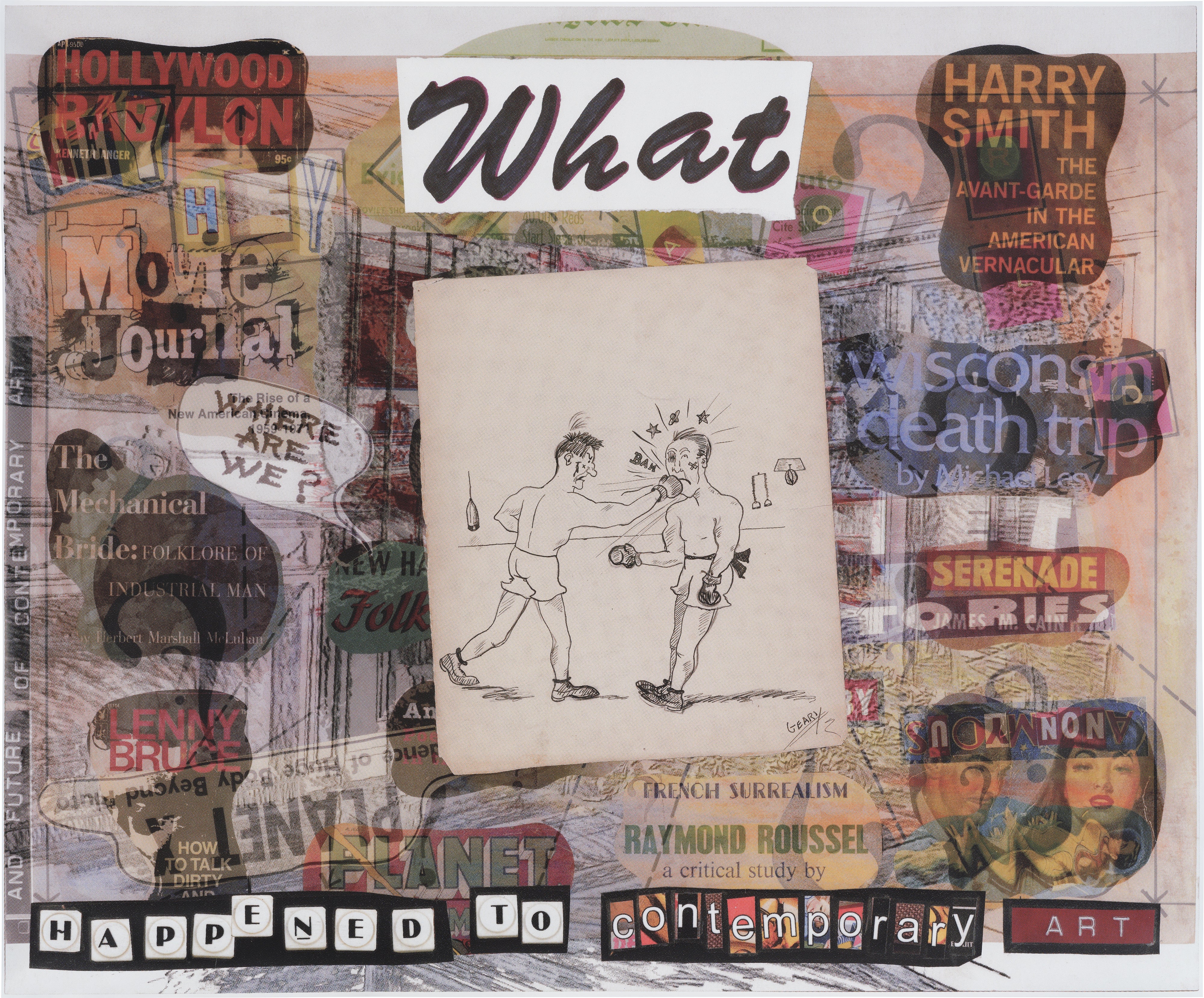
Allen Ruppersberg
Allen Ruppersberg
This was a formative move, dropping him into one of the most electrically charged creative environments in postwar America at precisely the right moment. Southern California in the late 1960s was alive with experiments in conceptualism, performance, and what critics would later call institutional critique. Ruppersberg absorbed all of it while maintaining a distinctive sensibility that was gentler, more literary, and more genuinely curious about everyday American life than much of what surrounded him. His early breakthrough came with a series of audacious conceptual gestures that immediately announced a singular artistic intelligence.
In 1969, he opened Al's Cafe, a functioning restaurant in Los Angeles that doubled as an artwork, inviting visitors to eat and drink within a space that was simultaneously an aesthetic proposition about hospitality, commerce, and the boundaries of art. A year later came Al's Grand Hotel, another immersive environment that transformed a Los Angeles house into a hotel complete with rooms themed around various cultural figures, available for guests to actually spend the night. These works were playful yet profound, asking serious questions about authorship, experience, and what it means to create a space for another person inside the frame of art. As his practice evolved through the 1970s and 1980s, Ruppersberg became increasingly fascinated with language, books, and the idea of information as both subject and medium.
Allen Ruppersberg
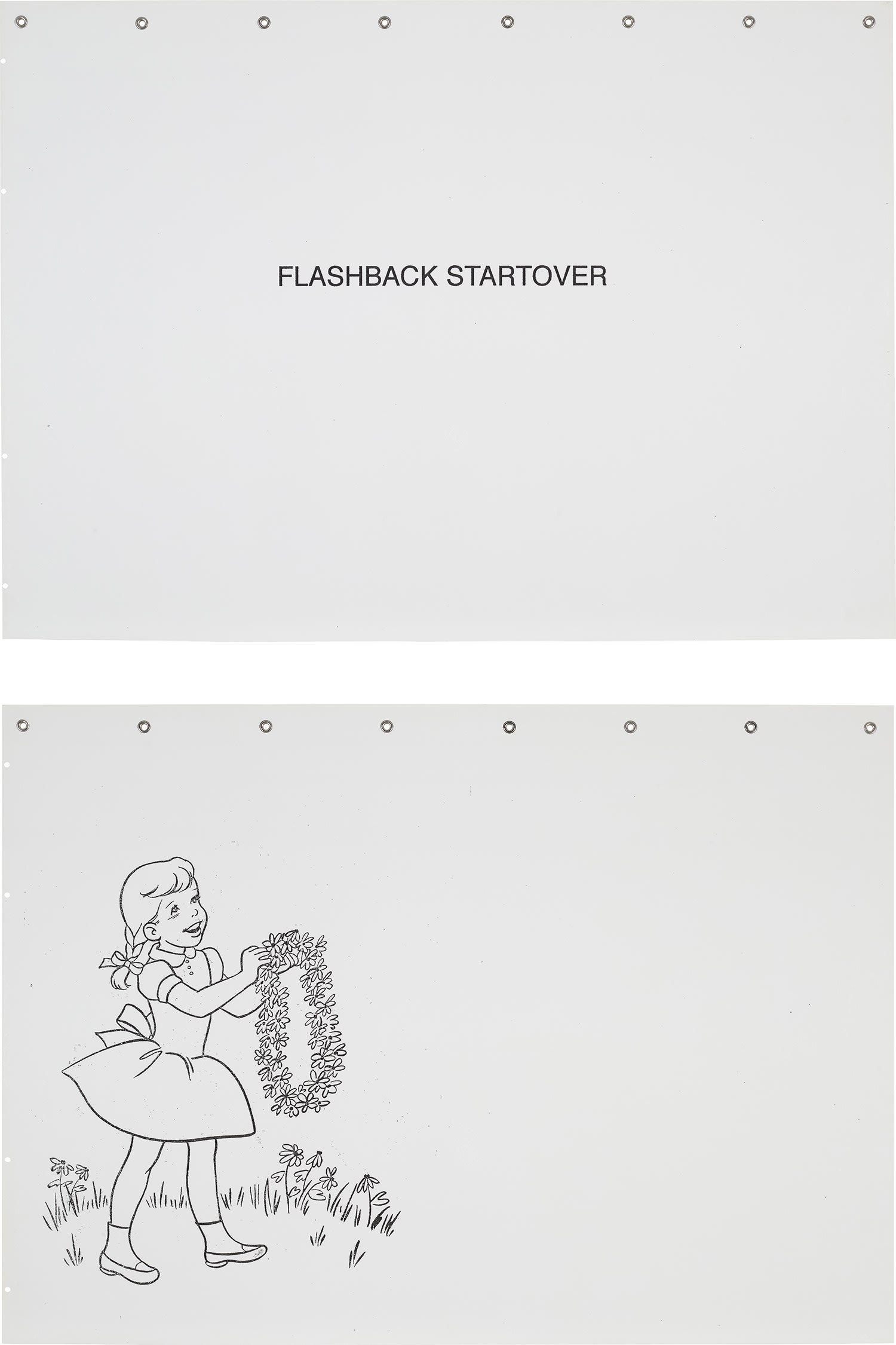
Poem No.1 Flashback Startover, 2012
He painstakingly handwrote the entire text of Oscar Wilde's The Picture of Dorian Gray across fifty separate canvases, a monumental act of transcription that transformed reading into sculpture and raised questions about originality, labor, and the transmission of culture. He collected pulp novels, song lyrics, newspaper clippings, self help manuals, and roadside signage with the devotion of an archivist and the eye of a poet, weaving these found materials into works that felt simultaneously like personal memory and collective American mythology. The artist described his practice as being fundamentally about storytelling, and every work he has made carries that narrative warmth. Among the works that collectors and curators return to again and again are his screenprints and poster objects, works that combine the visual vernacular of advertising and popular print culture with conceptual rigor and unexpected emotional depth.
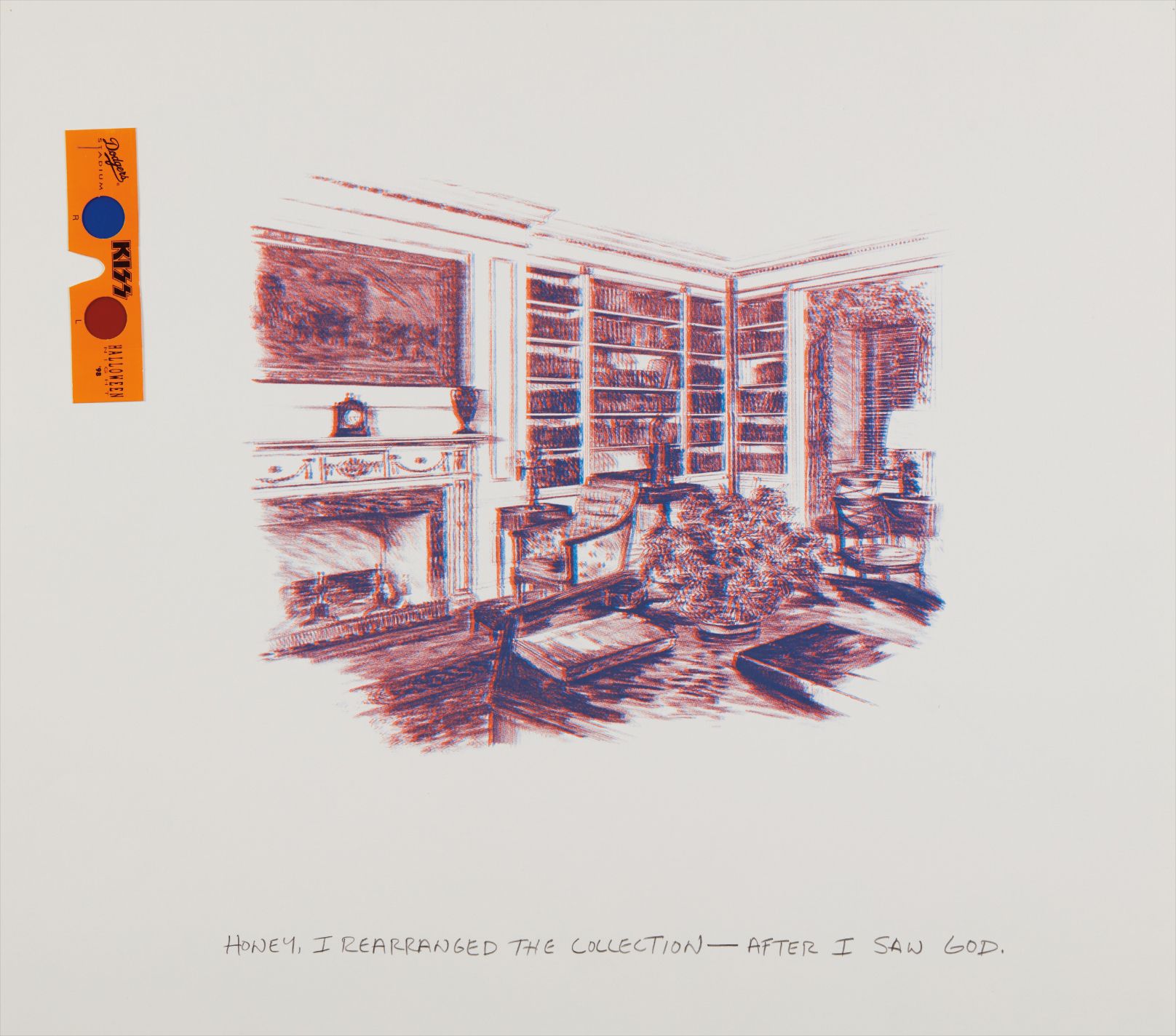
A work like Honey, I Rearranged the Collection After I Saw God, a unique screenprint with Kiss 3D glasses attached directly to the sheet, captures everything essential about Ruppersberg in miniature. It is funny, it is self aware, it references mass entertainment and private experience simultaneously, and it transforms a simple material gesture into something genuinely strange and moving. His Poem No. 1 Flashback Startover from 2012 continues this thread, collapsing autobiography, pop culture, and lyrical fragmentation into a single surface.
Allen Ruppersberg
Honey, I rearranged the collection after I saw God
Who Killed the Kennedys from the same year, assembled across pegboard panels with laminated color copies and silkscreen, channels the American obsession with conspiracy and collective grief through the language of the garage sale and the community bulletin board. For collectors, Ruppersberg represents a particularly compelling opportunity. His works exist across a generous range of scales and media, from intimate prints and unique works on paper to large scale installations, making his practice accessible to collections of varying scope and ambition. The screenprints and lithographs available on platforms like The Collection offer entry points into a body of work whose critical standing has only deepened with time.
Collectors drawn to artists like Ed Ruscha, John Baldessari, and Lawrence Weiner will find in Ruppersberg a kindred spirit who shares their fascination with language and American vernacular culture but brings to those concerns a distinctly personal and literary dimension. His prints in particular have performed steadily at auction, with works appearing at Christie's, Sotheby's, and Phillips drawing serious attention from informed collectors who recognize both the art historical significance and the genuine pleasure these works deliver. Placing Ruppersberg within the broader landscape of postwar and contemporary art reveals just how central his contributions have been. He emerged alongside the first generation of California conceptualists, sharing a moment and a geography with artists including Baldessari, Chris Burden, and Bruce Nauman, yet he carved out a space that was entirely his own.
Allen Ruppersberg
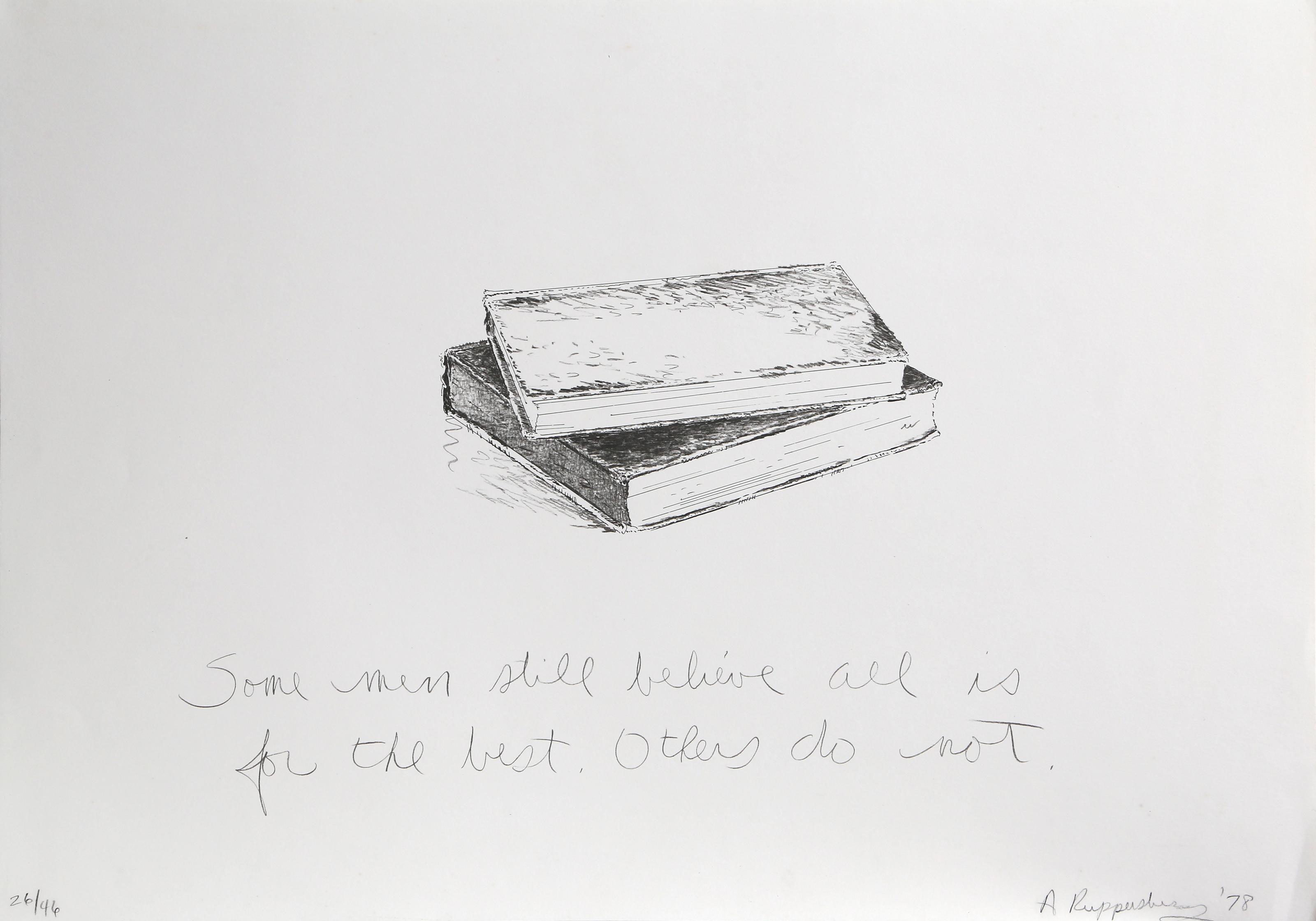
Untitled (Some Men Still Believe...)
Where Nauman pursued an often confrontational body based practice, Ruppersberg turned toward books, photographs, and the detritus of popular culture. Where Ruscha maintained a cool photographic remove from his subjects, Ruppersberg embraced the personal and the anecdotal with genuine warmth. He anticipated by decades the widespread artistic interest in appropriation, archiving, and the aesthetics of everyday information that now characterizes so much contemporary practice. What makes Ruppersberg so essential today is precisely his refusal of easy categorization alongside his insistence that art can be genuinely humane and even fun without sacrificing seriousness or depth.
At a moment when artists and institutions are reconsidering the relationship between high culture and popular experience, between the museum and the street, between the archive and the living present, his practice reads not as historical artifact but as a still active set of propositions about what art can do and who it can speak to. To spend time with a Ruppersberg is to be reminded that the best conceptual art does not close down meaning but opens it up, generously, into the full complexity of a life lived in the world.