Allen Jones
Allen Jones: Bold, Brilliant, Beautifully Provocative
Artist Spotlight · The Collection Editorial
“I use a woman's body as a vehicle for painting. It's not about women, it's about painting.”
Allen Jones, interview
In the grand sweep of postwar British art, few figures have sustained such fierce creative energy across six decades as Allen Jones. Born in Southampton in 1937, Jones came of age during a period of extraordinary cultural upheaval, and his work has never stopped reflecting that charged atmosphere. Today, with major holdings in Tate Britain and institutions across Europe and North America, and with a market that continues to reward serious collectors, Jones stands as one of the defining voices of British Pop Art and a painter of genuine, enduring power. Jones studied at Hornsey College of Art and later at the Royal College of Art in London, where he was a contemporary of David Hockney, R.
Allen Jones
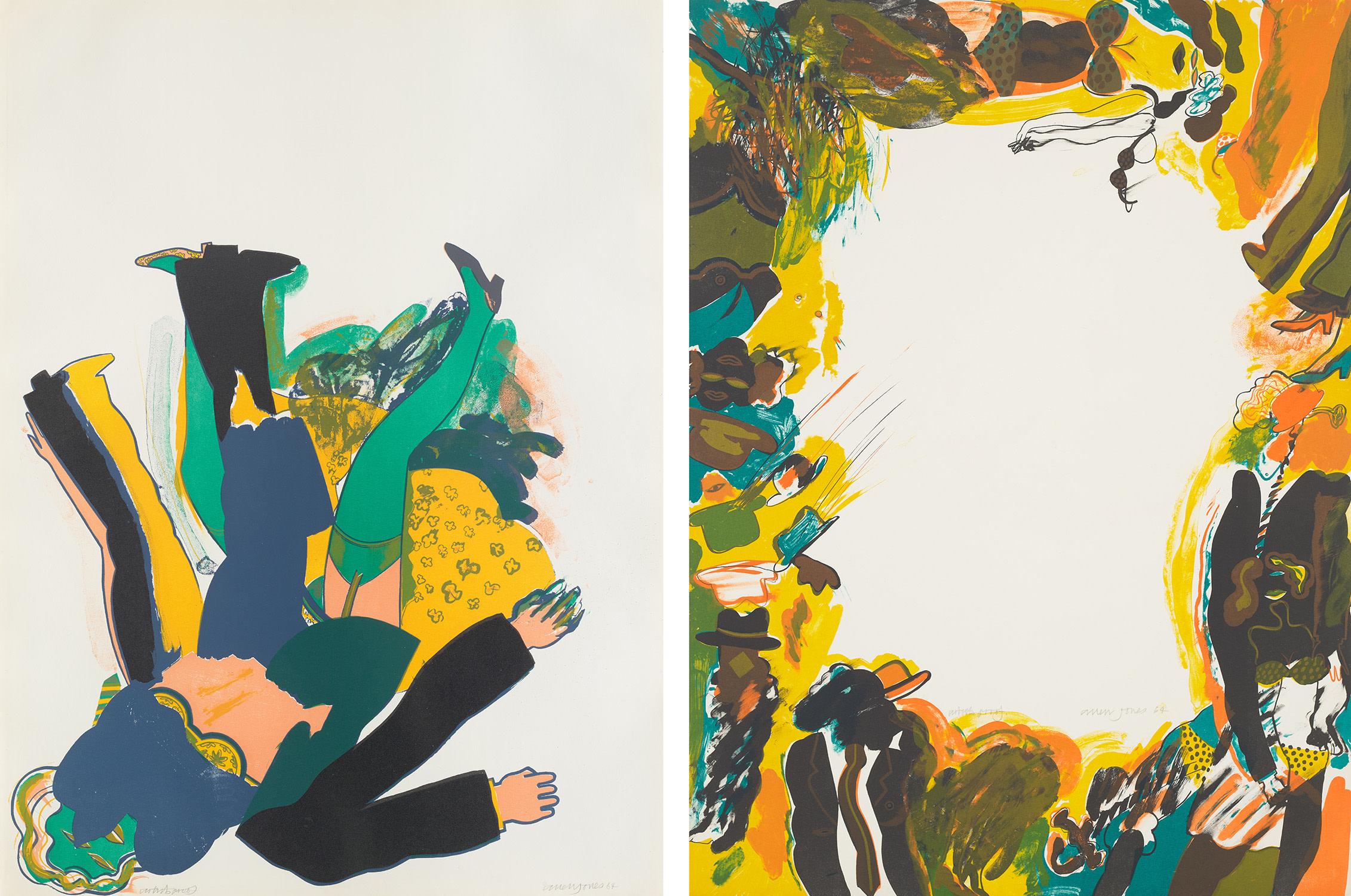
Concerning Marriages: two plates (Ll. 24g-h)
B. Kitaj, and Peter Phillips. That cohort of Royal College students in the early 1960s would collectively reshape British art, drawing on American popular culture, commercial imagery, and a new permissiveness about what painting could address. Jones was asked to leave the Royal College after his first year, a rupture that some biographers have read as formative.
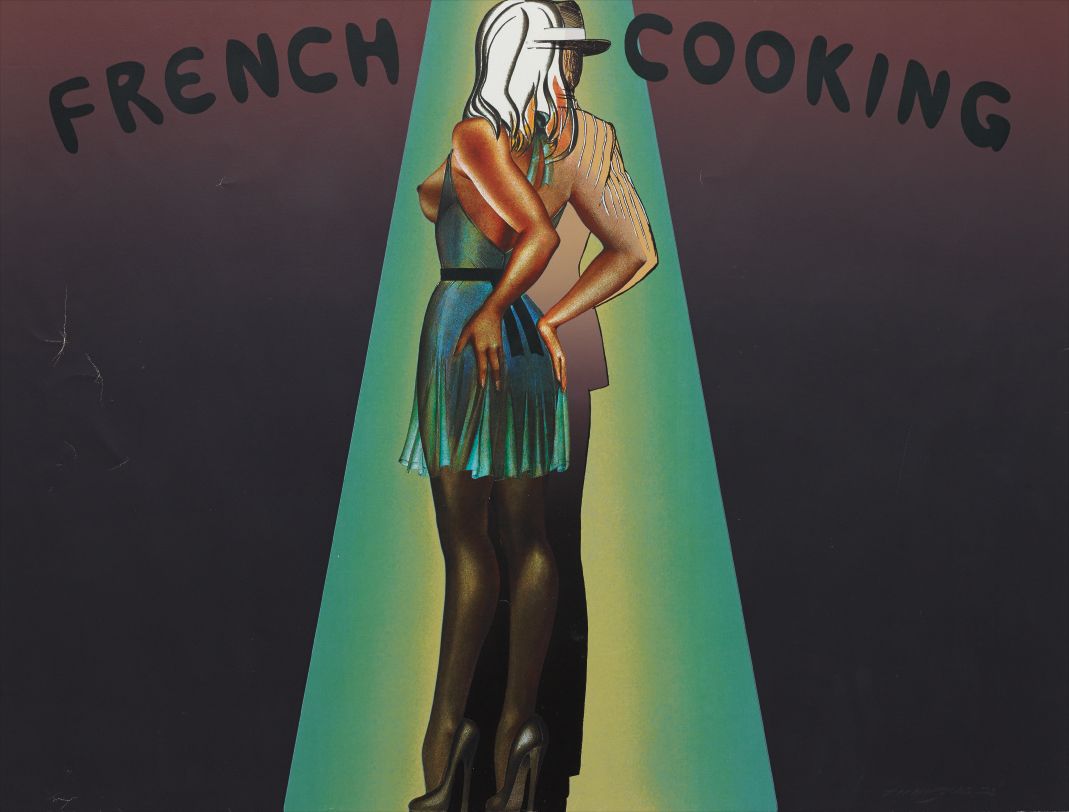
Rather than dampening his ambition, the experience sharpened it, sending him toward a fiercely independent path. The early 1960s saw Jones developing a visual language rooted in bold, flat color and a frank engagement with the erotic. Where many of his peers gravitated toward consumer goods and celebrity, Jones turned his attention toward the body, particularly the female body rendered through the prism of fashion, fetish, and fantasy. His paintings of this period pulse with a graphic intensity that owes something to advertising and something to Surrealism, yet feel entirely his own.
Allen Jones
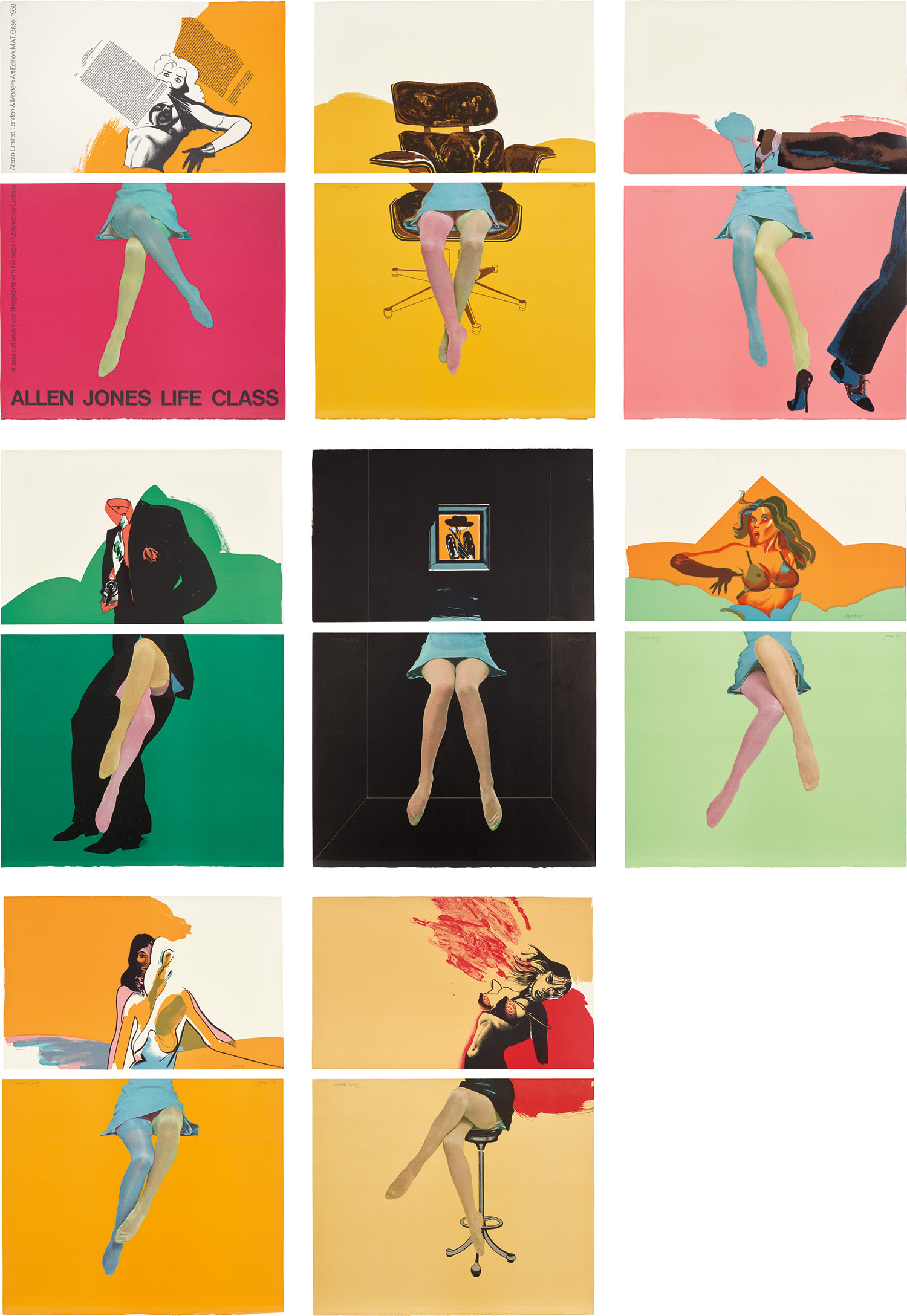
Life Class (Ll. 48a-g; E.A. 533-540)
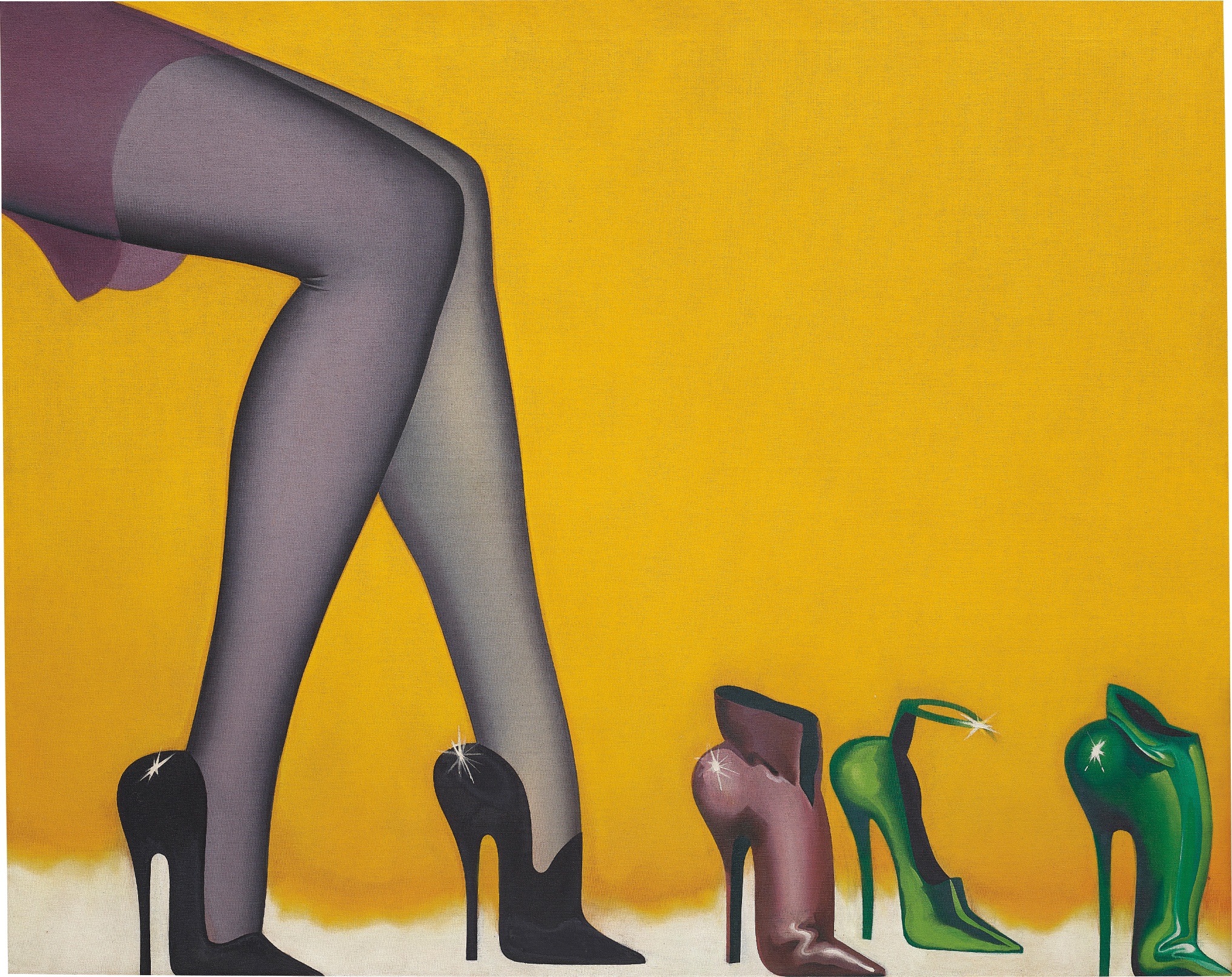
The 1966 oil on canvas known as T riffic captures this perfectly: a work crackling with chromatic confidence and compositional daring that announced a fully formed artistic vision. Jones reached perhaps his most controversial and internationally discussed moment in 1969 when he exhibited a series of furniture sculptures depicting women as chairs, tables, and hat stands. Rendered in fibreglass with meticulous attention to surface and pose, these works detonated a fierce debate about art, objectification, and the politics of representation. Feminist critics, most notably Lucy Lippard, responded with sustained and pointed criticism.
The sculptures were vandalized on more than one occasion. Yet they also secured Jones a place in art history, appearing in Stanley Kubrick's 1971 film A Clockwork Orange and entering the permanent collection of the Museum Ludwig in Cologne. Whatever one makes of them, they are impossible to look away from and impossible to ignore as art historical objects. Across the 1970s Jones continued to work with unflagging productivity in both painting and printmaking, his collaborations with Editions Alecto in London producing some of the most celebrated prints of the British Pop era.
Allen Jones
T-riffic, 1966
Works such as Concerning Marriages and the Life Class series demonstrate his mastery of the lithographic and screenprint processes, with the artist treating the printed surface as an extension of his painterly thinking rather than a reproductive afterthought. These editions, some of which exist in artist's proof versions as well as standard editions, are now sought after objects in their own right, bridging the worlds of painting and works on paper with characteristic elegance. The collaborative publication with David Hockney in The Erotic Arts serves as a reminder of how naturally Jones moved within the most significant artistic networks of his generation. The market for Jones has remained consistently robust, with his paintings and prints appearing regularly at the major London auction houses.
Collectors are drawn to his work for several interconnected reasons: the sheer visual pleasure of his color, the confidence of his draftsmanship, and the way his paintings occupy an unusual space between high art seriousness and pleasurable immediacy. Works from the 1960s and early 1970s command particular attention, though paintings from later decades such as Command Performance from 1975 and The Singer not the Song from 2002 demonstrate that Jones never coasted on early achievement. A work like Beauty Spot from 2011 shows a painter still discovering new possibilities within a vocabulary he has spent a lifetime refining. For collectors approaching Jones for the first time, his prints offer an ideal entry point: meticulously produced, often bearing the artist's signature and annotations, and representative of the full arc of his thinking.
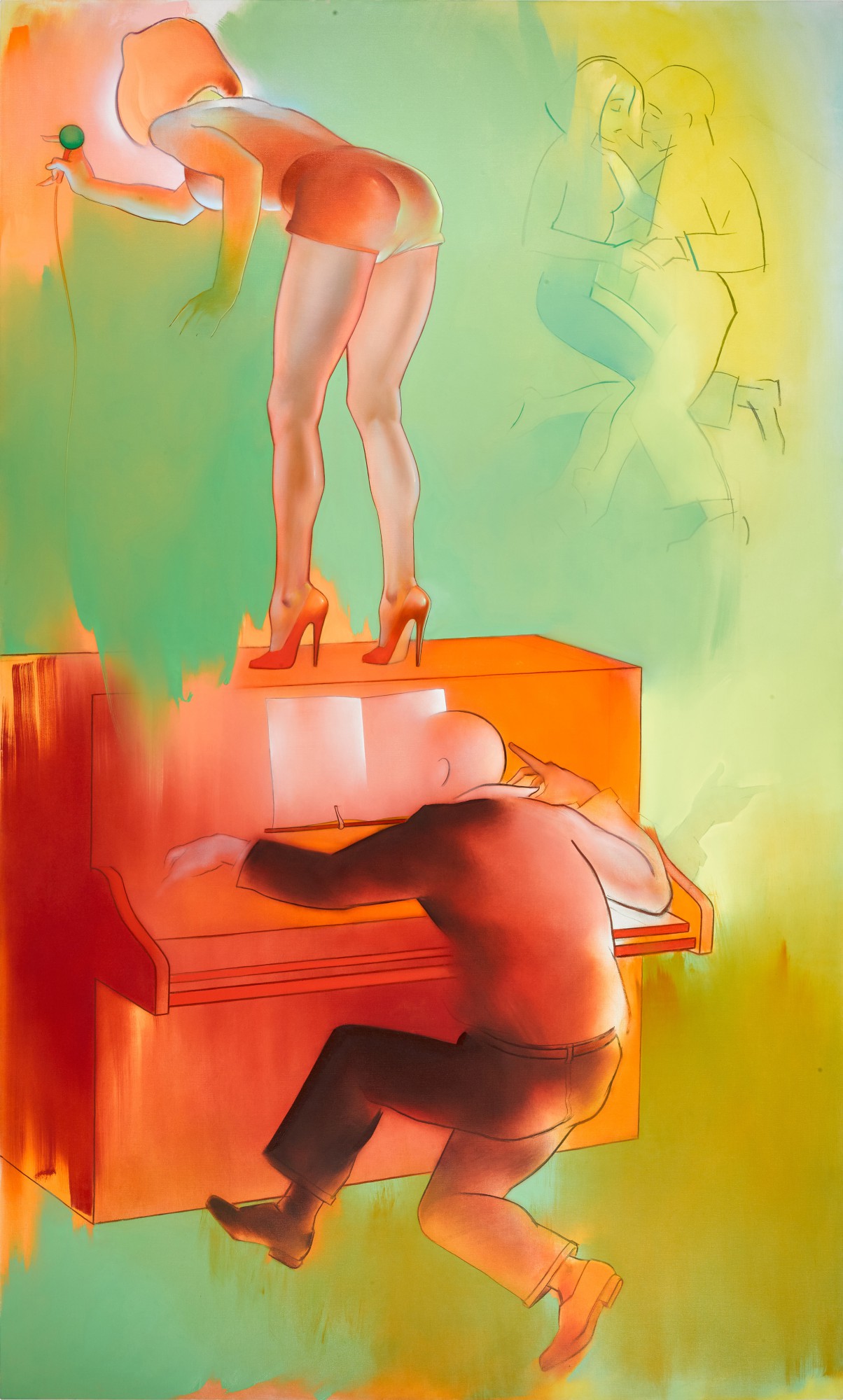
Allen Jones
The Singer not the Song, 2002
To understand Jones fully it helps to situate him within the broader context of Pop Art on both sides of the Atlantic. His American contemporaries Tom Wesselmann and Mel Ramos were working with similar subject matter during the same decades, and the dialogue between British and American Pop remains one of the richest chapters in postwar art history. Closer to home, the friendships and rivalries with Hockney and Kitaj shaped a generation's understanding of what figurative painting could do. Jones differs from Hockney in his preference for a more charged, less autobiographical mode of address, and from Kitaj in his resistance to literary program.
He is, in the truest sense, a painter's painter, someone for whom the surface of the canvas is the arena where ideas come alive. The legacy of Allen Jones is still being written, and that is part of what makes him such a rewarding artist to collect and to study. His work has been reassessed repeatedly, sometimes antagonistically and sometimes with fresh admiration, and it has survived every reassessment with its energy intact. Major retrospectives and loan exhibitions have kept his paintings and sculptures in front of new generations of viewers, and the growing scholarly interest in British Pop Art has only deepened appreciation for what Jones achieved.
His willingness to engage with controversy, to refuse the safe path, and to pursue beauty through discomfiting means places him squarely in a tradition of genuinely serious art making. To own a work by Allen Jones is to possess something that has participated in one of the great conversations of twentieth century art, a conversation that shows no sign of ending.
Explore books about Allen Jones
Allen Jones: A Retrospective
Museum of Modern Art
Allen Jones: Retrospective
Royal Academy of Arts
Allen Jones: Erotic Art and Other Passions
Whitford, Frank
Allen Jones
Morphet, Richard
Allen Jones: Images and Imaginings
Livingstone, Marco