Allan McCollum
Allan McCollum Makes Abundance Feel Singular
Artist Spotlight · The Collection Editorial
“I want each object to be both unique and part of a larger group, so that neither the individual nor the collective takes total precedence.”
Allan McCollum, interview
There is a particular kind of attention that Allan McCollum's work demands, one that begins with a simple, almost innocent question: what makes one thing different from another? That question, pursued with extraordinary patience and intellectual rigor across five decades, has produced one of the most quietly radical bodies of work in contemporary American art. In the early 2020s, a renewed curatorial appetite for institutional critique and systems based practice brought fresh eyes to McCollum's long career, with scholars and younger artists alike rediscovering the warm, philosophically generous universe he has been building since the 1970s. His work sits at the intersection of conceptual art and craft, of mass culture and individual longing, and it has never felt more relevant than it does today.
Allan McCollum
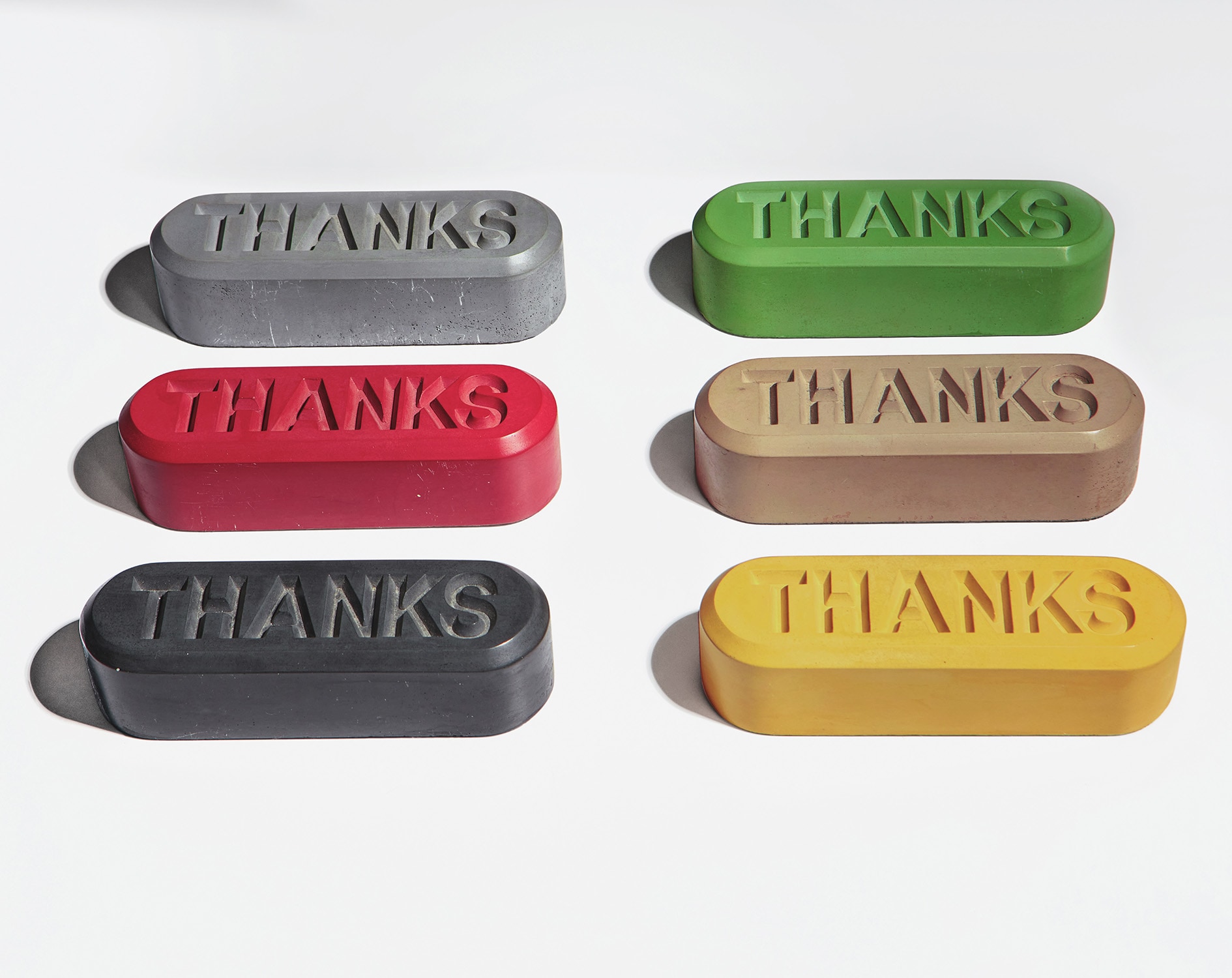
Visable Markers
McCollum was born in Los Angeles in 1944, and the city's particular relationship to reproduction, surface, and spectacle left a deep mark on his sensibility. He came of age in a cultural moment when the lines between fine art, commercial production, and popular culture were being actively renegotiated by artists like Andy Warhol, Donald Judd, and the Minimalists. Unlike many of his contemporaries, however, McCollum did not pursue a formal art school education in the traditional sense, and the self directed nature of his intellectual development gave his practice an unusually independent character. He moved to New York in the early 1970s, embedding himself in the downtown art scene at a moment when artists were thinking seriously about what institutions, markets, and systems do to meaning.
His artistic development took a decisive turn in the late 1970s and early 1980s, when he began working on what would become his most celebrated series. The Surrogate Paintings, which he began around 1978, consisted of small canvas works that looked, from a distance, like framed abstract paintings hanging on a gallery wall. Up close, each one revealed itself to be a solid mat of enamel paint, a kind of simulacrum of a painting that was, in fact, not a painting at all. These works were then multiplied in great numbers and installed in densely hung arrangements that transformed gallery walls into meditations on collecting, display, and the sociology of taste.

Allan McCollum
Untitled
The gesture was cool and precise but also strangely tender, as though McCollum genuinely loved the objects he was quietly dismantling. The Plaster Surrogates that followed in the early 1980s extended this logic into sculpture, replacing canvas with cast hydrostone and enamel in works that could be produced and accumulated at a scale that challenged conventional ideas about scarcity and value. The work "384 Plaster Surrogates" from 1982, cast in enamel on hydrostone in 384 individual parts, stands as one of his landmark achievements. It is a work that rewards sustained looking: each piece is subtly distinct in its proportions, yet all belong to an unmistakable family of forms.
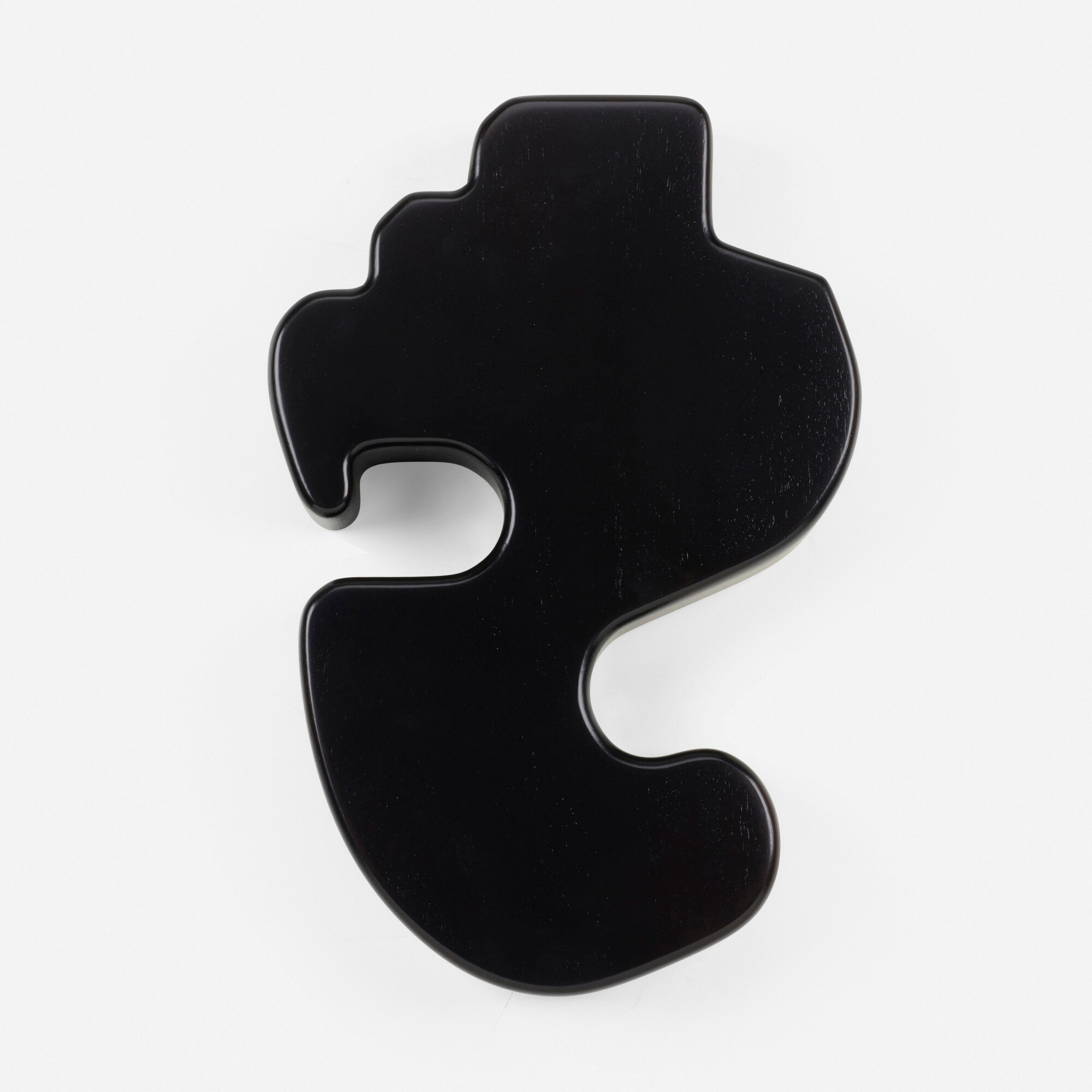
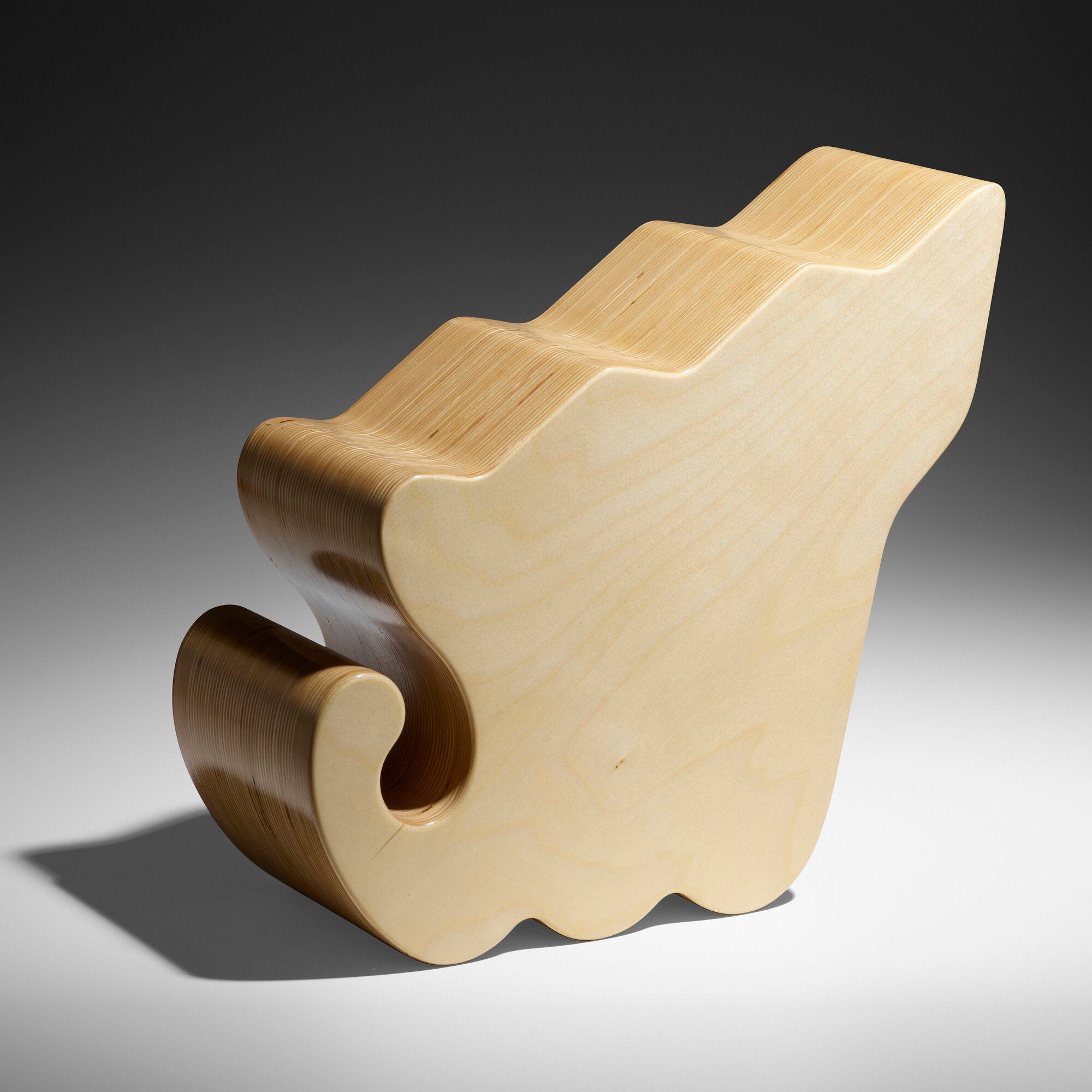
The installation has an almost theatrical presence, filling a wall with what appears to be a crowd, a community, a census of objects that each insist quietly on their individuality. His Collection of Drawings series, including works such as the "Collection of Thirty Drawings, No. 4" from 1988 in graphite on museum board, brought the same systematic sensibility to works on paper, each unique yet part of an accumulative logic that gives the group its full meaning. Perhaps the most ambitious expression of McCollum's ideas is The Shapes Project, a long term undertaking in which he devised a system capable of generating a unique two dimensional shape for every person alive on earth.
Allan McCollum
Shape #15 (Small), 2007
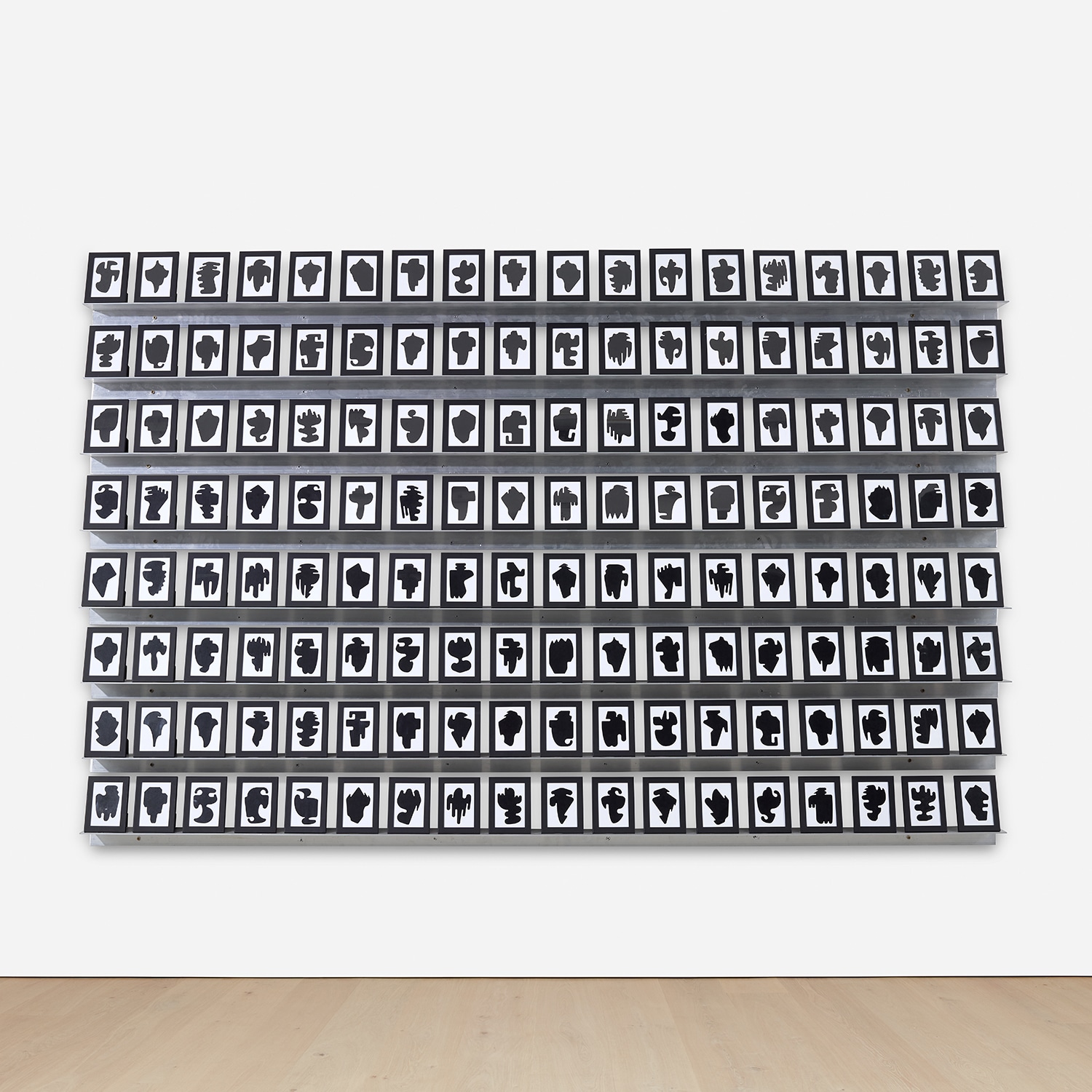
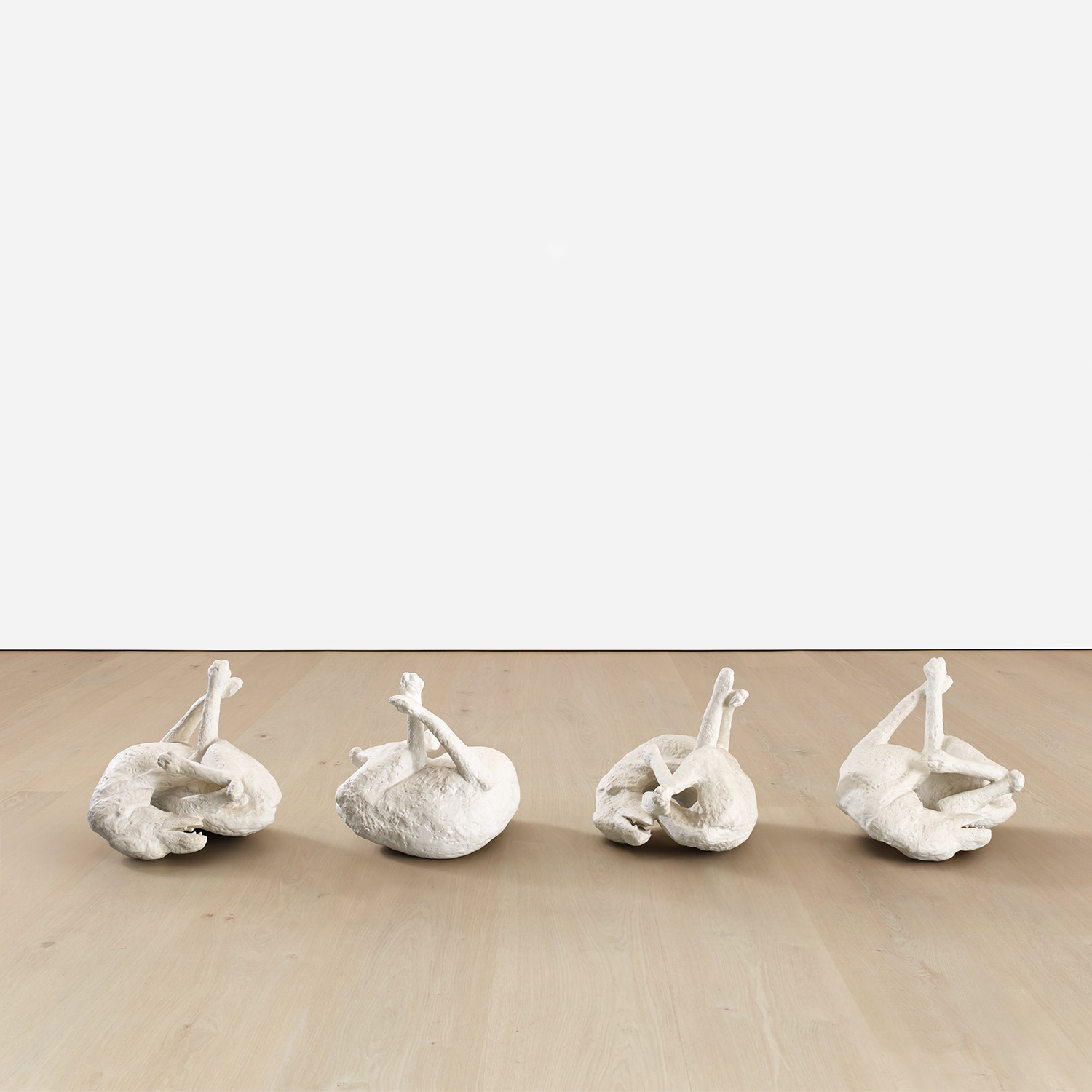
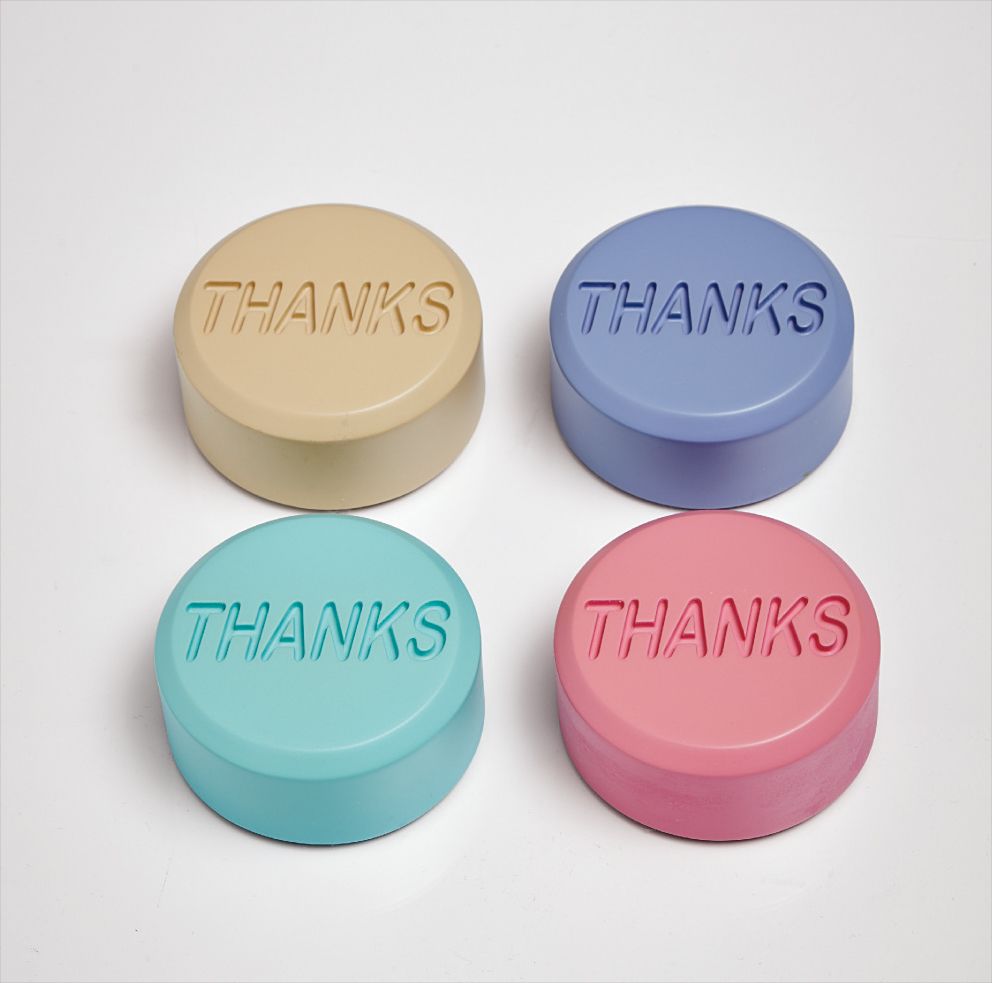
The project, which he began developing in the early 2000s, resulted in laser prints, objects, and collaborative productions with communities around the world. The 2006 laser print on acid free paper in 144 parts, among the works available through The Collection, is one of the most accessible entry points into this vast undertaking. It captures the essential McCollum proposition in a single, elegant object: that uniqueness is a condition that can be engineered, distributed, and shared, not just discovered. His Visible Markers series, realized in reinforced fiberglass resin and Hydrocal and produced in both functional and purely sculptural editions, brought the same spirit of democratic abundance into three dimensions, with works suitable for both indoor and outdoor environments and produced in a range of colors that gave the series a populist, almost festive energy.
For collectors, McCollum's work offers something genuinely rare: a practice that is conceptually rigorous without being cold, and materially consistent without being monotonous. His works have been acquired by the Museum of Modern Art in New York, the Whitney Museum of American Art, and major collections across Europe and the United States, which speaks to the breadth of institutional recognition his practice has earned over time. On the secondary market, his serial works reward collectors who think in groups and sequences rather than single acquisitions, because the logic of accumulation is built into the work's DNA. Works from the Surrogate Paintings and Plaster Surrogates series are among the most sought after, but the drawings and Shapes Project prints represent excellent opportunities to engage with his ideas at a range of price points.
Allan McCollum
Shape #11, 2006
The collaborative publications he produced with institutions like Graphicstudio at the University of South Florida, including the "Rosa; and Aaron, from Friends and Family" prints, are particularly prized for their combination of intimacy and conceptual weight. McCollum occupies a singular position in the lineage of postwar American conceptualism. His practice shares a family resemblance with the work of artists like Sol LeWitt, whose systems based drawings also explored the relationship between instruction and outcome, and with Haim Steinbach and Jeff Koons, who were similarly preoccupied with the cultural meanings embedded in everyday objects. But McCollum's project is warmer and more humanistic than any of these comparisons fully capture.
Where Koons embraces spectacle and Steinbach coolly frames consumption, McCollum seems genuinely moved by the problem of individuality in a world of mass production, by the question of whether a single person's uniqueness can survive in a world that manufactures everything at scale. The legacy of Allan McCollum is still being written, which is one of the most exciting things about engaging with his work right now. His ideas have proved extraordinarily generative for a generation of artists working with fabrication, community participation, and the politics of access, and his influence is visible in practices as diverse as those of Tino Sehgal, Andrea Fraser, and younger artists working in sculpture and social practice. To collect McCollum is to invest in a genuinely original philosophical project, one that asks how we make meaning, how we assign value, and how we find our own face in a crowd of beautiful, insistently similar objects.
That is a question worth living with.
Featured Works
Explore books about Allan McCollum

Allan McCollum
Benjamin H.D. Buchloh
Allan McCollum: Perpetual Pictures
Various contributors
Allan McCollum: The Visible World
Various curators
Allan McCollum: Collected Drawings and Notebooks
Allan McCollum
Allan McCollum: Individual Works
Multiple authors