Alicja Kwade
Alicja Kwade Bends Reality Beautifully
Artist Spotlight · The Collection Editorial
“I want to make the invisible visible, to make things you know but cannot see tangible.”
Alicja Kwade, Interview with König Galerie
When Alicja Kwade installed her monumental sculpture ParaPivot on the rooftop of the Metropolitan Museum of Art in New York in 2019, something shifted in the way the art world understood her ambitions. The work, a series of interlocking steel frames suspending stones and mirrored orbs against the Manhattan skyline, turned the rooftop garden into a meditation on planetary systems, perception, and the fragility of the structures we use to make sense of the universe. The installation drew enormous critical attention and introduced her practice to an entirely new audience of collectors and curators who had previously encountered her only in the more intimate European gallery context where she had quietly built one of the most rigorous bodies of work of her generation. Kwade was born in Katowice, Poland in 1979, a city shaped by coal mining and industrial transformation, and she moved to Berlin as a teenager, arriving in a city that was itself undergoing one of the most dramatic reinventions in modern European history.
Alicja Kwade
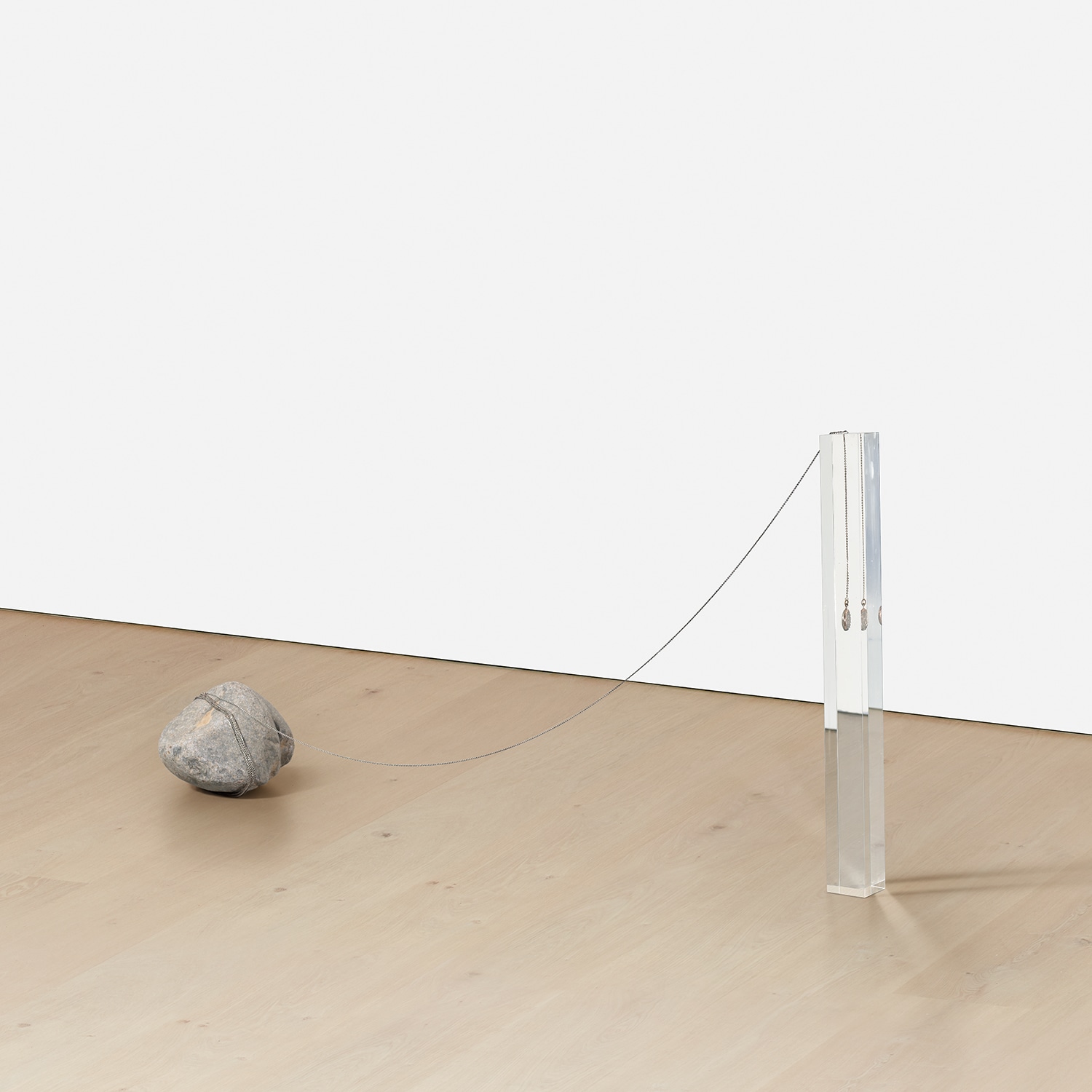
Heavy times (3pm), 2014
Berlin in the 1990s was a place where time seemed unstable, where old systems had collapsed and new ones had not yet calcified into certainty. She studied at the Universität der Künste Berlin, completing her studies in the early 2000s, and the atmosphere of that institution and that city left a permanent mark on her thinking. The question of how systems of order, whether political, scientific, or philosophical, are constructed and then naturalised into apparent truth became the engine of her practice. Her early work drew on the traditions of Conceptual Art and Minimalism, but she quickly distinguished herself from both by injecting a quality of quiet wonder into forms that might otherwise read as cool or detached.
Where artists of the Minimalist lineage tended to insist on the autonomy of the object, Kwade consistently points beyond the object toward the invisible forces and conventions that give it meaning. She began working with everyday materials, clocks, mirrors, stones, metal chains, and glass, treating them not as found objects in the Duchampian sense but as vessels for philosophical inquiry. Time, as both a physical phenomenon and a cultural construction, became one of her most persistent subjects. Few works illustrate this better than Heavy Times (3pm), created in 2014, in which a pocket watch is encased in a clear acrylic pedestal alongside a metal chain and a stone.
Alicja Kwade
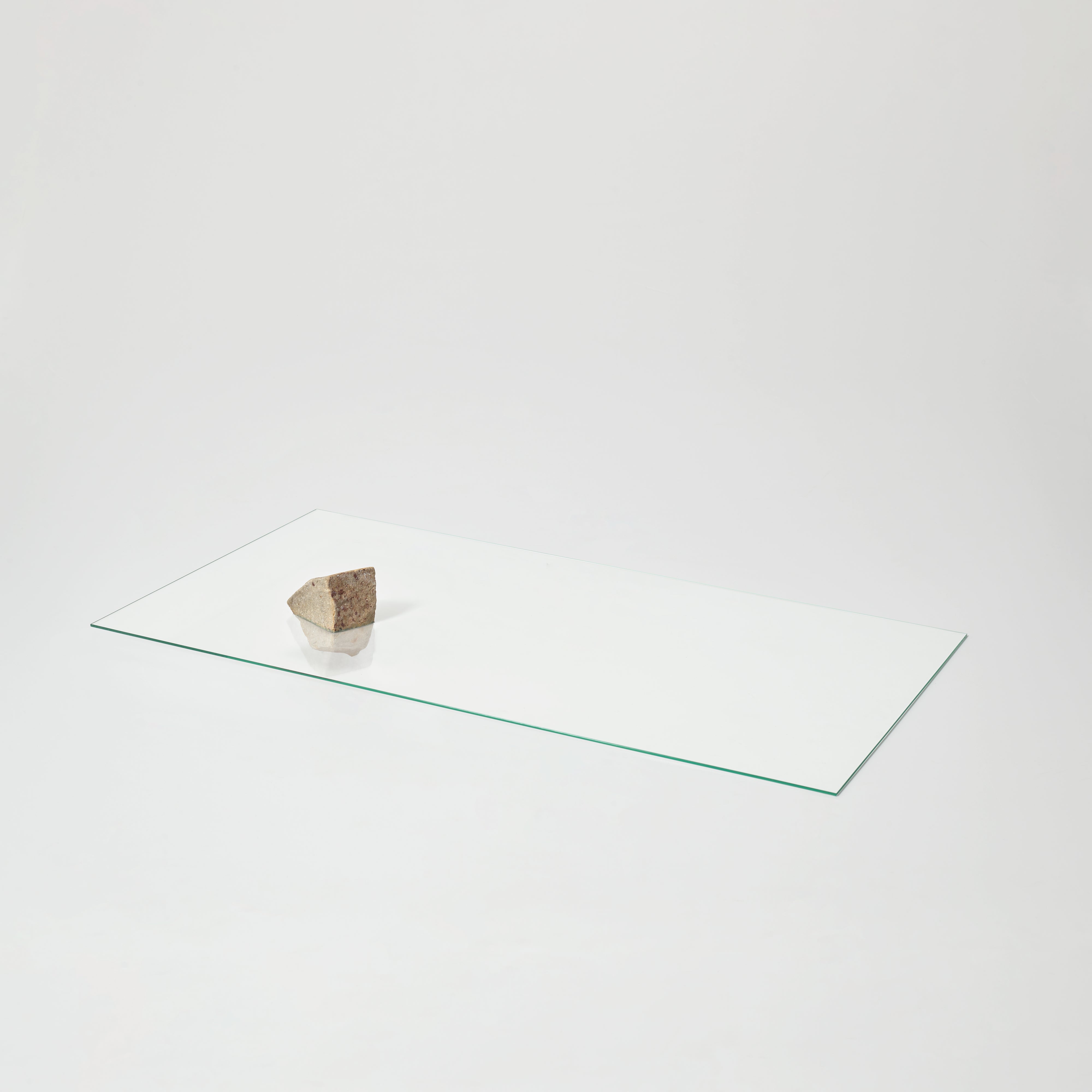
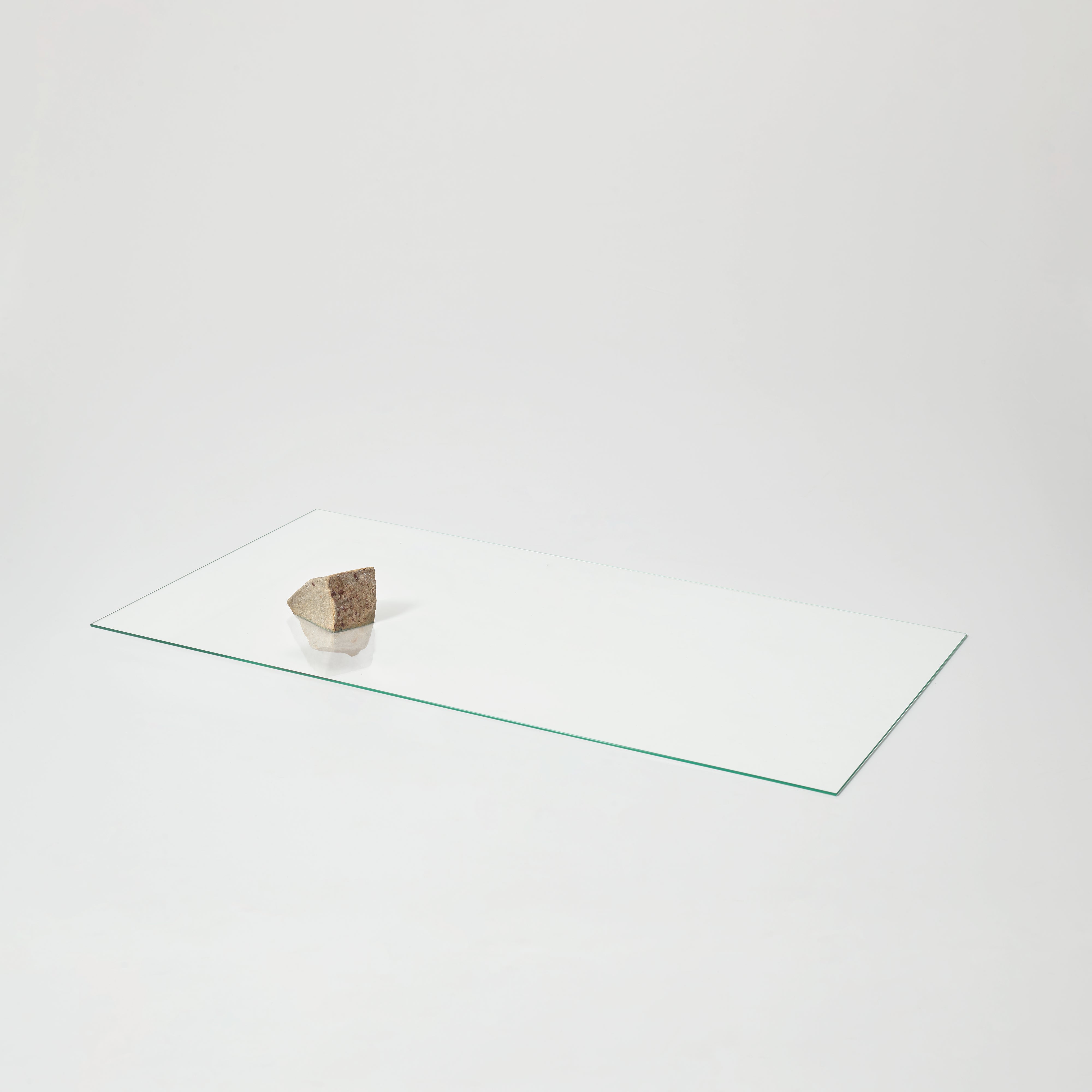
Hemmungsloser Widerstand
The piece is deceptively simple in appearance but astonishing in its implications. The watch, a human instrument for measuring and organising time, is rendered useless, entombed, placed in dialogue with a stone that has existed across geological timescales that dwarf any human chronology. The juxtaposition asks the viewer to consider the absurdity and the necessity of timekeeping simultaneously. It is a work that rewards long looking and repeated returns, and it exemplifies the way Kwade works: through economy of means toward maximum philosophical density.
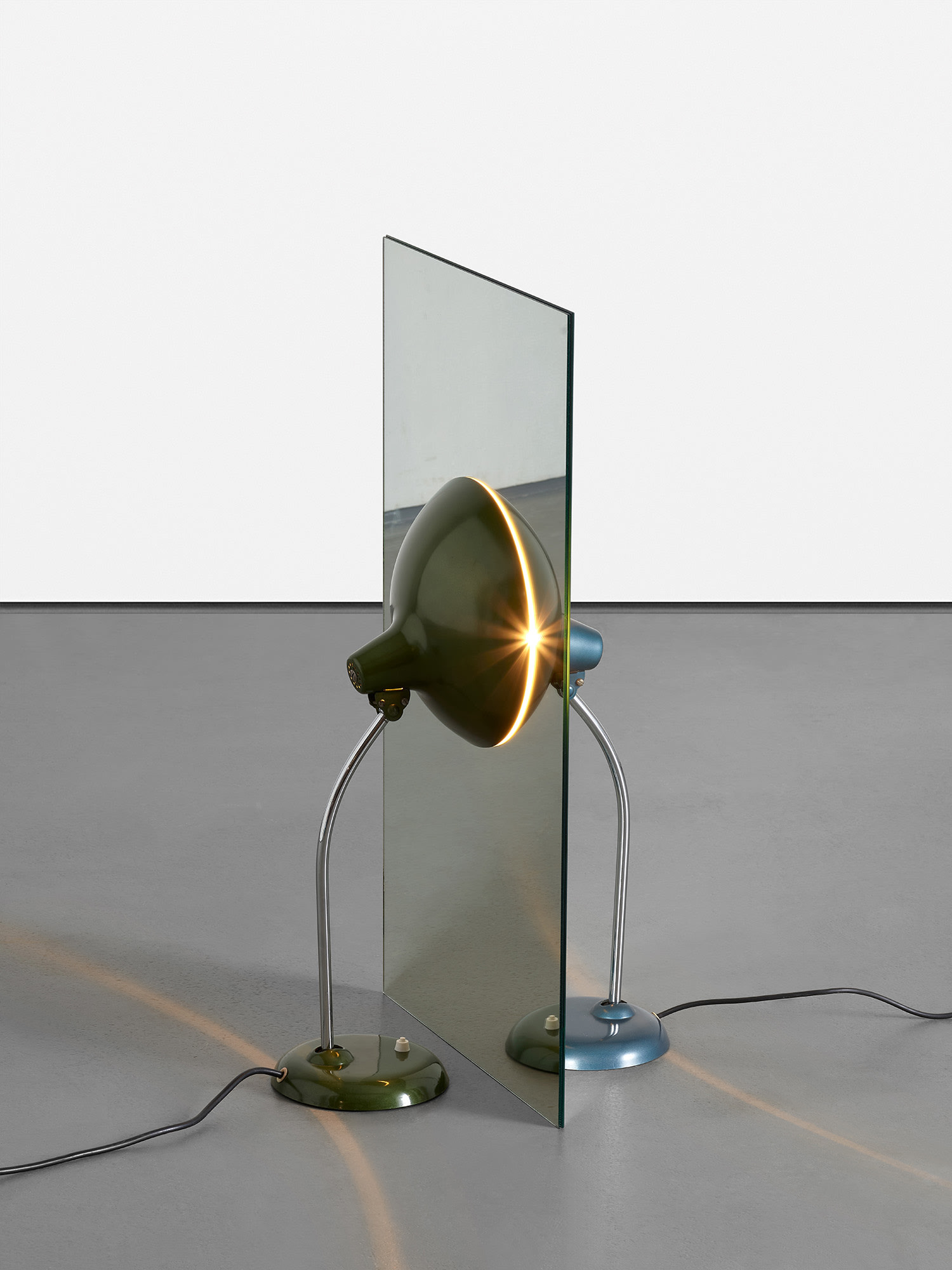
Similarly, Under Different Conditions (Parallel World) from 2008 and Parallelwelt (blau/grün) from 2009 demonstrate her sustained fascination with the idea that the world we perceive is only one of many possible arrangements of the same matter, a theme that runs through her practice like a deep current. Her photographic and mixed media works extend this inquiry into the two dimensional plane with equal conviction. Raum Zeit Krümmung 2, created in 2009, engages directly with the language of physics, borrowing concepts of spacetime curvature from general relativity and translating them into visual and material experience. Ungeklaerter Zustand from 2010 and the more recent Rain (0.
Alicja Kwade
Parallelwelt (blau/grün), 2009
5 hour / 0.5 meter) from 2020 show her range across time and medium, from the conceptually charged installation to works that carry a gentler, more lyrical quality while still refusing sentimentality. The work Totum Pro Parte (Ein Hocker ist ein Bild) pushes further into questions of representation and substitution, asking what it means for one thing to stand in for another, a question that is, at its root, a question about how meaning is made at all. For collectors, Kwade represents a particularly compelling proposition.
Her work sits at the intersection of several collecting traditions without being wholly owned by any of them. Conceptual art collectors find in her practice the rigour and ideational depth they prize. Sculpture and installation collectors are drawn to her mastery of space and material. Photography and mixed media collectors encounter in works like Hemmungsloser Widerstand a precision and intentionality that elevates the photographic object beyond documentation into pure concept.
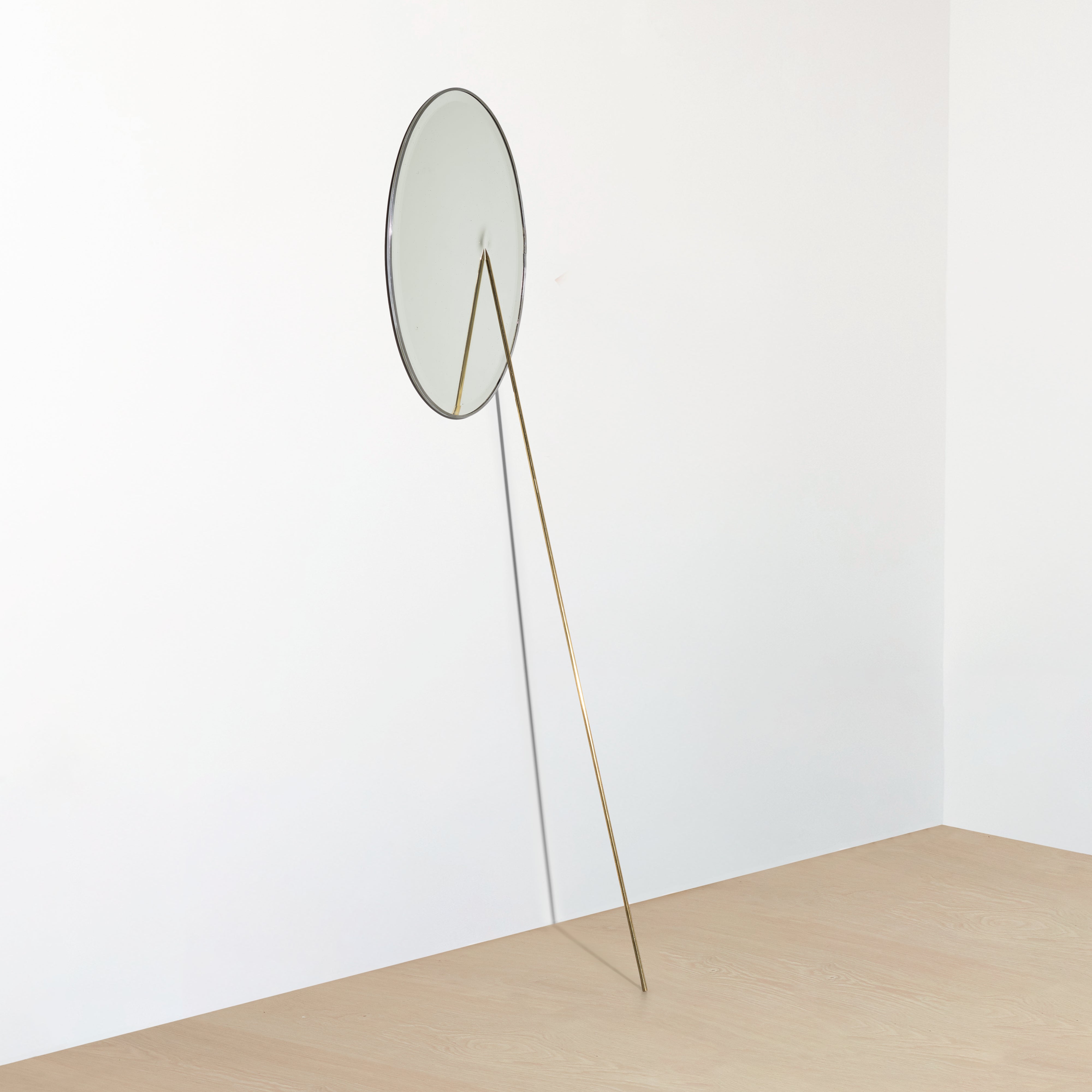
Alicja Kwade
15.04.1931, 2012
Works on paper and editioned pieces, some accompanied by signed Certificates of Authenticity, offer entry points at a range of price levels, while her major sculptural installations represent significant institutional and investment grade acquisitions. Her market has grown steadily and with genuine credibility, supported by serious gallery representation including Galerie Krinzinger in Vienna and König Galerie in Berlin, and by acquisition by major museums globally. Contextually, Kwade belongs to a generation of artists who absorbed the legacies of Joseph Beuys, Bruce Nauman, and the Arte Povera movement while reaching toward something distinctly their own. Her interest in the intersection of art and scientific epistemology places her in conversation with artists such as Olafur Eliasson and Tomás Saraceno, while her economy of means and her use of everyday objects recall the quieter registers of Felix Gonzalez Torres.
Yet she is not derivative of any of these figures. Her voice is genuinely singular, shaped equally by Central European intellectual traditions and by the particular restlessness of Berlin as a creative environment. What makes Kwade matter urgently right now is the quality of the questions she asks and the generosity with which she opens them to the viewer. In an art world that sometimes mistakes complexity for profundity, her work is a reminder that the deepest philosophical territories can be entered through a pocket watch, a stone, a mirror, or a carefully bent steel frame.
She is an artist at full creative stride, with major institutional recognition behind her and, by all evidence, her most significant works still ahead. To collect her now is to participate in something genuinely alive.