Alfred Sisley
Alfred Sisley, Master of Light and Water
Artist Spotlight · The Collection Editorial
“Every picture shows a spot with which the artist himself has fallen in love.”
Alfred Sisley, letter to Adolphe Tavernier, 1892
There is a moment, standing before Alfred Sisley's "Port Marly avant l'inondation" from 1876, when the painted water feels genuinely wet. The sky and the flooded streets of the Seine valley blur into a single luminous field, and the world seems suspended between reflection and reality. That painting, one of several Sisley devoted to the dramatic floods at Port Marly, has come to represent something essential about this artist: his uncanny ability to locate the extraordinary within the apparently ordinary, to find in a grey morning or a mist wrapped canal the full emotional weight of the natural world. Alfred Sisley was born in Paris in 1839 to British parents, his father a prosperous silk merchant with commercial ties between England and France.
Alfred Sisley
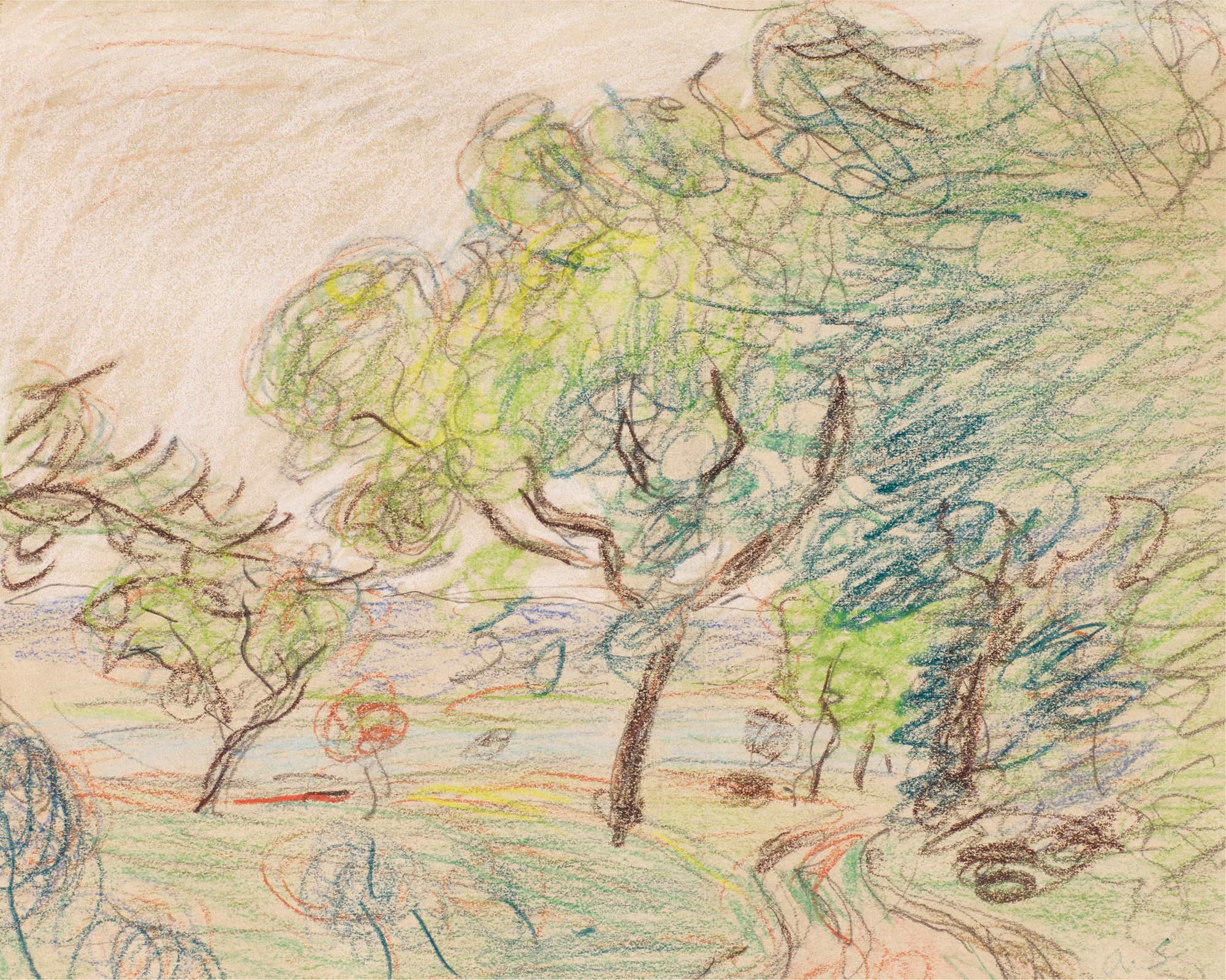
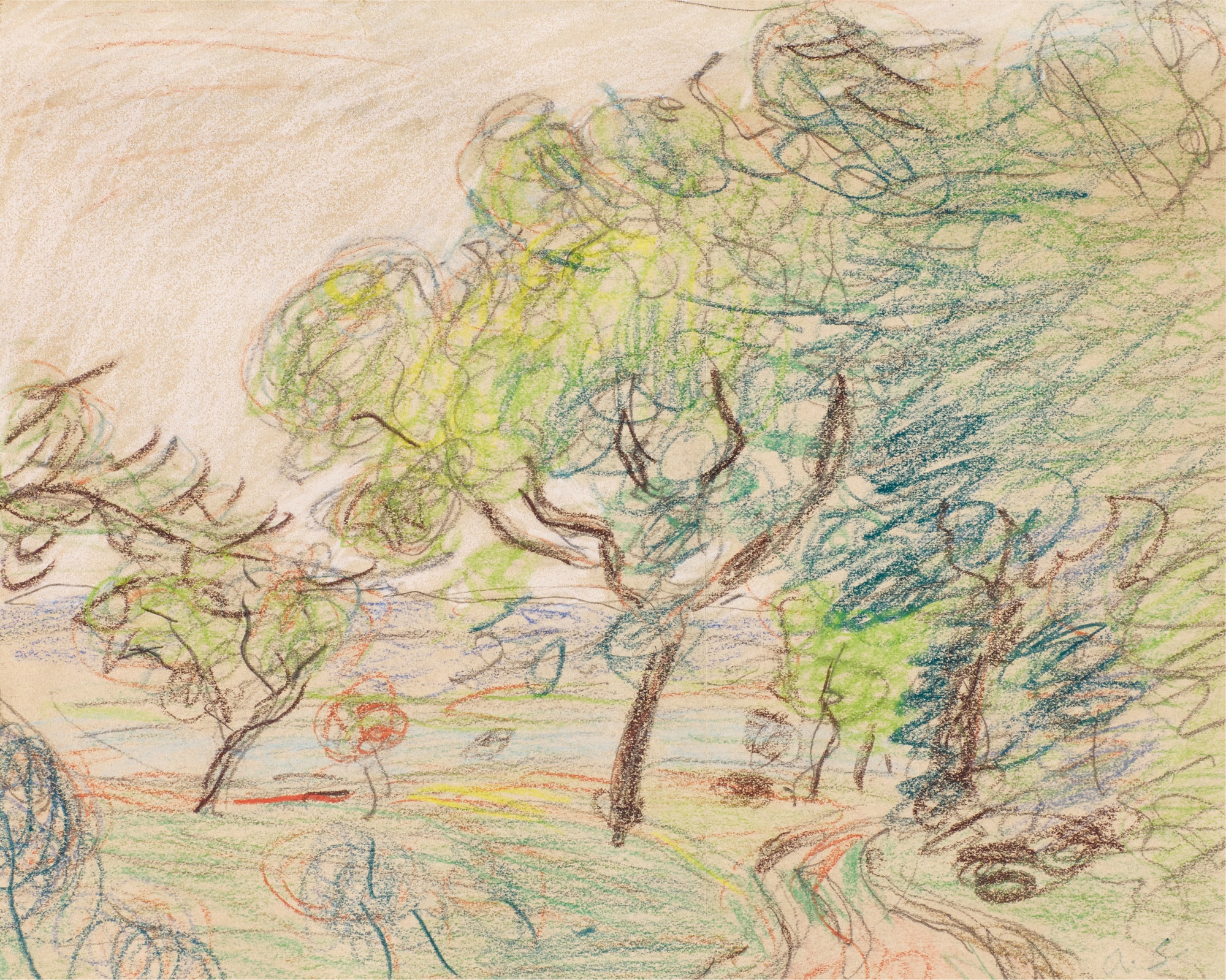
Chemin à la lisière d'un bois
He spent his formative years moving between both cultures, sent to London at eighteen to prepare for a career in business, only to find himself drawn instead to the paintings he encountered in the city's galleries and museums. John Constable and J.M.W.
Turner made an impression that would last a lifetime, particularly their treatment of sky, weather, and the shifting moods of English and French landscape. By 1862 he had abandoned commerce entirely and enrolled at the atelier of Charles Gleyre in Paris, where he met Claude Monet, Pierre Auguste Renoir, and Frédéric Bazille. The friendships formed there would define the next two decades of art history. Sisley's development as a painter was quiet and deliberate rather than dramatic.
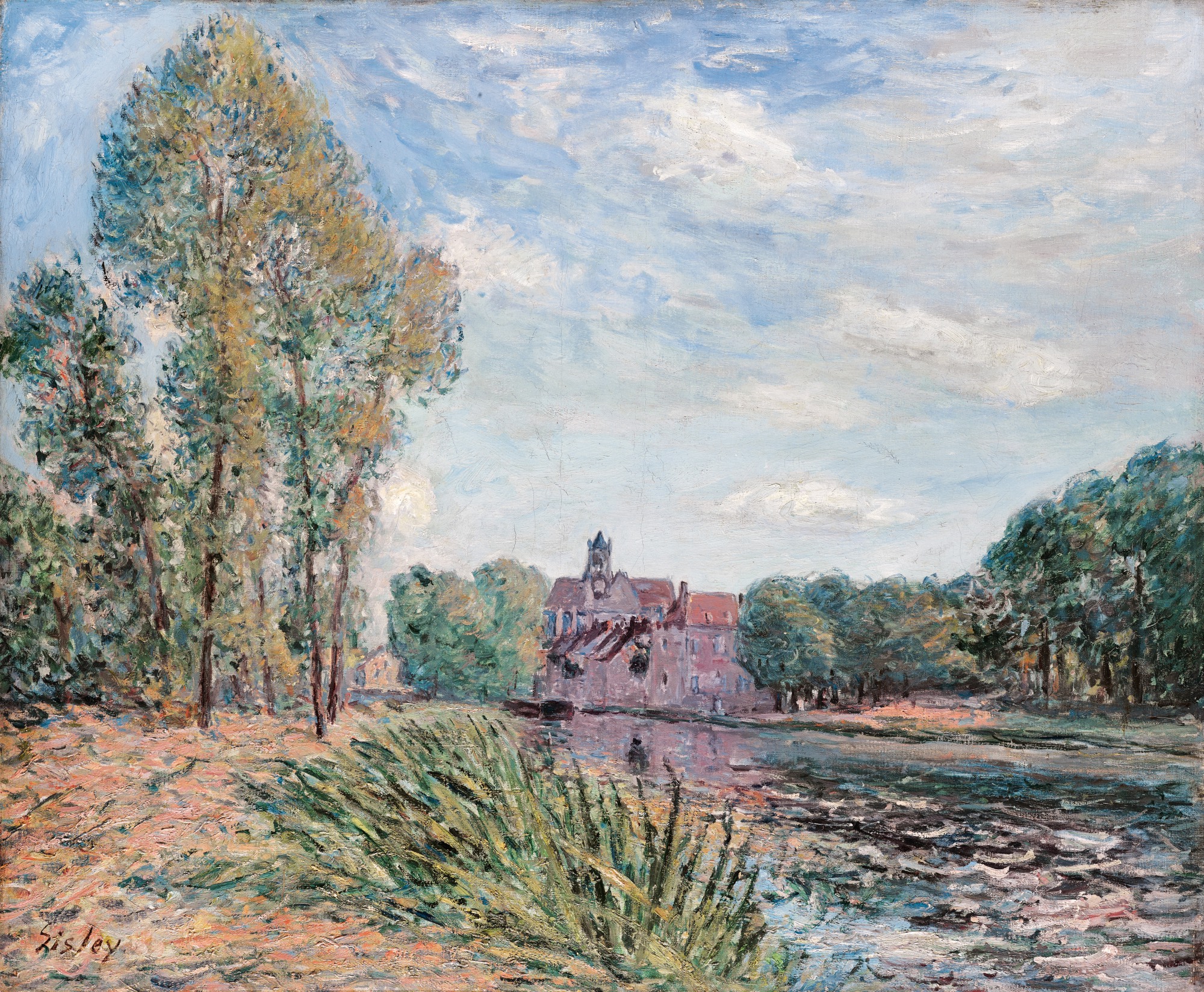
Alfred Sisley
Fin d'après-midi à Moret, 1891
Unlike Monet, who pushed his experiments toward dissolution and abstraction, or Renoir, who turned his attention to the human figure with increasing warmth and sensuality, Sisley remained devoted throughout his career to landscape in its purest sense. He painted the villages and riverbanks of the Île de France with a focused, almost meditative intensity. After the Franco Prussian War and the financial ruin of his father's business, which left Sisley without personal wealth for the rest of his life, he settled in a succession of small towns along the Seine and the Loing: Louveciennes, Marly le Roi, Sèvres, and eventually Moret sur Loing, where he spent his final decade. These places were not picturesque in any conventional tourist sense.
“The sky cannot merely be a background. It contributes to the life of the picture.”
Alfred Sisley, notes on painting, c. 1890
They were working river towns, quietly domestic, and Sisley painted them with the careful attention of someone who genuinely belonged there. What distinguishes Sisley's work is the quality of atmosphere he sustains across an entire canvas. Works such as "Brumes d'automne" from 1874 and "Jour de brouillard sur la Seine, Saint Mammès" from 1880 demonstrate his mastery of tonal subtlety, the way he could render fog and mist not as obscuring forces but as active presences with their own character and weight. His skies, which frequently occupy half or more of a canvas, are among the most carefully observed in the Impressionist tradition.
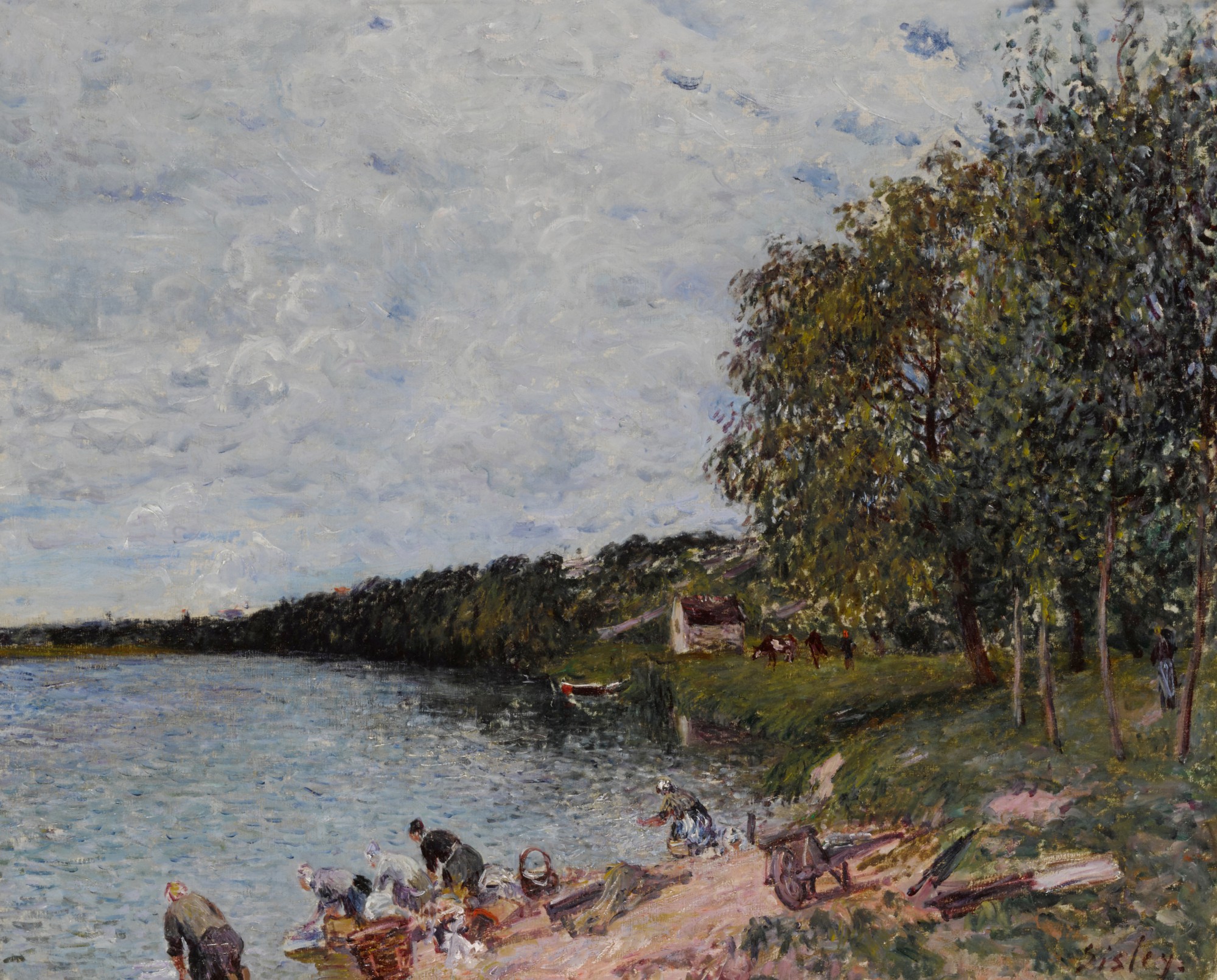
Alfred Sisley
Lavandières près de Champagne, 1879
In "Fin d'après midi à Moret" from 1891 and "Bords du Loing, effet du matin" from 1896, the light has a quality that feels almost photographic in its precision yet entirely painterly in its execution. The Loing river became for Sisley what the Thames was for Whistler or what the Mediterranean coastline would later become for Matisse: a constant subject through which the artist could endlessly explore the relationship between colour, light, and time of day. Sisley's market position during his lifetime was a painful one. Despite exhibiting in the first Impressionist exhibition of 1874 and enjoying the support of the dealer Paul Durand Ruel, who championed the Impressionist group throughout their years of commercial struggle, Sisley never achieved the recognition that came to Monet or Renoir before his death in 1899.
He died of throat cancer at Moret sur Loing, his work still undervalued relative to his peers. The correction came posthumously and has been gathering pace ever since. Major auction houses have seen his canvases achieve significant results over the past three decades, and works from his mature Loing period in particular are now recognised as among the finest achievements of the Impressionist movement. Collectors are drawn to Sisley for reasons that distinguish him clearly from his contemporaries: there is a quietness to his work, a lack of social drama or anecdote, that feels deeply restful in the current collecting climate.
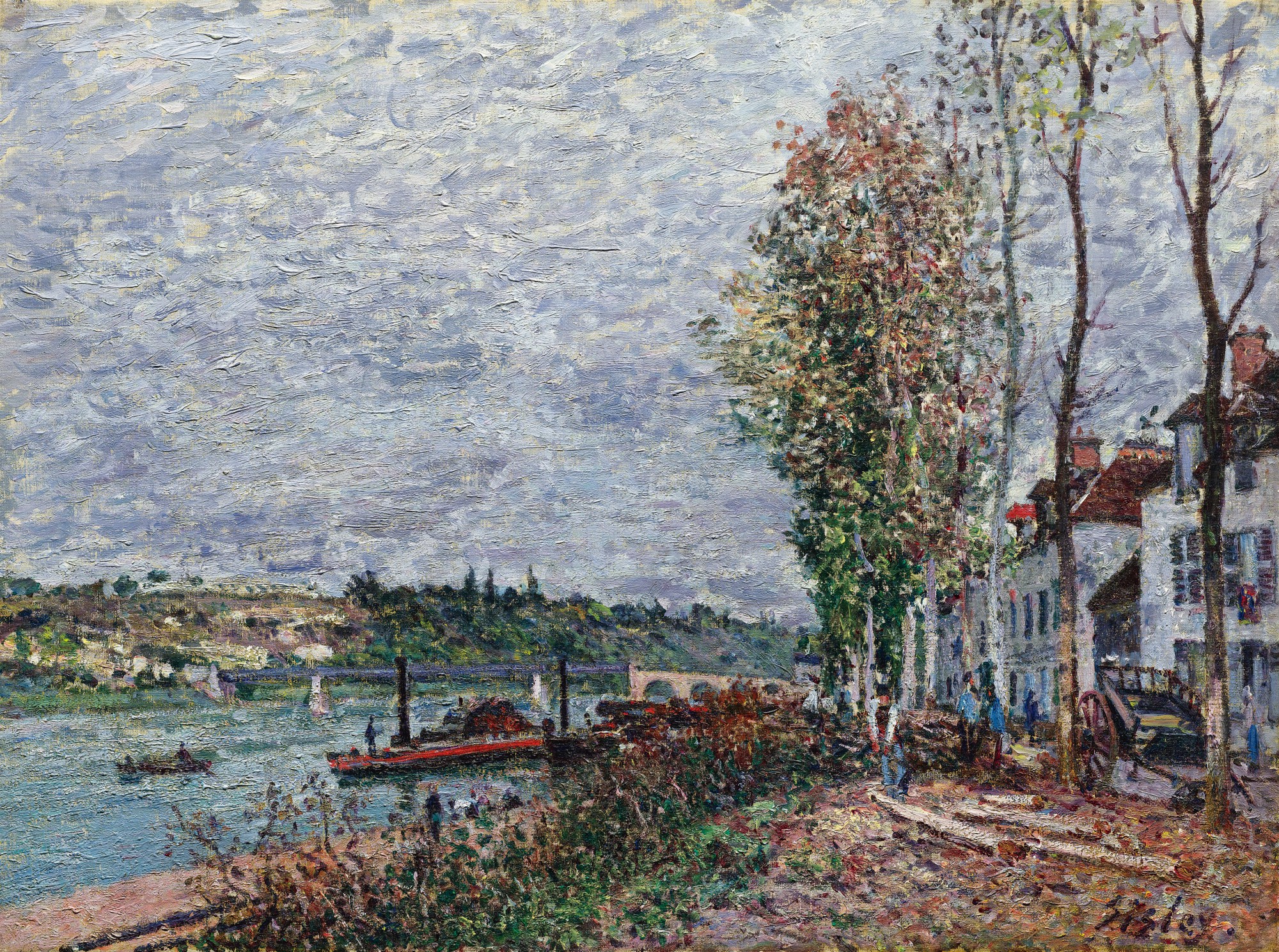
Alfred Sisley
Jour de brouillard sur la Seine, Saint-Mammès , 1880
His paintings ask to be lived with rather than looked at from a respectful distance. In terms of what to seek out, the river and canal scenes represent the strongest and most consistently admired body of work. Paintings depicting the Loing at Moret or Saint Mammès, the flooding sequences at Port Marly, and the softly lit morning and late afternoon studies from the 1880s and 1890s are the works that command the most sustained critical and collector attention. Works on paper, including the rare coloured crayon compositions such as "Chemin à la lisière d'un bois", offer an accessible point of entry into the collection and demonstrate the sureness of his draftsmanship.
His lithographs, among them "The River Bank or Geese" from 1897, are comparatively scarce and represent an often overlooked aspect of his printmaking practice during his final years. Sisley occupies a unique position within the broader Impressionist story. He is genuinely comparable to Camille Pissarro in his commitment to landscape as a serious and sufficient subject, and there is a kinship too with the Barbizon painters, especially Camille Corot and Charles François Daubigny, whose influence shaped the Impressionist generation's understanding of working outdoors. Yet Sisley brought something that neither the Barbizon painters nor his own contemporaries quite replicated: a tenderness toward the overlooked corner of France he had chosen as home, a painter's fidelity to a specific place that feels less like artistic strategy and more like genuine devotion.
His legacy today is a quietly expanding one. Museum collections across Europe and North America hold significant examples of his work, from the Musée d'Orsay in Paris to the National Gallery in London and the Art Institute of Chicago. Scholars have increasingly attended to his contribution as something not merely supplementary to the careers of Monet and Renoir but as a distinct and irreplaceable voice within the Impressionist chorus. For collectors and admirers coming to his work for the first time, the experience is often one of surprised recognition: a painter of exceptional refinement and feeling, whose greatest canvases carry the specific weight of a cold morning on a French river, rendered with enough care and love to make you feel it decades and centuries later.
Explore books about Alfred Sisley