Alexander Gardner
Alexander Gardner: Witness to a Nation's Soul
Artist Spotlight · The Collection Editorial
In October 1862, New Yorkers crowded the doorway of Mathew Brady's gallery on Broadway, drawn by a sign that read simply: 'The Dead of Antietam.' Inside, for the first time in American history, the public confronted the unvarnished reality of battlefield death through photographs. Many of those images were made by Alexander Gardner, and the moment marked a seismic shift in how human beings would understand war, truth, and the moral weight of a photograph. That encounter on Broadway was not merely a gallery exhibition.
Alexander Gardner
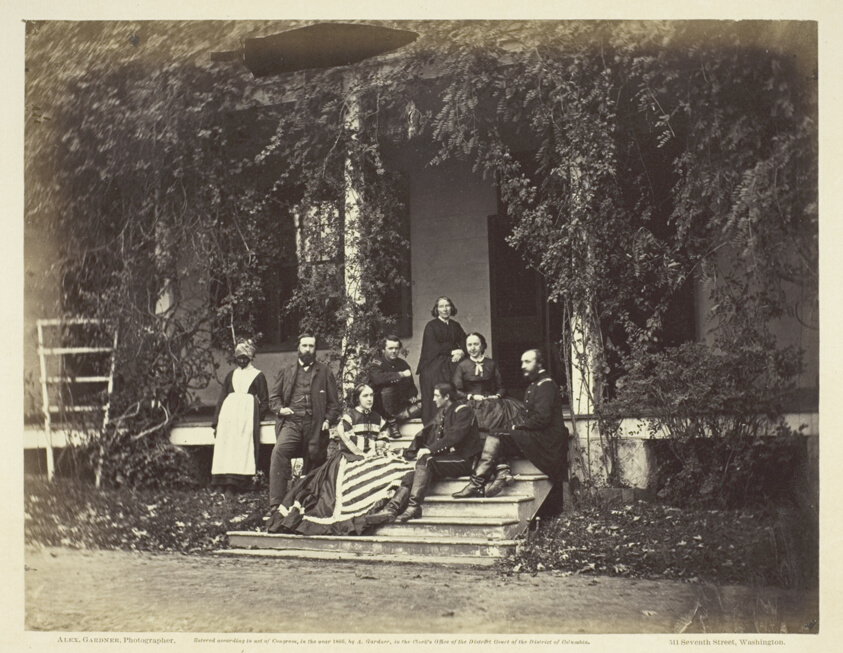
Scene in Pleasant Valley, Maryland, 1862
It was the birth of modern photojournalism. Alexander Gardner was born in 1821 in Paisley, Scotland, a town long associated with textile craft and radical political thought. He came of age during a period of intense social reform in Britain, and his early years were shaped by cooperative idealism. He worked as a jeweler and was involved with Owenite socialist communities, even organizing an emigration scheme to Iowa in the early 1850s.
Though that utopian colony ultimately failed, the journey brought Gardner permanently to the United States, a country on the verge of the most consequential rupture in its history. He arrived in New York around 1856 and quickly found his way into the studio of Mathew Brady, where his technical aptitude and organizational intelligence set him apart immediately. At Brady's gallery Gardner mastered the wet collodion process and rose to manage the Washington, D.C.
Alexander Gardner
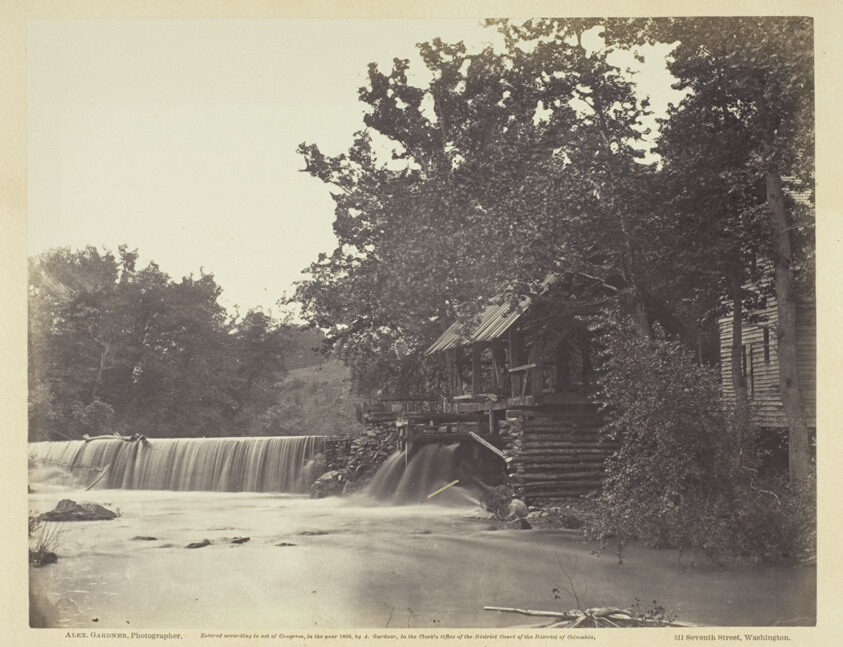
Quarles' Mill, North Anna, Virginia, 1864
operation. He possessed a rare combination of scientific precision and compositional instinct, qualities that would define his mature work. When the Civil War began in 1861, Gardner was positioned at the center of the Union's wartime capital, with access to military officials, politicians, and the President himself. He photographed Abraham Lincoln on multiple occasions across several years, producing some of the most psychologically penetrating portraits of any American leader in history.
The intimacy and gravity in those images speak to a relationship built on trust as much as technical skill. Gardner parted ways with Brady around 1862, a professional separation that freed him to build his own organization of field photographers and claim authorship over his own images. This was no small matter in an era when studio owners routinely took credit for the work of their employees. Gardner's insistence on attribution was a quiet revolution in the ethics of photographic practice.
Alexander Gardner
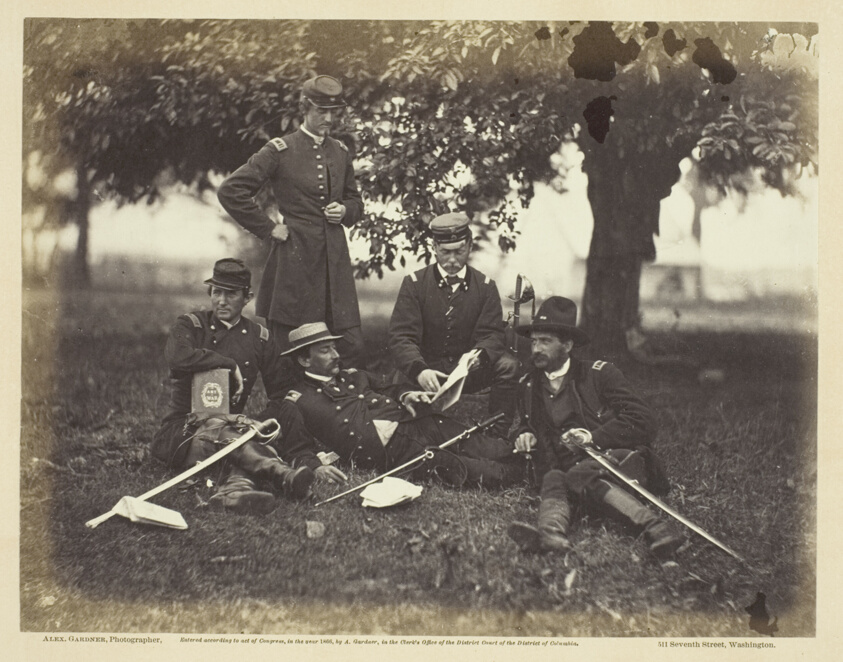
Studying the Art of War, 1863
He embedded himself with the Army of the Potomac and moved through some of the war's most devastating theaters: Antietam, Fredericksburg, Gettysburg, the Wilderness. His images from Antietam, made in September 1862 just days after the bloodiest single day in American military history, remain among the most important photographs ever produced on this continent. The capstone of Gardner's Civil War practice arrived in 1866 with the publication of Gardner's Photographic Sketch Book of the War, issued in two volumes and containing one hundred albumen prints. It stands as the first photographic book of war in American history and one of the most ambitious publishing projects of the nineteenth century.
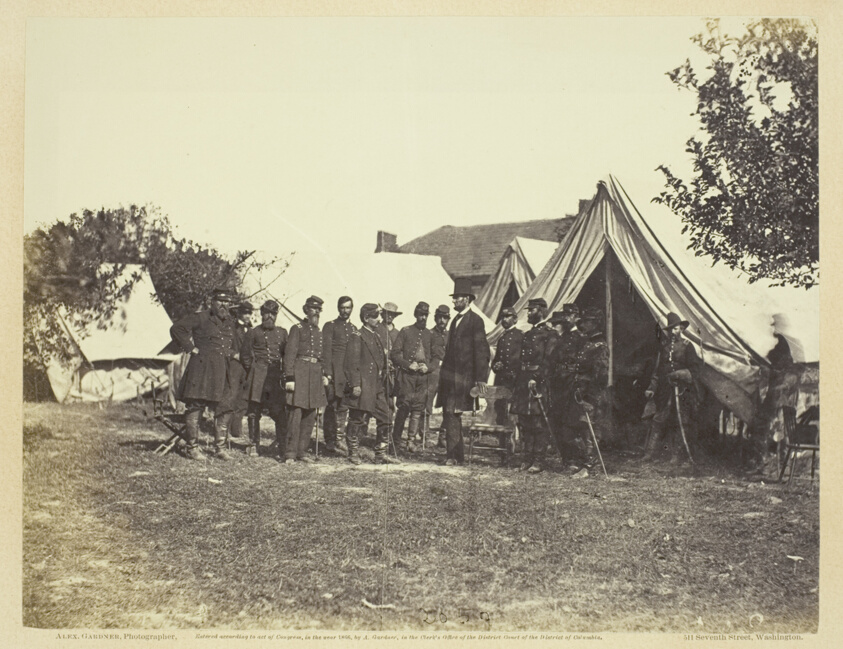
Each print was individually mounted and accompanied by extended captions written in a literary register that balanced factual documentation with moral reflection. Works such as 'Scene in Pleasant Valley, Maryland,' 'Burnside Bridge Across Antietam Creek,' 'Scouts and Guides to the Army of the Potomac,' and the quietly devastating 'Studying the Art of War' demonstrate Gardner's capacity to find both grandeur and human fragility within a single frame. 'President Lincoln on Battle Field of Antietam,' plate 23 from the first volume, is perhaps the single image that most completely captures the weight of leadership during national catastrophe. The Sketch Book was produced in a limited edition and even in its own time was considered a rare and significant artifact.
Alexander Gardner
President Lincoln on Battle-Field of Antietam, 1862
Today complete sets appear almost exclusively at major auction houses and in institutional collections. For collectors, Gardner's work occupies a singular position at the intersection of art history, American political history, and the history of photography as a medium. His albumen prints from the Sketch Book are the most actively sought of his works, and individual plates appear with meaningful frequency at auction through houses including Christie's, Sotheby's, and Swann Galleries. Condition is paramount, as albumen prints from this period are vulnerable to fading and foxing.
Plates with strong silver retention and clean mounts command the highest premiums. The bound volumes, especially complete sets with intact captions, are extraordinary rarities and belong in conversation with the most significant American books of any kind. Collectors drawn to documentary photography, to American realism, or to the material culture of the Civil War era will find Gardner's prints to be among the most historically resonant objects available on the market. Gardner's work sits in rich dialogue with the broader history of nineteenth century photography.
His contemporaries Timothy O'Sullivan and George Barnard both served as field photographers under his direction before pursuing independent careers of enormous distinction. O'Sullivan would go on to photograph the American West with a geological severity that owes much to what he learned alongside Gardner. Barnard's Photographic Views of Sherman's Campaign, published in 1866 the same year as the Sketch Book, is the closest analog in ambition and scope. Together these photographers established the vocabulary of American documentary photography that would run forward through Lewis Hine, Dorothea Lange, and W.
Eugene Smith. Gardner also photographed the American West after the war, working with survey expeditions along the route of the Union Pacific Railroad, images that demonstrate his landscape instincts were as refined as his documentary ones. Alexander Gardner died in Washington, D.C.
in 1882, having spent the final decades of his life as a successful portrait photographer with a prominent studio. His reputation faded somewhat in the decades after his death, obscured partly by the long shadow of Brady's more aggressive self promotion. The twentieth century brought sustained reappraisal, and Gardner is now recognized as one of the founding figures of photographic art. His Sketch Book is held in the collections of the Library of Congress, the George Eastman Museum, the Metropolitan Museum of Art, and institutions across the world.
What endures in his photographs is not merely historical record but something closer to conscience: a belief that the camera carried moral obligations, that to witness was also to testify. For collectors and admirers of photography, of American history, and of images made with both craft and conviction, Gardner's work is not simply important. It is irreplaceable.
Explore books about Alexander Gardner
Alexander Gardner: American Photographer in the Civil War
D. Mark Katz
Gardner's Photographic Sketch Book of the War
Alexander Gardner
Alexander Gardner: The Complete Civil War Photographs
Peter S. Carmichael and Caroline E. Janney
A Terrible Swift Sword: The Life of Alexander Gardner
Keith F. Davis
Gardner's Photographic Art: Civil War Images and Legacy
Josephine Cobb