Alex Israel
Alex Israel, Where Hollywood Dreams Meet Art
Artist Spotlight · The Collection Editorial
“Los Angeles is one of the main subjects of my work. Every day is an experience of all of this material, which for me, is an art material.”
Alex Israel
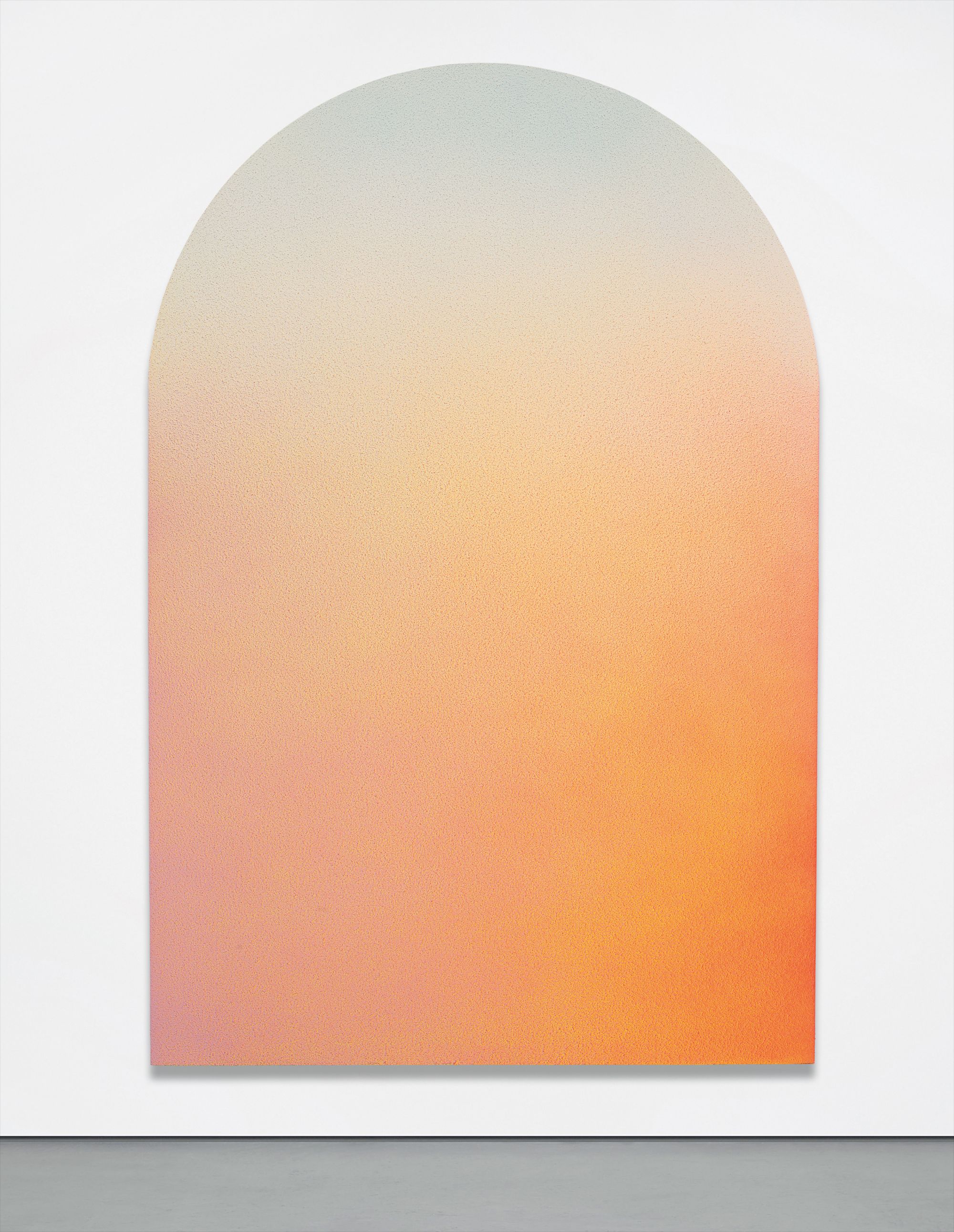
There is a particular quality of light in Los Angeles that resists description. It is warm and diffuse, neither fully real nor fully imagined, and it falls across the city with the casual authority of a film set that has been running for a century. No contemporary artist has claimed that light more convincingly than Alex Israel, whose Sky Backdrop paintings have become one of the defining visual signatures of American art in the past decade. When his work was presented at the Nasher Sculpture Center in Dallas and the Bass Museum in Miami Beach, visitors encountered something that felt simultaneously familiar and entirely new: the grammar of Hollywood translated into the language of fine art, with a precision and intelligence that left the culture saturated surface glowing long after you walked away.
Alex Israel
Willy Wonka and the Chocolate Factory
Israel was born in Los Angeles in 1982, which means he grew up inside the very mythology he would later dissect and celebrate. To be raised in that city is to absorb a particular understanding of image making, of how surfaces communicate desire, of the strange intimacy between the constructed and the authentic. Los Angeles does not hide its artifice; it makes artifice into a way of life, and Israel understood from an early age that this quality was not a weakness but a profound philosophical condition worth exploring. His formation was shaped by the constant presence of the entertainment industry, by the studio lots and billboard corridors and swimming pools that constitute the city's visual vocabulary, and by a keen awareness that all of this material was, as he has said himself, an art material waiting to be worked.
His artistic development drew on a rich lineage of post war American art, situating his practice within the conceptual and painting traditions that stretch from Pop Art through the Pictures Generation and into the image saturated present. Israel absorbed the lessons of artists who understood that popular culture was not beneath serious artistic inquiry but was in fact its most urgent subject. He came to his mature practice with both a painter's sensitivity to surface and material and a conceptual artist's interest in the systems and structures that produce meaning. This combination gave his work an unusual double character: visually seductive and intellectually exacting at the same time, a quality that is genuinely difficult to achieve and that marks him as one of the most distinctive voices of his generation.
Alex Israel
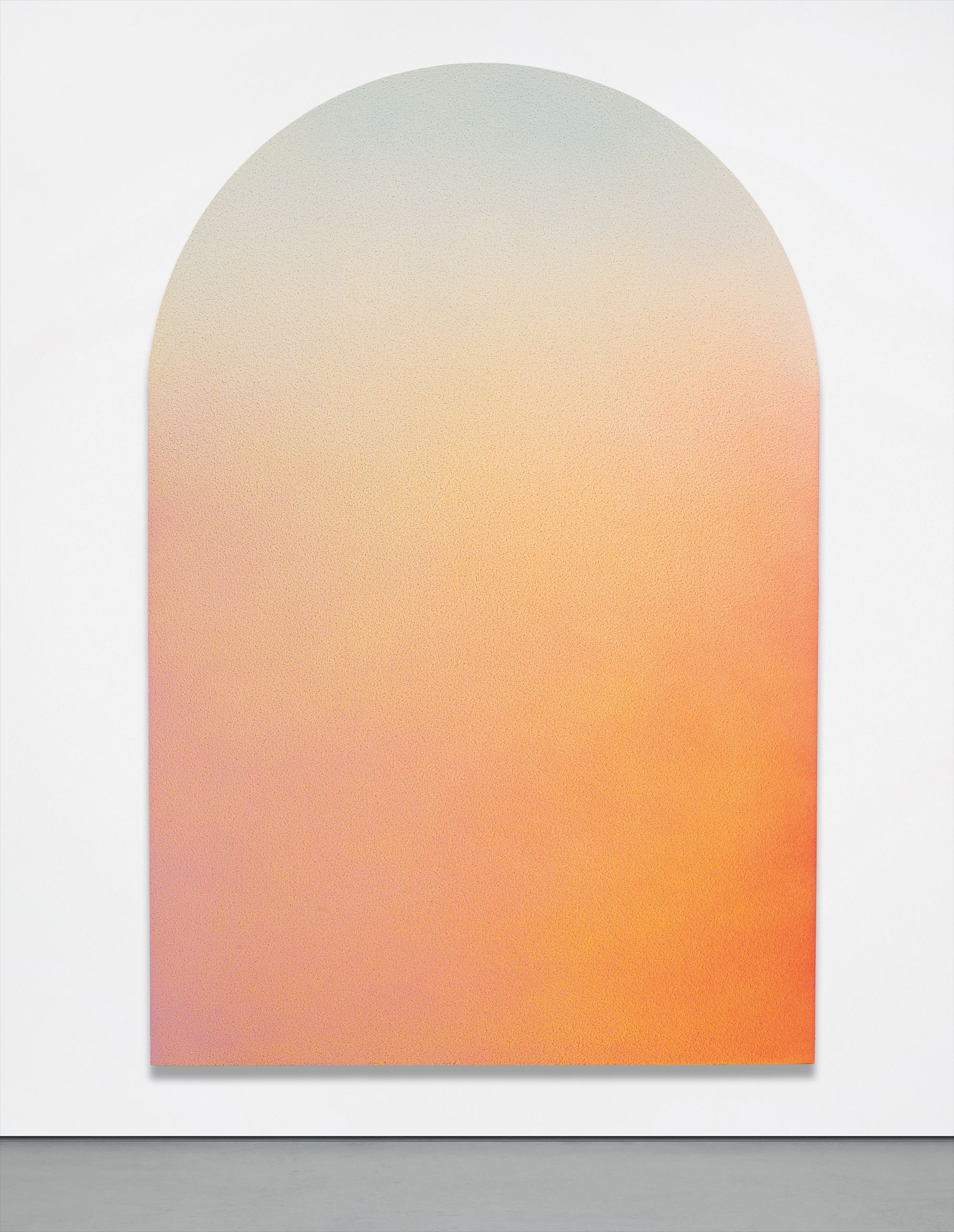
Alex Israel makes images, objects and experiences that balance an elevated, almost debased rush of visual pleasure with a scalpel-like intellectual sharpness. Like Los Angeles, the artist’s home and—in many ways his most fertile medium—his works find their depth in the seamlessness of their surface and the artifices that construct them and which they in turn deconstruct. It is clear that the artist, one of the most important voices of his generation, is able to instrumentalize our star-filled and wide-eyed Hollywood dreams and collective memories within a specific lineage of post-war American painting and conceptual, intellectually driven art making.
The Sky Backdrop paintings are the works for which Israel is perhaps best known, and they reward close attention. Created in acrylic on stucco, the paintings reproduce the airbrushed gradient skies that served as literal backdrops on Hollywood film sets, those painted canvases that stood behind actors during outdoor scenes and created the illusion of a California sky for audiences around the world. Israel takes this supremely functional, thoroughly artificial image and presents it as painting, inviting questions about originality, reproduction, and the nature of cinematic illusion that connect to deep currents in art history. The stucco surface adds a tactile, architectural quality that grounds these luminous skies in the physical world of Los Angeles, where stucco is the material of houses, walls, and storefronts throughout the city.
“I've always been interested in the magic of the movies, in the connection between how they manipulate us and how art can manipulate us.”
Alex Israel, 2013
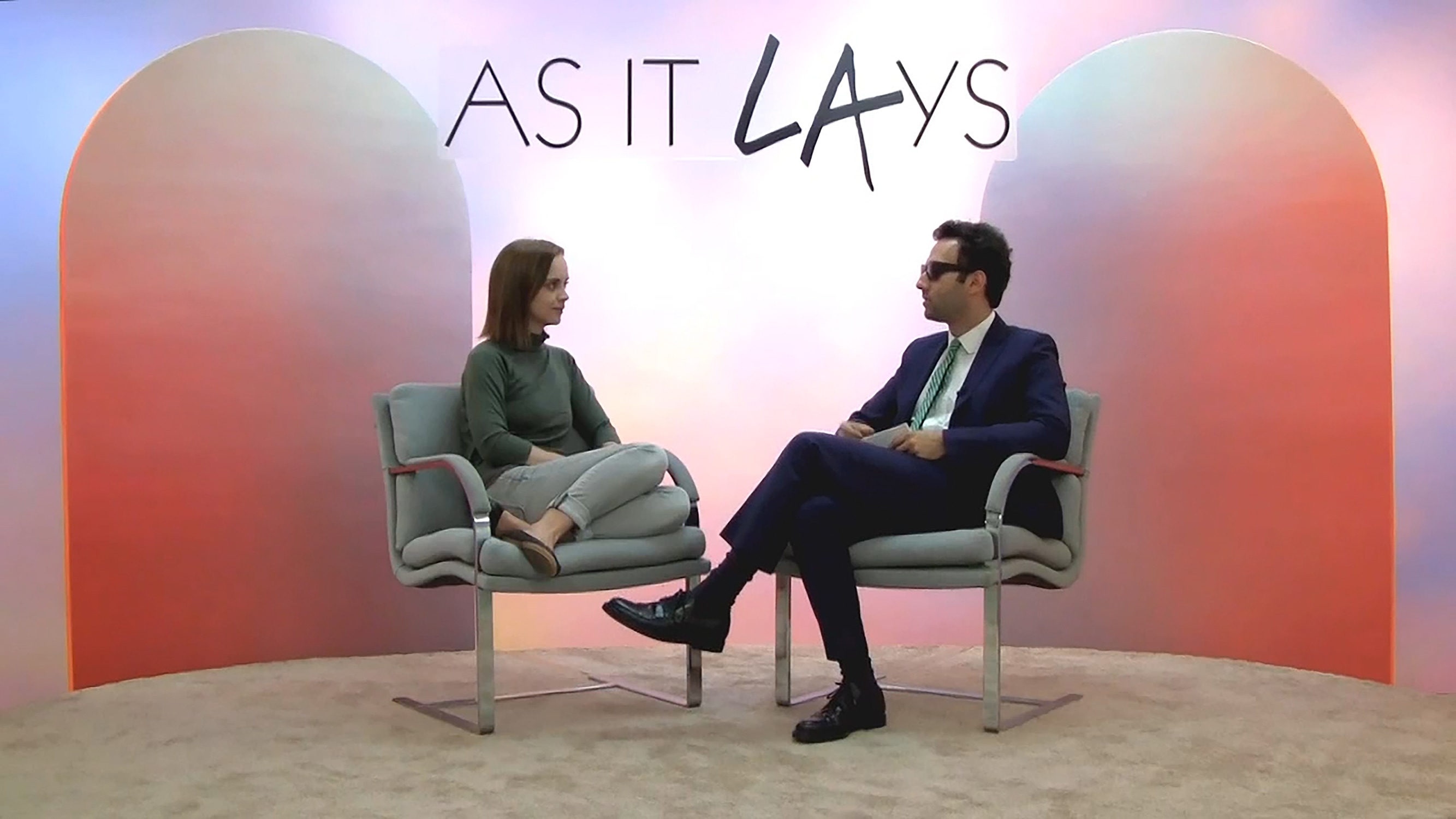
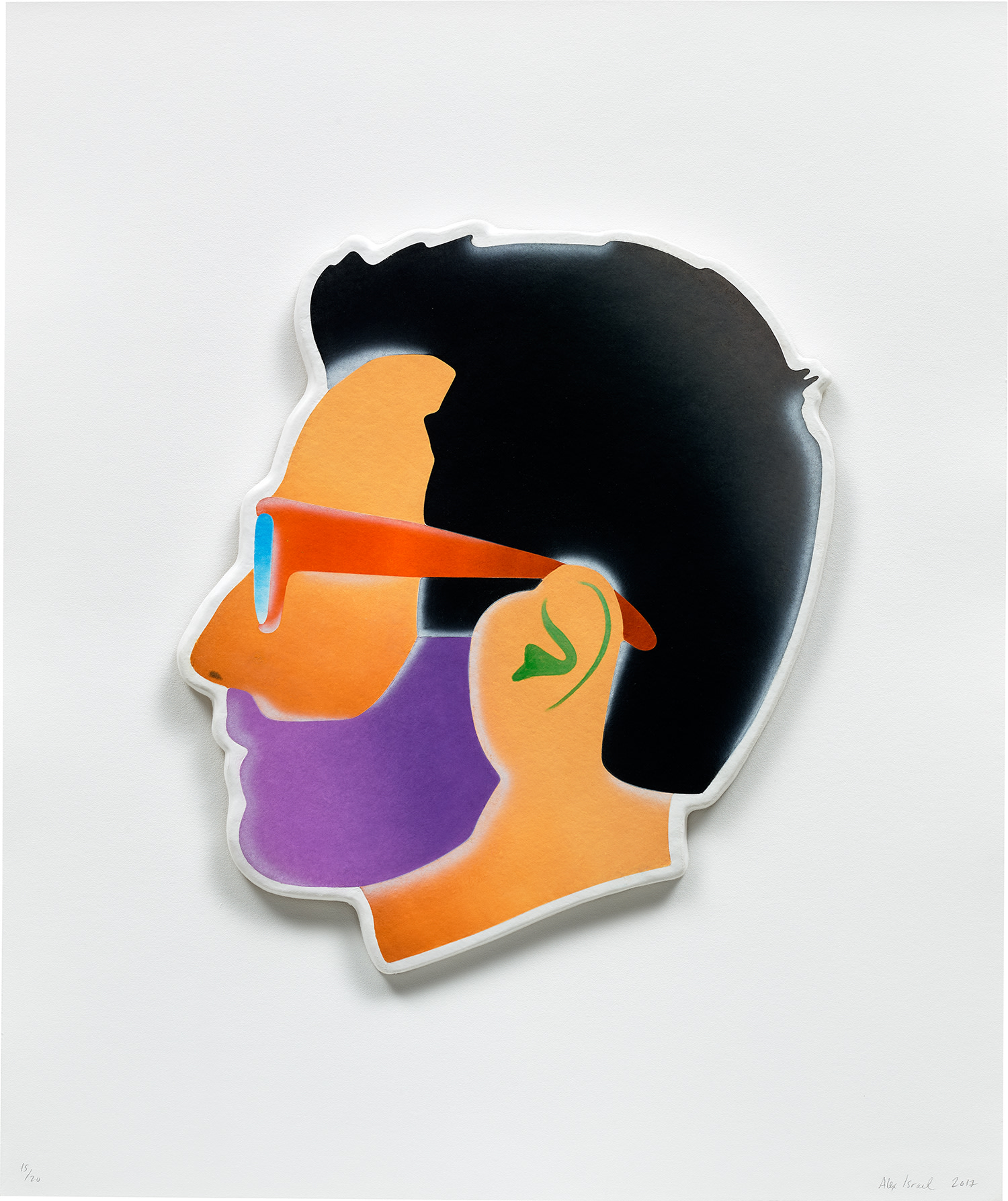
His Self Portrait works, published through the prestigious Mixografia studio in Los Angeles, demonstrate that his interest in image and persona extends to his own presence within the cultural landscape he maps so carefully. Israel has also worked extensively across sculpture and multimedia, producing works that deepen the themes running through his paintings. The set of multiples that includes a marble in a styrofoam cup, a cast bronze piece, and a crystal glass piece reveals his talent for transforming ordinary objects associated with daily Los Angeles life into resonant art objects that carry weight far beyond their modest materials. His video work, including the high definition digital piece As It Lays from 2012, extends his investigation into the storytelling structures and visual codes of Hollywood, taking the durational and narrative possibilities of film as another medium through which to examine the city and its dreams.
Alex Israel
As It Lays, 2012
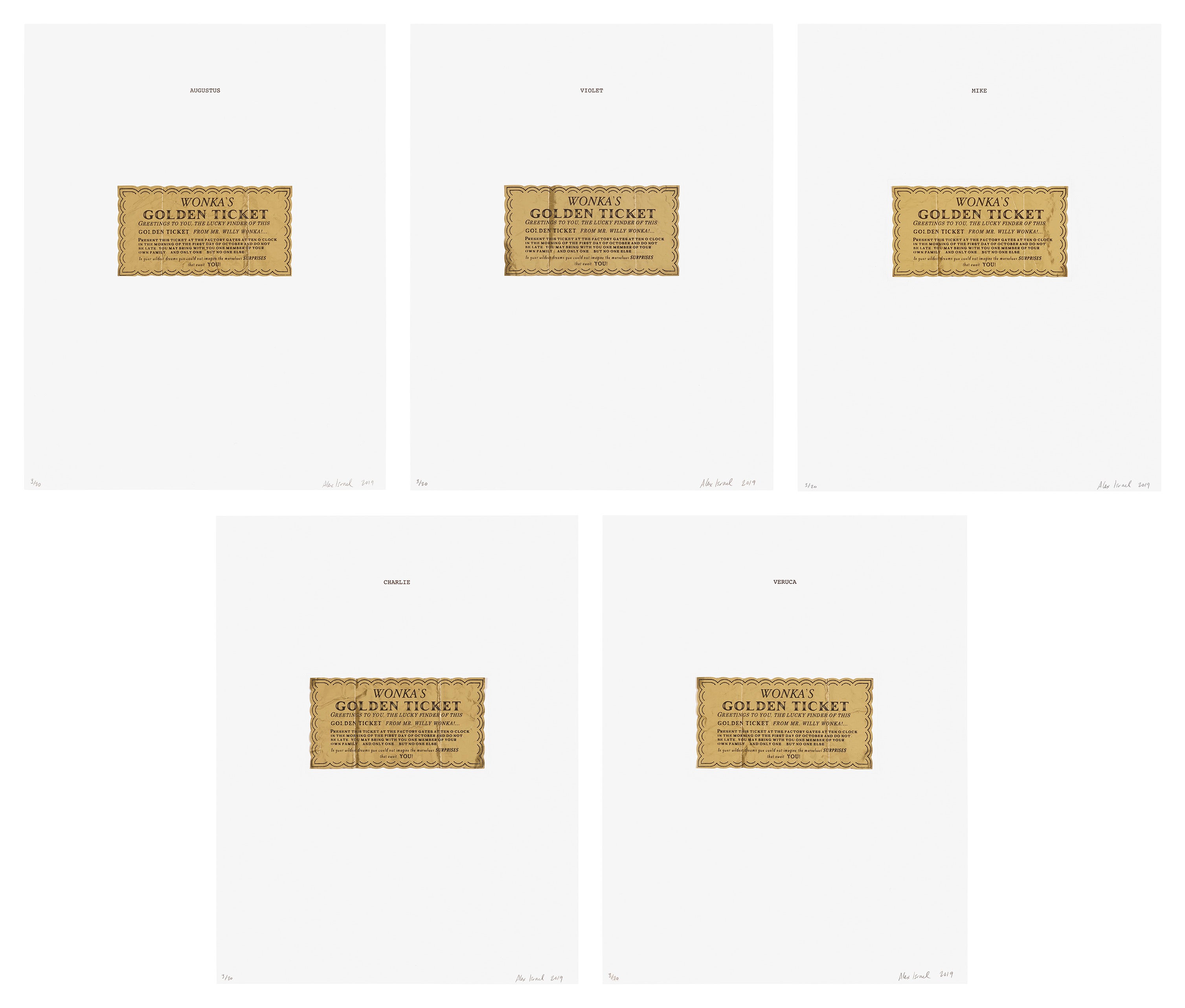
His Willy Wonka and the Chocolate Factory screenprints, rendered on gold foil and mounted with debossed paper in a cloth covered portfolio, demonstrate a sophisticated engagement with the aesthetics of luxury, collectibility, and the cultural memory embedded in beloved films, transforming nostalgia into a material and conceptual proposition. From a collecting perspective, Israel's work occupies a compelling position in the contemporary market. His prints and multiples, particularly those produced through Mixografia, offer accessible entry points into a practice that commands serious attention at the institutional level, and the care with which these editions are produced reflects his commitment to quality across every format. His paintings on stucco represent the most significant and sought after tier of his production, and collectors who have followed his career from his early exhibitions have watched these works appreciate considerably in both cultural and financial terms.
“Hollywood is not simply a town, but also an attitude and a way of moving and being.”
Alex Israel
The specificity of his materials, the stucco, the airbrushed acrylic, the ceramic tiles that appear in some works, gives his paintings a material identity that photographs poorly but rewards presence, which is one reason that seeing them in person remains such a persuasive experience. His work has been exhibited at the Museum of Contemporary Art Los Angeles, affirming his standing within the institutional conversation around serious contemporary painting. In terms of art historical context, Israel belongs to a constellation of artists who have used Los Angeles as both subject and method. His engagement with the visual culture of Hollywood and celebrity connects him to traditions running from Ed Ruscha's engagement with the vernacular landscape of Southern California through the work of artists like Richard Prince, who examined the seductive power of advertising and mass media imagery, and John Baldessari, whose long investigation of film and popular culture shaped the conceptual possibilities available to younger Los Angeles artists.
Alex Israel
Self-Portrait
Israel brings his own generation's fluency with branding, digital image circulation, and the omnipresence of screens to these questions, making his practice feel distinctly of its moment while remaining grounded in a serious art historical awareness. What Alex Israel ultimately offers is something rare in contemporary art: a genuinely coherent vision of a place and a culture, executed with both warmth and rigor. Los Angeles, as he inhabits and transmits it, is not a backdrop for irony or critique but a living subject whose complexity and beauty he renders with something approaching love. His work reminds us that the surfaces through which a culture represents itself are never merely surfaces, that they carry history, desire, and meaning in every gradient and glowing inch.
For collectors, for institutions, and for anyone who has ever looked up at a California sky and wondered whether what they were seeing was entirely real, his art offers an answer that is as generous as it is intelligent.
Explore books about Alex Israel