Alex Da Corte
Alex Da Corte Makes America Deliriously Beautiful
Artist Spotlight · The Collection Editorial
Something remarkable happens when you stand inside an Alex Da Corte installation. The air itself seems to change color. Candy pinks and acid greens and the particular blue of a motel swimming pool press in from every direction, and the familiar world the world of chip bags and Christmas ornaments and animatronic television characters suddenly feels both completely knowable and profoundly strange. Da Corte has been building this singular universe for well over a decade, and in that time he has emerged as one of the most distinctive voices in American contemporary art, an artist whose work is simultaneously joyful and unsettling, tender and rigorous, utterly personal and deeply collective.
Alex Da Corte
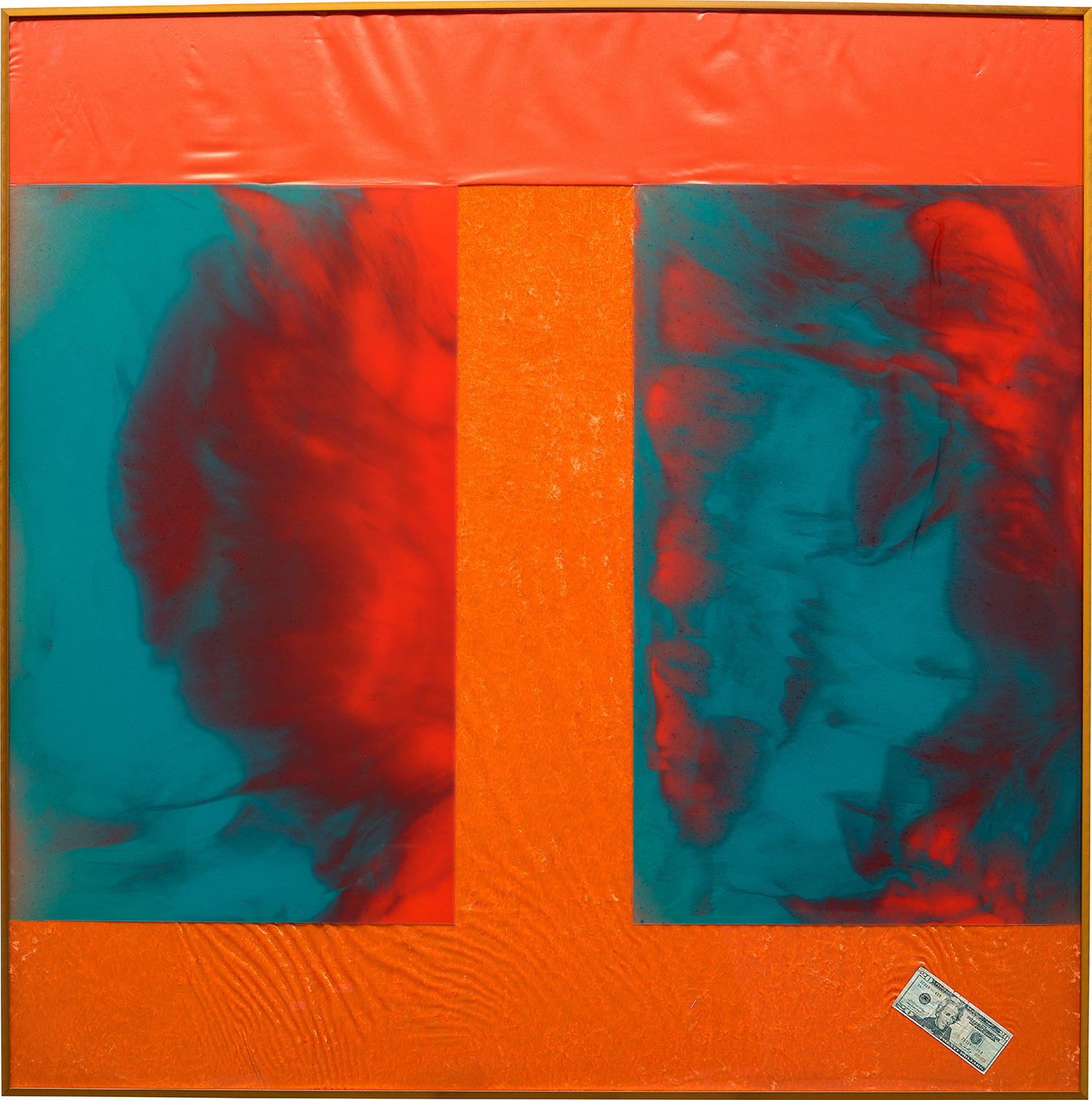
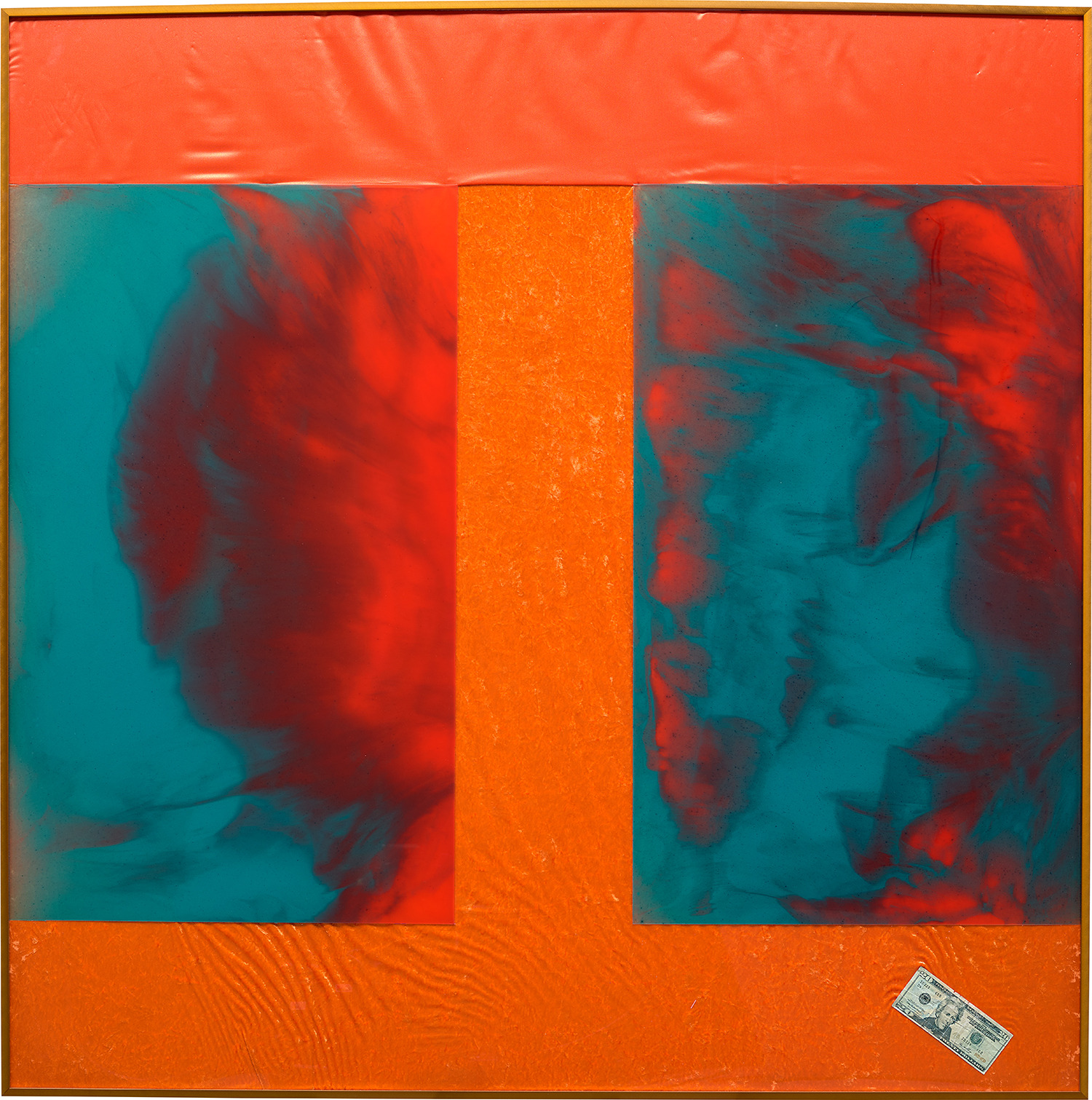
Solid State (Robbing Peter to PayPal), 2013
Da Corte was born in 1980 and grew up shaped by the visual grammar of late twentieth century American consumer culture, that relentless flood of branded imagery, mass produced objects, and television archetypes that formed the common language of his generation. Where other artists might treat this material as subject matter for critique, Da Corte approaches it with something closer to devotion. He is drawn to the objects that surround ordinary American life precisely because they carry genuine emotional weight. A Dorito bag is not merely a symbol of corporate excess in his hands; it is a relic, a fragment of lived experience, a thing that someone held and opened and ate from while watching television on a Tuesday night.
This capacity for empathy toward the everyday is what distinguishes his practice and what gives his work its unusual warmth. Da Corte studied at the University of the Arts in Philadelphia, a city whose scrappy, unglamorous energy has clearly left a mark on his sensibility. Philadelphia is not New York, not Los Angeles; it is a place where American mythology accumulates without the polish of coastal ambition, and you can feel that influence in the texture of Da Corte's objects and environments. His early development as an artist was shaped by a deep engagement with Pop Art and its legacies, with the work of Andy Warhol in particular, as well as with Surrealism's commitment to finding the uncanny within the mundane.
Alex Da Corte
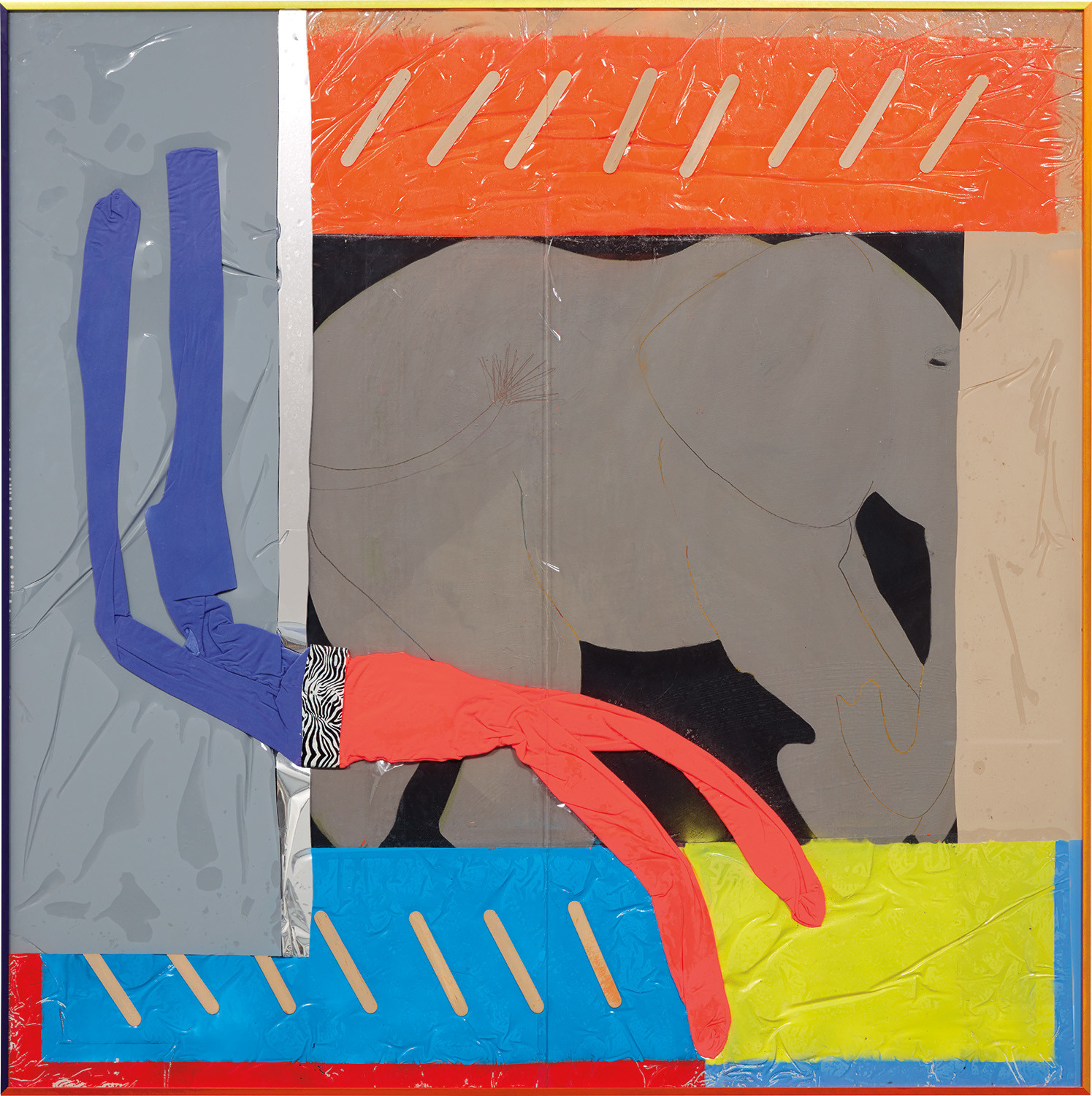
Elephant Bends, 2013
These influences did not produce imitation but rather a genuine synthesis, a way of seeing that is entirely his own. The works for which Da Corte has become known fall broadly into two modes that are deeply interconnected. On one side are his sculptural assemblages and wall works, dense accumulations of found and purchased objects that reward extended looking. On the other are his video installations, immersive environments in which the artist himself appears in elaborate costumes and personas, enacting strange rituals that seem to hover between advertisement, fever dream, and myth.
Both modes share a commitment to surface as meaning: the sheen of enamel paint, the glitter of sequin pins, the plasticity of foam and spray paint are not decorative choices but statements about how identity is constructed and sold in contemporary America. He has exhibited this work at significant institutions including the Freedman Gallery and the Massachusetts Museum of Contemporary Art, bringing these environments to audiences who encounter them as genuinely transformative spaces. Looking closely at individual works reveals the sophistication beneath the seductive surfaces. "Solid State (Robbing Peter to PayPal)," created in 2013, announced the full scope of Da Corte's ambitions at an early stage, weaving together references to digital finance, consumer anxiety, and American self reinvention with formal precision.
Alex Da Corte
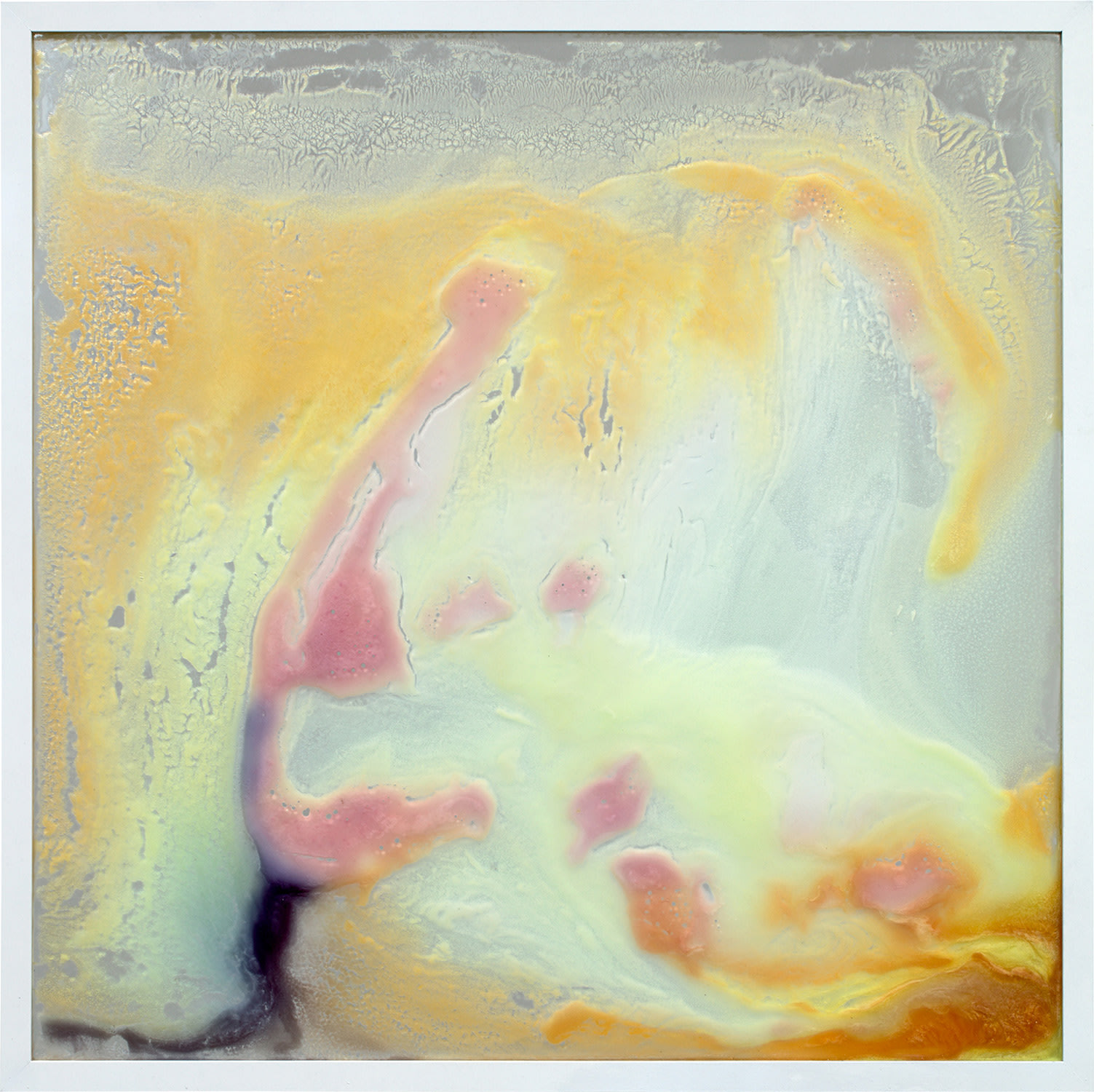
Hood, 2012
"The Money Pit" from the same year layers spray paint, adhesive vinyl, currency, plastic leaves, sequins, rubber ties, fabric, marbleized Plexiglas, gold foil, foam, and duct tape into a work that reads as both baroque abundance and gentle comedy about the American obsession with wealth. "Buff Tusk," also from 2013, uses a Dorito's spicy sweet chili chip bag alongside fringe, enamel, spray paint, fabric collage, and vinyl set in an IKEA metal frame to create something that sits beautifully between painting and sculpture, high art and household waste. The IKEA frame is not incidental; it is the whole point, a readymade that collapses the distance between the museum and the living room. The 2015 works represent a particularly rich period in Da Corte's development.
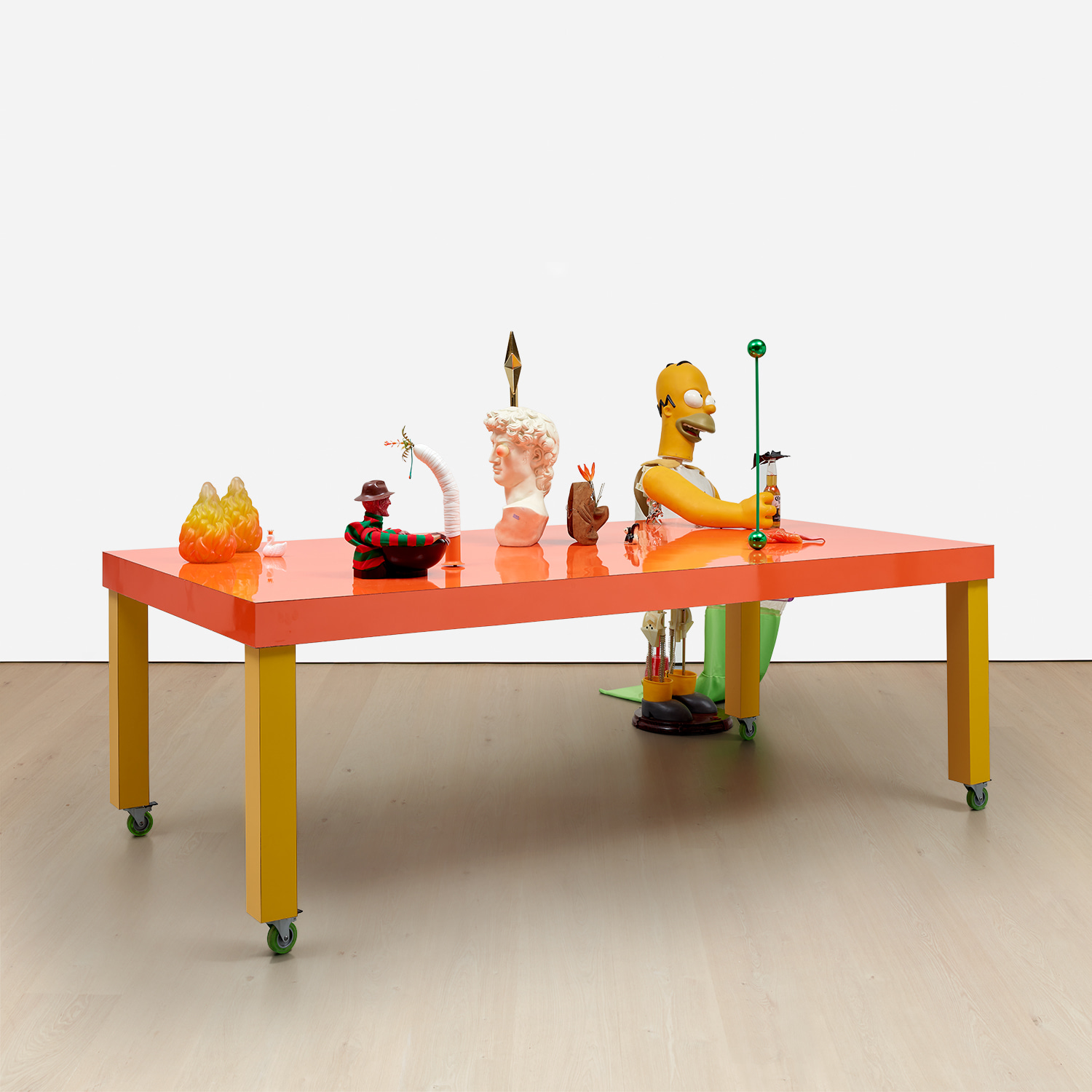
"GOBS/A Boxes (White Closet)" is an almost theatrical accumulation of objects including glass lanterns, a perfume bottle, a porcelain figurine, a Freddy Krueger candy dish, mica, rubber bologna, plastic eggs, elastic shoe ties, plastic flora, a wooden mask, a plastic bust of David, lip gloss, a Christmas tree star, wire, a porcelain skunk, a Christmas ornament, a Plexiglas rod, a rubber bat, a Corona bottle, an animatronic Homer Simpson statue, a candle, and a rubber coyote tongue. The list itself reads like a poem, a taxonomy of the American unconscious. "Siren (After E.K.
Alex Da Corte
GOBS/A Boxes (White Closet), 2015
Charter)" and "Nosegay," both from the same year, demonstrate his mastery of more restrained formats, using foam, spray paint, sequin pins, velvet, and paper to create works of considerable formal beauty that evoke the histories of craft and decorative art while remaining unmistakably contemporary. For collectors, Da Corte's work offers something genuinely rare: a practice that is both intellectually serious and visually pleasurable, that grows richer with time and knowledge, and that speaks directly to the cultural moment without being enslaved to it. His assemblages reward the kind of close, repeated looking that is the particular pleasure of living with art, and they have a way of reorganizing how you see the world outside the frame. The specific materials Da Corte chooses are worth attending to carefully, as they shift and evolve across works, building a vocabulary that becomes more resonant the more deeply you inhabit it.
Collectors who have engaged early with this practice have found themselves in possession of works that feel increasingly essential as his reputation continues to grow. Within the broader landscape of contemporary art, Da Corte belongs to a lineage that runs from Warhol and Claes Oldenburg through Mike Kelley and Paul McCarthy, artists who found in mass culture not a degraded reflection of high art but a primary material of extraordinary richness. He shares with artists like Josephine Meckseper and Ryan Trecartin a commitment to American consumer culture as both medium and subject, though his sensibility is warmer and more lyrical than either. What ultimately distinguishes Da Corte is his belief in beauty as a form of honesty, his insistence that the surfaces of American life, however synthetic, however mass produced, carry real feeling and deserve real attention.
In a moment when so much art reaches for critique at the expense of connection, that insistence feels not merely refreshing but necessary.