Alec Soth

Alec Soth: America's Great Lyrical Eye
Artist Spotlight · The Collection Editorial
“I'm not interested in photographing ideas. I'm interested in photographing life.”
Alec Soth, interview with The Guardian
In the years since Alec Soth first drove the length of the Mississippi River with a large format camera and a restless sense of purpose, his reputation has only deepened and broadened. His 2023 retrospective at the Walker Art Center in Minneapolis, the institution that holds a significant portion of his archive, confirmed what collectors and curators had long understood: Soth is not simply a documentary photographer capturing the American interior, he is one of the defining artists of his generation, full stop. The show drew visitors who had grown up with his images online alongside seasoned collectors encountering his chromogenic prints for the first time in their full, contemplative scale, and the effect in both cases was the same quiet astonishment. Soth was born in Minneapolis in 1969, and the Midwest has remained the gravitational center of his imagination even as his lens has traveled to Paris, Los Angeles, Fire Island, and beyond.

Alec Soth
Justin and Mattias. Fire Island, New York, 2021
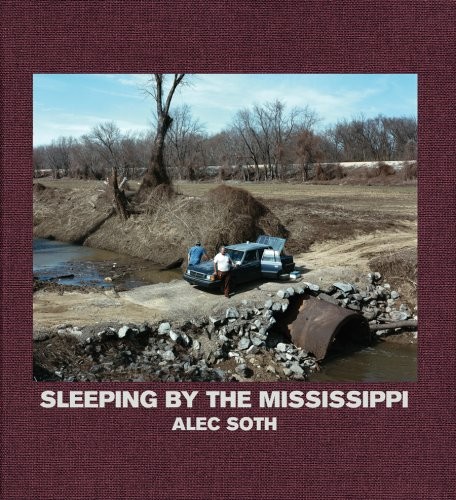
He studied at the Minneapolis College of Art and Design and later spent time at the School of Visual Arts in New York, absorbing influences that ranged from Walker Evans and Robert Frank to William Eggleston and Stephen Shore. What distinguished Soth early on was not just technical facility with the 8x10 view camera, a notoriously demanding instrument that requires patience and physical commitment, but an almost novelistic attentiveness to the emotional texture of places and the people who inhabit them. His breakthrough arrived with the publication of "Sleeping by the Mississippi" in 2004 by Steidl, the German photobook publisher whose collaborations with major photographers have become collector objects in their own right. The book gathered images made during Soth's journeys along the river and presented them as something between a road trip and a fever dream of American solitude.
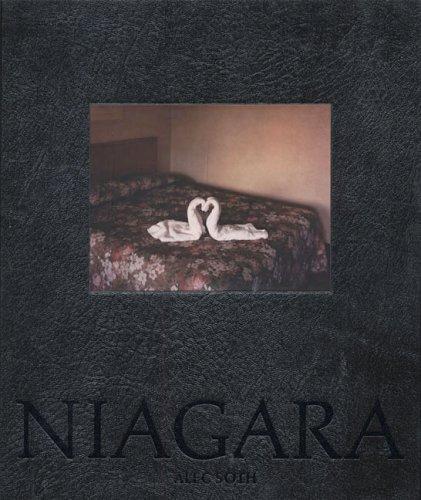
Photographs of rumpled beds, aging men sitting alone, and vast quiet landscapes accumulated into a portrait of a country that was neither condemned nor romanticized but observed with extraordinary tenderness. The critical response was immediate and sustaining, and when Soth was invited to join Magnum Photos in 2004, the same year the book appeared, it felt less like an endorsement than a recognition of something already inevitable. The years that followed saw Soth extend his practice across a series of projects that each carried their own internal logic and emotional register. "Niagara" in 2006 explored romantic longing and disappointment through portraits of couples and solitary figures at the famous falls.
Alec Soth
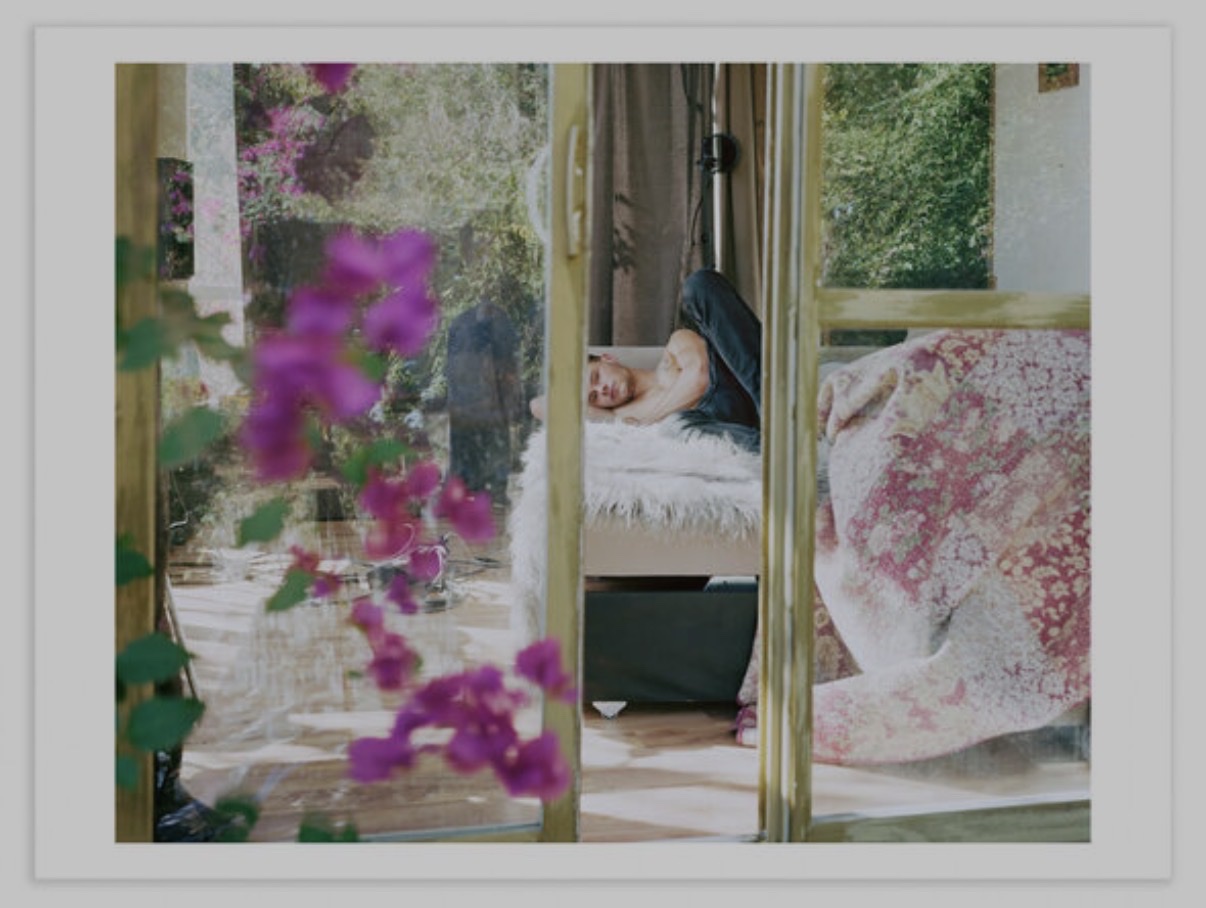
Nick. Los Angeles, USA, 2017, 2021
"Broken Manual" from 2010 turned toward men who had chosen to disappear from conventional society, living in cabins and communes at the edges of mapped America. "Sleeping by the Mississippi" had asked what holds people to a place; "Broken Manual" asked what drives them away. Each project demonstrated Soth's gift for sustained inquiry, his ability to spend years inside a question before emerging with work that feels both deeply personal and universally resonant. Among the specific works available to collectors, several stand out as particularly eloquent examples of his vision.
“The thing I love about photography is that you can be completely alone and yet connected to the world.”
Alec Soth, Little Brown Mushroom
"Charles, Vasa, Minnesota" is one of the most celebrated images from "Sleeping by the Mississippi," depicting a man in a rural Minnesota interior who seems to exist in a world slightly apart from ordinary time. The chromogenic print carries the warmth and density of color that Soth coaxes from large format film, and its mood of quiet dignity has made it one of the most recognized images in contemporary American photography. "Herman's Bed, Kenner, Louisiana" and "The Reverend and Margaret's Bedroom, Vicksburg, Mississippi" both demonstrate his fascination with the private spaces where lives are actually lived, rooms that carry the accumulated weight of their inhabitants even in absence. "Peter's Houseboat, Winona, Minnesota" extends this sensibility to the threshold between land and water, between rootedness and drift, a tension that runs throughout his entire body of work.
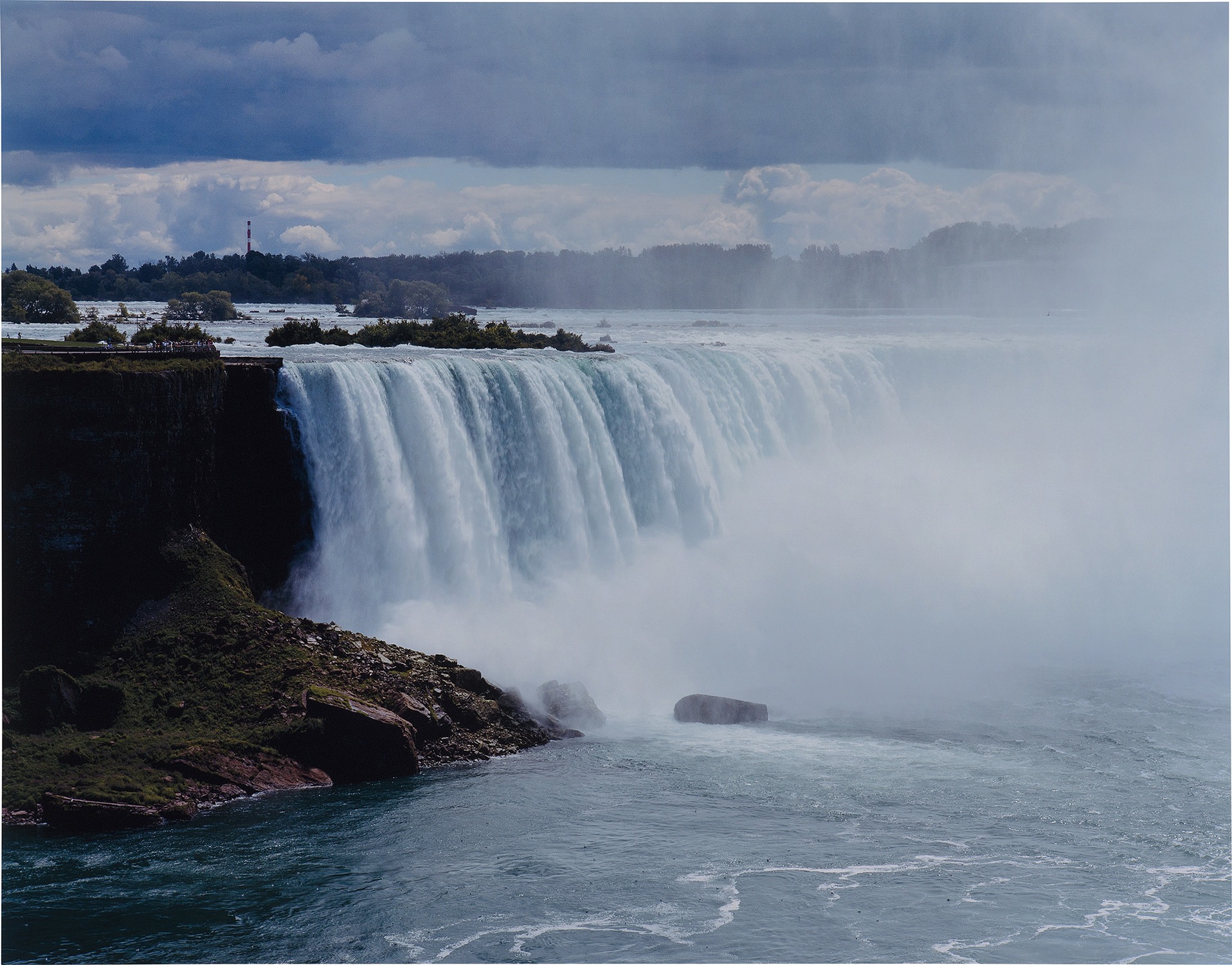
Alec Soth
Falls 34, 2005
More recent works such as "Nick. Los Angeles, USA, 2017" and "Justin and Mattias. Fire Island, New York" show Soth's continuing evolution as a portraitist. These images carry a slightly different quality of light and encounter from his Mississippi work, reflecting a practice that has matured without calcifying.
His portraiture has always worked by establishing a genuine relationship between photographer and subject, an unhurried negotiation that the viewer can feel in the resulting image. The subjects look back at the camera, or away from it, in ways that suggest they have been genuinely seen rather than merely photographed. From a collecting perspective, Soth's market has demonstrated exactly the kind of sustained institutional and private demand that characterizes a truly blue chip contemporary practice. His prints are held at the Museum of Modern Art in New York, the Whitney Museum of American Art, and the Walker Art Center, a roster of institutional homes that speaks to the seriousness with which the museum world regards his contribution.
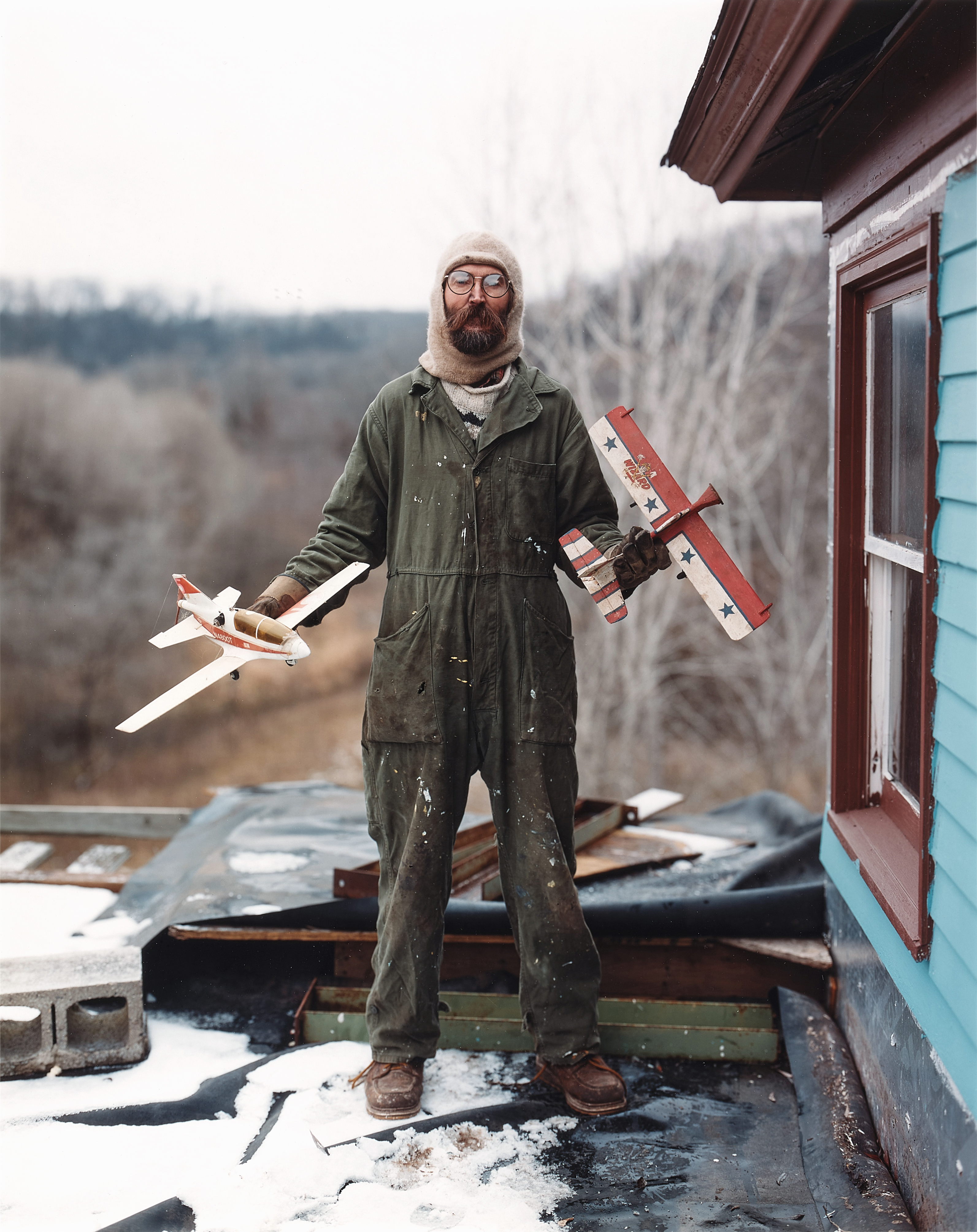
Alec Soth
'Charles, Vasa, MN'
Secondary market appearances of his chromogenic prints from the early Mississippi and Niagara periods regularly attract attention from serious collectors, and editions from his more recent projects have found homes quickly upon release. For collectors entering his work now, the breadth of periods and subjects available offers a genuine opportunity to build a coherent collection around one of photography's most important living voices. The artists with whom Soth belongs in conversation are a distinguished company. His relationship to the American photographic tradition places him alongside Stephen Shore, whose "Uncommon Places" similarly transformed banal American geography into charged visual poetry, and William Eggleston, whose democratization of color photography opened the door through which Soth's generation walked.
The influence of Walker Evans, particularly the compassionate documentary gaze of "Let Us Now Praise Famous Men," runs through Soth's portraiture like an underground river. Among his contemporaries, the work of Taryn Simon and Gregory Crewdson explores adjacent territories of American strangeness, though through methods and temperaments quite different from Soth's patient, road weary directness. What makes Soth's work matter now, perhaps more than at any previous moment, is its insistence on the specificity and dignity of American lives that might otherwise go unwitnessed. In a cultural environment saturated with images produced at speed and consumed in seconds, his large format photographs demand a different kind of attention.
They ask viewers to slow down, to notice the quality of light falling across a man's shoulders or the particular disorder of a loved bed, to feel the weight of a life lived in a specific place. That quality of attention, offered both by the photographer and invited in return from the viewer, is not a nostalgic gesture toward some older way of seeing. It is a form of radical hospitality, and it is exactly what the best collecting, like the best art, has always been about.
Explore books about Alec Soth