Albert Besnard
Albert Besnard: Light, Life, and Legacy
Artist Spotlight · The Collection Editorial
Picture Paris in the final decades of the nineteenth century, a city electric with artistic ambition, where the academies and the avant garde were locked in a thrilling and generative tension. Into this charged atmosphere stepped Albert Besnard, a painter of extraordinary facility who refused to be entirely claimed by either camp. His canvases shimmered with a luminosity that drew admirers from across the spectrum of taste, and his printmaking revealed a technical intelligence that continues to reward close attention more than a century after the plates were inked. Today, as collectors and institutions rediscover the rich territory between strict academic tradition and early modernist experiment, Besnard emerges as one of the most compelling figures of his era.
Albert Besnard
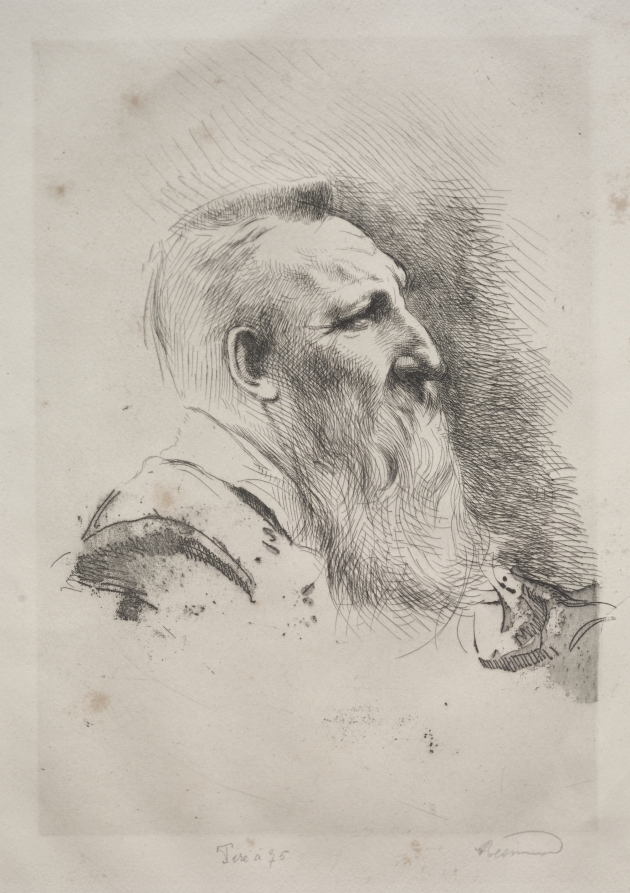
Auguste Rodin, 1900
Born in Paris in 1849, Albert Besnard grew up surrounded by the visual culture of a city in transformation. His father was a painter and miniaturist, and the household was one in which art was not a distant aspiration but a daily practice. This early immersion gave the young Besnard both a technical foundation and an instinctive confidence that would serve him throughout a career spanning more than six decades. He entered the École des Beaux Arts and studied under Jules Joseph Lefebvre and Eugène Fromentin, absorbing the rigorous draftsmanship and compositional discipline that defined the French academic tradition at its finest.
The decisive turning point in Besnard's formation came when he won the Prix de Rome in 1874, earning a residency at the Villa Medici that would prove transformative. In Italy he encountered the full weight of the classical tradition, but he also absorbed the particular quality of Mediterranean light, a softness and intensity combined, that would inflect his palette for the rest of his life. Subsequent travels to England brought him into contact with the work of the Pre Raphaelites and, crucially, with the atmospheric effects that British painters had long cultivated. These international encounters loosened the strictures of his academic training and pushed him toward something freer, more sensuous, and more alive.
Albert Besnard
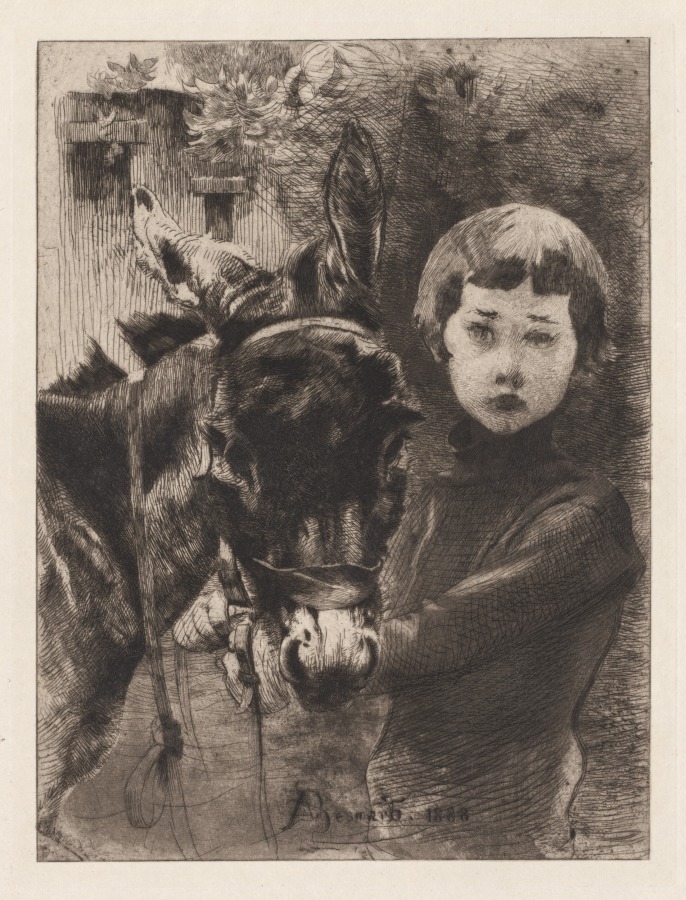
Robert Besnard and His Donkey (Robert Besnard et son âne), 1888
Returning to France, Besnard developed a mode of painting that occupied genuinely singular ground. He retained the academic commitment to the figure, to psychological presence, and to compositional architecture, but he bathed his subjects in a light that seemed to breathe. His portraits are among the finest of the period, capturing not merely likeness but the quality of a person's inner life. The remarkable canvas of Madeleine Lerolle and Her Daughter Yvonne, painted in 1879, demonstrates this gift with particular clarity.
The tenderness between the two figures is rendered with warmth and precision, and the handling of fabric and flesh alike shows a painter entirely in command of his medium. By the time he produced The Siesta in 1890, his oil technique had grown yet more assured, the paint applied with a confidence that gives the work an almost physical presence. Besnard's printmaking deserves recognition as a parallel achievement of the highest order. His etchings and drypoints from the late nineteenth and early twentieth centuries show an artist who understood the unique expressive possibilities of the intaglio process rather than simply transposing his painted effects onto copper.
Albert Besnard
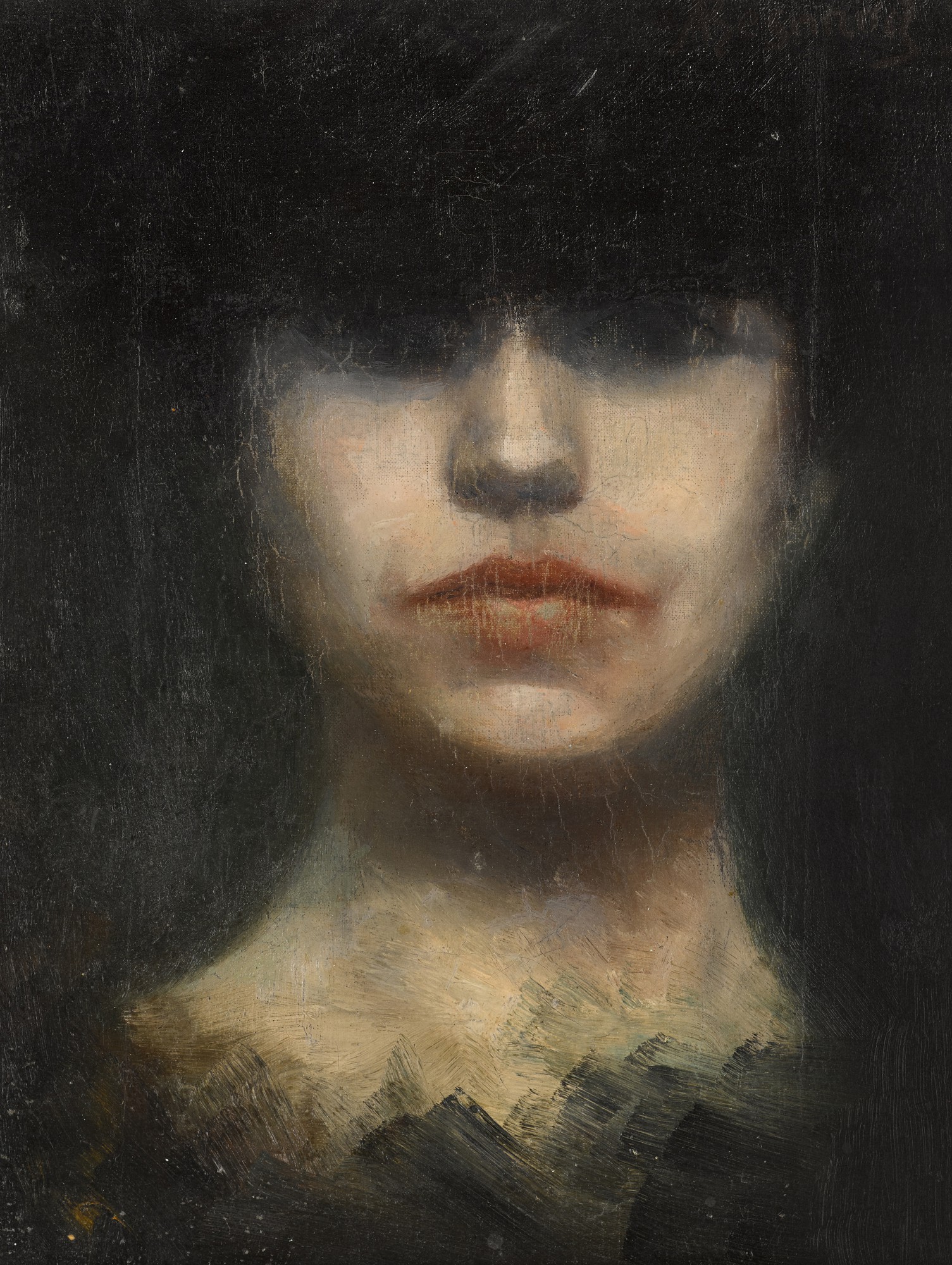
The Temptress
Works such as Woman with a Cape from 1889, rendered in etching, drypoint, and roulette, demonstrate a mastery of tonal range that places him among the great printmakers of his generation alongside figures like James McNeill Whistler and Anders Zorn. His 1900 portrait etching of Auguste Rodin is a document of particular historical resonance, capturing the great sculptor with an intimacy that speaks to genuine friendship and mutual respect between two artists at the height of their powers. Robert Besnard and His Donkey, an etching and aquatint from 1888, reveals a more personal and tender register, the artist turning his technical gifts toward a subject of quiet domestic affection. In the Ashes from 1887 and Study of Heads from 1899 further demonstrate the range of mood and subject he could achieve within the medium.
As a figure within the broader art historical narrative, Besnard occupies a position that rewards careful consideration. He is neither a straightforward academician content with received formulas nor an avant garde revolutionary seeking to overturn the tradition that formed him. His closest affinities are perhaps with those painters who inhabited similar productive tensions, artists like Giovanni Boldini, who combined virtuoso technique with an alert responsiveness to contemporary life, or Gaston La Touche, who brought decorative richness to subjects drawn from everyday experience. Besnard also shares qualities with his Danish contemporary Peder Severin Krøyer, particularly in the handling of outdoor light and the capacity to make a figure feel genuinely present within its environment.
Albert Besnard
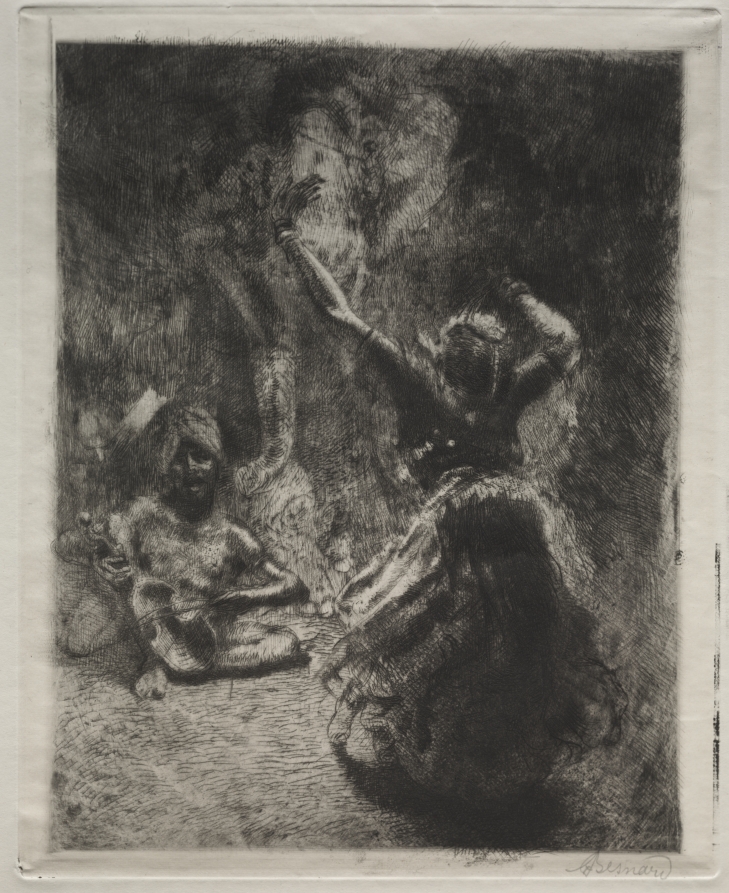
The Dancer, 1900
Understanding Besnard in this company helps clarify what makes his achievement distinctive: he brought something genuinely personal to a tradition he had absorbed completely. For collectors, Besnard's work offers a remarkable combination of historical significance and visual pleasure. His prints in particular represent an accessible entry point into a body of work that spans portraiture, genre, and allegory. When evaluating works on paper, condition is naturally paramount, but collectors should also attend to the quality of the printing itself, the depth of the burr in drypoint passages, the richness of the aquatint tones, and the clarity of the etched line.
His oil paintings, when they appear, carry the full authority of a painter who was recognized in his lifetime with the most prestigious honors his country could bestow. Besnard served as director of the French Academy in Rome, a position that placed him at the center of French artistic life and confirmed the esteem in which his contemporaries held him. Albert Besnard died in Paris in 1934, having witnessed not only the transformations of Impressionism and Post Impressionism but the full upheaval of the early twentieth century avant garde. That he maintained both his artistic identity and his cultural authority through this period of seismic change is itself a testament to the depth of his vision.
In an era when collectors are increasingly interested in the rich and complex territory of late nineteenth and early twentieth century European art, Besnard stands as a figure whose work repays discovery with genuine and lasting rewards. His paintings and prints are documents of a remarkable sensibility, one that found beauty in the world with consistency, intelligence, and grace.
Explore books about Albert Besnard