Alan Rath
Alan Rath: Where Humanity Meets the Machine
Artist Spotlight · The Collection Editorial
There is a particular kind of magic that happens when you stand before one of Alan Rath's sculptures and realize it is looking back at you. A monitor mounted on a graceful aluminum armature blinks, shifts, tracks. The eye rendered on its screen is uncanny in the truest sense: familiar enough to trigger recognition, strange enough to make you question your assumptions about what it means to be seen. This quality, at once intimate and unsettling, playful and profound, has made Rath one of the most enduring and genuinely original figures in the history of electronic and technological art.
Alan Rath
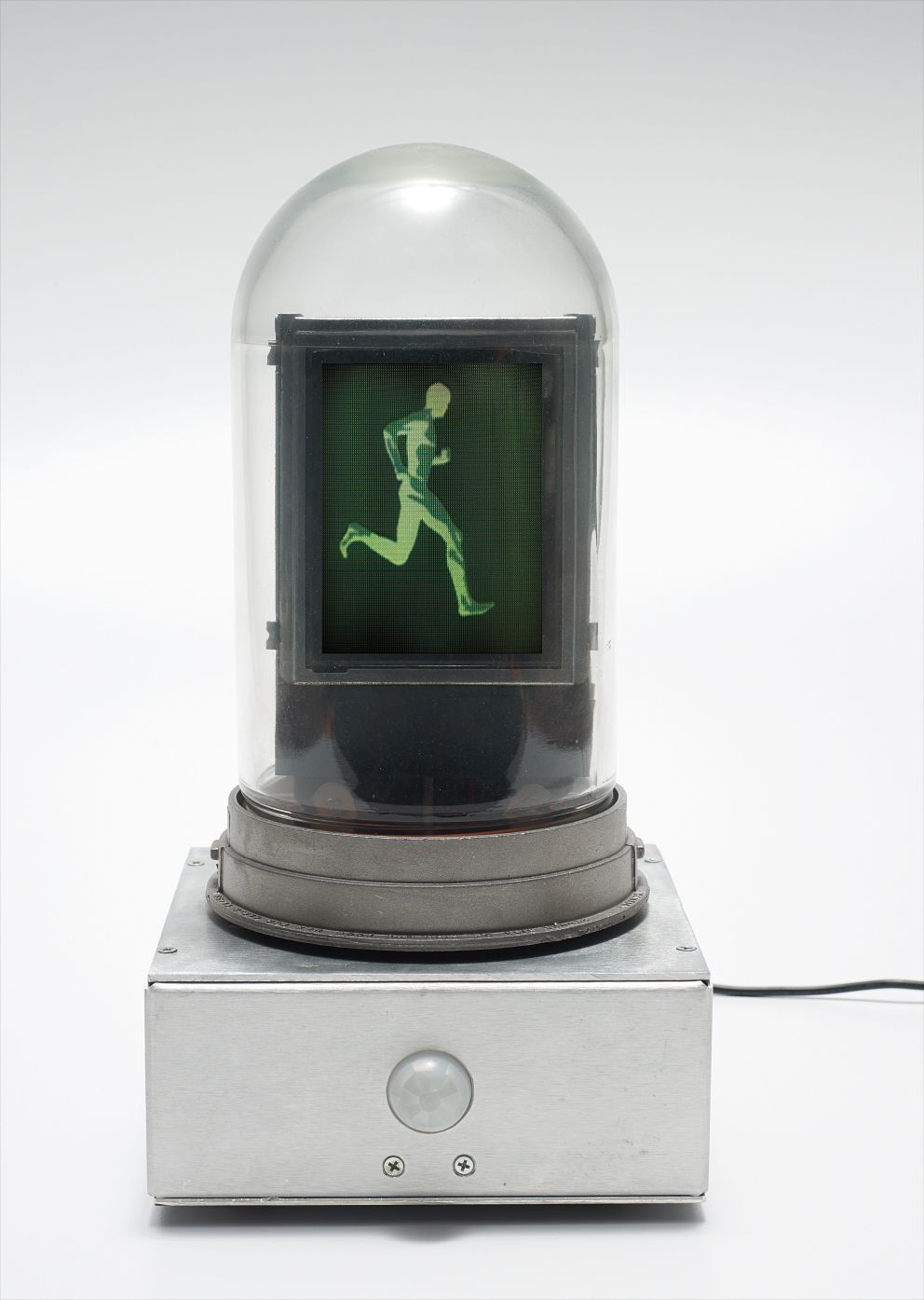
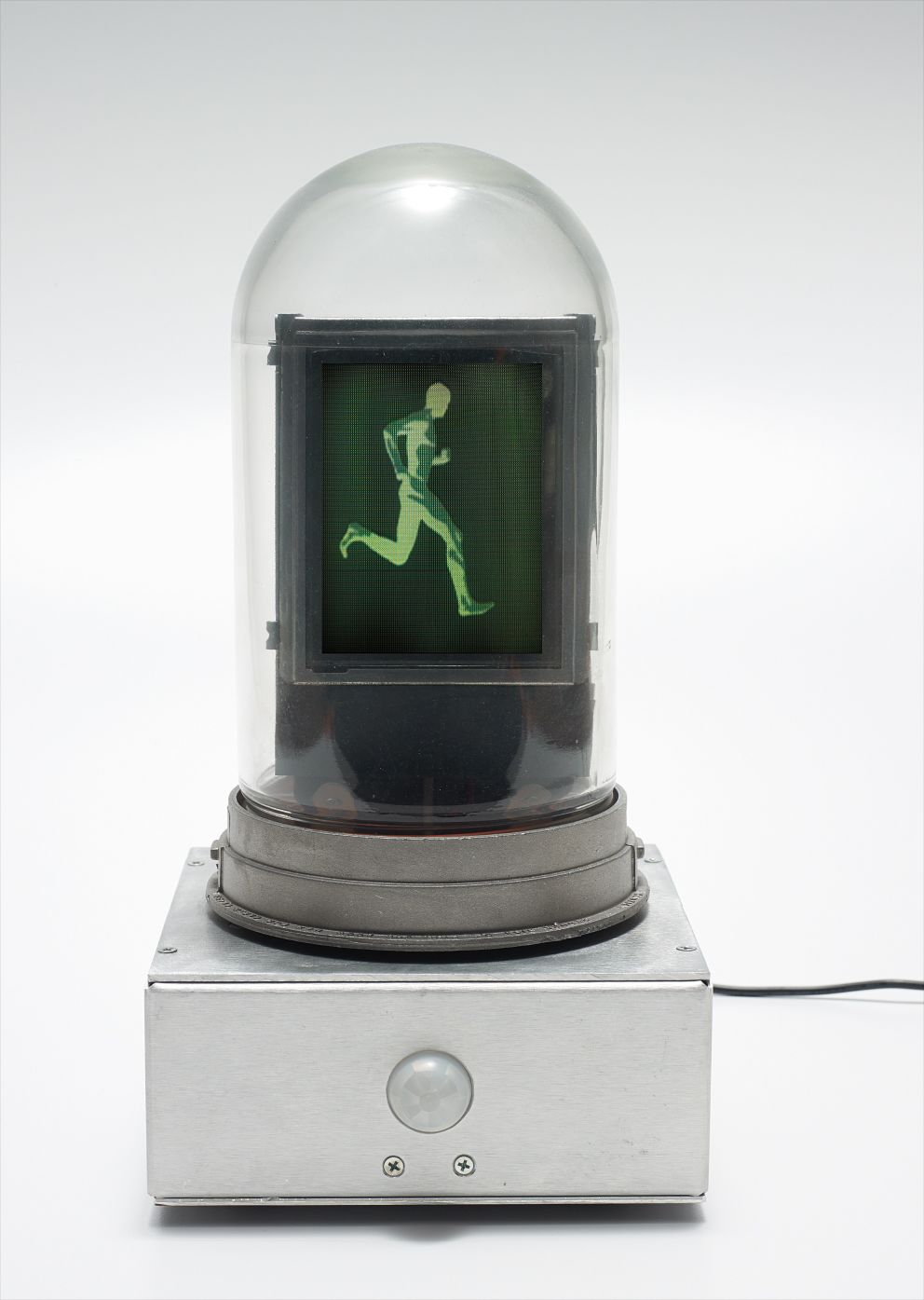
Little Running Man
As institutions and collectors continue to reassess the pioneers of new media practice, Rath's reputation has only grown richer and more relevant with time. Alan Rath was born in 1959 and grew up with a natural affinity for the internal logic of machines. That inclination led him to the Massachusetts Institute of Technology, where he studied electrical engineering, graduating in 1982. MIT in the late 1970s and early 1980s was an extraordinary environment, a place crackling with ideas about artificial intelligence, cybernetics, and the boundaries of human perception.
Rath absorbed all of it, but where many of his peers went on to careers in industry or research, he turned toward the studio. The decision was less a departure than a redirection: he would use the language of engineering not to solve industrial problems, but to ask philosophical ones. After leaving MIT, Rath settled in the San Francisco Bay Area, where he has lived and worked for decades. The region's particular culture, simultaneously technological and countercultural, entrepreneurial and experimental, proved a natural home for his practice.
Alan Rath
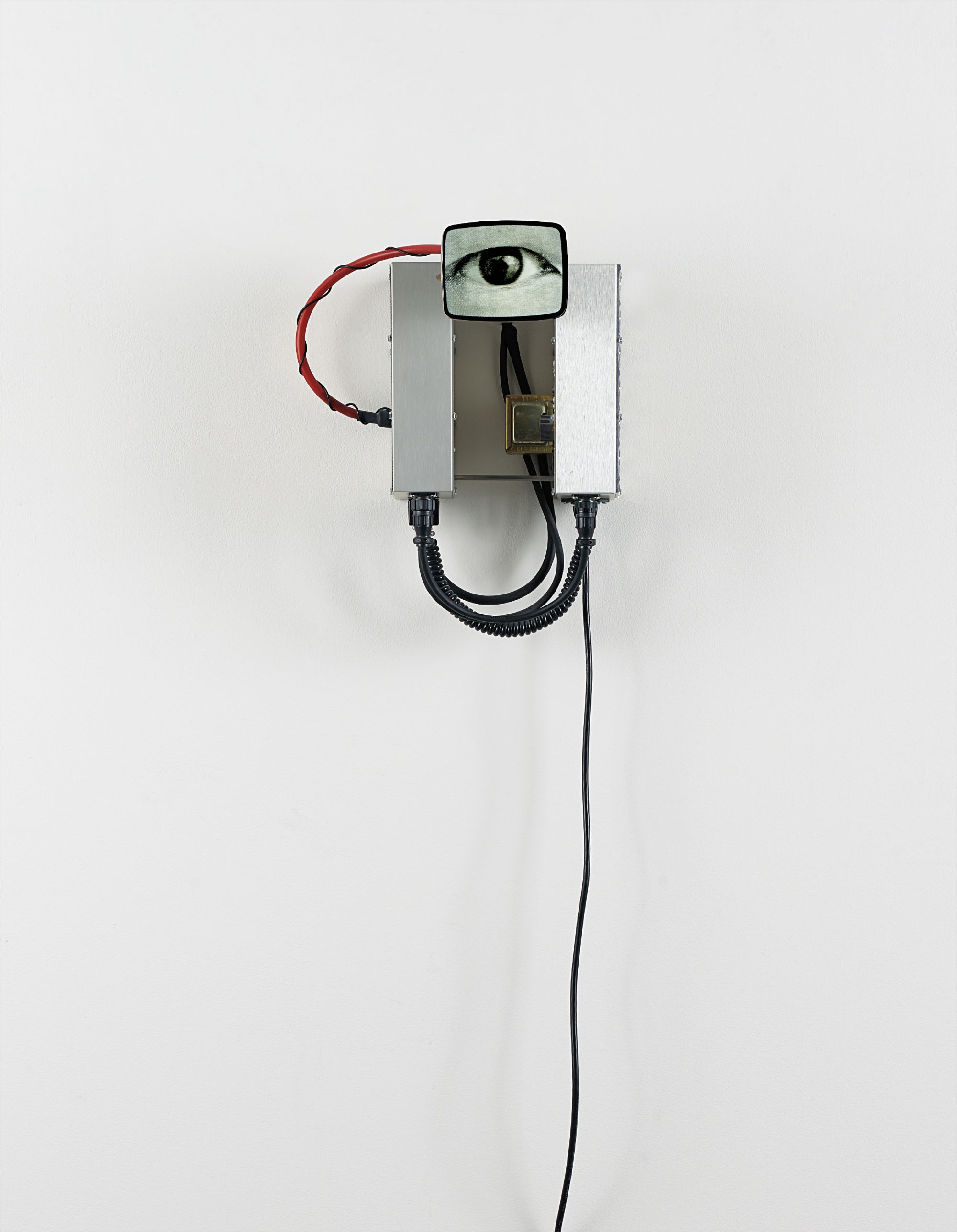
Wall Eye I
By the mid to late 1980s, he was already building the custom electronic systems that would define his work. Rather than appropriating off the shelf consumer electronics, Rath designed and fabricated his own circuits, wrote his own software, and constructed his own enclosures. This insistence on total authorship, from the circuit board to the finished object, is fundamental to understanding him. His sculptures are not assemblages of found technology; they are handmade things, as deliberate and considered as any cast bronze.
The breakthrough works that established Rath's international reputation began arriving in the late 1980s and continued through the 1990s, a period of extraordinary productivity. His sculptures featuring animated eyes became something close to icons of the era, exhibited at major venues and acquired by serious collections. The images of irises, eyelids, and gazes displayed on CRT monitors mounted on sleek aluminum structures had a quality no photograph quite captures: they moved with a rhythm that felt biological, breathing, present. Works from this period, including the celebrated Wall Eye series, demonstrate Rath's core insight that the body, fragmented and rearranged through technology, becomes a site of reflection on consciousness itself.
Wall Eye I, with its aluminum housing, custom electronics, and CRT monitor, exemplifies the elegance of his approach: industrial materials rendered warm by the life pulsing across the screen. Little Running Man represents another dimension of Rath's practice, one that introduces kinetics and a note of gentle humor. The work incorporates glass, aluminum, PVC, rubber, custom electronics, software, and an LCD monitor to create a small animated figure in perpetual motion. There is something both comic and poignant about that endless running: the figure goes nowhere, yet cannot stop.
Rath has always understood that technology is as funny as it is serious, as absurd as it is sublime. This wit, which never tips into mere cleverness, is one of the things that separates his work from the more earnest strands of new media practice. His sculptures feel lived in, humanized, because they are genuinely interested in what it means to be human. For collectors, Rath's work presents a distinctive and rewarding proposition.
His output is relatively limited, a consequence of the intensive fabrication process each piece demands. Works change hands infrequently, and when they do appear, they tend to attract serious attention from collectors with sophisticated technological and conceptual interests. The sculptures hold their presence exceptionally well in domestic and institutional settings alike: they are not merely art objects but presences, companions, things that animate a room. Collectors drawn to artists who bridge disciplines, who work at the intersection of science, philosophy, and visual art, consistently find Rath's practice compelling.
The materiality of his work, the custom electronics and handbuilt structures, also means that each piece carries the mark of genuine craftsmanship, an increasingly rare quality in an age of digitally fabricated multiples. Rath's place in art history is best understood alongside a constellation of artists who took technology seriously as both medium and subject. His work invites comparison with Nam June Paik, whose pioneering video sculptures opened the door for an entire generation, and with artists such as Bill Viola, whose video installations probe the depths of human experience. Closer in spirit, perhaps, are figures like Charles Ray, who shares Rath's interest in the uncanny body, and the robotics work of Ken Goldberg, whose practice similarly emerges from engineering culture.
What distinguishes Rath within this company is his commitment to handcraft, his insistence that the machine, however sophisticated, must be touched by a maker's hand to carry genuine meaning. Today, as artificial intelligence reshapes conversations about creativity, authorship, and what it means for a machine to simulate life, Rath's work feels not dated but prescient. He was asking these questions when the asking was still genuinely difficult, before the culture had developed a vocabulary for them. The eyes that blink from his monitors are not illustrations of an idea about technology and humanity; they are the idea, made physical, made present, made impossible to look away from.
For anyone building a collection around the art of our technological moment, Rath is not background context. He is one of the founding voices.