Agathon Léonard
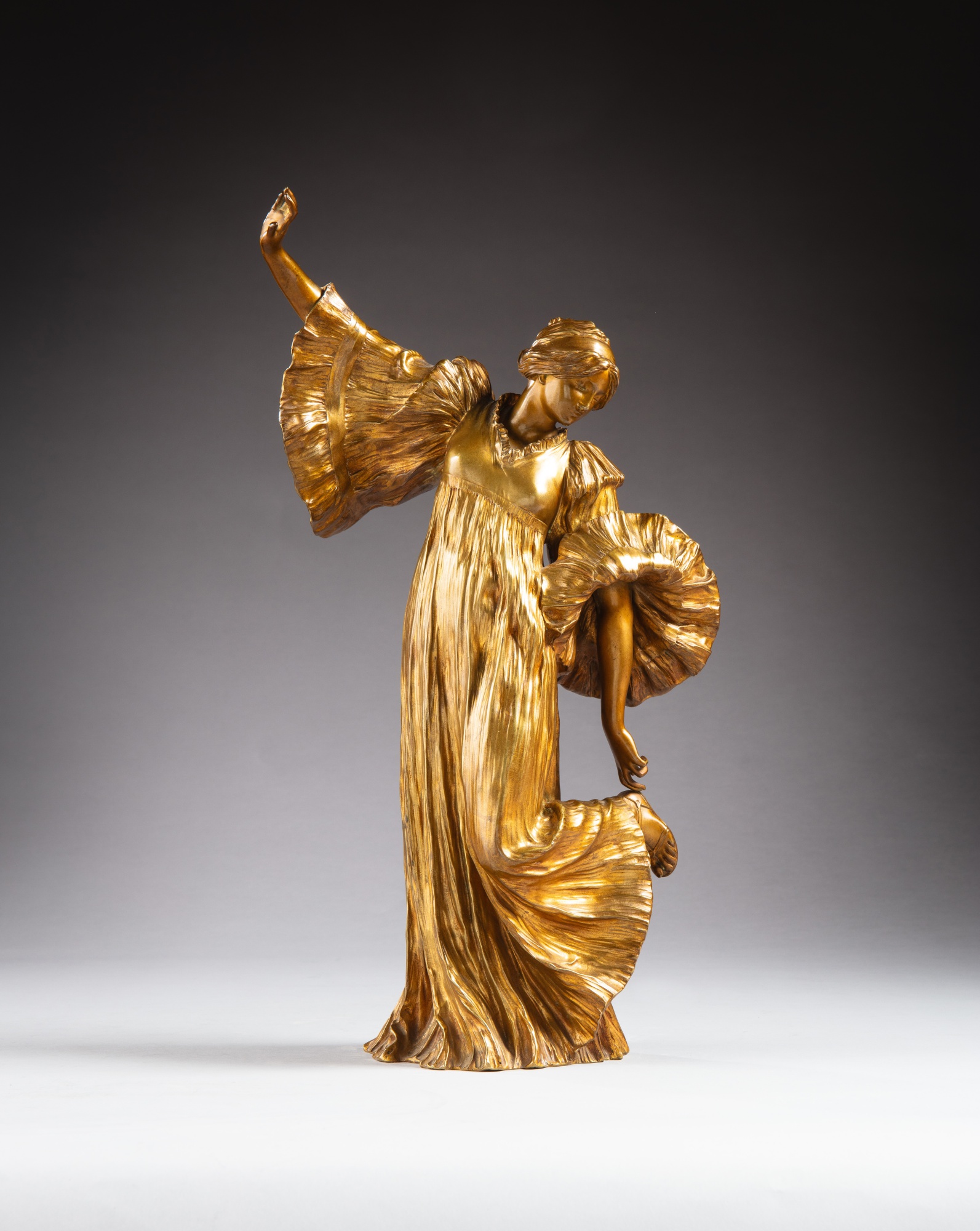
Artist Spotlight · The Collection Editorial
```json { "headline": "Grace in Bronze, Beauty Without End", "body": "There are moments in the decorative arts when a single object manages to arrest time, when a sculptor's hand coaxes from cold metal something that breathes, sways, and seems on the verge of motion. That is precisely the sensation one encounters standing before a work by Agathon Léonard, the French sculptor and medalist whose gilt bronzes have been quietly enchanting collectors and curators since the final decades of the nineteenth century. His figures, often dancers caught mid gesture, exist in a space between antiquity and modernity, between the disciplined geometry of Neoclassicism and the sinuous, organic poetry of Art Nouveau. To discover Léonard is to understand one of the most elegant corners of the Belle Époque.
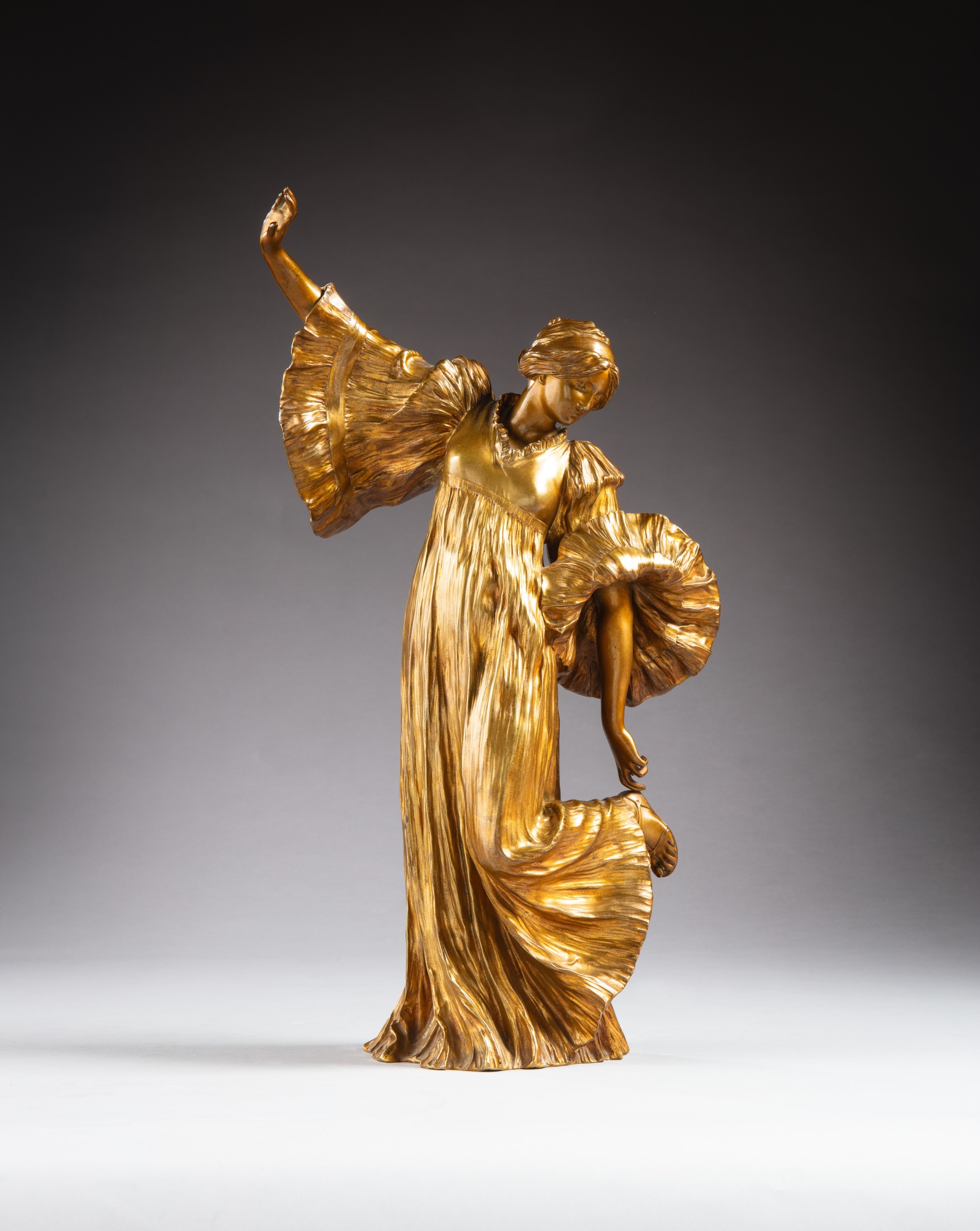
Agathon Léonard
Danseuse au cothurne
\n\nAgathon Léonard was born in 1841, and his formation as an artist unfolded against the rich and tumultuous backdrop of French cultural life in the second half of the nineteenth century. Paris in this era was the undisputed center of the Western art world, a city where the annual Salon functioned as both marketplace and tribunal, where ambitions were made and unmade in the grand halls of the Palais des Champs Élysées. Léonard trained within this tradition, absorbing the rigorous standards of academic French sculpture while remaining alert to the currents of change that were beginning to stir around him. His eye for the figure, for the particular way a body organizes itself in space and communicates emotion through posture alone, would prove to be the defining gift of his long career.
\n\nThe Paris Salon served as Léonard's primary platform, and his regular exhibitions there brought his work before the most discerning audiences in Europe. He belonged to a generation of French sculptors who were expected to demonstrate mastery across multiple scales and materials, from monumental public commissions to the intimate cabinet bronzes and medals that circulated among private collectors. Léonard excelled particularly in the latter categories, where his sensitivity to surface, texture, and the interplay of light on metal could be most fully appreciated. His medals, though less celebrated today than his sculptural figures, reveal a miniaturist's precision and a keen understanding of how relief can compress a world into a few square centimeters of bronze or silver.
\n\nThe work that best encapsulates Léonard's achievement is almost certainly his celebrated series known in the context of the Sèvres porcelain manufactory, but the gilt bronze iteration of the dancer figure, represented in the work "Danseuse au cothurne," stands as perhaps his most personal and enduring statement. The cothurnus was the elevated boot worn by performers in ancient Greek and Roman theater, and Léonard's choice of this detail is telling. It anchors his dancer firmly in a classical tradition while allowing the figure's pose and drapery to breathe with a contemporary, almost living energy. The gilt surface catches and scatters light in ways that animate the bronze, giving it a warmth that cold patinated metal could never achieve.
Collectors who encounter the Danseuse au cothurne consistently describe a sense of intimacy with the object, as though the figure were pausing in a private moment rather than performing for an audience.\n\nLéonard's place within the Art Nouveau movement deserves particular attention, because his relationship to that style was never one of simple adoption. He did not abandon the structural clarity he had learned from the classical tradition; rather, he allowed the sinuous, nature inspired vocabulary of Art Nouveau to soften and animate forms that retained their academic poise. This tension, this productive dialogue between discipline and ornament, is precisely what distinguishes his best work from the more flamboyant output of some of his contemporaries.
Artists working in comparable territory during the same period include Albert Carrier Belleuse, whose influence on decorative sculpture in France was enormous, and Emmanuel Fremiet, whose command of figurative bronze set a high standard for the generation that followed. Within the specifically ornamental and applied arts sphere, Léonard can also be productively compared to Théodore Rivière and Raoul Larche, both of whom shared his commitment to the female figure as a vehicle for exploring the boundaries between fine art and the decorative tradition.\n\nFor collectors today, Agathon Léonard represents a compelling and still accessible entry point into the world of French Belle Époque sculpture. His gilt bronzes appear at major auction houses with enough regularity to allow a collector to develop a sense of the market, yet they retain the quality and rarity that prevent them from ever feeling commonplace.
The finest examples, particularly those that retain their original gilding in strong condition and bear clear foundry marks or exhibition provenance, command serious attention from specialists in nineteenth century decorative arts. What draws the most thoughtful collectors to Léonard is not merely the beauty of the objects themselves but the historical density they carry, the way each figure encodes an entire world of Parisian taste, ambition, and technical mastery. A collector who owns a Léonard bronze is in conversation with everyone who has admired that object across more than a century.\n\nThe question of legacy is always complex for an artist who worked primarily in the decorative arts tradition, where the boundaries between sculpture and object, between artwork and luxury goods, are deliberately blurred.
Léonard navigated those boundaries with unusual grace throughout his career, maintaining a seriousness of artistic intention while producing work that was designed to exist in domestic spaces, to be handled and lived with rather than merely viewed from a respectful distance. That quality is, if anything, more valued today than it was in his own time, as collectors and institutions alike have grown increasingly attentive to the full range of artistic production rather than a narrowly defined canon of fine art. Museums dedicated to the applied arts, from the Musée d'Orsay in Paris to the Victoria and Albert Museum in London, have done much in recent decades to restore the critical seriousness that Léonard and his peers deserve.\n\nAgathon Léonard lived and worked through one of the most fertile periods in the history of French art, contributing to it with a quiet authority that is only now receiving the full recognition it merits.
His dancers, his medals, his gift for transforming bronze and gilt into something that appears almost to breathe, these are not merely historical artifacts but living arguments for the enduring power of craftsmanship and imagination working in concert. To bring a work by Léonard into a collection is to honor that argument, and to participate in the long, beautiful conversation that the best art always sustains across time.
Explore books about Agathon Léonard
Agathon Léonard: Sculpteur Art Nouveau
Alastair Duncan
The Sevres Porcelain Manufactory 1740-1900
Tamara Préaud and Antoine d'Albis
French Sculpture of the Nineteenth Century
Philip Ward-Jackson
Art Nouveau 1870-1914
Charlotte Benton
Porcelain Sculpture of the Eighteenth and Nineteenth Centuries
Ulrich Pietsch