After Francis Bacon
Bacon's Vision, Brilliantly Alive Again
Artist Spotlight · The Collection Editorial
There are certain artistic legacies so vast and so visceral that they demand ongoing conversation, reinterpretation, and celebration long after the artist's death. Francis Bacon, who died in Madrid in 1992, is emphatically one of those figures. In recent years, the Estate of Francis Bacon and Heni Productions have undertaken an ambitious and meticulous programme of facsimile editions that bring the painter's most significant canvases into intimate proximity with new audiences. These editions, produced under the designation After Francis Bacon, represent one of the most thoughtful approaches to artistic legacy management in the contemporary art world, and they have introduced Bacon's charged, contorted imagery to a generation of collectors for whom the originals remain locked away in major museum collections and the holdings of a small number of extraordinarily fortunate private hands.
After Francis Bacon
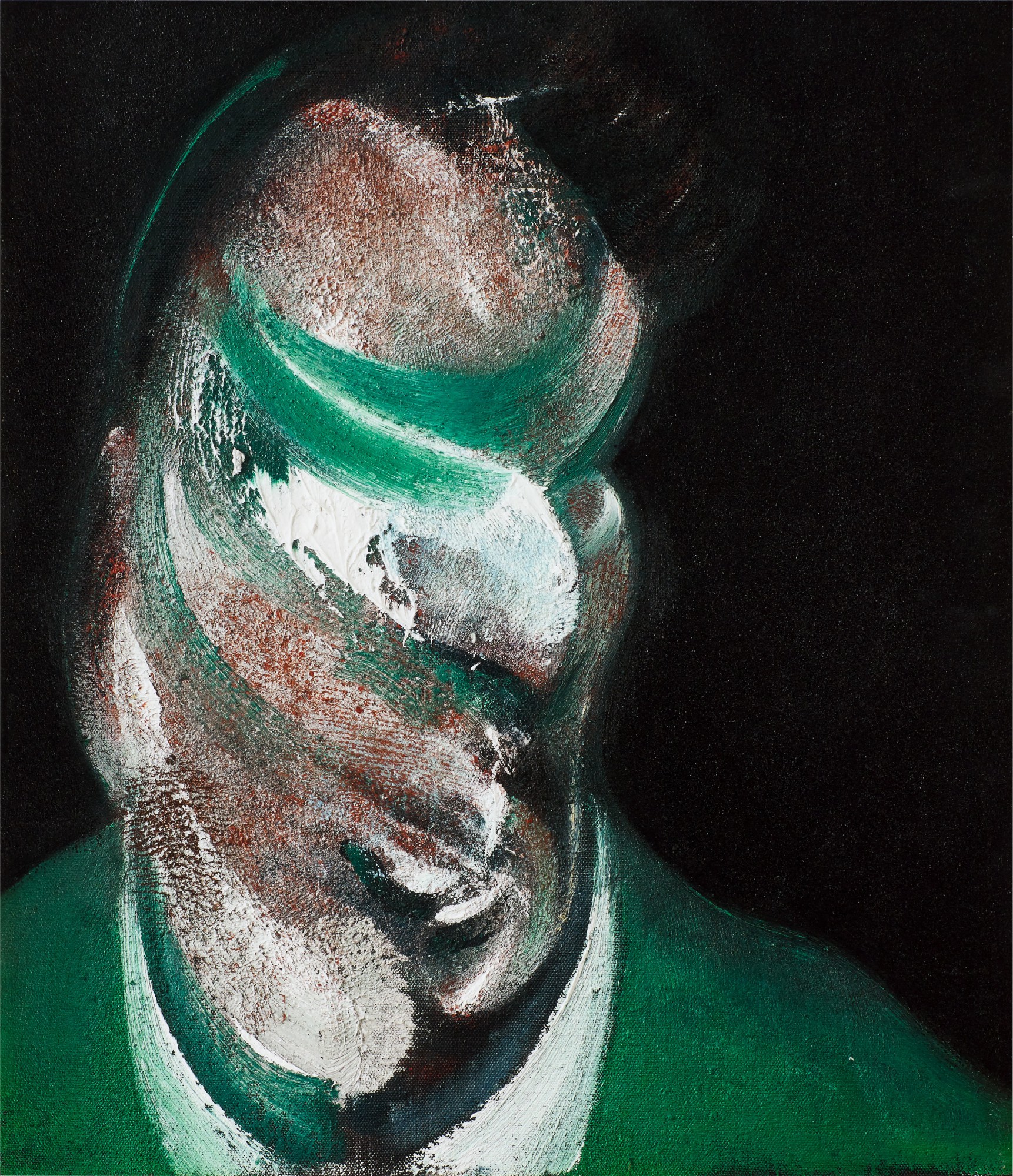
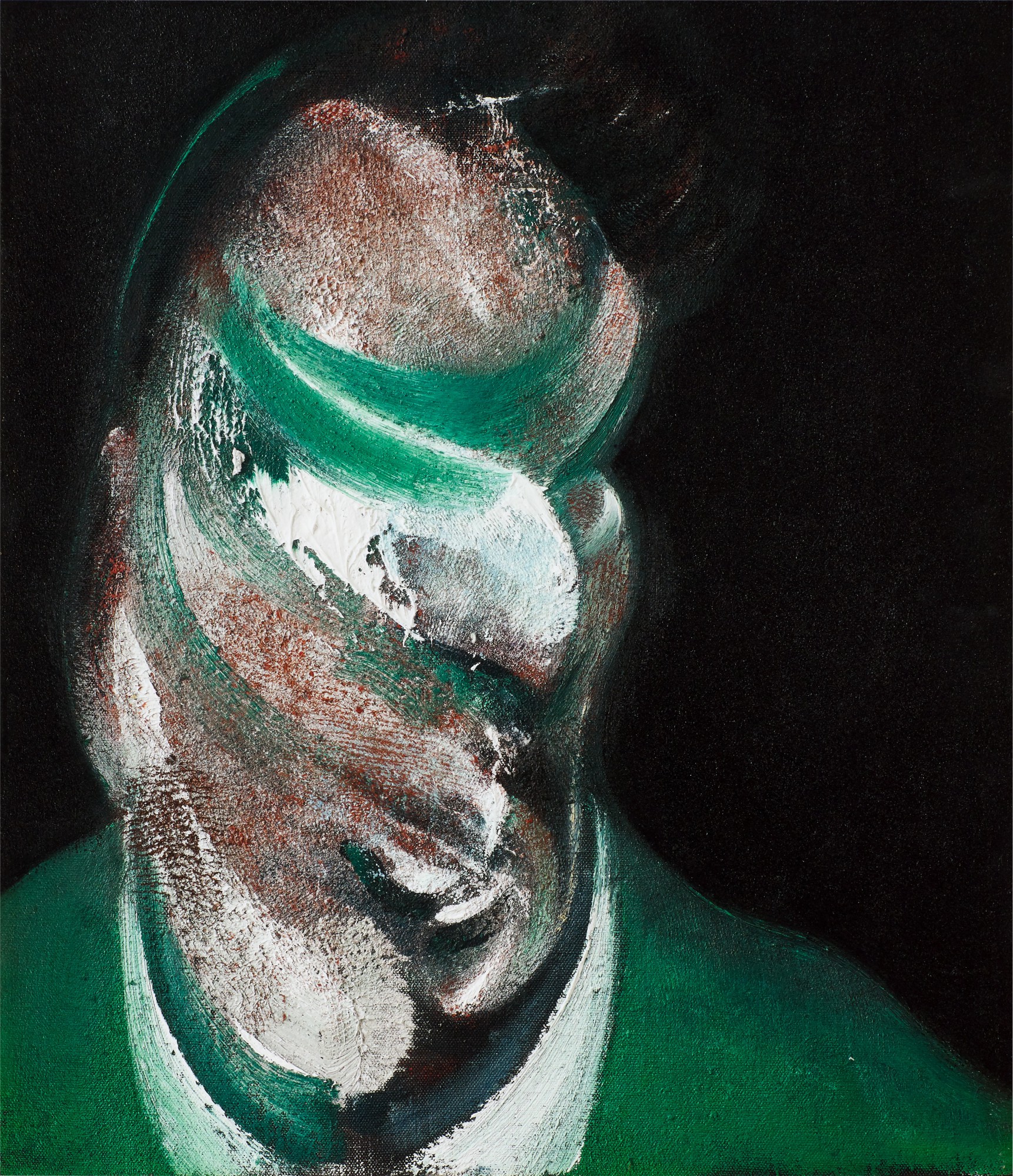
Study For The Head Of Lucian Freud (Q3)
Francis Bacon was born in Dublin in 1909 to English parents and spent much of his early life moving between Ireland and England, a transience that seemed to embed in him a permanent restlessness and a refusal to be contained by convention. Largely self taught, he drifted through interior design and furniture work before finding his way to painting in the early 1930s. His formation was shaped by the Old Masters he studied obsessively, by his deep reading of Nietzsche and Aeschylus, by the raw atmosphere of Soho in postwar London, and by a series of intense personal relationships that would feed directly into some of the most psychologically charged portraiture of the twentieth century. The Colony Room, Muriel Belcher's legendary Soho club, became a second home, and the community of artists, writers, and drinkers he encountered there provided both sustenance and subject matter.
Bacon's mature practice coalesced around a set of obsessions that he returned to and refined across decades. The isolated figure on a geometric plinth or within a spare architectural cage, the smeared and torqued face that seems to be simultaneously forming and dissolving, the raw meat tones of flesh rendered with an almost surgical attention to vulnerability: these became the coordinates of a visual language entirely his own. His Screaming Popes, derived from Velázquez's portrait of Innocent X, established his international reputation in the 1950s and showed how deeply he could engage with art history while utterly transforming it. The triptych format, which he adopted and made singularly his own, allowed him to fracture narrative and psychology across three panels in ways that felt cinematic, liturgical, and deeply personal all at once.
Among the works that have been made available through the facsimile edition programme is Study For The Head Of Lucian Freud, originally painted in 1967. The original is a concentrated, almost ferociously intimate portrait of Bacon's closest friend and perhaps his greatest artistic peer, Lucian Freud, whose own practice of prolonged, psychologically demanding sittings made him uniquely suited as a subject for Bacon's method. The edition designated Q3, produced in 2015 by Heni Productions in London as a giclée print in colours mounted on aluminium, captures the luminous intensity of the original with remarkable fidelity. Numbered 268 from an edition of 500 and bearing both the artist's printed signature and the Heni Productions ink stamp, this is a work that carries genuine documentary weight as well as aesthetic presence.
It arrives framed as issued, making it immediately ready to live with, which is precisely the point of this kind of edition done well. The relationship between Bacon and Freud was one of the defining friendships in postwar British art. They met in the early 1940s and remained close, if sometimes volatile, companions for decades. Freud sat for Bacon on multiple occasions, and the resulting studies are among the most psychologically loaded portraits in the entire Bacon catalogue.
In Study For The Head Of Lucian Freud, the face emerges from shadow and paint with a quality of arrested motion, as though the sitter has been caught in the midst of becoming rather than simply being. Bacon was never interested in likeness in any conventional sense. He spoke of wanting to capture the sensation of a person, the trembling of nervous systems beneath skin, and in the Freud portraits this ambition is delivered with extraordinary directness. From a collecting perspective, the After Francis Bacon facsimile editions occupy a genuinely interesting position in the market.
The original canvases have long since ascended into the stratosphere of major auction records, with Bacon's Three Studies of Lucian Freud from 1969 achieving over 142 million dollars at Christie's New York in 2013, a record for the artist at that time and one of the highest prices ever achieved for a work of art at auction. Access to the originals is therefore effectively closed for all but the most exceptional collectors. The facsimile editions, produced with the full involvement and authorisation of the Estate, offer something that straightforward reproductions never can: an object with genuine provenance, a numbered position within a defined edition, and the physical authority of a work mounted and framed to museum standard. For collectors building a serious collection around twentieth century British modernism, an authorised After Francis Bacon edition represents a meaningful and considered acquisition.
Within the broader context of art history, Bacon stands alongside figures such as Lucian Freud, Frank Auerbach, and Leon Kossoff as one of the central pillars of what became known as the School of London, a loose grouping of figurative painters who maintained a commitment to the human body and to the painted mark during decades when abstraction dominated critical attention. His influence on subsequent generations of artists has been enormous, ranging from Marlene Dumas and Jenny Saville to any number of painters working today who find in distorted figuration a language adequate to psychological and political reality. The After Francis Bacon editions make this influence available to study and to live with, which is no small thing. The legacy of Francis Bacon is not simply one of shocking imagery or biographical notoriety, though both have contributed to his cultural presence.
It is a legacy of absolute seriousness about paint as a medium for conveying what it feels like to be alive in a body, in relation to other bodies, in a world that is beautiful and terrible simultaneously. The After Francis Bacon programme honours that legacy with evident care and intelligence, and the editions it has produced since 2015 are already finding their places in collections where they will be valued not as substitutes for something better, but as objects of real quality and genuine meaning in their own right.
Explore books about After Francis Bacon
Francis Bacon: Full Course
Michael Peppiatt
Francis Bacon: Anatomy of an Enigma
Michael Peppiatt
Francis Bacon: A Terrible Beauty
Andrew Sinclair
Francis Bacon: The Logic of Sensation
Gilles Deleuze
Francis Bacon: The Human Body
Michel Leiris
Francis Bacon Catalogue Raisonné
Ronald Alley
Francis Bacon: Death and the Figure
Dawn Ades