
Afro Basaldella
1
Works
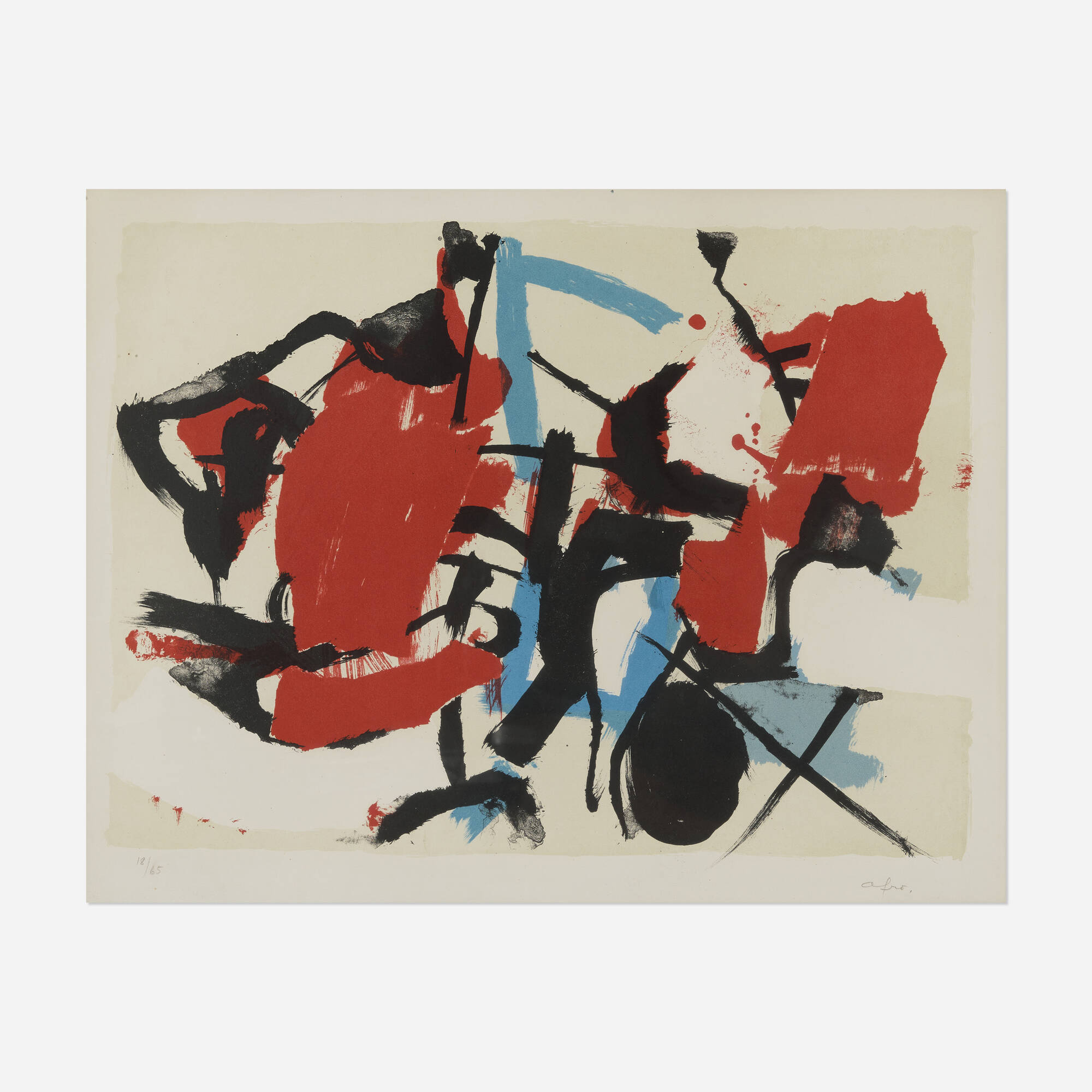
Afro Basaldella, known simply as Afro, was an Italian painter born in Udine in 1912 who became one of the most significant figures in postwar Italian abstract art. He was the younger brother of sculptors Dino and Mirko Basaldella, and his early training was grounded in figurative painting. During the 1930s and 1940s he worked in a style influenced by Cubism and the School of Paris, but it was his exposure to American Abstract Expressionism during a pivotal trip to New York in the early 1950s that transformed his practice into the luminous, gestural abstraction for which he is best known. Afro developed a distinctive lyrical abstraction characterized by translucent, overlapping veils of color, fluid brushwork, and a sophisticated sense of pictorial depth. His paintings often evoke landscape and light without directly representing them, occupying a space between pure abstraction and poetic suggestion. He became closely associated with the Rome-based group of artists who sought to bridge European painterly tradition with the energy of American abstract painting. His large-scale mural for the UNESCO building in Paris, commissioned in the mid-1950s, brought him considerable international recognition and stands as one of his most celebrated works. Afro exhibited widely in both Europe and the United States throughout the 1950s and 1960s, including at the Venice Biennale and in major New York galleries. He maintained a close relationship with American critics and collectors, and his work was championed by figures in the New York art world who saw him as a vital link between transatlantic modernisms. His paintings are held in significant museum collections across Europe and North America, and he is regarded as a foundational figure in the development of postwar Italian modernism, whose contribution to lyrical abstraction remains influential.
Artists in conversation