Ado Chale
Ado Chale, Where Stone Becomes Poetry
Artist Spotlight · The Collection Editorial
There is a moment, standing before an Ado Chale table, when the eye refuses to settle. The surface seems to breathe. Veins of agate catch the light differently with each passing minute, and what appears at first to be mere decoration reveals itself as something far more considered: a meditation on geological time, on the boundary between the natural world and human artifice. That this sensation remains as vivid today as it did when Chale was working at the height of his powers in Brussels in the 1970s and 1980s speaks to the enduring authority of his vision.
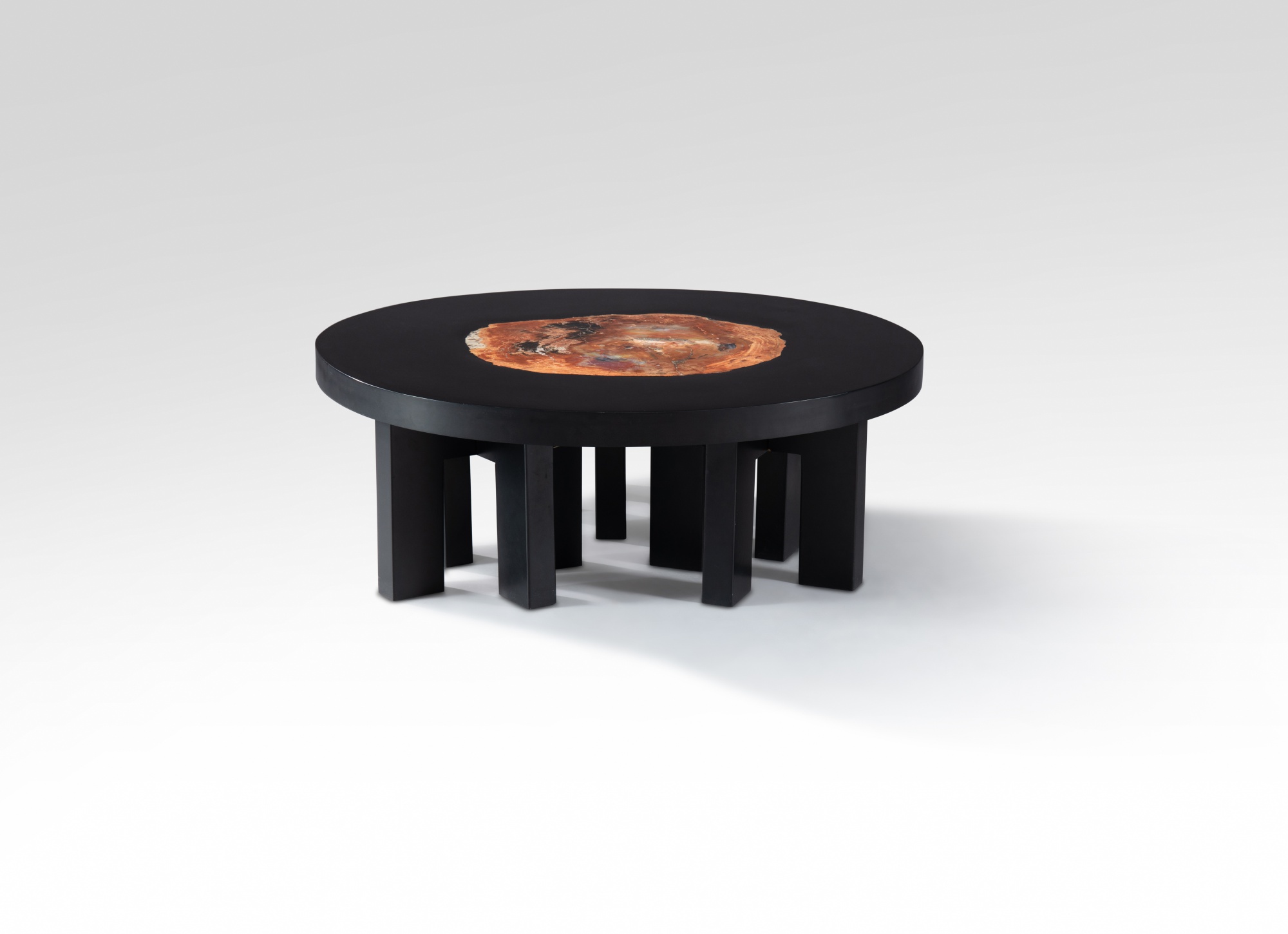
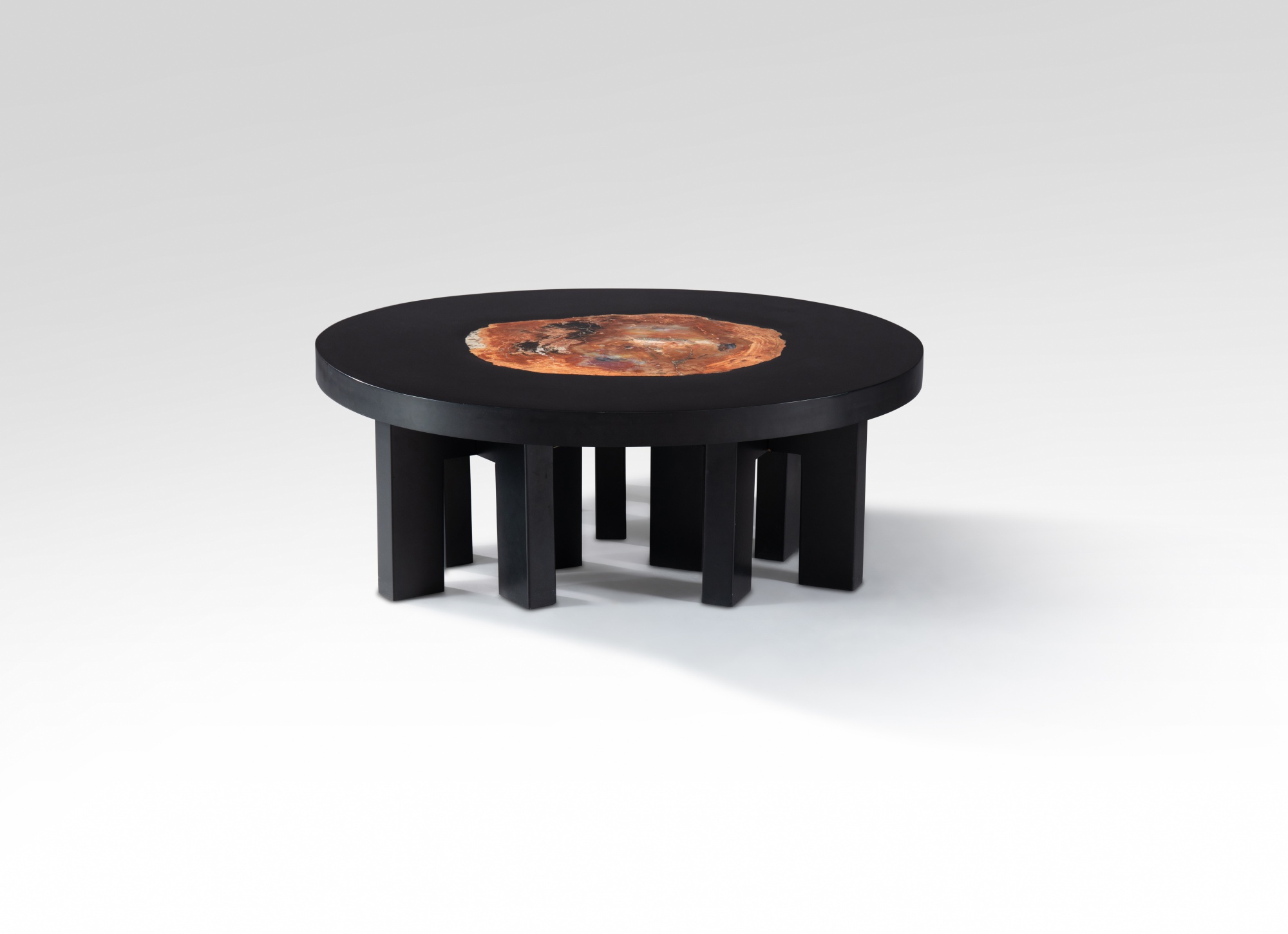
Ado Chale
Table basse
Major auction houses including Christie's and Sotheby's have continued to bring his works before eager rooms, and the appetite among serious decorative arts collectors shows no sign of cooling. Ado Chale was born in Belgium in 1928, and it was the particular cultural atmosphere of postwar Brussels that shaped both his sensibility and his ambitions. Belgium has long occupied a distinctive position in the European decorative arts, a country where the boundary between fine art and applied craft was never treated with the same anxious suspicion it encountered elsewhere. Chale came of age in this environment, absorbing an aesthetic tradition that placed immense value on material intelligence, on the idea that the maker who truly understood his materials could elevate a functional object into something approaching the sublime.
The craft workshops and ateliers of Brussels gave him a rigorous technical foundation, and he carried that foundation with him throughout a career that would span decades. What distinguished Chale from the very beginning was his instinct for materials that other designers considered impossible or impractical. He was drawn to the earth's own archive: fossilized wood from the deserts of Arizona, malachite from the mines of central Africa, agate slabs formed over millions of years, semi precious stones whose patterns no human hand could have invented. His genius lay in his understanding that these materials demanded collaboration rather than domination.
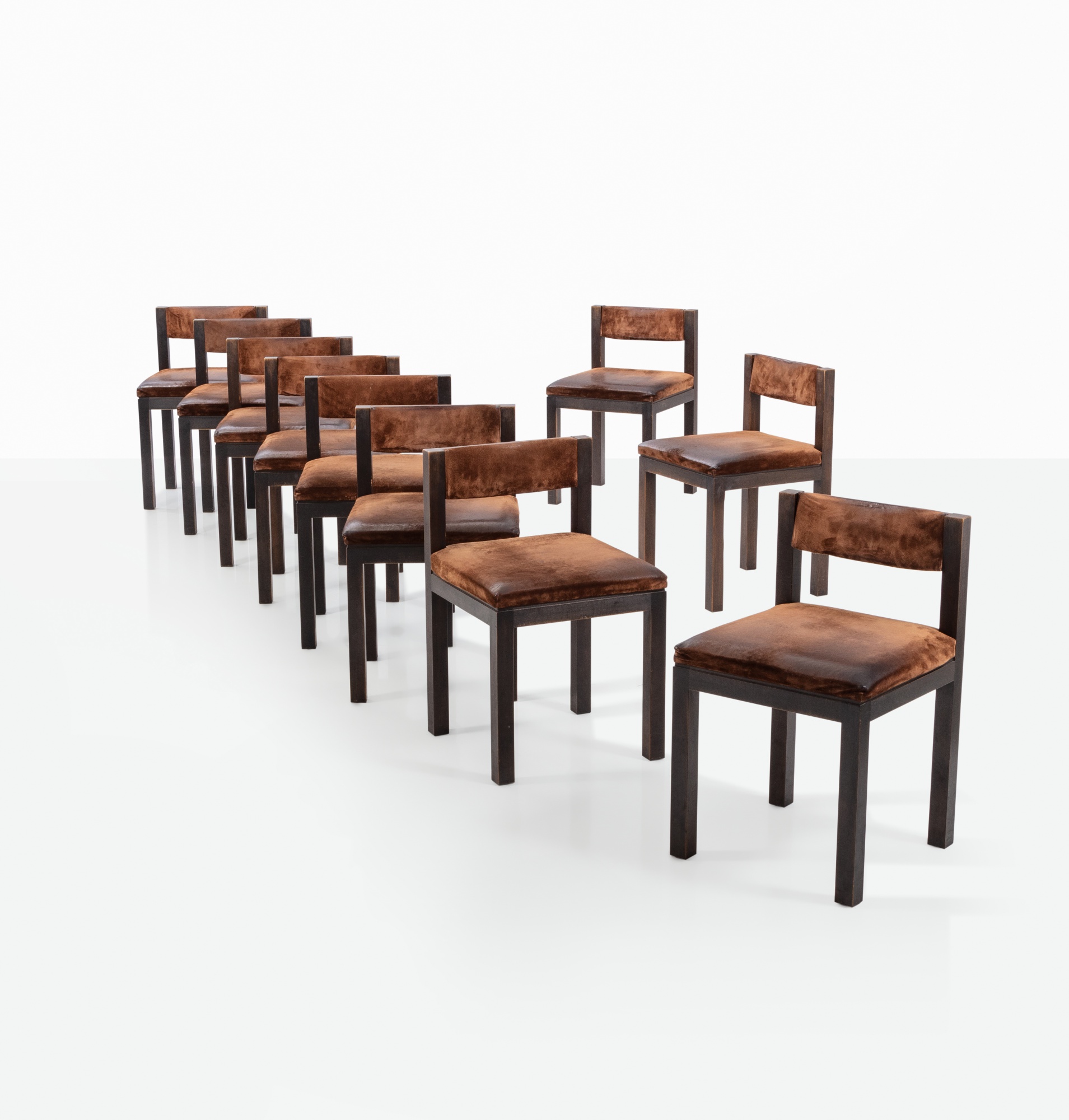
Ado Chale
Suite de dix chaises à dossier mobile
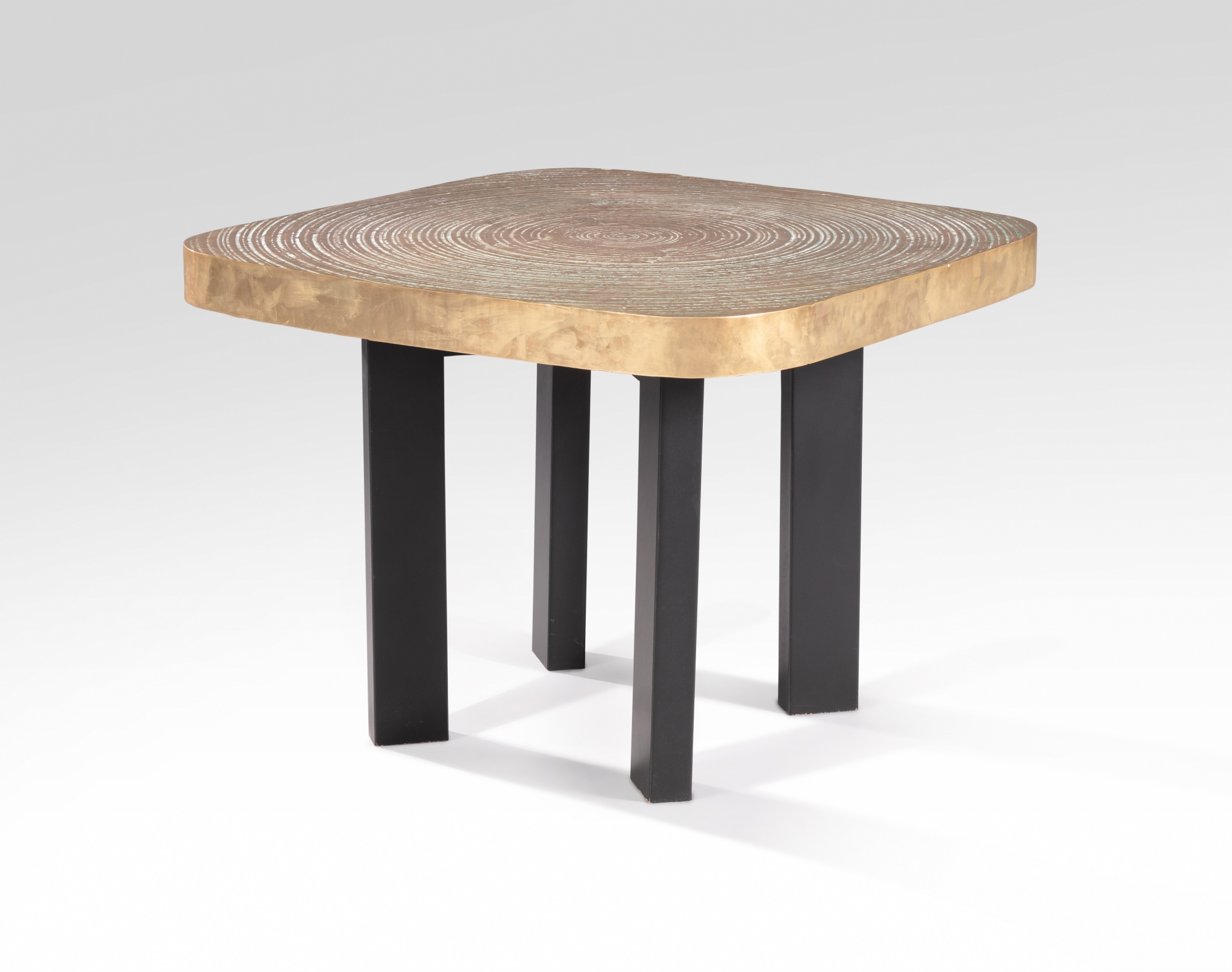
Where a lesser craftsman might impose a design upon such surfaces, Chale listened to what the stone or the petrified wood wanted to become. The result was furniture and objects that felt inevitable, as though they had always existed in precisely this form and the maker's role had simply been to reveal them. His signature works demonstrate this philosophy with extraordinary consistency. The Table basse in Arizona petrified wood, resin, and lacquered wood is among the most recognizable expressions of his mature vision: a surface that presents the cross section of ancient wood, its cellular structure frozen and transformed by mineral replacement over millennia, now set within a composition of refined architectural simplicity.
The piece asks its owner to live with deep time, to place a cup of coffee on a surface that was already ancient when the Roman Empire was young. The Table Relief d'Agate, executed in gilt bronze and lacquered metal, shows a different facet of the same intelligence. Here the stone is celebrated as relief, as landscape, the banding of the agate read almost as topography. The Guéridon Goutte d'eau in gilt bronze and lacquered wood, and the Table Goutte d'eau in aluminum cast and painted steel, reveal his equal command of sculptural form when working without geological materials: the droplet shape is at once organic and architectural, sensuous and precise.
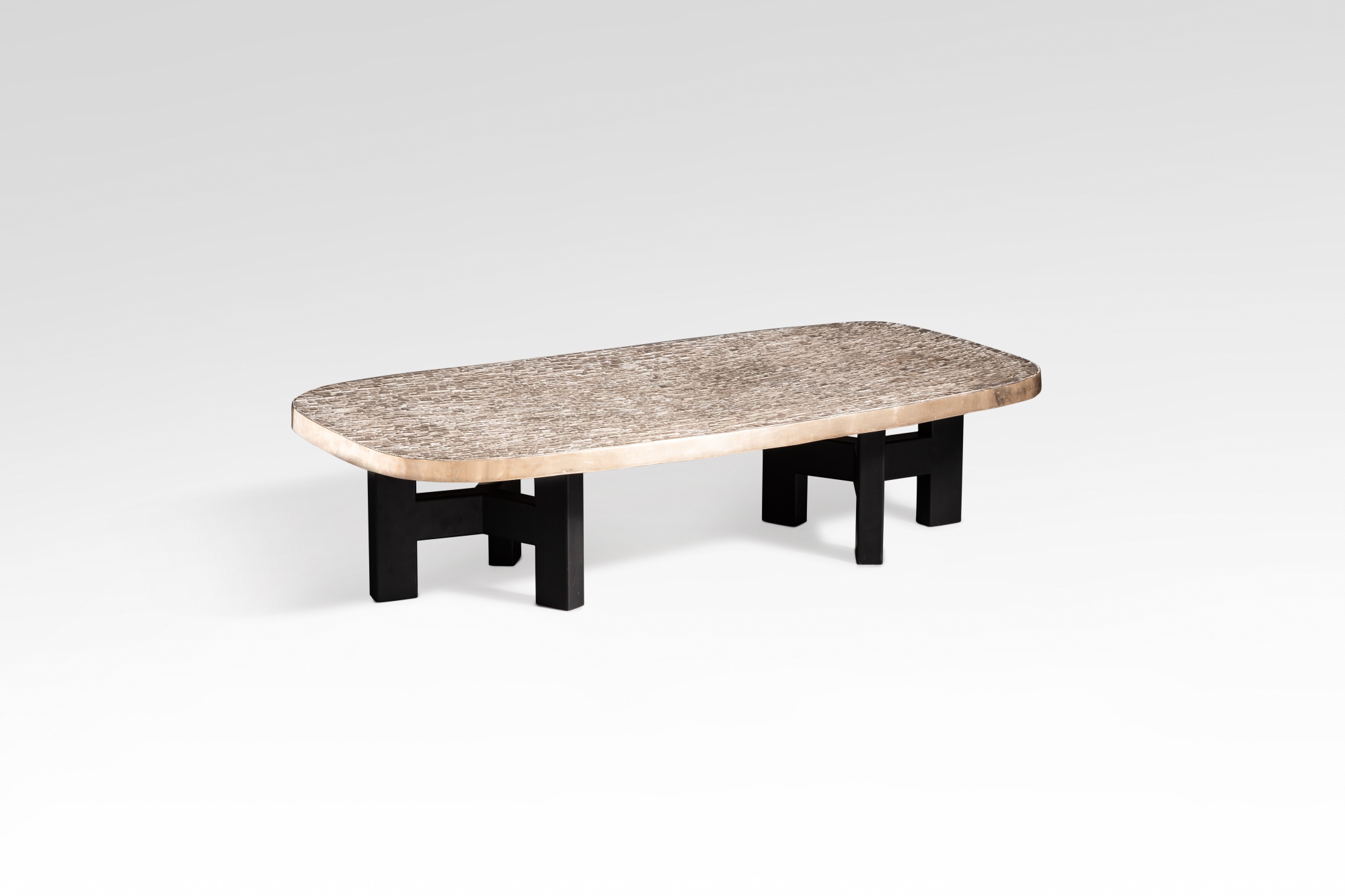
Ado Chale
Table Relief d'Agate
His Suite de dix chaises à dossier mobile, in darkened wood with suede upholstery, demonstrates that his mastery was not confined to surfaces but extended to the full vocabulary of form and comfort. Within the broader context of the decorative arts in the second half of the twentieth century, Chale's practice belongs to a distinguished lineage of designer craftsmen who refused the false choice between art and function. His sensibility invites comparison with Diego Giacometti, whose sculptural bronzes for furniture and lighting occupy a similarly exalted position at the intersection of art and the applied arts. One might also place him in conversation with Line Vautrin, the French jeweler and object maker whose work shared his commitment to materials as primary carriers of meaning.
In the Belgian tradition specifically, his reverence for natural materials and his formal intelligence recall the broader influence of Art Nouveau, that earlier Belgian moment when the boundary between nature and design dissolved entirely. Chale updated this inheritance for the postwar world, stripping away ornament but preserving the fundamental conviction that natural form is inexhaustible as a source of wonder. For collectors, acquiring an Ado Chale work represents entry into a very particular conversation. His pieces were sought during his lifetime by a sophisticated international clientele, and the secondary market has consistently rewarded those who recognized his importance early.
Ado Chale
Guéridon Goutte d'eau
What distinguishes a strong example of his work is the quality of the material selection: the most compelling pieces are those where the geological pattern is genuinely extraordinary, where the agate or the petrified wood presents a composition that no designer could have planned. Provenance matters here, as it does with any significant decorative arts holding, and works that can be traced directly to his Brussels atelier or to notable early collections carry additional authority. The scale and function of a piece matters too: his larger statement tables, designed for grand interiors, represent the fullest expression of his vision and command the most serious attention at auction and among private collectors. Ado Chale died in 2018 at the age of ninety, having worked with unwavering commitment across a career of remarkable length and consistency.
His legacy is the proof that the decorative arts, at their highest level, are not a lesser form of creative endeavor but a distinct and rigorous discipline with its own standards of excellence. In an era when the most forward looking collectors increasingly refuse the hierarchy that places painting and sculpture above all other forms of making, Chale's work feels not like a historical curiosity but like a prophecy. He understood before almost anyone else that the future of collecting would belong to those who could see beauty in geological time, in the patient transformation of organic matter into stone, in the marriage of the earth's deepest processes with the human desire to make something worthy of them. The tables he left behind continue to hold that conversation with everyone who sits near them.