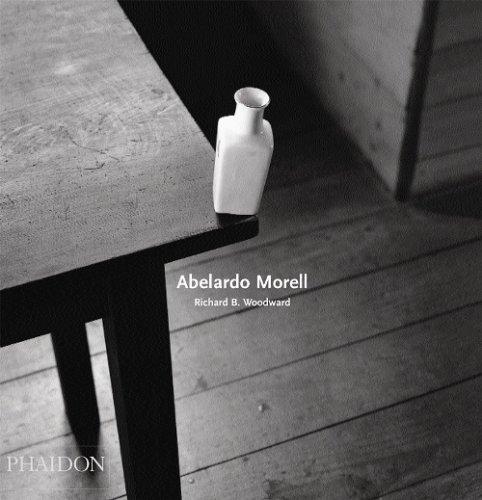
Abelardo Morell
Abelardo Morell Turns Light Into Wonder
Artist Spotlight · The Collection Editorial
“I want to make photography that shows how amazing it is that we can see at all.”
Abelardo Morell
There is a particular kind of hush that falls over viewers the first time they encounter an Abelardo Morell camera obscura photograph. The image stops you mid step: a Venetian canal shimmers across a wall painted with jungle motifs, or the Brooklyn Bridge arches in ghostly color across a rooftop, the city folded in on itself like a dream. Morell has spent decades engineering these moments of perceptual vertigo, and the art world has responded with sustained, deepening admiration. His 2013 retrospective at the Art Institute of Chicago, accompanied by a major monograph published by Bulfinch Press, brought his practice to the broadest audience yet, cementing his status as one of the most genuinely original photographers working in America today.
Abelardo Morell
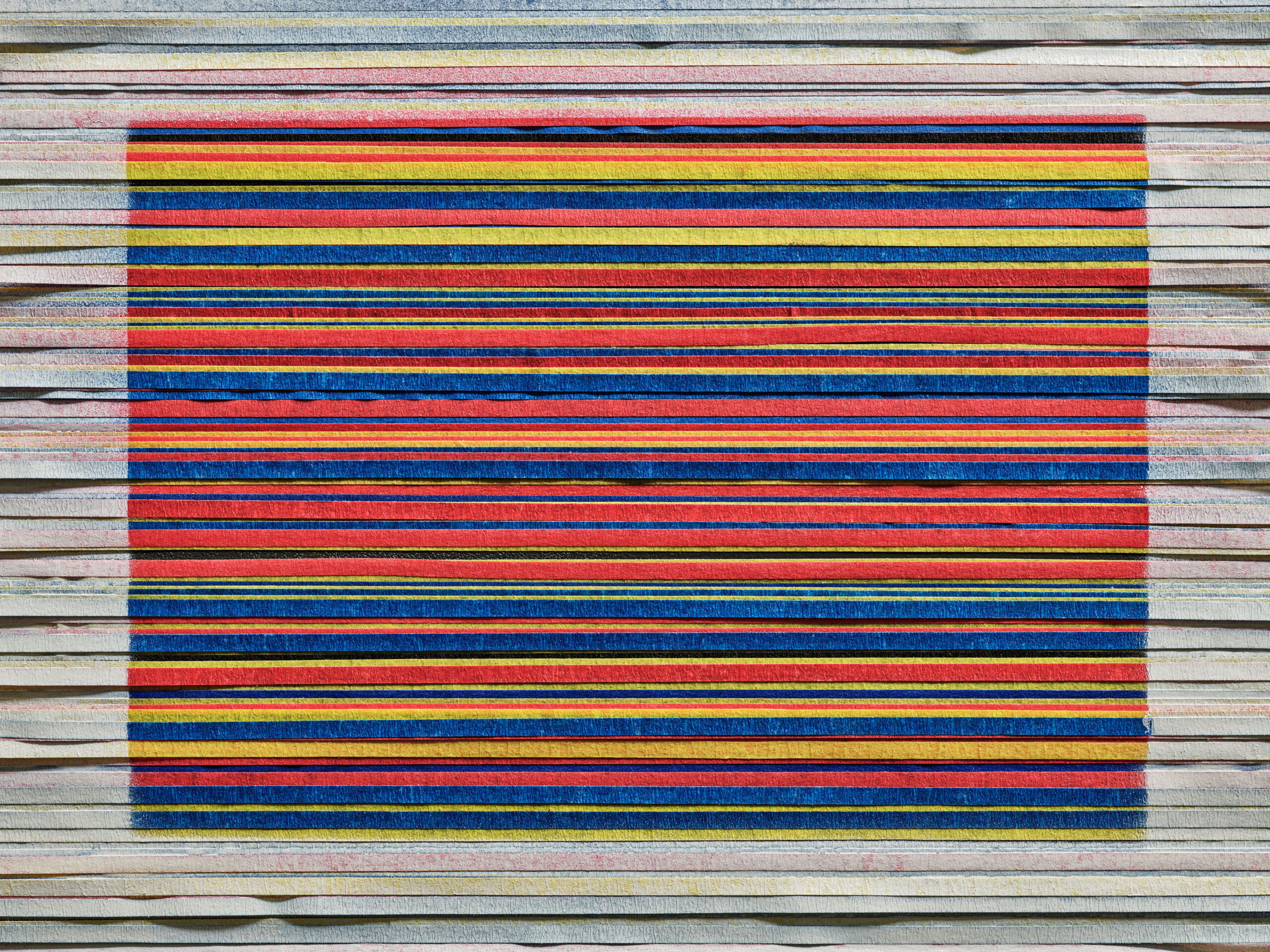
Untitled, 2025
Morell was born in Havana, Cuba in 1948, and the circumstances of his early life gave him a particular sensitivity to displacement and transformation. His family left Cuba for the United States in 1962, part of the wave of emigration that followed the revolution. He grew up in New York, navigating between two cultures and two visual languages, a formative experience that would eventually surface in work that is always, in some sense, about the collision of interior and exterior worlds. He studied at Bowdoin College in Maine and later earned his MFA from the Yale School of Art, where he absorbed the rigorous intellectual traditions of American photography and began developing a practice rooted in curiosity about how pictures actually come to be.
For much of the 1980s and into the 1990s, Morell taught at the Massachusetts College of Art and Design in Boston, a position he held for many years. Teaching sharpened his thinking about the fundamentals of photography, and it was this returning to first principles that led him toward the camera obscura. The technique, which dates to the Renaissance and was used by painters including Vermeer and Canaletto as an aid to composition, involves sealing a room in darkness and cutting a small aperture to project the outside world onto interior surfaces. Morell began experimenting with this method in the early 1990s, and his 1991 image of his son Brady's room, with the outside world pooled across the child's bed and toys, is often cited as the breakthrough that announced his singular vision.
Abelardo Morell
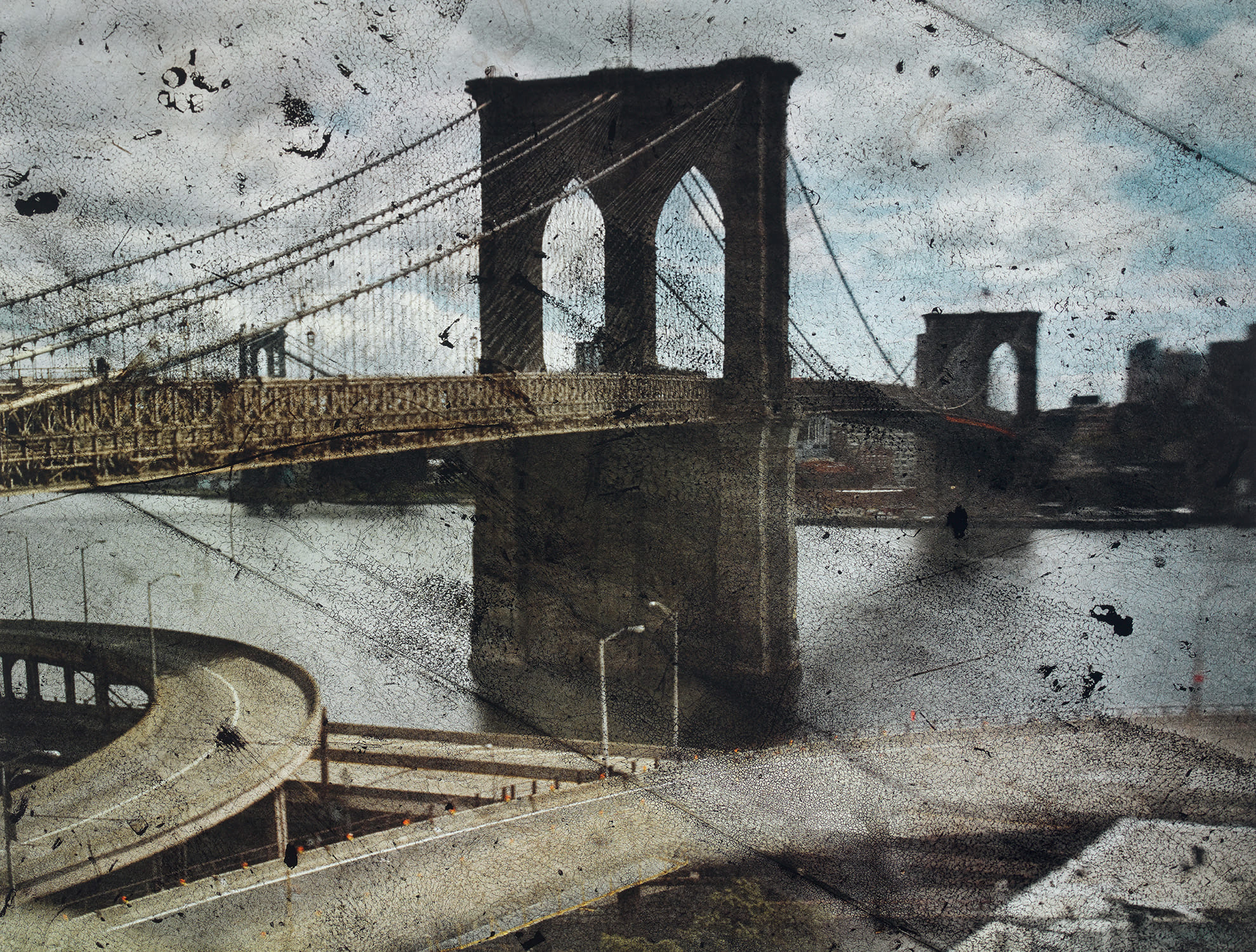
Tent-Camera Image on Ground: Rooftop View of the Brooklyn Bridge
The intimacy of that image, the way it married the boundless outside world with the tender smallness of a child's space, contained everything that would follow. What makes the camera obscura series so enduring is the way it refuses easy categorization. These works are simultaneously documentary and fantastical, technically precise and emotionally resonant. When Morell sealed a room in a Florentine palazzo and let the rooftops and hills pour across a bookcase, he was not simply demonstrating an optical trick.
“The camera obscura is, in a sense, the most basic and primal form of photography possible.”
Abelardo Morell, interview with the Art Institute of Chicago
He was asking profound questions about the act of seeing, about the relationship between the real and its representation, and about what it means to be inside any given space. His images of the Philadelphia Museum of Art, where the exterior is projected onto a gallery containing a Giorgio de Chirico painting, layer art history onto itself with a wit and lightness that few photographers could achieve. The Venice series, including the unforgettable view of the Volta del Canal in a room painted with jungle imagery, carries a particular weight for collectors because it makes the floating city feel both more real and more mythological at once. Beginning around 2010, Morell extended his camera obscura practice outdoors through the invention of what he called the Tent Camera, a portable device of his own design that projects the landscape beneath it directly onto the ground.
Abelardo Morell
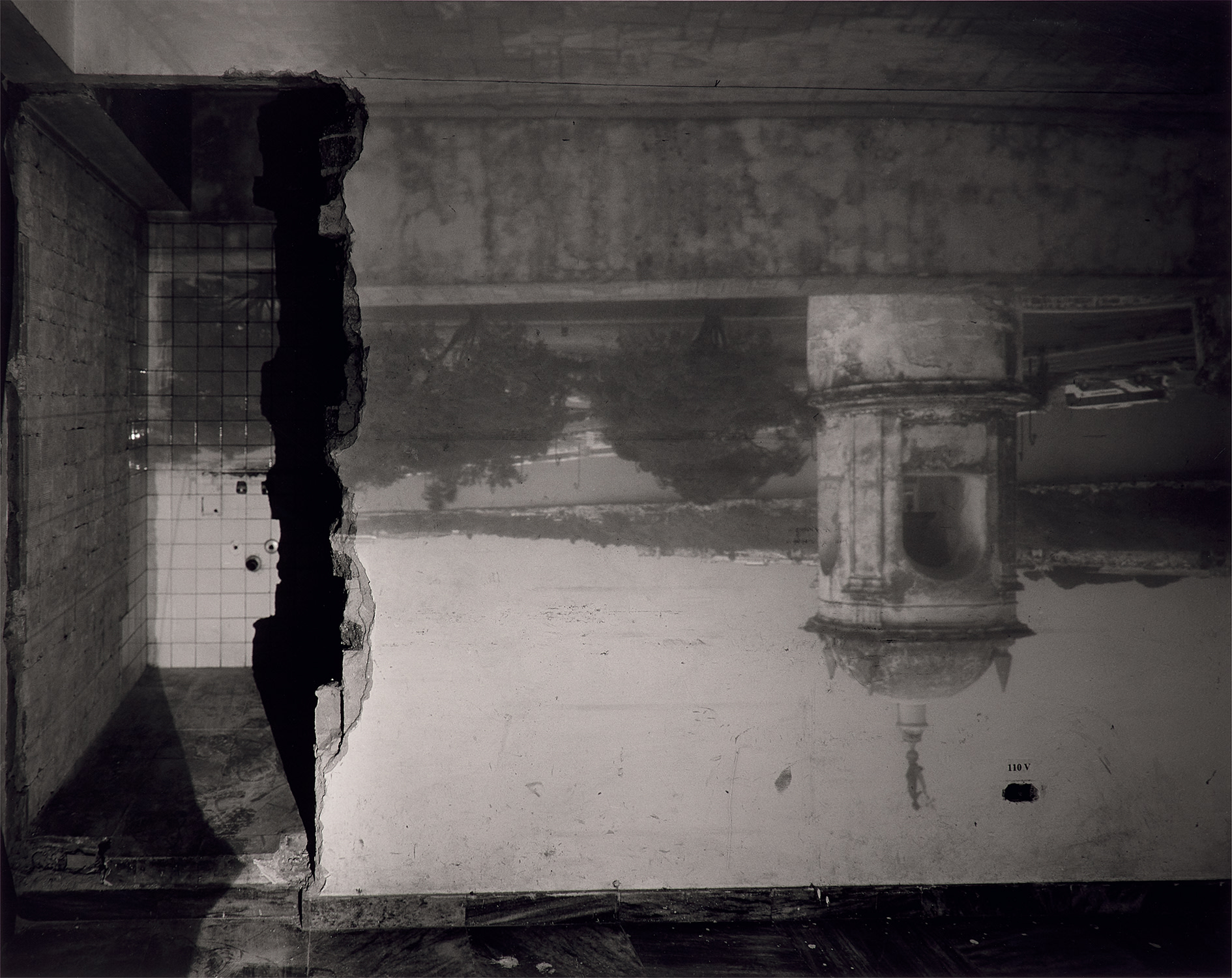
Camera Obscura Image of La Giraldilla de la Habana in Room with Broken Wall
The Tent Camera images, including the celebrated view of the Brooklyn Bridge projected across a rooftop, opened a new chapter. Here the technique shed the enclosure of interior space and met the open air, and the results have an expansive, almost cinematic quality. In 2012 and beyond, these works were received enthusiastically at exhibitions across Europe and North America, and they introduced Morell to a new generation of collectors who responded to their combination of technological ingenuity and deep visual pleasure. For collectors, Morell's market is distinguished by its consistency and the clarity of his editions.
His work is held in major institutional collections including the Museum of Modern Art in New York, the Art Institute of Chicago, the Metropolitan Museum of Art, and the Victoria and Albert Museum in London, a roster that provides strong institutional validation. His gelatin silver prints, chromogenic prints, and archival pigment prints vary in scale and medium, and each format rewards close attention. The gelatin silver works carry the particular warmth and tonal depth that collectors of fine art photography prize, while the large format chromogenic and pigment prints hold their own on monumental walls. Works such as the Camera Obscura Image of La Giraldilla de la Habana, which connects his practice to his Cuban origins, carry an additional biographical resonance that collectors find compelling.
Abelardo Morell
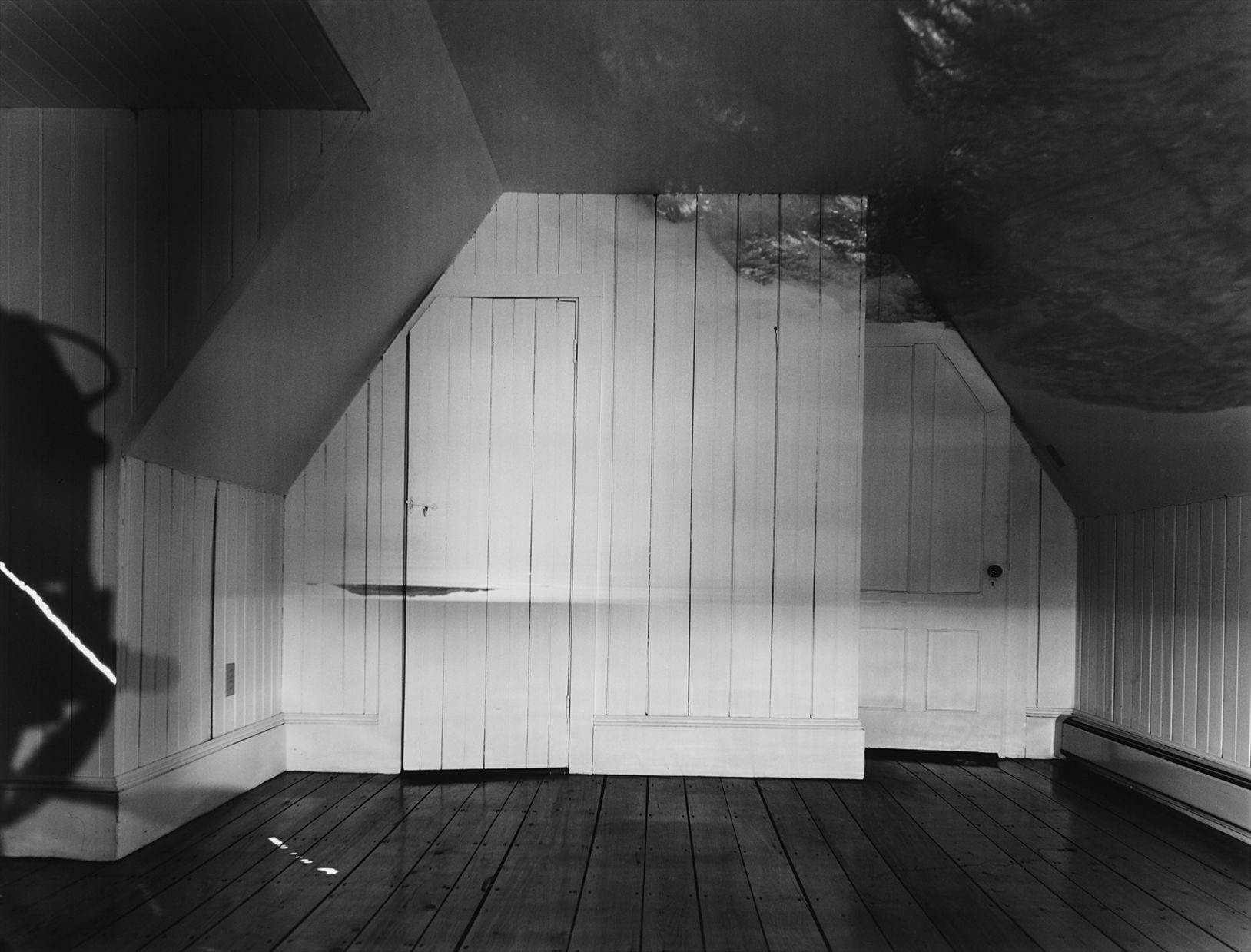
Camera Obscura Image of the Sea in Attic
Within the broader history of photography, Morell occupies a space that is distinctly his own while remaining in conversation with a rich tradition. His exploration of light, projection, and the nature of vision links him to the legacy of Man Ray and László Moholy Nagy on one side, and to contemporaries like Thomas Struth and Andreas Gursky in terms of photography's capacity to reframe institutional and public space. Yet Morell's work is warmer, more domestic, and more consistently playful than much of the cool conceptualism that surrounds it. His images of books, including a celebrated series in which open volumes are lit to reveal the curve of pages as landscape, place him in conversation with artists who understand the physical world as a site of poetic transformation.
Abelardo Morell matters today not only because his technical innovations are still being absorbed and appreciated, but because his fundamental subject, the miracle of light making meaning in a darkened room, has never been more relevant. At a moment when photography is ubiquitous and the conditions of seeing are debated endlessly, Morell insists on returning to the basics: a room, an aperture, and the world arriving as light. There is generosity in that insistence, and a humility that collectors and viewers recognize as rare. To own a Morell is to own a perpetual reminder that the world, properly attended to, is still capable of astonishing us.
Explore books about Abelardo Morell