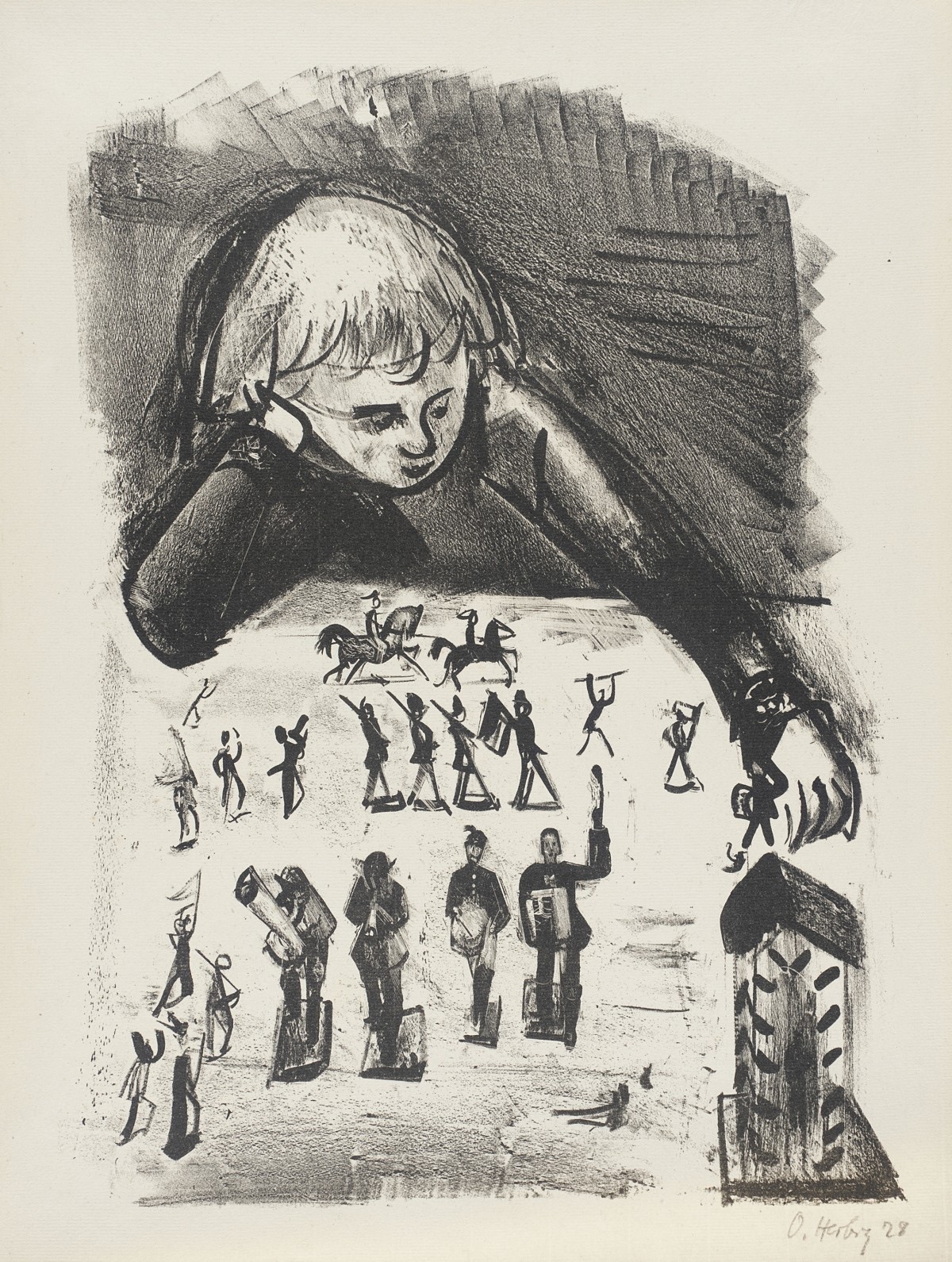
Lead Soldiers
1928
Lead Soldiers is a significant German Expressionist lithograph by Otto Herbig, created in 1928 during the Weimar Republic era. The composition depicts a young child looming over a surface scattered with toy soldiers, cavalry figures, and miniature buildings, rendered in dramatic black and grey tones. The work evokes the tension between childhood innocence and the shadow of militarism, themes highly resonant in interwar Germany. This piece entered the collection of the Los Angeles County Museum of Art as a gift from the Robert Gore Rifkind Foundation, Beverly Hills, CA, and was featured in the Artist Selects exhibition curated by Frances Stark.
- Medium
- Lithograph
- Signed
- Yes
Notes
Installation organized by the Los Angeles County Museum of Art. Work held in the Rifkind Center for German Expressionist Studies at LACMA. Photo credit: Museum Associates/LACMA. Signature visible lower right on the artwork reading O. Herbig 28. Featured alongside works by Karl Blossfeldt, Otto Dix, Wassily Kandinsky, and Kathe Kollwitz in the Frances Stark curated exhibition.
Est. Current Value
Artists in conversation
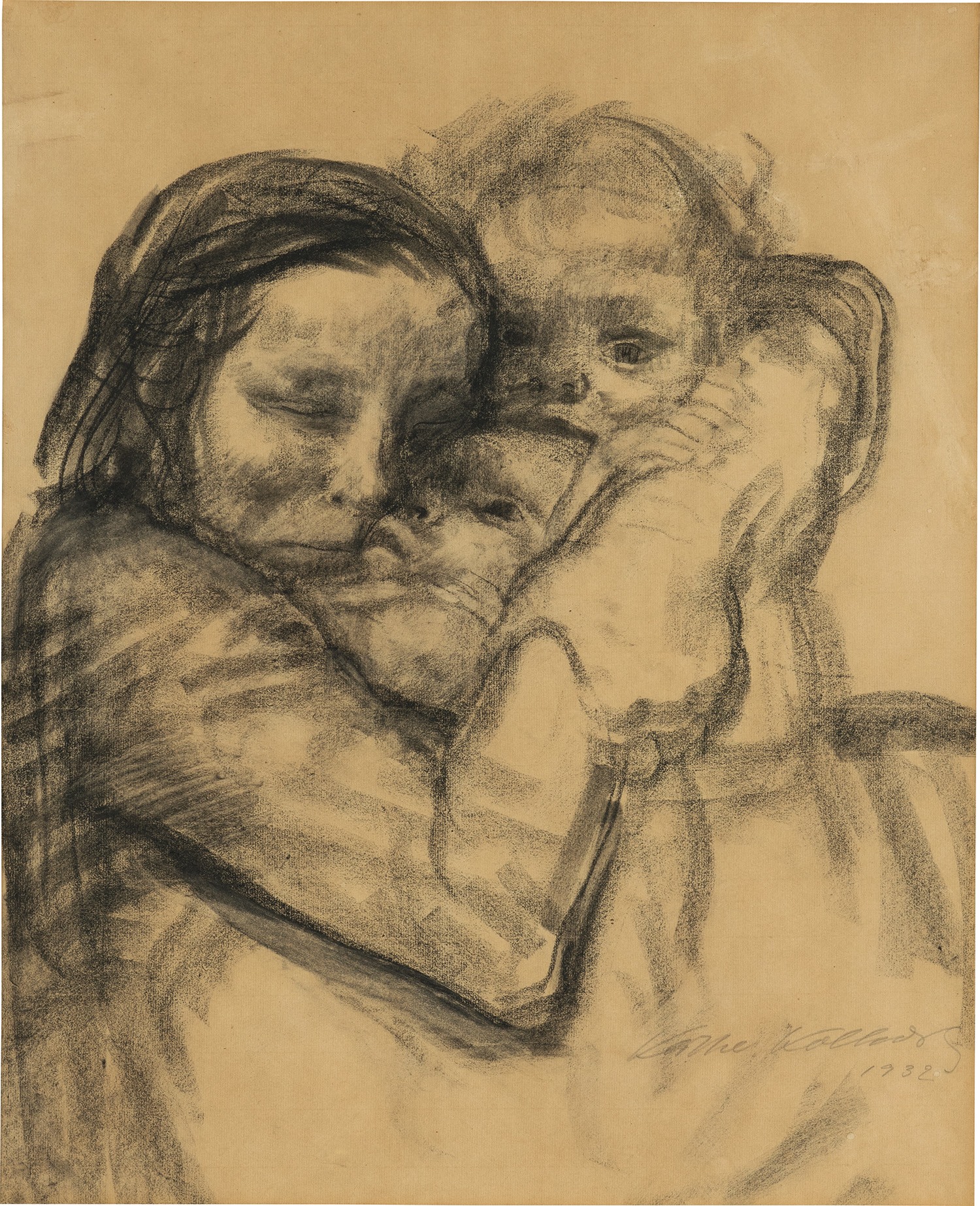
Käthe Kollwitz
German · b. 1867
Kollwitz produced powerful German Expressionist lithographs in the same Weimar era using stark black and grey tones to address the human cost of militarism and war, with children frequently appearing as vulnerable symbols against forces of violence and death.
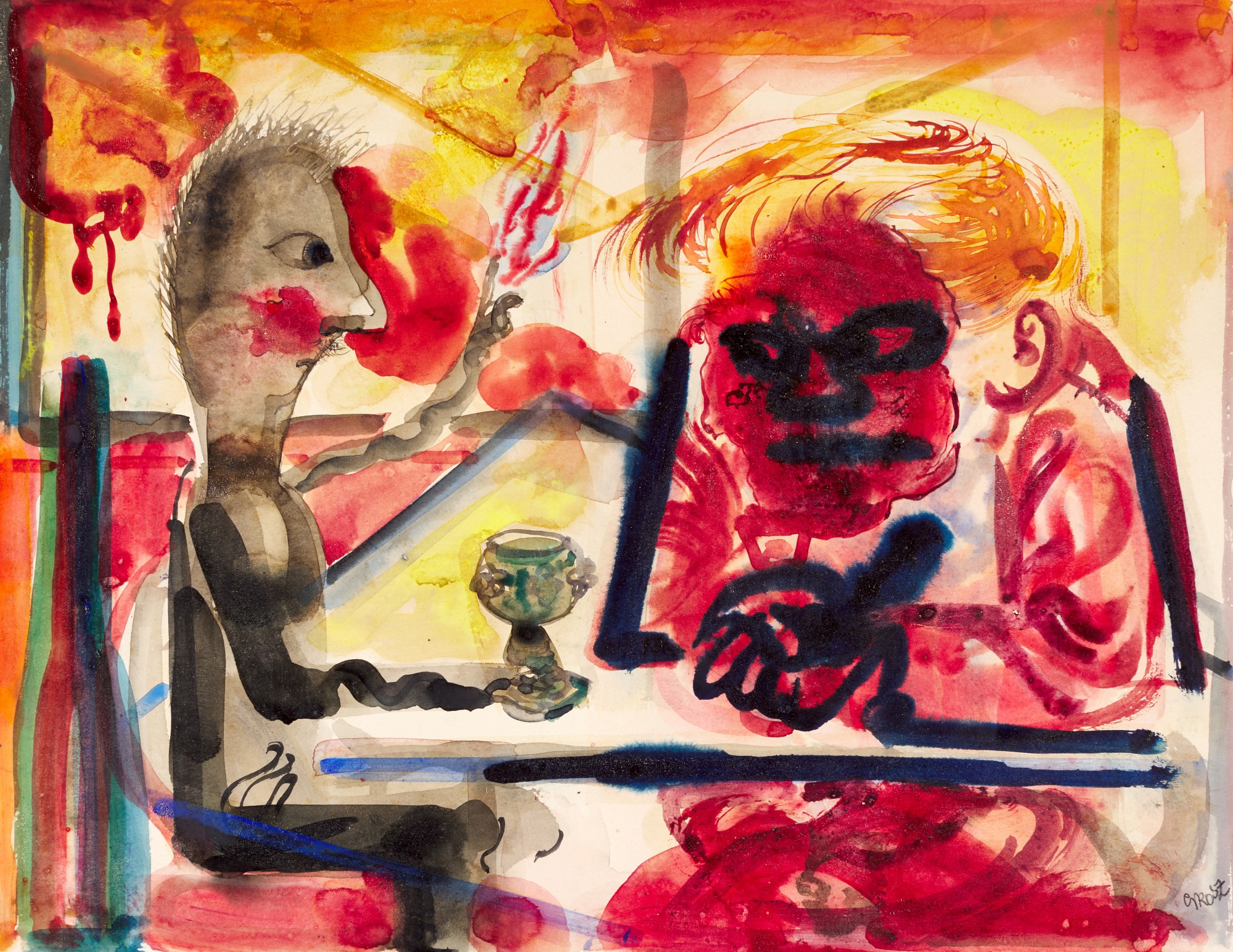
George Grosz
German · b. 1893
Grosz created biting Weimar Republic era prints that satirized German militarism using dramatic graphic contrasts and dark tonal ranges, directly critiquing the culture of war and its presence in civilian life with the same critical interwar sensibility found in Herbig's composition.

Heinrich Hoerle
German · b. 1895
Hoerle produced German Expressionist and New Objectivity era prints depicting figures in relation to mechanized and militarized imagery, using high contrast black tones and compositional tension that closely parallels Herbig's treatment of childhood innocence alongside the machinery of war.
Start the Discussion
Request access to join the discussion