
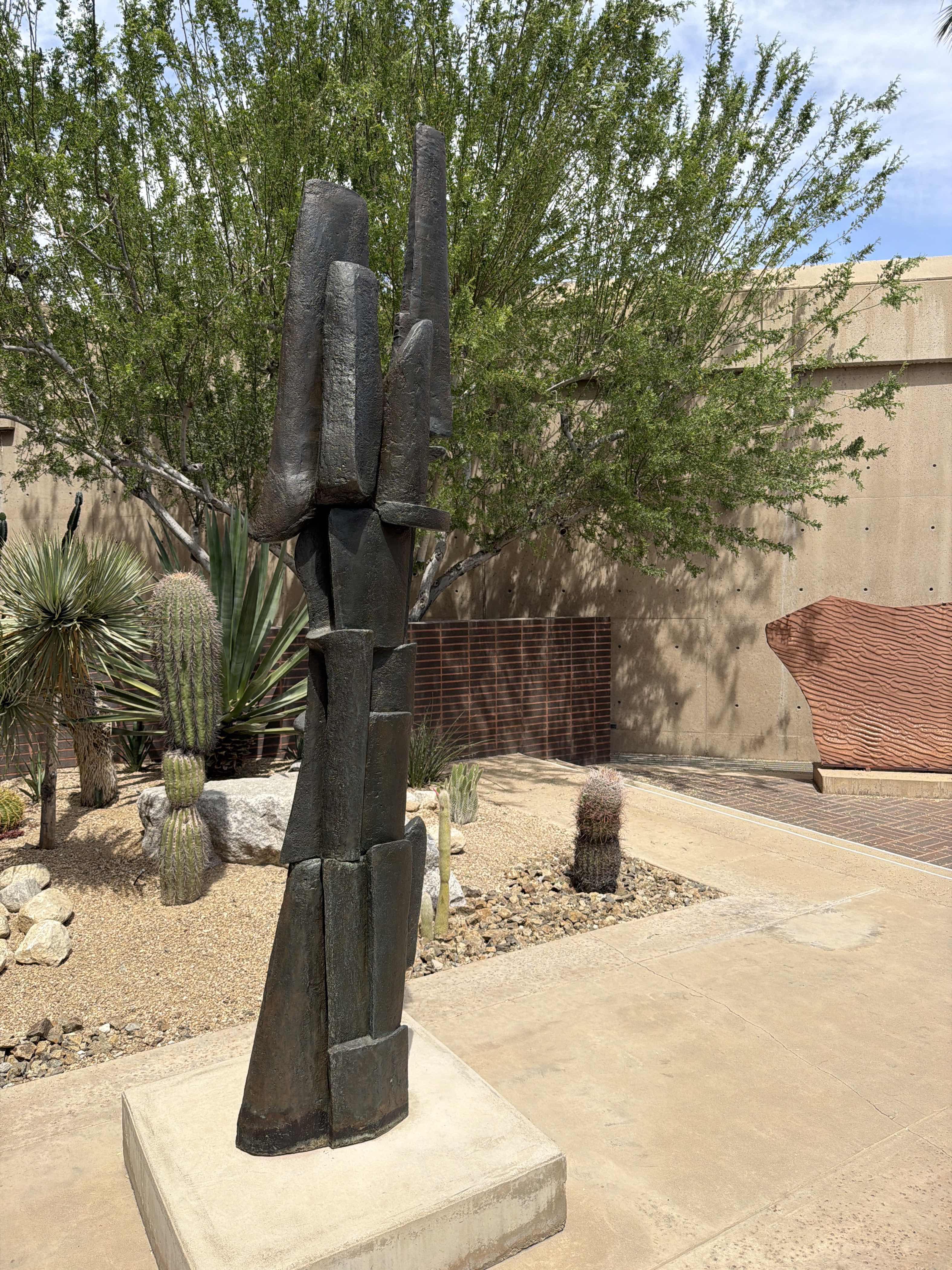
Hommage à César Vallejo
1957
This monumental abstract bronze sculpture by Argentinean artist Alicia Penalba features a vertical totem-like composition of stacked organic and geometric forms rising from a square concrete plinth. Cast in 1957 and titled in homage to the celebrated Peruvian modernist poet César Vallejo, the work exemplifies Penalba's signature biomorphic language with a richly textured dark patina. This is edition 2 of 4, a rare cast from a small edition, and entered a museum collection as a gift from Gwendolyn Weiner with accession number 2023.25. The sculpture is displayed outdoors in a desert garden setting, resonating powerfully with the surrounding landscape.
- Medium
- Bronze
- Edition
- 2 of 4
- Signed
- Yes
- Spotted At
- Museum · Palm Springs Art Museum
Notes
Accession number: 2023.25. Edition 2/4. Museum label identifies artist as Argentinean, active France, 1913–1982. Work is installed outdoors in a desert sculpture garden setting.
More by Alicia Penalba
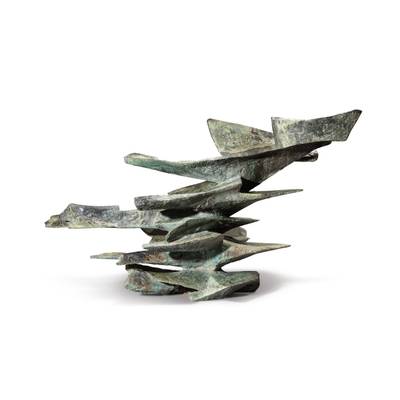
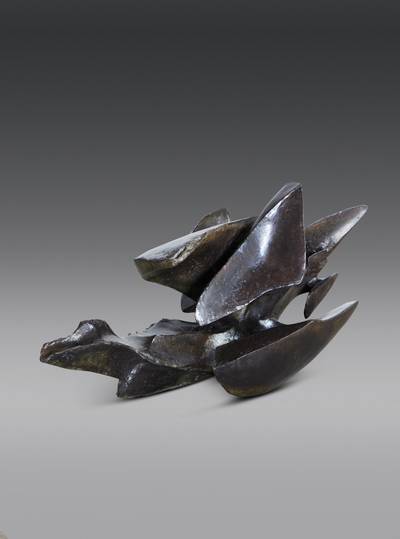
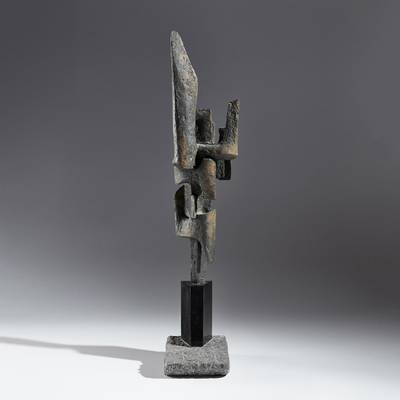
Spotted works by Alicia Penalba
Artists in conversation

Barbara Hepworth
British · b. 1903
Hepworth created biomorphic abstract bronze sculptures with richly textured surfaces and vertical totemic compositions that share the same organic yet structured formal language seen in this Penalba work. Both artists worked in Paris midcentury and developed a vocabulary of stacked and interlocking organic forms with dark patinated bronze finishes.

Eduardo Chillida
Spanish · b. 1924
Chillida produced monumental bronze sculptures combining geometric and organic forms with heavily textured surfaces rising vertically from solid bases, closely paralleling the formal and material qualities of this Penalba homage. His work shares the same meditative gravity and dialogue between mass and void that characterizes this totemic bronze.
Étienne-Martin
French · b. 1913
Étienne-Martin created vertical totemic bronze and mixed media sculptures with stacked accumulations of biomorphic forms and deeply textured surfaces, working in the same Parisian midcentury milieu as Penalba with a comparable emphasis on primal organic architectures rising from a grounded base.
Start the Discussion
Request access to join the discussion