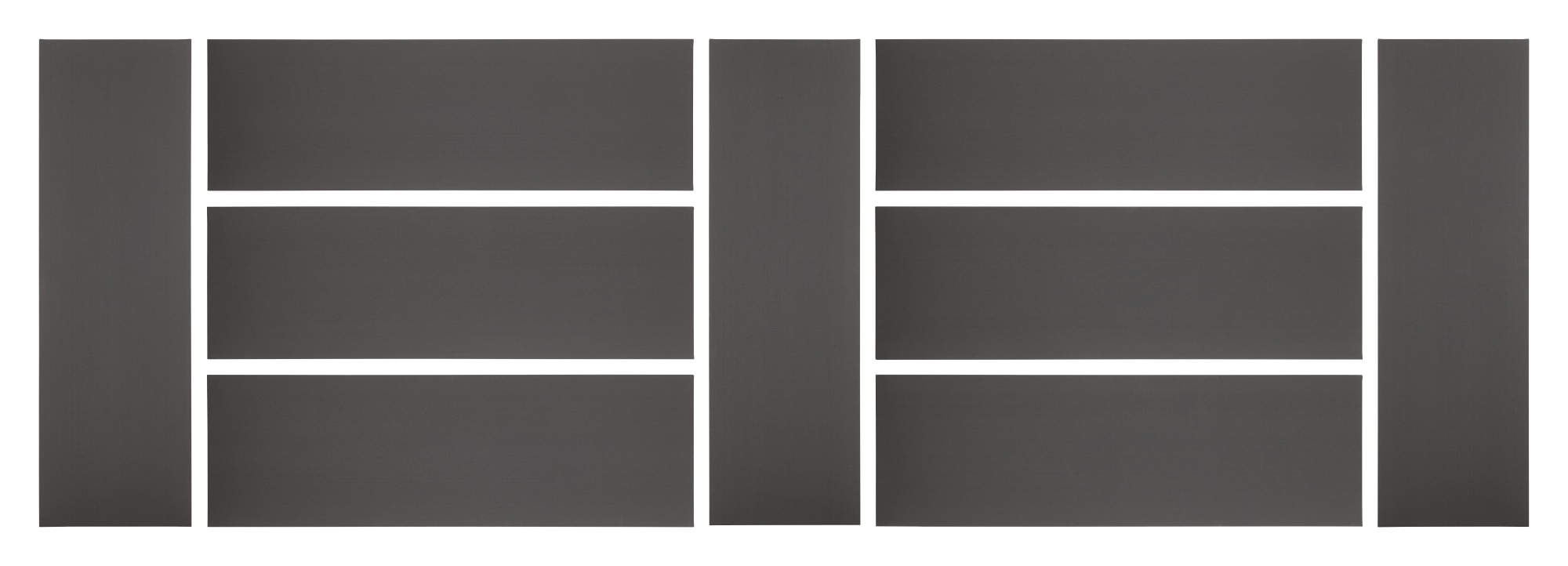
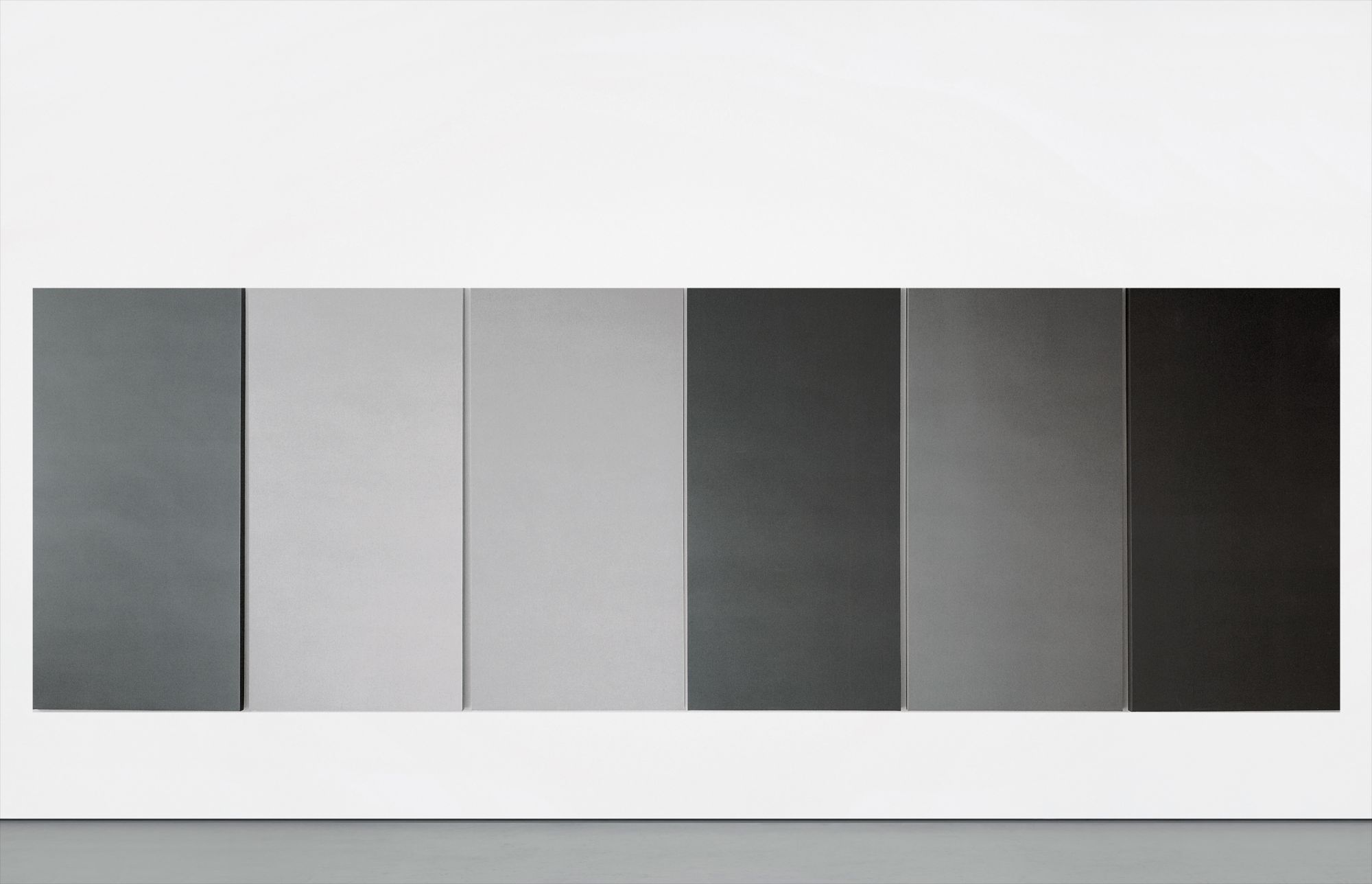
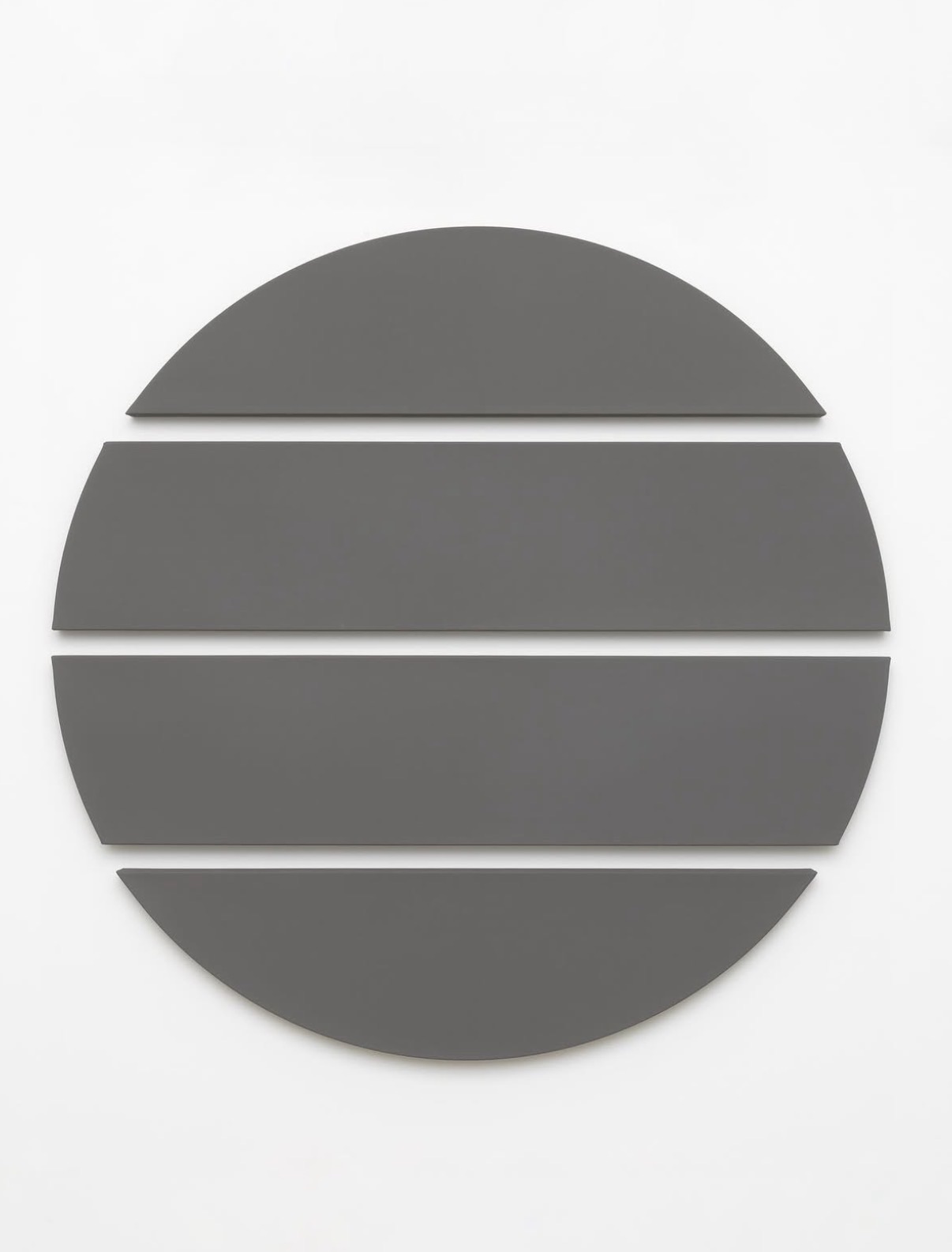
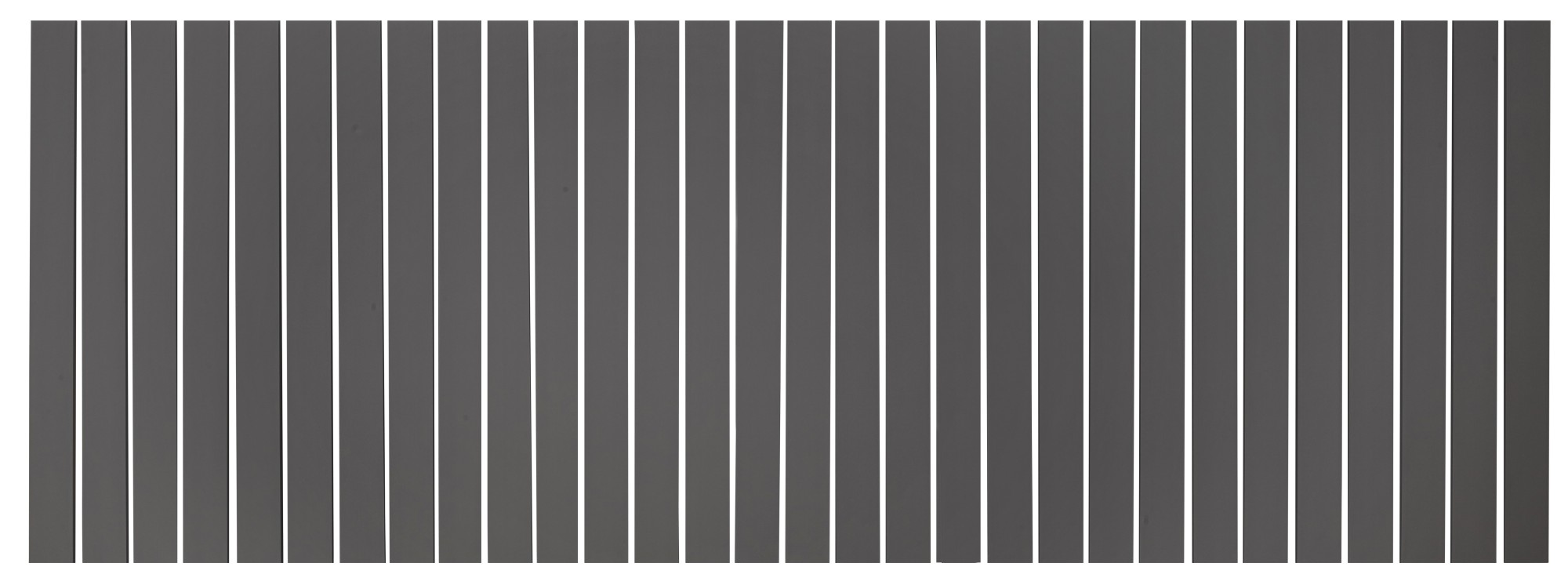
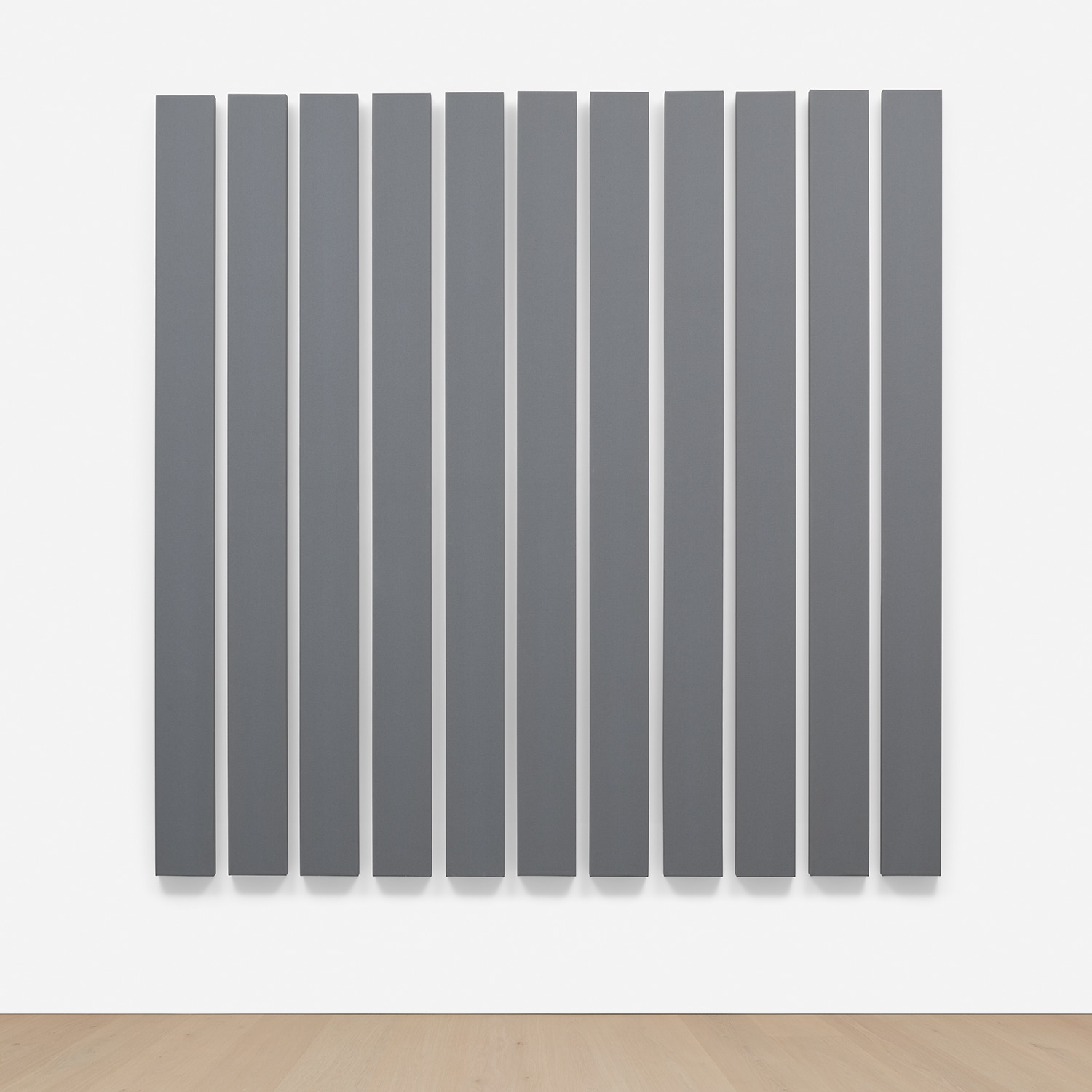
In 2024, Alan Charlton completed a new iteration of his enduring Circle Painting series, a work in four parts that distills decades of rigorous thought into an image of almost breathtaking calm. That a painter born in Sheffield in 1948 should still be producing work of such quiet authority, still deepening a practice he committed to more than fifty years ago, is itself a kind of artistic statement. Charlton has never wavered, never pivoted, never chased a trend, and the art world has rewarded that conviction with growing institutional recognition and a collector base that understands exactly what it is looking at. To encounter a new Charlton in 2024 is to feel the weight of a lifetime of careful, purposeful thinking made visible in paint. Charlton was born in Sheffield in 1948 and studied at the Sheffield College of Art before moving to London to attend Camberwell College of Arts and then the Royal Academy Schools, where he completed his studies in the early 1970s. It was during and immediately after this period of formal training that he arrived at the decision that would define his entire career: to paint exclusively in grey, and to pursue that singular commitment with an almost philosophical discipline. This was not a youthful experiment or a provocation designed for shock. It was, from the beginning, an act of conviction rooted in a belief that painting could be stripped of narrative, of colour relationships, of symbolic content, and still retain enormous power through structure, proportion, and physical presence. The early 1970s were a fertile moment for such thinking. Minimalism had reshaped the conversation about what art objects could be, and Conceptual Art had pushed painters to examine the foundational assumptions of their medium. Charlton absorbed these energies without becoming a servant to any single movement. His paintings sit in productive dialogue with American Minimalism, with the work of artists such as Donald Judd and Robert Ryman, and with European traditions of Concrete and Constructivist painting. Yet he has always remained distinctly and resolutely British in his approach, working from a studio practice that has prioritised process and material precision over theoretical performance. He developed a very specific grey, a mid tone achieved through a careful mixing of acrylic pigments, and he has maintained that tone with extraordinary consistency across five decades. What distinguishes Charlton's practice is the way he treats the canvas not merely as a support for paint but as an object that exists in physical space and in relationship to the architecture around it. His works frequently employ channels or slots cut into the surface, multiple joined panels, and proportional systems that determine every dimension of the work with the same rigour a composer might apply to a musical score. Works such as Solent from 1985, an acrylic on canvas in thirty parts, demonstrate the scale of ambition that lies beneath the apparent simplicity of his approach. Thirty panels of grey, each precisely proportioned and spaced, become something immersive and environmental, a work that does not simply hang on a wall but genuinely inhabits a room. Similarly, Painting in Six Parts and 11 Vertical Parts from 1984 reveal how Charlton uses seriality and repetition not to produce monotony but to generate a kind of visual rhythm that rewards sustained attention. Closed Border Painting, in nine parts on cotton, shows his sensitivity to material as well as to form, the softer ground lending a different quality of surface to the familiar grey. Charlton has exhibited at major institutions across Europe and beyond, with significant presentations at the Stedelijk Museum in Amsterdam and sustained engagement with the European gallery circuit throughout the 1980s and 1990s. His reputation in Germany and the Netherlands has always been particularly strong, in part because the tradition of systematic and Concrete painting is so deeply embedded in those art cultures, and audiences there have long understood the rigour of what he is doing. In Britain, recognition has sometimes been slower to arrive, as it so often is for artists whose work does not traffic in spectacle or irony, but his standing has grown considerably in recent years as collectors and institutions have come to appreciate the depth and consistency of his achievement. From a collecting perspective, Charlton occupies a rare and enviable position. His work is genuinely blue chip in the sense that its intellectual foundations are unassailable, its place in art history secure, and its physical presence in a collection both commanding and deeply satisfying to live with. Collectors who acquire Charlton works frequently report that the paintings change over time, not materially but perceptually, the grey shifting with the light of different seasons and hours, the proportions becoming more familiar and more mysterious simultaneously. Multi part works such as those available on The Collection represent particularly strong opportunities, because they demonstrate the full scope of his system and make the most compelling case for what he has spent his life building. Works on cotton, such as Closed Border Painting, are especially prized for the way the material softens and complicates the monochromatic surface. Within the broader landscape of postwar and contemporary abstraction, Charlton belongs to a generation of painters who chose depth over breadth, who understood that true originality often looks like restriction. He is a peer to Robert Ryman in his devotion to a single colour, to Brice Marden in his commitment to surface and medium, and to the great European Concrete painters in his belief that proportion and structure are themselves expressive languages. Yet no one else has made exactly the paintings Charlton has made, in exactly his grey, with exactly his system of channels and panels and proportional logic. That specificity is the mark of a truly original mind. The significance of Alan Charlton's work in the present moment is inseparable from the cultural hunger for seriousness and slowness that defines the best of contemporary collecting. In an era saturated with images, colour, noise, and irony, his grey paintings offer something genuinely rare: a sustained invitation to look, to think, and to be still. His 2024 Circle Painting in Four Parts is not just a continuation of a practice but a demonstration that the practice remains alive, searching, and necessary. For collectors who understand that the most meaningful acquisitions are those that deepen with time, Alan Charlton is an artist whose work will reward a lifetime of attention.