Graffiti
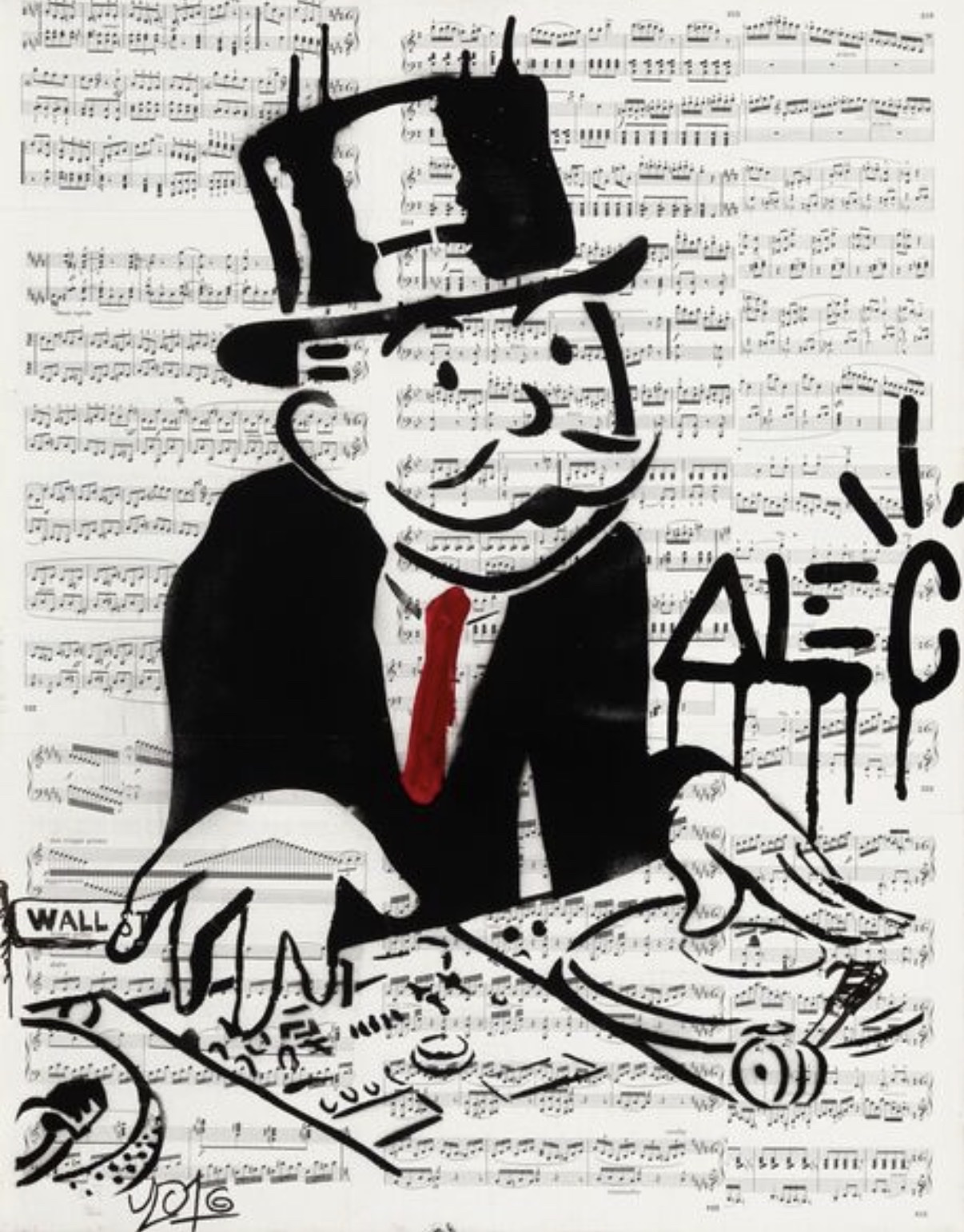
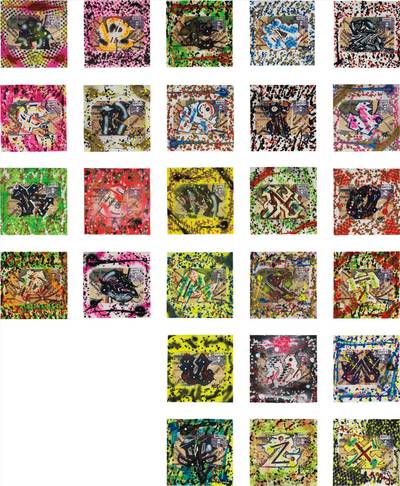
Alec Monopoly
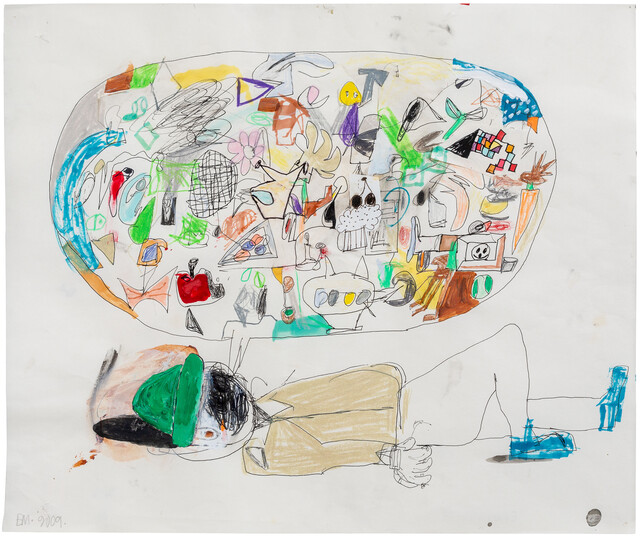
Untitled (DJ Monopoly), 2010

The Wall Was Always a Canvas
There is a moment, familiar to anyone who has stood before a great piece of street art, when the surrounding city seems to fall away. The noise, the traffic, the mundane architecture of urban life recedes, and what remains is something urgent and alive. Graffiti has always done this. Long before it was debated in auction rooms or celebrated in museum retrospectives, it commanded attention on its own terms, in its own territory, by its own rules.
The story begins, as most origin stories do, before anyone was paying attention. Subway cars in New York City became moving canvases in the late 1960s and early 1970s, when writers like Taki 183, a teenager from Washington Heights, began tagging their names across the five boroughs. By the mid 1970s, whole train cars were being transformed into elaborate compositions of interlocking letters, characters, and color. These were not random acts of vandalism.
How & Nosm
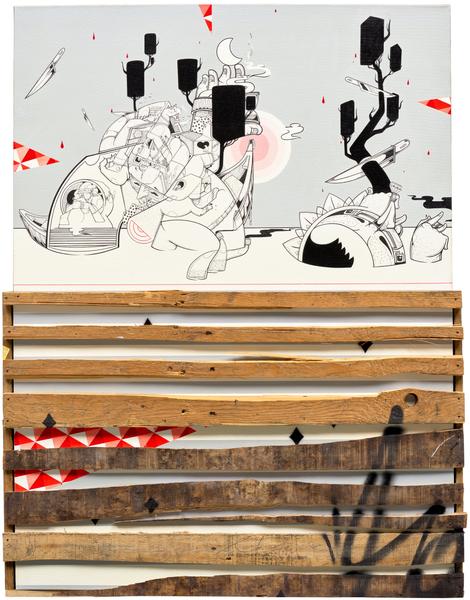
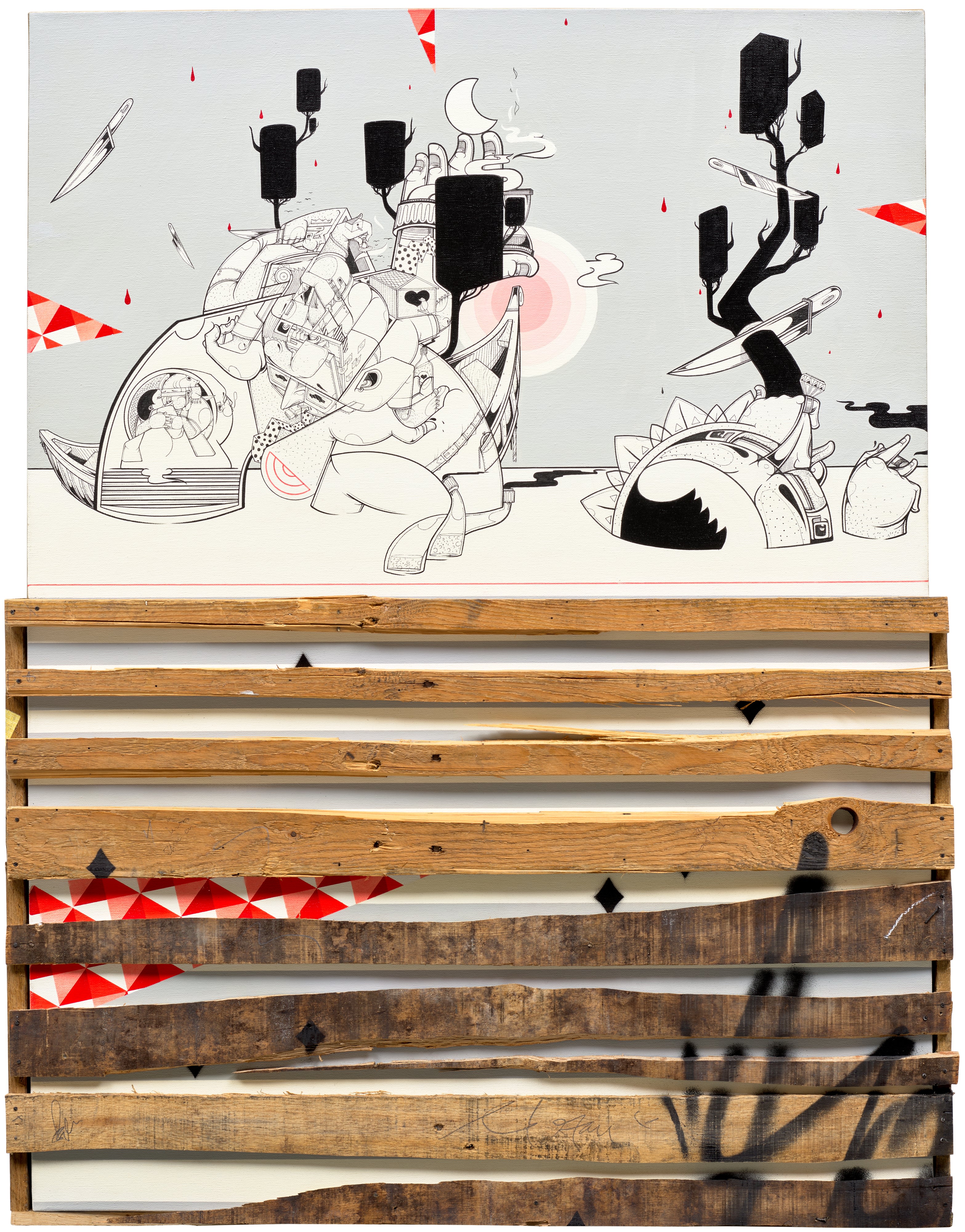
Midnight Mausoleum, 2012
They were the product of intense competition, technical mastery, and a fierce desire for visibility in a city that offered very little of it to young people from the margins. Dondi White, one of the most respected writers of that generation, elevated the form with whole car productions that were compositionally sophisticated and conceptually aware. His work, seen on The Collection, stands as a document of a movement at its most inventive. The transition from the streets to the gallery was not a clean one, and the tension it created was generative.
In 1980, the Times Square Show brought together graffiti writers, punk artists, and downtown figures in a raw, polyglot exhibition that announced something genuinely new was happening. Two years later, the Fun Gallery in Manhattan began showing work by writers including Futura and Dondi White, placing aerosol paintings on gallery walls and asking the art world to look more carefully. Futura, whose work carries a distinctly cosmic, abstract quality compared to the letter driven tradition, represents one of the earliest and most sustained arguments that graffiti was not a phase but a practice with its own internal logic and ambition. That argument has since been thoroughly won.
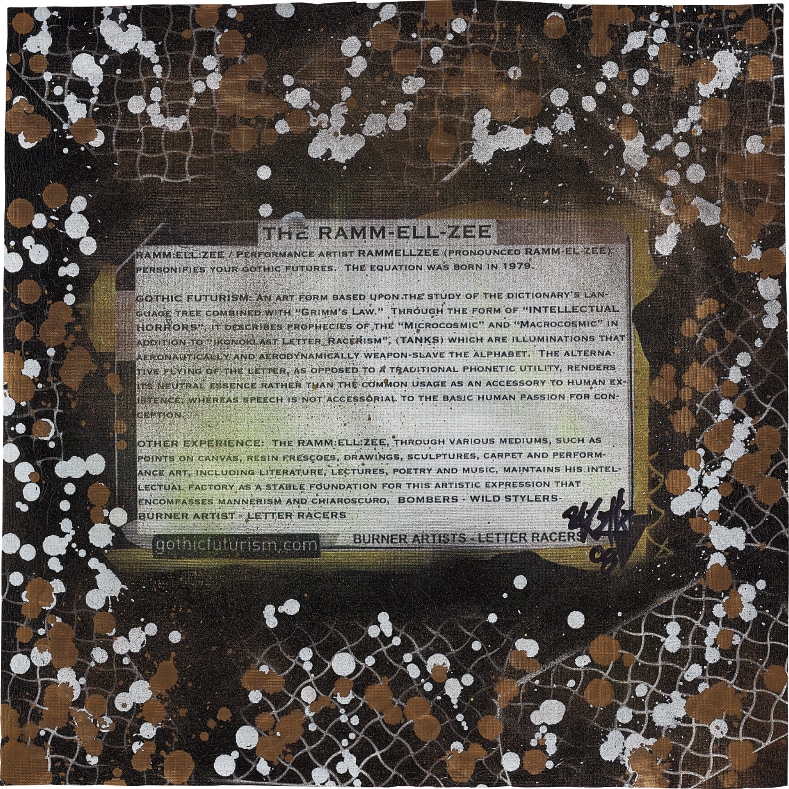
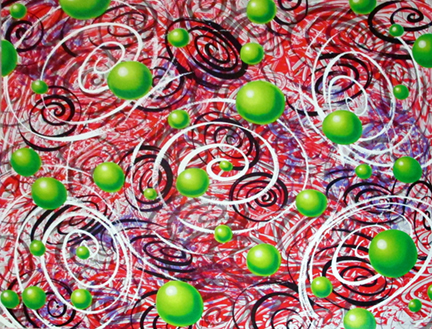
Rammellzee
Wild Style Dedication, 2008
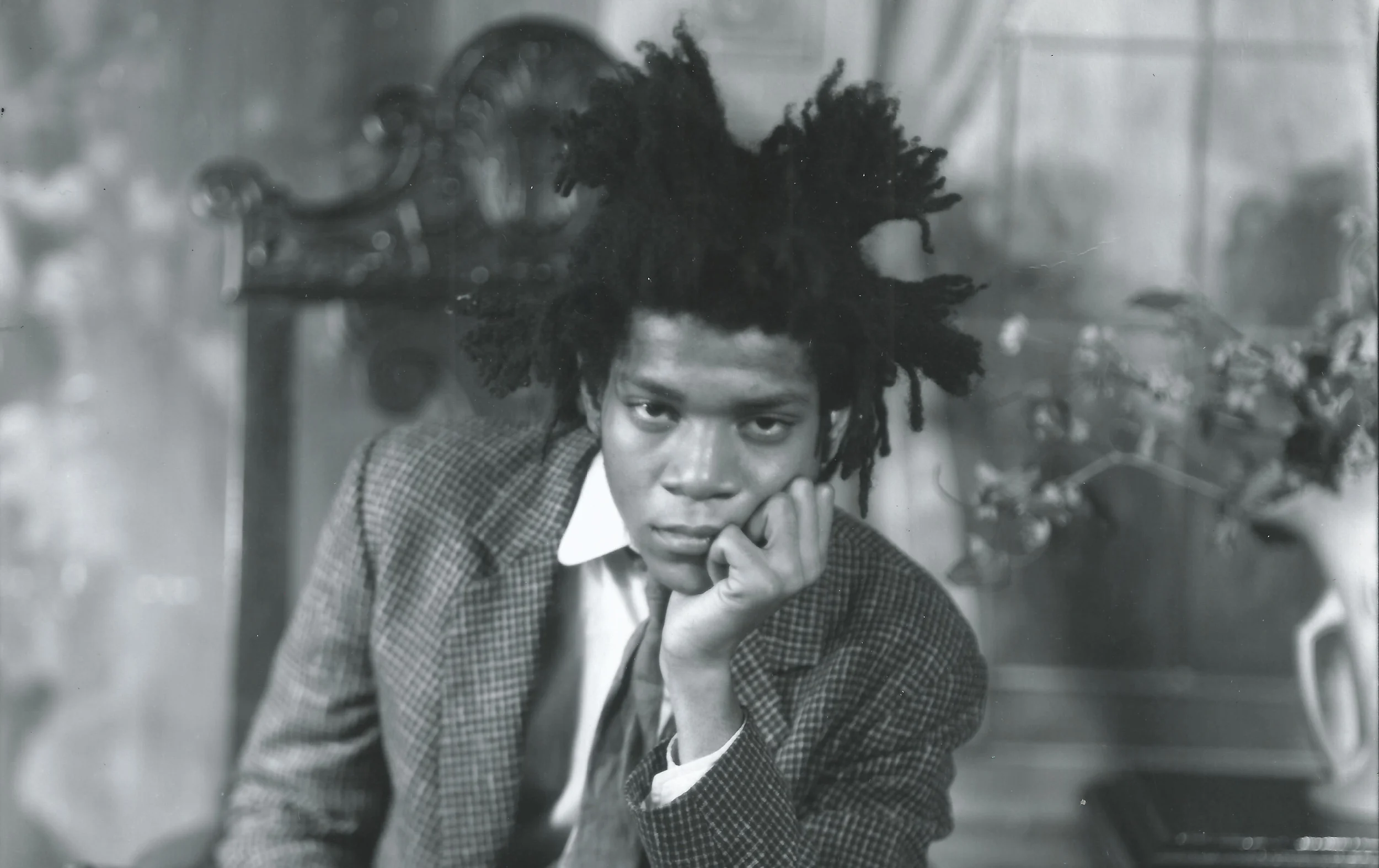
What made the downtown New York scene of the early 1980s so electrically significant was the convergence of graffiti with other movements that were equally restless and uncontained. Jean Michel Basquiat had tagged the streets of lower Manhattan as SAMO before abandoning the tag to work on canvas and paper. His trajectory remains one of the defining narratives of twentieth century art, a movement from the street to the studio that never fully left the street behind. Rammellzee, whose work occupies a genuinely singular position in the culture, fused graffiti writing with what he called Gothic Futurism, developing an entire philosophical and visual system around the armed letter.
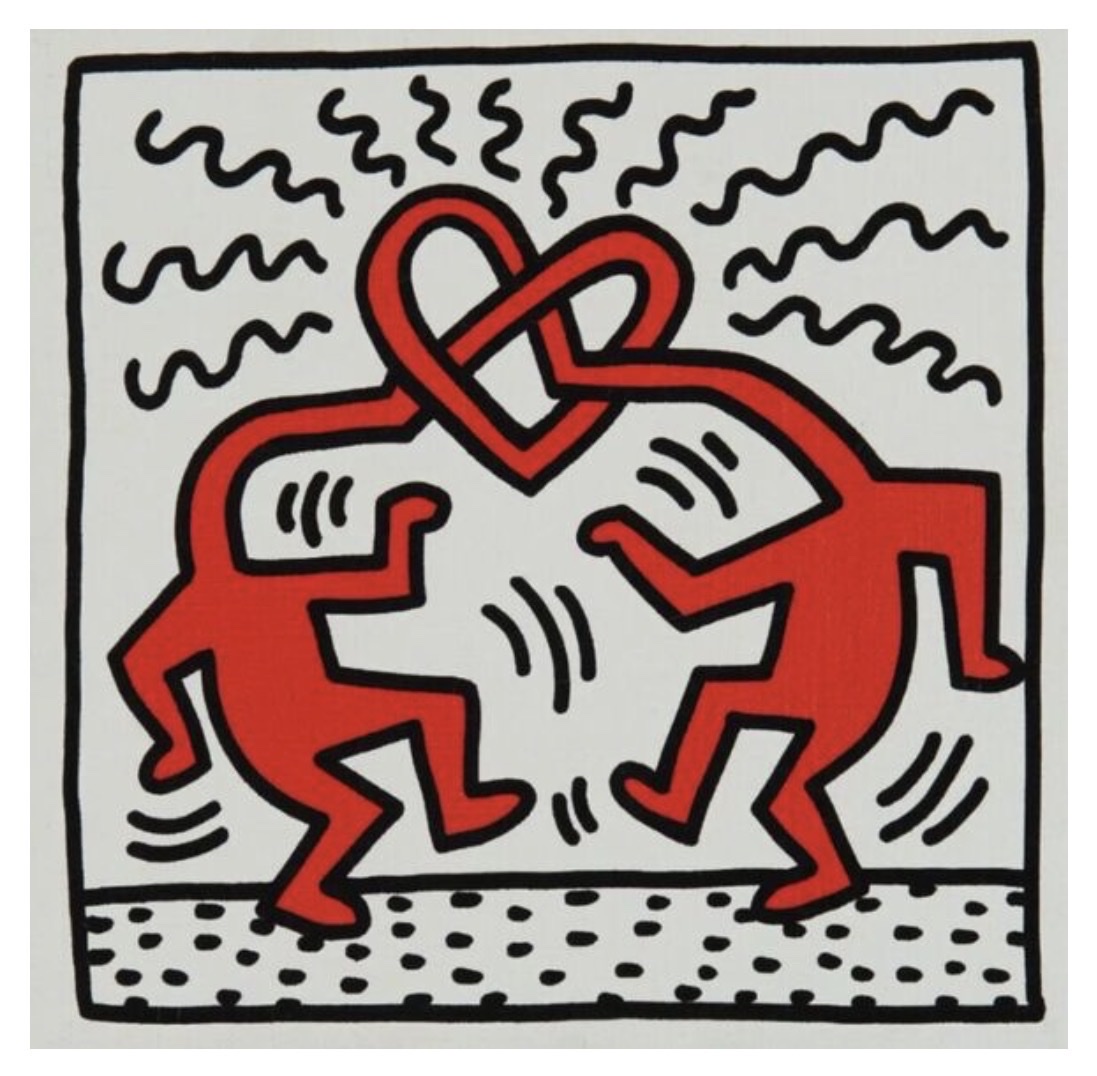
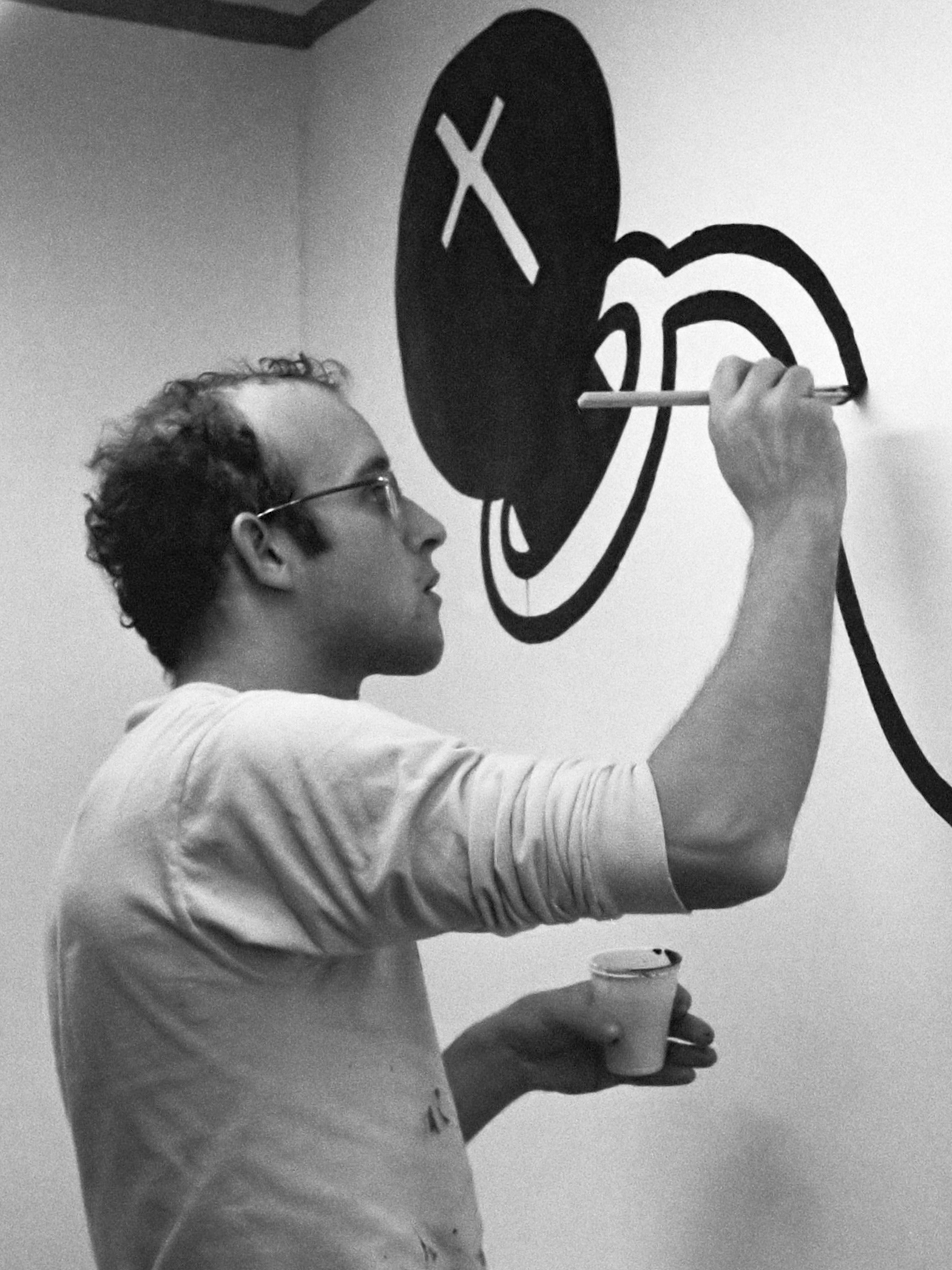
Keith Haring found his vocabulary in the New York City subway system, drawing chalk figures on blank black advertising panels before the market and the institutions caught up with him. His collaborations with LA II, also known as Angel Ortiz, are among the most vivid examples of a mentorship rooted in the aesthetics of the street, and those works are represented on The Collection with real feeling for what that partnership meant. The geography of graffiti expanded throughout the 1980s and into the 1990s in ways that the New York origin story cannot fully contain. In São Paulo, Os Gêmeos, the twin brothers Otavio and Gustavo Pandolfo, developed a visual language that drew on Brazilian folklore, hip hop culture, and a commitment to public space that remains undiminished.
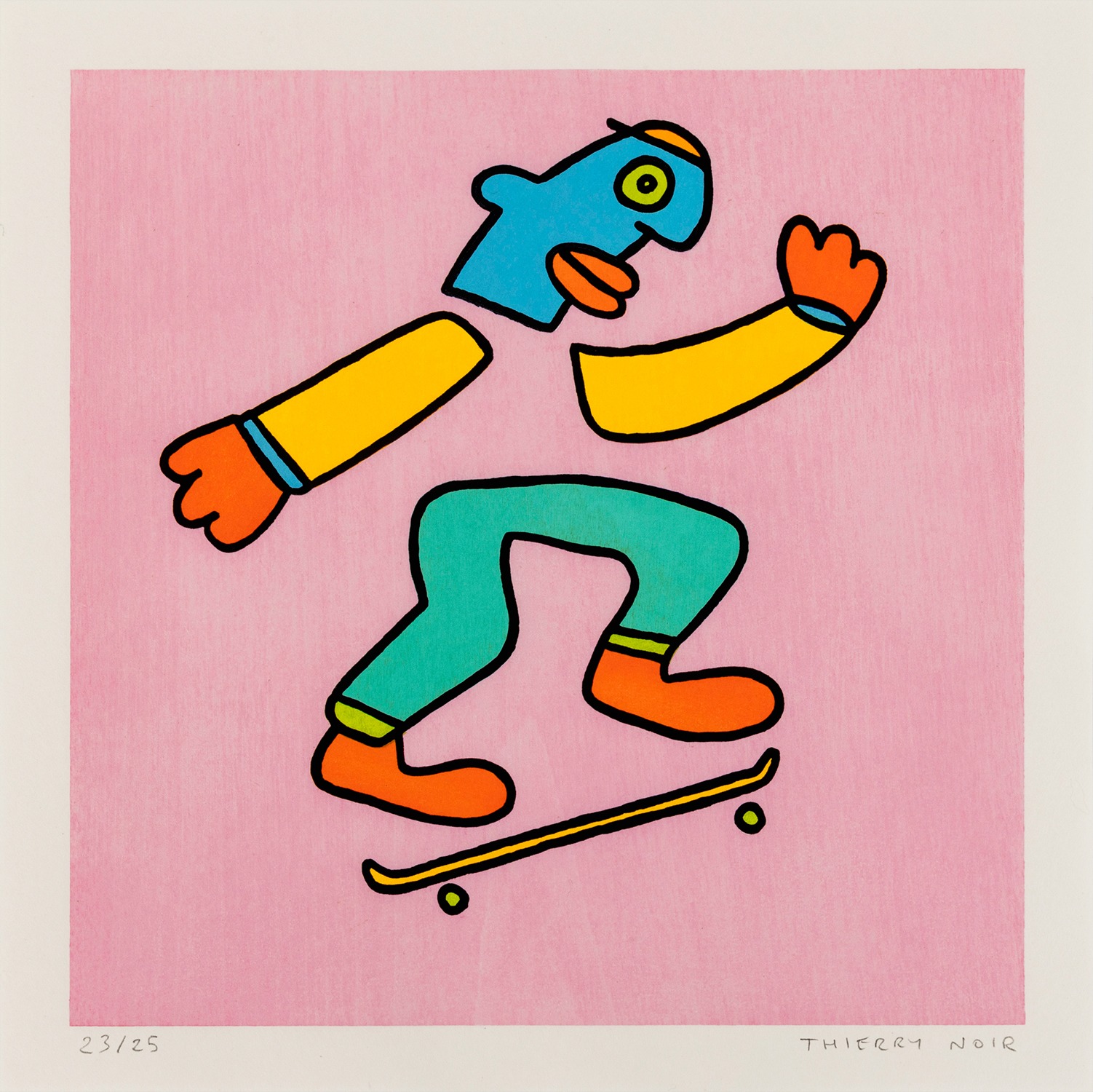
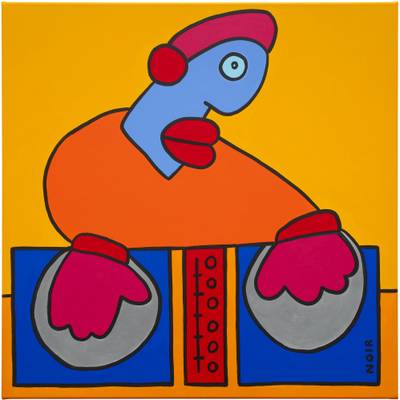
Thierry Noir
Thierry Noir
Their yellow skinned characters, often monumental in scale, feel at once mythic and deeply personal. Thierry Noir began painting the Berlin Wall in 1984, long before its fall made that gesture historically legible, creating bold cartoon figures that are among the most politically charged images in the entire history of the form. Barry McGee, working out of San Francisco's Mission District, brought a folk art sensibility and a preoccupation with outsider experience to a practice rooted in tagging and wheatpaste. These artists did not inherit a tradition so much as they each remade it in their own image.
The technical vocabulary of graffiti is worth dwelling on, because it shapes everything about how the work reads and what it can do. The aerosol can, with its wide caps and skinny caps, its pressure variations and its characteristic drips, is not a crude instrument. It rewards years of practice and resists easy mastery. The letter forms developed within graffiti writing, wildstyle, bubble letters, blockbusters, have their own grammar and history.
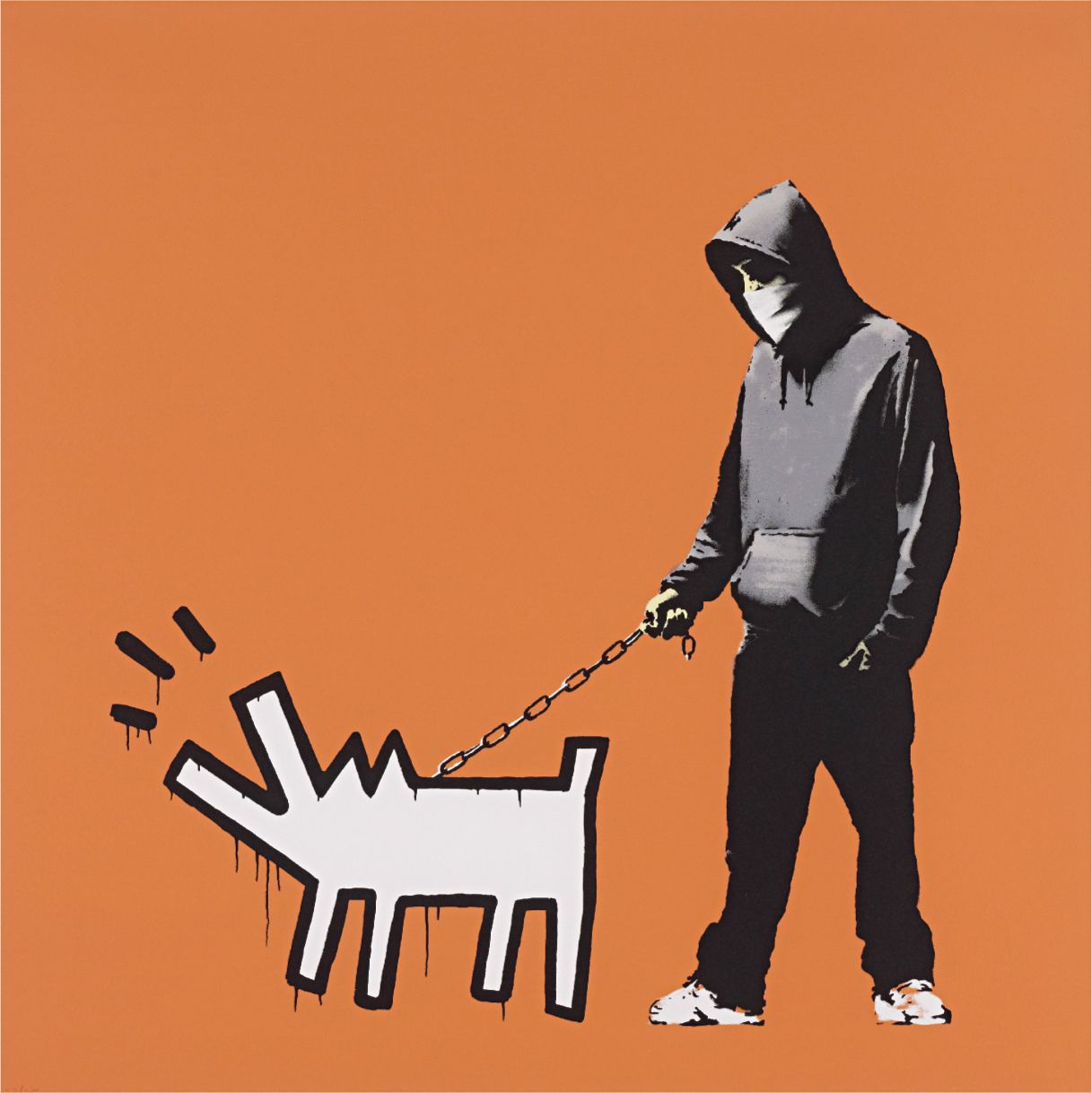
Banksy
Choose Your Weapon (Dark Orange)
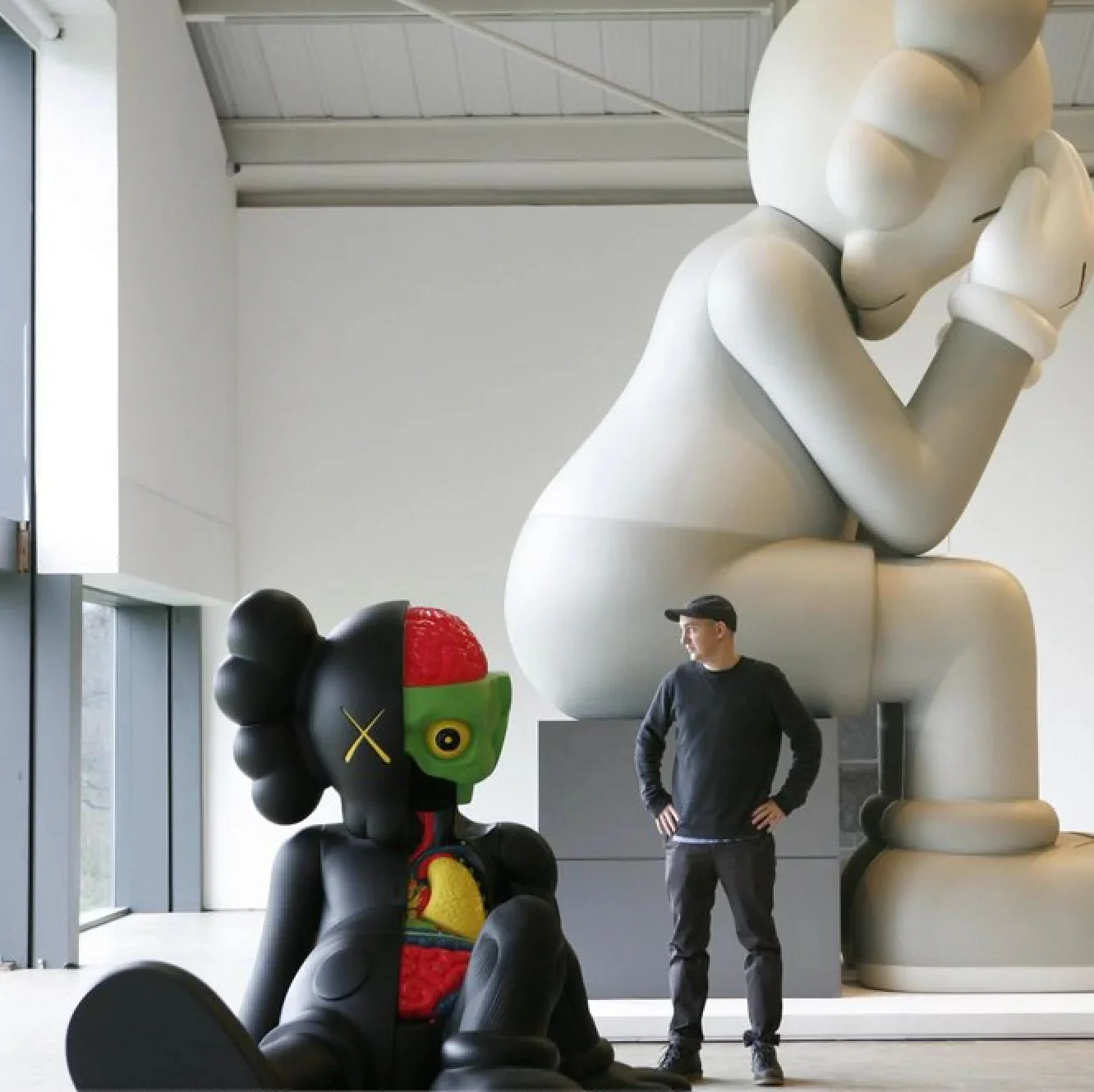
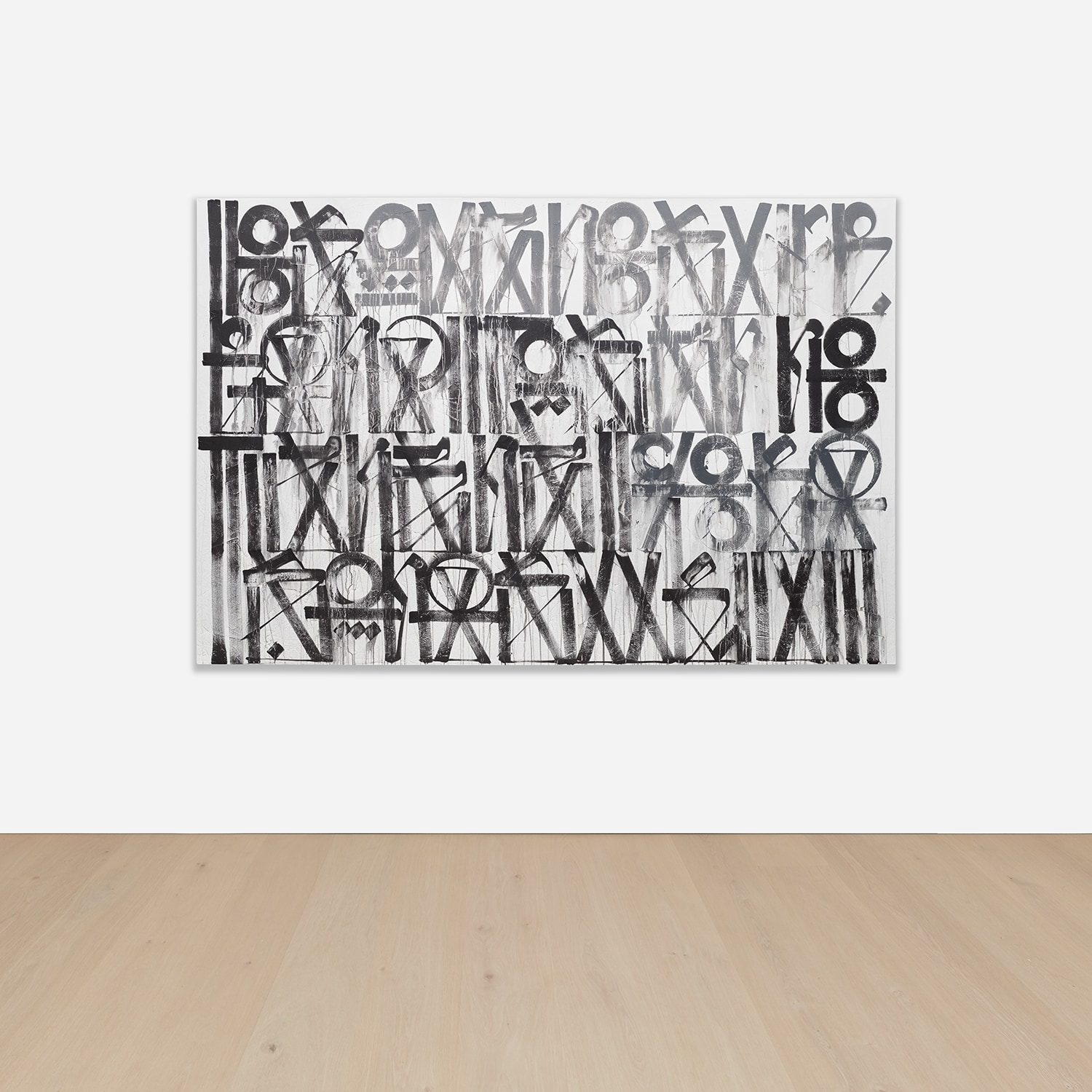
Artists like Retna developed scripts that appear to fuse calligraphic traditions from Arabic, Mayan, and Hebrew writing into something entirely invented, a visual language that looks ancient and feels urgent. KAWS, who began as a graffiti writer in the 1990s before his practice evolved toward sculpture and design, carries the formal confidence and cultural fluency of that background into everything he makes. The art market's relationship with graffiti has become impossible to ignore. Banksy, whose identity remains protected and whose work circulates with a mythological intensity unique in contemporary art, has made the commodification of street art one of his central subjects.
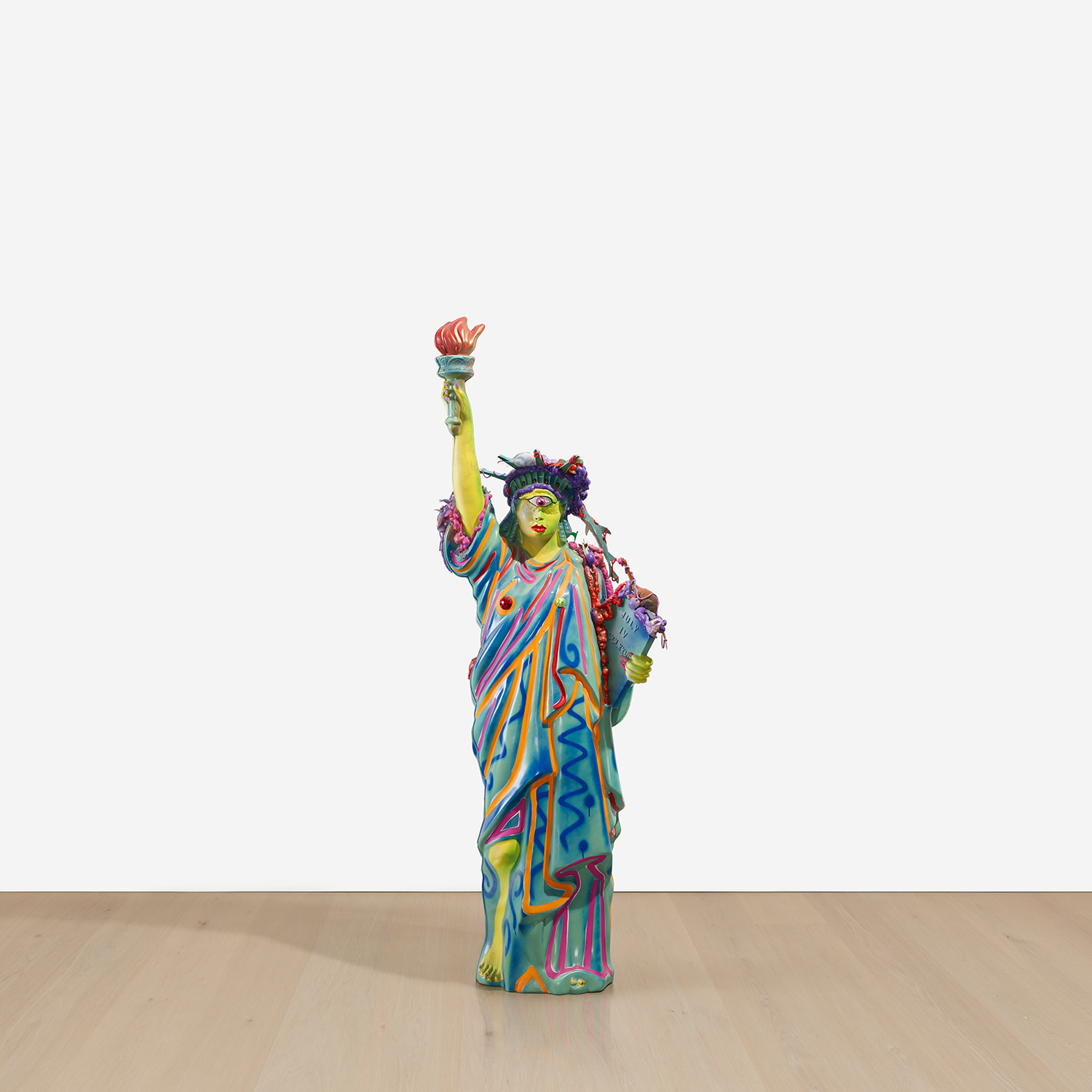
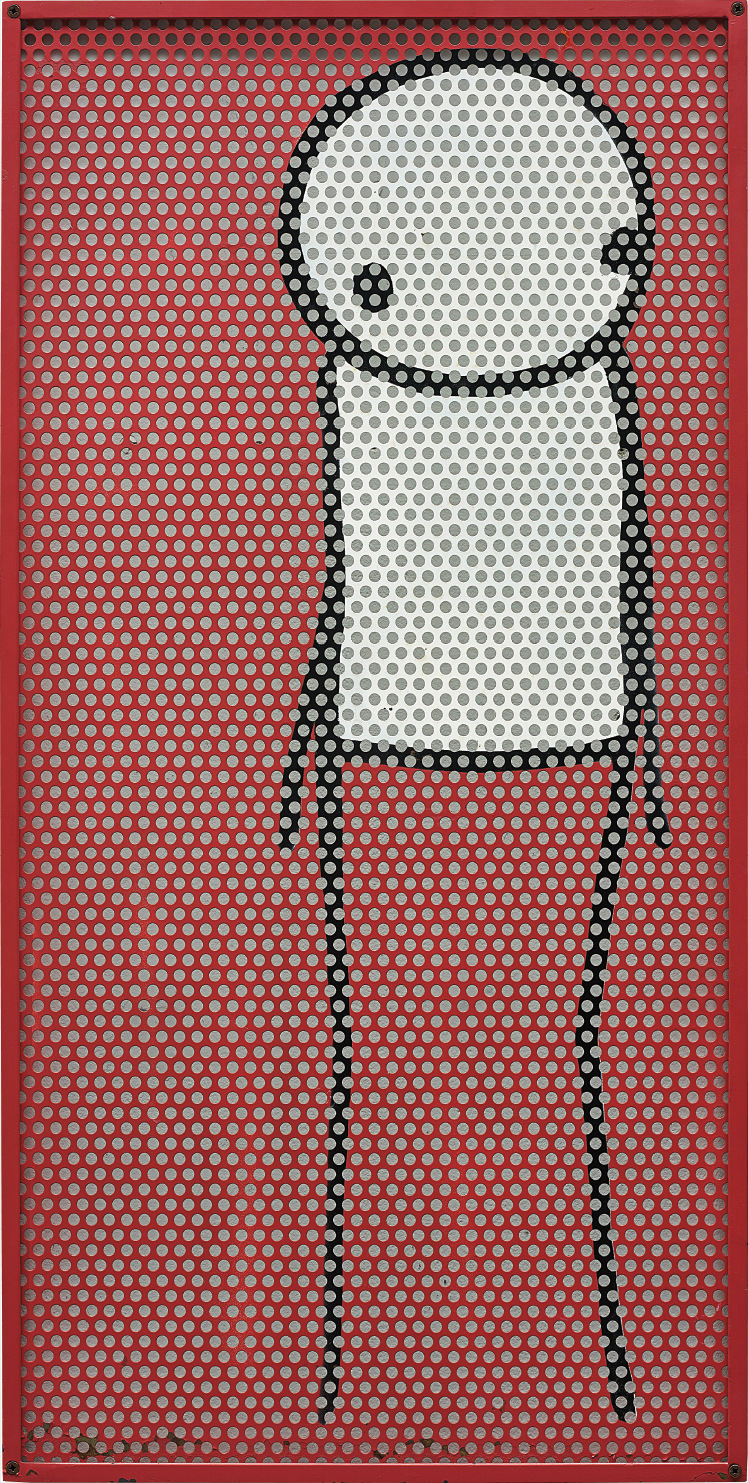
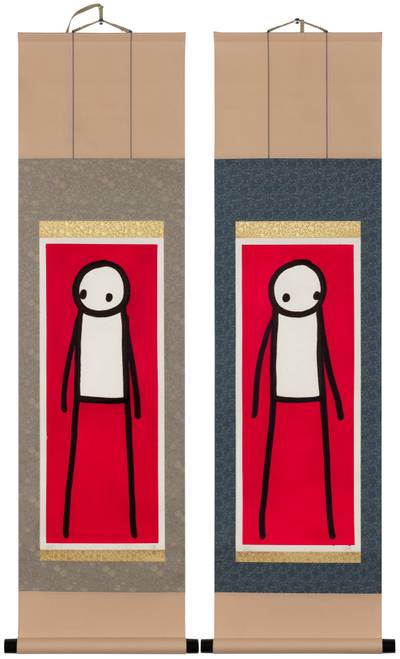
When his work Devolved Parliament sold at Sotheby's London in 2019 for just under ten million pounds, it felt like both a culmination and a provocation. Kenny Scharf, whose work sits at the intersection of graffiti, pop, and cosmic surrealism, has maintained a practice that refuses easy categorization for more than four decades. Stik, the London based street artist known for his minimal stick figures, brings a social conscience to public walls that connects directly to the earliest impulse behind the form, the desire to say something true in a place where everyone can see it. What graffiti has given the broader art world is not just a set of visual strategies or a pool of influential artists.
It has given contemporary art a different relationship to access, to audience, and to the question of who gets to decide what counts as art. That argument was made on subway cars and highway underpasses long before it was made in journals or symposia. The works on The Collection gathered under this category carry that argument forward, in paint and aerosol and ink, with the particular authority of things that were never waiting for permission.