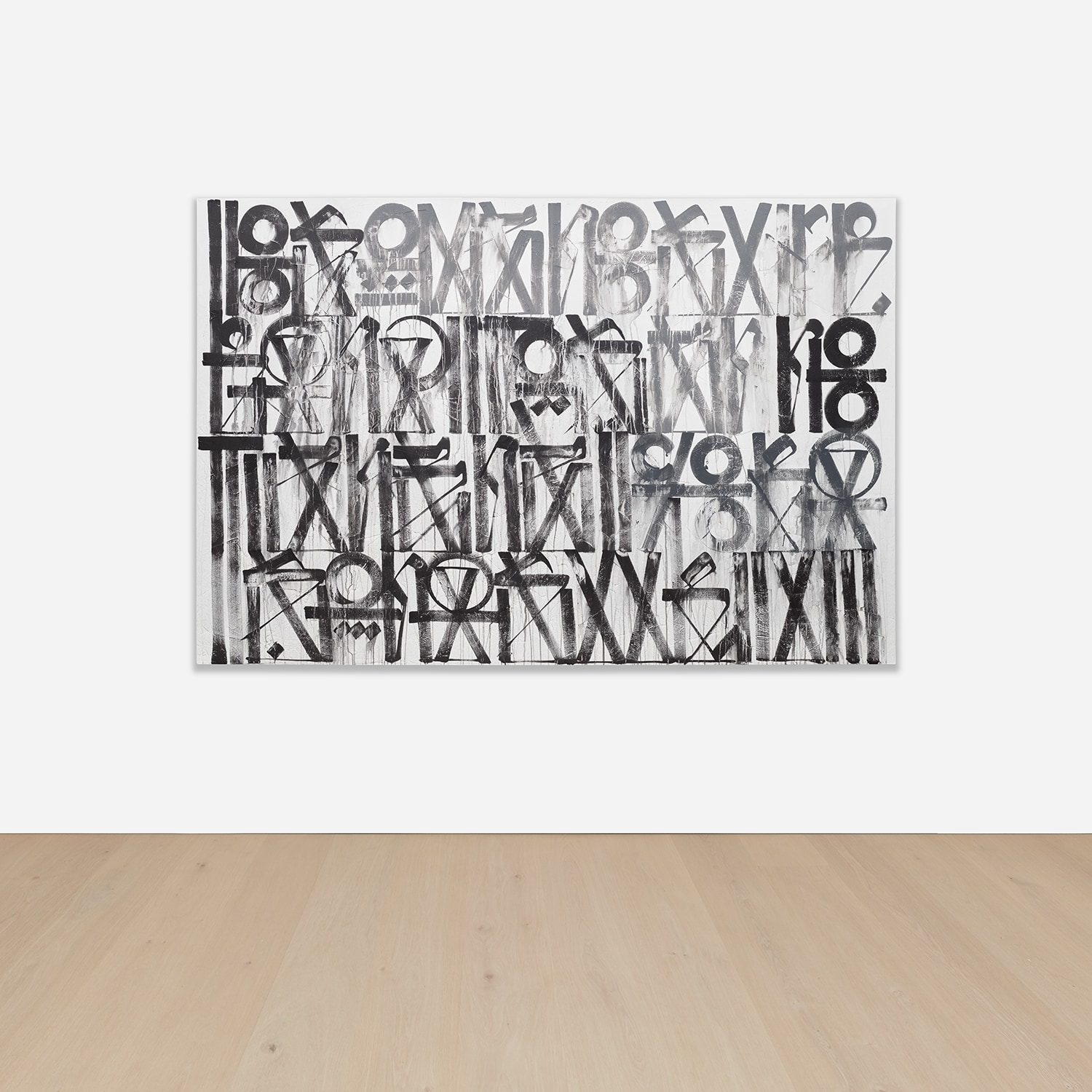
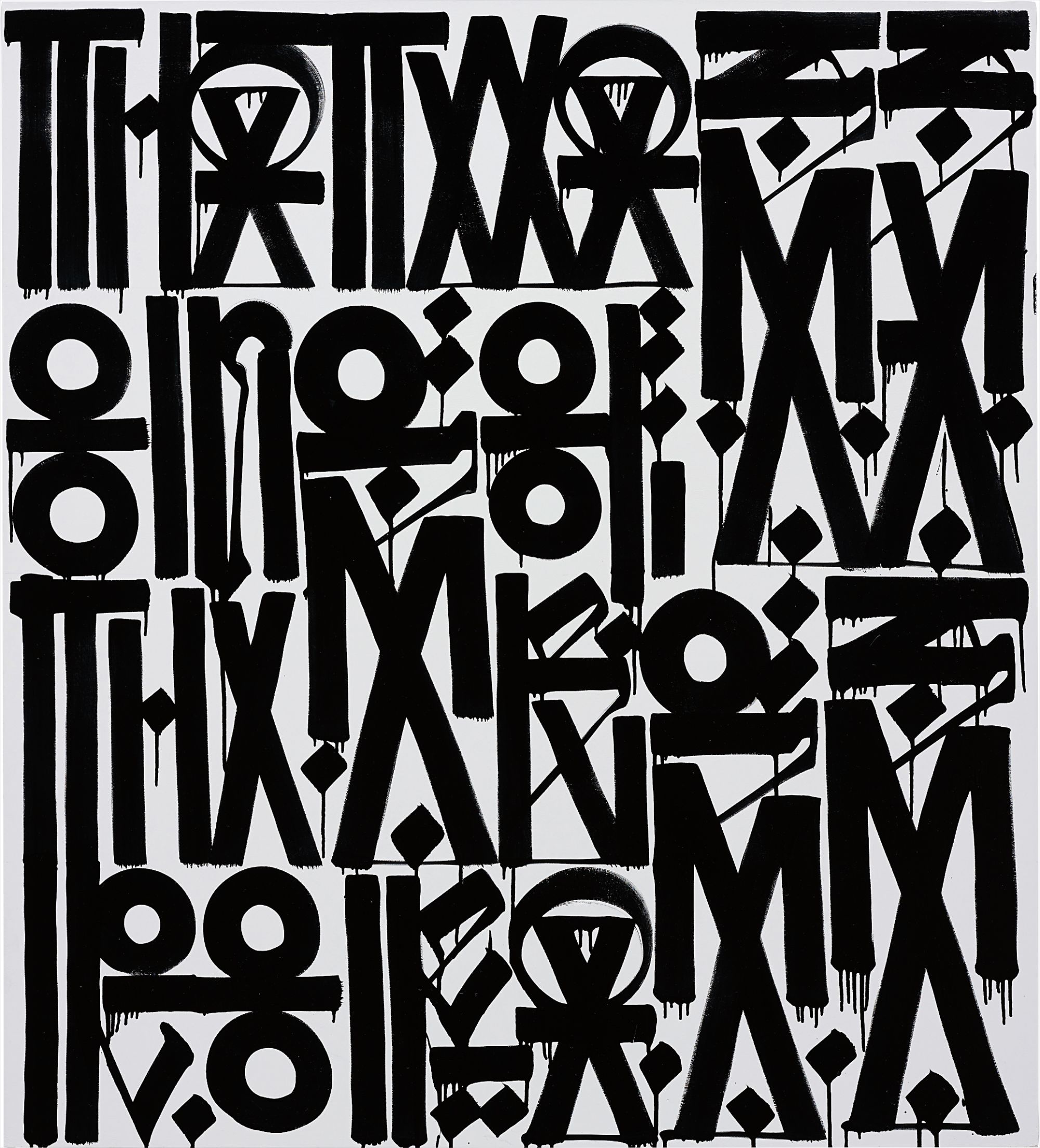
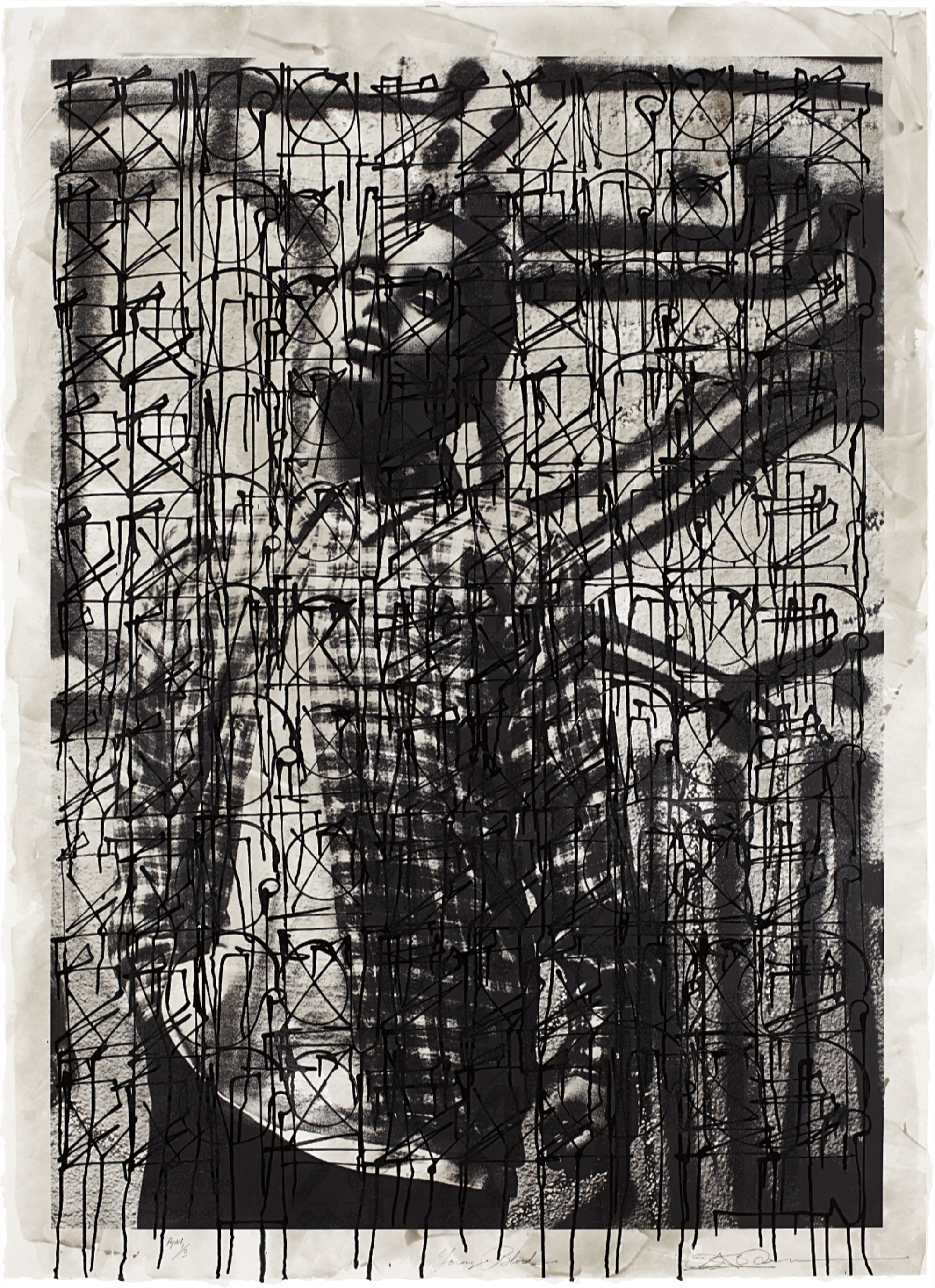
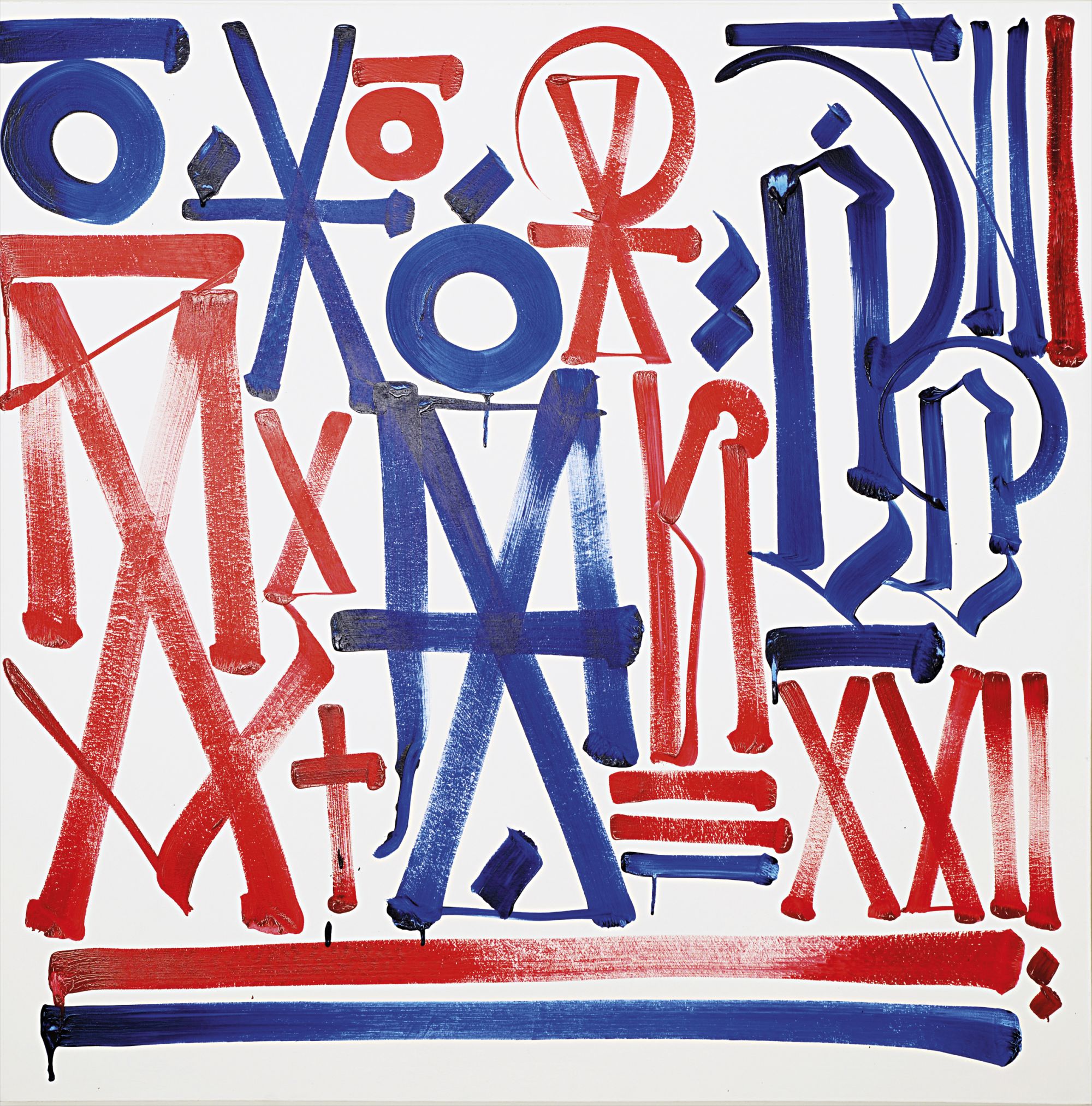
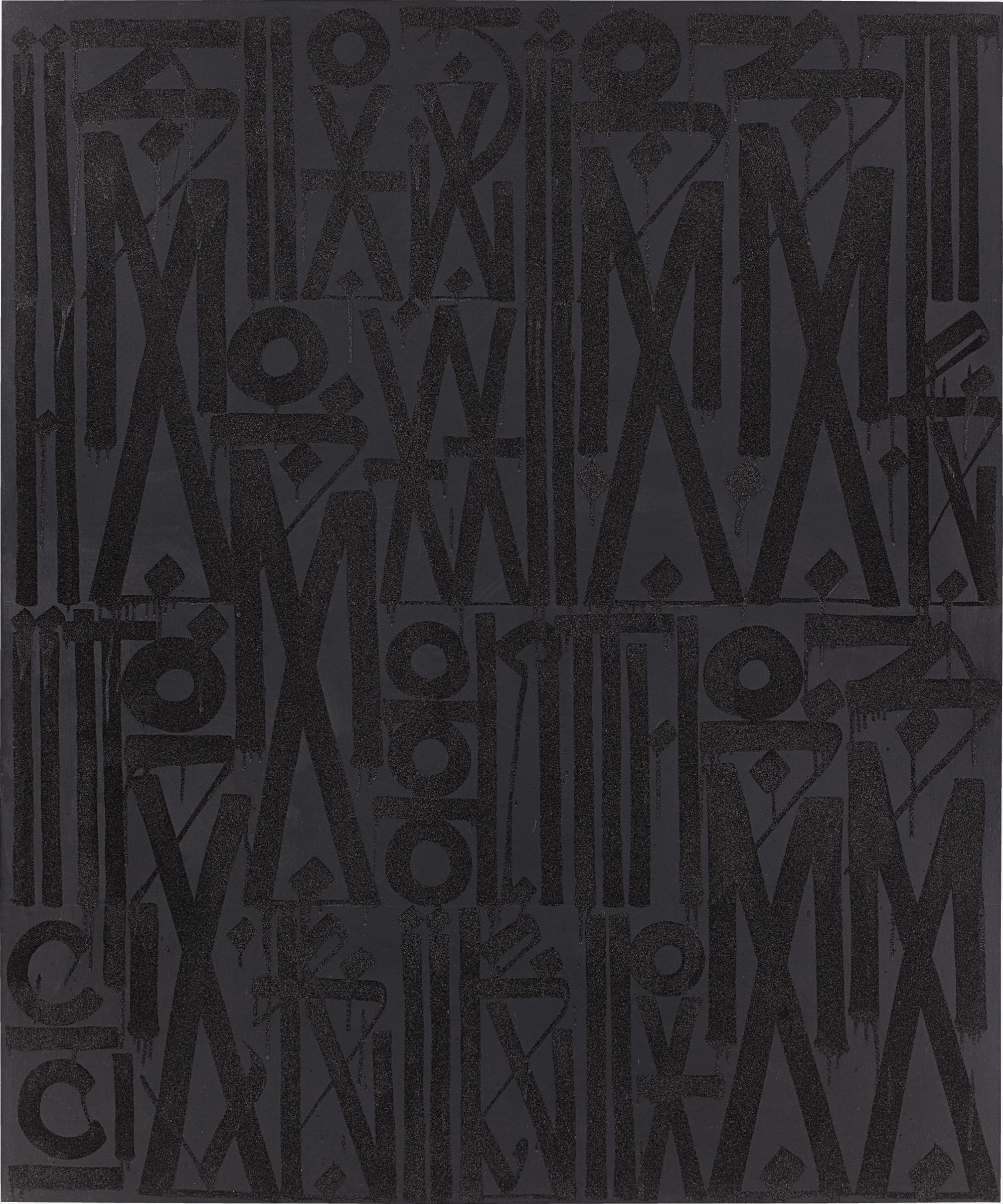
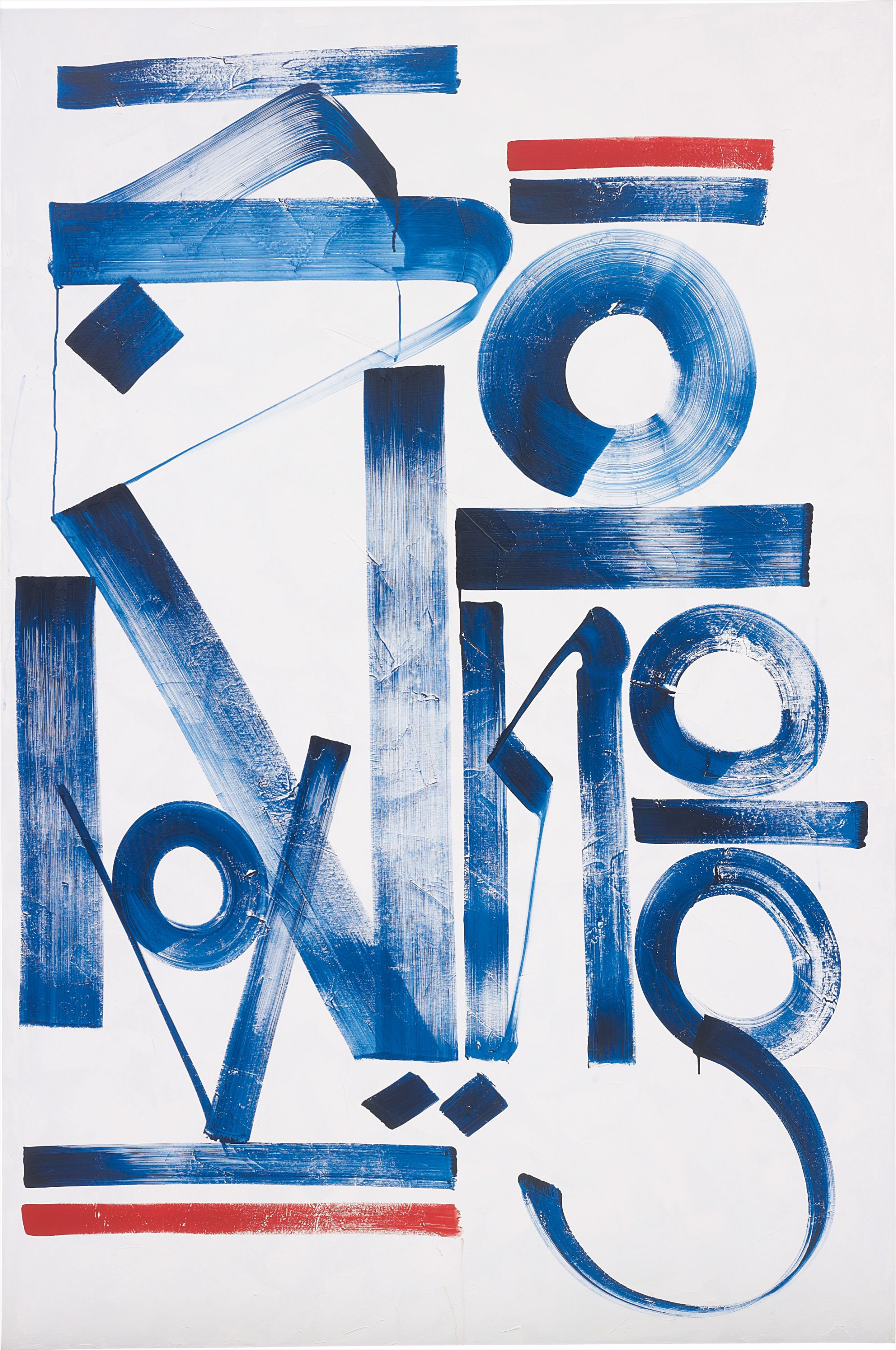
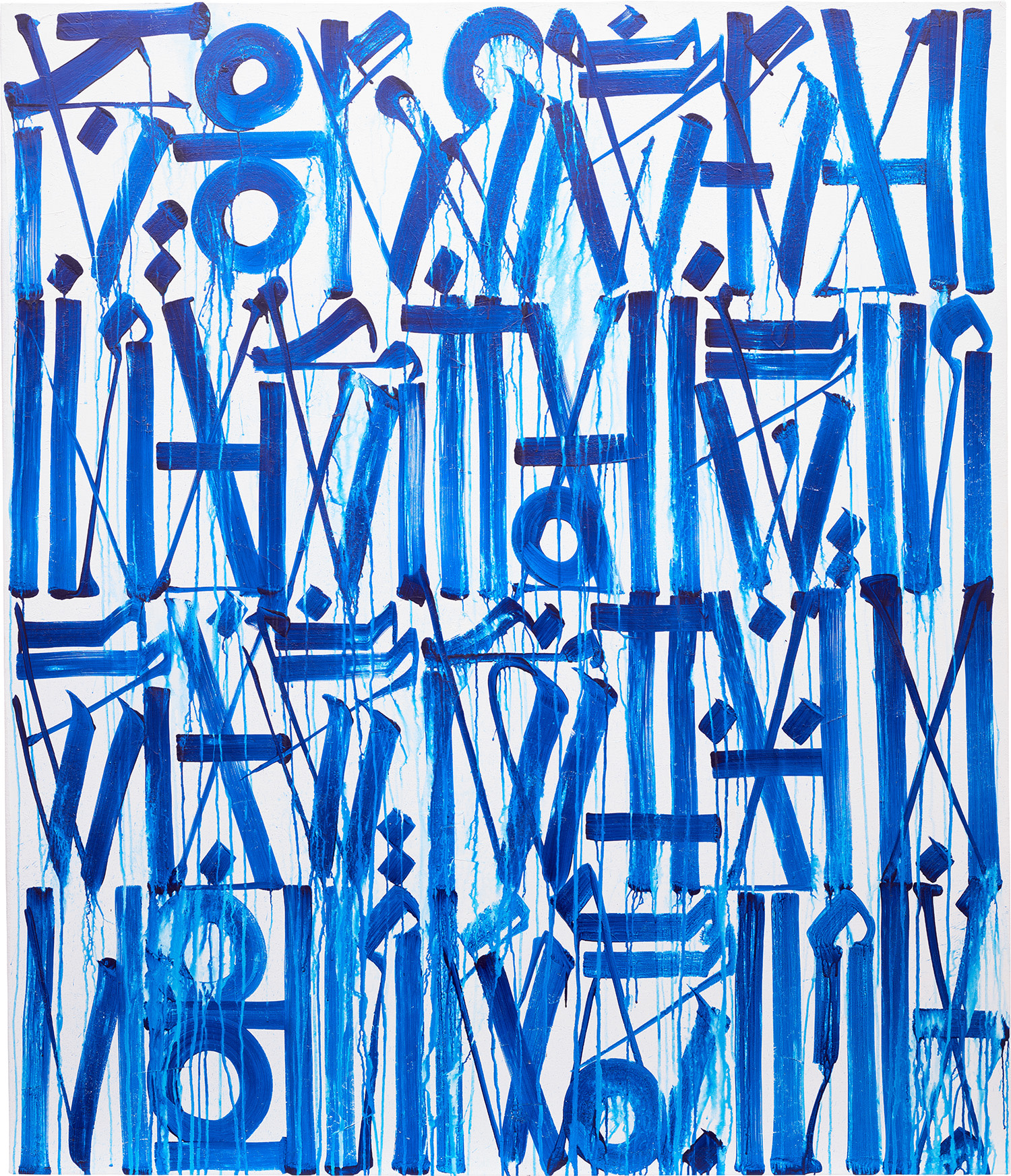
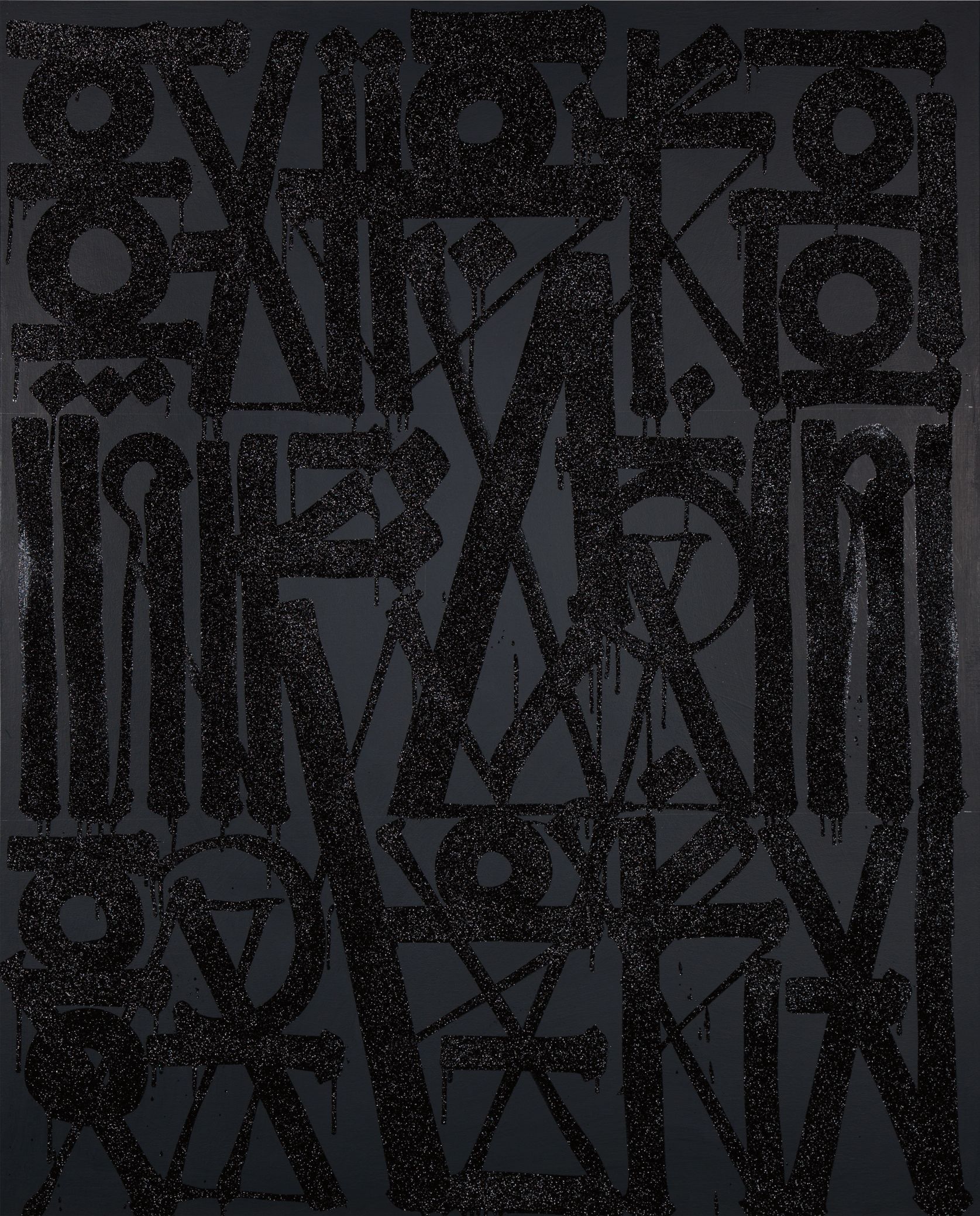
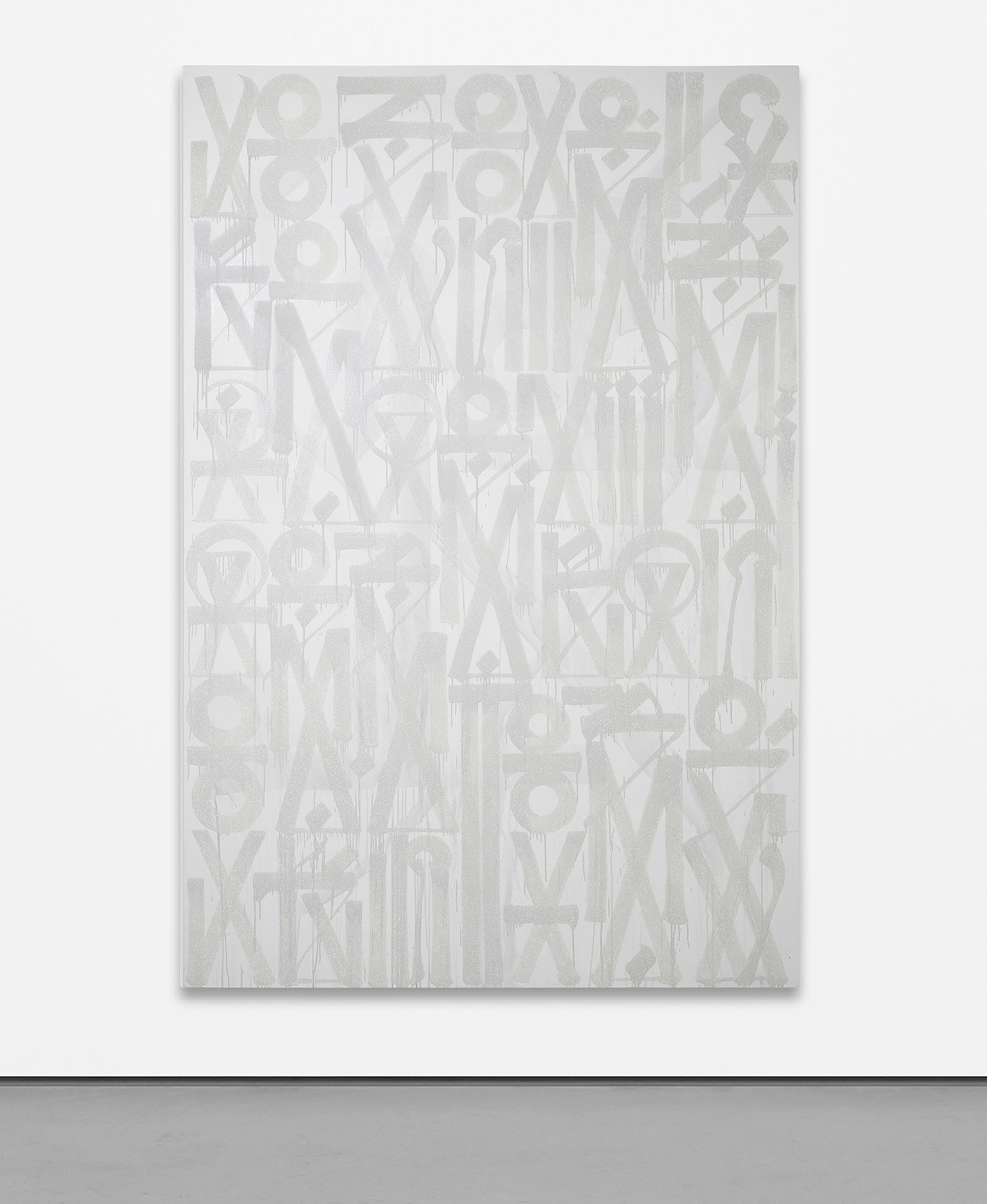
When Retna's large scale mural appeared on the facade of Art Basel Miami Beach, it stopped collectors and critics alike mid stride. The towering composition of interlocking glyphs, flowing lines, and luminous passages seemed to pulse with its own internal logic, a visual language that felt simultaneously ancient and urgent. That moment crystallized what the art world had been slowly recognizing for years: Marquis Lewis, known universally as Retna, had done something genuinely rare. He had invented a language, and the world was learning to read it. Born in 1979 in Los Angeles, Retna came of age in a city whose walls were already a living museum of vernacular mark making. The streets of East Los Angeles and the wider urban landscape formed his first gallery, and the graffiti culture of the late 1980s and 1990s provided his earliest education in letterform, scale, and the bold claim of public space. His mother is of El Salvadoran and Cherokee descent, and his father has African American and Cherokee heritage. That layered cultural inheritance proved foundational, instilling in him an early awareness that identity is not singular but composed of many overlapping scripts, many coexisting histories. As a teenager, Retna immersed himself in the Los Angeles graffiti scene, developing an exceptional sensitivity to the architecture of letters. Where many of his contemporaries were refining their tags and throw ups, Retna was already thinking at a different register, studying calligraphy from multiple traditions, absorbing the visual grammar of Arabic script, the hieroglyphic systems of ancient Egypt, the angular structures of Hebrew, and the gestural sweep of indigenous mark making. These were not borrowed aesthetics but genuine areas of sustained inquiry. Over years of practice, he distilled these influences into a constructed script that is entirely his own, one that carries the weight of ancient writing systems while belonging to no single culture or civilization. The breakthrough into the broader art world came in the mid 2000s, when Retna began exhibiting his canvases alongside his street work. His studio practice revealed the full depth of his technical command. Working in oil, acrylic, enamel, and crystalline mediums on canvas, paper, and wood, he translated the monumental ambition of his murals into intimate and collectible works that lost none of their power at a smaller scale. Works from this period, including pieces like Los Banditos from 2011 and the shimmering Yo Soy La Corazone Del la Linea Blanca from 2012, demonstrated his ability to balance raw visual energy with meticulous compositional control. The layering of crystalline materials into his surfaces gave many works a luminosity that shifts with the light, rewarding extended looking in a way that photography can only partially convey. The works available through platforms like The Collection offer a remarkable survey of his evolution across mediums and intentions. Study of Lexicon stands as one of the most concentrated expressions of his project, its surface dense with the refined glyphs of his constructed script, rendered in acrylic, enamel, and crystalline on canvas. Sorcery of My Style from 2015 announces its confidence in its very title, a work that feels like a master class in visual rhythm and tonal range. Quiero Mis Amigos De Regresso from 2013 carries an emotional directness that is characteristic of Retna at his most personal, the title itself a tender gesture toward friendship and longing. Even a work like the paint on wood door from 2010 speaks to his understanding that surface is never neutral, that a door already carries the history of every threshold it has guarded. For collectors, Retna represents a compelling proposition at multiple levels. His work sits at a genuine intersection of art historical significance and cultural currency, qualities that tend to sustain market interest across cycles. His collaborations with Louis Vuitton and Nike brought his visual language to genuinely global audiences, yet those associations have not diminished the seriousness with which institutions regard his fine art practice. The Museum of Contemporary Art Los Angeles has recognized his work, and his murals have become pilgrimage sites in cities around the world. Collectors who have followed his career closely note that works on canvas and paper from the period between 2010 and 2015 represent a particularly fertile phase of his development, when his script was fully formed but still expanding its expressive range. Placing Retna within art history requires thinking across several traditions simultaneously. He shares a commitment to the calligraphic line with artists like Mark Tobey and Franz Kline, whose Abstract Expressionist canvases found liberation in the gesture of writing. His engagement with non Western visual systems connects him to Jean Michel Basquiat, whose own work mined hieroglyphic and diagrammatic languages for contemporary meaning. The street art lineage places him alongside figures such as Os Gemeos, Barry McGee, and Shepard Fairey, artists who moved fluidly between public walls and gallery walls without diminishing either practice. Yet Retna occupies a position that none of these predecessors quite defines. His project is fundamentally linguistic, an attempt to create a universal scripture from the fragments of many civilizations. What makes Retna matter today, in a cultural moment saturated with images competing for attention, is precisely the patience his work demands and rewards. His constructed script cannot be decoded in a single glance. It asks the viewer to slow down, to look again, to accept that meaning can be present even where full legibility is withheld. In an age of instant comprehension and algorithmic image consumption, that insistence feels almost radical. There is a devotional quality to his best work, a sense that these marks were laid down with the conviction that they carry something worth preserving. Whether on a monumental wall in downtown Los Angeles or on a canvas held in a private collection, Retna's language endures, patient and luminous, waiting to be read.