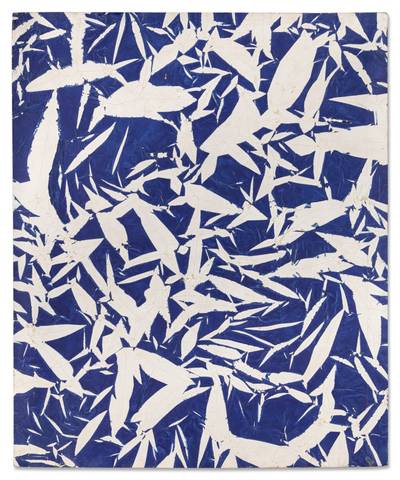
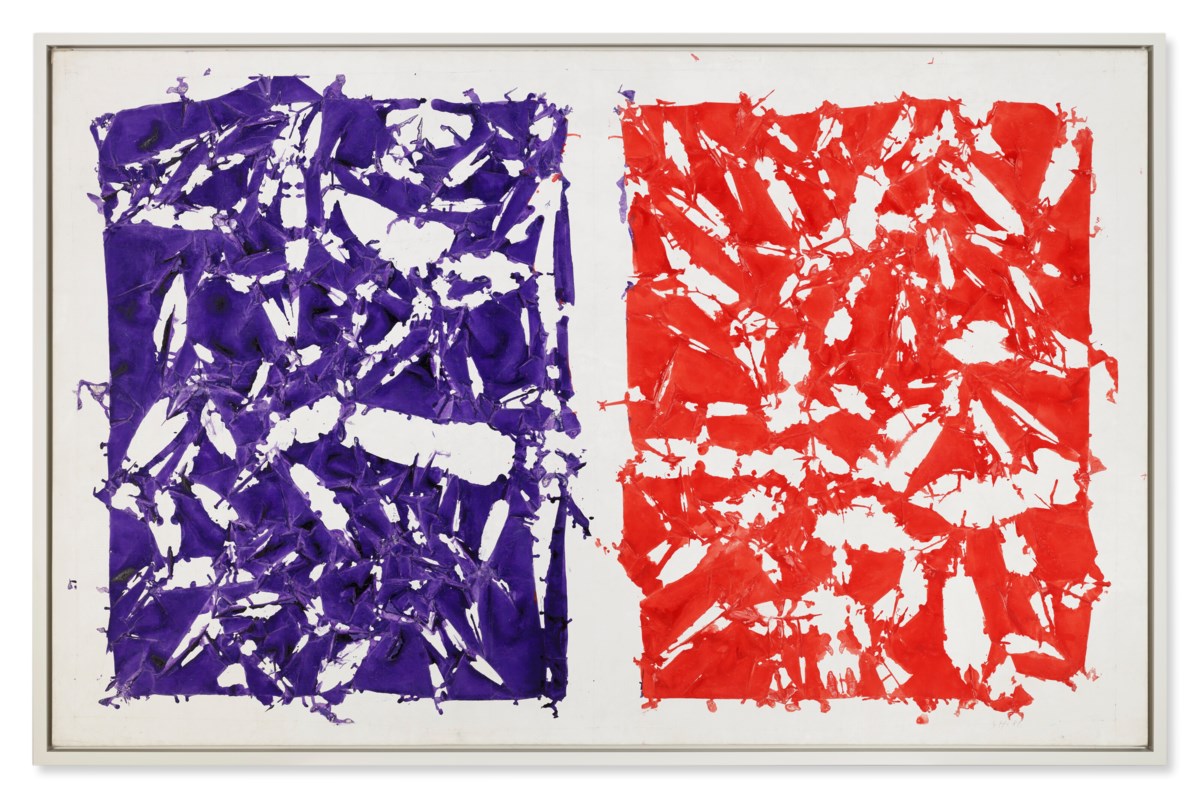
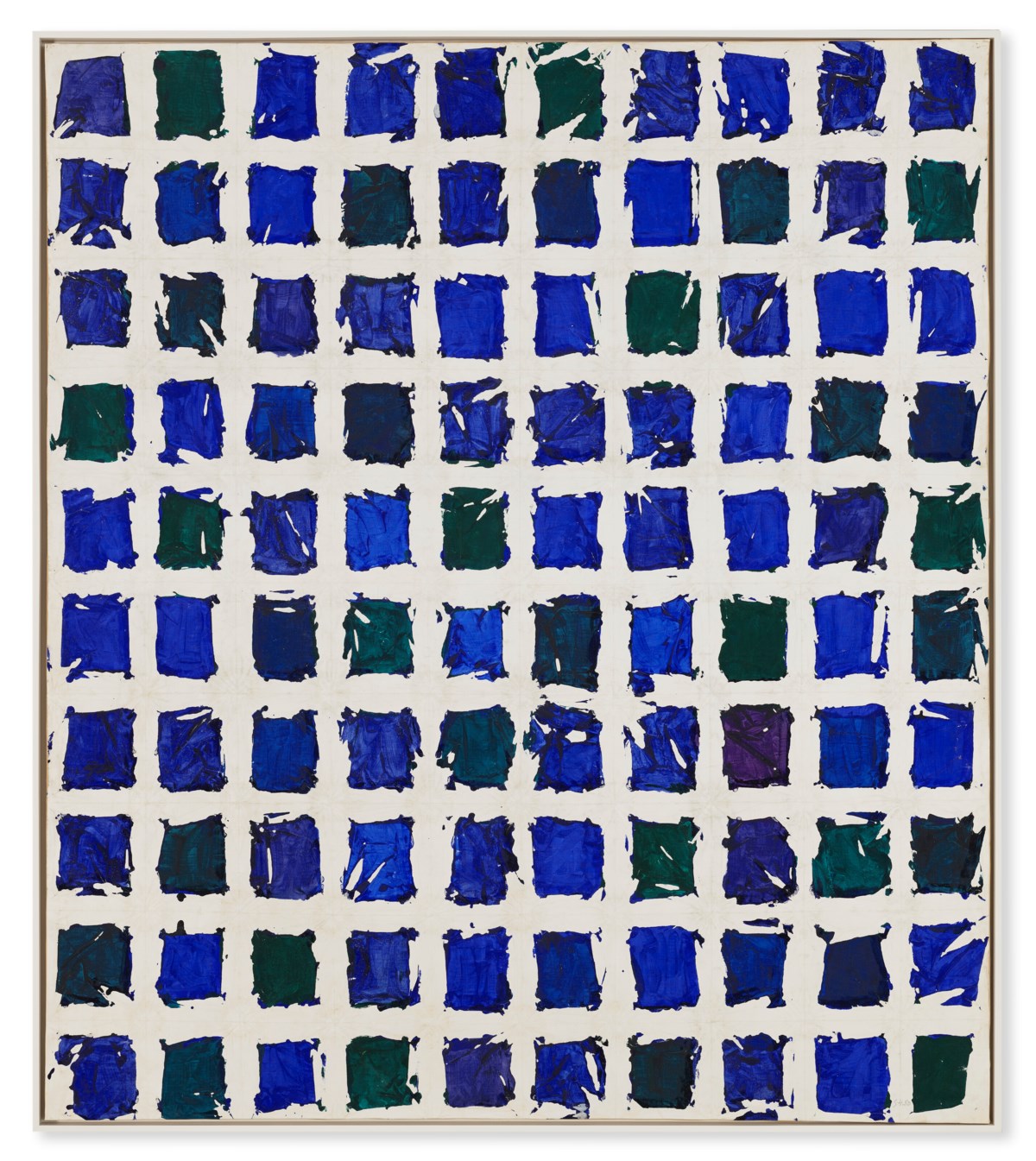
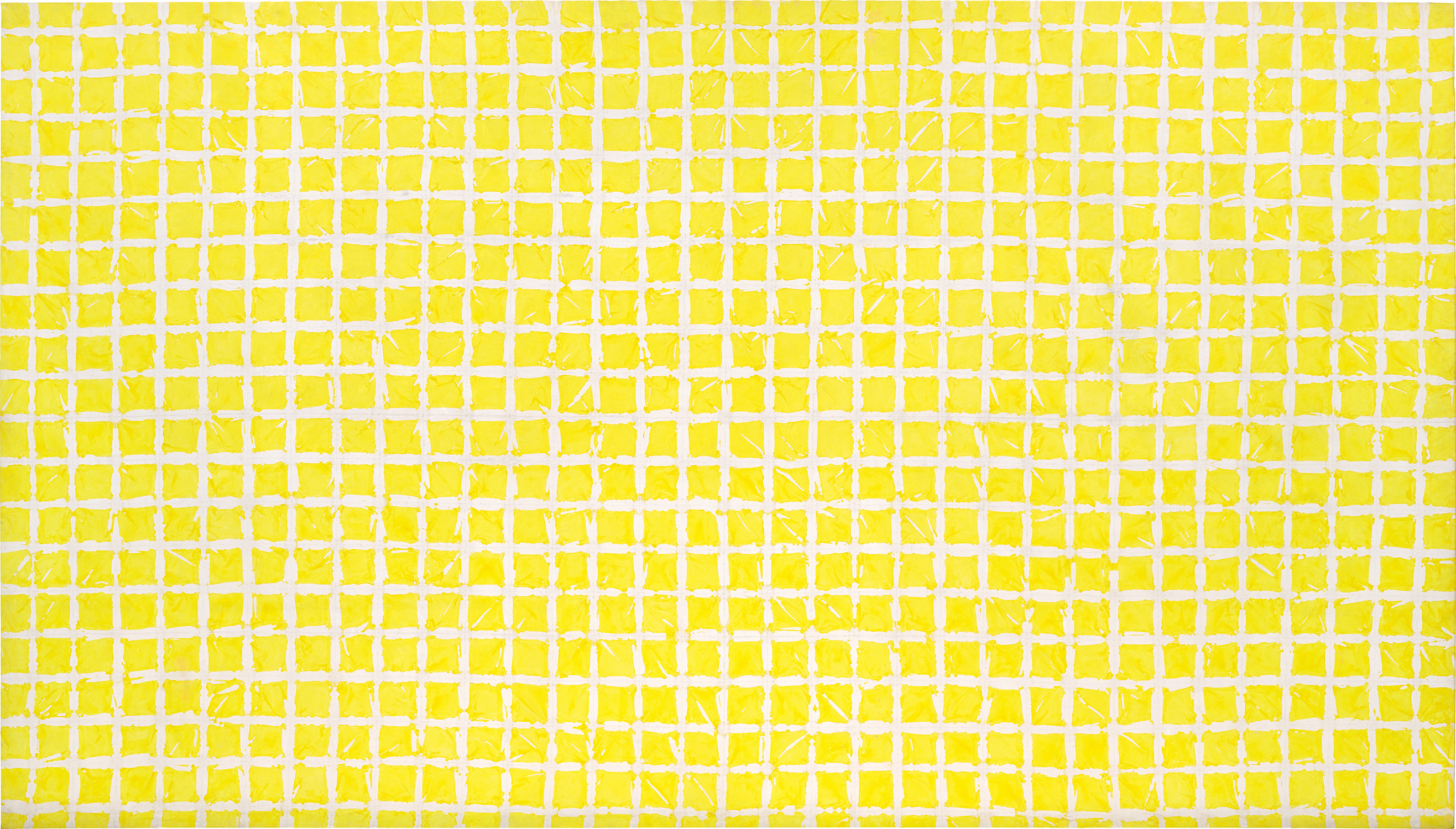
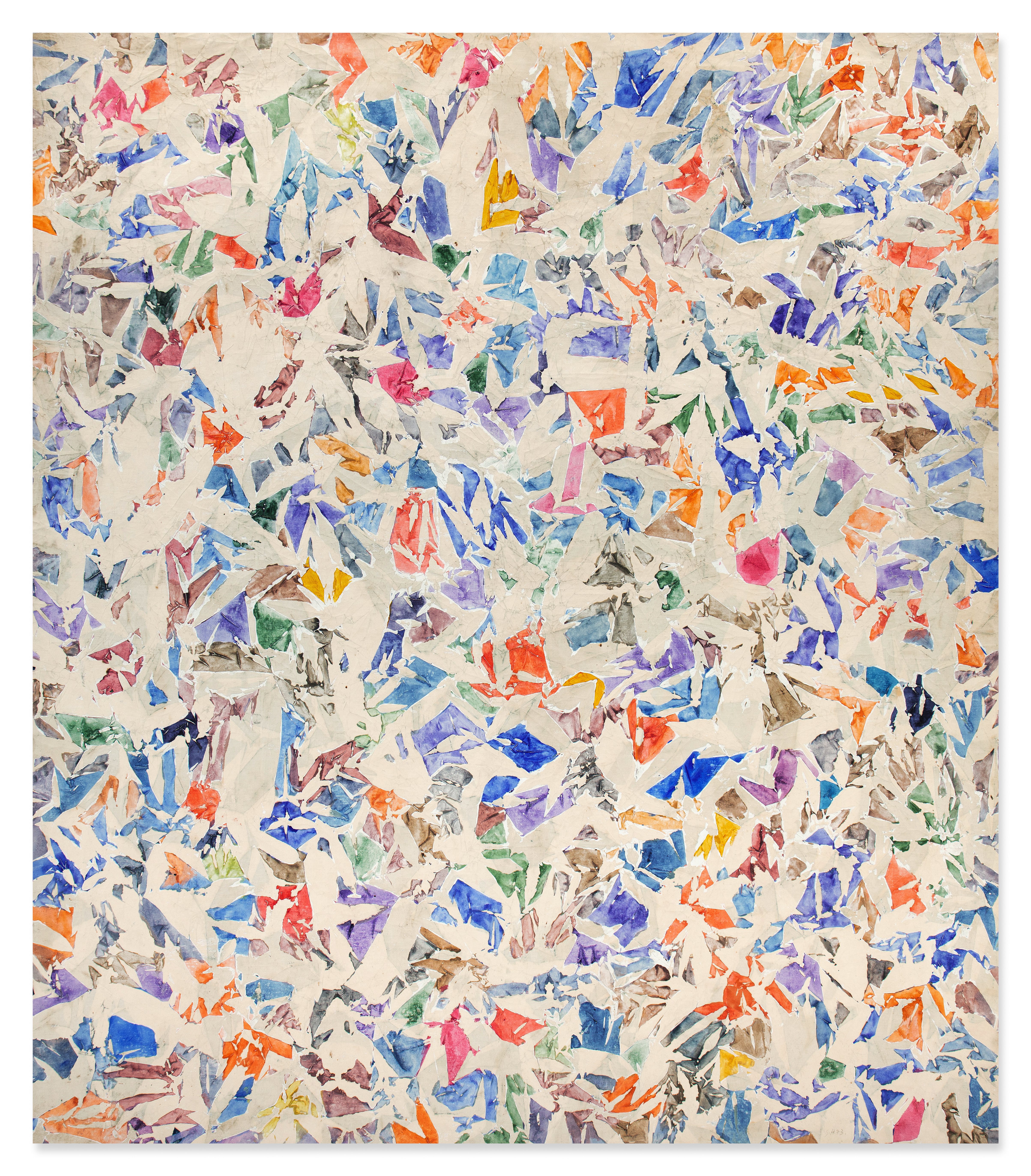
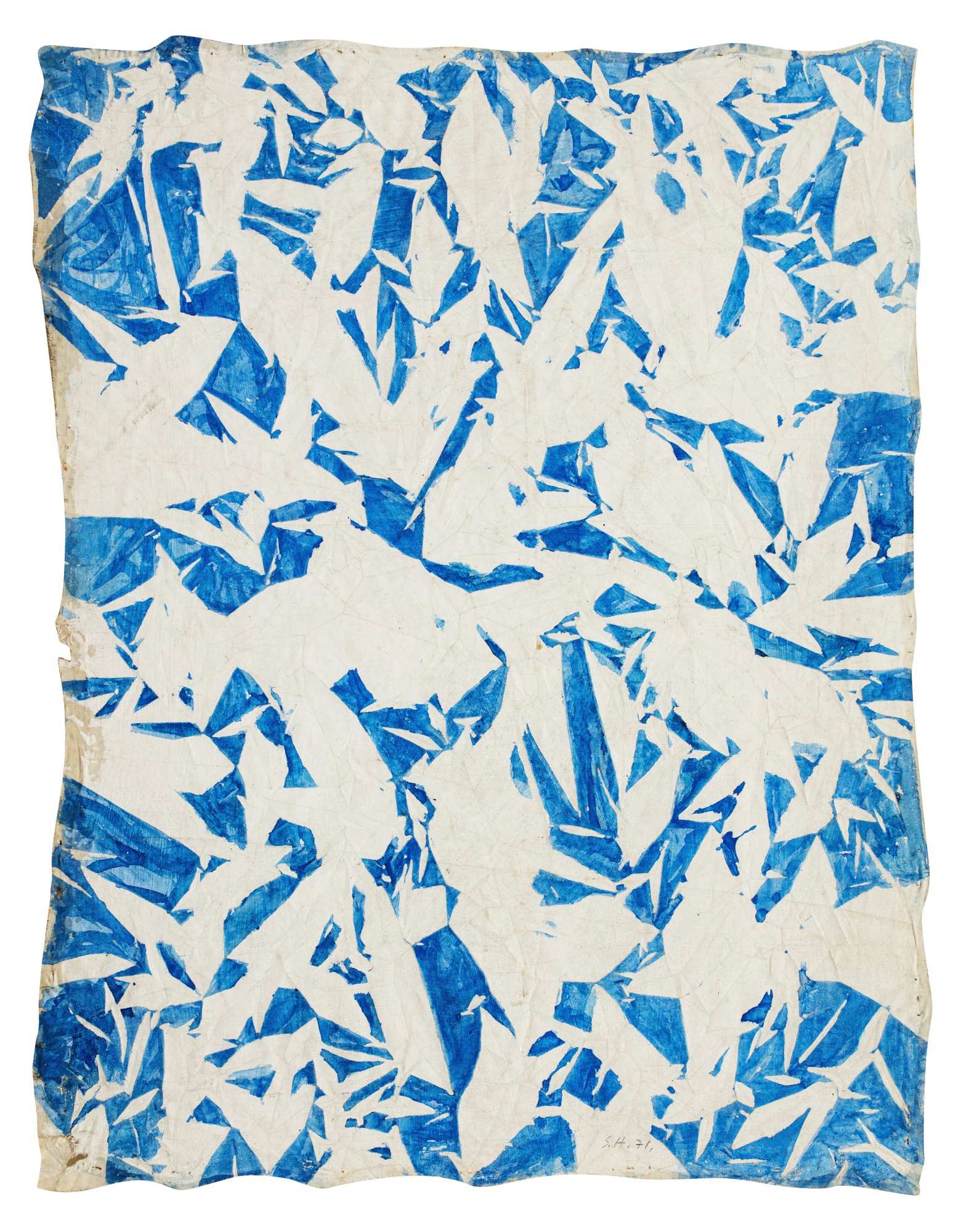
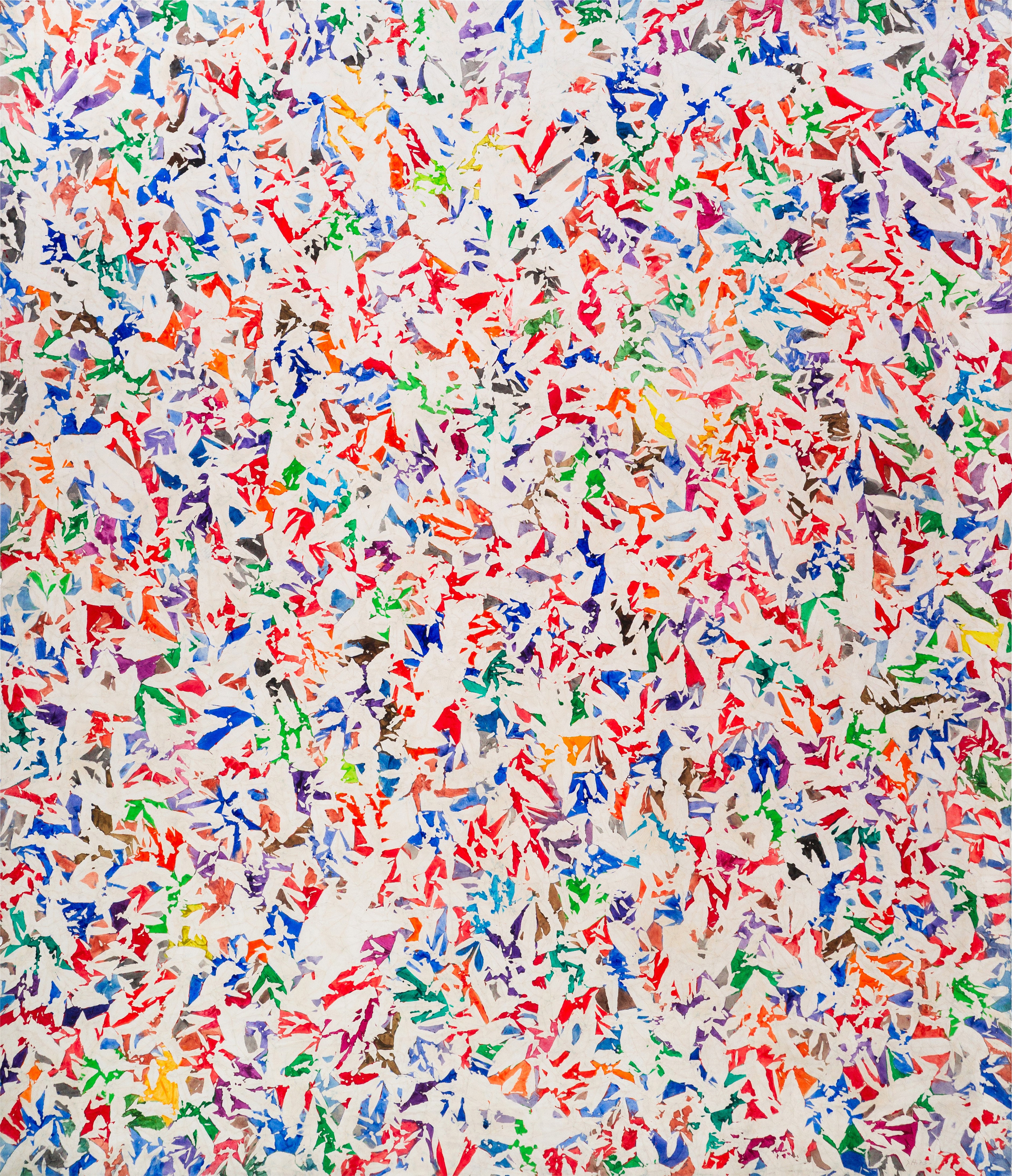
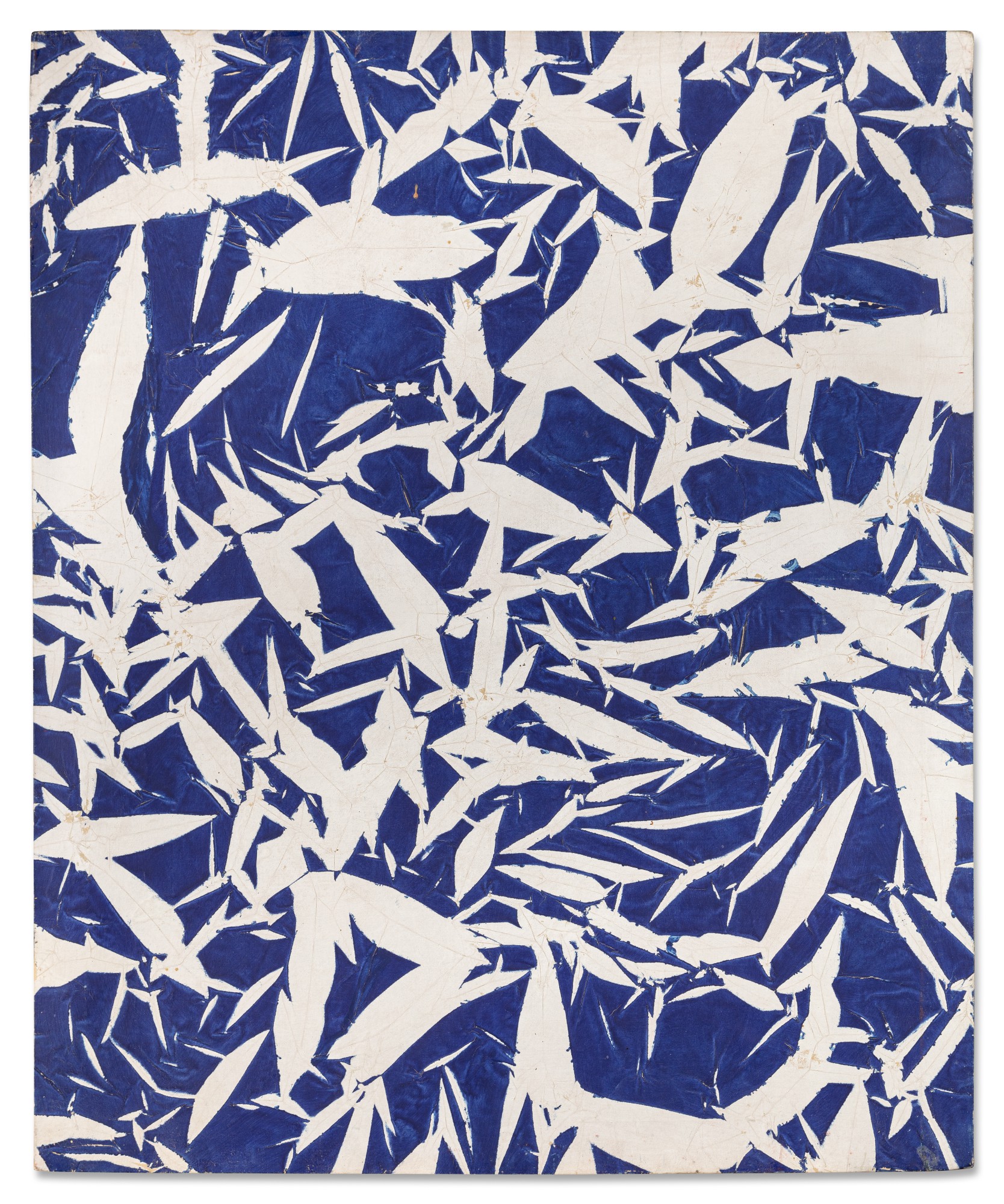
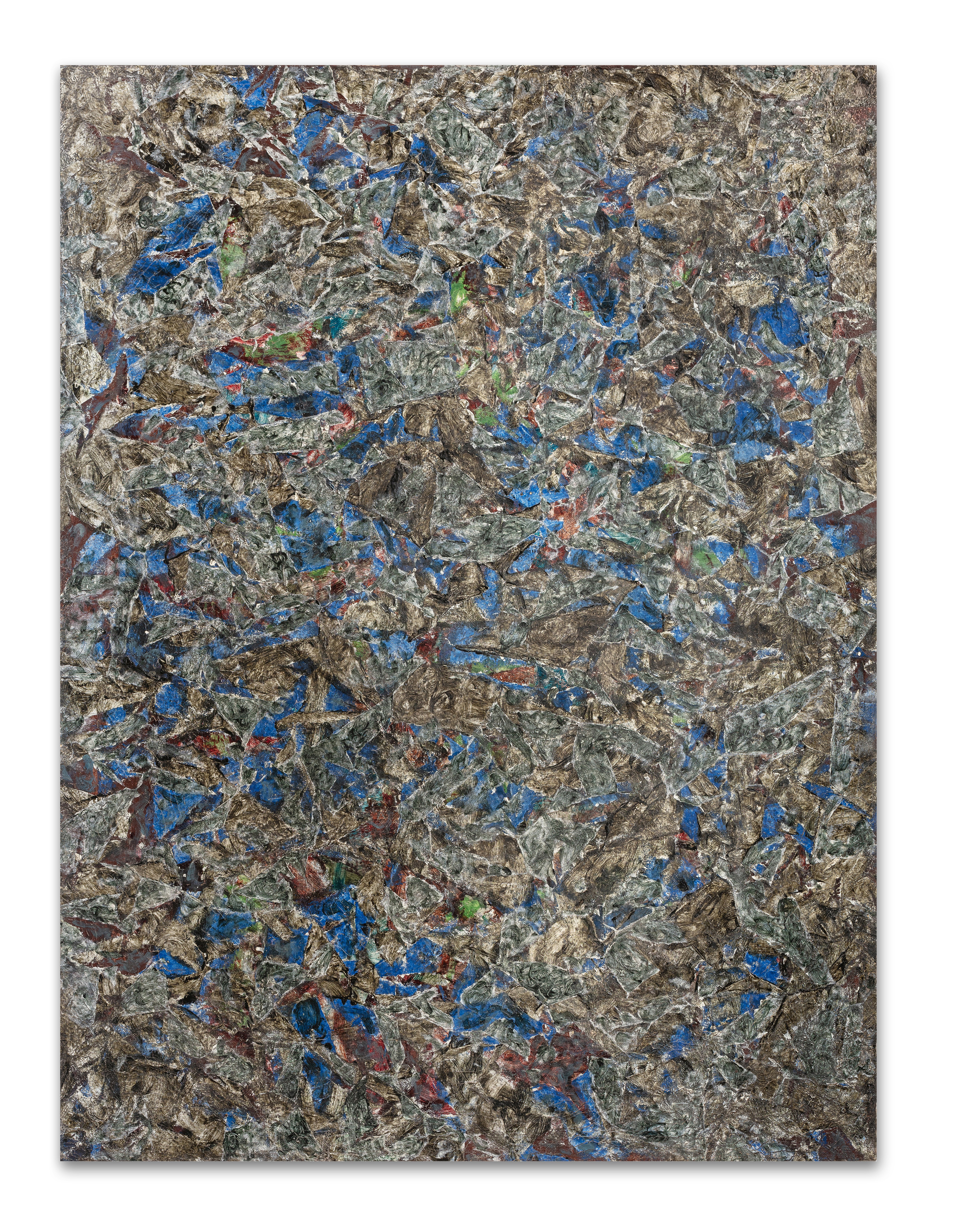
In the summer of 2021, the Centre Pompidou in Paris devoted a landmark exhibition to the legacy of Simon Hantaï, reaffirming his place among the titans of European abstraction. The occasion drew collectors, curators, and critics who had long championed his work, as well as a younger generation encountering his luminous canvases for the first time. Standing before a wall of his late Tabula paintings, their grids of pooled colour and blank white voids shimmering under gallery light, it was impossible not to feel that something genuinely radical had happened here, something that still resonates decades after these works were made. Simon Hantaï was born in 1922 in Bia, a small town in Hungary not far from Budapest. He studied at the Budapest Academy of Fine Arts before leaving Hungary in 1948, first passing through Vienna and arriving in Paris in 1949. The move proved decisive. Paris in the late 1940s was a city crackling with intellectual and artistic energy, and Hantaï threw himself into its most adventurous circles. He made contact with André Breton and the Surrealist group, and his early paintings from this period carry the fever of that encounter: dense, mythological, almost hallucinatory canvases that owe something to Max Ernst and something to the automatic drawing practices the Surrealists championed. Yet Hantaï was never content to remain a follower. The decisive rupture came in 1960, when he developed what would become the defining method of his career: the pliage, or folding technique. The process was as simple in conception as it was profound in consequence. Hantaï would fold, crumple, or knot his canvas before applying paint across its surfaces, then unfold it to reveal a composition that no hand could have drawn, no eye could have planned. The result was a dialogue between the artist and the canvas, between intention and chance, between structure and freedom. It was also, quietly, a radical redistribution of artistic authority. The painter did not so much create the image as release it. The pliage method gave rise to several distinct series over the following decades, each representing a new investigation of what folding could mean. The Mariales, begun in the early 1960s, are among his most powerful early works in this mode: large canvases filled with dense webs of green and blue, the unfolded folds leaving white or pale traces that run through the colour like light through leaves. Works such as the untitled oil on canvas of 1963 and the Catamurons of the same year demonstrate the raw energy of this period, the sense of a painter who has discovered a new continent and is mapping its territory with barely contained excitement. Around this time Hantaï developed close relationships with figures including Georges Bataille and Henri Michaux, writers whose ideas about transgression, inner experience, and the limits of rational control found a visual echo in his practice. Through the late 1960s and into the 1970s the work grew increasingly refined without ever losing its physical immediacy. The Etude series, represented here by the 1969 oil on canvas, marks a moment of lyrical concentration: smaller in scale, more intimate, these works feel like studies in the grammar of the fold, each one a fresh set of variations on a theme the artist could never fully exhaust. The Blancs, such as the 1973 acrylic on canvas, introduced a new austerity, allowing large portions of the canvas to remain unpainted after unfolding, so that white space became as active as colour. These are paintings that breathe. The Aquarelle works, including the 1971 watercolour on canvas, extend the pliage vocabulary into a more translucent register, the watercolour bleeding and pooling through the folds with a delicacy that seems almost to contradict the physicality of the process that produced it. The Tabula series, which occupied Hantaï through the late 1970s and into the 1980s, is widely considered the summit of his achievement. Works such as the Tabula of 1976, the Tabula of 1980, and the Tabula of 1981, all in acrylic on canvas, present grids of colour interrupted by rectangular islands of bare, unprimed canvas where the folds shielded the surface from paint. The effect is of a luminous, breathing geometry, something between a mosaic and a meditation. These canvases have been compared to the colour field paintings of Ellsworth Kelly and the grid abstractions of Agnes Martin, and the comparisons are illuminating, though Hantaï's process is fundamentally different: where his American contemporaries arrived at the grid through design and measurement, he arrived at it through the logic of the folded and unfolded body of the canvas itself. For collectors, Hantaï represents one of the most compelling opportunities in postwar European abstraction. His market has grown steadily since the major retrospective held at the Musée National d'Art Moderne in Paris in 2013, which was widely seen as a watershed moment for his international reputation. Major auction houses including Christie's and Sotheby's have seen sustained demand for his work, with his Tabula series and Mariales commanding the strongest prices. Collectors are drawn not only to the visual beauty of the paintings but to the integrity of the process behind them, the sense that each work carries within its surface a record of physical labour, of time, and of a genuine encounter between an artist and his materials. Works on paper and the Aquarelle series offer points of entry for collectors who want to engage with the full range of his practice. Hantaï occupies a singular position in art history, bridging the Surrealist inheritance of the late 1940s and the rigours of process based abstraction that would come to define ambitious painting in Europe and America through the 1960s and 1970s. He has been grouped with figures such as Pierre Soulages, whose own obsessive attention to a single formal problem produced a body of work of comparable depth, and with the American painter Morris Louis, whose poured and stained canvases share something of Hantaï's interest in allowing the physical properties of paint to speak for themselves. His work also anticipates the concerns of artists such as Niele Toroni and the Supports/Surfaces movement, who would later foreground the material conditions of painting in ways that owe something, consciously or not, to Hantaï's example. Simon Hantaï died in Paris in 2008, having spent much of his later life in deliberate withdrawal from the art world, rarely exhibiting and granting few interviews. That reticence has only deepened the mystery and the authority of his work. What he left behind is a body of painting that rewards sustained attention and repays the effort of understanding how it was made. These are not simply beautiful objects, though they are undeniably that. They are records of a practice conducted with exceptional rigour and humility, of an artist who understood that the most profound discoveries are sometimes made not by imposing a vision on the world but by folding back, and waiting to see what the canvas, the paint, and time itself choose to reveal.