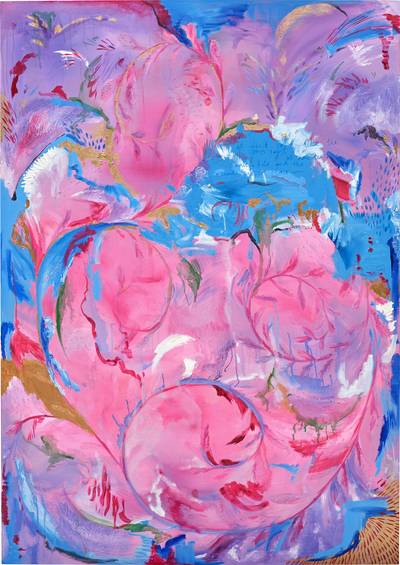
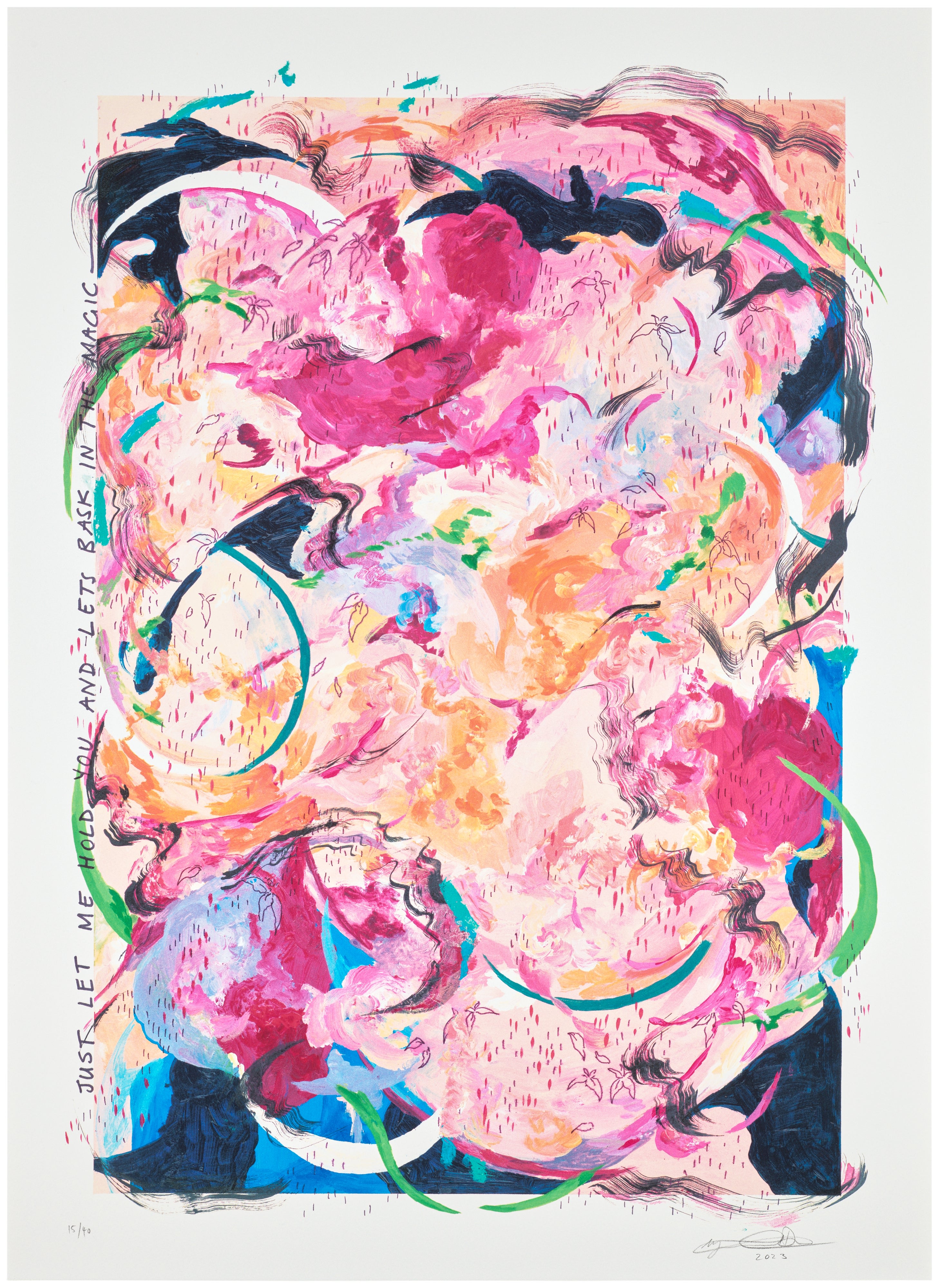
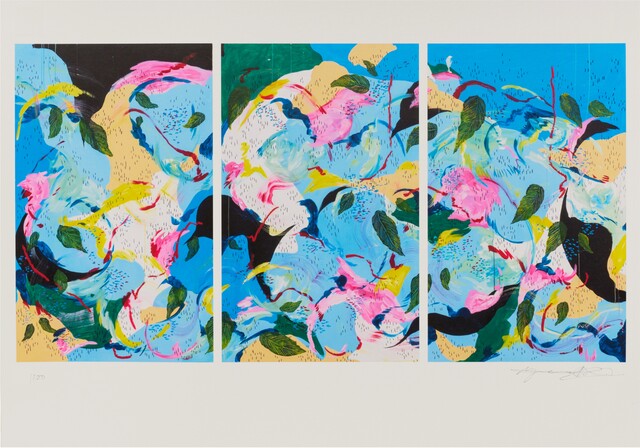
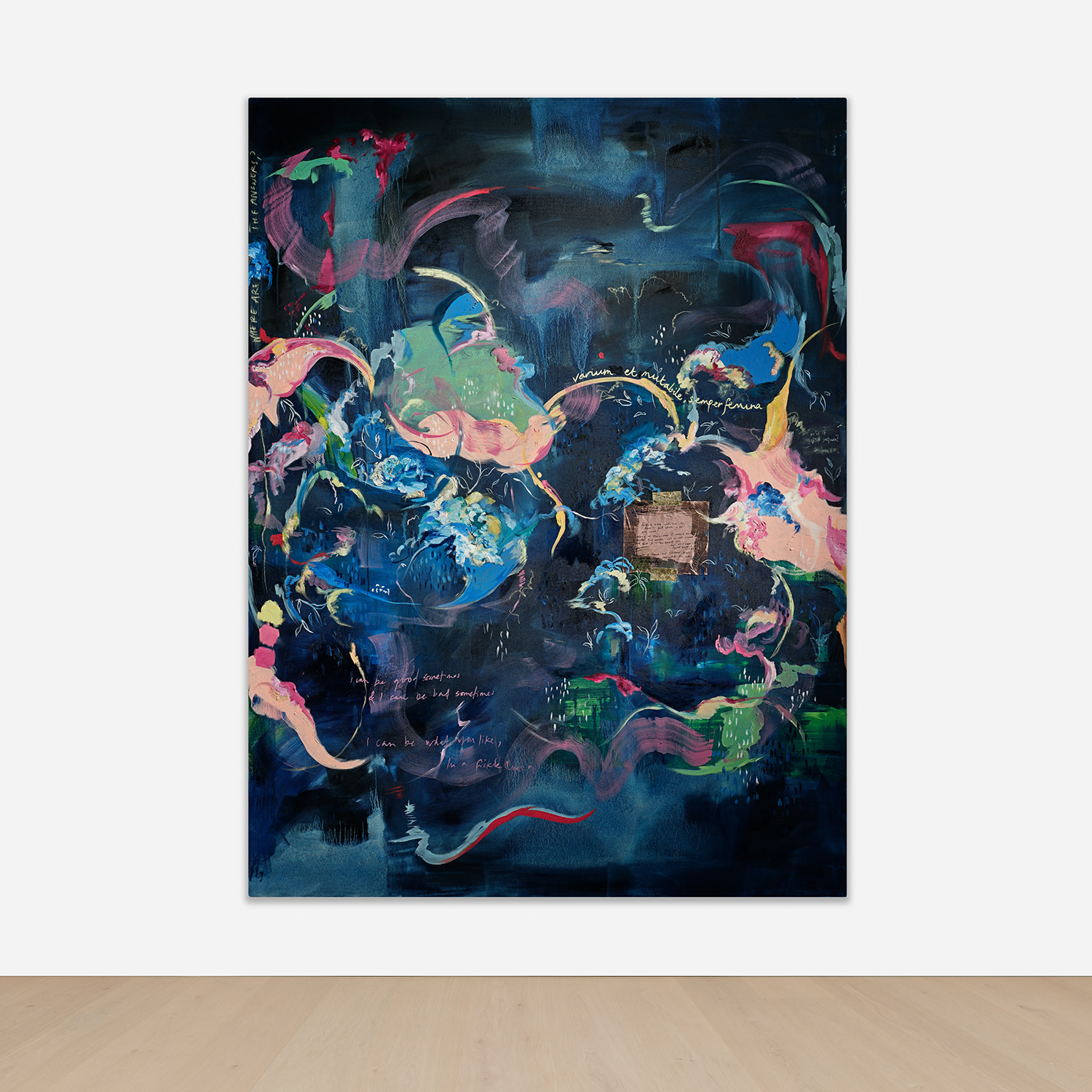
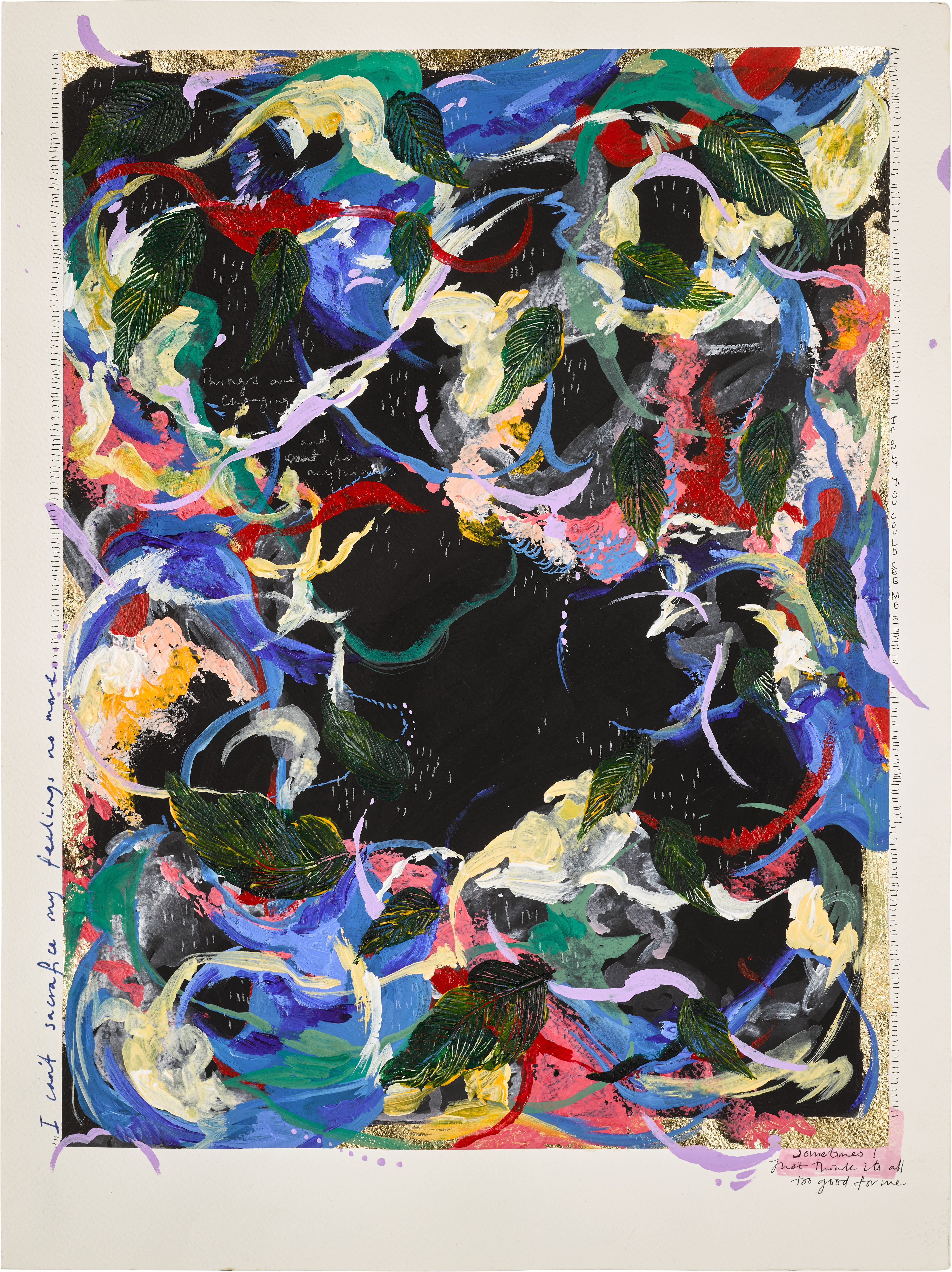
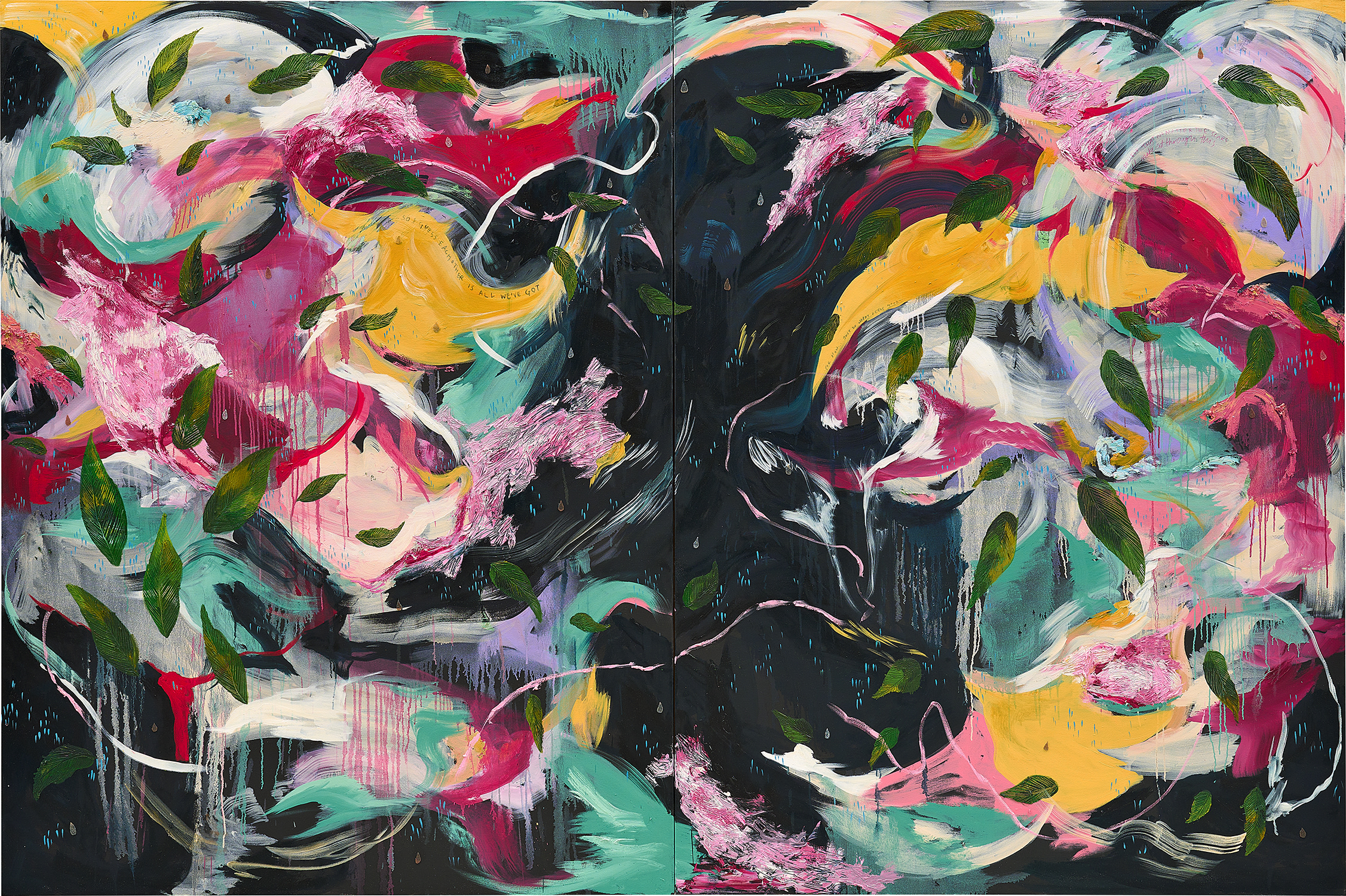
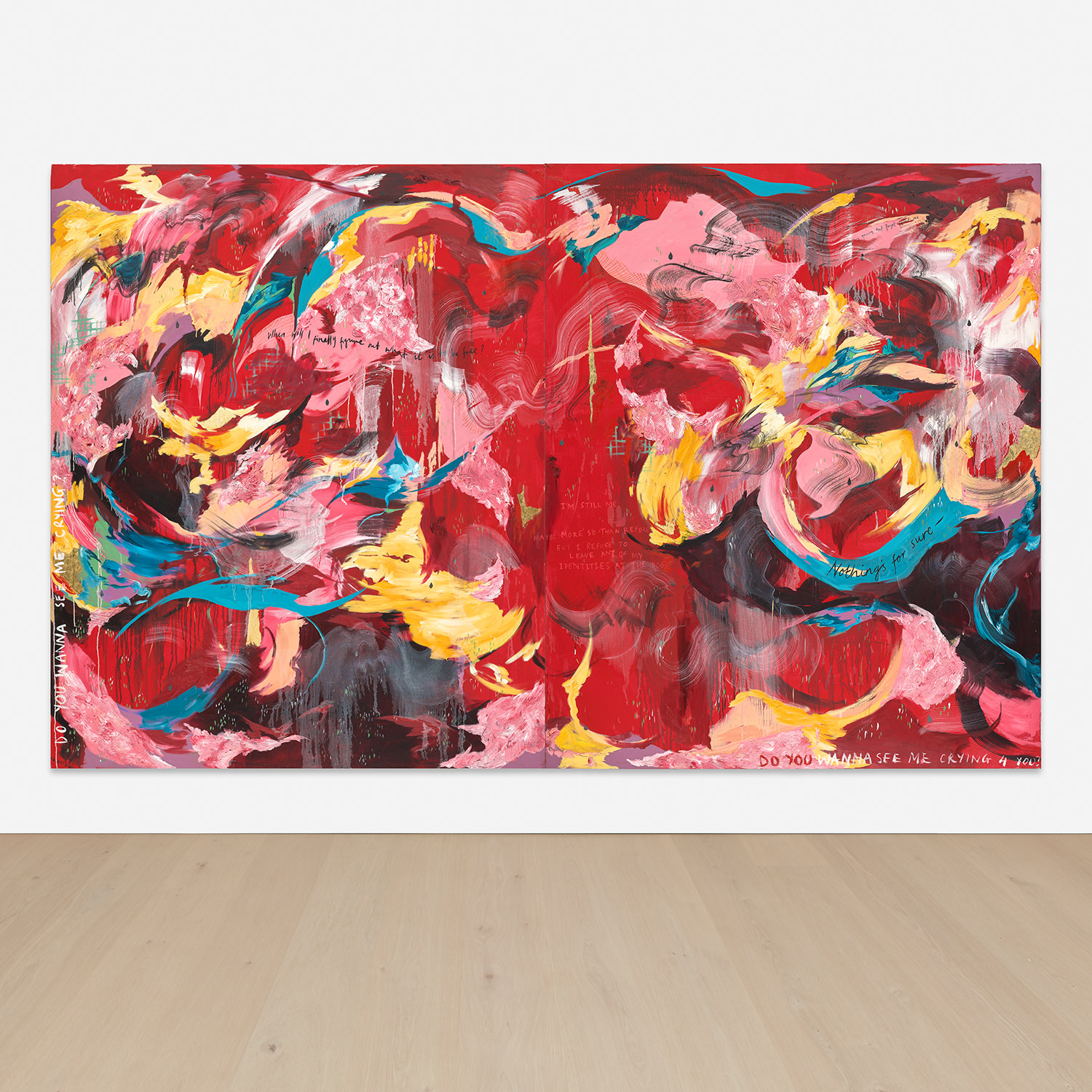
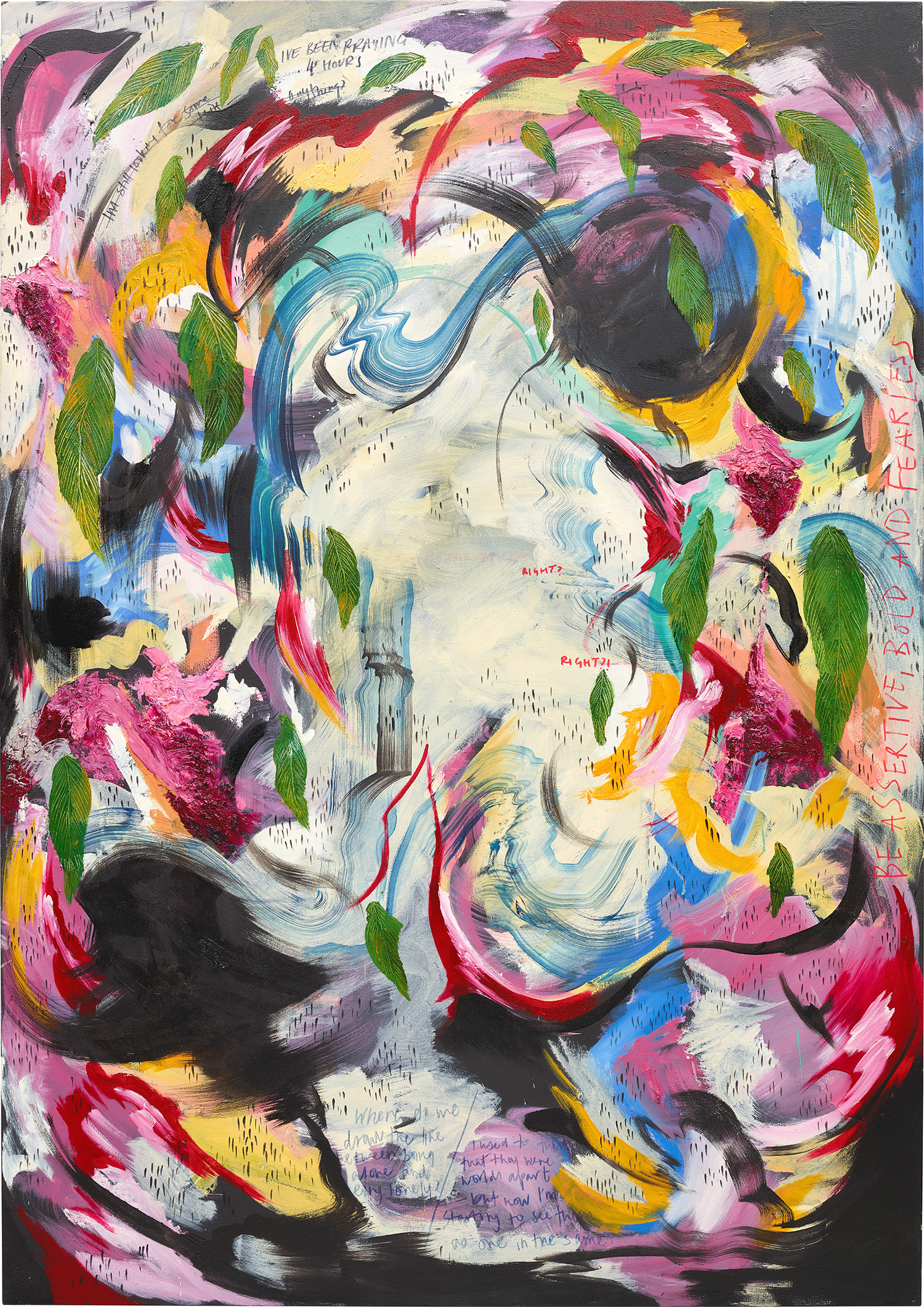
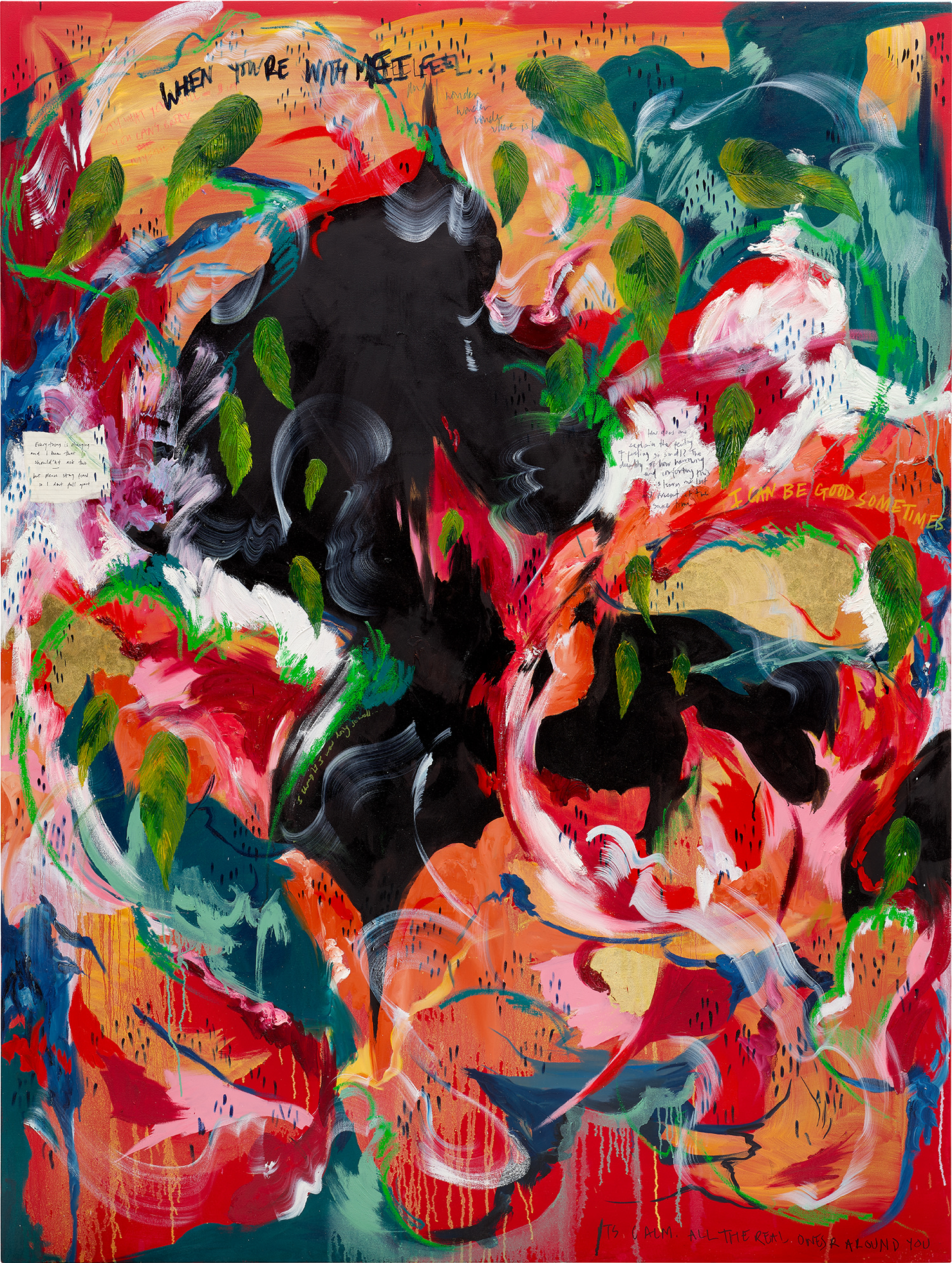
In the years since her graduation from Camberwell College of Arts and a subsequent MA from Chelsea College of Arts, Michaela Yearwood Dan has moved with remarkable velocity through the contemporary art world. Her canvases now hang in prominent private collections across Europe and North America, and her presence in gallery programmes from London to New York has become a fixture of the most thoughtful exhibition schedules. That trajectory, built on paintings of extraordinary emotional generosity and visual abundance, feels less like a rise and more like an arrival long overdue. Yearwood Dan was born in 1994 and carries the dual inheritance of her British upbringing and Barbadian heritage with evident pride and intention. London is her base and her creative home, and the city's layered, multicultural energy feeds directly into the density of her compositions. Yet the warmth and lusciousness of the Caribbean runs just as strongly through her palette, which favours deep magentas, sun saturated yellows, and the particular quality of green that belongs to tropical foliage. She has spoken openly about the importance of joy as a political and personal act, and that conviction registers immediately in front of her paintings. Her artistic development accelerated with purpose in the late 2010s, when she began weaving text fragments and diary like reflections directly into her floral compositions. Works such as Love Letters to Siri no.2 from 2018, made with acrylic, oil, and charcoal on canvas, announced a practice already confident in its ambitions. The combination of lush botanical imagery with intimate written language gave her paintings the quality of private correspondence made monumental, personal thoughts rendered vast and unapologetic. That fusion of the written and the painted, the confessional and the celebratory, would become the hallmark of everything that followed. By 2020 and 2021, the signature works that define her reputation had taken full shape. The Summit of Beauty and Love, an oil on canvas from 2020, exemplifies her maximalist instinct: botanical forms cascade across the picture plane with an almost theatrical generosity, while the composition holds together through the artist's assured understanding of colour relationships and pictorial weight. Sentiments for D and The Imperfection of Divinity, both also from 2020, demonstrate her range within a consistent visual language, moving between the tender and the declarative without losing their emotional centre. The 2021 diptychs represent perhaps her most ambitious formal moves of that period. What's the Use in Yearning, made with acrylic, oil, and Swarovski crystals on canvas, brings a glittering materiality to the surface that reads as both glamorous and emotionally loaded. The crystals are not decorative additions but structural arguments, insisting on the value and visibility of the feelings the work carries. Freedom don't come for free, another 2021 diptych incorporating gold leaf alongside the crystals, extends that thinking into the domain of political resonance, its title a pointed observation wrapped in visual splendour. That your lovin' makes it better from 2021, a work incorporating acrylic, oil, gold leaf, ink, and paper collage on canvas, shows the full range of her material thinking. The collage elements bring a tactile, scrapbook intimacy to what might otherwise be read purely as grand painting, reminding the viewer that these images have a domestic, lived origin. The Hospital Rooms collaboration of 2023, realised as a digital print on wove paper, extended her practice into a context concerned with the wellbeing of people in clinical settings, a meaningful extension of her belief that beauty and care are inseparable. The print edition Just, a screenprint in colours with high gloss varnish on Somerset paper, and Feather, A Salute to You Mr Magpie from 2020, round out a body of work that is consistent in its convictions while genuinely exploratory in its means. For collectors, Yearwood Dan represents one of the most compelling propositions in contemporary British painting. Her works on canvas carry the greatest institutional and market weight, and the diptychs in particular have attracted strong attention for their scale and ambition. Works incorporating gold leaf and Swarovski crystals occupy a distinct category within her output, their material richness functioning as a marker of the emotional stakes the artist sets for herself. Collectors entering her market now are acquiring a practice that has already demonstrated its staying power through critical consensus and institutional interest, without yet reaching the ceiling that her trajectory clearly suggests. The prints and works on paper offer a more accessible point of entry while retaining the full force of her visual and conceptual language. Within the broader landscape of contemporary painting, Yearwood Dan occupies a meaningful position alongside artists engaged with questions of identity, the Black experience, and the politics of pleasure and visibility. Her floral maximalism invites comparison with the decorative traditions that Western art history long undervalued, and her reclamation of those traditions feels purposeful and charged. The influence of artists who have pushed figuration and pattern in emotionally direct directions is discernible, though Yearwood Dan's voice is entirely her own, shaped by the specificity of her biography and the particularity of her literary sensibility. She belongs to a generation of British painters who have insisted that their full selves are not just permitted but required subjects for serious art. What makes Yearwood Dan genuinely important, beyond the compelling surface of her paintings, is the seriousness with which she holds the idea of joy. In a cultural moment that often treats happiness with suspicion, her canvases make an argument for delight as a form of knowledge and resistance. They insist that intimacy, botanical abundance, love, and the pleasures of language are subjects worthy of the largest and most technically demanding painting practices. That argument, made again and again across a body of work already substantial and still growing, is one the art world is listening to with increasing attention and the kind of sustained admiration that defines lasting careers.