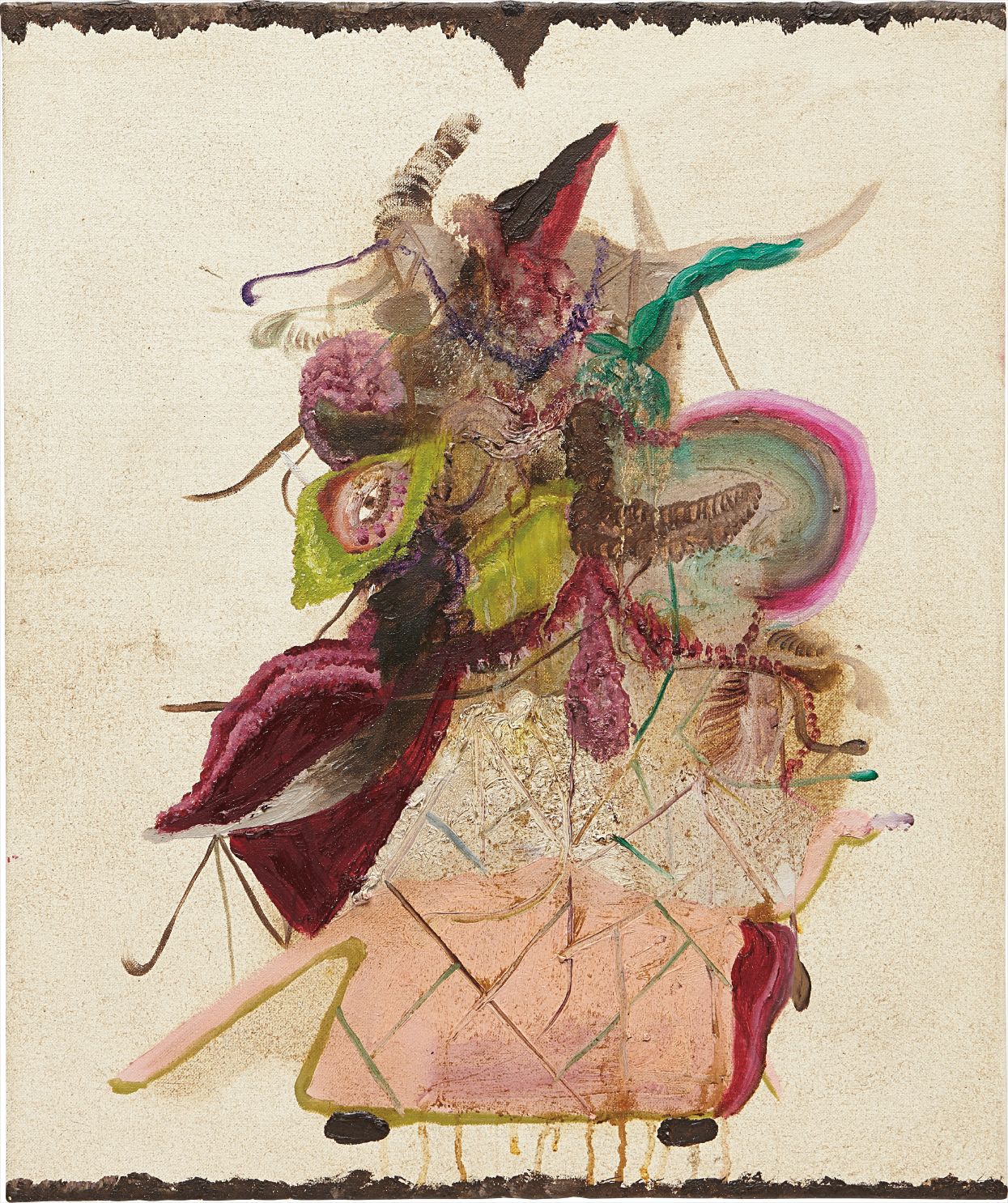
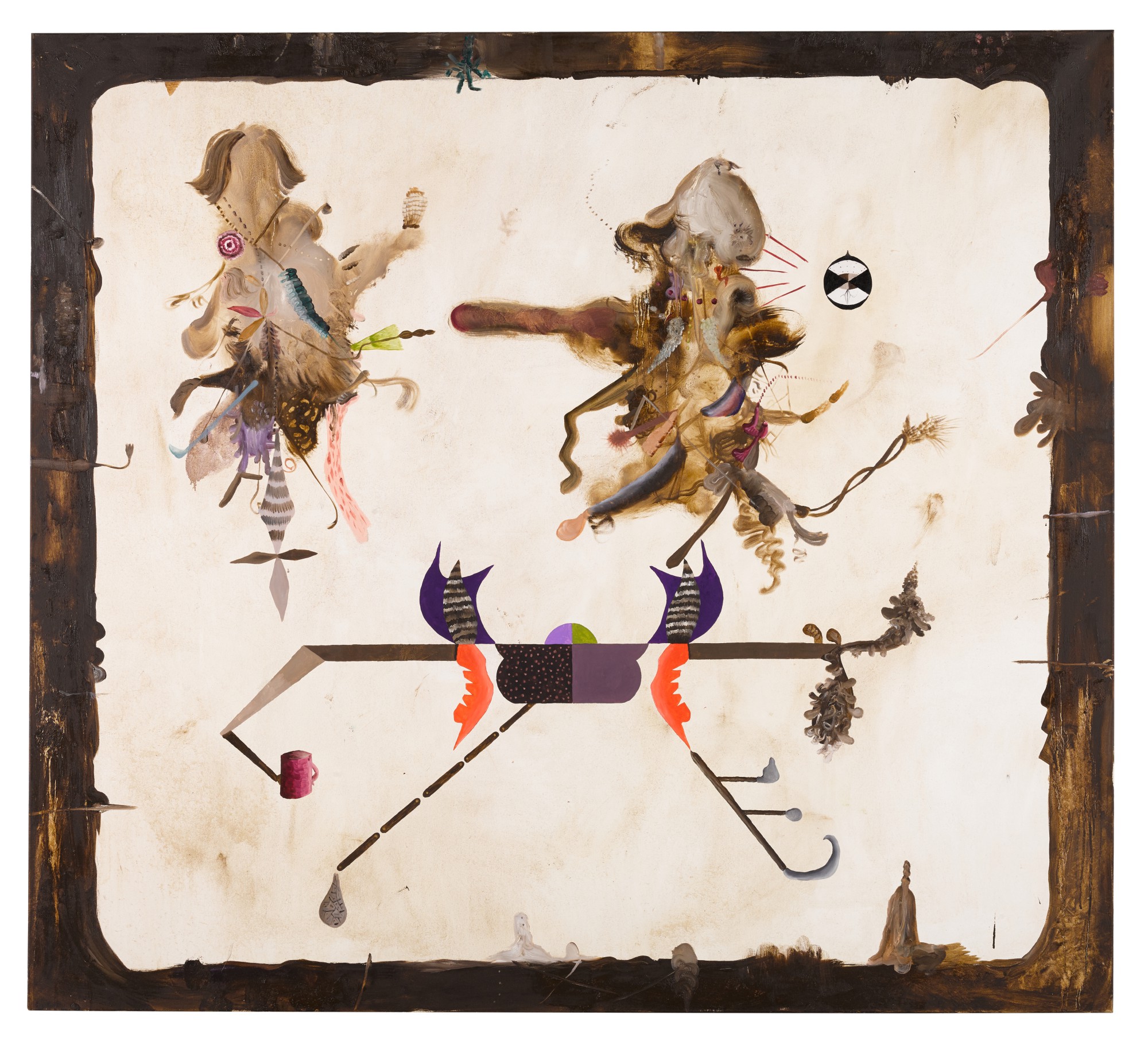
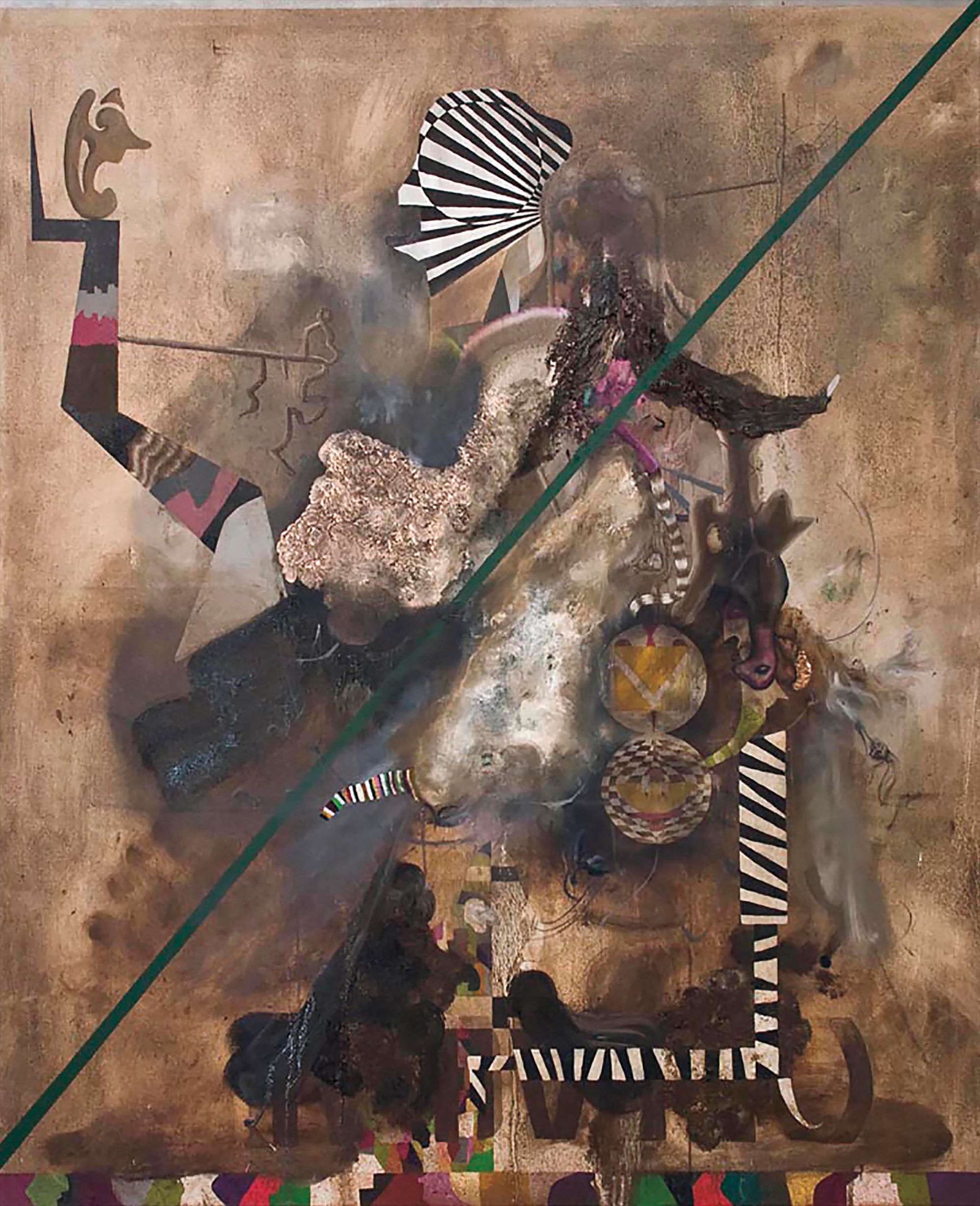
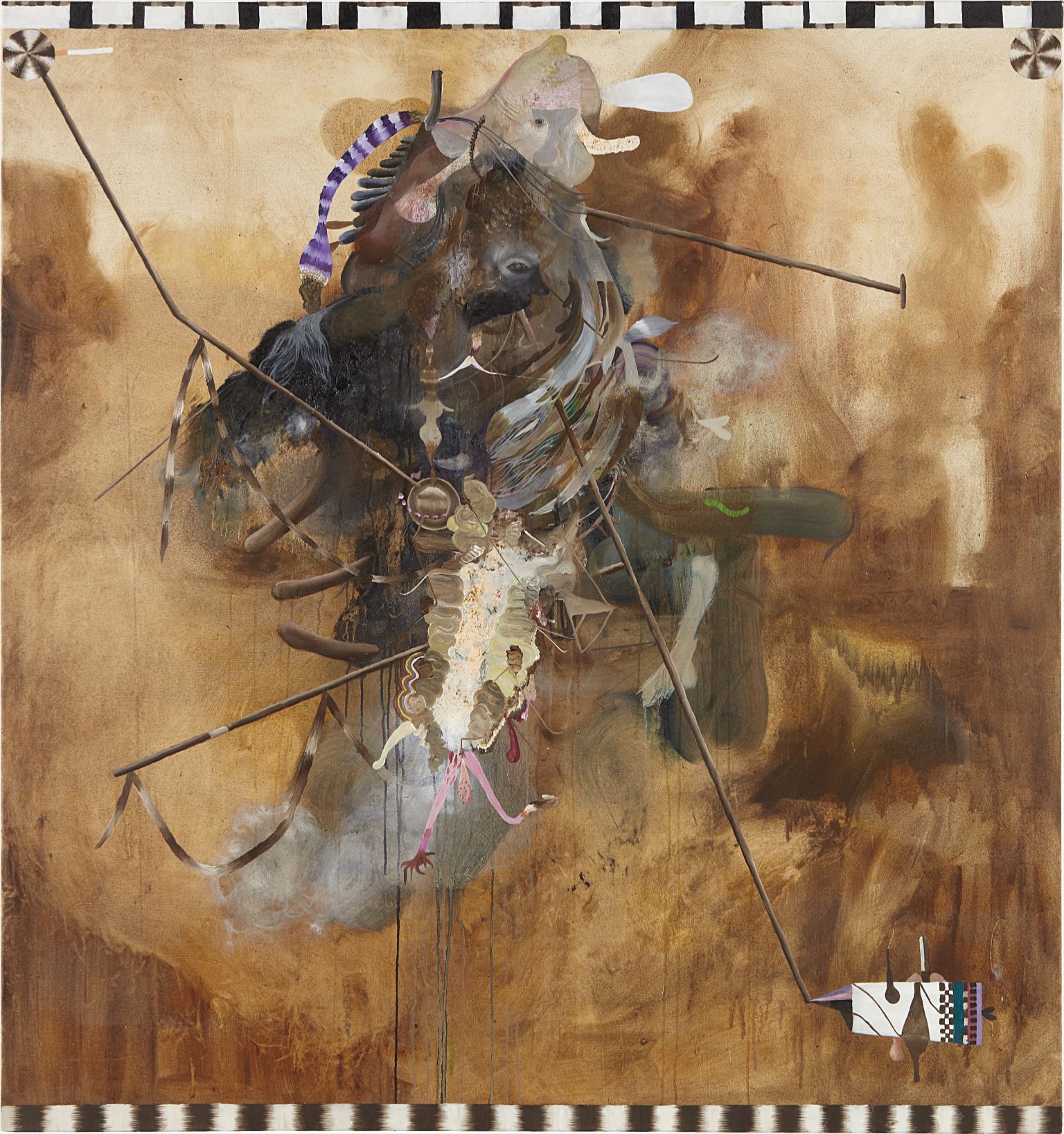
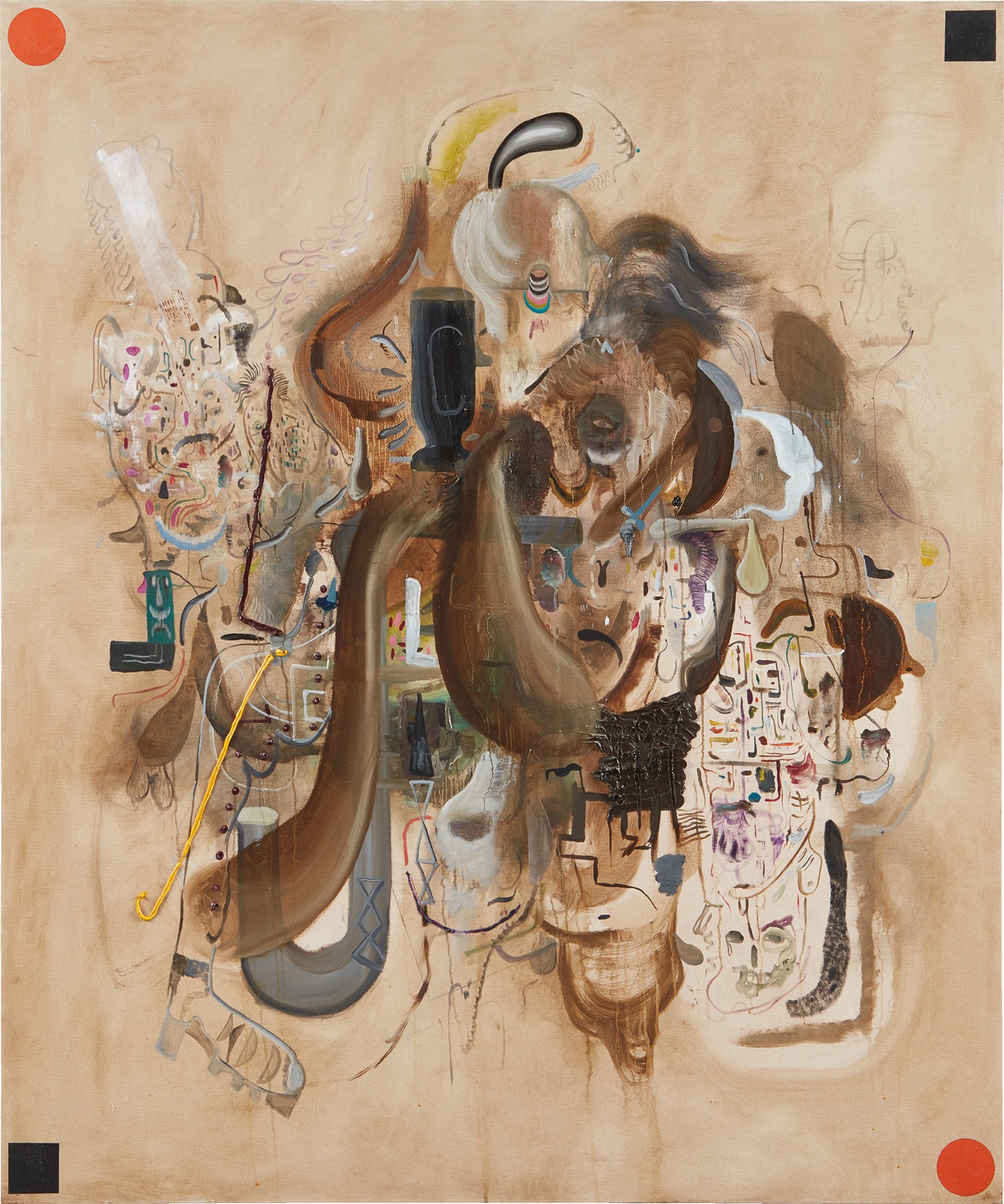
Something quietly electric is happening around the paintings of Michael Bauer. In recent years, his densely worked canvases have moved with increasing confidence through the international auction market, appearing at Phillips and Christie's to the admiring attention of collectors who recognize in them a singular and wholly committed vision. Bauer occupies a fascinating position in contemporary painting, respected deeply within artist communities and steadily gaining the wider institutional recognition his practice has long deserved. For those who have followed his career from the beginning, this moment feels less like a discovery and more like a long overdue arrival. Born in Germany in 1972, Bauer came of age in a cultural moment defined by a particular kind of fertile tension. Reunified Germany in the early 1990s was a country rewriting itself, and its art schools crackled with ambition and restlessness. Bauer found his way to the Städelschule in Frankfurt, one of Europe's most rigorous and intellectually demanding art academies, an institution with a tradition of producing painters who think as fiercely as they work. The Städelschule environment encouraged a kind of radical independence, pushing students to build a visual language rather than simply inherit one, and Bauer absorbed that imperative completely. What emerged from those formative years was a practice that refused easy categorization. Bauer began fusing references that had rarely been brought into the same conversation: the surrealist tradition of Matta and Picabia, the raw energy of underground comics and outsider graphic culture, and a deeply personal gestural approach to paint handling that gave his surfaces an almost geological density. Where other painters of his generation leaned into cool conceptualism or photorealist precision, Bauer dove headlong into the psychic and the visceral. His paintings feel excavated rather than constructed, as though layers of imagery have been buried and partially recovered through an act of obsessive attention. The figurative elements in Bauer's work are among its most arresting qualities, and also among its most unsettling in the most pleasurable sense. Bodies in his canvases are rarely whole. They fragment, multiply, dissolve into landscape, emerge from abstraction, and recombine in configurations that feel simultaneously grotesque and tender. There is dark humor threaded through his imagery, a sensibility more aligned with the tradition of James Ensor or early Philip Guston than with the earnest figuration that dominated much of the early 2000s. Bauer always seemed to understand that painting could be genuinely funny and genuinely disturbing at the same time, and that this combination was not a weakness but a form of honesty. Several works stand as particularly strong examples of what makes his practice so compelling. "Pott" demonstrates his ability to build a composition from seemingly irreconcilable elements and bring them into a charged, uneasy harmony. "Bad Harvest" carries a title that telegraphs his gift for deadpan poetic naming, and the canvas delivers on that promise with a tangle of forms that rewards sustained looking. "L.o.r.d. s. 4000" shows his tendency to layer text, symbol, and figure into something approaching a coded manuscript, a visual system with its own internal grammar. The 2012 work "Sutcliffer J. H. S.O.P. 38/39" displays his mature handling of paint with particular clarity, the surface working as both record of process and completed image simultaneously. "Umer 1 Marquis c c" extends this vocabulary further still, demonstrating a restless refusal to repeat himself even within a consistent and recognizable vision. For collectors, Bauer's work offers something rare in the current market: genuine intellectual depth combined with visceral visual impact. These are not paintings that explain themselves quickly, and that sustained opacity is precisely their value. Works that continue to yield new readings after years of living with them are among the most treasured possessions in any serious collection, and Bauer's canvases operate exactly in that register. His appearances at Phillips and Christie's have demonstrated that the secondary market recognizes this quality, and collectors who have moved early on his work have done so with the confidence that comes from trusting their eyes over the noise of trend. Within the broader history of painting, Bauer belongs to a lineage of artists who have taken seriously both the legacy of European surrealism and the disruptive energy of vernacular and subcultural visual languages. Painters such as Martin Kippenberger, Albert Oehlen, and Werner Büttner shadow his formation in obvious ways, though Bauer has always pushed toward something more hallucinatory and personally mythological than the ironic cool that characterized much of the Cologne and Hamburg scenes. His closer spiritual relatives might include Carroll Dunham or Chris Ofili in their willingness to build entire cosmologies within a canvas, or indeed the late Philip Guston, whose late career turn toward cartoon and caricature created permission for an entire generation to take pleasure seriously as an aesthetic category. What makes Michael Bauer matter now, in a moment when painting is once again at the center of critical and market conversation, is precisely his refusal to compromise the strangeness of his vision in service of accessibility. The art world is full of painters who have learned to calibrate their work for maximum appeal; Bauer has done the opposite, going deeper into his own imagery with each passing year, trusting that the paintings that are most fully themselves will ultimately find the audience they deserve. That trust appears increasingly well placed. For collectors building collections with genuine ambition, for institutions looking to represent the full complexity of painting at the turn of the century, and for anyone who simply wants to stand in front of a canvas that feels truly alive, Michael Bauer is an artist whose time has decisively arrived.