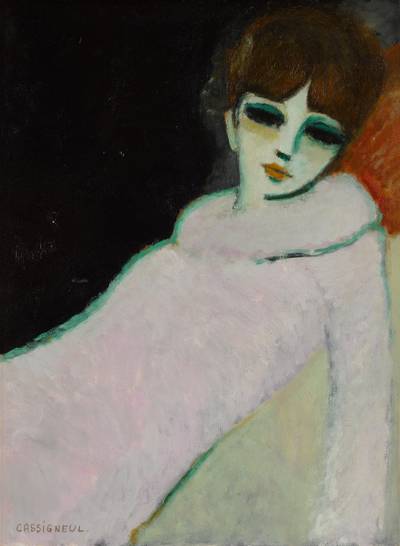
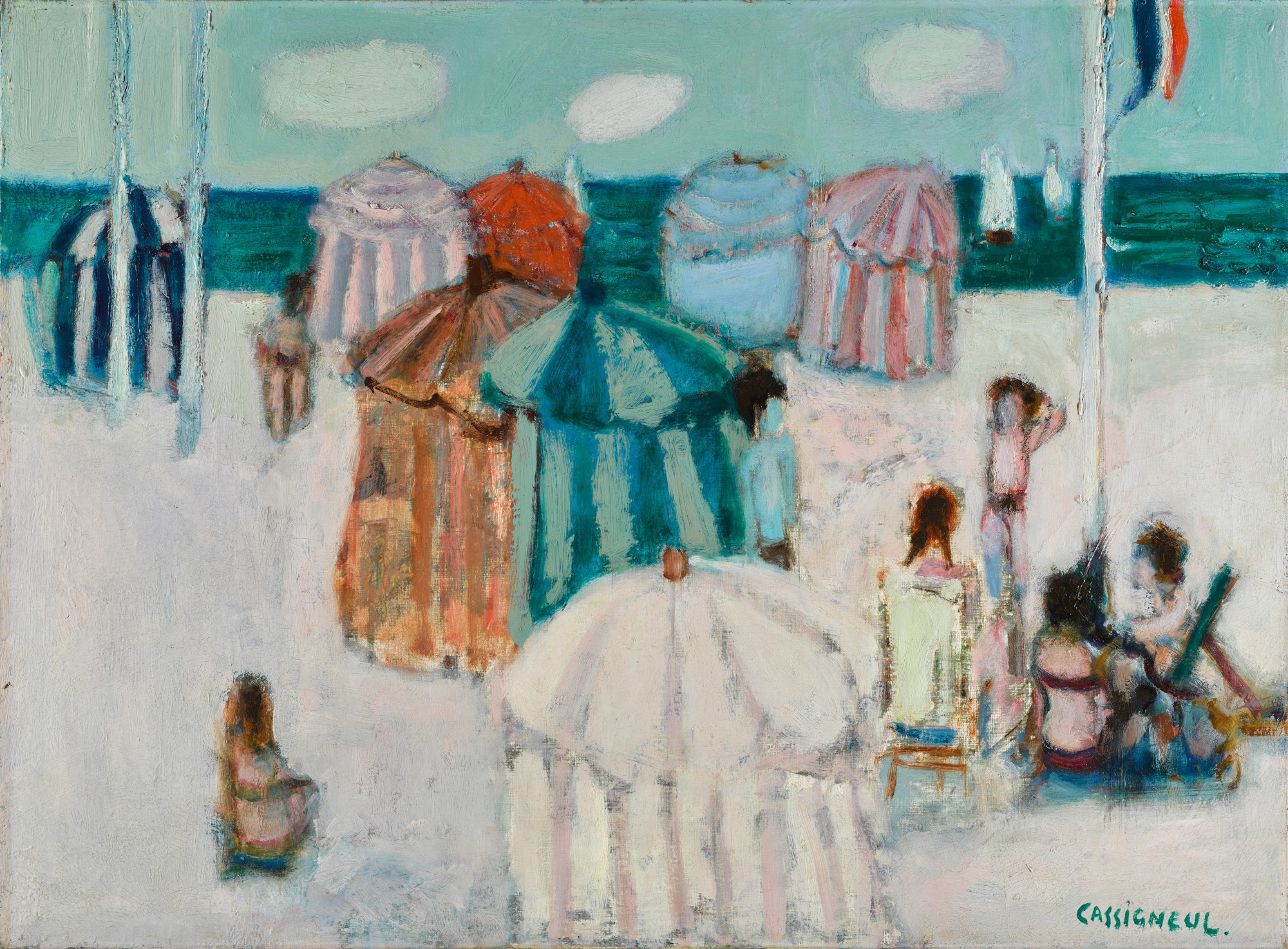
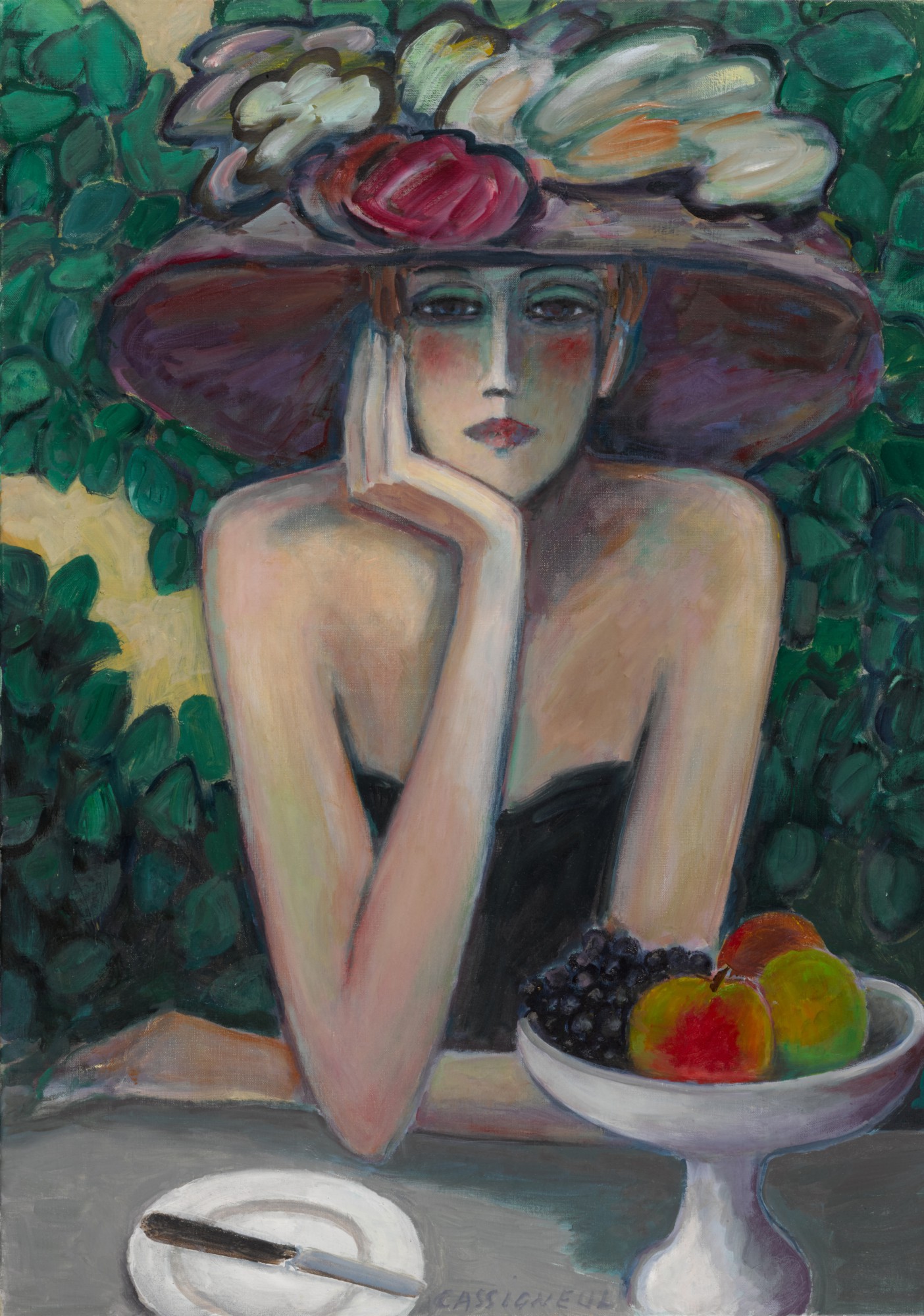
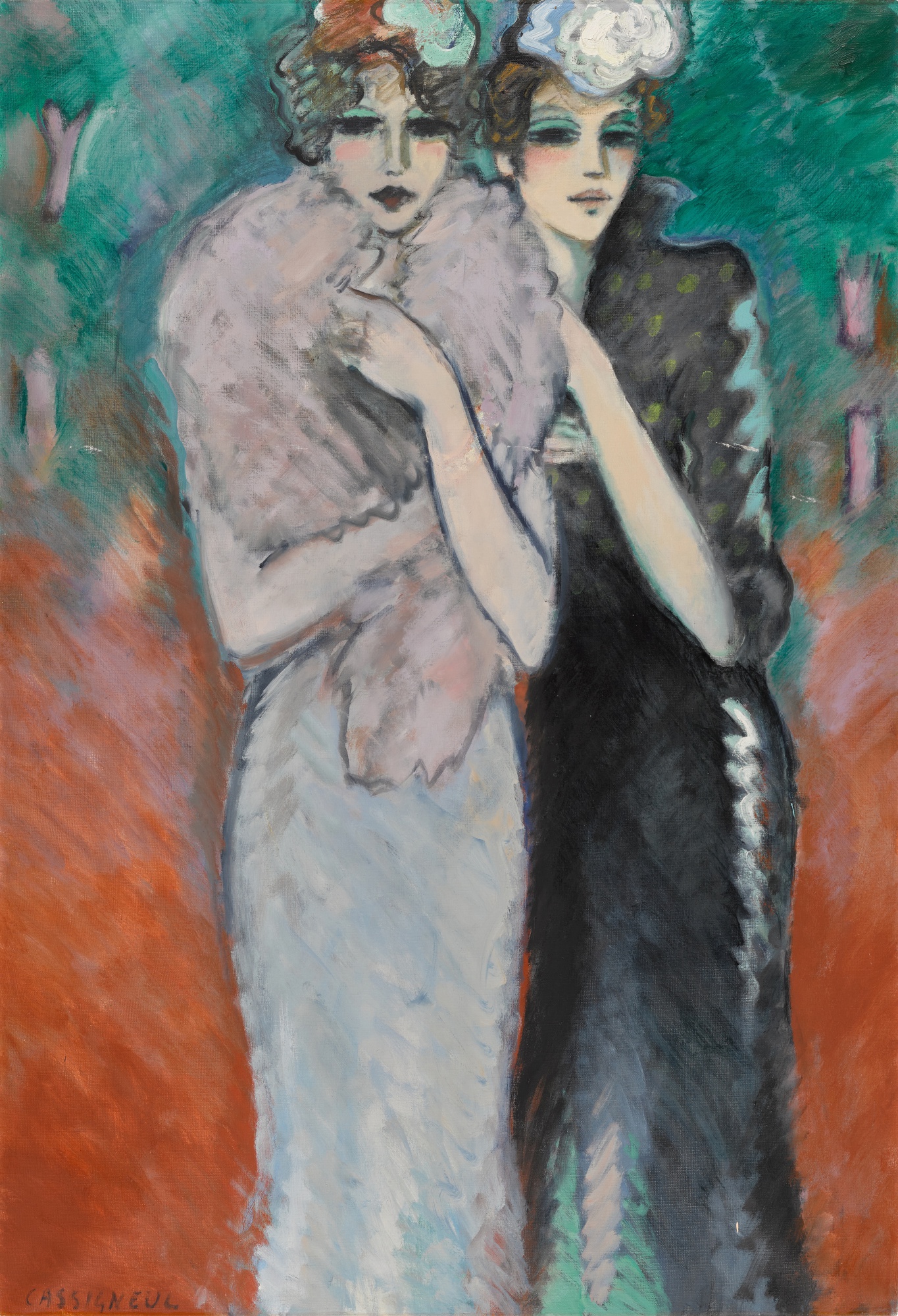
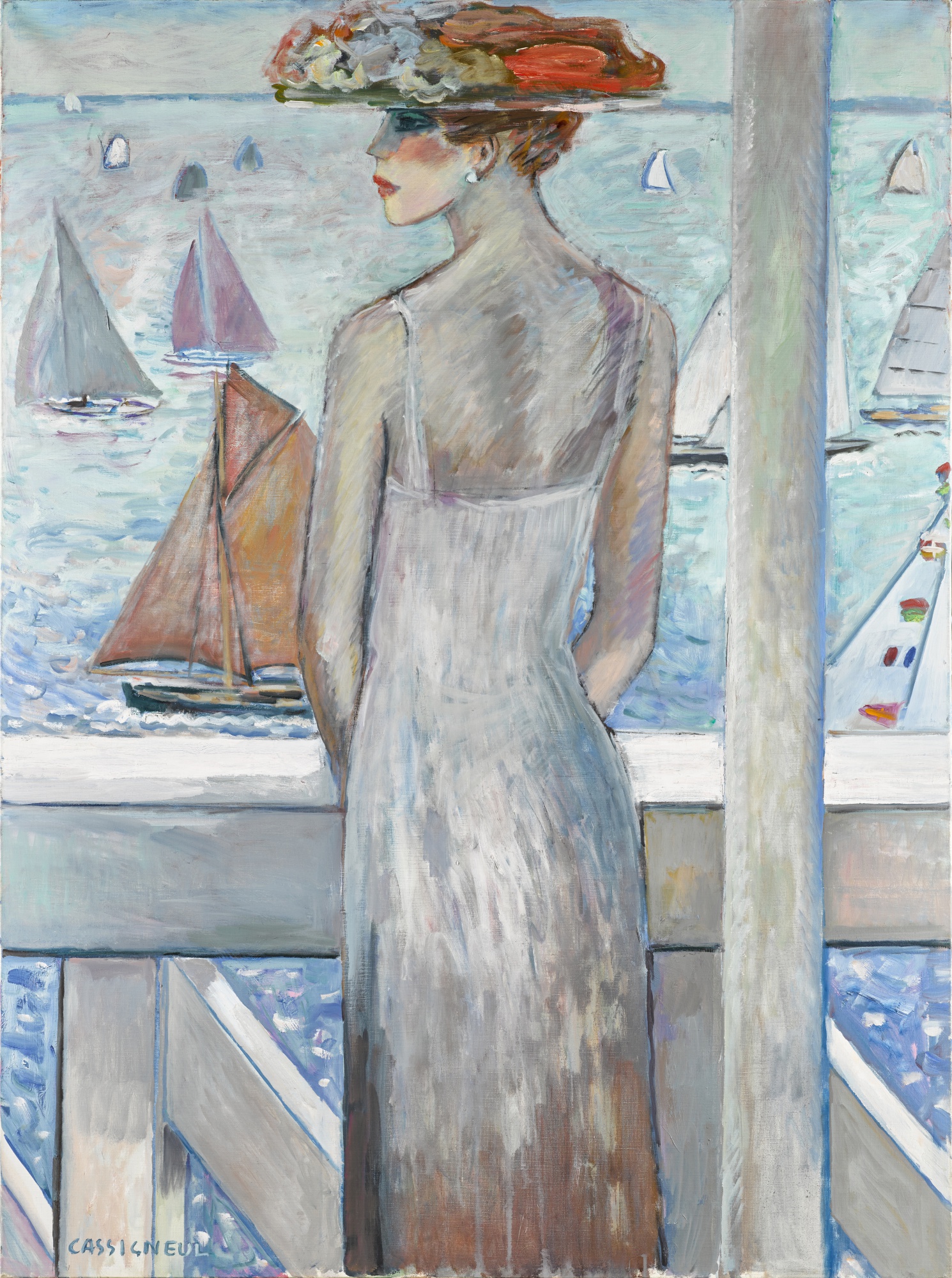
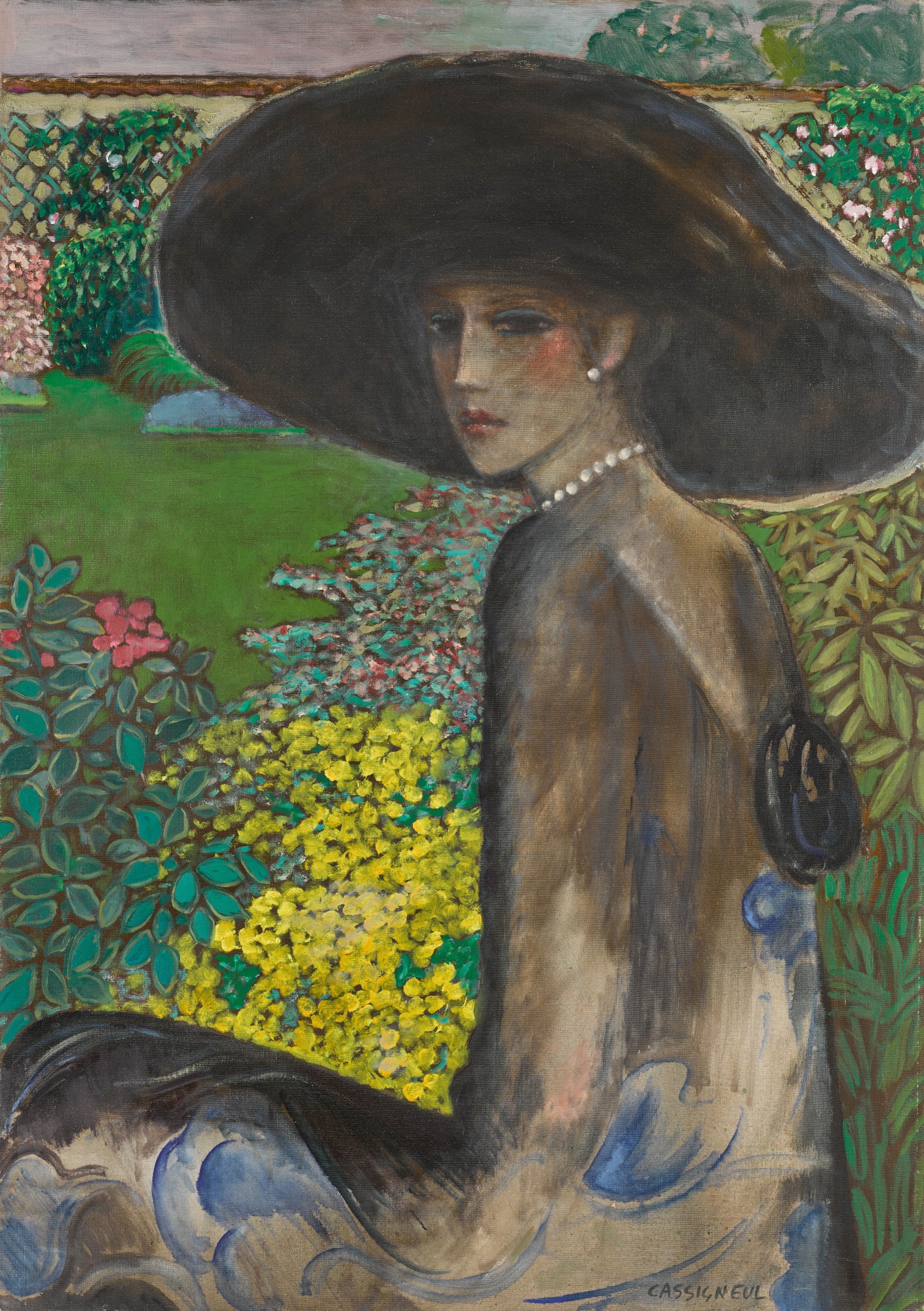
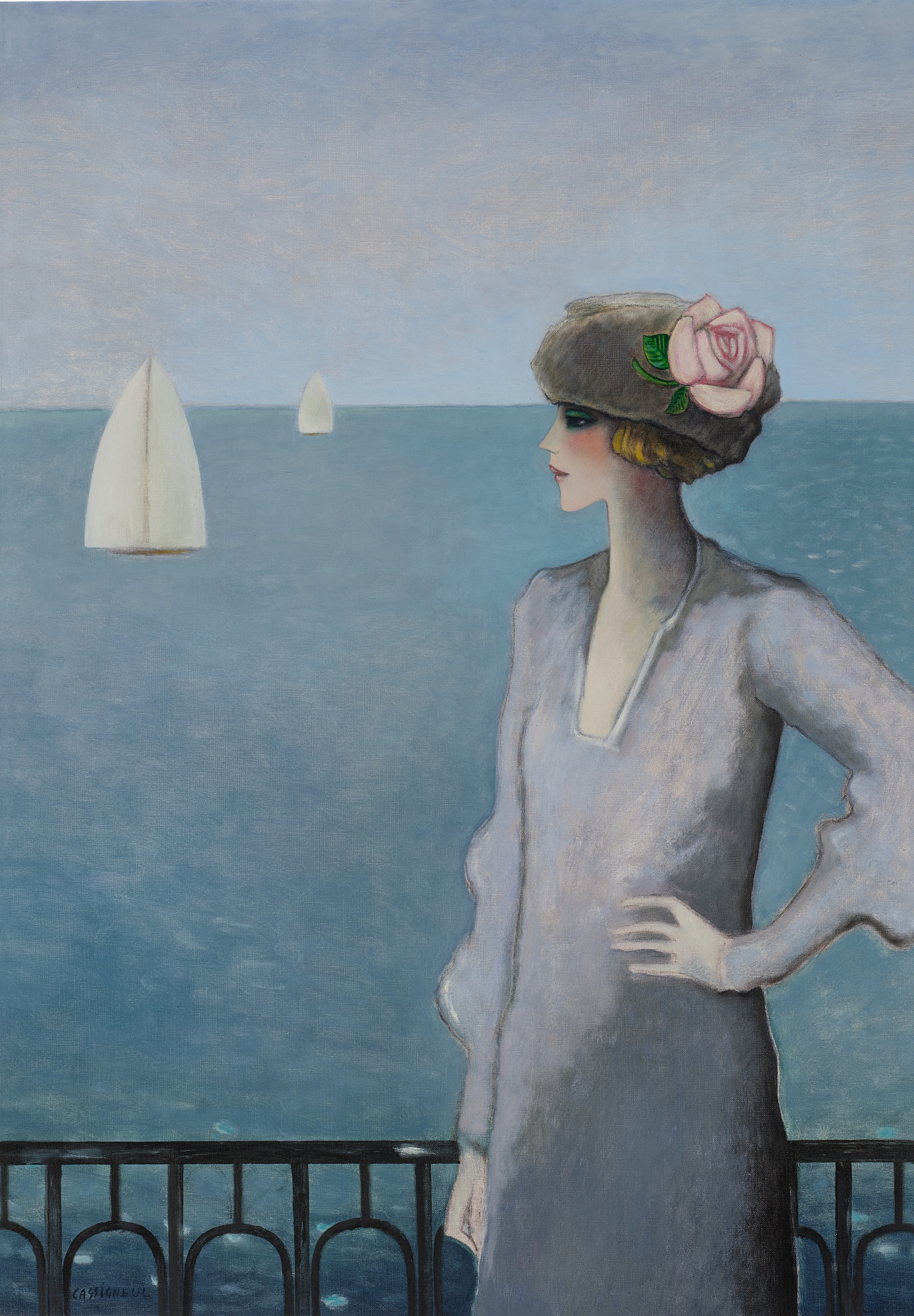
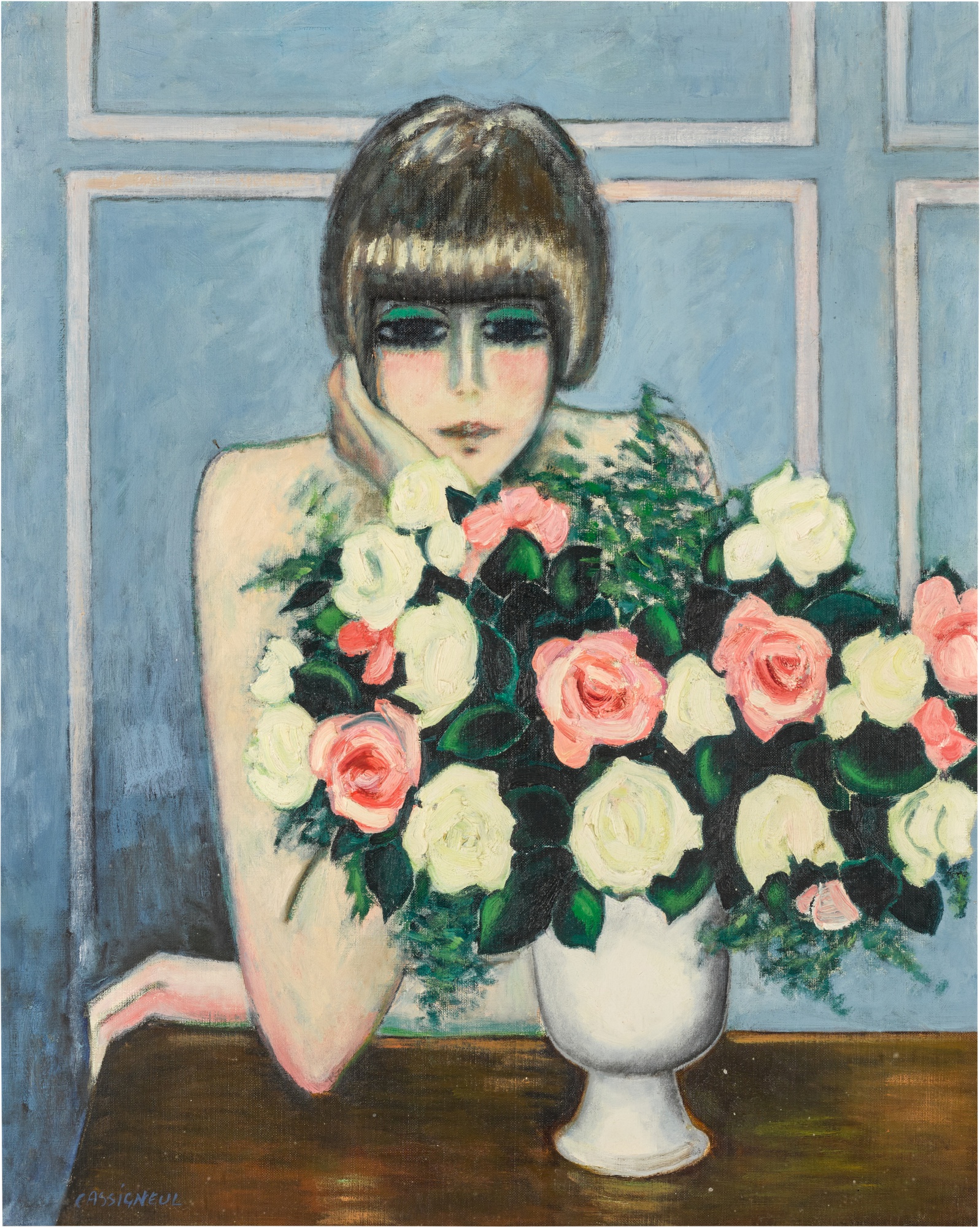
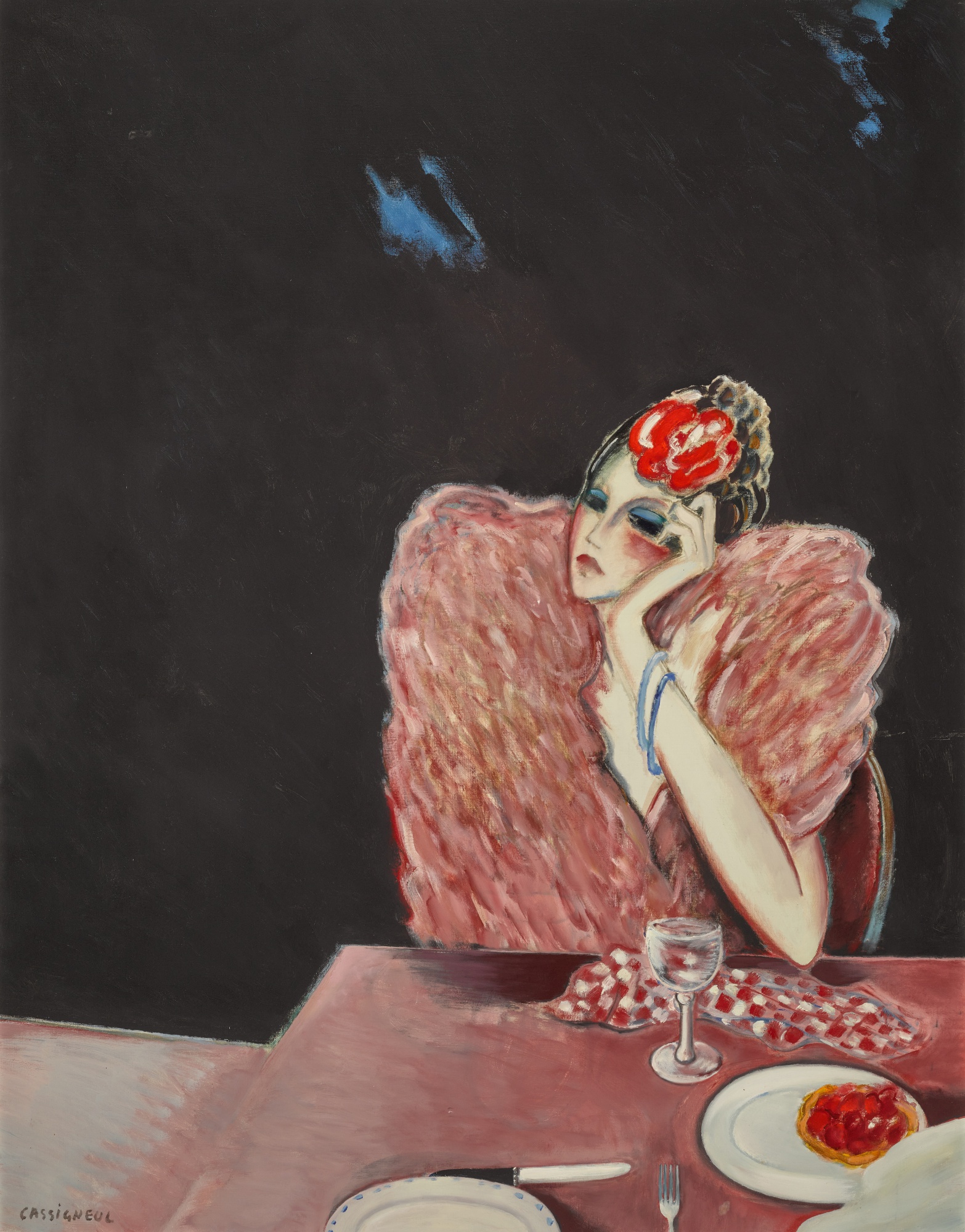
There is a particular kind of painting that stops you mid step in a gallery, not because it shouts but because it hums. Jean Pierre Cassigneul's canvases do exactly that. In recent seasons, renewed collector appetite for decorative figurative work has brought his paintings back to prominent auction rooms in Paris and New York, with his signature compositions of stylized women in garden settings and fashionable interiors commanding strong prices among European and Asian buyers alike. The market has remembered what devoted collectors always knew: that Cassigneul occupies a singular and irreplaceable position in postwar French painting, one that bridges the lush ornamental spirit of the Belle Époque with the flat graphic confidence of mid century modernism. Born in Paris in 1935, Cassigneul came of age in a city still reconstructing its cultural identity in the aftermath of the Second World War, yet a city that had never entirely surrendered its faith in beauty, elegance, and the pleasures of everyday life. He trained in Paris, immersing himself in the rich traditions of French figurative painting while absorbing the lessons of the Post Impressionist masters whose work filled the city's museums and private collections. The influence of Pierre Bonnard is detectable in Cassigneul's early attention to the decorative possibilities of interior scenes, while the flattened compositional rhythms of Paul Gauguin and the synthetist painters gave him permission to simplify and distill. Paris in the 1950s and early 1960s was also a city awakening to Japanese visual culture, and Cassigneul proved a particularly attentive student of the Ukiyo e woodblock tradition, with its bold contour lines, its compression of space, and its celebration of the transient pleasures of fashionable existence. His artistic development through the 1960s represents one of the more quietly confident evolutions in French painting of that decade. While many of his contemporaries pursued abstraction or conceptual experimentation, Cassigneul remained committed to the figure, specifically to the figure of the modern Parisienne, rendered with an economy of means that was anything but simple. Works from this period, including the arresting "Femme allongée" of 1965 and "Femme de dos" of 1966, reveal an artist already in full command of his language. The elongated silhouette, the decisive dark outline enclosing flat passages of luminous color, and the sense of a woman absorbed in her own interior world: these are already fully formed. By 1968 and the superb "Cavaliers au bois," he had extended his vocabulary to encompass outdoor scenes with the same assured graphic touch, demonstrating that his approach was not a stylistic tic but a genuine and flexible pictorial philosophy. The 1970s were the decade in which Cassigneul achieved the international recognition his work had long merited. Exhibitions in Europe, the United States, and Japan brought his paintings to audiences who responded immediately to their combination of accessibility and sophistication. The Japanese reception was particularly enthusiastic, and understandably so: collectors there recognized in his work a deep and sincere dialogue with their own visual traditions. Canvases such as "Le Chale indien" from 1969 and the glorious "Femme rouge (le bracelet bleu)" from 1973 exemplify the period at its peak. In these works the color relationships are bold without being strident, the compositions are decorative without being merely pretty, and the women who inhabit them possess a quiet authority that elevates portraiture into something closer to archetype. "Femme et fleurs" from 1971 and "Les roses" from 1974 further demonstrate his gift for weaving the human figure and the natural world into seamless, mutually enhancing arrangements where neither element dominates. To look closely at a Cassigneul is to appreciate the intelligence concealed within apparent simplicity. His technique involves a process of careful reduction: the observed world is stripped of incidental detail until only its essential visual music remains. The hat brim curves just so. The garden behind a seated figure dissolves into passages of green and gold that read simultaneously as foliage and as pure painterly sensation. "Le jardin silencieux" from 1980 is a masterclass in this equilibrium, a work in which the stillness of the title is felt as a physical quality, as if the canvas itself were holding its breath. His later work, represented by "Le Compotier" from 2014, confirms that his powers did not diminish with time but instead settled into an even more distilled confidence. The still life elements he has introduced in later decades sit comfortably alongside his figures, sharing the same economy of line and the same gift for color that sings without straining. For collectors, Cassigneul represents a compelling and still accessible point of entry into the tradition of twentieth century French decorative figuratism. Works on paper and smaller canvases have historically offered opportunities for collectors at a range of price points, while major oils from the late 1960s through the 1980s represent the core of his market and have shown consistent appreciation over time. Buyers drawn to his work tend to share certain sensibilities: an appreciation for craft and surface quality, a preference for paintings that reward sustained looking, and an instinctive sympathy for art that is unashamed of its own beauty. His work sits naturally in conversation with that of Bernard Buffet, with whom he shares a commitment to strong contour and a certain elegant melancholy, and with the graphic figurative tradition represented by artists such as Leonor Fini and the late output of Kees van Dongen. Collectors who admire the decorative confidence of Alphonse Mucha and the synthetist boldness of Paul Sérusier will also find in Cassigneul a twentieth century heir to those traditions. The legacy of Jean Pierre Cassigneul is one of sustained fidelity to a vision that the broader art world has taken a pleasurably long time to properly celebrate. In an era that increasingly values the expressive and the conceptual, his insistence on beauty, elegance, and the quiet drama of a woman in a garden or at a window reads not as nostalgic escapism but as a principled aesthetic commitment. His paintings do not argue or provoke. They invite. They ask the viewer to slow down, to attend to the quality of afternoon light, to the way a shawl falls, to the particular orange of a vase against a blue interior. That invitation, extended across six decades of painting, is one of the more generous offers in contemporary French art, and it rewards every collector who accepts it.