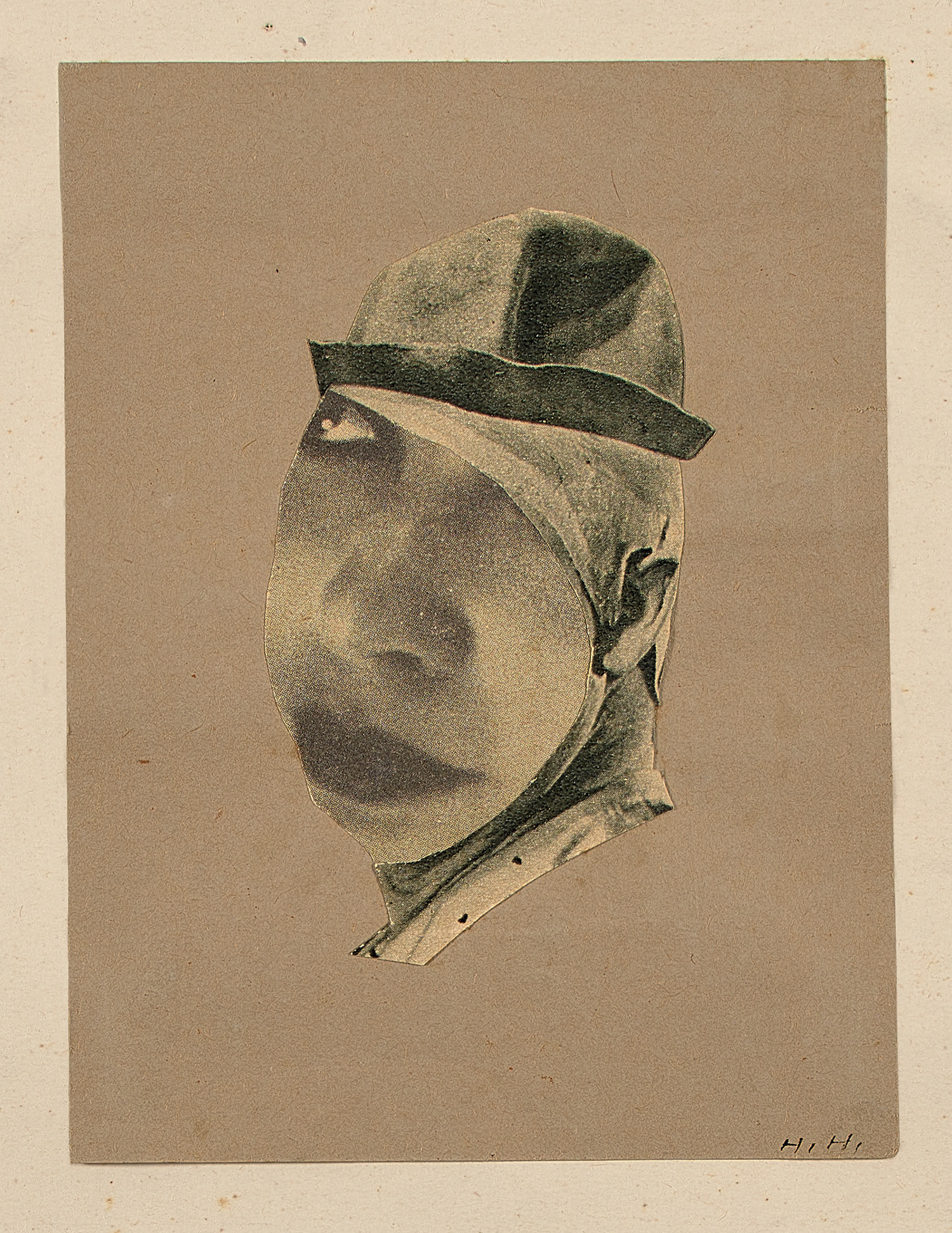
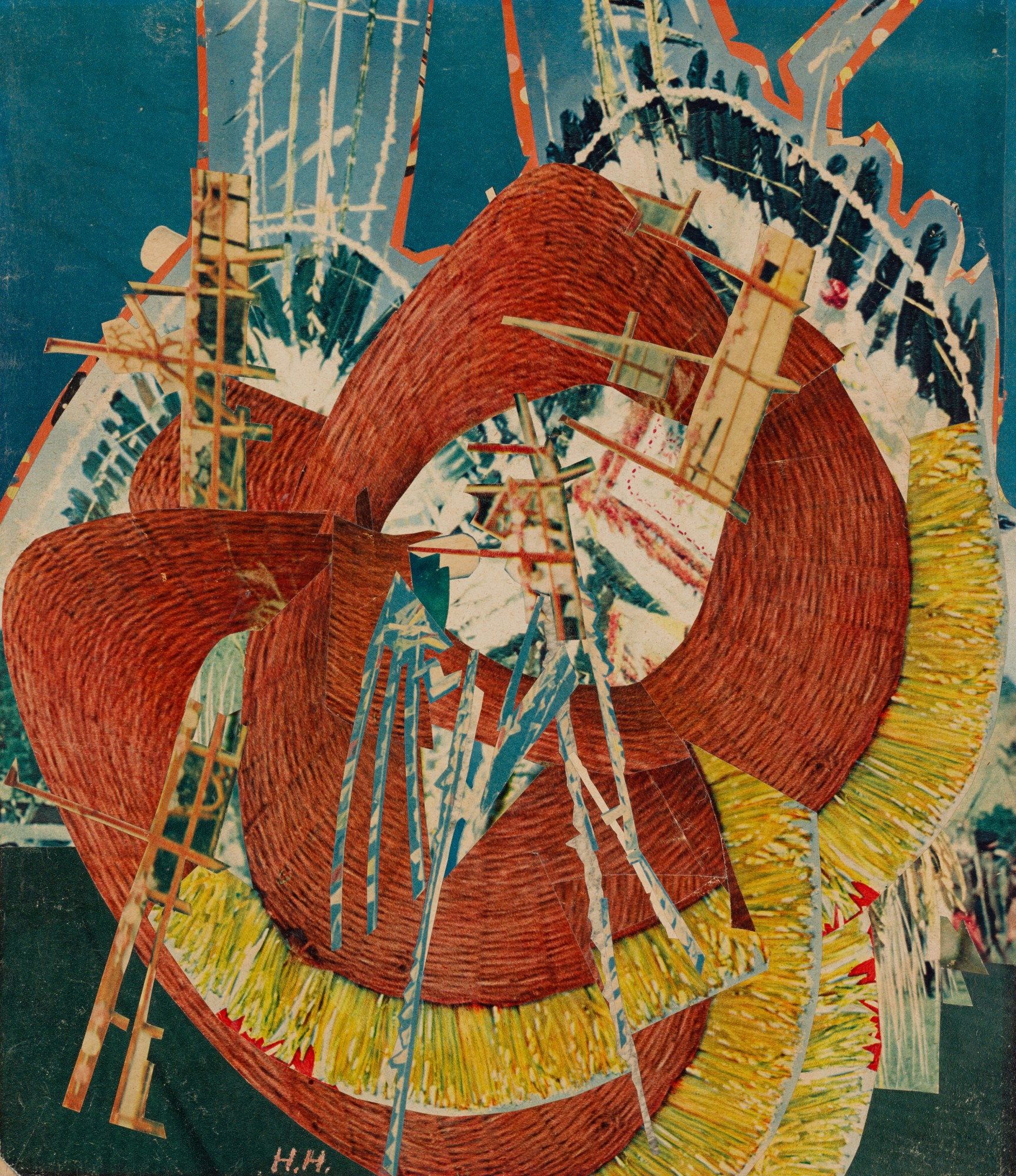
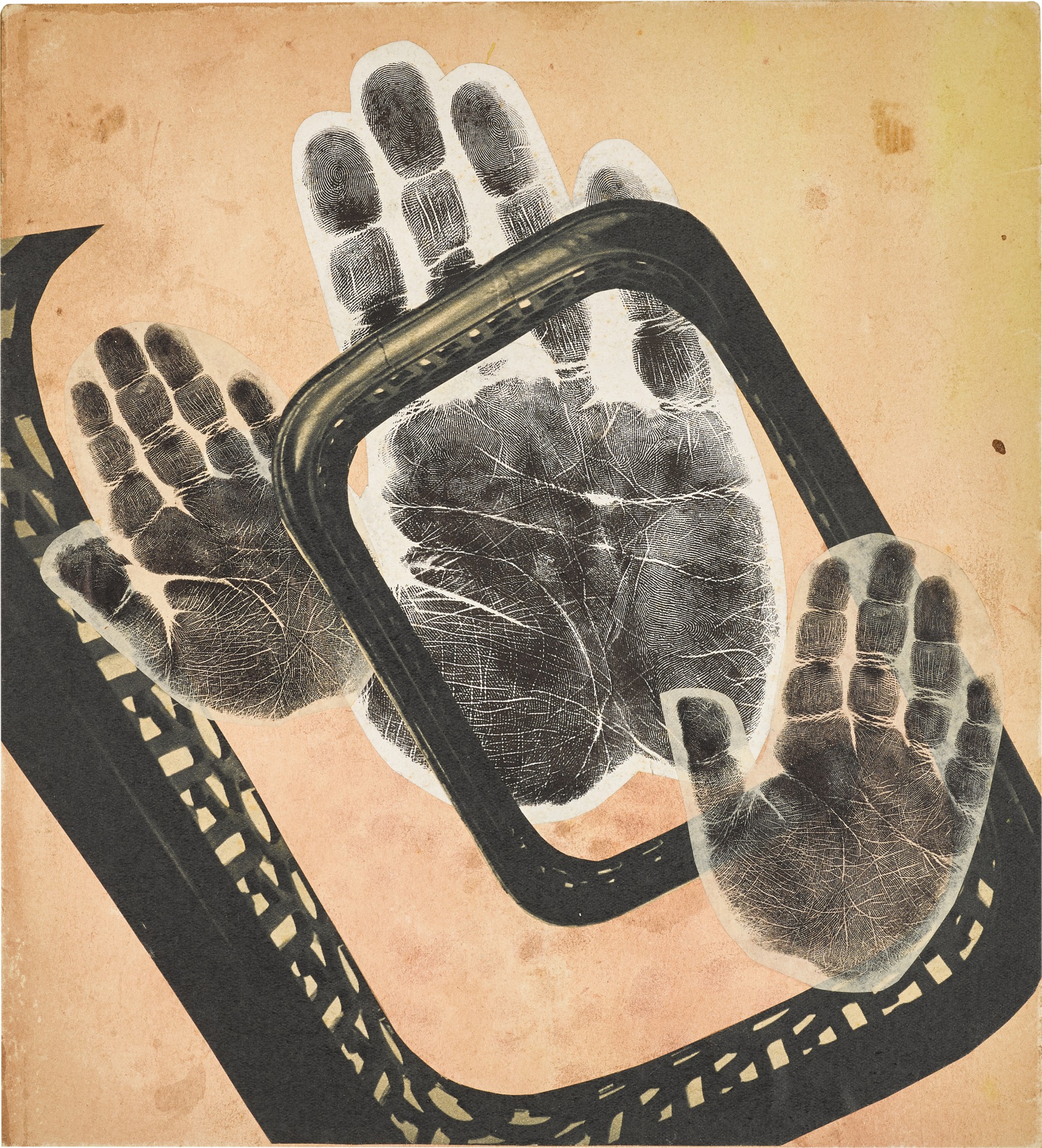
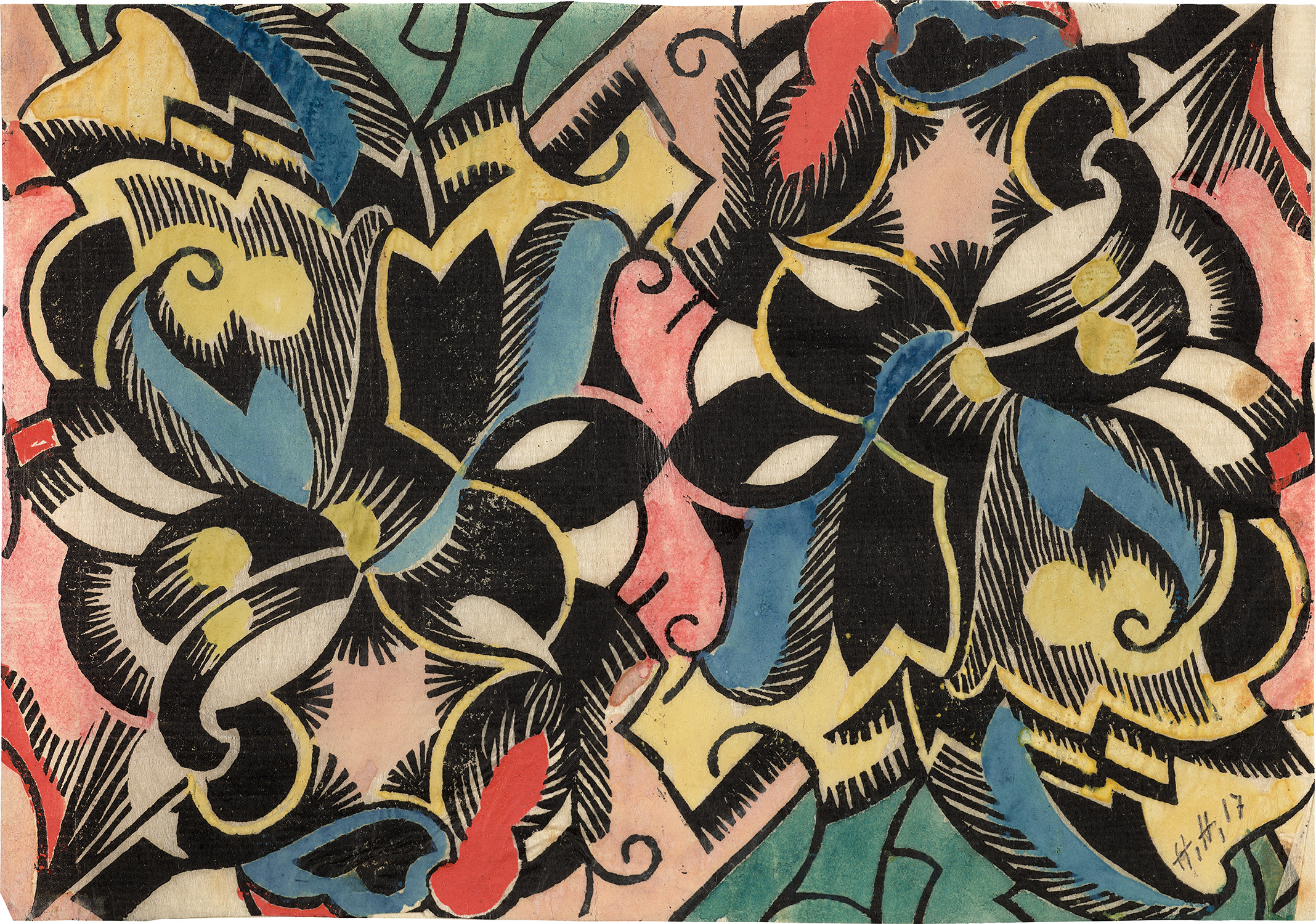
In 2022, the Berlinische Galerie mounted a celebrated survey of Hannah Höch's work that drew queues around the block and reaffirmed what a growing community of scholars, curators, and collectors had long suspected: that Höch is not merely a footnote in the story of the European avant garde but one of its most radical and enduring voices. Her scissors were sharper than any manifesto. Her eye for incongruity, for the electric friction between one image and another, produced art that still crackles with intelligence and wit nearly a century after it was made. To encounter a Höch collage is to feel the twentieth century thinking out loud. Hannah Höch was born on November 1, 1889, in Gotha, in the German state of Thuringia. She was the eldest of five children in a bourgeois family, and her early years were shaped by the orderly expectations of Wilhelmine Germany, a world of propriety that her art would spend decades dismantling with gleeful precision. She began studying glass design and graphic arts in Berlin in 1912, later enrolling at the Kunstgewerbeschule under Harold Bengen. Her formation was interrupted by the First World War, during which she returned home to care for her siblings, but she resumed her studies and by 1916 was working in the handicrafts and pattern department at the Ullstein Verlag publishing house, one of Germany's largest media companies. That job proved formative in ways no classroom could replicate. Immersed daily in the flood of photographic images pouring through mass print culture, Höch began to see those images not as finished statements but as raw material. By the late 1910s, Höch had entered the orbit of the Berlin Dada group, forming a close working relationship and romantic partnership with Raoul Hausmann. She was a full participant in the intellectual ferment of that circle, which included Richard Huelsenbeck, George Grosz, John Heartfield, and Johannes Baader, though she was often relegated to domestic and logistical roles within the group, a contradiction she processed with characteristic intelligence in her work. Her inclusion in the landmark First International Dada Fair in Berlin in 1920 was hard won, and it was there that her monumental photomontage "Cut with the Kitchen Knife Dada through the Last Weimar Beer Belly Cultural Epoch of Germany" announced her arrival in terms no one could ignore. That work, now held by the Nationalgalerie in Berlin, is a torrential composition of cropped newspaper photographs, mechanical imagery, and political caricature that reads as both a diagnosis of Weimar Germany and a celebration of its chaotic possibilities. What sets Höch apart from her Dada contemporaries is the sustained breadth of her practice across time. Where others burned brilliantly and briefly, she kept working, kept refining, kept expanding. Through the 1920s and into the 1930s she developed her celebrated series "From an Ethnographic Museum," in which she juxtaposed images of African and Oceanic art objects with photographs of contemporary European women drawn from fashion magazines. The series was a layered provocation, interrogating colonialism, the male gaze, and the construction of femininity all at once, decades before those frameworks had names. Her later work, produced during and after the years she spent in relative isolation in Heiligensee on the outskirts of Berlin during the Nazi period, grew quieter in palette but no less searching. Works from the 1950s and 1960s reveal an artist who had metabolized Surrealism, abstraction, and her own long experience into something entirely singular. The four works available on The Collection offer a beautiful cross section of Höch's range and longevity. "Komposition" from 1917, a tempera over linocut mounted on card, captures the artist in her earliest Berlin years, experimenting with form before photomontage had fully crystallized as her primary language. "Hände (Hands)" from 1924 is a jewel of her Dada maturity, a collage and watercolour on paper that demonstrates her ability to transform the fragment into something both strange and formally resolved. "Clown," a unique collage of halftone and rotogravure elements, pulses with her characteristic dark humor and mastery of printed ephemera. And "Begegnung mit dem Wesensfremden (Encounter with the Strange Being)" from 1956 shows the late Höch at her most lyrical, conjuring a world that feels genuinely otherworldly while remaining rooted in careful compositional thought. Taken together these works trace an arc of nearly four decades and confirm that Höch was never standing still. For collectors, Höch represents one of the most compelling propositions in twentieth century art. Her works appear rarely on the market, and when they do they command serious attention. A strong collage from her Dada peak carries both historical weight and immediate visual power, the combination that defines true rarity. Collectors drawn to artists such as Kurt Schwitters, whose lyrical assemblages share Höch's reverence for found materials, or to the later photomontage experiments of Laszlo Moholy Nagy, or to the feminist conceptual art that Höch's work so directly anticipates, will find in her practice a kind of origin point. She is also increasingly appreciated alongside figures such as Sophie Taeuber Arp and Meret Oppenheim as part of a long overdue recentering of women's contributions to the European avant garde. The institutional momentum behind that recentering is real and growing, and it is reflected in values. Höch's legacy is, at this moment, in full flower. Feminist art historians began recovering her significance in the 1970s and 1980s, and that scholarly foundation has since been built upon by curators and collectors who recognize that her questions about bodies, media, identity, and power are not historical curiosities but living concerns. She died on May 31, 1978, in Berlin, leaving behind a practice that had spanned more than six decades and an archive she donated to the Berlinische Galerie that continues to yield new insight. In an era saturated with images, in which the cut and paste logic she pioneered in 1920 has become the native grammar of digital culture, Höch feels not like a figure from the past but like a contemporary. Her scissors are still moving.