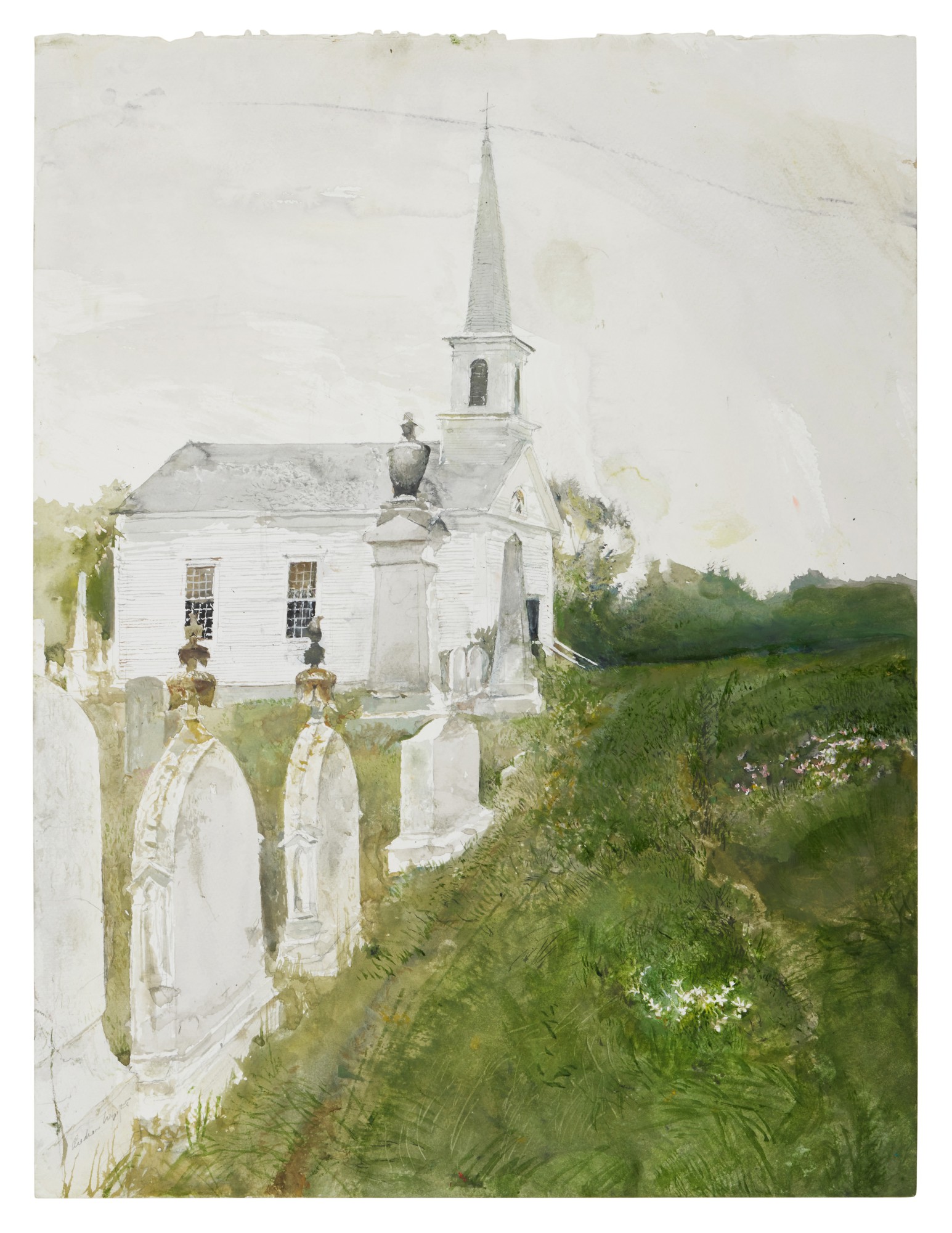
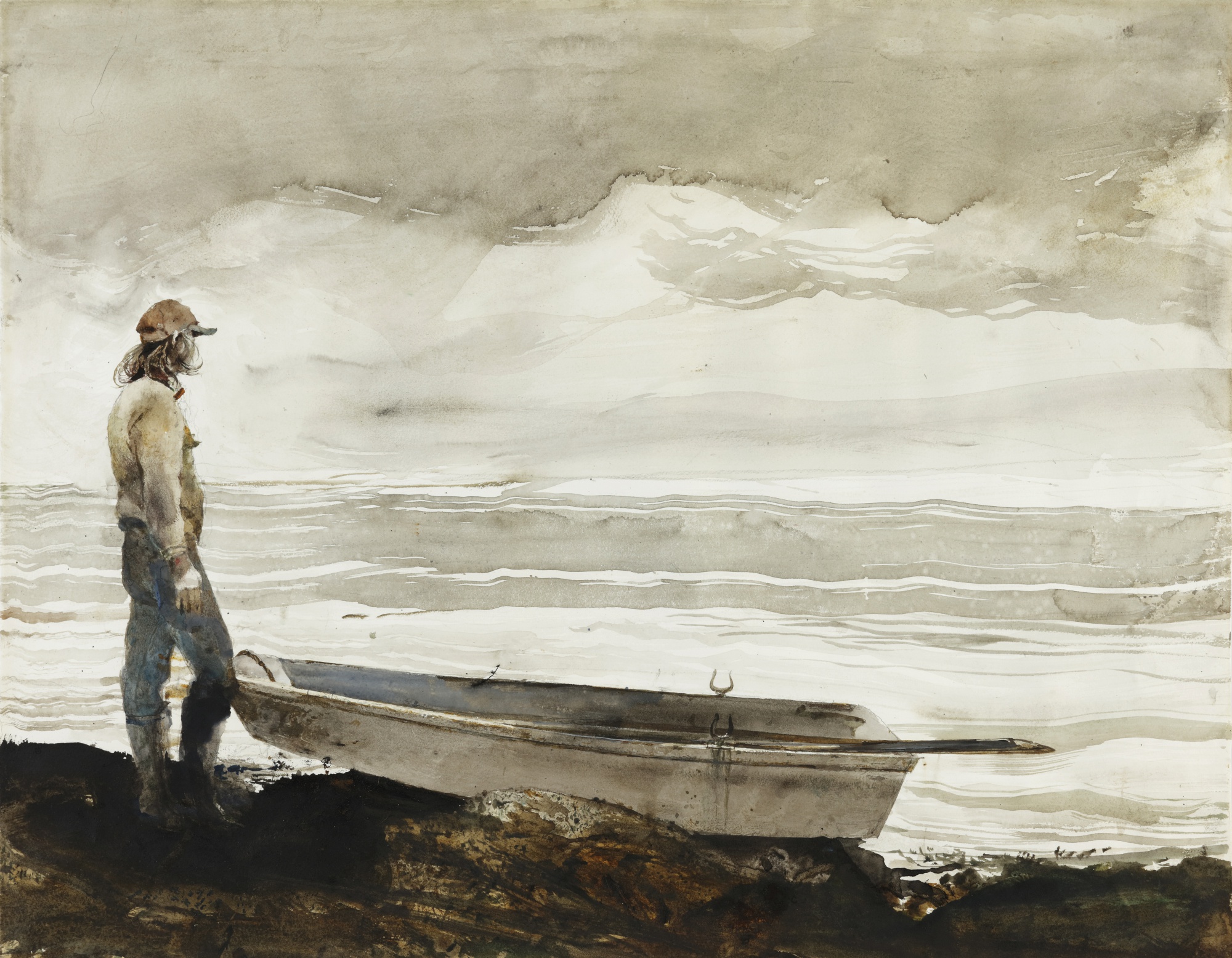
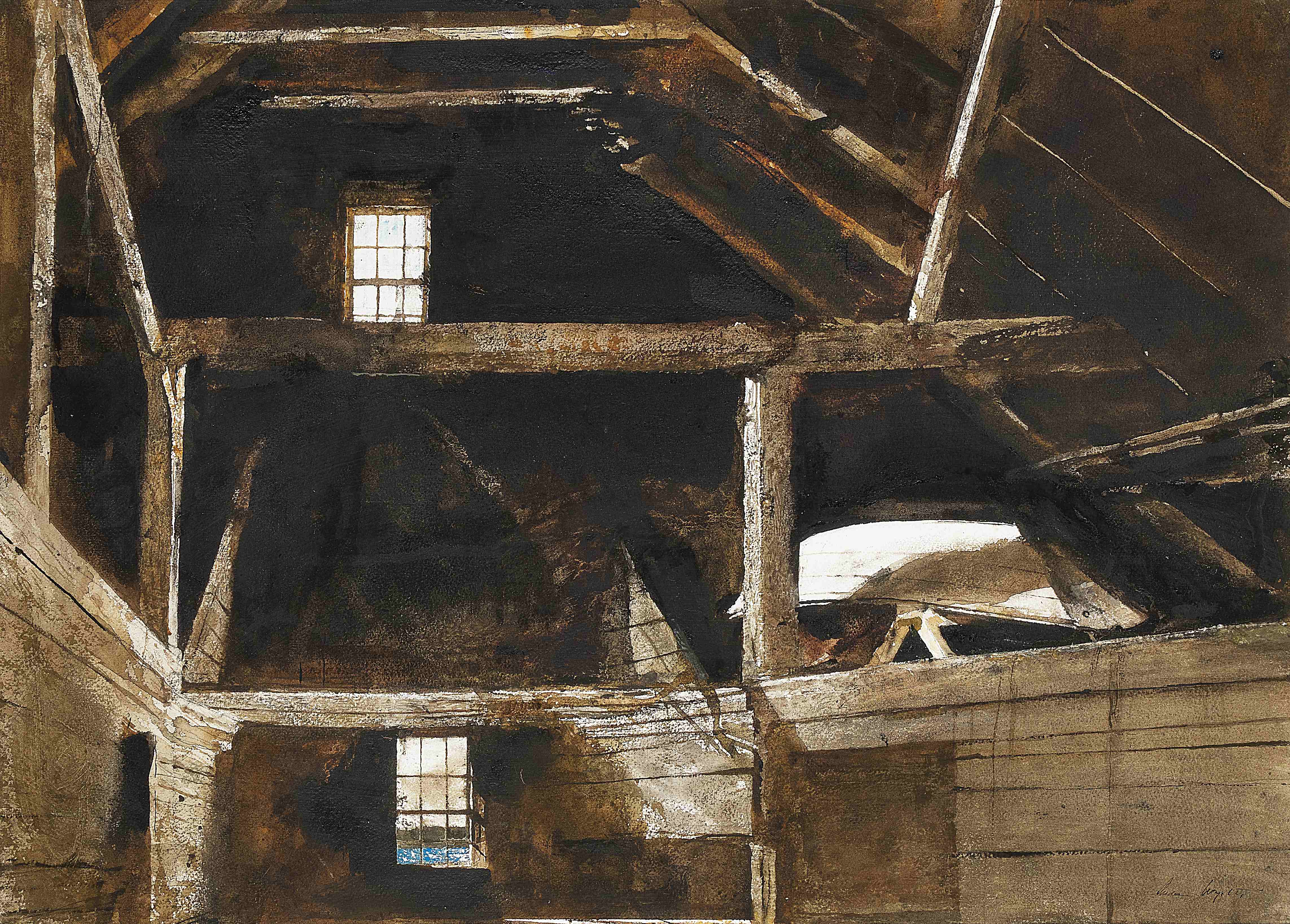
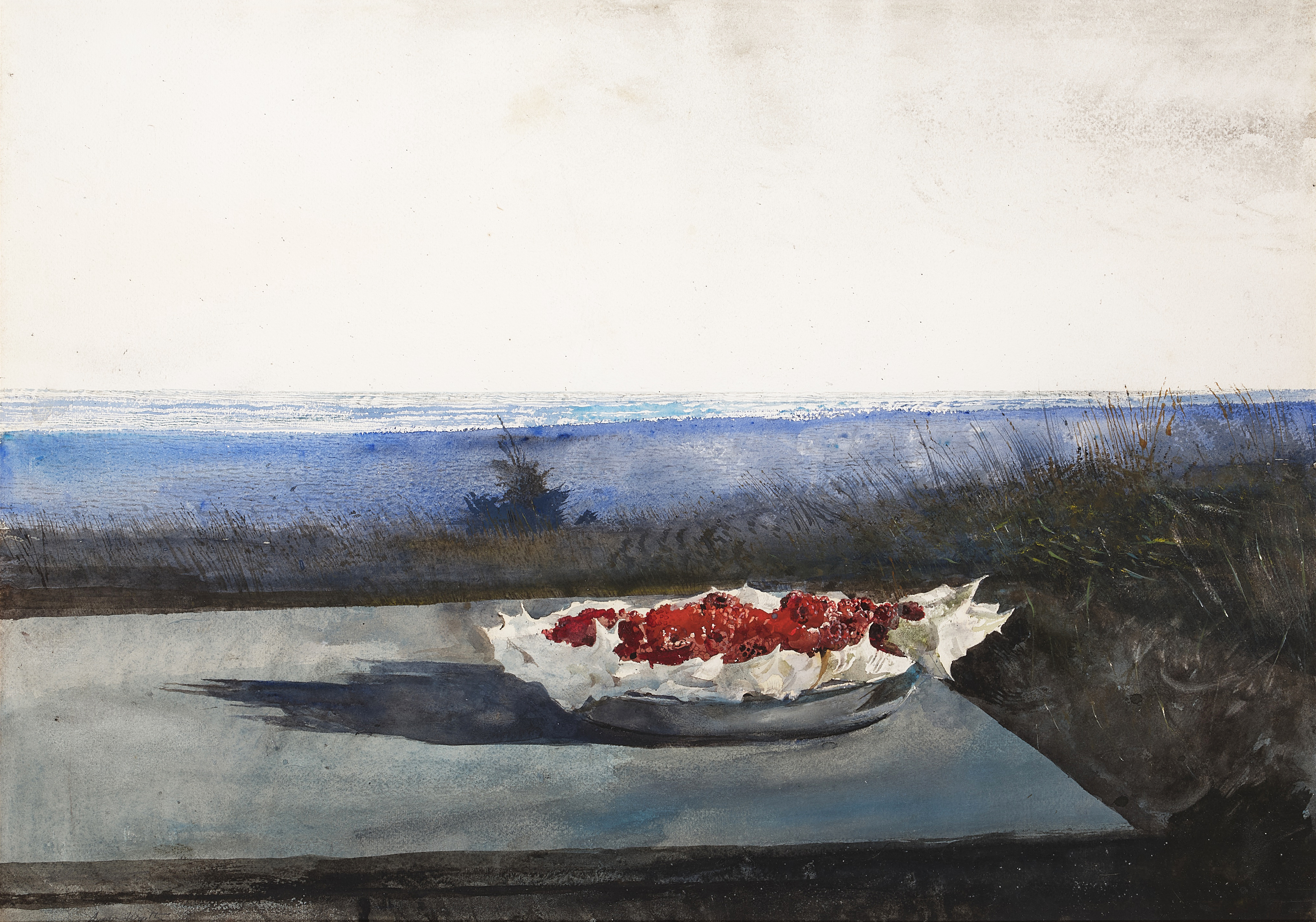
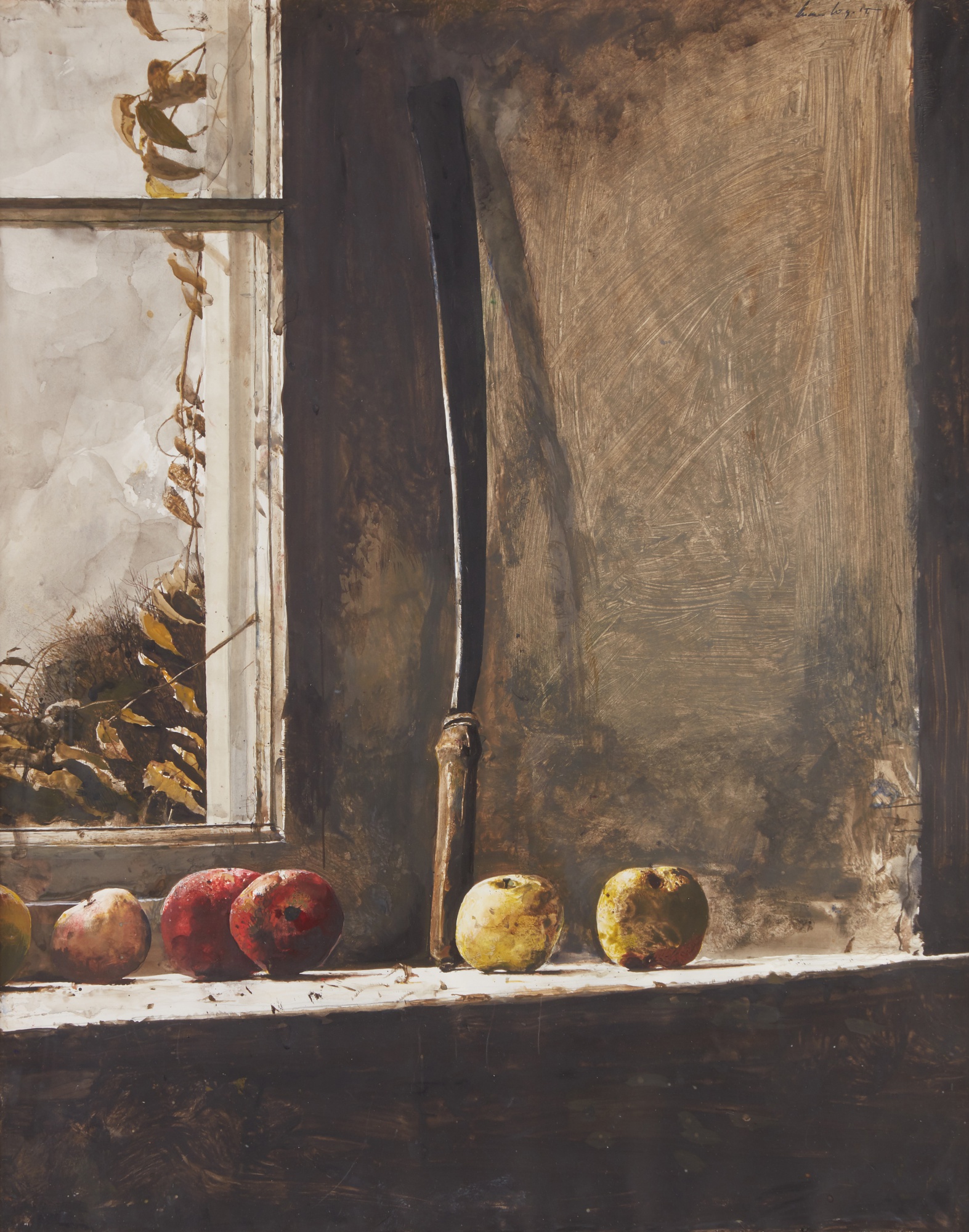
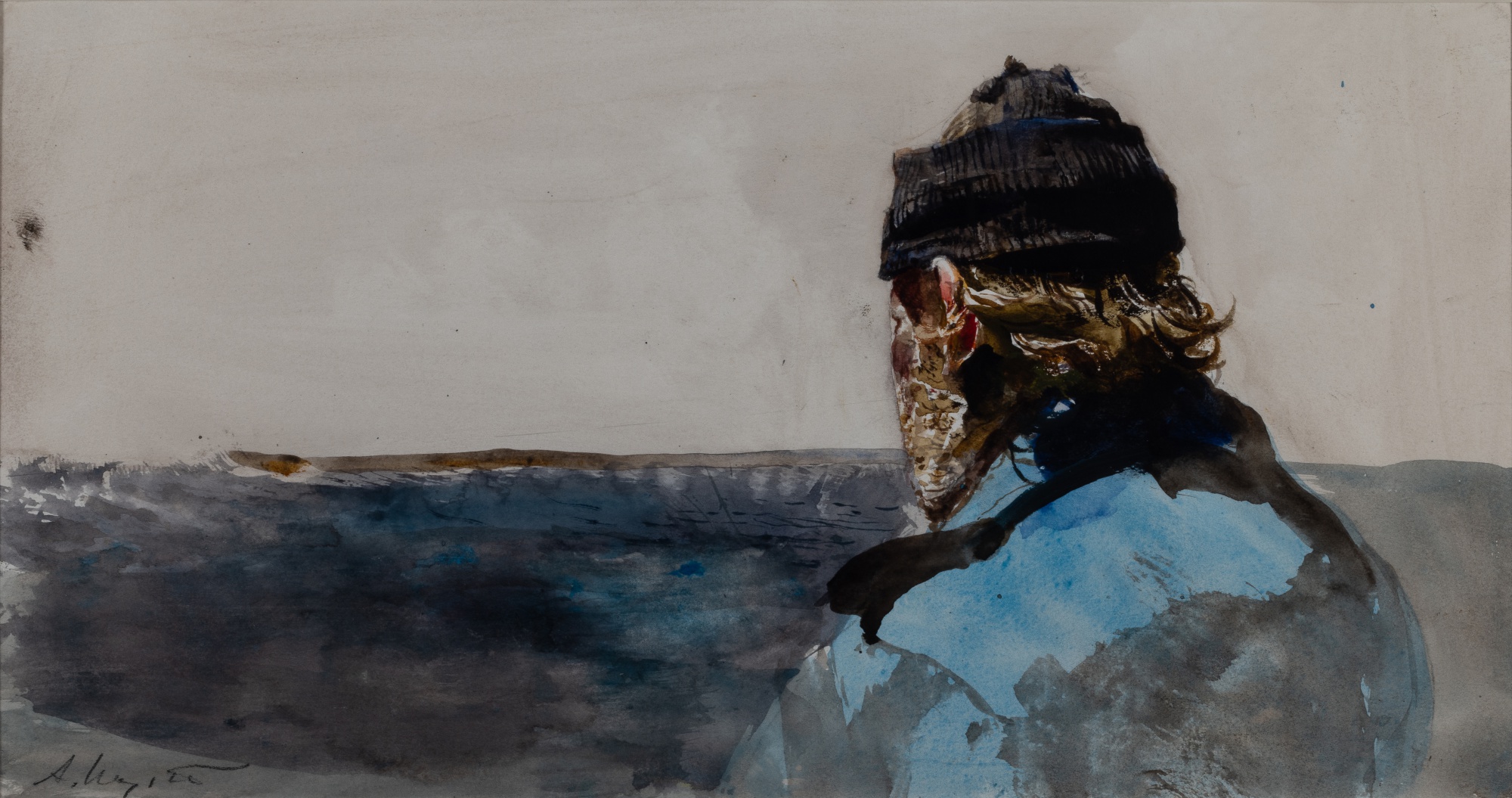
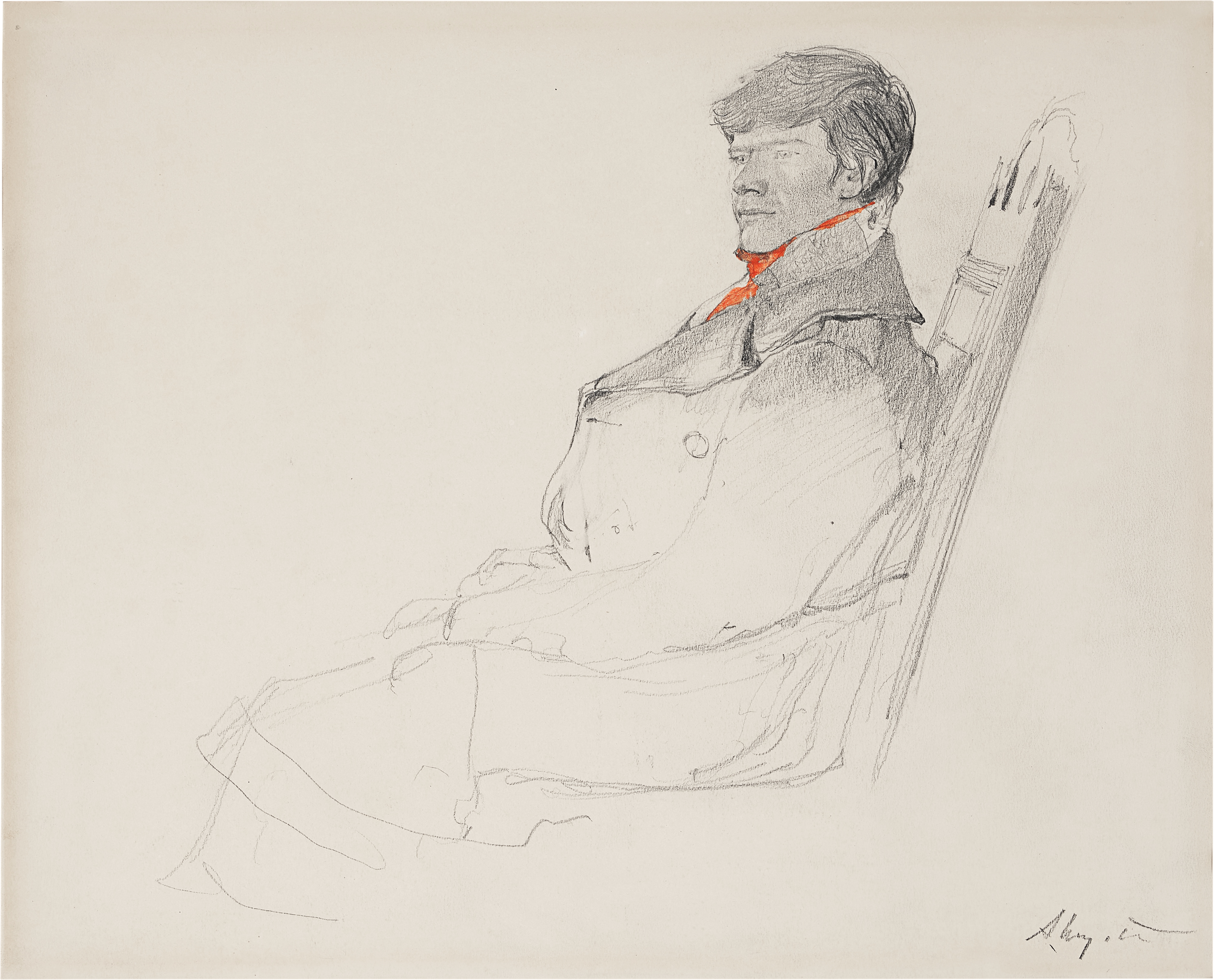
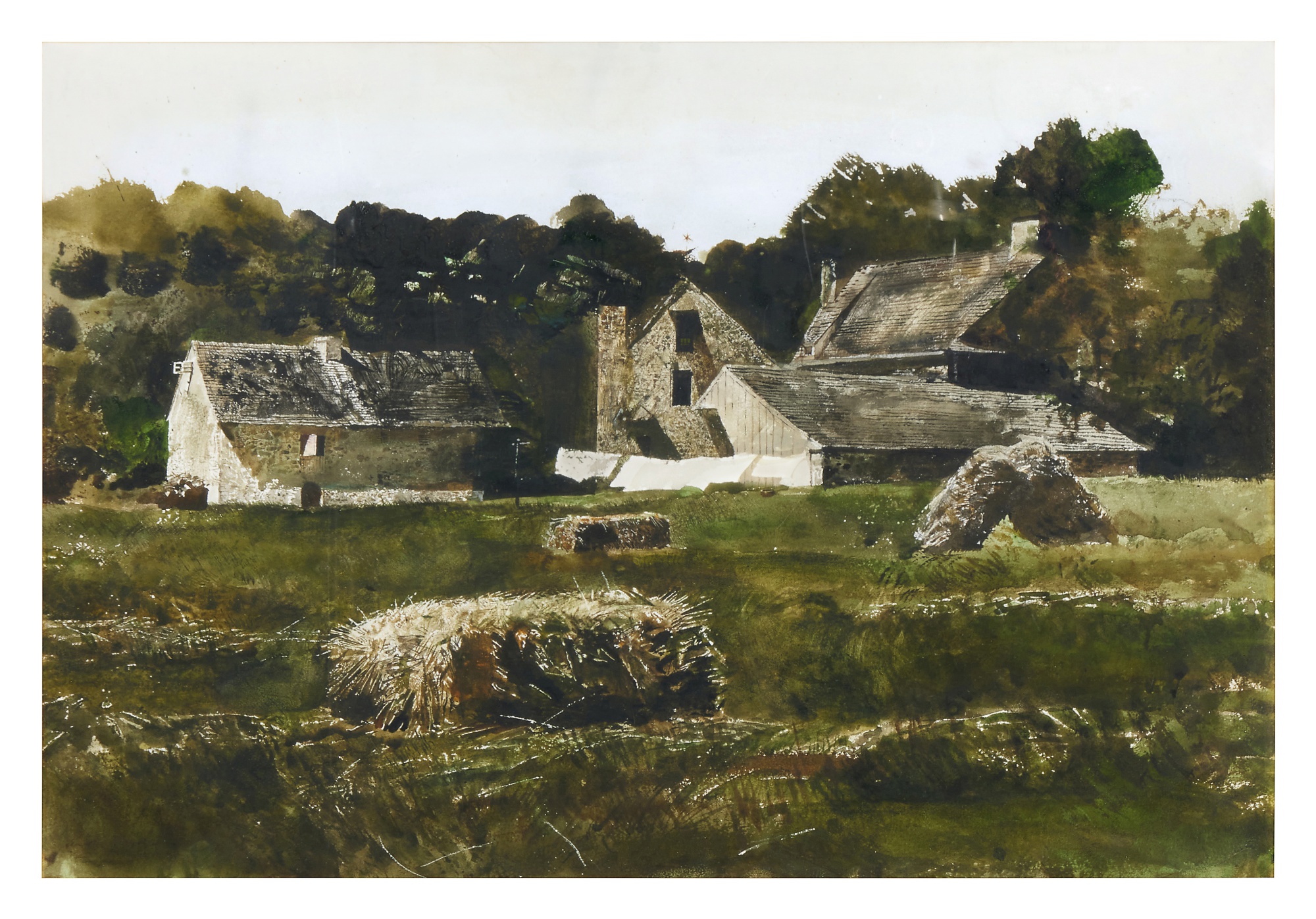
There is a moment that many visitors to the Philadelphia Museum of Art describe in hushed, almost reverent terms: standing before a Wyeth tempera and feeling, quite suddenly, that they have been somewhere before. Not a specific place, but an emotional geography, a quality of light falling across a hillside or a weathered door frame that feels like memory itself made visible. Andrew Wyeth, who lived from 1917 to 2009 and worked for nearly eight decades, possessed a singular gift for this kind of recognition. His paintings do not depict rural Pennsylvania and coastal Maine so much as they unlock something latent in the viewer, a longing for stillness, for honesty, for the world rendered with total attention. Wyeth was born in Chadds Ford, Pennsylvania in 1917, the youngest child of Newell Convers Wyeth, the celebrated illustrator whose dramatic canvases for Treasure Island and Robin Hood had made him one of the most recognizable visual storytellers in America. Growing up in that charged household, surrounded by creativity and high expectation, Andrew received no formal schooling. Instead, his father educated him at home and served as his sole artistic teacher, training his eye through rigorous drawing exercises and an insistence on technical mastery. The relationship between father and son was formative in every sense, intensely close, occasionally suffocating, and ultimately the crucible in which Wyeth's discipline and sensibility were forged. When N.C. Wyeth died in a railroad crossing accident in 1945, the loss reoriented his son's art permanently toward themes of absence, resilience, and the passage of time. The years immediately following that loss saw Wyeth consolidate the approach that would define him. He largely abandoned oil paint in favor of egg tempera, a demanding Renaissance medium that requires the artist to build form through thousands of tiny, deliberate strokes. The slow accumulation of marks suited his temperament and his subject matter perfectly. His watercolors, which he produced throughout his career with extraordinary freedom and fluency, served as a counterpoint to the tempera work, loose and immediate where the larger panels were dense and meditated. Works from the late 1940s and early 1950s show him arriving at full command of both modes. Beech Hill, a 1948 watercolor currently available through The Collection, captures a hillside in that cool, clear northern light he loved, the composition spare and the brushwork both spontaneous and absolutely sure. The work that brought Wyeth to national and international attention was Christina's World, completed in 1948 and acquired by the Museum of Modern Art in New York, where it has remained one of the most visited paintings in the collection. The image of a young woman lying in a field, her body angled toward a distant farmhouse, became an icon of postwar American culture, reproduced endlessly and debated at length. Christina Olson, who suffered from a degenerative muscular condition, was a neighbor and recurring subject in Maine, and the painting transformed the language of American realism into something genuinely haunting. Wyeth was only thirty one when he made it. The success of Christina's World also complicated his critical reception, as the painting's popularity made certain modernist critics dismissive of his broader achievement, an assessment that later generations of scholars have persuasively revised. The Helga Pictures, a series of more than two hundred and forty paintings and drawings made between 1971 and 1985 depicting his neighbor Helga Testorf, represented both a creative summit and a cultural sensation when they were revealed to the public in 1986. The works had been kept entirely secret, even from Wyeth's wife Betsy, and their unveiling generated extraordinary media attention and a touring exhibition that drew enormous crowds. Beyond the biographical drama, the series stands as one of the most sustained figurative projects in twentieth century American art, a meditation on the human form, on time, and on the particular quality of observation that sustained attention makes possible. Works from this decade, including pieces such as Bruce and His Punt from 1985, show him at the height of his powers in watercolor, the line between spontaneity and control dissolved entirely. For collectors, Wyeth occupies a position that is both secure and genuinely rewarding to explore. His auction record is substantial: major tempera works have achieved prices well into the millions, and even studies and smaller watercolors carry significant value given the depth of institutional and private demand. What distinguishes serious Wyeth collecting is the attention paid to his works on paper, which represent not peripheral production but a central strand of his practice. Watercolors such as Berry Picking from 1940 or the tender Early Spring from 1957 offer direct access to his thinking and his touch, the hand visible in every passage. Pencil studies, including the intimate Front Door Study from 1944, reveal the architectural precision underlying his seemingly effortless compositions. Collectors drawn to American modernism, to the broader tradition of American Regionalism associated with artists like Edward Hopper and Thomas Hart Benton, and to international realist movements frequently find Wyeth to be the most emotionally direct and technically rigorous point of entry. Within art history, Wyeth sits at a fascinating and slightly independent angle to the major movements of his era. He worked through the decades of Abstract Expressionism, Pop Art, and Minimalism without deflection, neither ignoring those movements nor accommodating them, simply continuing to look at the land and the people he knew with deepening concentration. His closest affinities are with the American Regionalists and with the Precisionist tradition as practiced by Charles Sheeler, though his emotional temperature is warmer and his attachment to human presence far stronger than Sheeler's. Internationally, he invites comparison with Lucian Freud in the intensity of his observational commitment and with the great Northern European realist traditions he absorbed through his father's encyclopedic visual education. Andrew Wyeth's legacy is, in the end, about fidelity. Fidelity to place, to the people who inhabit it, to the quality of light on a particular morning in a particular season. His paintings ask viewers to slow down, to look again, to find in the ordinary not consolation exactly but something more demanding and more sustaining: truth. As interest in representational painting continues to grow among younger collectors and curators, and as institutions from the Brandywine River Museum to the Whitney revisit his contribution with fresh eyes, Wyeth's position as one of the essential American artists of the twentieth century feels not merely secure but increasingly central. To hold one of his works is to hold a piece of a sustained and irreplaceable vision of American life.