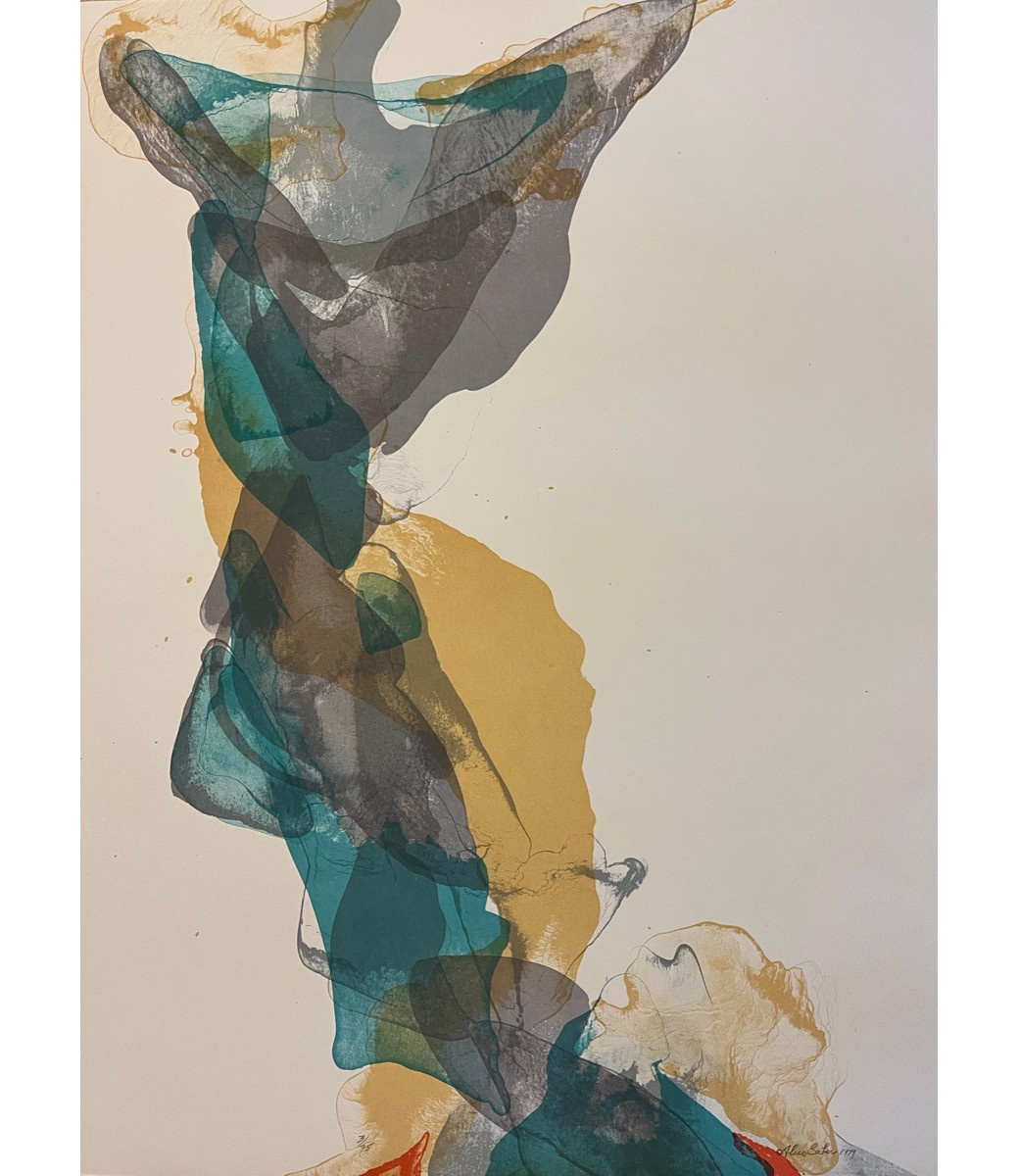
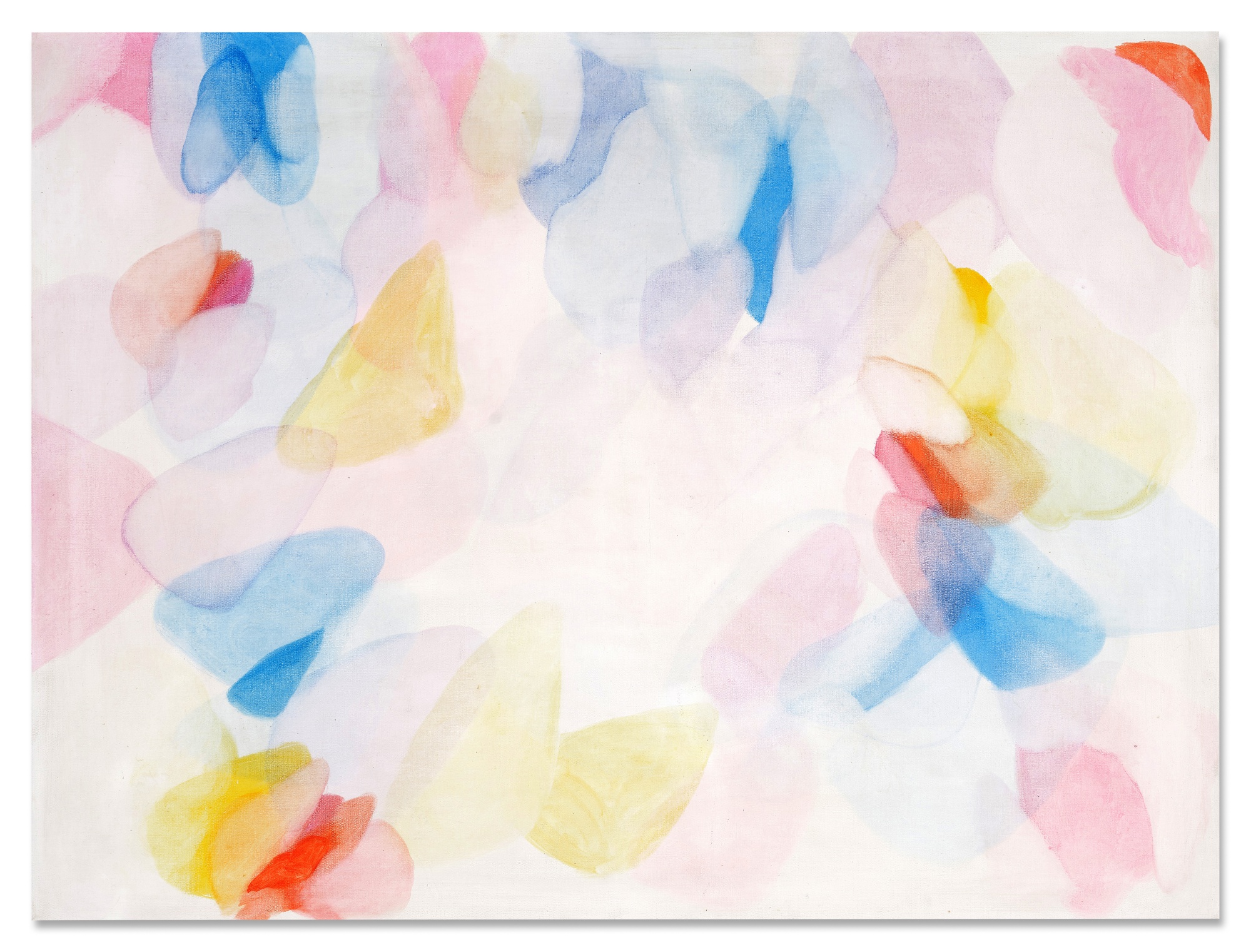
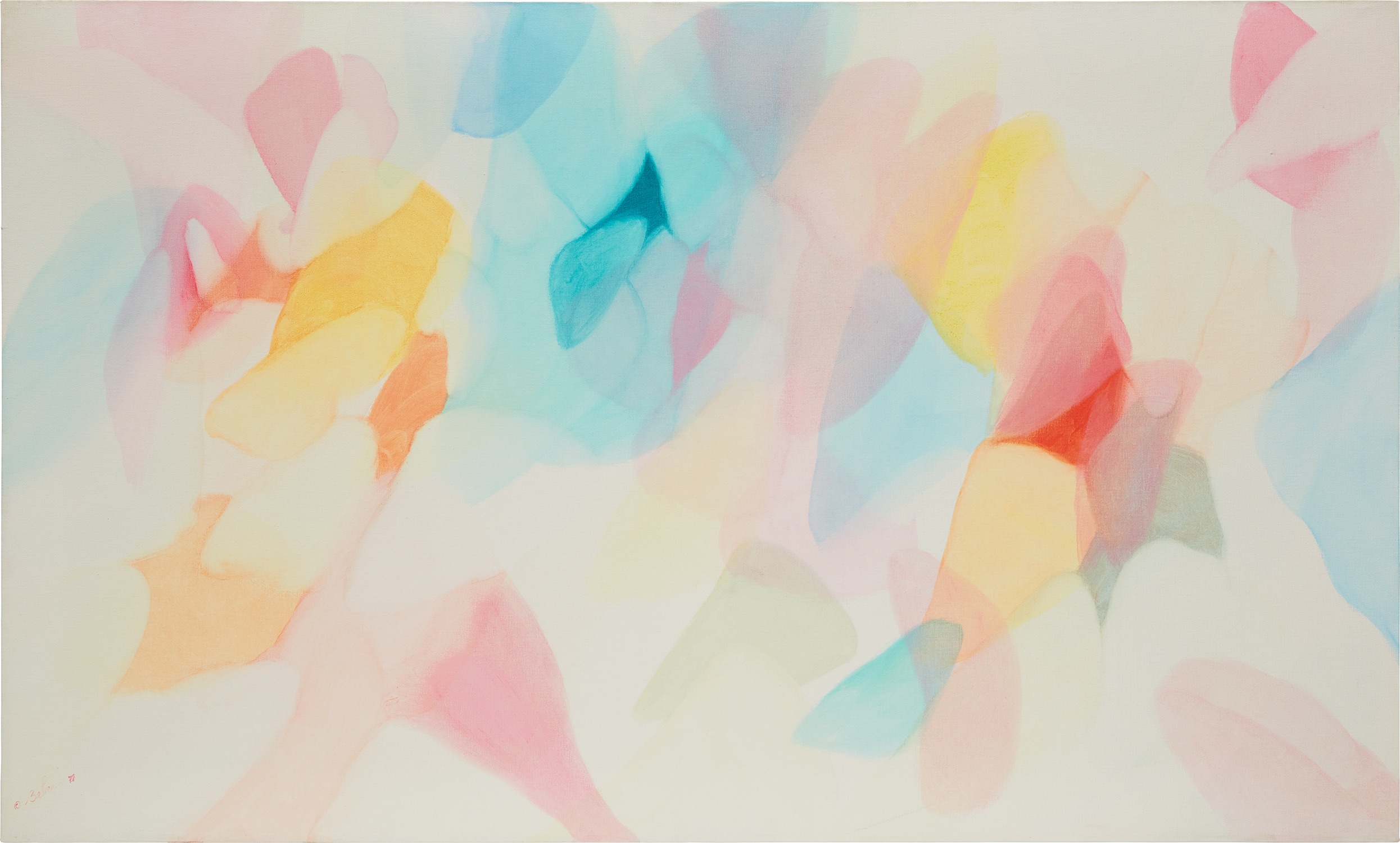
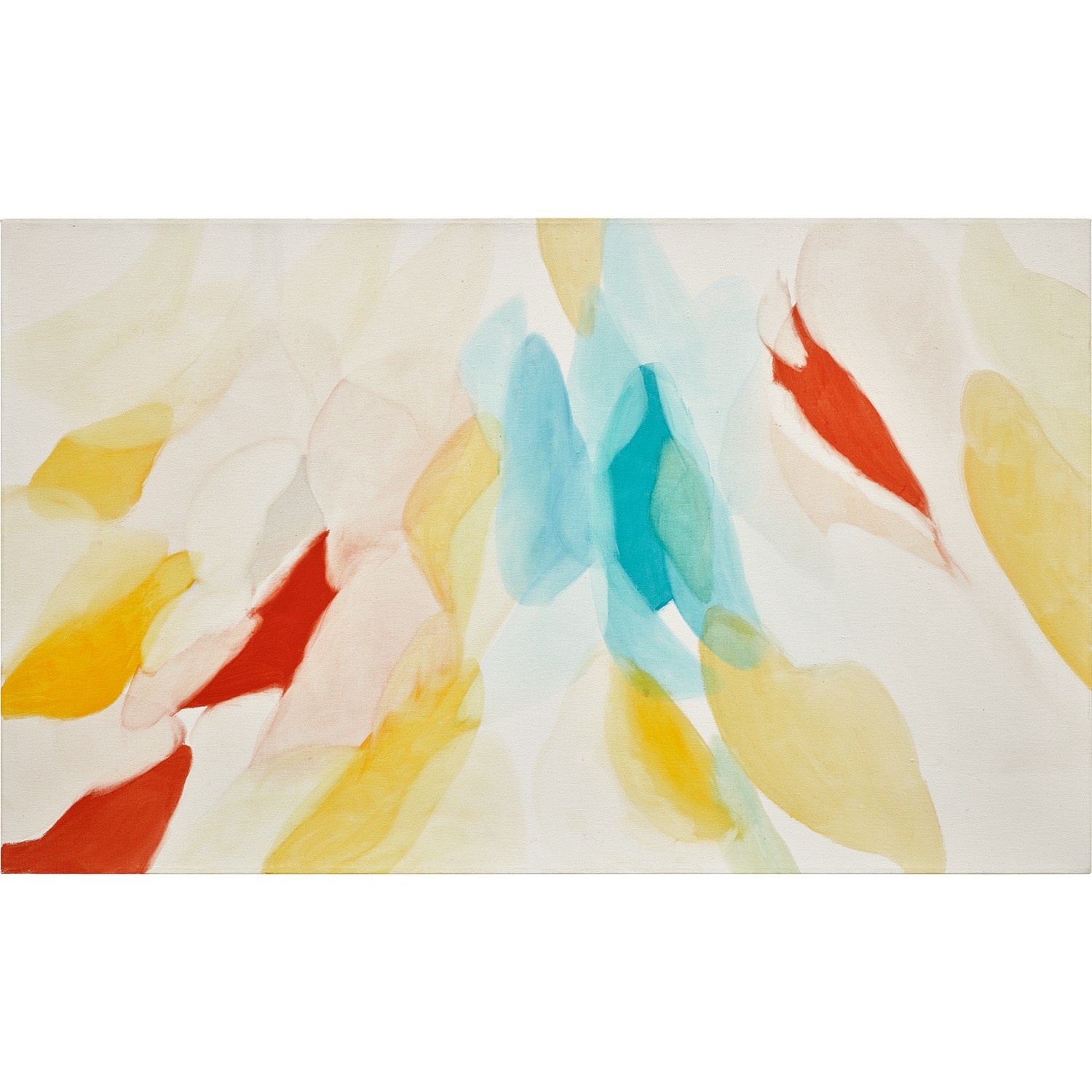
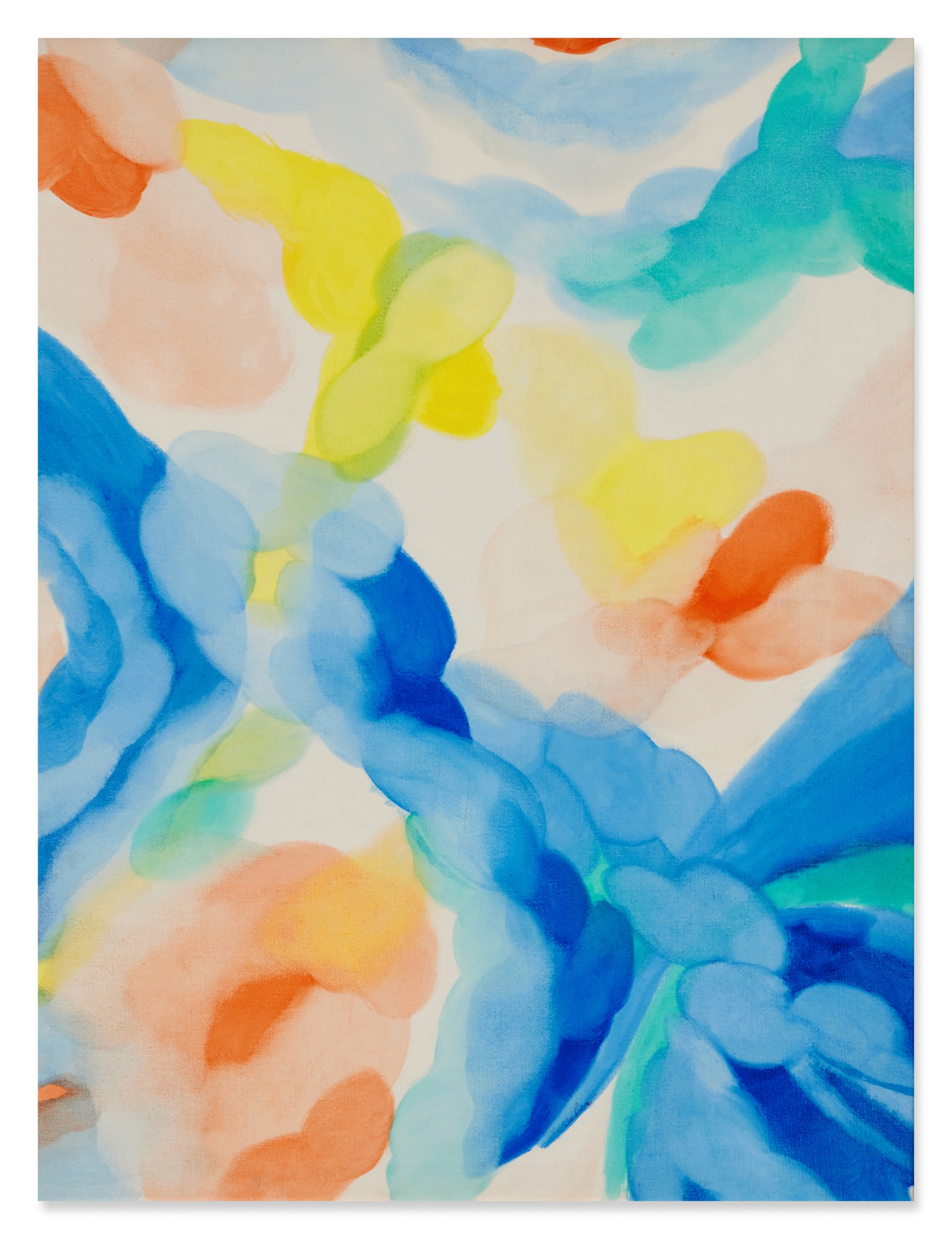
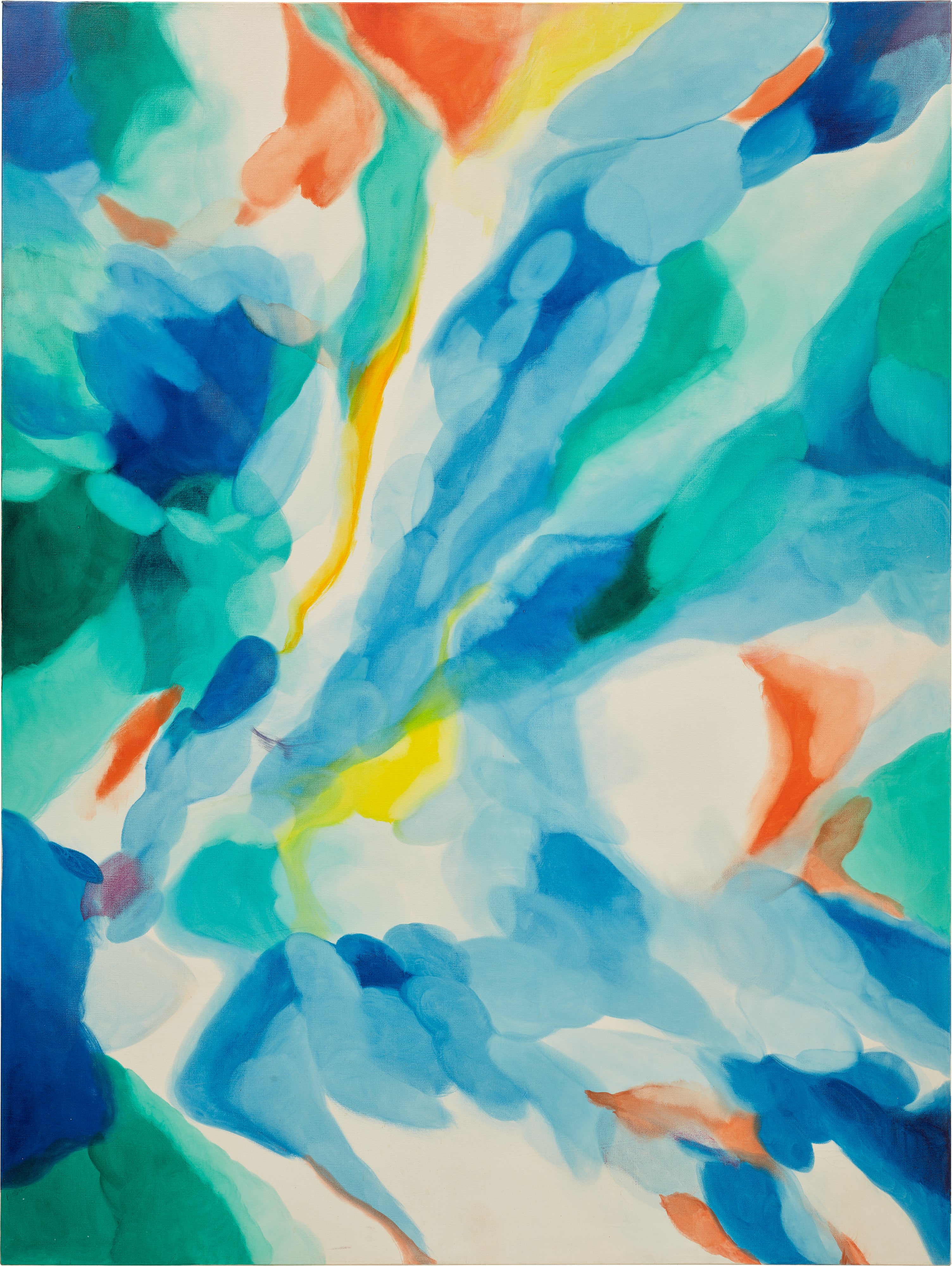
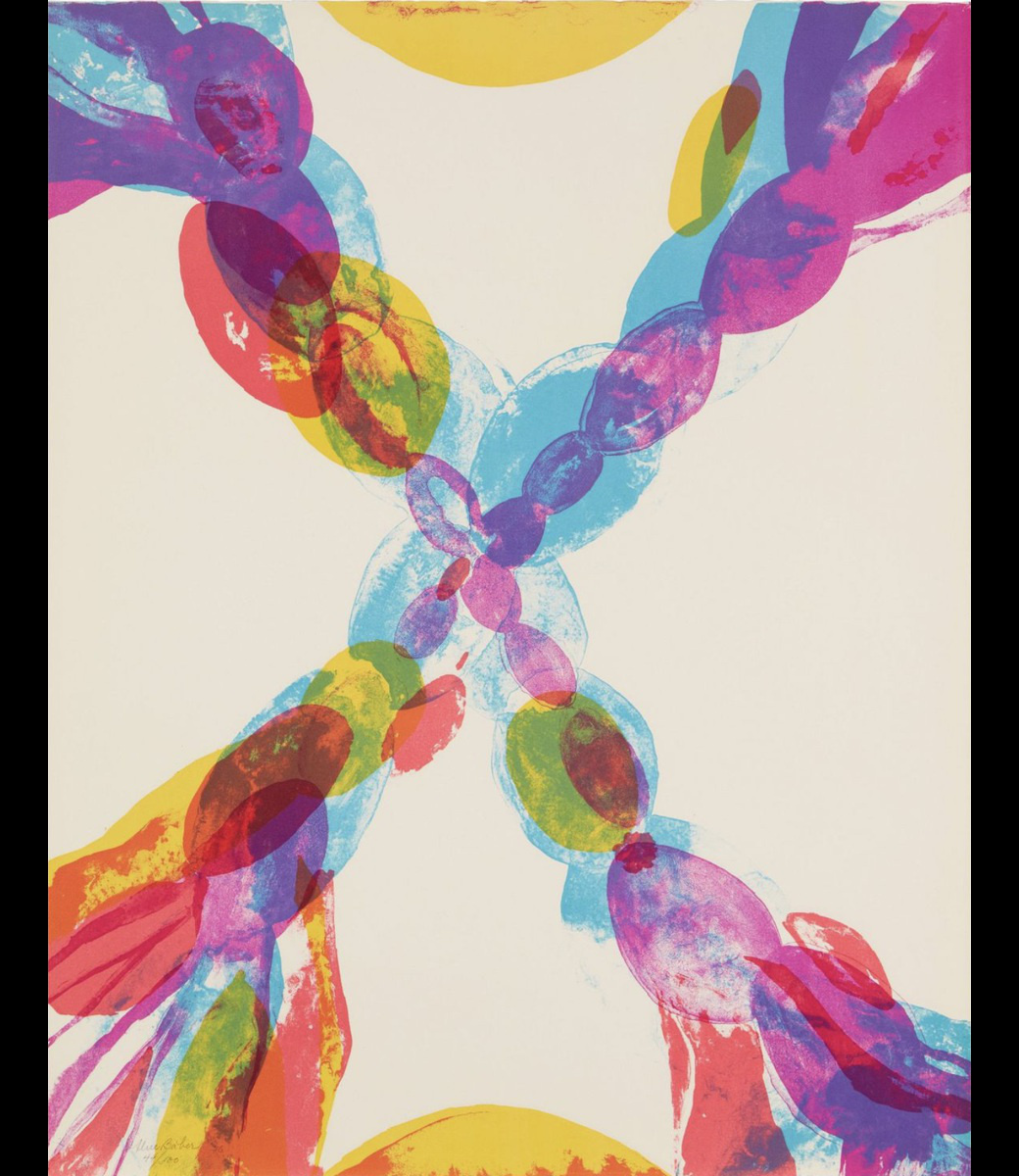
There are artists whose reputations grow quietly but insistently over decades, gathering force like light through water until their presence in a room becomes impossible to ignore. Alice Baber is one of them. In recent years, institutions and private collectors alike have been returning to her work with fresh attention, drawn by canvases that feel as urgently alive today as they did when she completed them in her New York and Paris studios during the 1960s and 1970s. Her paintings, with their radiant ellipses and translucent washes of color, speak a language of pure sensation that transcends their historical moment entirely. Baber was born in 1928 in Charleston, Illinois, and came of age in the American Midwest during a period when the center of gravity in world art was shifting dramatically toward New York. She pursued her education with genuine ambition, studying at Aurora College in Illinois before earning her degree from Southern Illinois University, and she immersed herself early in the intellectual and creative ferment that defined the postwar American art world. Her sensibility, however, was never parochial. From the beginning, Baber was oriented toward the wider world, and her career would ultimately unfold across multiple continents. The trajectory of her early professional life reflects a restlessness and curiosity that would define her practice. She made her way to New York and also spent formative periods in Paris, a city that left a clear impression on her feeling for light and atmospheric depth. She became fluent in the international discourse of abstraction at precisely the moment when Color Field painting was emerging as a major force, and she developed friendships and professional relationships across the New York and European art communities. Baber also co founded the literary and arts journal known as the Insect Trust Gazette, which positioned her as a connector and intellectual catalyst within the broader avant garde culture of her time. As a painter, Baber developed a signature vocabulary that set her apart even within the richly populated field of American abstraction. Where many Color Field painters favored flat, architecturally precise zones of pigment, Baber worked with extraordinary transparency and flow. Her characteristic elliptical forms seem to bloom outward from within the canvas, as though the light were emanating from a source deep inside the painting rather than reflecting off its surface. She worked extensively in oils as well as acrylics, and her command of both mediums allowed her to modulate between dense, saturated passages and areas of near weightless luminosity within a single composition. The result is a body of work that feels organic, breathing, and suffused with what can only be described as joy. Among the works that best represent her achievement, "The Light Center of the Pink Mountain" from 1977 stands as a particularly affecting example. The painting radiates a warmth that is almost physical, its central mass of rose and amber light expanding outward through veils of softer, cooler tone. "The Green Day of the Jaguar" from 1976 demonstrates her gift for giving color a kind of animal vitality, while "Dervish Ladder and Tree" from 1974 reveals her interest in vertical movement and the tension between earthbound form and aerial openness. The ladder motif, which recurs across multiple works including "Ladder over and under" from 1972 and "Red Song of the Ladder" from 1976, functions almost as a spiritual metaphor, a form of ascent rendered in pure pigment and light. Her printmaking, including lithographs such as "The Shadow of the Mountain Becomes the Light" from 1979, extends this visual poetry into works on paper that collectors have increasingly come to prize. For collectors, Baber's work represents a genuinely compelling proposition on multiple fronts. Her canvases occupy a distinct and identifiable position within the history of American abstraction, neighboring but never derivative of figures like Helen Frankenthaler, Morris Louis, and Sam Gilliam, artists who similarly explored the expressive potential of color freed from rigid geometric constraint. At the same time, Baber's work retains a lyricism and personal warmth that distinguishes it clearly from those references. She exhibited widely during her lifetime at significant venues in New York, Paris, and Tokyo, which means her work entered collections internationally and carries a genuinely global provenance history. Collectors drawn to mid century American abstraction with a poetic and humanist character will find in Baber a painter whose best works can hold their own in the most serious company. Baber's place in art history is one that scholars and curators have been actively reconsidering, partly as part of the broader reassessment of women artists who were central to the New York and international art scenes of the postwar decades but who did not always receive the institutional recognition their male contemporaries enjoyed in real time. Artists such as Frankenthaler, Joan Mitchell, and Lee Krasner offer useful points of comparison, as each navigated the overlapping worlds of Abstract Expressionism and Color Field painting while developing practices of profound individual character. Baber belongs in this company without qualification. Her engagement with Asian aesthetics, visible in her exhibitions in Tokyo and in the luminous spatial quality of her canvases, adds another dimension to her work that gives it an unusual breadth of cultural reference. Alice Baber died in 1982, leaving a body of work that was, by any measure, both substantial and fully realized. She was only 54 years old, and it is impossible not to wonder what the decades that followed might have brought. What she did leave behind is a legacy of paintings and prints that continue to reward looking, that continue to give back more than they initially appear to offer. In an art world that moves at extraordinary speed and sometimes favors the loud and the spectacular, Baber's work asks for quiet attention and rewards it abundantly. To live with one of her canvases is to live with something genuinely luminous, a sustained and generous act of color that illuminates whatever room it inhabits.