Stainless Steel
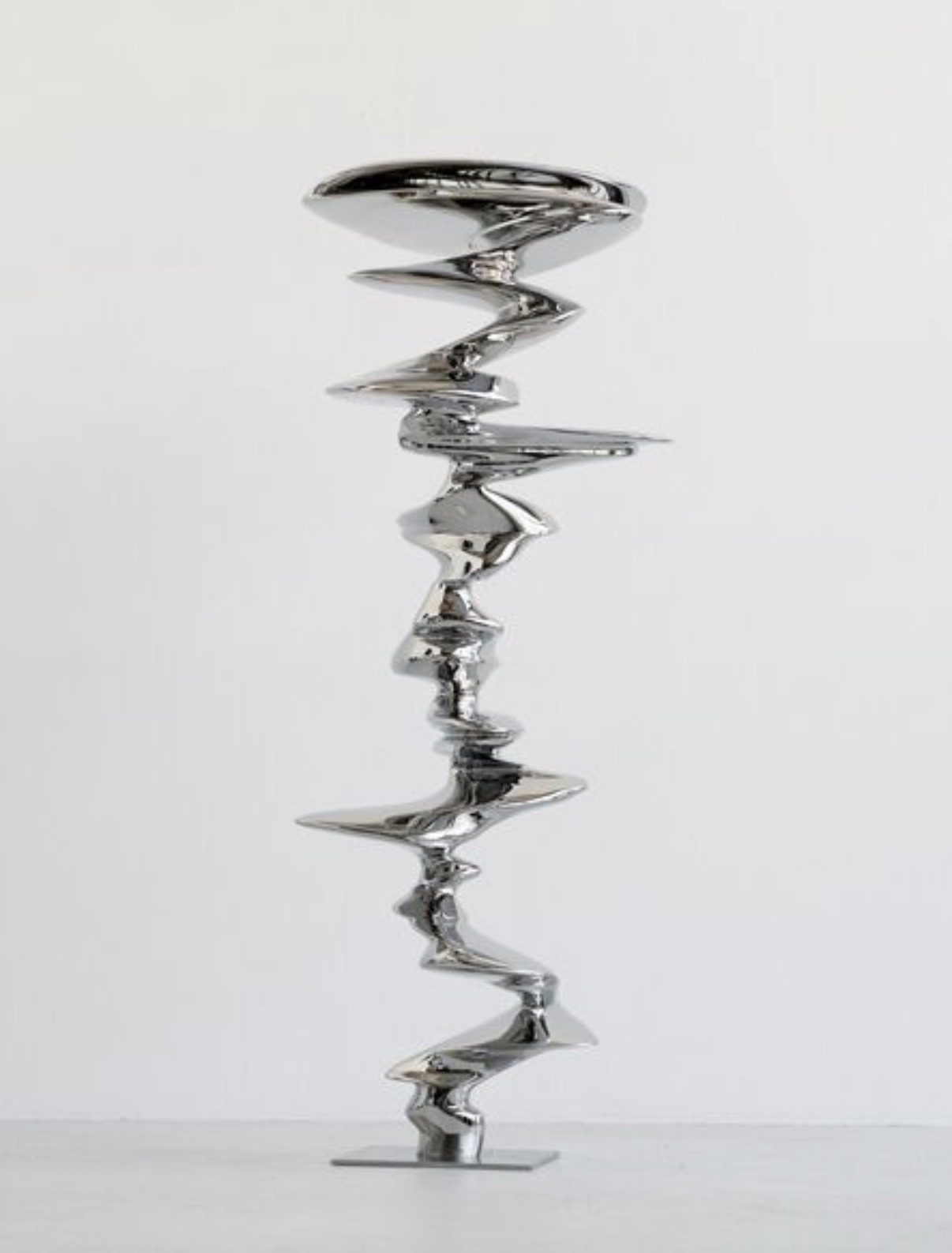
Tony Cragg
Elliptical Column, 2019


The Mirror That Changed Everything
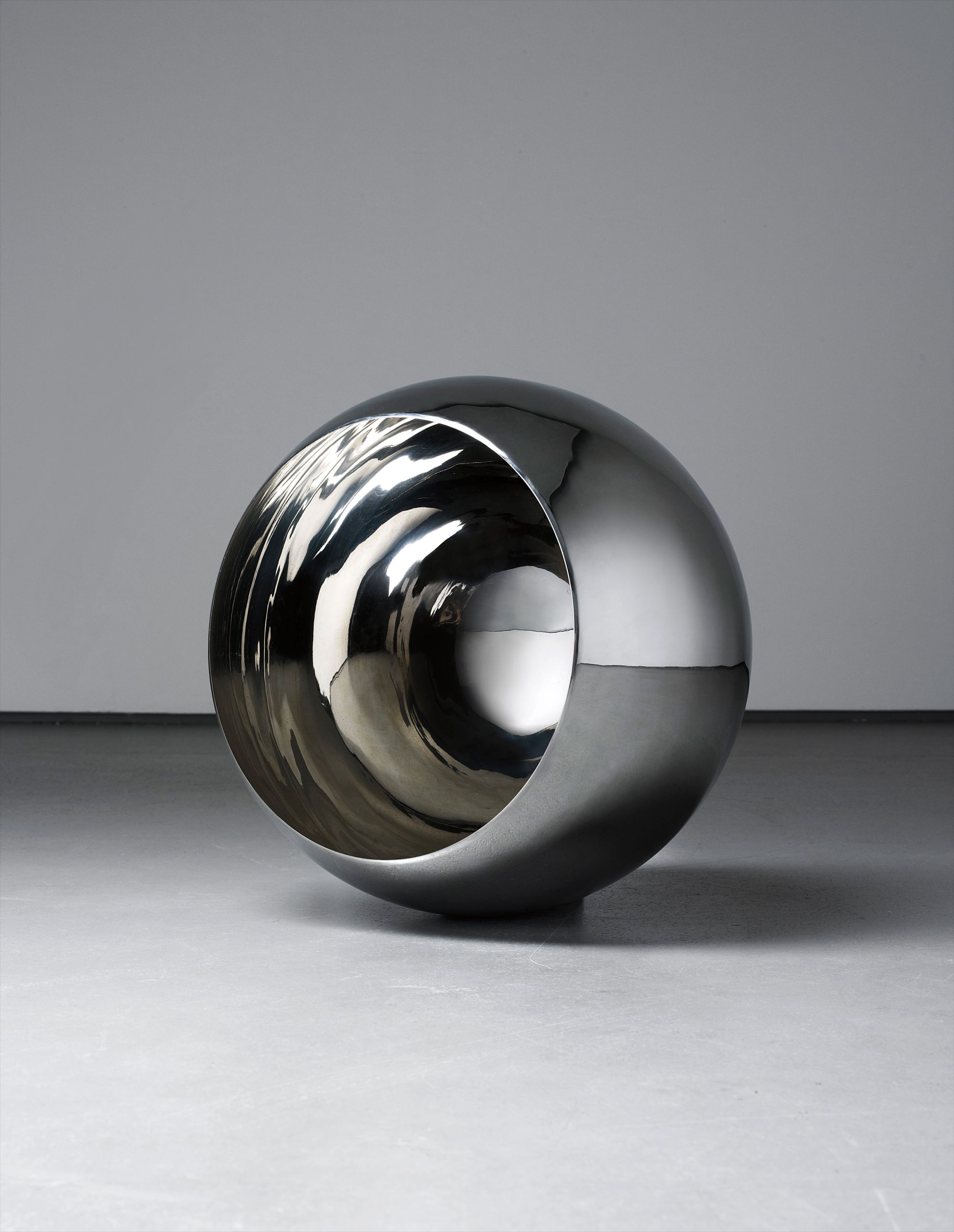
There is something almost confrontational about stainless steel. It gives back what you bring to it. Stand before a polished surface and you are suddenly part of the composition, your reflection warped or clarified depending on the artist's intention. This quality, at once democratic and disorienting, has made the material one of the defining mediums of modern and contemporary art, a surface that refuses to be passive and insists on a relationship with the viewer that no other material quite replicates.
The story of stainless steel in art begins, in practical terms, in the early twentieth century, when the alloy itself was first developed. Patented in various forms around 1913, the material was celebrated for its resistance to corrosion and its industrial strength. Sculptors were slow to adopt it at first, given its resistance to traditional working methods, but by the postwar period a handful of artists had recognized that its cold luminosity carried something beyond the merely functional. It looked like the future.
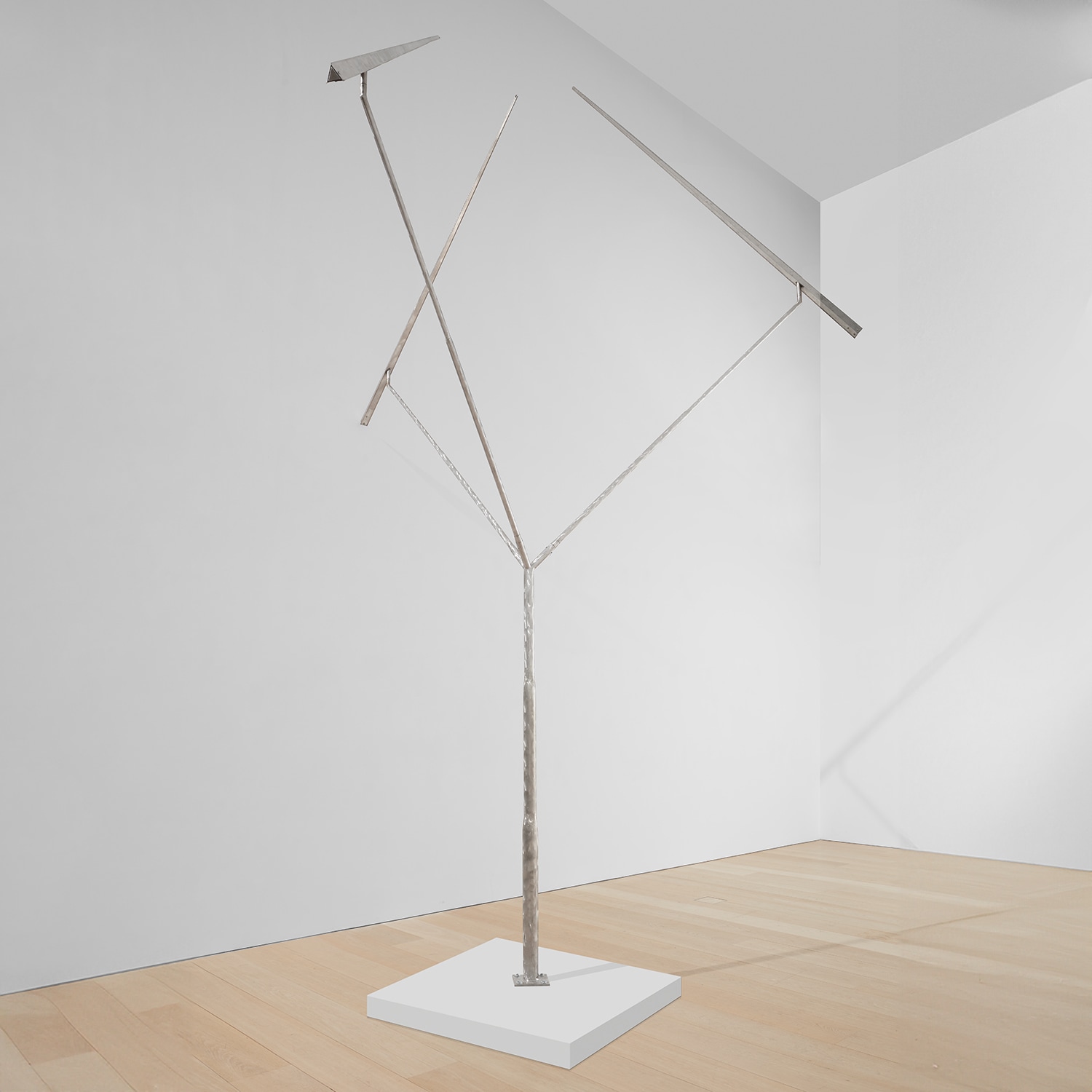
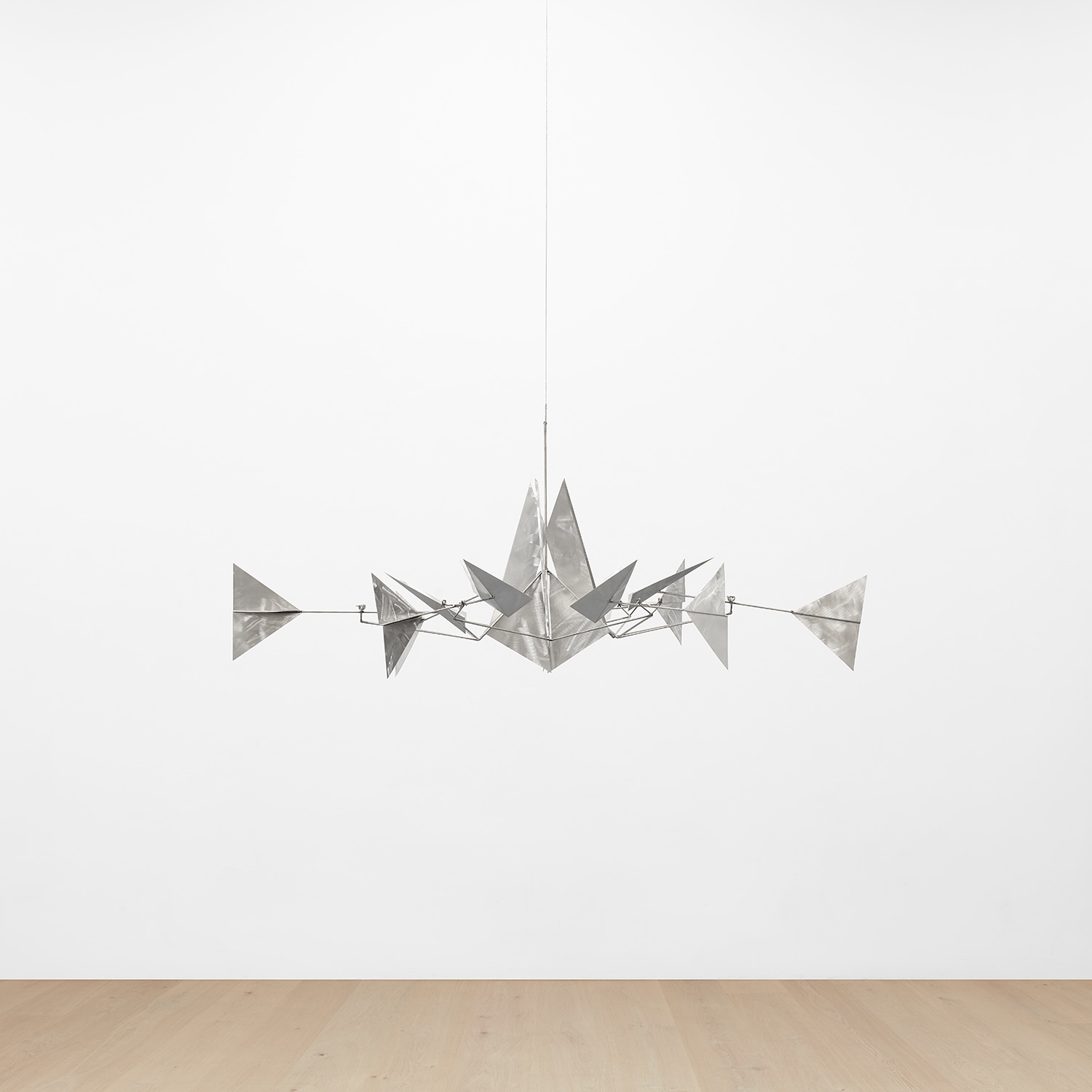
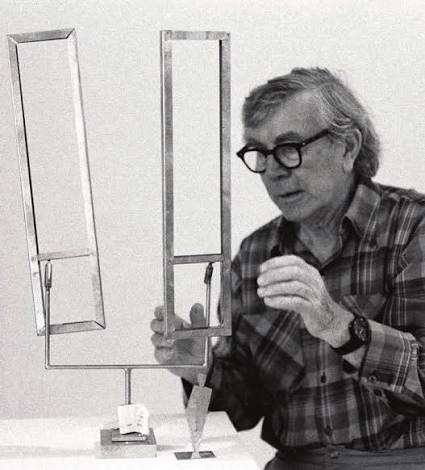
George Rickey
Three Oblique Lines Conical Path III, 1991
It felt like it too. George Rickey was among the first to understand what kinetic sculpture could become in stainless steel. From the 1950s onward, Rickey developed a practice built around precision fabrication and the physics of balance, creating works whose blades and planes caught light and wind simultaneously. His pieces, well represented on The Collection, move with an almost biological intelligence, responding to atmospheric conditions with a sensitivity that feels improbable given the rigidity of the material.
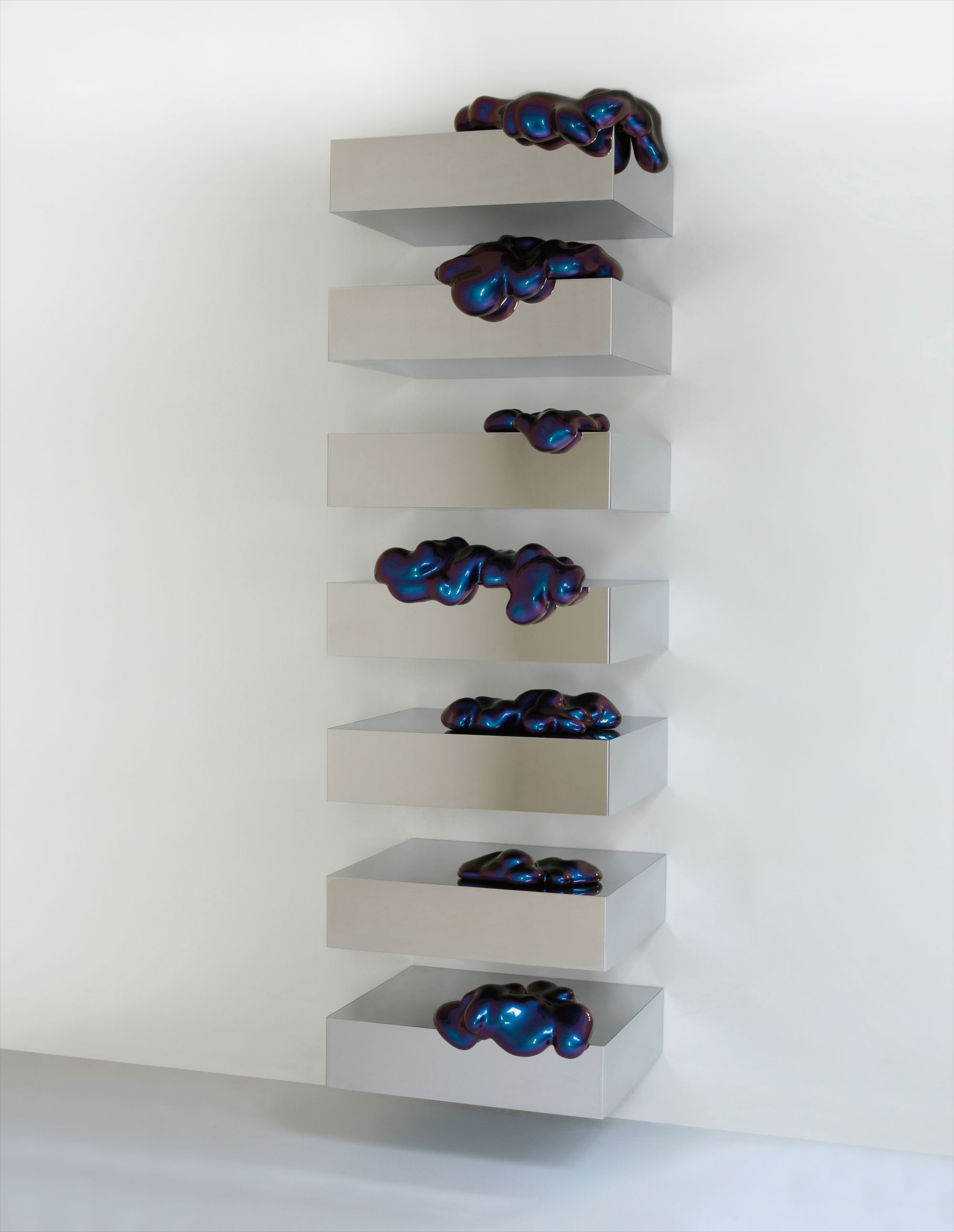
Rickey was trained in art history before he became a sculptor, and that intellectual grounding gave his work a conceptual seriousness that distinguished it from mere mechanical spectacle. Nicolas Schöffer was working in a parallel register in Europe during the same period, fusing cybernetics and kinetic art into sculptural environments that used reflective metals to stage an encounter between the viewer, the machine, and the surrounding space. By the 1960s, Minimalism had transformed the conversation entirely. Donald Judd's use of industrial steel and later of commercially fabricated stainless surfaces brought the material into the gallery as a statement about the nature of objects themselves.
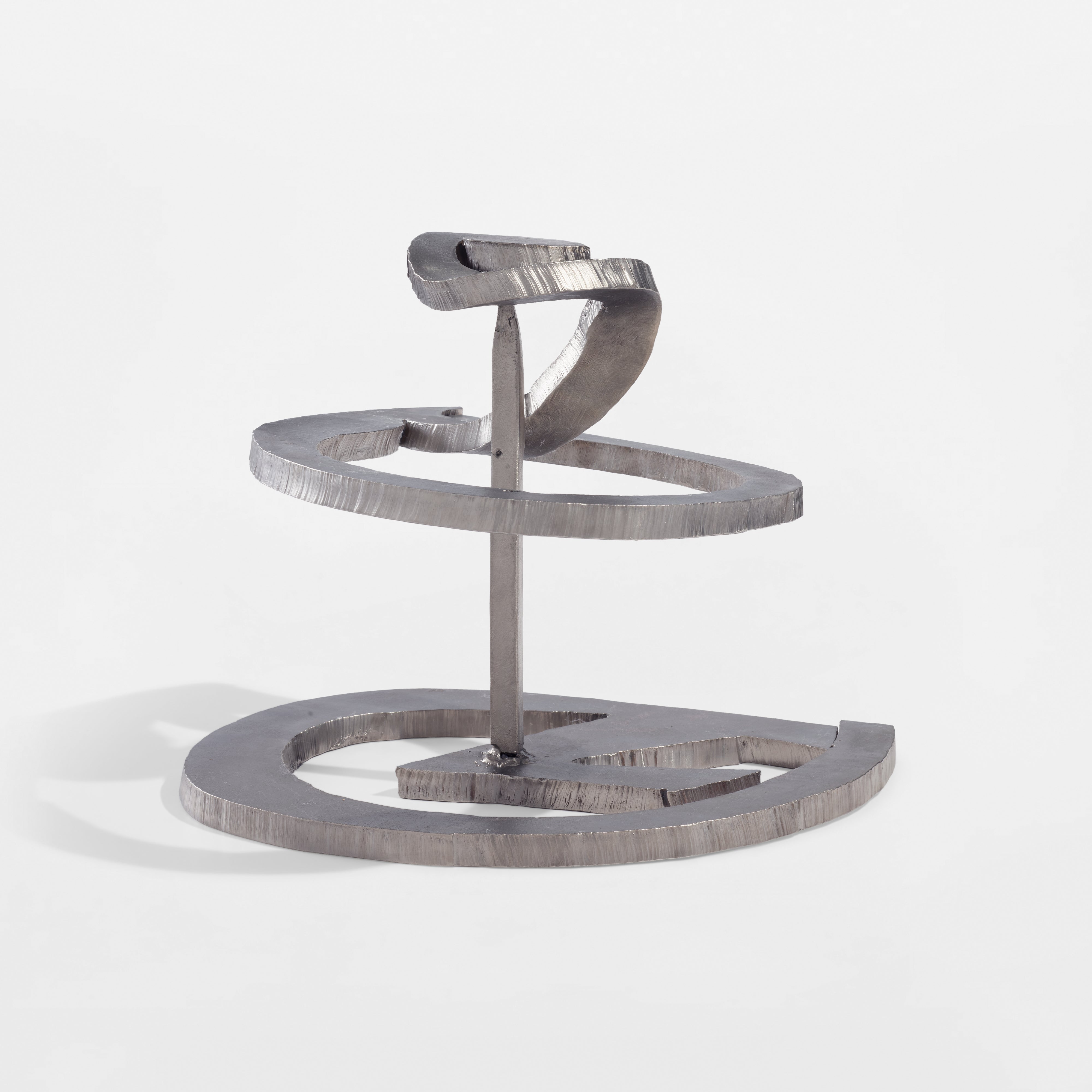
Mark di Suvero
Untitled, 1995
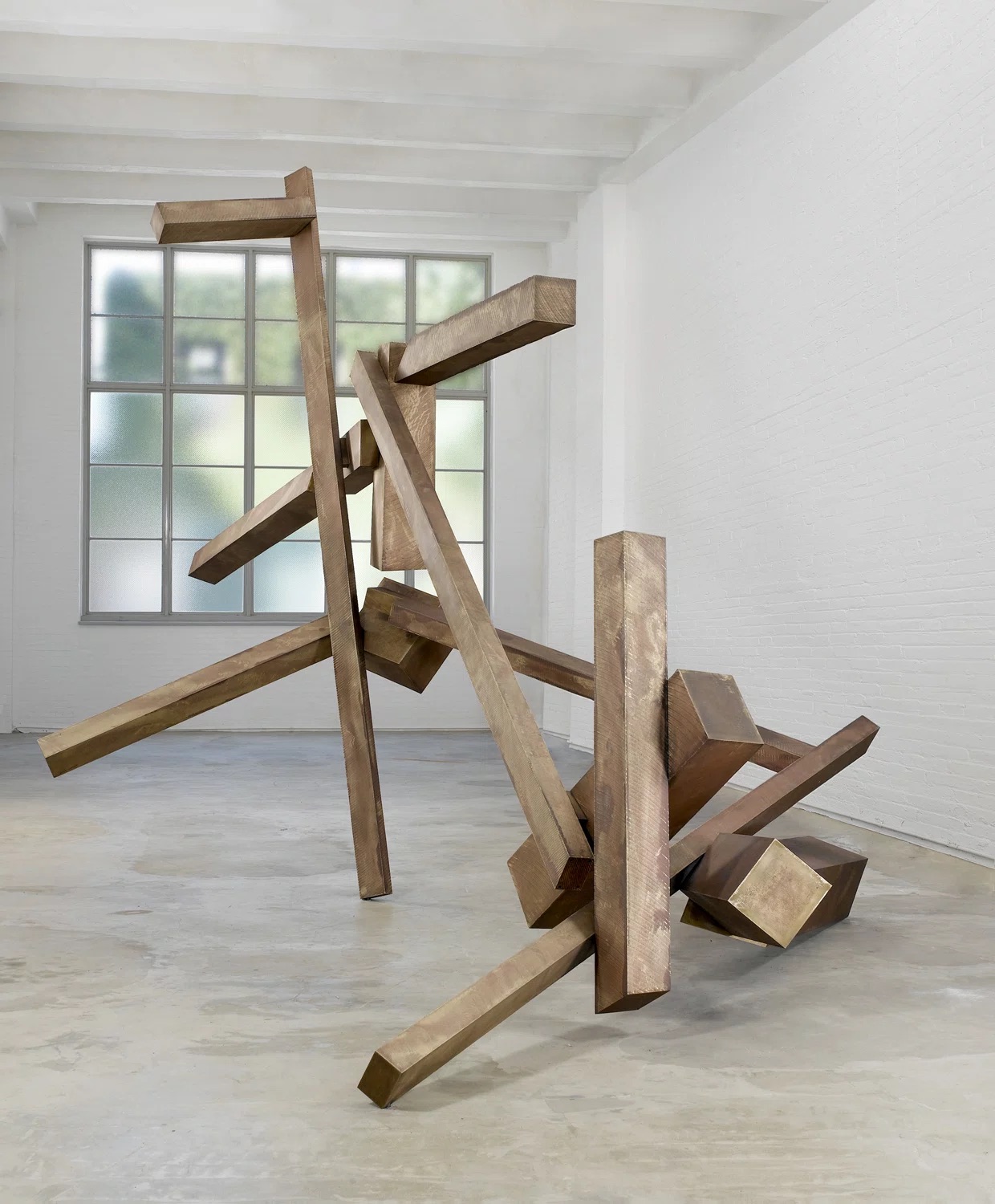
Judd was not interested in the handmade mark. He wanted his works to exist in the world as things among things, their presence undeniable and their surfaces uncompromising. The logic was rigorous and cold, but it opened the door to an entirely new relationship between sculpture and its environment. Mark di Suvero took a different approach, combining raw structural steel with a gestural energy that echoed Abstract Expressionism without the painterly sentiment, building works at an architectural scale that occupied public space with muscular authority.
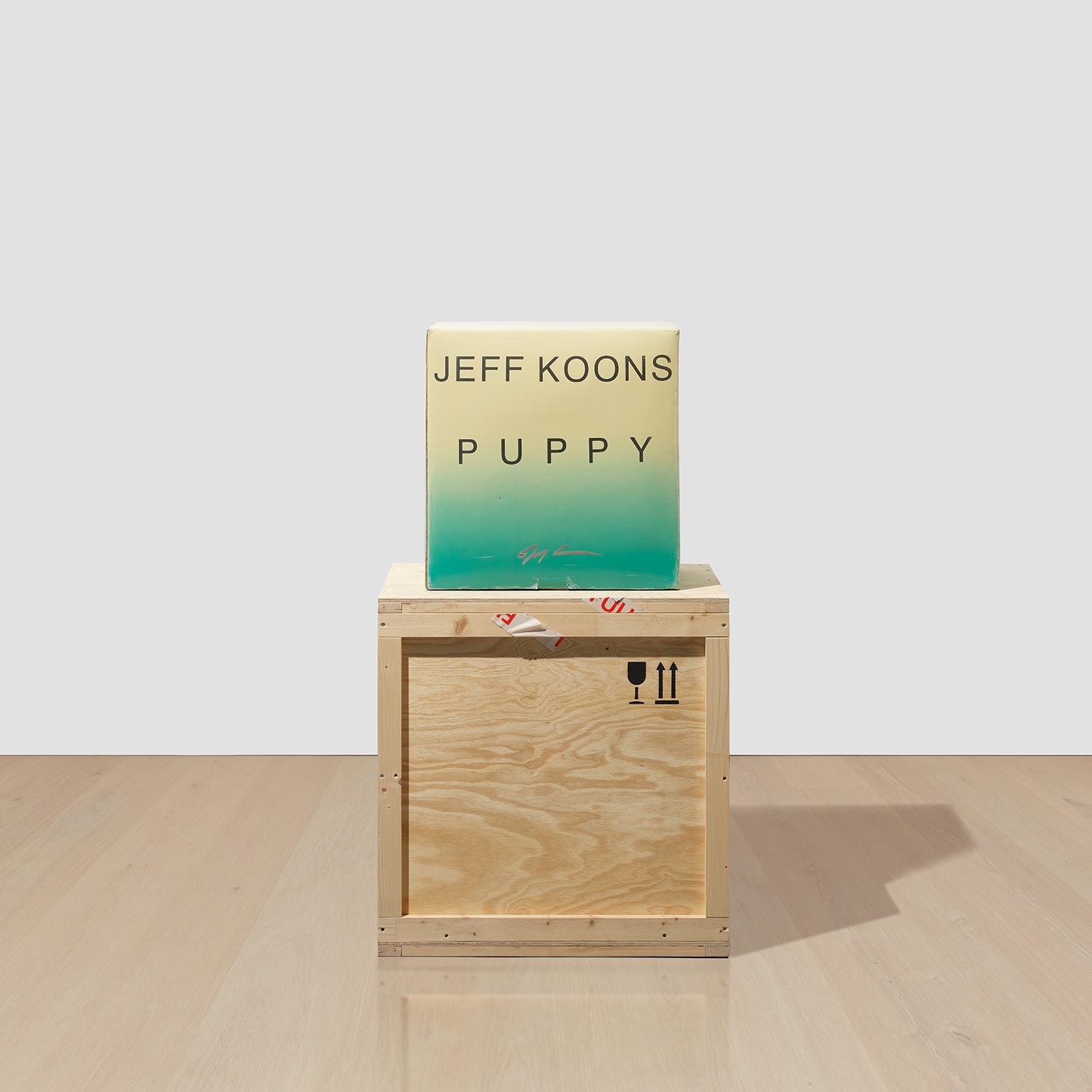
Jeff Koons arrived in the 1980s and rewrote the rules completely. His stainless steel works, the balloon animals and other inflatable forms cast in mirror polished metal, collapsed the distinction between high art and consumer culture in a way that was either thrilling or maddening depending on your position. The surface of a Koons sculpture reflects the gallery, the crowd, the ceiling, the exit signs. Nothing is hidden, nothing is solemn.
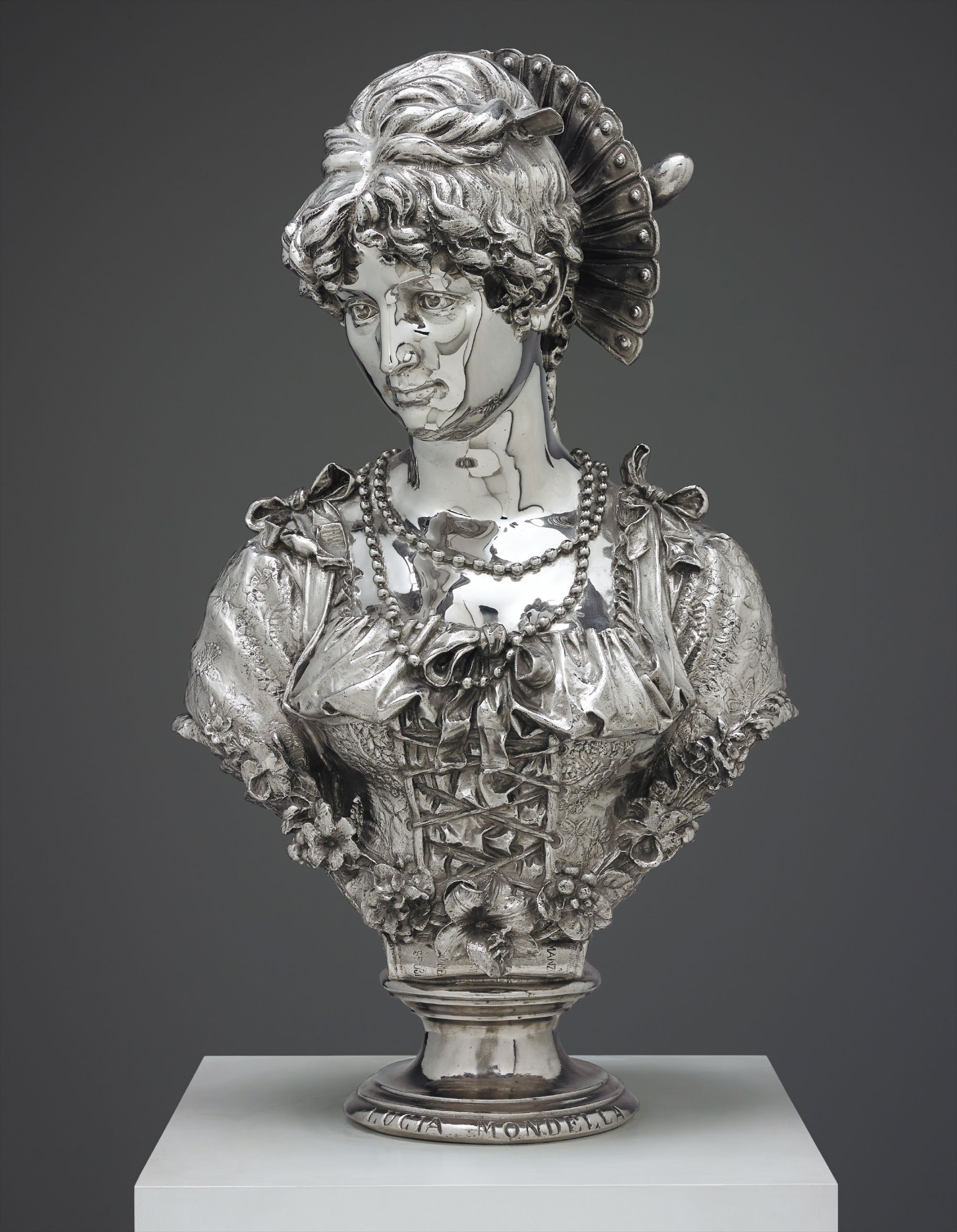
Jeff Koons
Italian Woman, 1986
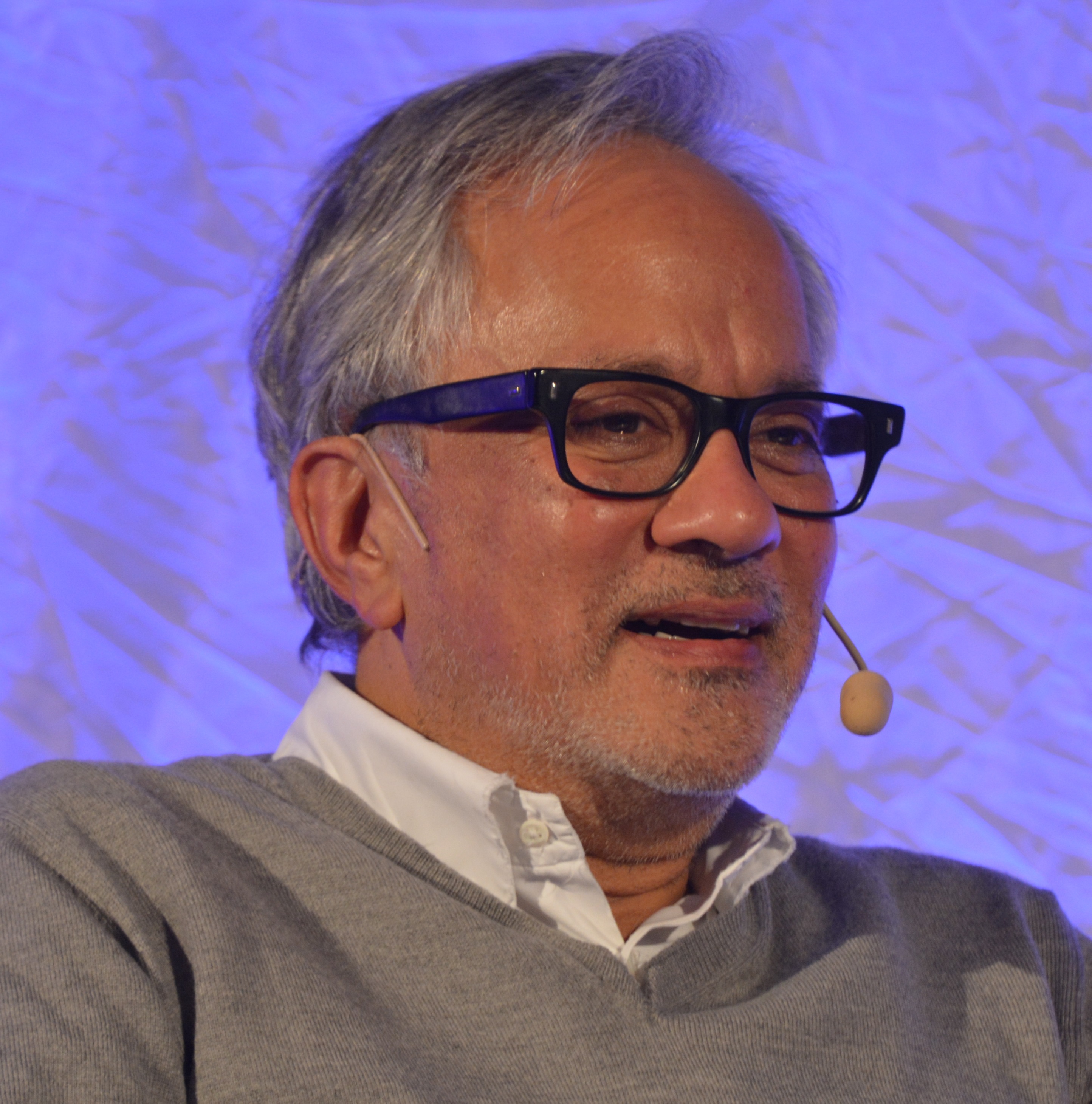
Koons understood that the reflective surface was not just a material choice but a philosophical one, implicating everyone in the room. His work remains among the most debated in contemporary art, and The Collection holds a significant body of it. Anish Kapoor has pursued a different kind of mirror logic, one that is closer to the phenomenological traditions of Merleau Ponty than to the pop theatrics of Koons. Kapoor's concave and convex steel surfaces create spatial distortions that have a genuinely vertiginous quality.
His large scale public installations, from Cloud Gate in Chicago completed in 2006 to works made specifically for gallery contexts, treat the viewer's reflection not as a joke or a provocation but as a subject for sustained philosophical attention. The Collection holds a strong body of Kapoor's work, and across it you can trace his ongoing investigation into how a material surface can become a threshold rather than a boundary. Zhan Wang brings an entirely different cultural register to the material. His Artificial Rocks series, begun in the late 1990s, uses stainless steel to replicate the scholar's rocks traditionally prized in Chinese literati culture.
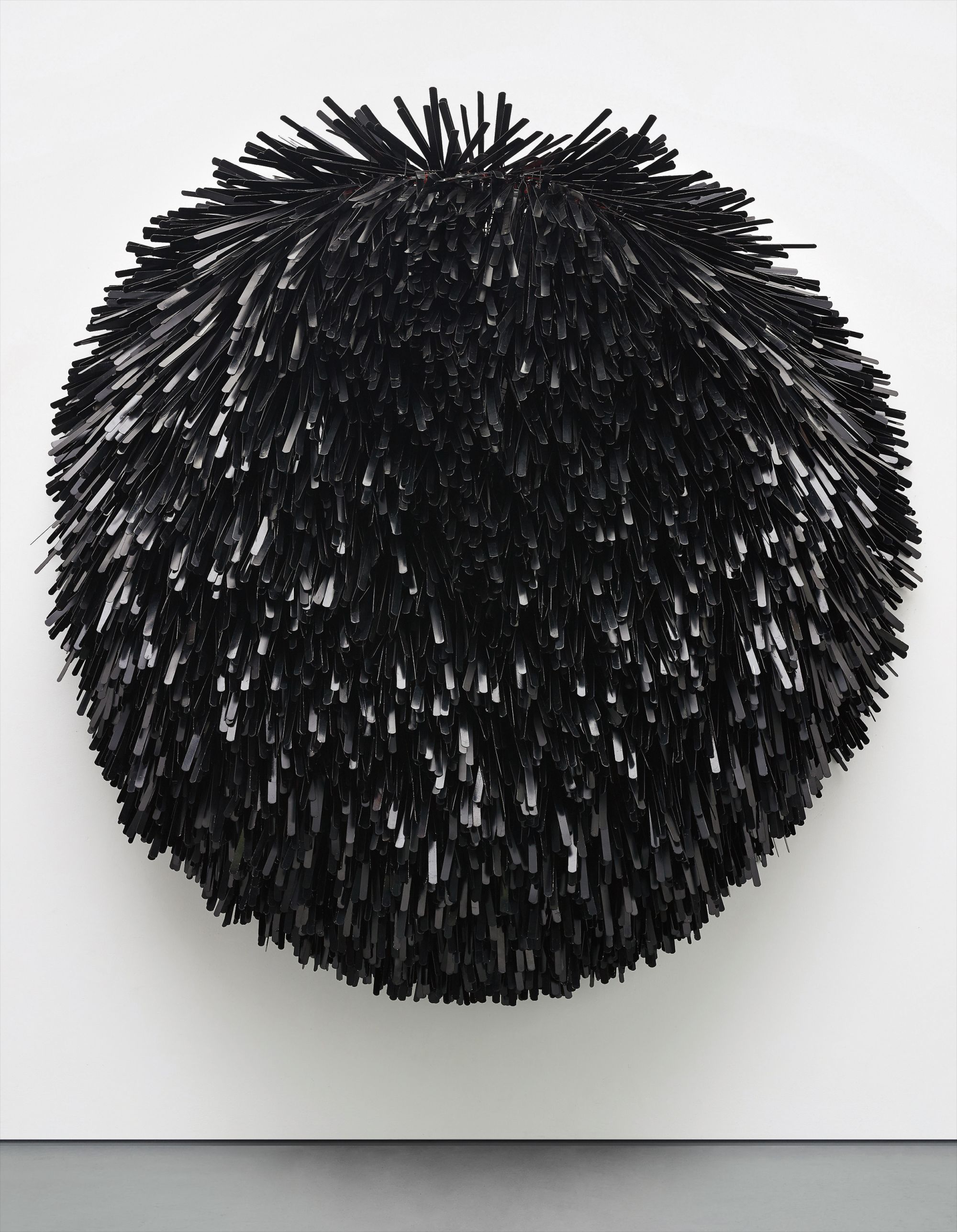
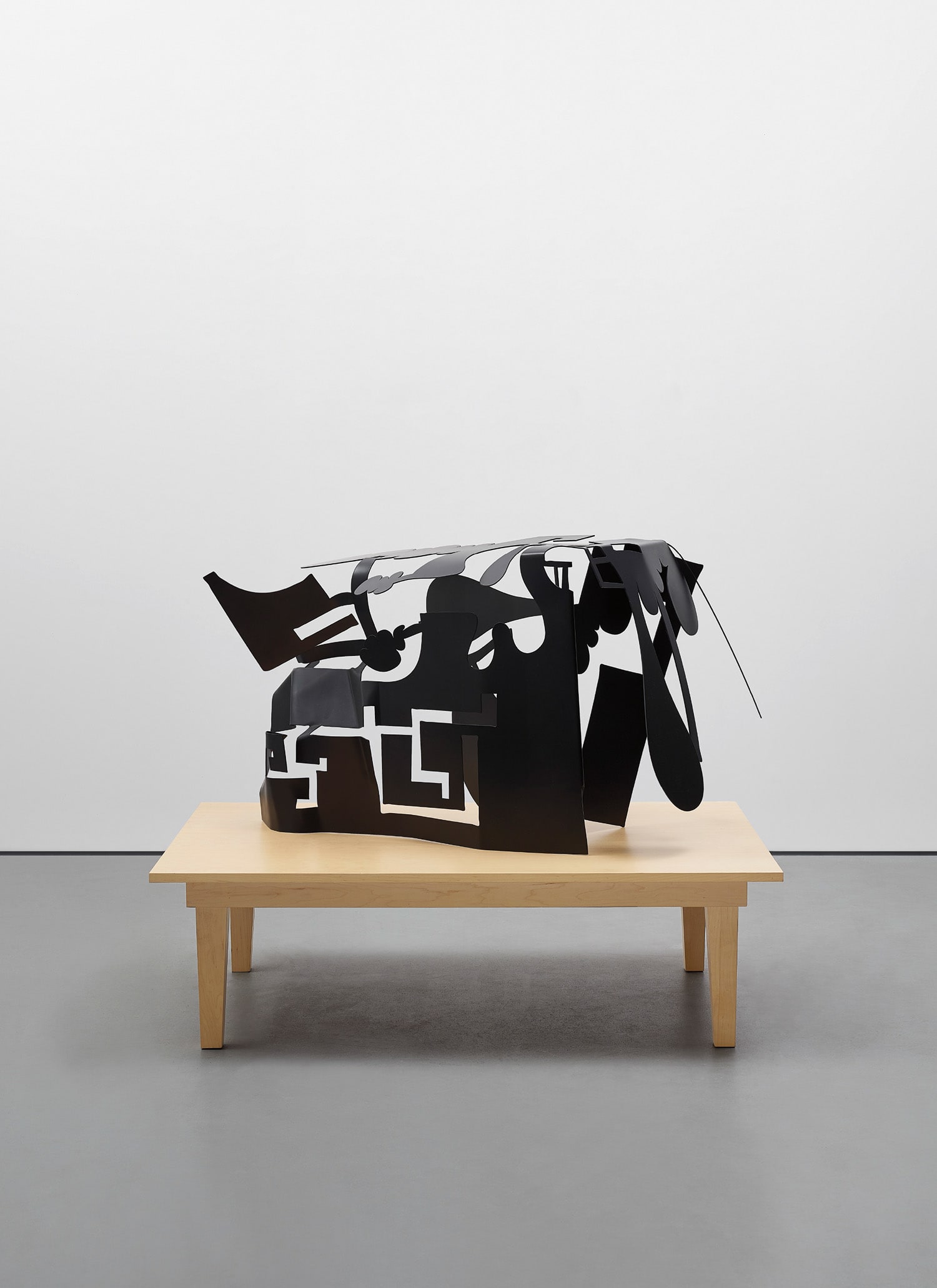
Subodh Gupta
Black Thing, 2007
The effect is uncanny. The familiar forms of natural contemplation appear translated into a material associated with modernity and industry. It is a conversation between two worlds that would seem to have nothing to say to each other, and Zhan Wang holds that tension with enormous intelligence. Subodh Gupta has worked similarly with steel in a different mode, using everyday stainless steel vessels, the kind found in kitchens across India, to build monumental accumulations that speak simultaneously about domestic life, migration, and global capitalism.
Michelangelo Pistoletto's mirror paintings, begun in the early 1960s, were arguably the moment when the reflective surface became fully conceptual rather than merely material. By silkscreening photographic figures onto sheets of polished steel and placing them in gallery spaces, Pistoletto made the viewer's own moving reflection into an active element of the composition. The work collapsed the temporal distance between the depicted figure and the living body standing before it. His practice, richly represented on The Collection, anticipated much of what later artists would explore with reflective surfaces and remains one of the great conceptual contributions of postwar Italian art.
What stainless steel has given art is not just a surface but a set of questions. Who is looking. What is real. Where does the work end and the world begin.
The artists who have worked most deeply with the material, from Rickey's kinetic precision to Kapoor's spatial philosophy to Pistoletto's conceptual daring, have all understood that stainless steel is not neutral. It is argumentative. It makes demands. In a moment when so much contemporary practice is concerned with the relationship between objects and their environments, between the work and its audience, that quality feels more relevant than ever.