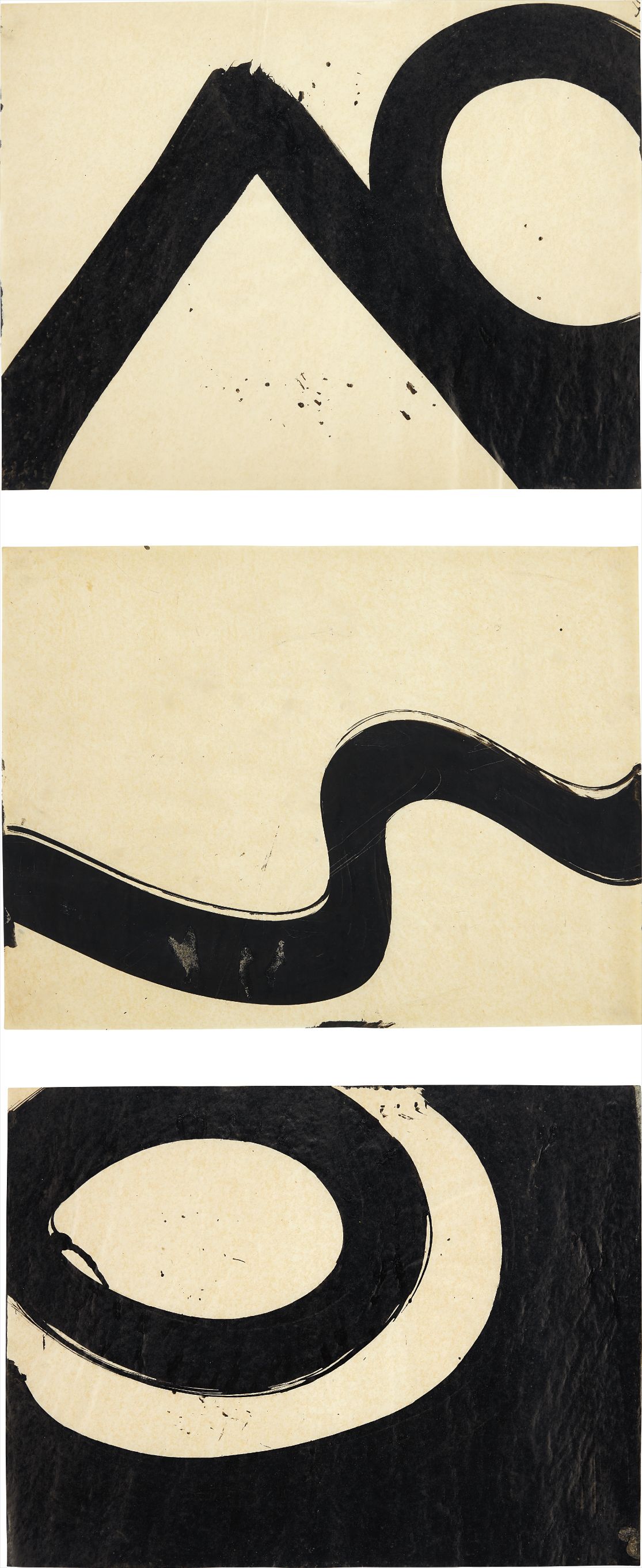
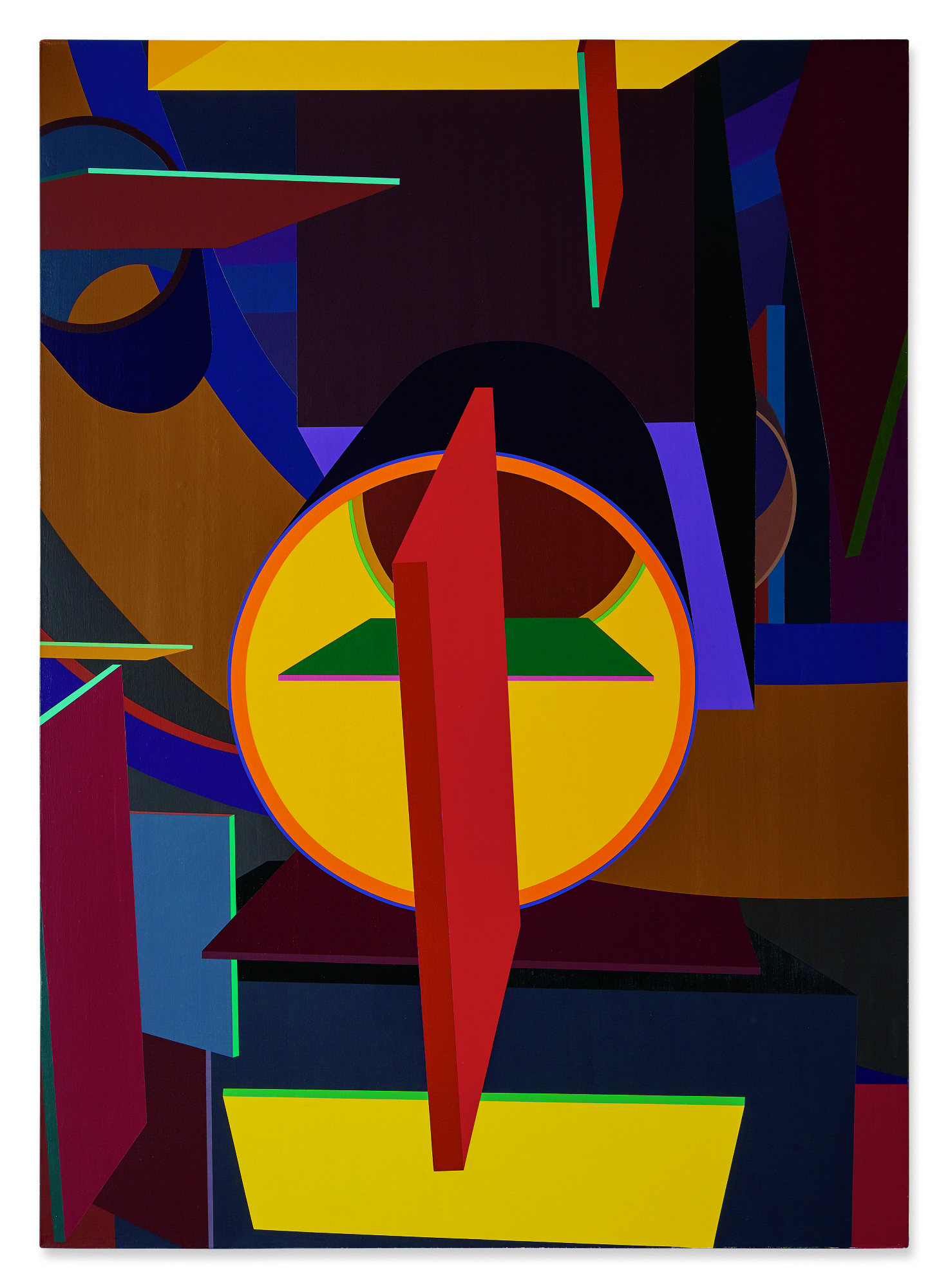
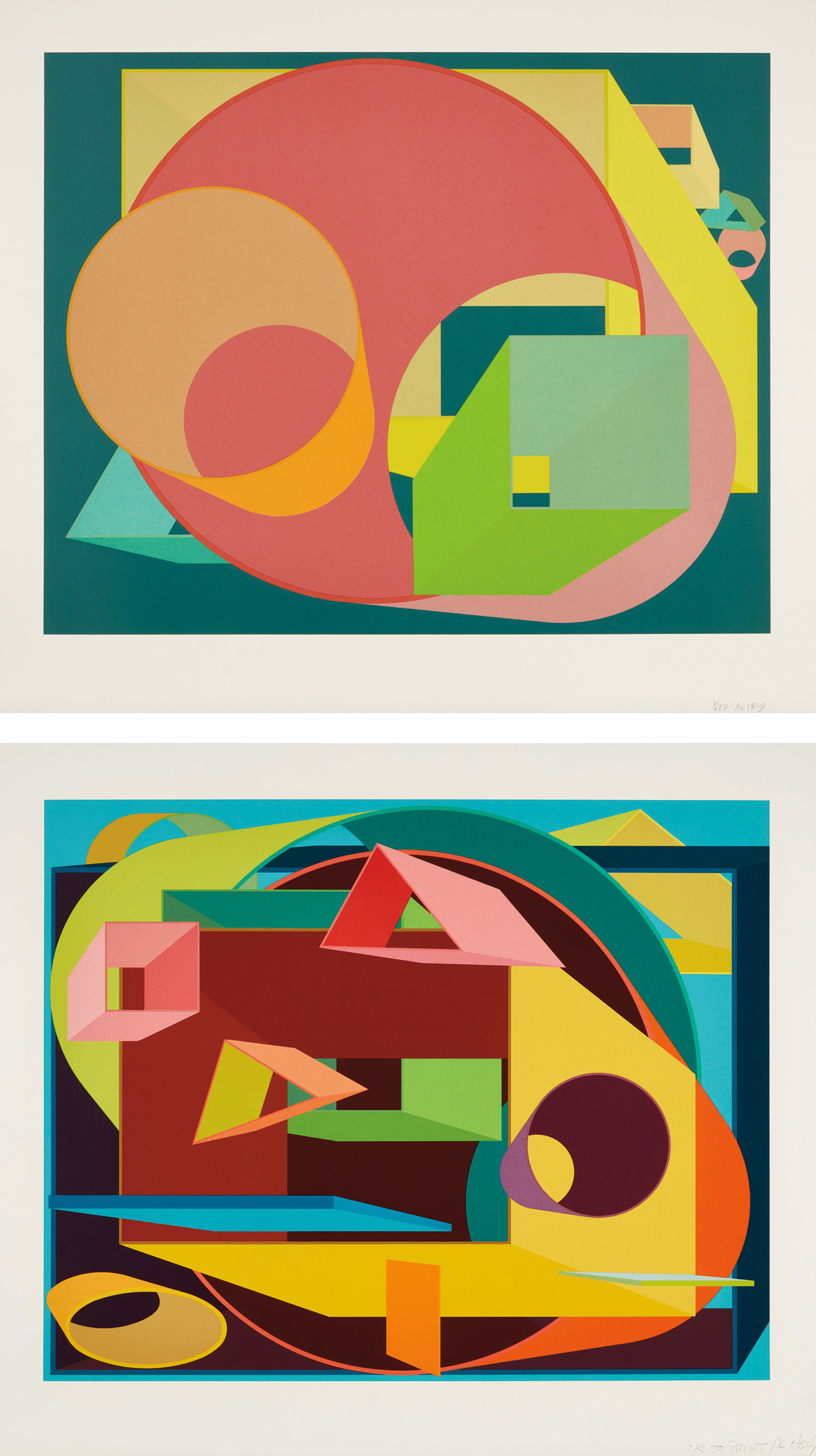
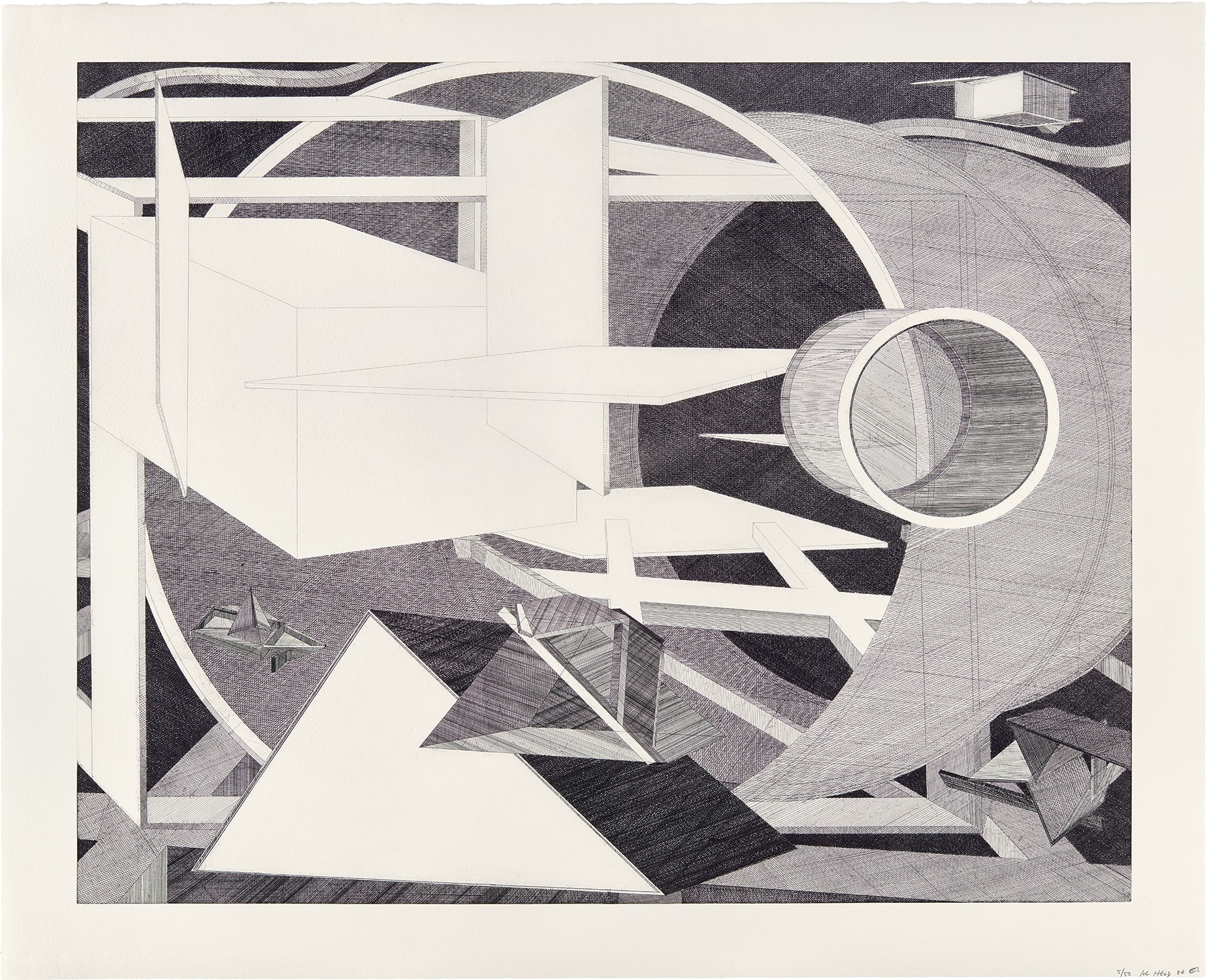
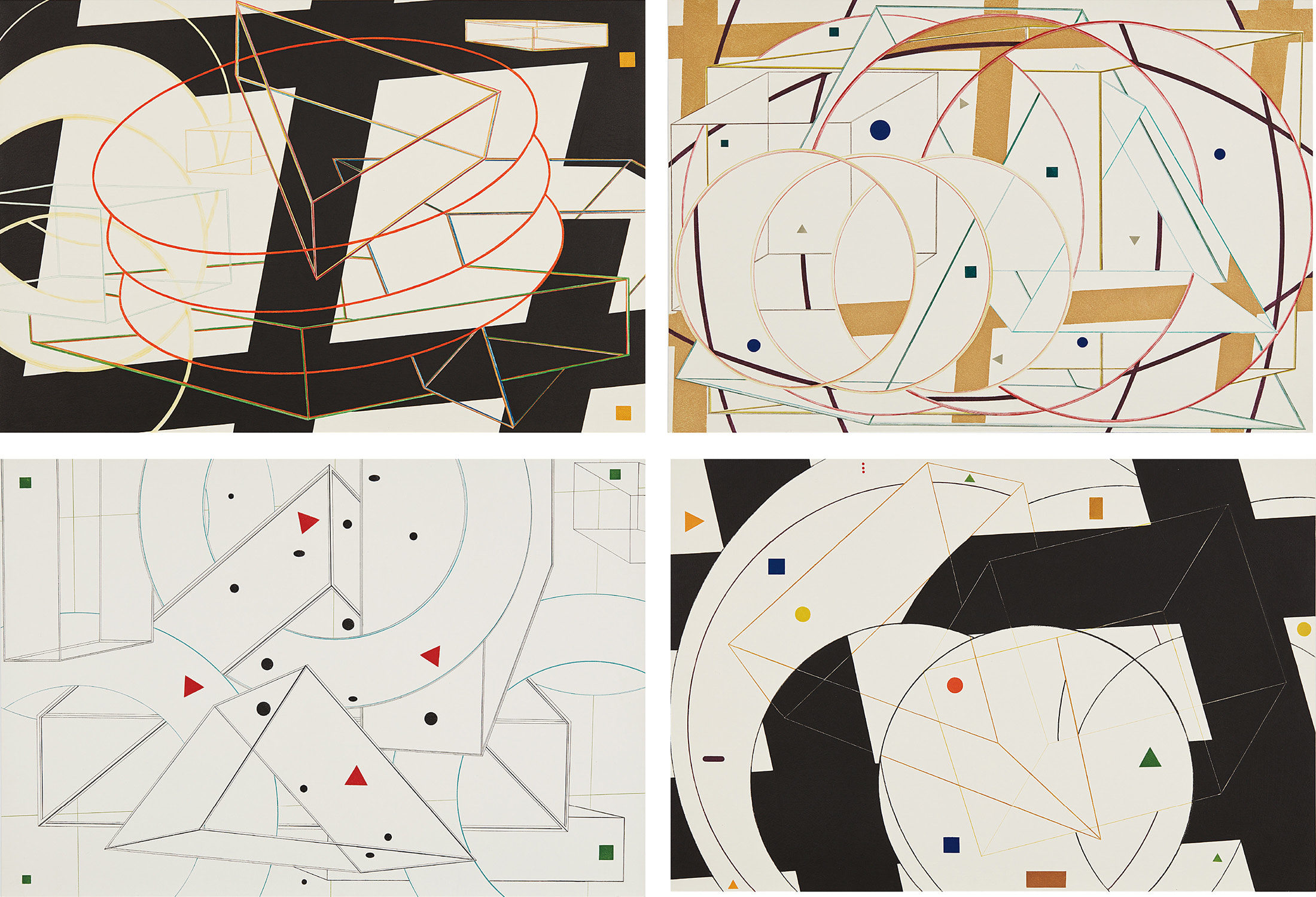
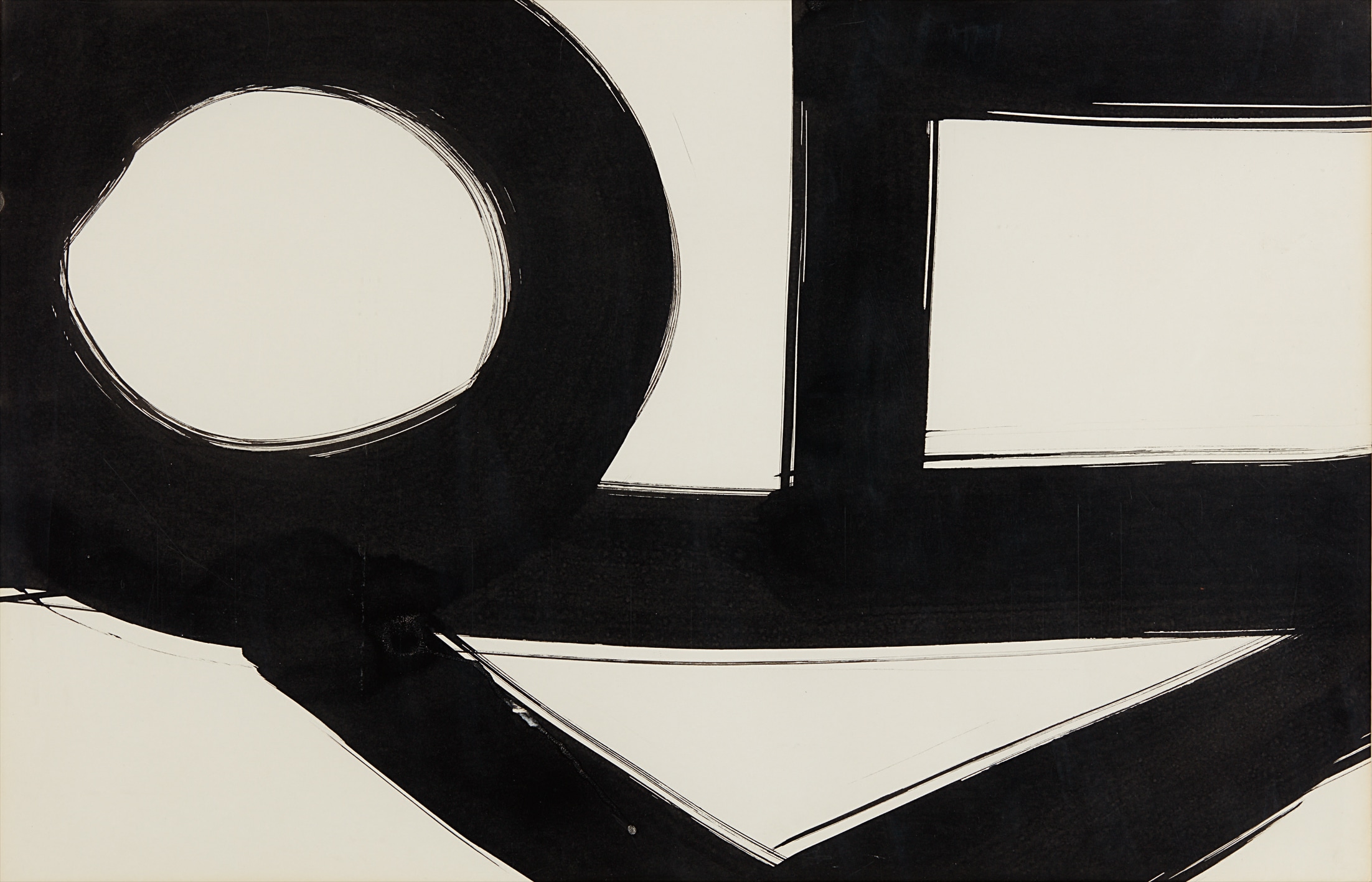
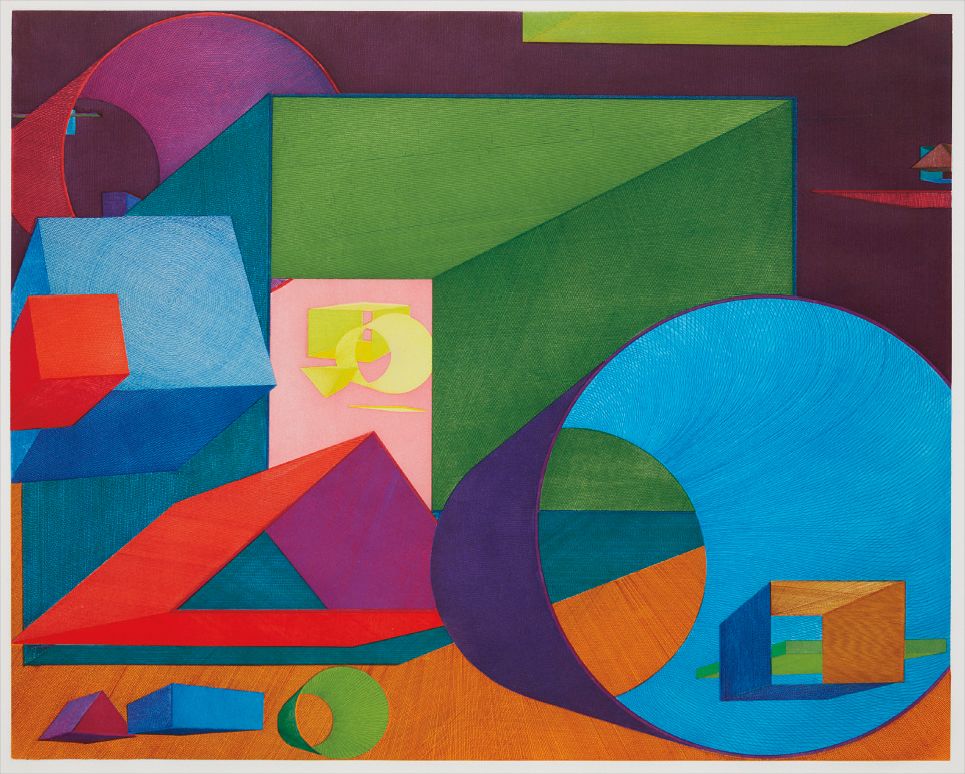
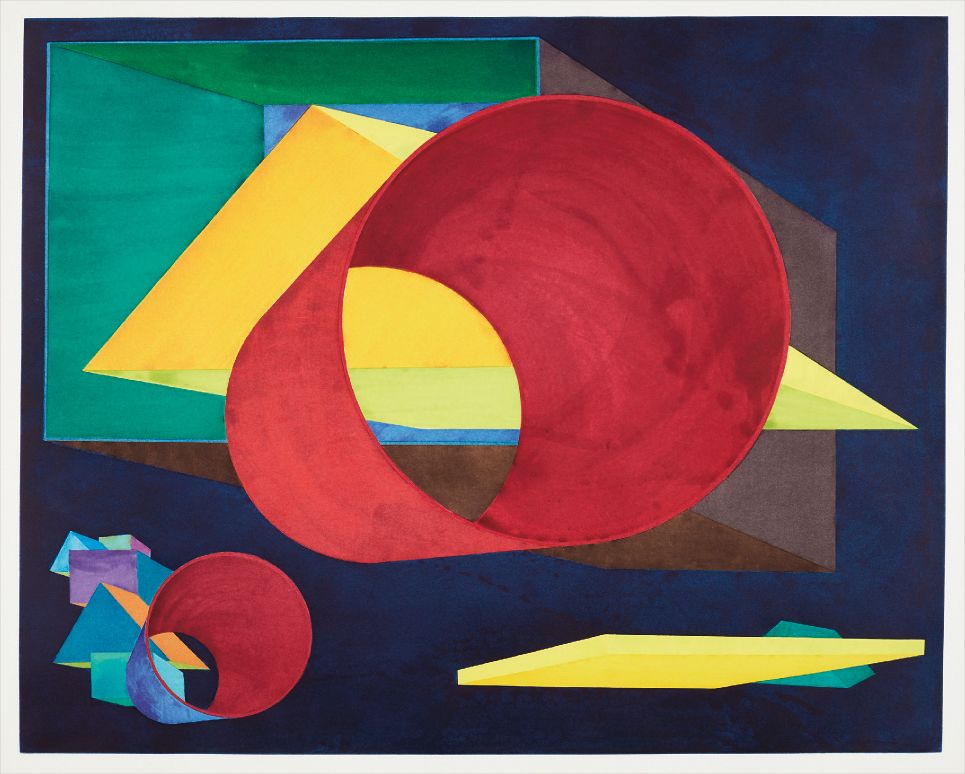
There are paintings that ask you to look, and then there are paintings that ask you to step inside. Al Held built the second kind. When the Whitney Museum mounted a major survey of his work, visitors found themselves disoriented in the best possible way, standing before canvases so vast and so spatially charged that the wall itself seemed to dissolve. Held spent decades constructing visual worlds where geometry becomes drama, where a circle intersecting a cube at the edge of a monumental canvas feels as consequential as any narrative in the history of painting. His legacy is one of the most distinctive and intellectually rigorous in postwar American art, and the market for his work has only deepened as collectors come to understand how singular his achievement truly was. Alfred Julius Held was born in Brooklyn, New York, in 1928, and came of age at a moment when American painting was remaking itself from the ground up. He served in the United States Navy and then, with the restless ambition that would define his entire career, moved to Paris in the late 1940s to study at the Académie de la Grande Chaumière. Paris in that period was still the gravitational center of the art world, and Held absorbed its lessons carefully, including the weight of Cézanne, the structural ambitions of Cubism, and the ongoing conversation about what painting could and should do. He returned to New York in the early 1950s and threw himself into the downtown scene that was producing Abstract Expressionism, studying briefly with the sculptor Ossip Zadkine and immersing himself in a city crackling with artistic possibility. His early work placed him squarely within the gestural abstraction of his generation. The paintings from the 1950s show a young artist in dialogue with the energy of the New York School, with thick impasto surfaces and the kind of physical urgency that characterized the era. But Held was always asking harder questions about structure and space than pure gesture could answer. By the early 1960s, he had begun to pull back from the painterly excess of Abstract Expressionism, working toward something harder edged and more architecturally conceived. He started making large letter and number paintings, works of stark graphic power that anticipated the emergence of hard edge abstraction as a serious counterforce to gestural painting. These were transitional works, but they signaled a decisive shift in his thinking. The transformation that defined Held's mature identity arrived in the late 1960s and reached its apex through the 1970s and into the 1980s. He abandoned color entirely for a period, working in black and white on enormous canvases where geometric forms, spheres, cubes, cylinders, and cones collided and interpenetrated in ways that defied conventional perspective. These works created a new kind of pictorial space, neither flat nor illusionistic in any traditional sense, but something stranger and more cognitively unsettling. Held was engineering spatial paradoxes, constructing environments where the eye is perpetually in motion, never arriving at a stable resting point. Paintings such as Flemish I and the Byzantine series, produced during this period, are among the most uncompromising spatial investigations in the history of abstract painting. The canvases were not merely large; they were scaled to overwhelm, to make the viewer's body part of the perceptual equation. When Held reintroduced color in the 1980s, the results were revelatory. Works like Cygnus I from 1989 and Padua I from 1980 brought all the structural complexity of the black and white period into a chromatic register that was simultaneously more seductive and more demanding. Deep blues, warm ochres, and luminous whites moved through the paintings like light through an architectural space, and the geometric forms took on a new kind of presence. The prints and works on paper from this period, including the aquatints and etchings that make up a significant and sometimes overlooked part of his output, demonstrate that Held's spatial intelligence translated beautifully into the print medium. Works like Straits of Magellan and the Indigo and Russell's Way aquatints carry the full authority of his large canvases in a more intimate format, and they represent exceptional opportunities for collectors drawn to his vision. In the context of postwar American art, Held occupies a position that is both central and curiously undersung. He was a genuine peer of Frank Stella, Ellsworth Kelly, and Kenneth Noland in the project of rethinking pictorial space after Abstract Expressionism, but his insistence on spatial illusion and architectural complexity set him apart from the literalism of Minimalism and the pure opticality of Color Field painting. He was teaching at Yale University for decades, and his influence on generations of painters is profound and well documented. His students and colleagues knew him as a rigorous, demanding, and deeply generous thinker about art, someone who brought to the studio the same intellectual seriousness he brought to his canvases. For collectors interested in the broader narrative of American abstraction, placing a Held alongside works by his contemporaries illuminates the full range of possibilities that the postwar generation was exploring. The market for Held's work reflects both the scale of his ambition and the breadth of his practice. Major canvases from the black and white period and the subsequent color works are held in distinguished institutional collections including the Museum of Modern Art in New York, the Whitney Museum of American Art, and numerous international museums. Works on paper and prints, including the watercolors and the substantial body of aquatints, offer points of entry that reward close attention and serious study. The Scholes paintings, the Hudson series, and the Nectarius works represent Held operating at full power, and any of them rewards extended looking. Collectors who acquire Held are joining a tradition of serious engagement with one of the most genuinely original minds that American painting produced in the twentieth century. His work does not flatter or soothe; it challenges, it activates, and ultimately it expands the viewer's sense of what space and form can mean on a painted surface. That is a rare and enduring gift.