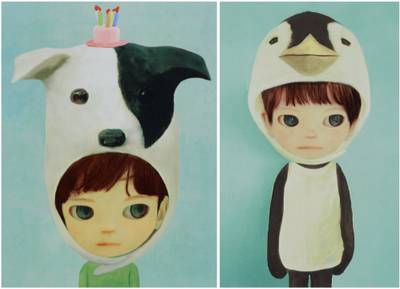
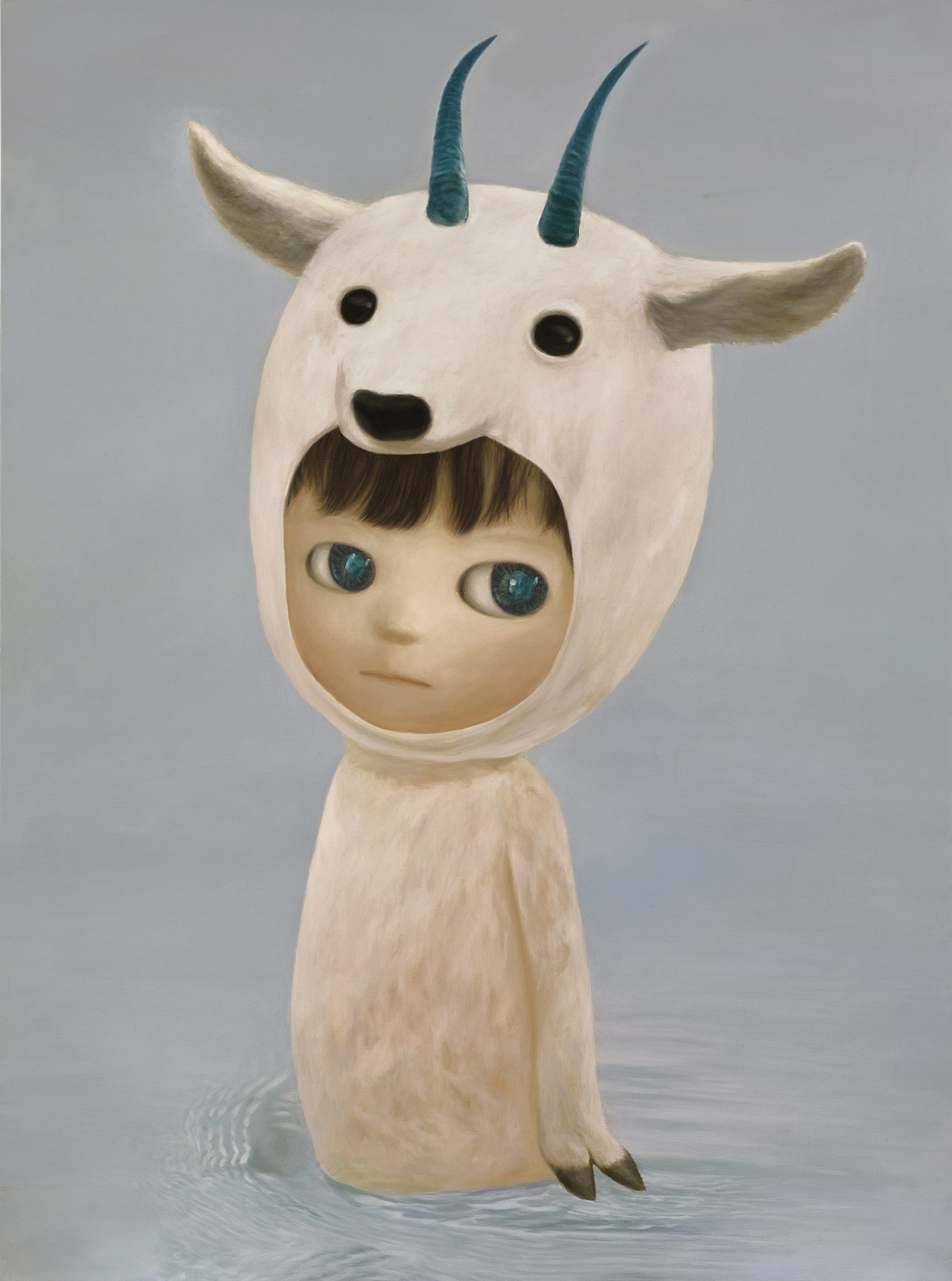
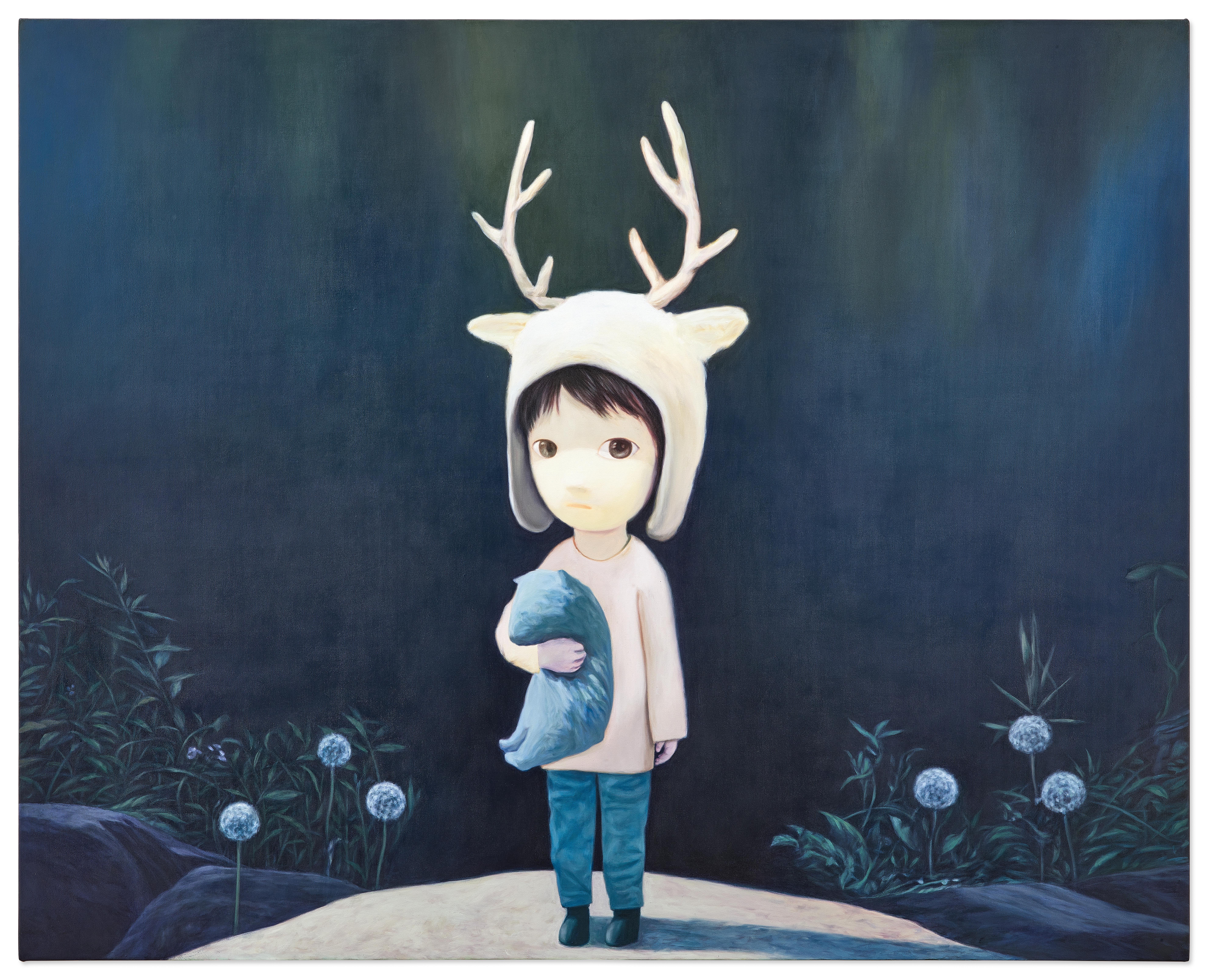
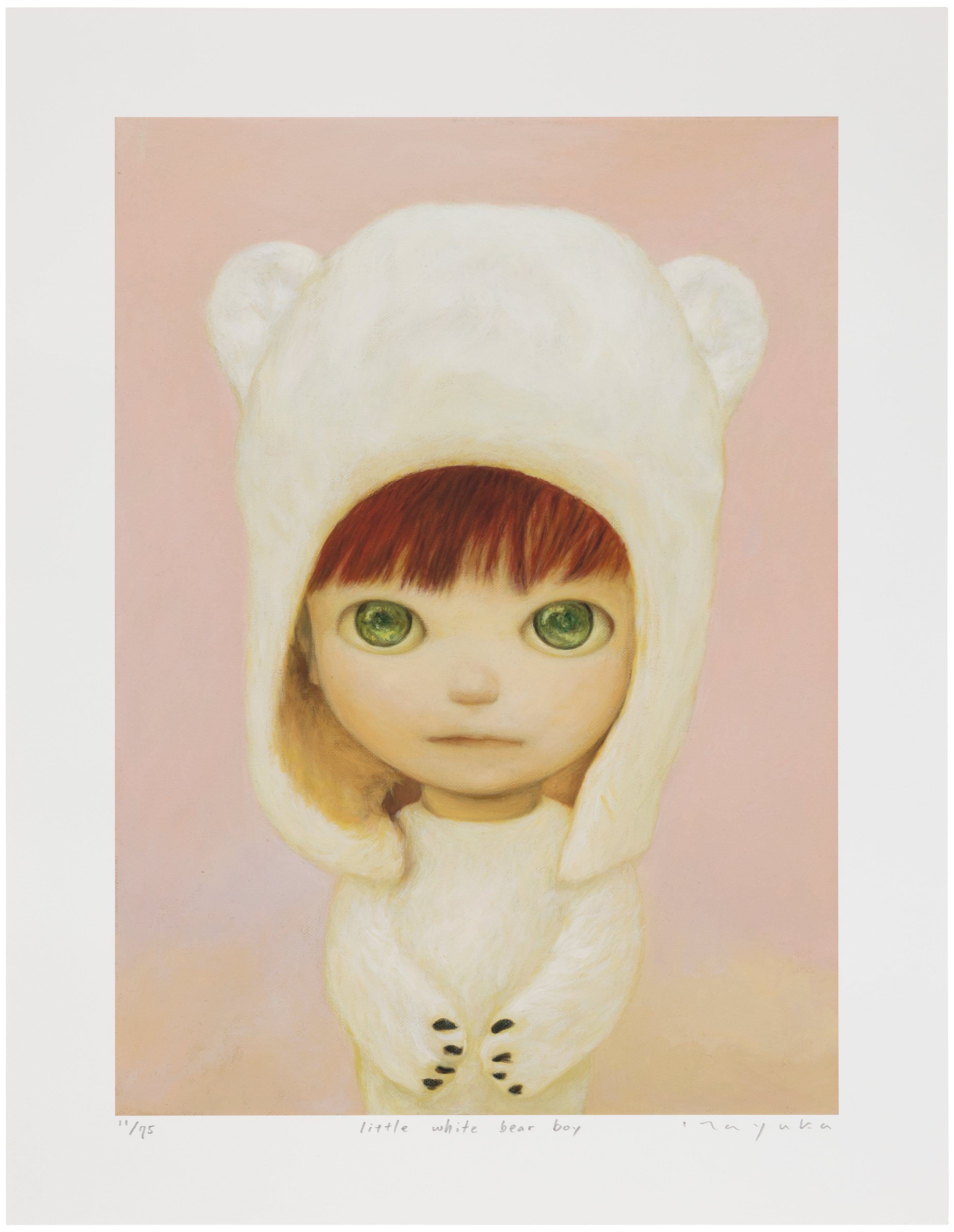
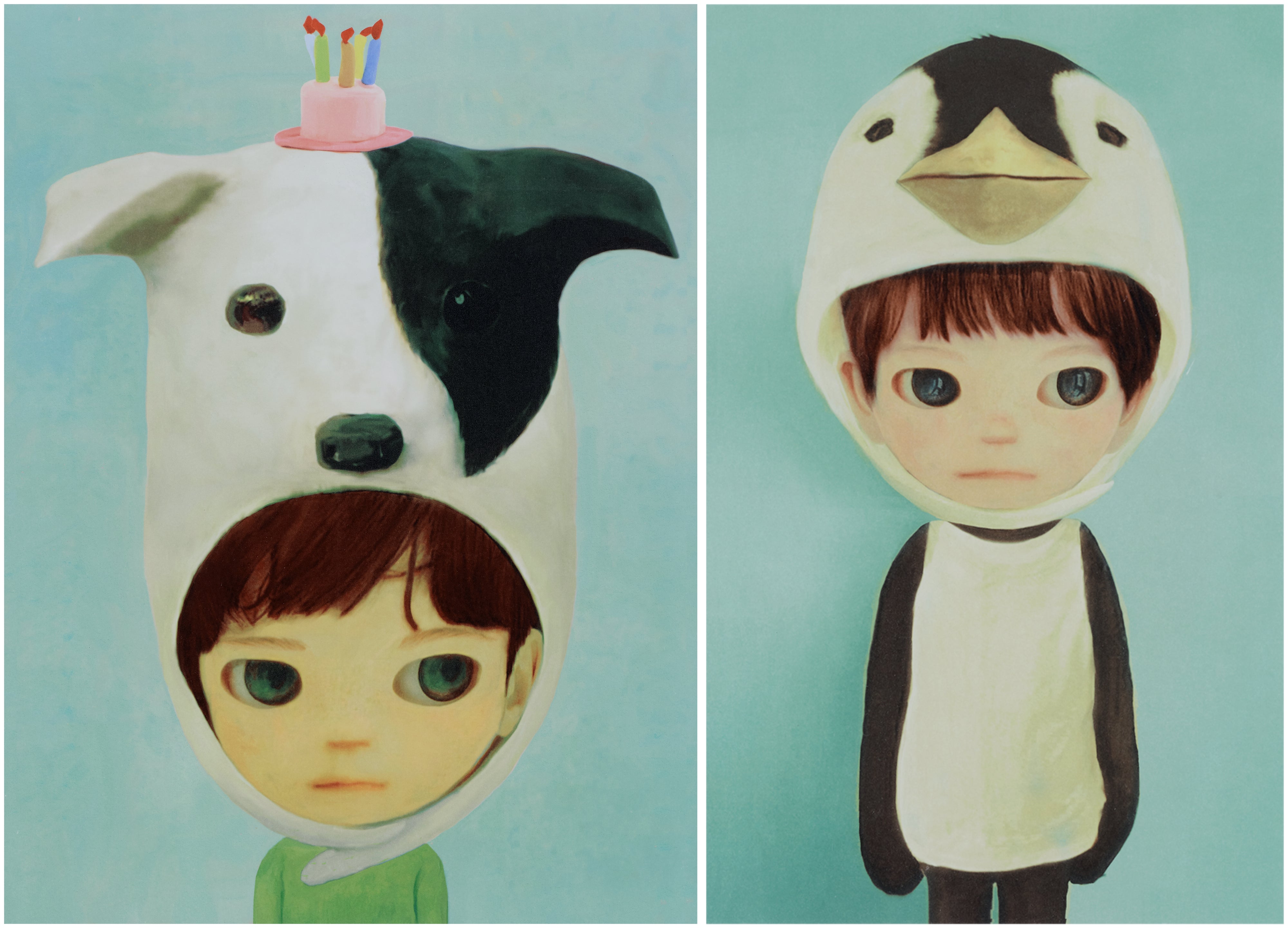
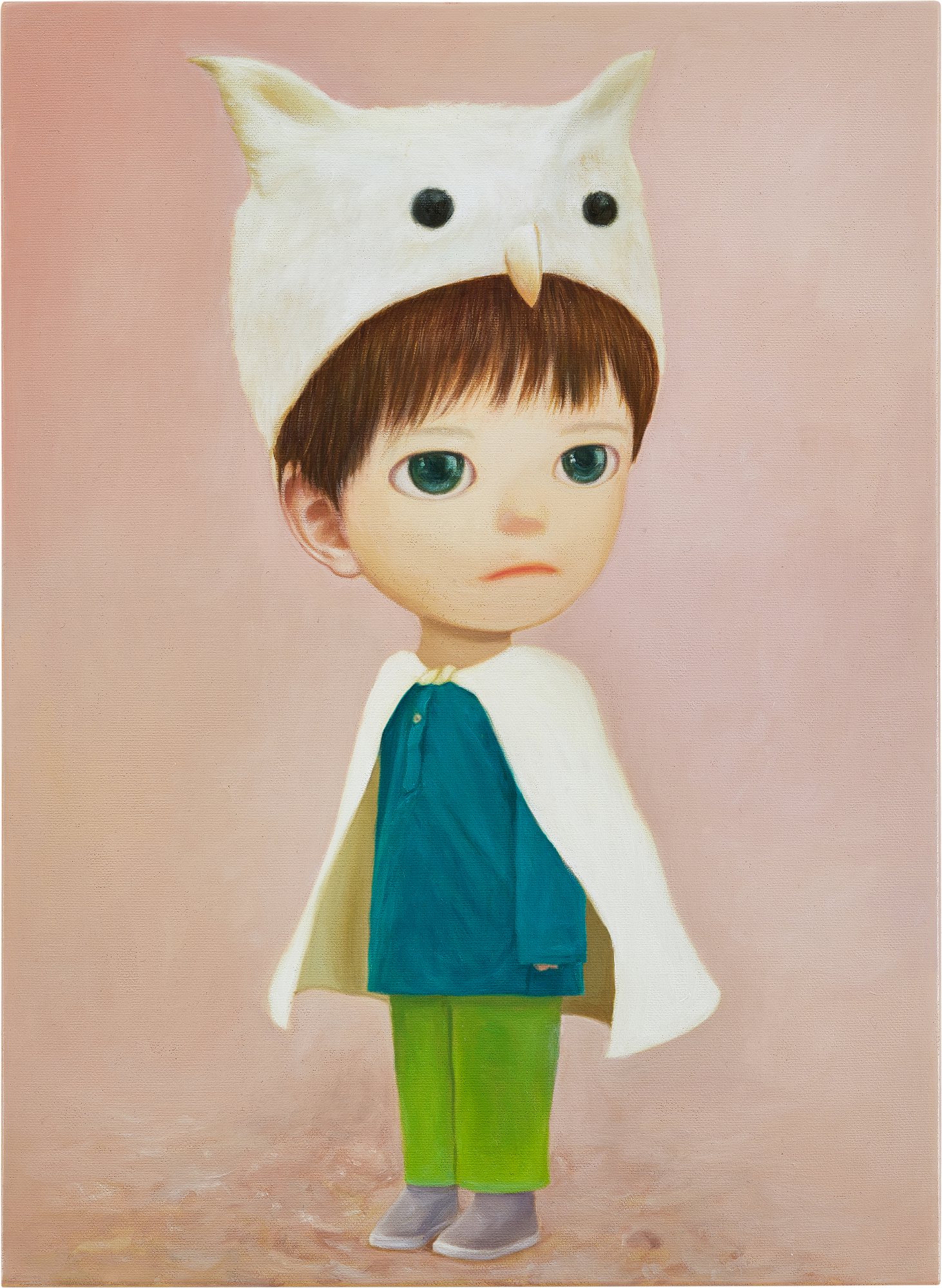
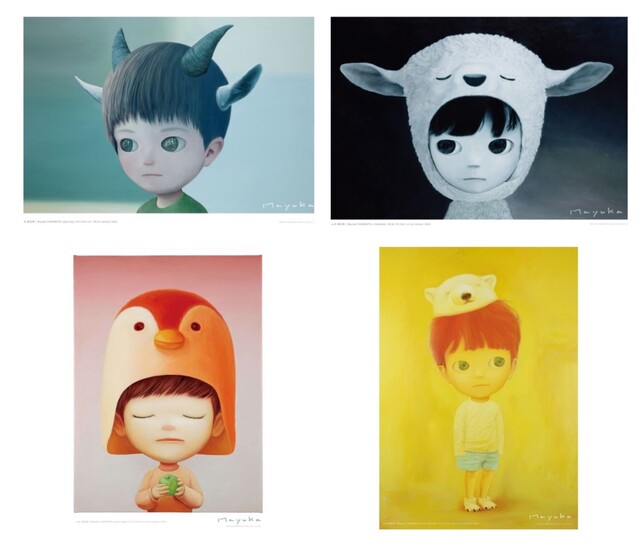
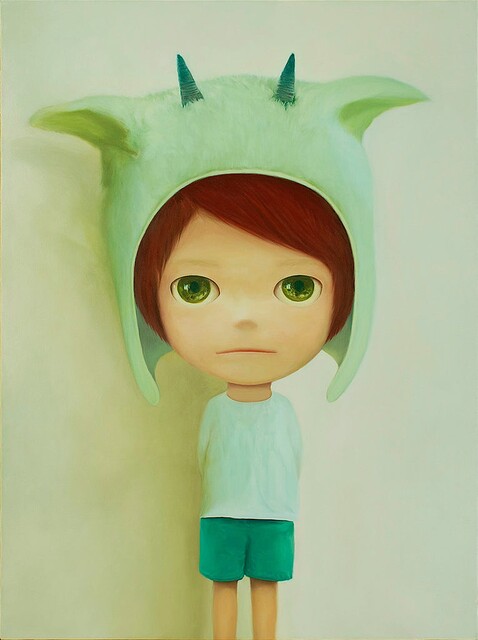
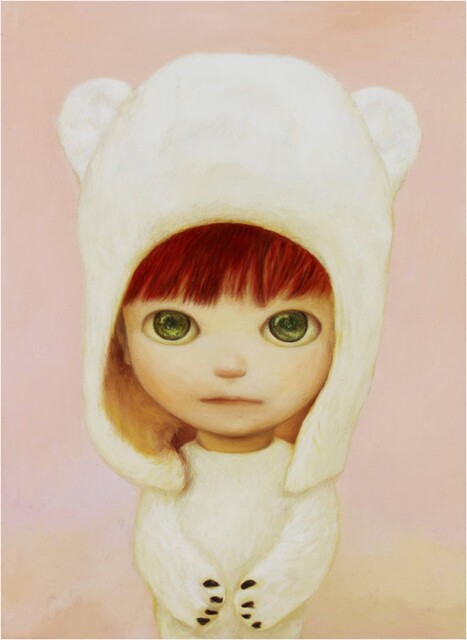
In recent years, a quiet revolution has been unfolding in the international contemporary art market, and Mayuka Yamamoto sits at its gentle center. Her works have appeared at major auction houses and through significant gallery partnerships, most notably with Corey Helford Gallery in Los Angeles, a space that has consistently championed artists working at the intersection of pop surrealism and emotionally resonant figuration. The gallery's decision to publish her limited edition prints, including the beloved Cake Hat and Penguin Boy series, speaks to a growing institutional confidence in Yamamoto's ability to reach collectors across cultural and geographic boundaries. That confidence, it turns out, has been richly rewarded. Born in Japan in 1964, Yamamoto came of age during a period of profound cultural negotiation in her home country, a moment when Japanese artists were absorbing the influence of Western modernism while simultaneously reaching back into deep traditions of delicacy, restraint, and the suggestion of feeling rather than its explicit declaration. These twin inheritances are visible in every canvas she has produced. Her work does not shout. It whispers, and in doing so, it draws the viewer closer than any raised voice could manage. The particular quality of silence in her paintings feels distinctly Japanese, rooted in aesthetics that prize the unspoken and the liminal. Yamamoto's artistic development has followed a path that rewards patience, both in the artist and in those who collect her. Her early works, such as deer boy from 2006, already demonstrate the visual language she would spend the following decades refining: solitary figures rendered with a child's proportions and posture, placed against backgrounds of unusual quietude, surrounded occasionally by animals that function less as companions than as projections of feeling. The palette in these earlier works tends toward warm earth tones and soft ochres, and there is a rawness to the paint surface that feels exploratory and deeply personal. She was, in those years, building a world from the inside out. By the time she produced Horn in 2011, Yamamoto had arrived at a more assured compositional confidence. The figures became more architecturally placed within the picture plane, and the symbolic language of her animal companions grew more specific and resonant. The arrival of the Penguin Boy series marked a particularly significant evolution. In works such as Flapping Penguin Boy from 2021, the central figure achieves something remarkable: he is simultaneously comic and heartbreaking, a small being attempting flight with the earnest conviction of someone who has not yet learned to doubt himself. This refusal to condescend to her subjects, even while acknowledging their vulnerability, is one of Yamamoto's most distinctive ethical commitments as an artist. The works from her 2021 and 2022 periods show Yamamoto at perhaps her most expansive. Deer and Blue Bear and Little Blue Monster demonstrate an increasingly confident use of colour as emotional temperature, with the blues in her palette functioning almost as a separate character in each composition. Little Hippo Boy from 2020 and Little White Bear Boy from 2021 extend her menagerie of hybrid presences, figures that are never quite human and never quite animal but occupy a third category of being that feels entirely native to Yamamoto's imagination. The digital print series Goat Boy, Sheep Boy, Green Apple, Polar Bear Boy from 2022 shows her willingness to engage with new formats without sacrificing the intimacy that defines her practice. From a collecting perspective, Yamamoto represents a particularly compelling proposition. Her works sit at a juncture that sophisticated collectors have increasingly come to prize: they are formally accomplished and art historically informed, yet they carry genuine emotional accessibility that does not tip into sentimentality. The limited edition screenprints published through Corey Helford Gallery, signed and numbered by the artist, offer an entry point that has attracted a generation of younger collectors who respond to her visual world instinctively. For those moving further into her practice, the oil paintings on canvas represent works of serious ambition, pieces that reward sustained looking and that hold their presence with quiet authority in almost any collection context. Within the broader landscape of contemporary Japanese art, Yamamoto occupies a distinctive position. She shares with certain of her contemporaries an interest in the figure as a site of psychological inquiry, and her work can be meaningfully discussed alongside artists who mine childhood and innocence not for nostalgia but for what those states reveal about the persistence of longing and the complexity of interiority. International collectors who have built relationships with figurative art from Japan will find in Yamamoto both a coherent extension of those interests and a genuinely individual voice. She is not reducible to any single movement or category, which is itself a mark of artistic seriousness. What Yamamoto has built over more than two decades of sustained practice is something increasingly rare: a world that is entirely her own, recognisable at a glance, and yet capable of generating new meaning with each new work. Her child like figures do not age, but they accumulate resonance. Each new painting or print adds another layer to the mythology she has constructed, a mythology of small beings navigating large feelings in landscapes of tender uncertainty. For collectors who seek art that operates on both the eye and the heart simultaneously, who want works that will hold their attention across years and decades rather than seasons, Mayuka Yamamoto is an artist of genuine and lasting importance. To live with her work is to be reminded, gently and persistently, that vulnerability is not weakness but the very condition of feeling anything at all.