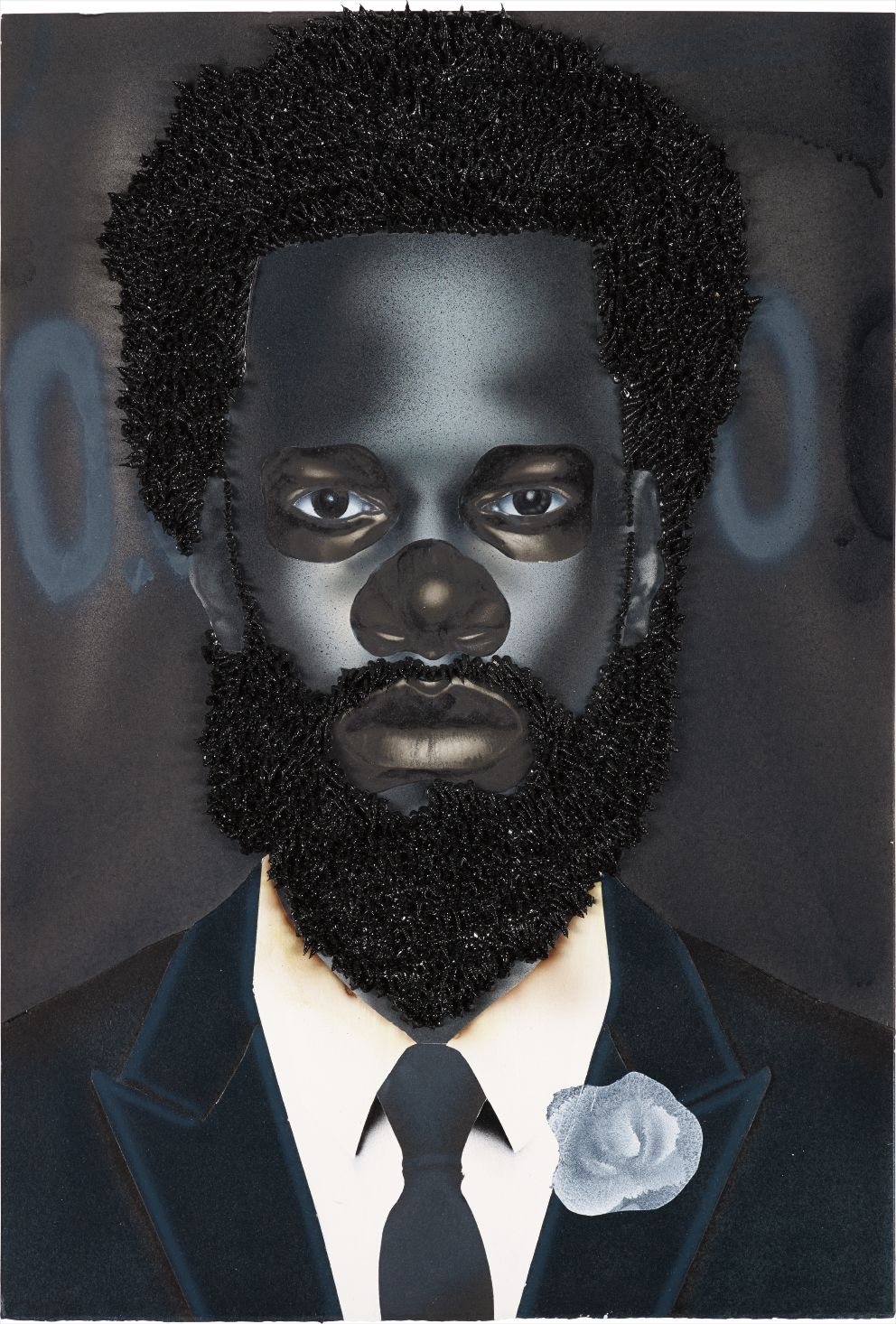
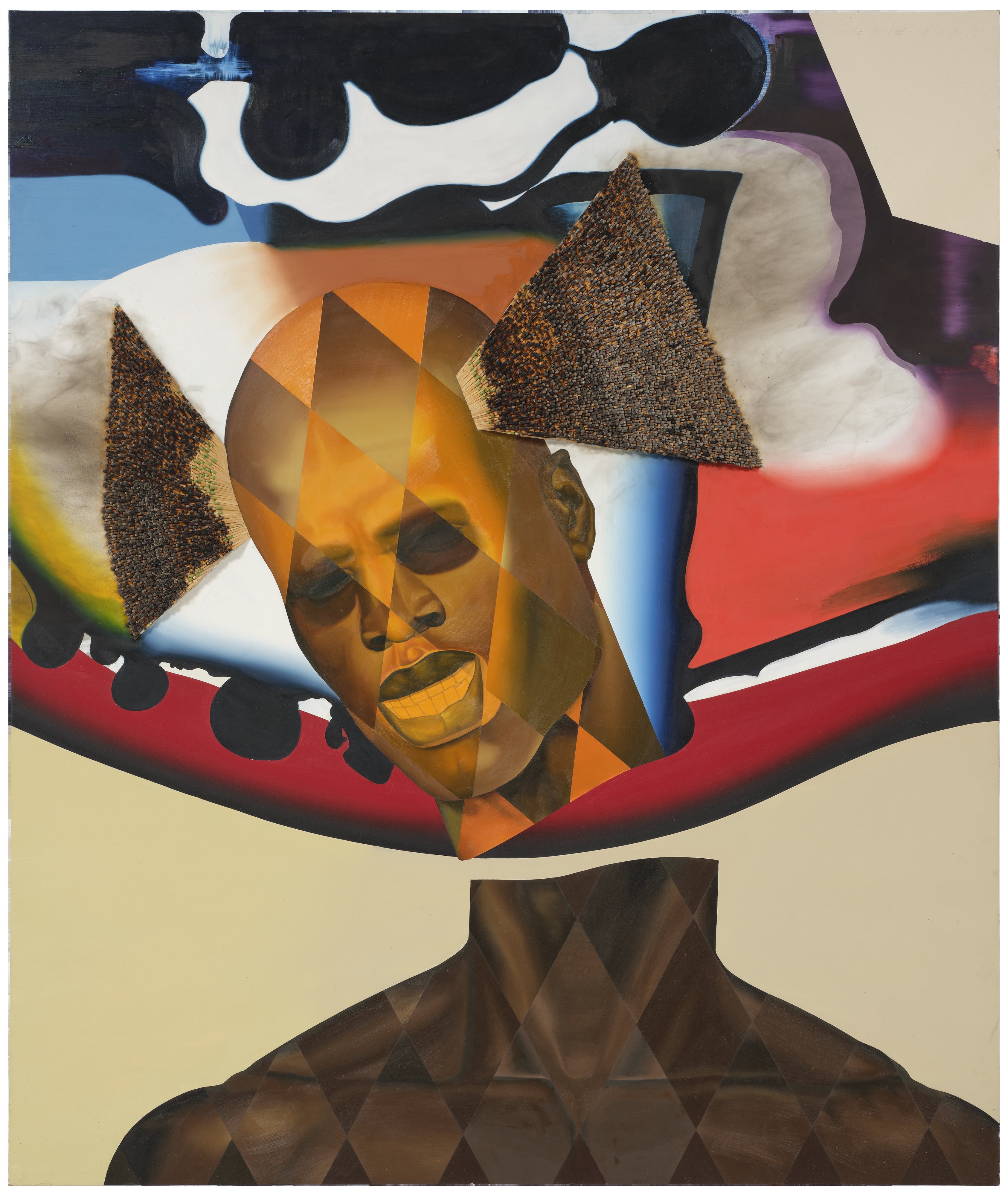
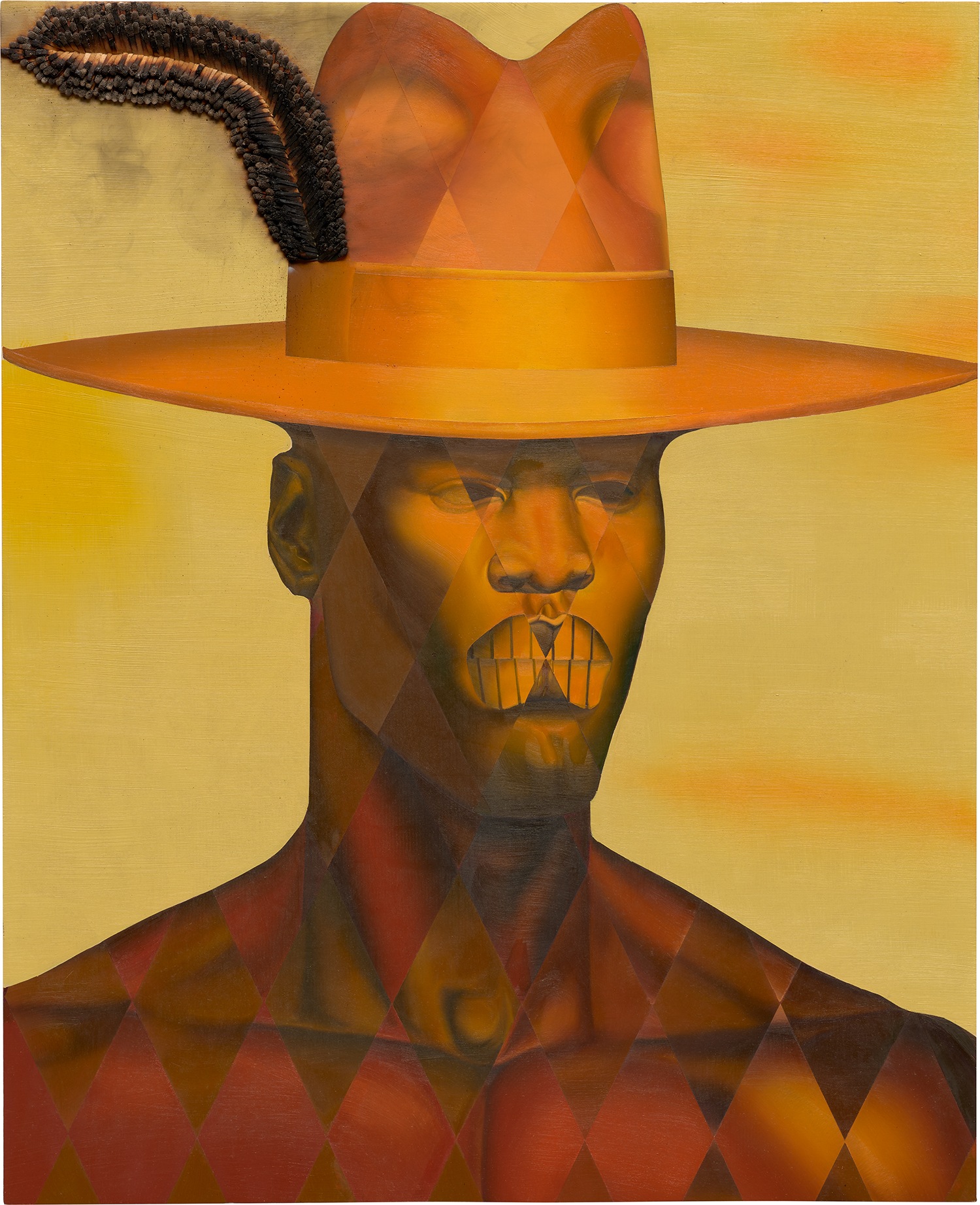
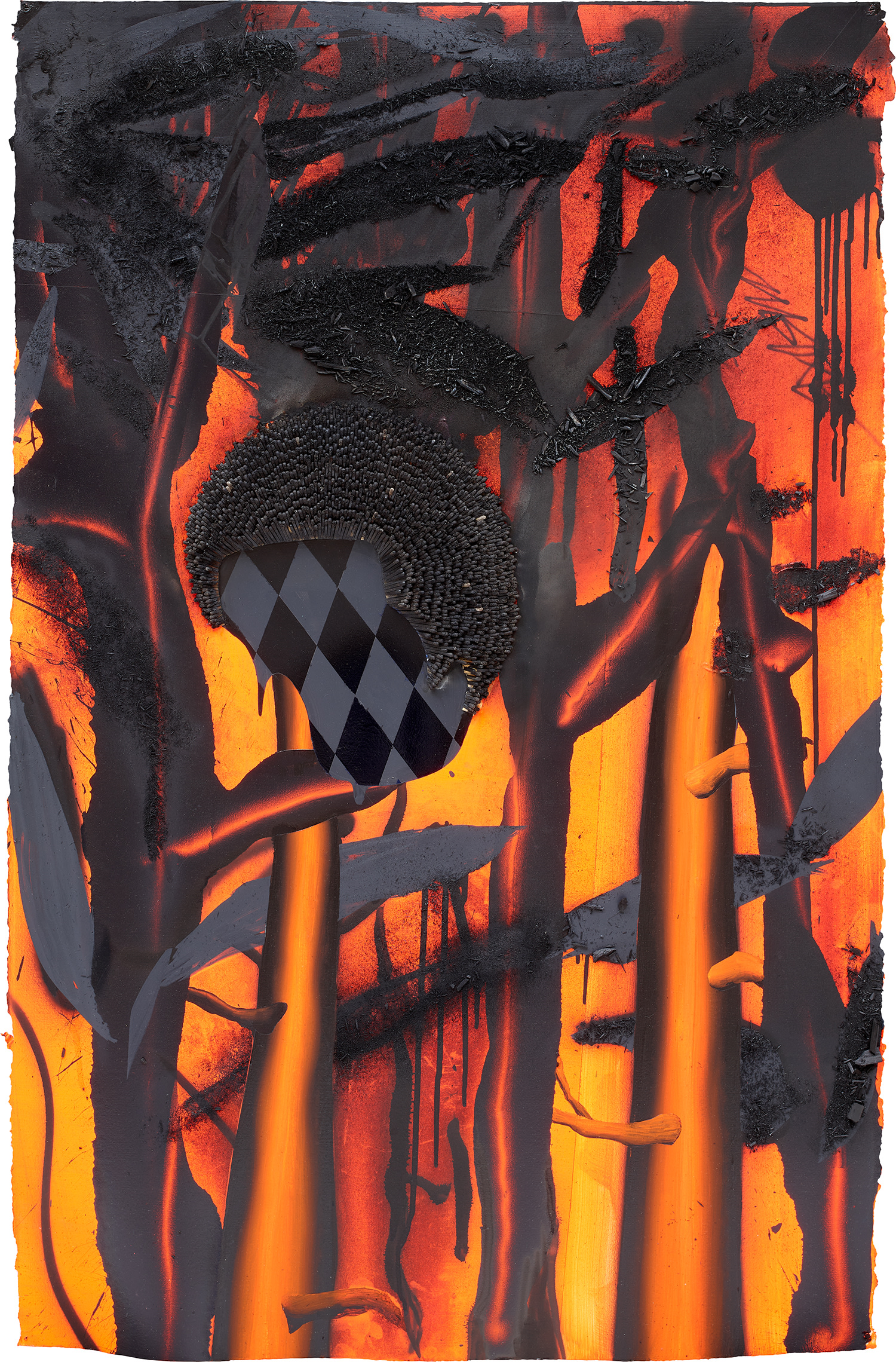
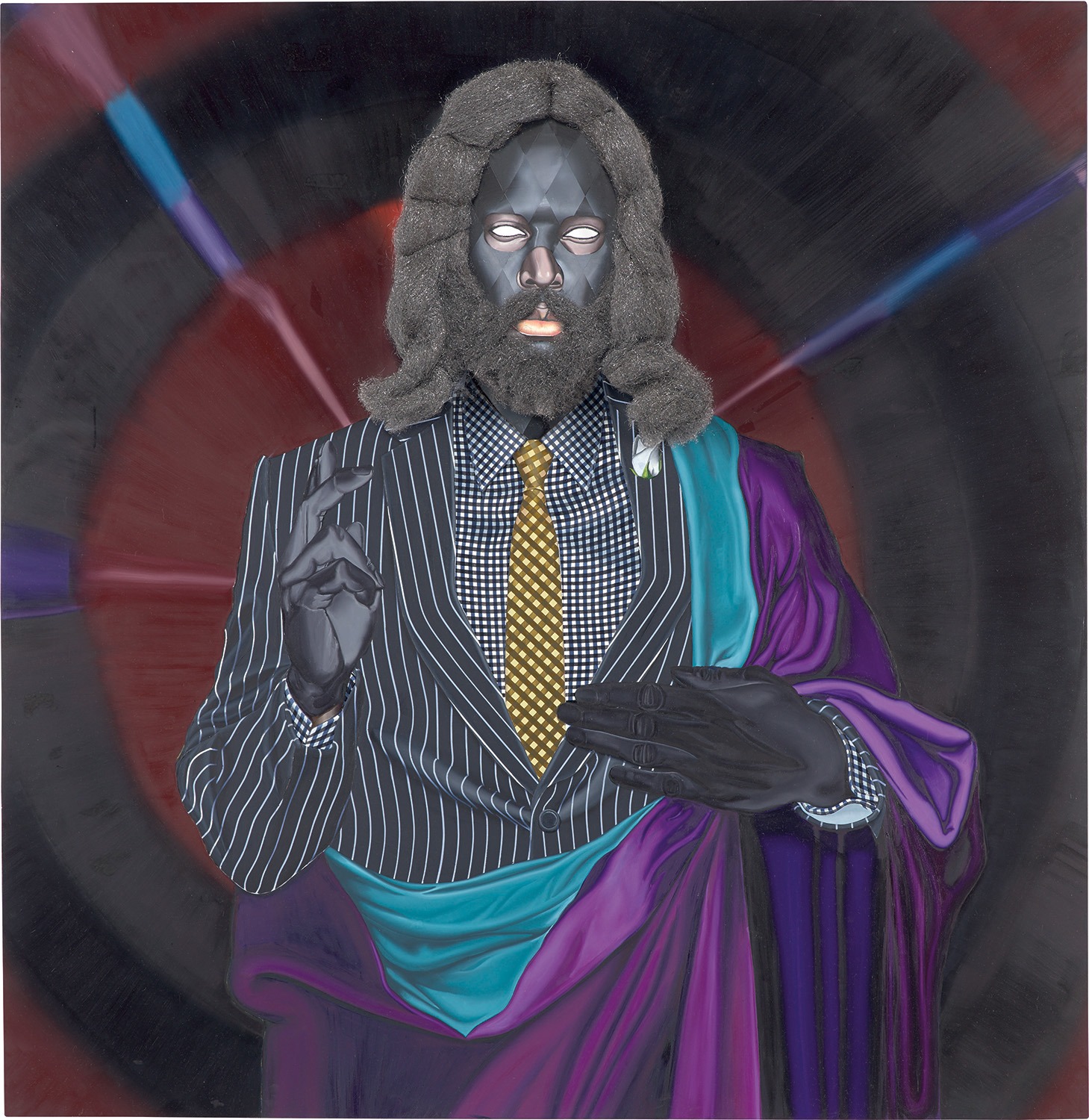
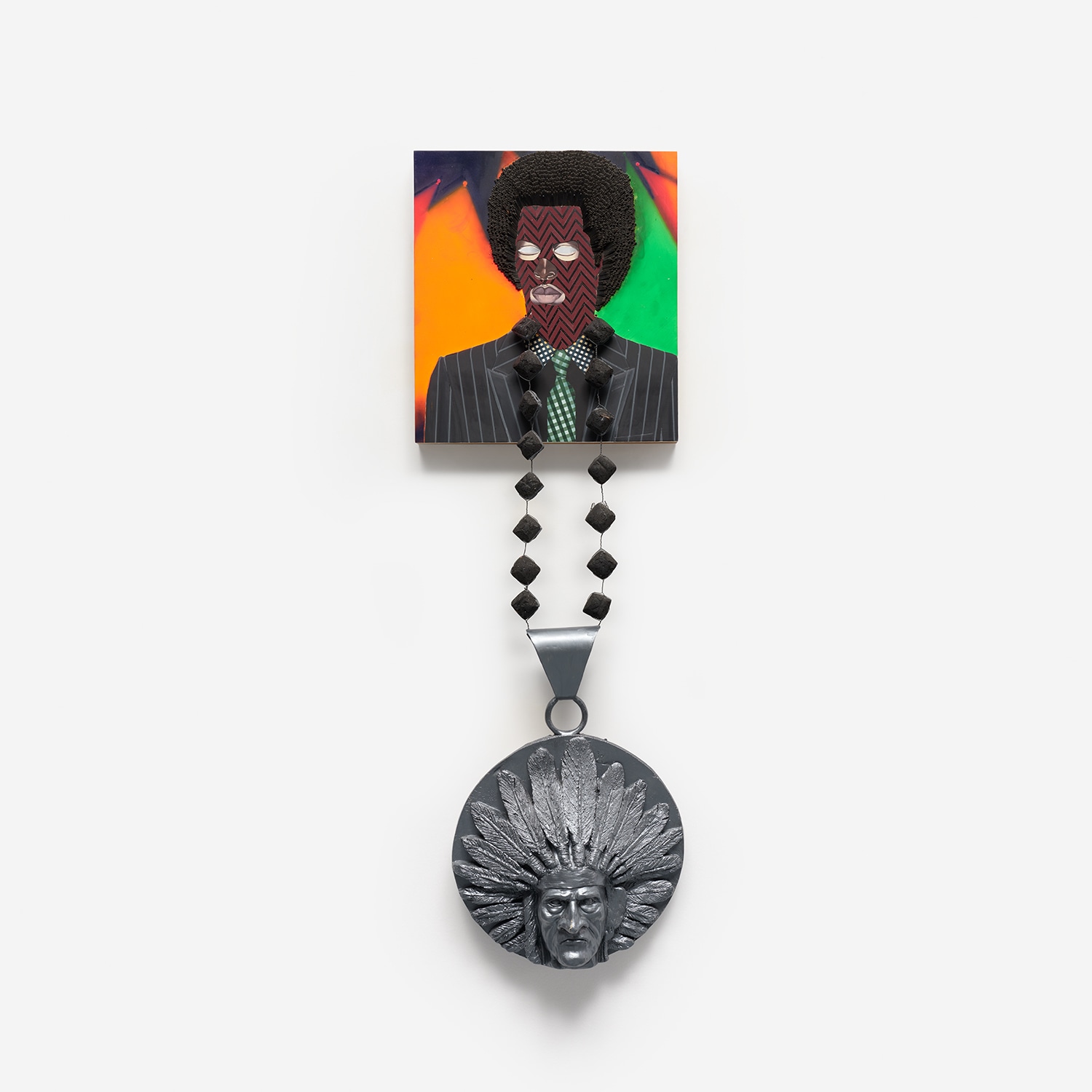
In recent seasons, the art world has trained its attention with renewed intensity on the generation of American figurative painters who came of age in the late 1990s and early 2000s, artists who chose to wrestle with portraiture and identity at a moment when both felt urgently contested. Within that conversation, Jeff Sonhouse occupies a singular position. His paintings do not simply depict Black male figures; they construct elaborate, layered ceremonies around them, investing each canvas with the weight of history, the heat of ritual, and a formal inventiveness that rewards sustained looking. Museum curators and serious collectors alike have recognized that Sonhouse represents something irreplaceable in contemporary American painting. Sonhouse was born in 1968, and his formation as an artist unfolded across the cultural landscape of New York, a city that in his developmental years was simultaneously convulsing with economic crisis and igniting with creative energy. The visual grammar of street culture, the coded systems of style and self presentation that Black and Latino communities developed in part as acts of survival and assertion, left a permanent mark on how Sonhouse thinks about surfaces, layering, and the relationship between a person and their public face. These were not incidental influences. They became the structural logic of his painting practice, the reason his canvases feel simultaneously intimate and monumental, personal and mythic. Sonhouse studied at the University of the Arts in Philadelphia and later at Hunter College in New York, where he developed the intellectual and technical foundations that would allow him to pursue his most ambitious ideas with rigor. His emergence as a mature voice came in the early 2000s, precisely when figurative painting was being reexamined by curators and critics who had spent the prior decade absorbed in conceptual and post medium debates. Works like "Project Science" from 2003, which combines oil paint and matches on canvas, announced the arrival of a painter with an entirely original material vocabulary and a clear sense of what he wanted to say with it. The matches, a recurring element across his practice, are not decorative flourishes. They carry connotations of ignition, destruction, illumination, and the fragile threshold between stability and conflagration. The years between 2003 and 2010 represent a period of extraordinary productivity and conceptual deepening for Sonhouse. Works such as "Inauguration of the Solicitor" from 2005, a diptych combining acrylic, oil, matches, match striker pads, and paper on wood, and "Study for Secretary of State" from 2006 demonstrate his growing preoccupation with the language of official power and its relationship to Black identity in America. These paintings ask what it means to hold authority, to be recognized by institutions that were built in part to exclude you, and they ask these questions with a formal sophistication that draws on traditions of European portraiture while dismantling its assumptions from within. "I Swear on Everything I Love," also from 2006, deepens this inquiry through oil and mixed media on wooden panel, the surface itself becoming a kind of testimony, a sworn statement rendered in paint and material accumulation. Among the most formally arresting works in Sonhouse's body of painting is "Incognito" from 2012, which layers oil, spray paint, wood chips, paper collage, and matches on paper to produce a figure who is at once hypervisible and structurally concealed. The masks and obfuscating elements that recur across his portraits are not symbols of shame or erasure. They function as the opposite: they insist that the figure possesses an interior life so complex, so historically layered, that no single face could contain it. This is a radical act of portraiture, one that has clear resonances with the work of artists such as Kerry James Marshall, Kehinde Wiley, and Titus Kaphar, all of whom have in different ways interrogated what representation means for Black subjects in a Western art historical context. Sonhouse's approach is distinct in its embrace of material volatility and its refusal of resolution. His paintings do not arrive at conclusions. They sustain productive tensions. The work continued to evolve through the 2010s, with pieces like "Nationhood" from 2017, rendered in oil and matchsticks on fiberboard, and "Gifted the Enabler's Dexterity" from 2019, which combines oil, acrylic, gel medium, pumice gel, and matchsticks on canvas, signaling an artist who was both refining his signature approach and expanding its emotional and political range. The texture of these paintings, their insistence on the physicality of the surface, the way material accumulation becomes a metaphor for the accumulation of history and experience, places Sonhouse in a lineage that includes Romare Bearden, Jean Michel Basquiat, and the broader tradition of artists who understood collage and assemblage as tools of cultural excavation. Works like "Papi Shampoo" from 2010, with its incorporation of mirror and oil on fiberboard, add yet another dimension, implicating the viewer directly in the act of looking and being looked at. From a collecting perspective, Sonhouse's work represents both a significant cultural investment and a deeply rewarding act of aesthetic engagement. His paintings are held in institutional and private collections that reflect serious curatorial judgment, and his exhibition history includes significant gallery representation that has introduced his work to audiences across the United States and internationally. Collectors are drawn to Sonhouse because his work operates on multiple registers at once: it is visually commanding, intellectually rigorous, and emotionally resonant in ways that do not diminish with familiarity. On the contrary, extended proximity to a Sonhouse painting tends to deepen one's understanding of it. The layered surfaces reward patient attention, and the thematic concerns at the heart of his practice, questions of visibility, power, identity, and history, only grow more relevant with time. Jeff Sonhouse matters because the questions he asks are not peripheral to American life. They are central to it. In an era when the politics of representation, the contested terrain of who gets to be seen and on whose terms, has moved from the margins of cultural debate to its very center, Sonhouse has been making paintings that engage these questions with intelligence, formal beauty, and genuine moral seriousness for more than two decades. His figures, partially masked and richly adorned, flickering with the potential of unlit matches, do not plead for recognition. They command it. That is the gift of his art, and it is a gift that collects with extraordinary grace.