Textured
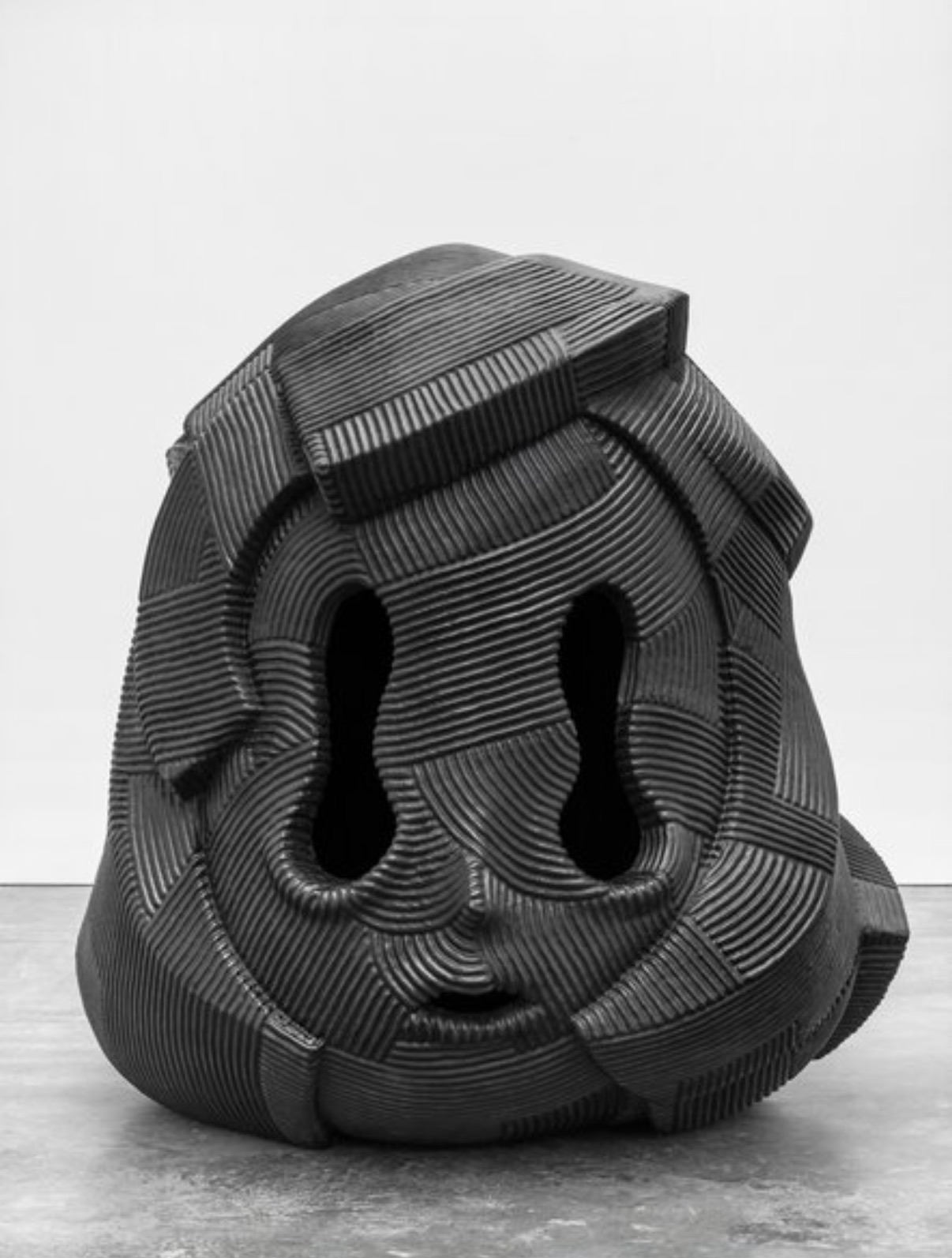
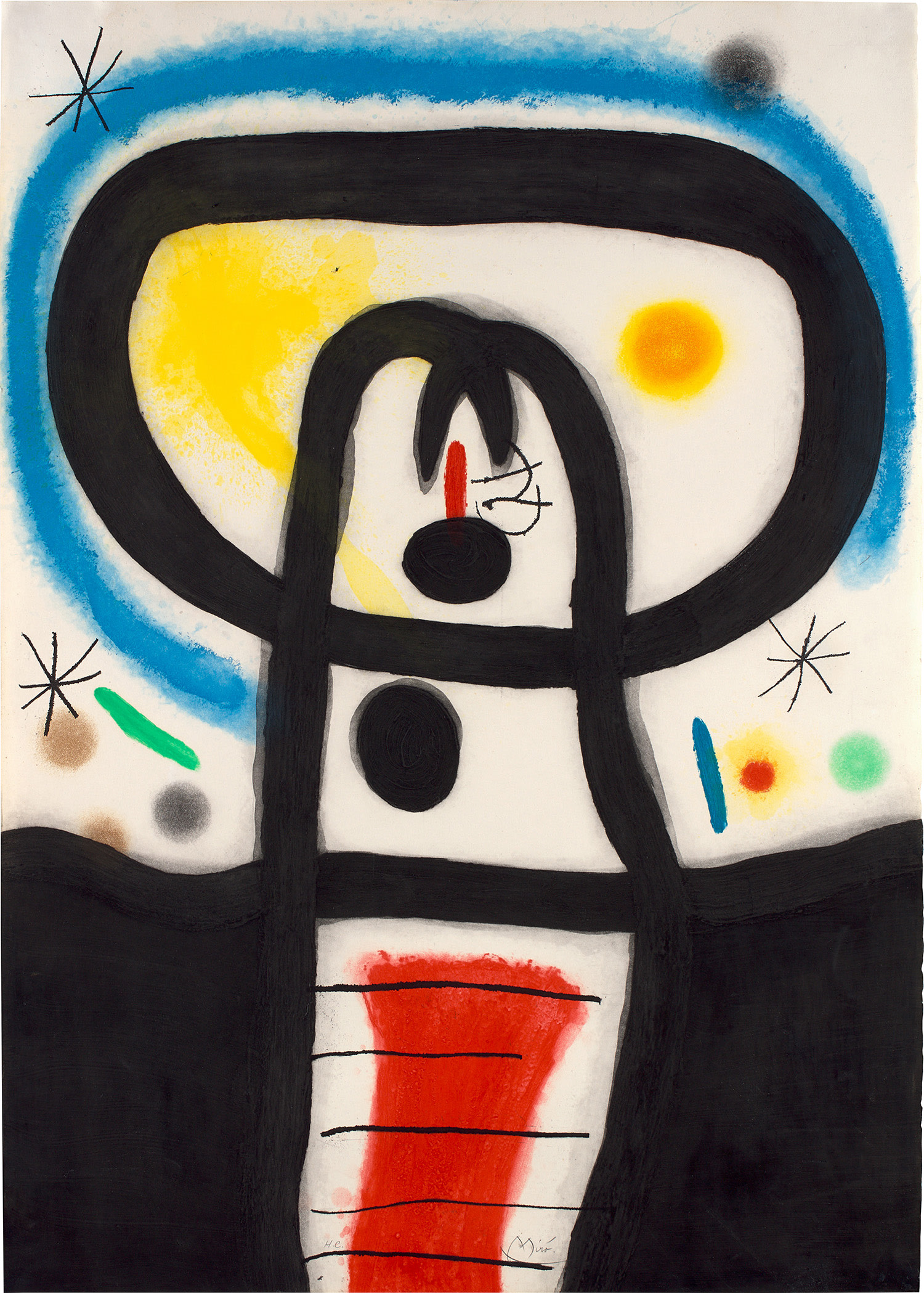
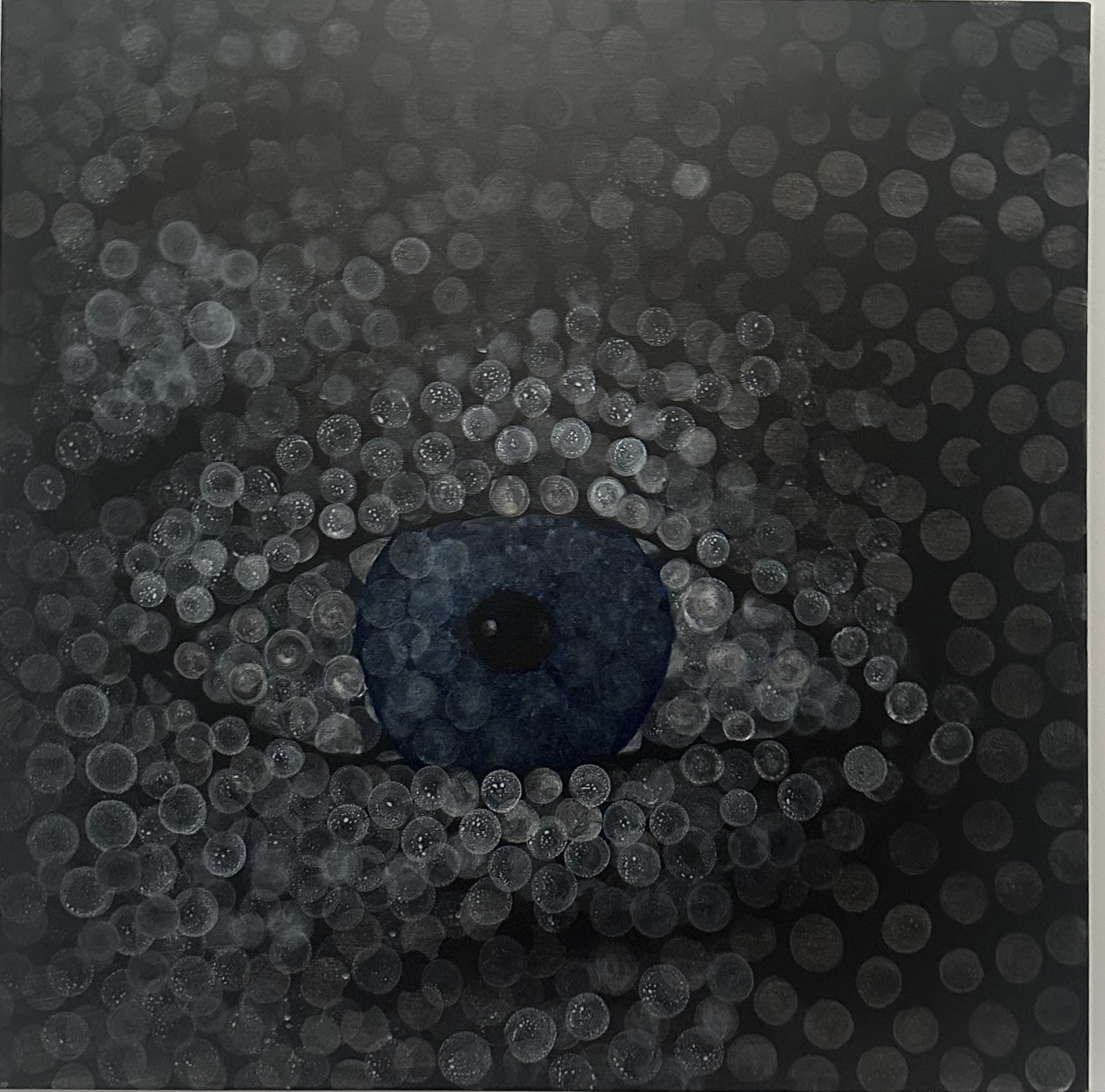
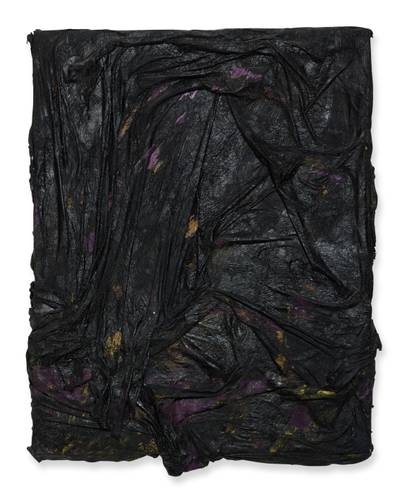
En Iwamura
Still Dreaming, 2021





Surface Tension: Art That Demands to Be Felt
There is a moment, standing before a heavily worked canvas, when the eye stops being enough. You want to reach out. You want to know what it feels like under your fingertips, whether the ridges are sharp or yielding, whether the surface holds warmth or throws it back at you. Texture in art is one of the oldest and most visceral forms of communication between maker and viewer, a language that bypasses intellect and goes straight to the body.
It is also, in the current art world, experiencing one of its most expansive and conceptually rich periods in generations. The roots of texture as a primary expressive tool run deep. Long before modernism gave artists permission to let the surface speak for itself, painters were using impasto to create shadow and mass, sculptors were finishing bronze to different degrees of polish to control how light moved across a figure. But the real revolution came in the twentieth century, when artists began treating the surface not as a window onto something else but as the subject itself.
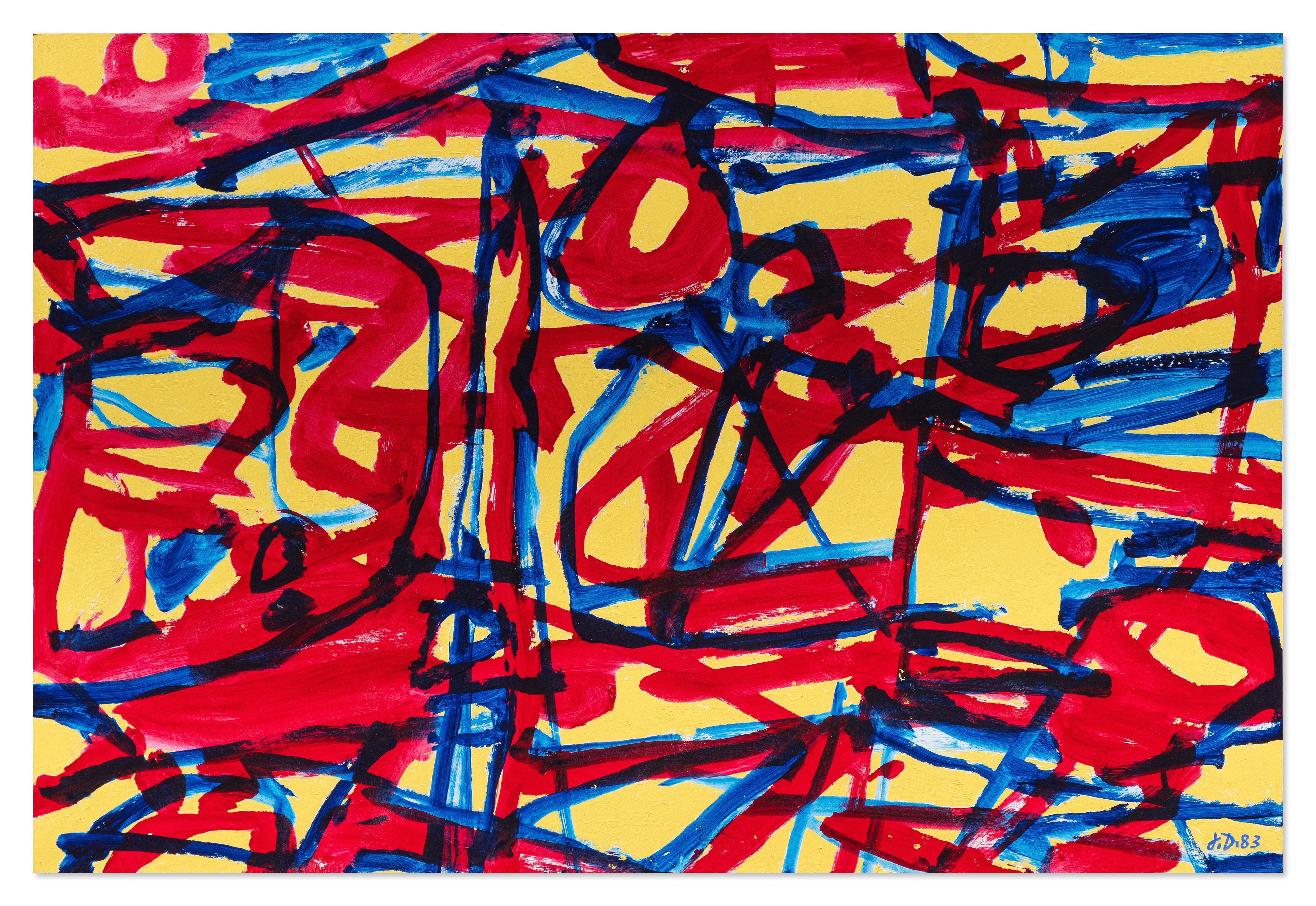
Jean Dubuffet
Mire G44 (Kowloon) (La Mer), 1983
Jean Dubuffet was among the most radical early practitioners of this shift. From the late 1940s onward, his Art Brut philosophy led him to incorporate sand, gravel, tar, and plaster directly into his canvases, creating grounds that resembled cracked earth or scarred walls. He was insisting that high culture look at what it had been trained to ignore, the rough, the unfinished, the abject. Dubuffet is exceptionally well represented on The Collection, and spending time with those works is a masterclass in how texture functions as both material fact and philosophical stance.
The Arte Povera movement in Italy during the late 1960s extended this thinking in important directions, collapsing the boundary between art object and raw material. Giovanni Anselmo, Jannis Kounellis, and their contemporaries brought burlap, soil, and live flame into gallery spaces, treating texture as a record of time and process rather than craft. Meanwhile in Spain, Antoni Tàpies was developing a body of work that remains among the most compelling of the twentieth century. His canvases from the 1950s onward used mixed media in ways that felt almost geological, layers of paint combined with marble dust, resin, and collaged materials that accumulated into surfaces resembling the walls of old buildings in Barcelona, dense with history and erosion.
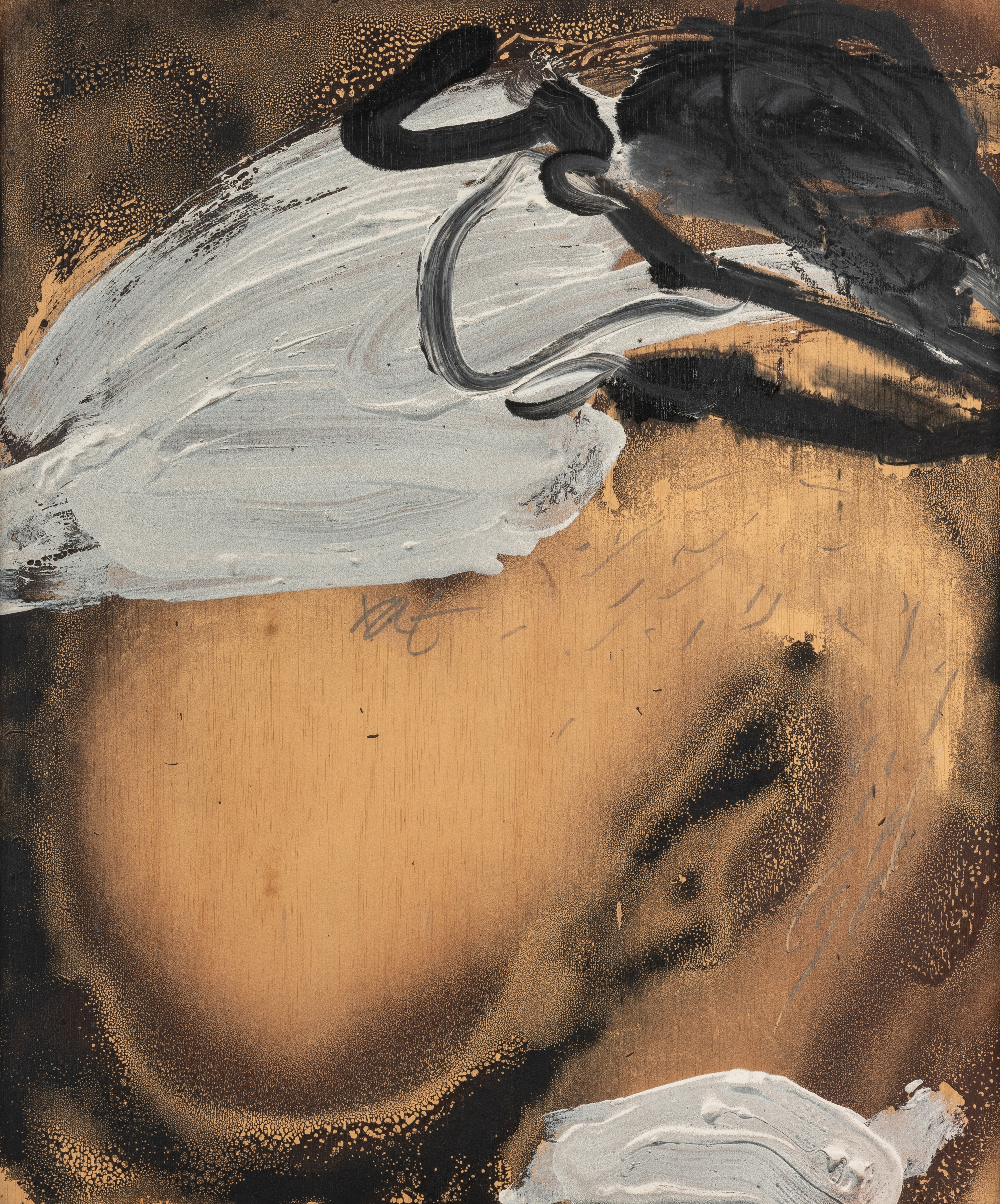
Antoni Tàpies
Nu de vernís, 1982
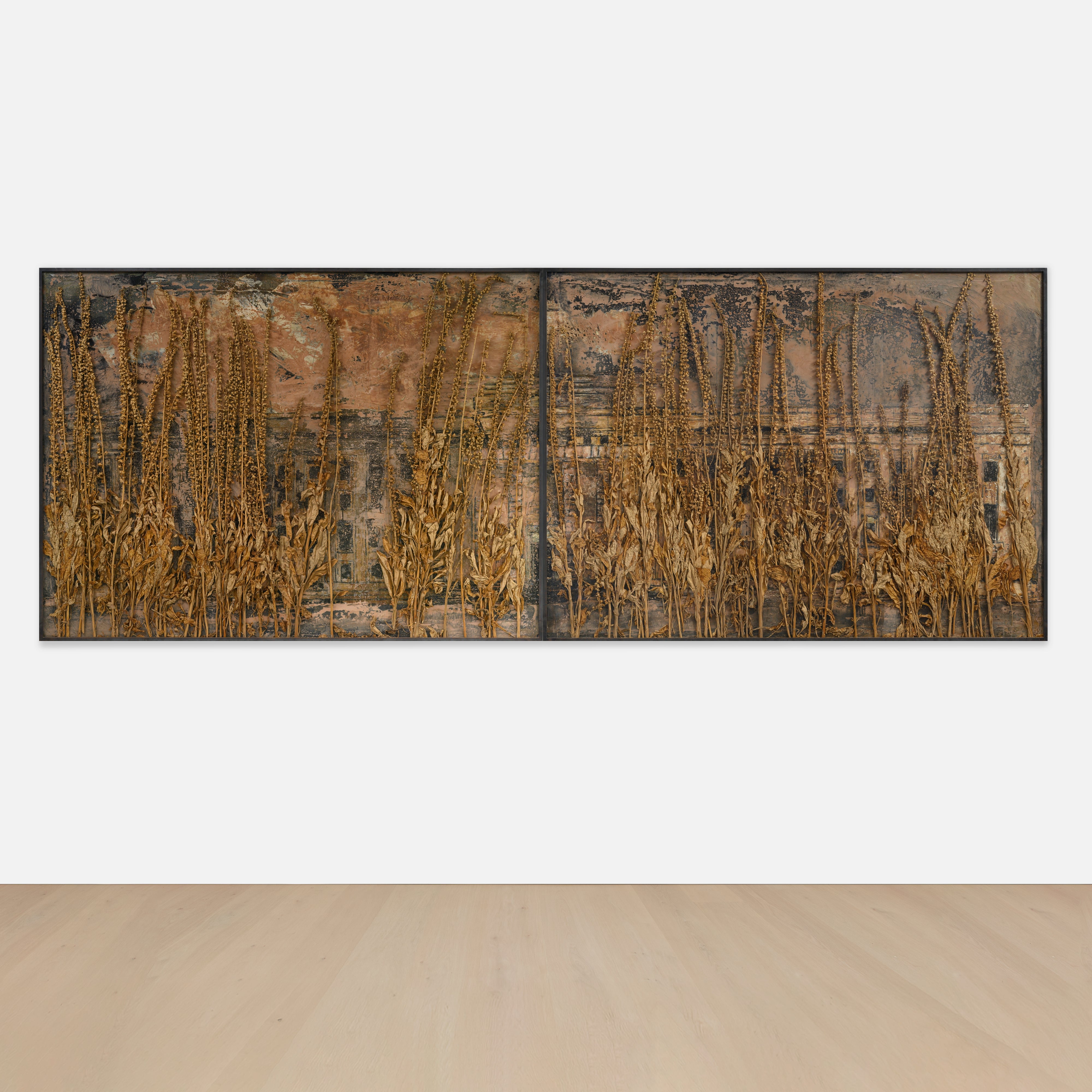
Tàpies understood texture as memory, as the physical residue of living. The works on The Collection demonstrate exactly why his influence has never really faded. Anselm Kiefer arrived with a similarly monumental ambition. His canvases from the 1970s and 1980s incorporated lead, straw, shellac, and ash to build surfaces that felt like landscapes after catastrophe.
Looking at a Kiefer is not a passive experience. The weight of the materials is almost atmospheric; you feel the gravity of what he is referencing, German history, mythology, the burden of cultural inheritance. Kiefer and Tàpies share a quality that distinguishes the greatest textured work from mere surface decoration: the material choices are never arbitrary. Every layer of matter carries meaning.
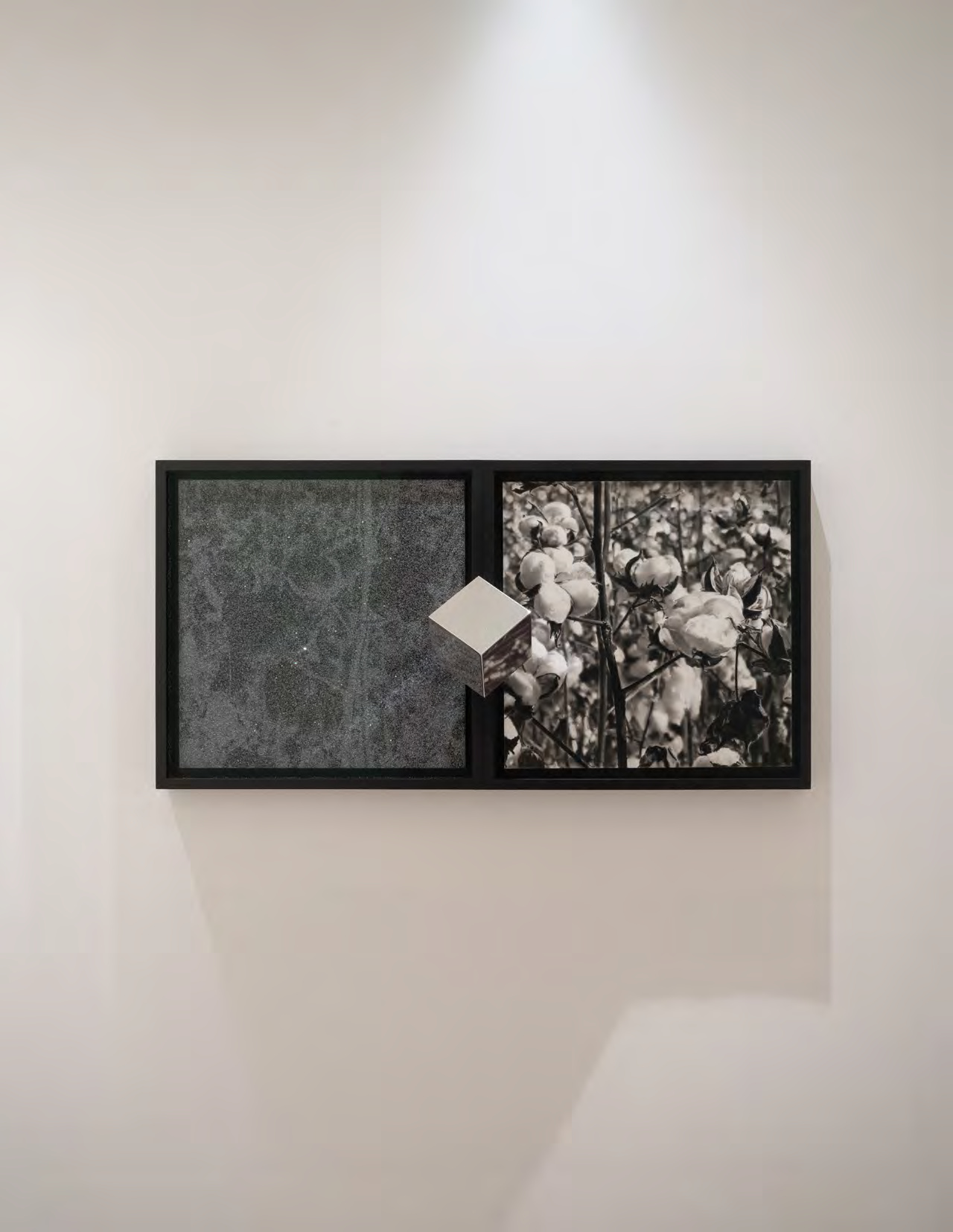
Robert Longo
Maquette for Wolf, 2025
Günther Uecker, represented on The Collection with a strong group of works, approached this from another angle entirely. His nail reliefs, begun in the early 1960s, create surfaces that are almost aggressive in their repetition, fields of shadow and light that shift with every change in illumination. By the 1980s and into the 1990s, the terrain had expanded considerably. Julian Schnabel brought a kind of operatic energy to textured painting, famously working on broken crockery plates embedded in surfaces of enormous scale.
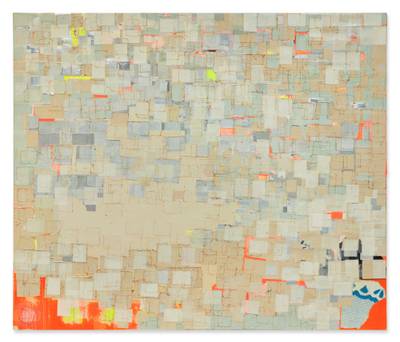
His approach was theatrical where Tàpies was contemplative, but the underlying commitment to the physical object as carrier of meaning was shared. The generation that followed continued to push the boundaries. Mark Bradford builds his canvases from layers of paper, billboard materials, and paint that he then sands, peels, and excavates, so that the final surface reveals a stratigraphy of urban material. His work is explicitly social as well as painterly, and the texture is evidence of that double life.
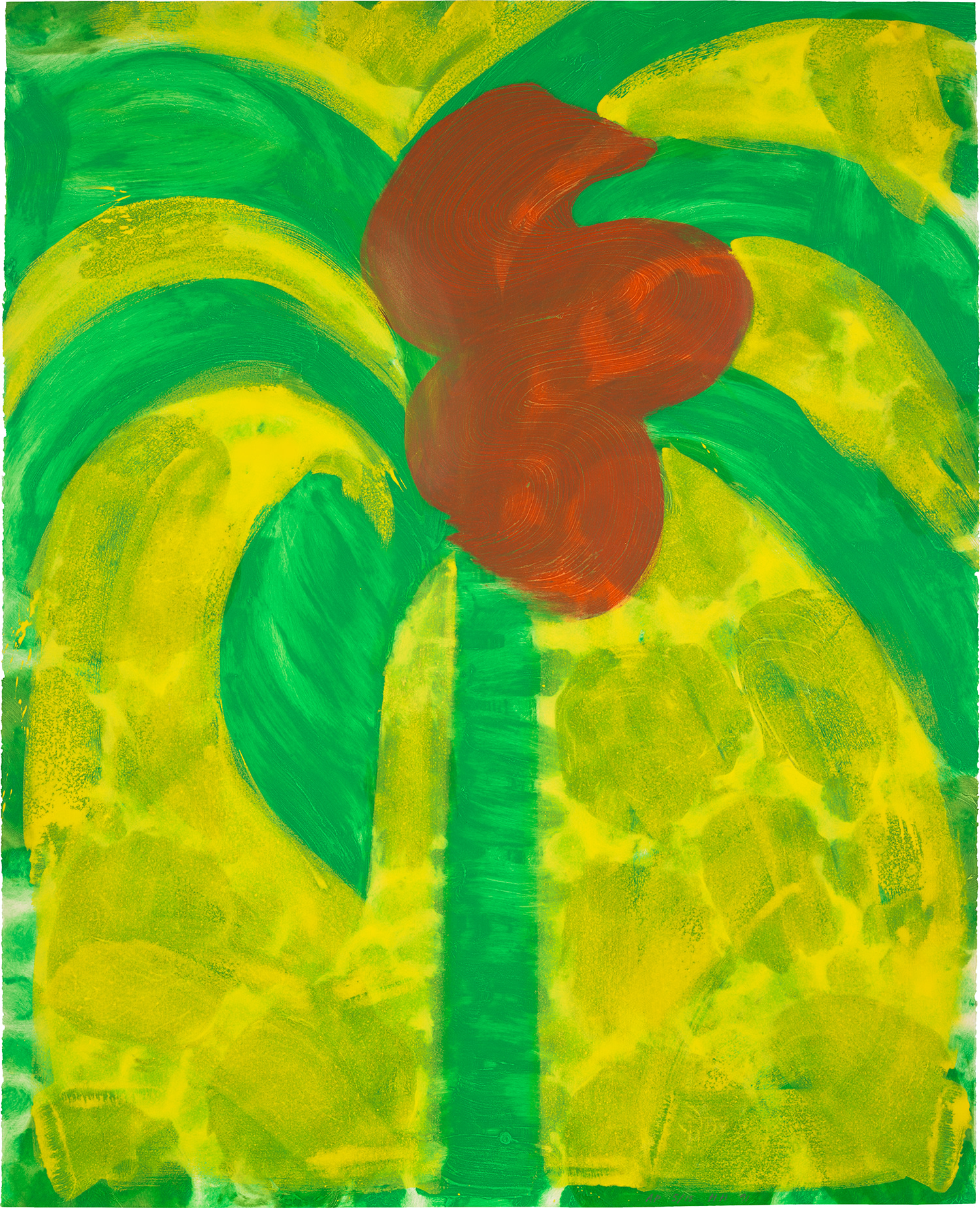
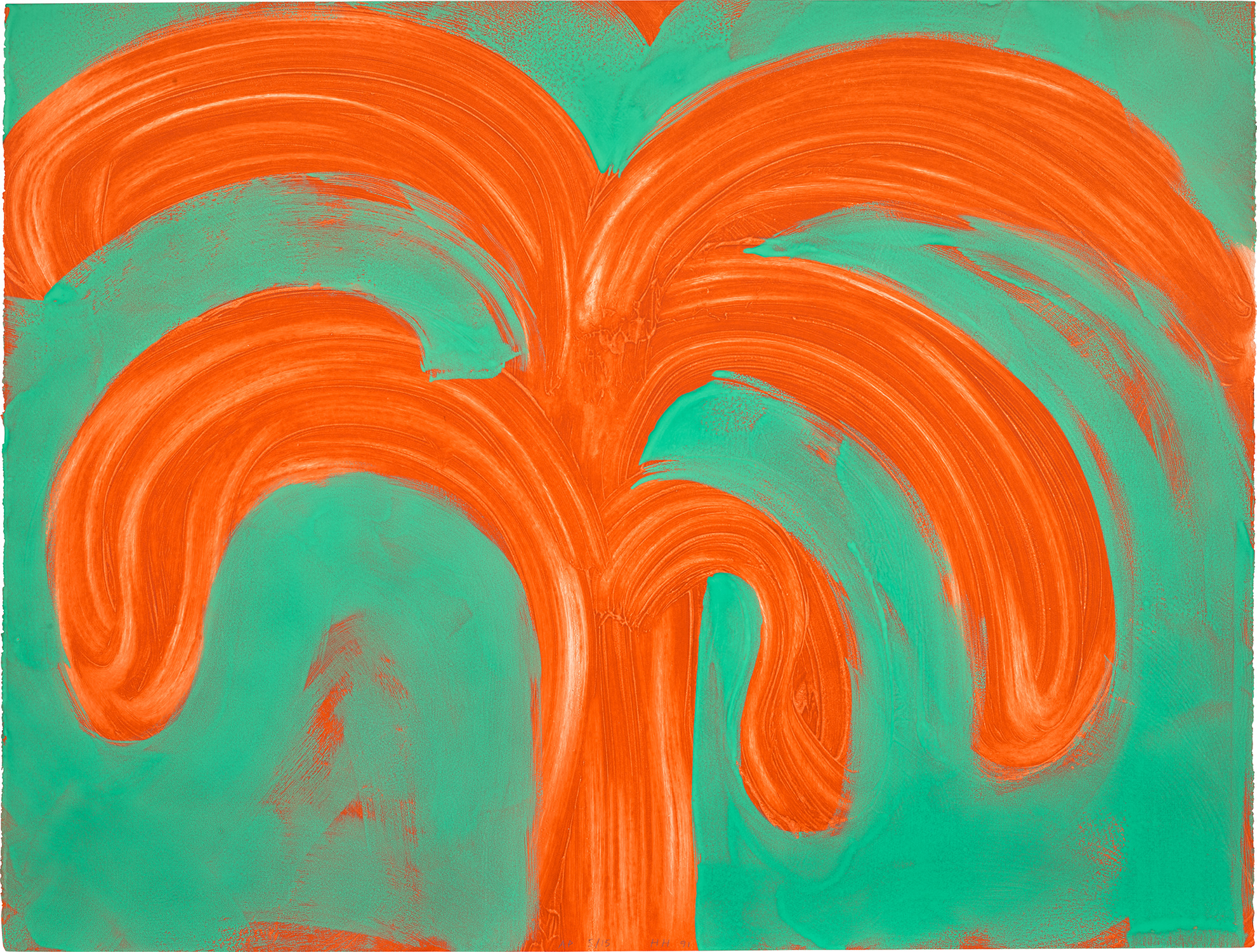
Howard Hodgkin
Flowering Palm (H. 89)
Oscar Murillo approaches the canvas differently, incorporating dust, dirt, and found fabric in ways that invoke labor, migration, and the residue of lives lived in specific places. Both artists are represented with significant depth on The Collection. Texture also lives productively in sculpture and installation. Angel Otero, whose poured paint skins create delicate but complex relief surfaces, bridges painting and object making in ways that feel genuinely contemporary.
Bosco Sodi works with raw clay and natural pigments to produce monolithic objects whose cracked and fissured surfaces seem to record the drying process as a kind of autobiography. Sterling Ruby combines industrial materials with an almost baroque accumulation of mark making that gives his work a density that rewards sustained attention. What unites artists as different as these is a refusal to treat the surface as neutral ground. For all of them, the outer skin of the work is where its meaning lives most intensely.
The current moment is particularly interesting because texture has become newly legible to a generation of collectors who have grown up encountering art as much through screens as in person. The flat digital image cannot capture what a heavily worked surface actually does, and this creates a hunger for the physical encounter that great textured work satisfies completely. Artists like Gina Beavers, who builds up her painted surfaces into low relief with a kind of tongue in cheek literalism, and Donna Huanca, whose work incorporates skin, pigment, and organic material in ways that are overtly bodily, are speaking directly to this moment. The question of what can only be experienced in the room, what resists reproduction, has rarely felt more urgent.
Texture, ultimately, is art insisting on its own materiality. It is a refusal of dematerialization, a claim that the physical world has not been superseded. From Dubuffet scraping gravel into wet paint in postwar Paris to Bradford sanding through layers of Los Angeles street life, the impulse is continuous. Matter means something.
The surface remembers. And the best collectors have always known that some conversations can only be had in person, standing close enough to see what the work is actually made of.