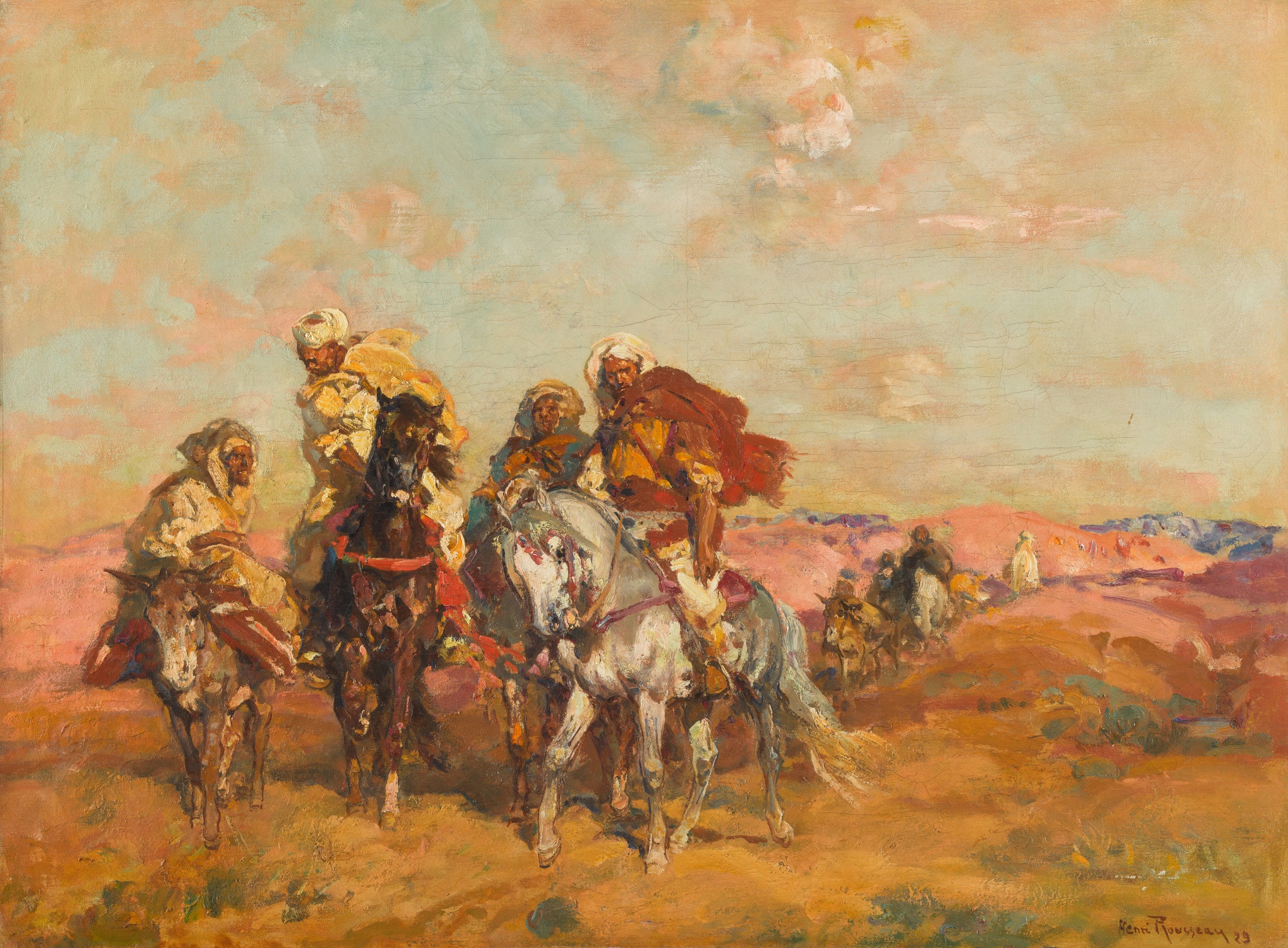
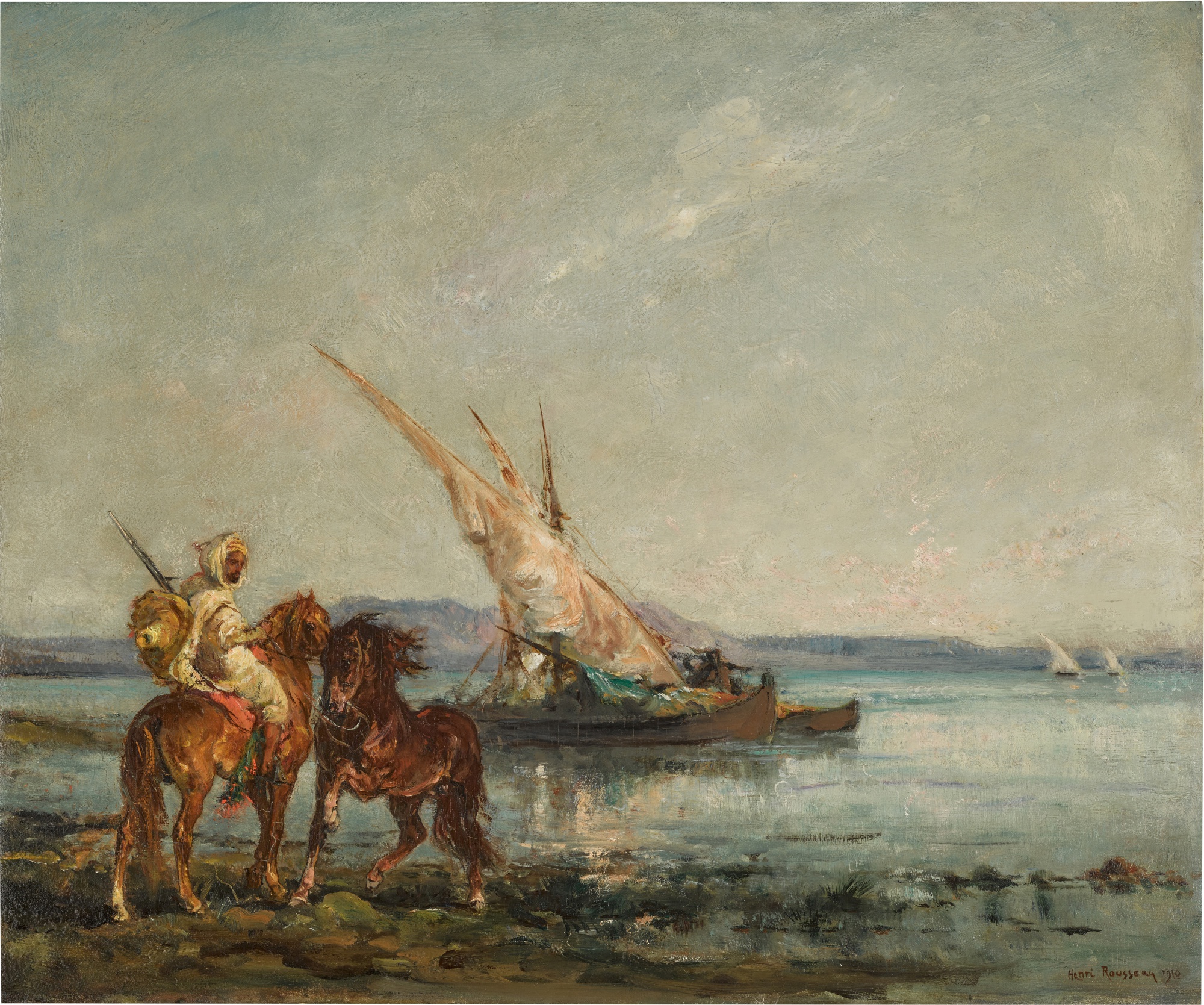
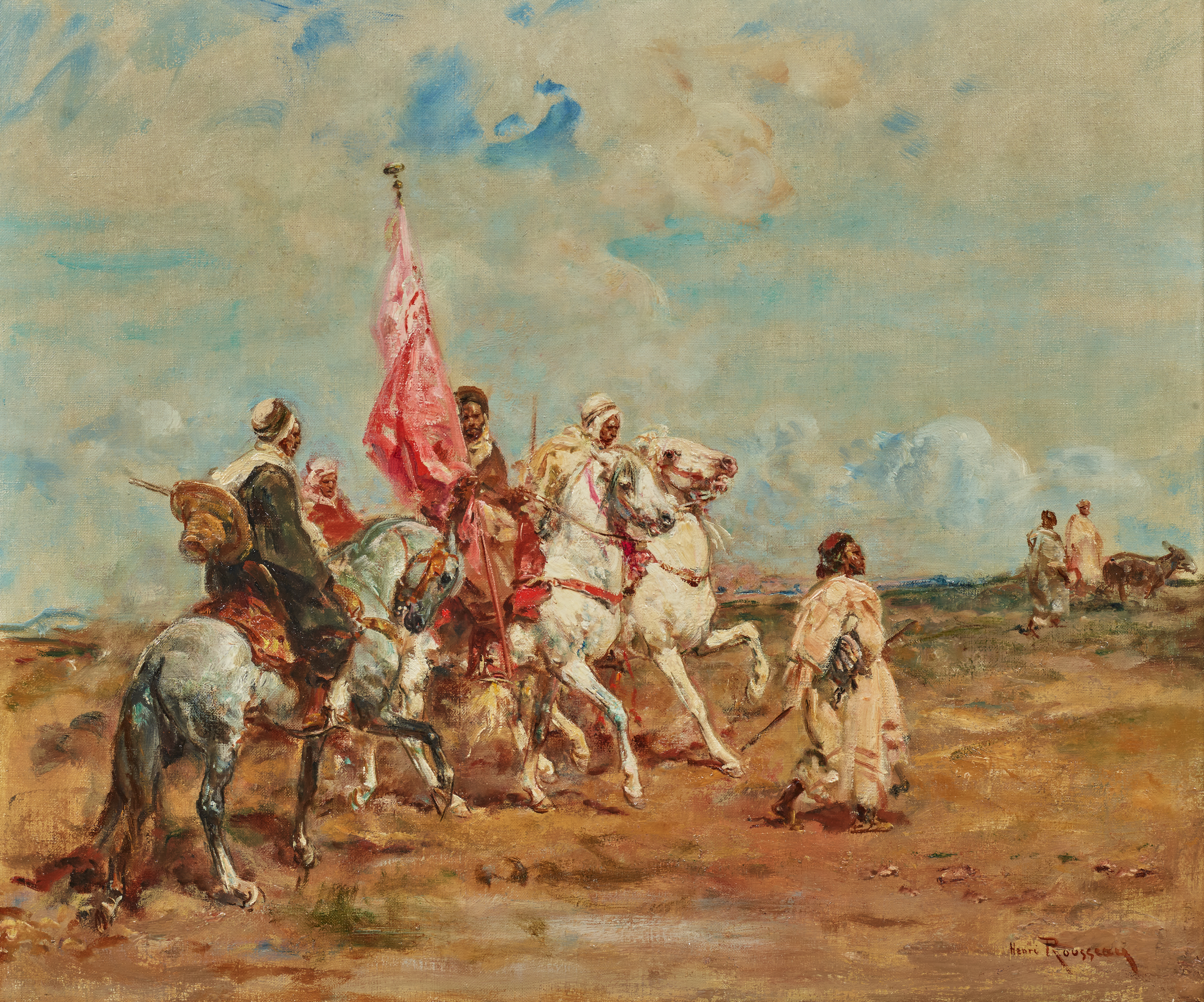
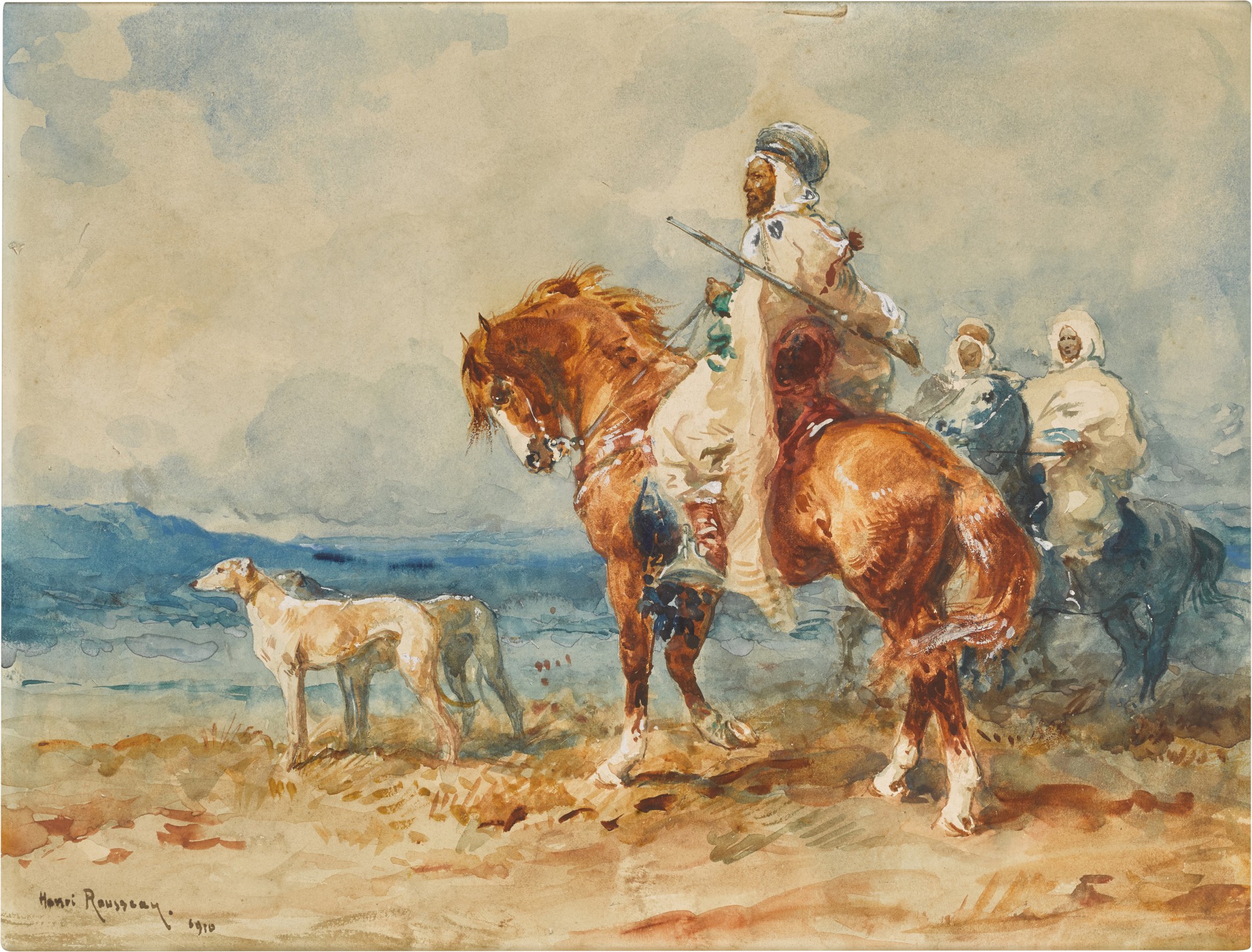
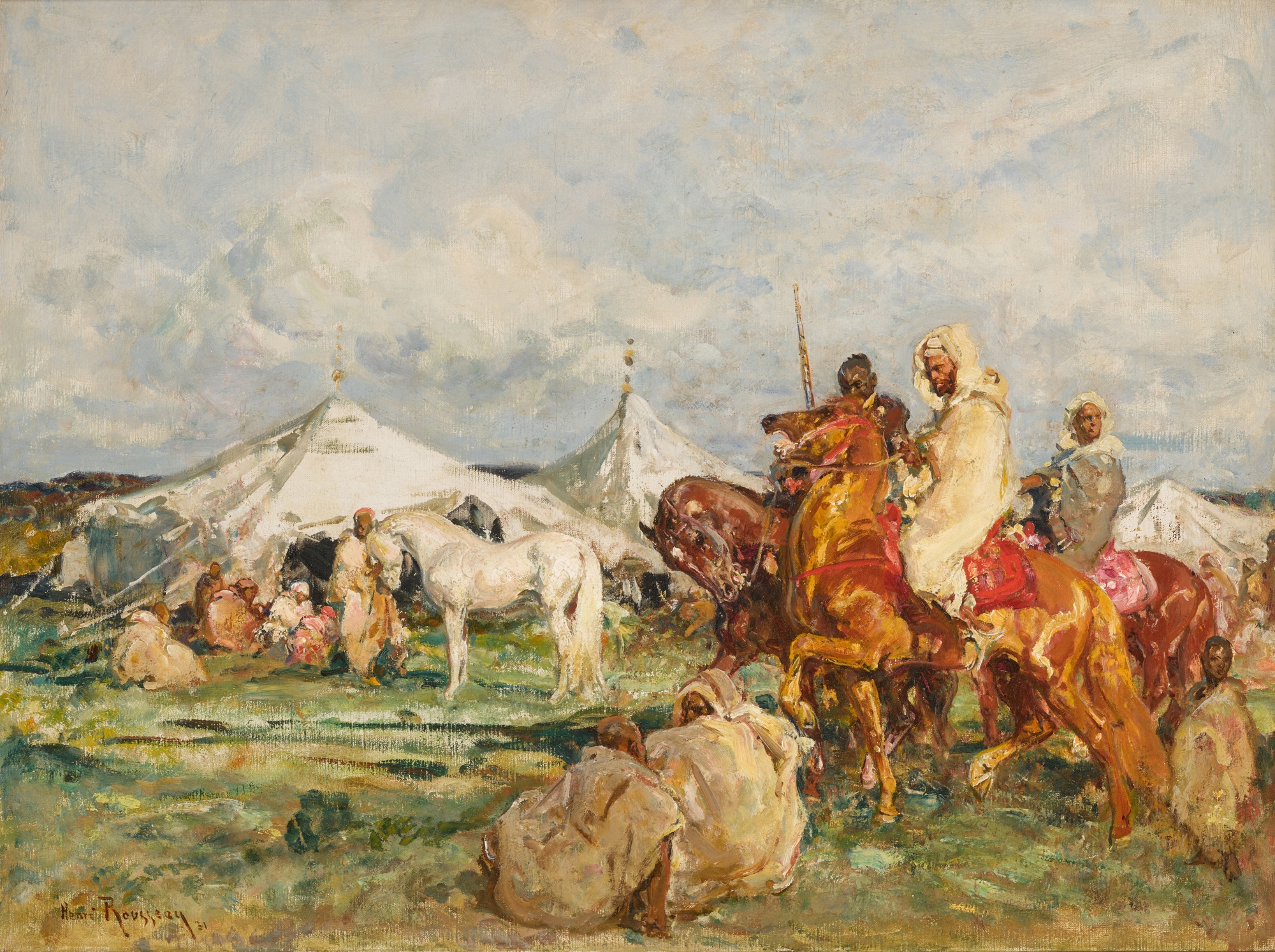
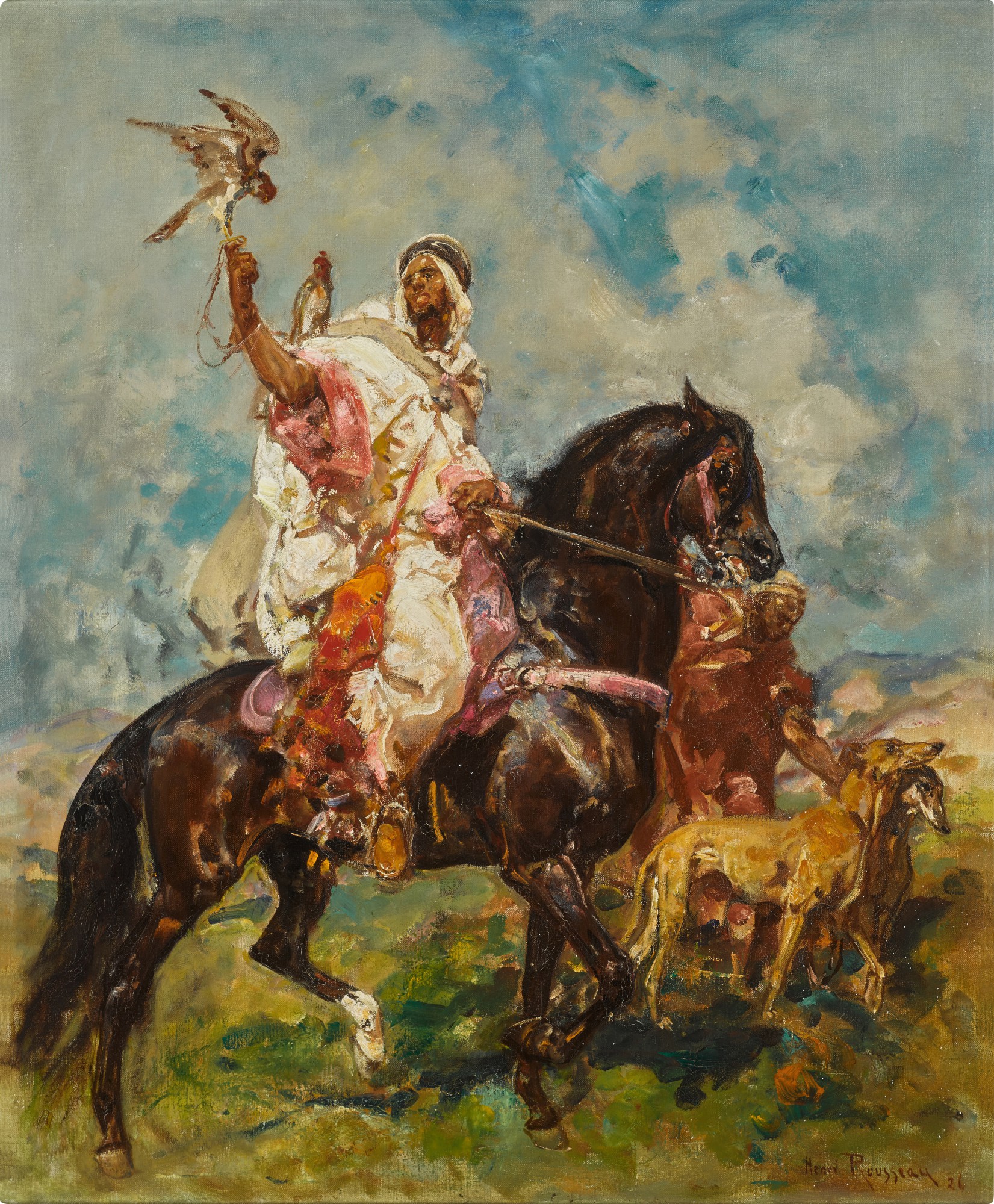
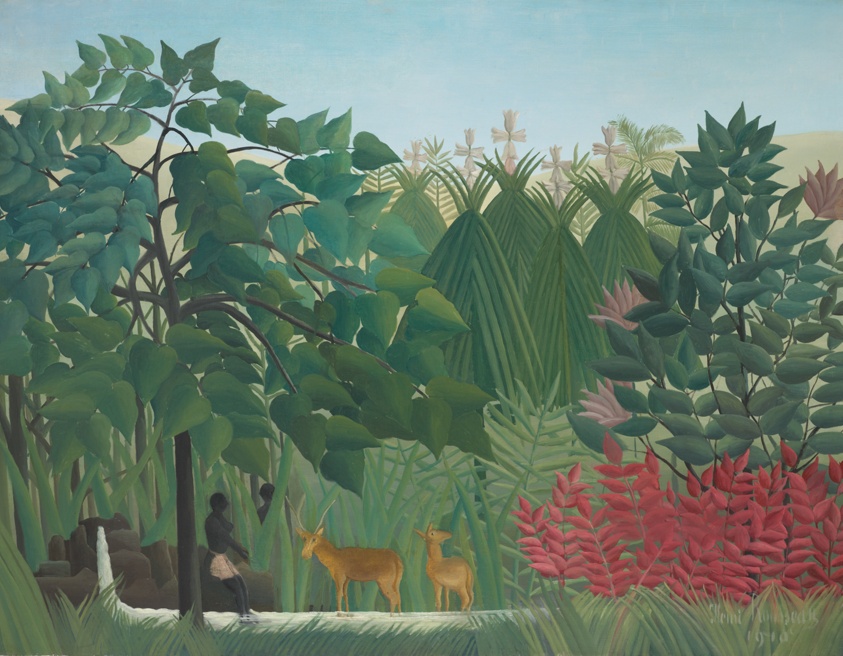
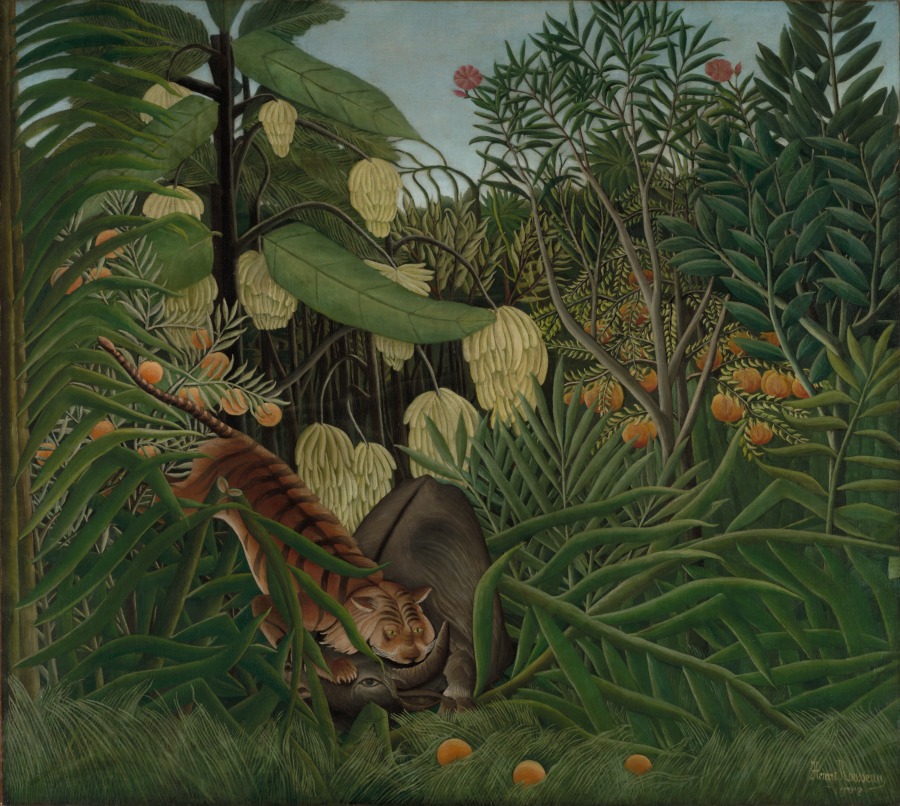
There is a moment, standing before Henri Rousseau's luminous jungle canvases at the Musée d'Orsay in Paris, when the rational world quietly dissolves. The leaves are too large, the lions too still, the moonlight too silver and certain. And yet something in the image feels more truthful than truth, more vivid than memory. It is the sensation that has drawn generations of artists, collectors, and dreamers to the work of a self taught toll collector from Laval, a man who never left France and yet painted the wildest corners of the imagination with absolute conviction. Rousseau was born on May 21, 1844, in Laval, in the Mayenne region of northwestern France. His early life offered little suggestion of artistic greatness to come. He worked briefly as a lawyer's clerk before serving in the French army during the Franco Prussian War of 1870 to 1871, a period he later mythologized freely, claiming exotic postings and adventures that the record does not fully support. By the 1870s he had settled into a modest position as a customs and toll collector for the city of Paris, earning him the affectionate nickname Le Douanier, the customs officer. It was a humble, practical life, and painting entered it not through formal education or wealthy patronage but through sheer personal necessity. With no academic training and no access to the ateliers and academies that shaped his contemporaries, Rousseau taught himself to paint by studying works in the Louvre, observing the world around the outskirts of Paris, and following his own instincts with remarkable fidelity. He began exhibiting at the Salon des Indépendants from 1886 onward, a venue that, crucially, accepted work without jury selection. Critics were frequently unkind, reading his flat perspectives, outsized foliage, and simplified forms as signs of incompetence rather than imagination. Rousseau absorbed the mockery with equanimity, and occasionally with genuine puzzlement, because he considered himself a serious and accomplished artist. He was not wrong. The development of his practice across the 1880s and 1890s reveals an artist of tremendous internal consistency. His early works depicting the suburbs and outskirts of Paris, including the luminous Sawmill, Outskirts of Paris from 1888 and the quietly observed Outskirts of Paris from 1897, demonstrate a precise and tender attention to everyday French life. These paintings reward close looking: the light is clear and democratic, falling equally on factory smokestacks and garden hedges, on working people and empty roads. There is no sentimentality and no condescension, only a kind of generous, uncomplicated seeing. His floral still lifes, including the lovely Dahlia and Daisies in a Vase from 1904, carry the same quality, each petal placed with the care of someone who finds the ordinary world genuinely astonishing. It is, of course, the jungle paintings for which Rousseau is most celebrated globally. Works such as The Sleeping Gypsy, completed in 1897 and now held by the Museum of Modern Art in New York, and The Dream, his final major canvas from 1910, now also at MoMA, established an entirely new visual language for the fantastical. Rousseau had never visited a jungle. His sources were illustrated magazines, taxidermied animals at the Jardin des Plantes in Paris, and the botanical gardens he visited regularly. Yet his jungles feel experienced rather than imagined, populated by creatures of uncanny stillness and plants of architectural certainty. The War, his striking lithograph of 1894, shows a darker register of his imagination, with a rider on horseback traversing a landscape of fallen bodies, a work of genuine symbolic weight that anticipates the anxious imagery of the twentieth century. The works available through The Collection offer a rich and varied entry point into Rousseau's practice. The Advance Party and Preparing for the Charge belong to his engagement with military and narrative subjects, a thread running through his work that reflects the Franco Prussian War's long shadow over his generation. A Hunter and His Charge on the Shores of the Nile and Halt of the Caravan speak to his fascination with the exotic and the unknown, worlds constructed entirely from reading, looking, and imagining. The Falconer is a particularly distinguished example of his figurative work, placing a solitary human form within a natural setting with the same composed certainty he brought to all his subjects. The Waterfall from 1910, one of his final works, is suffused with the lush, dreaming vegetation that defined his mature vision. From a collecting perspective, Rousseau occupies a singular and secure position in art history. His work has been held by major institutions worldwide for well over a century, and significant examples rarely come to market. When they do, they command serious attention from the most dedicated collectors of Post Impressionist and early modern work. The artists who championed him during his lifetime, including Pablo Picasso, who famously hosted a banquet in his honor in 1908, and Robert Delaunay, who admired and collected his paintings, understood intuitively what the broader market would take decades to confirm: that Rousseau's apparent naivety was a form of radical vision, not a limitation. Collectors drawn to the intersection of folk tradition, modernist innovation, and pure imaginative force find in Rousseau an artist who satisfies all three at once. Rousseau's place within art history has grown only more secure and more fascinating with time. He is claimed, with some justification, by the Surrealists, who saw in his dreamscapes a direct ancestor of their own unconscious imagery. André Breton and his circle venerated him. He is also understood as a foundational figure in the tradition of outsider and self taught art, though that framing can obscure the sophistication of his ambition and the consistency of his vision. He belongs, most accurately, to no single movement but to the broader human impulse to make meaning from the visible world through the force of imagination alone. In an era that increasingly values authenticity, singularity, and work made outside the pressures of institutional validation, Rousseau feels more relevant than ever. He painted the world as he needed it to be, with clarity and without apology, and the world has been catching up to him ever since.