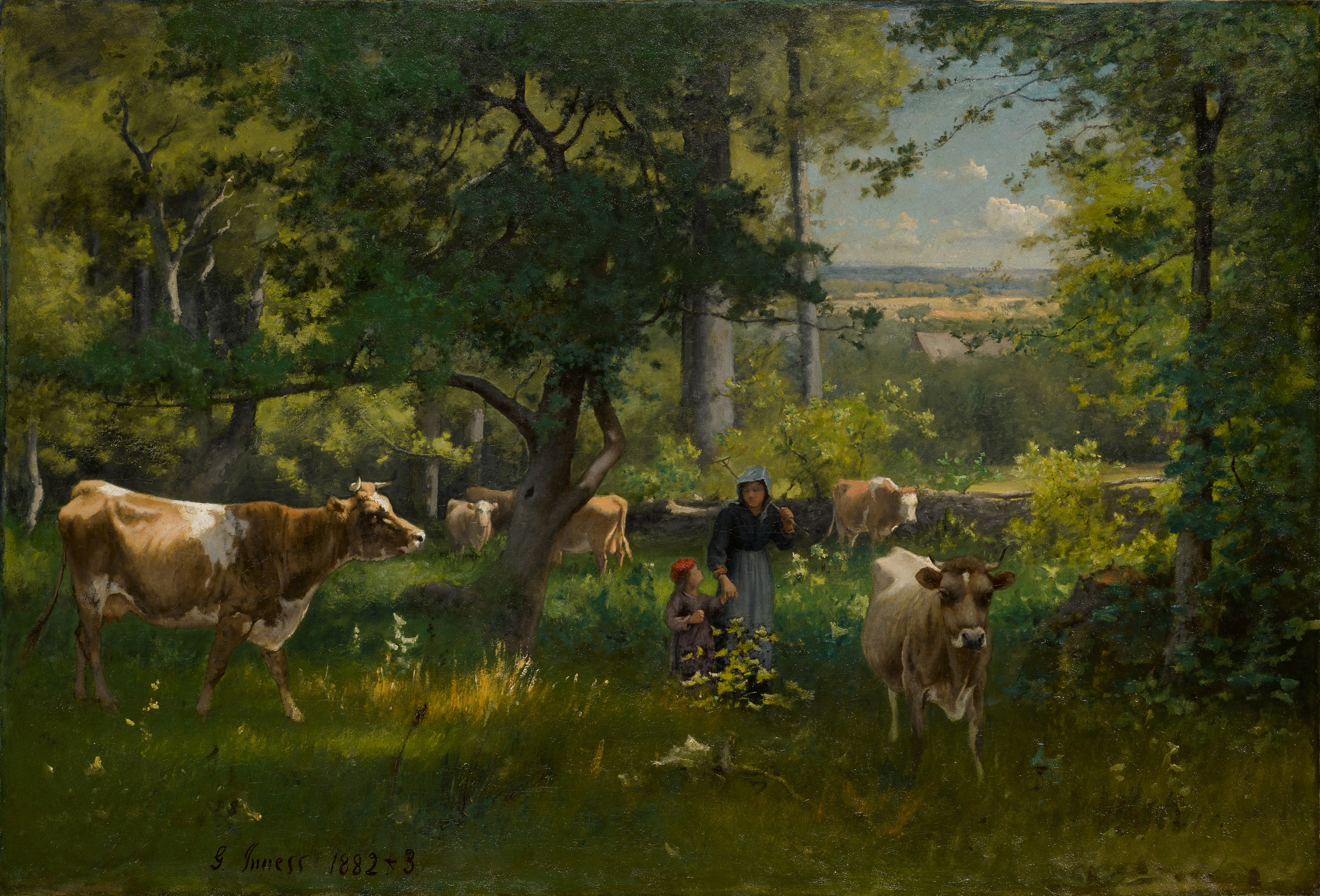
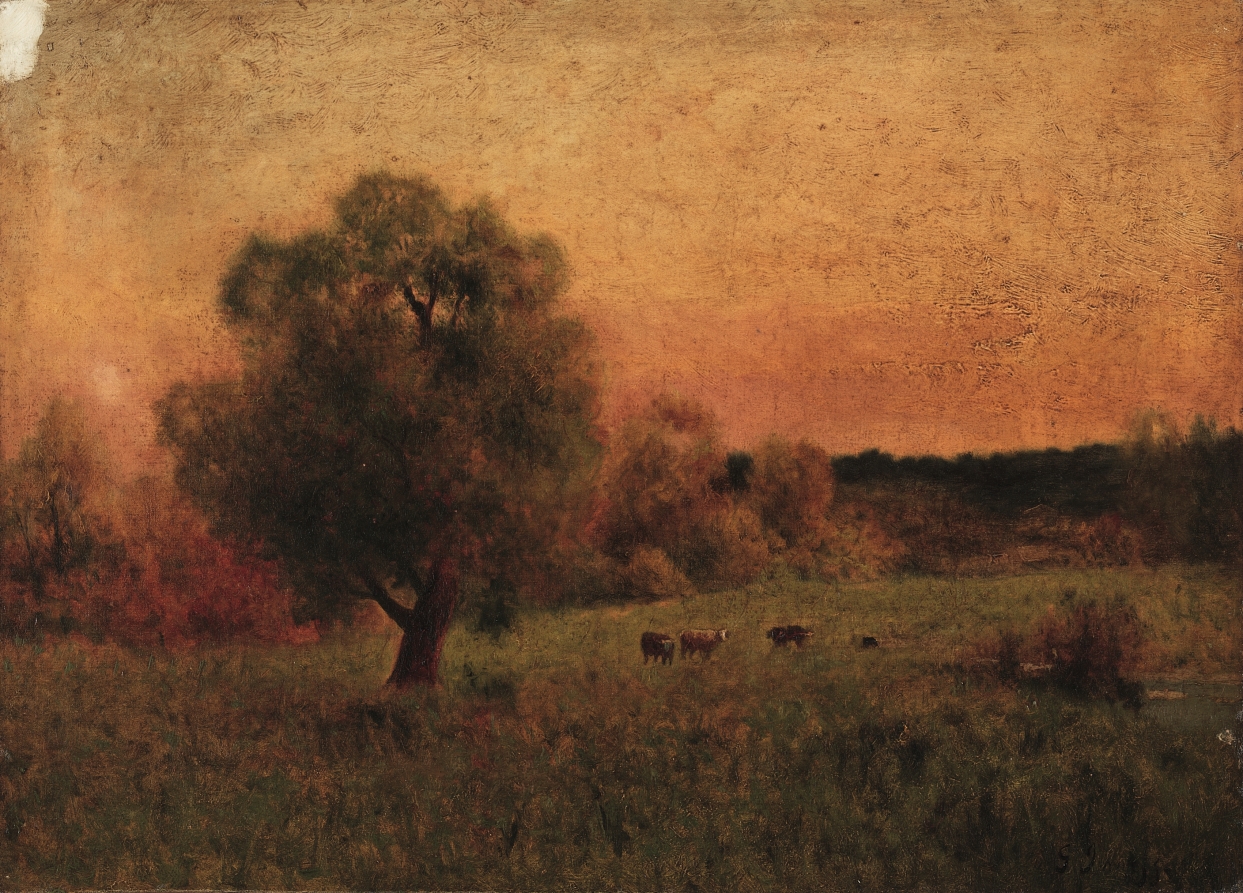
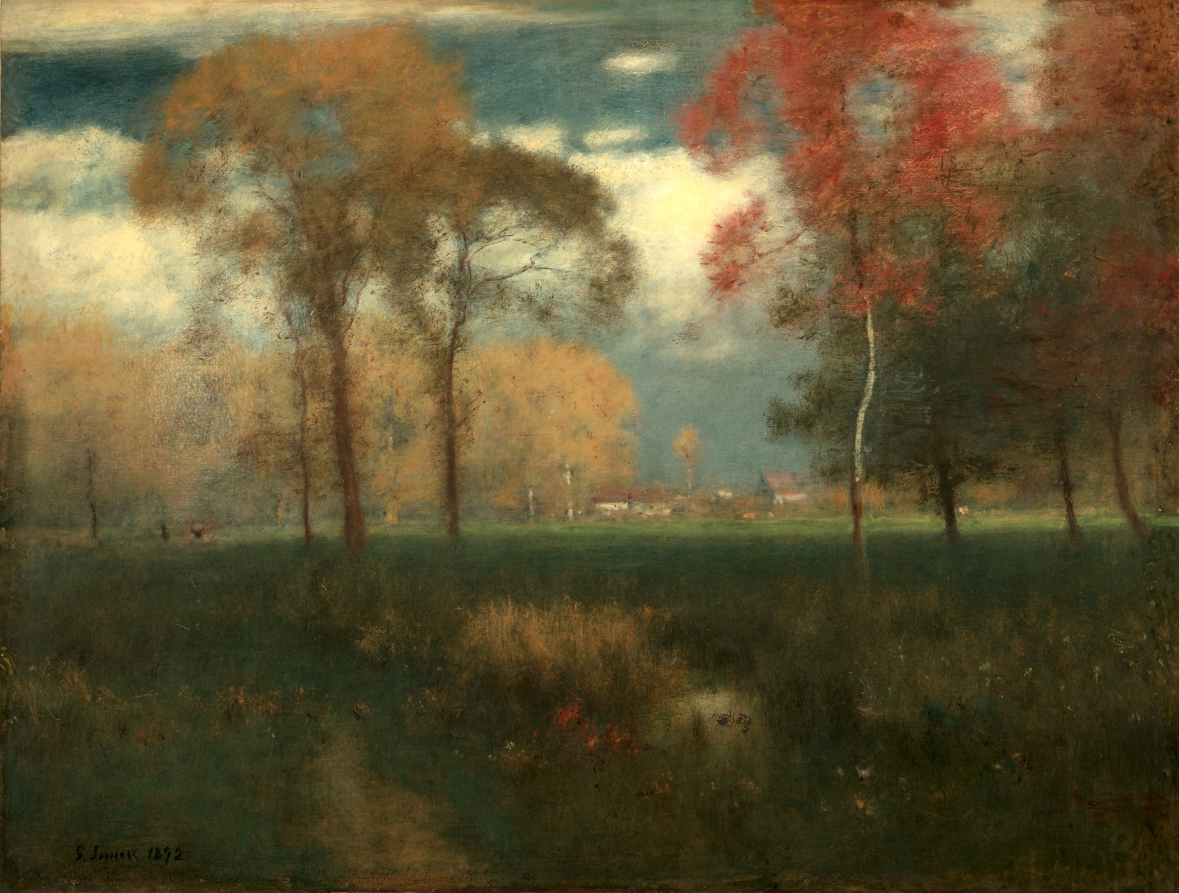
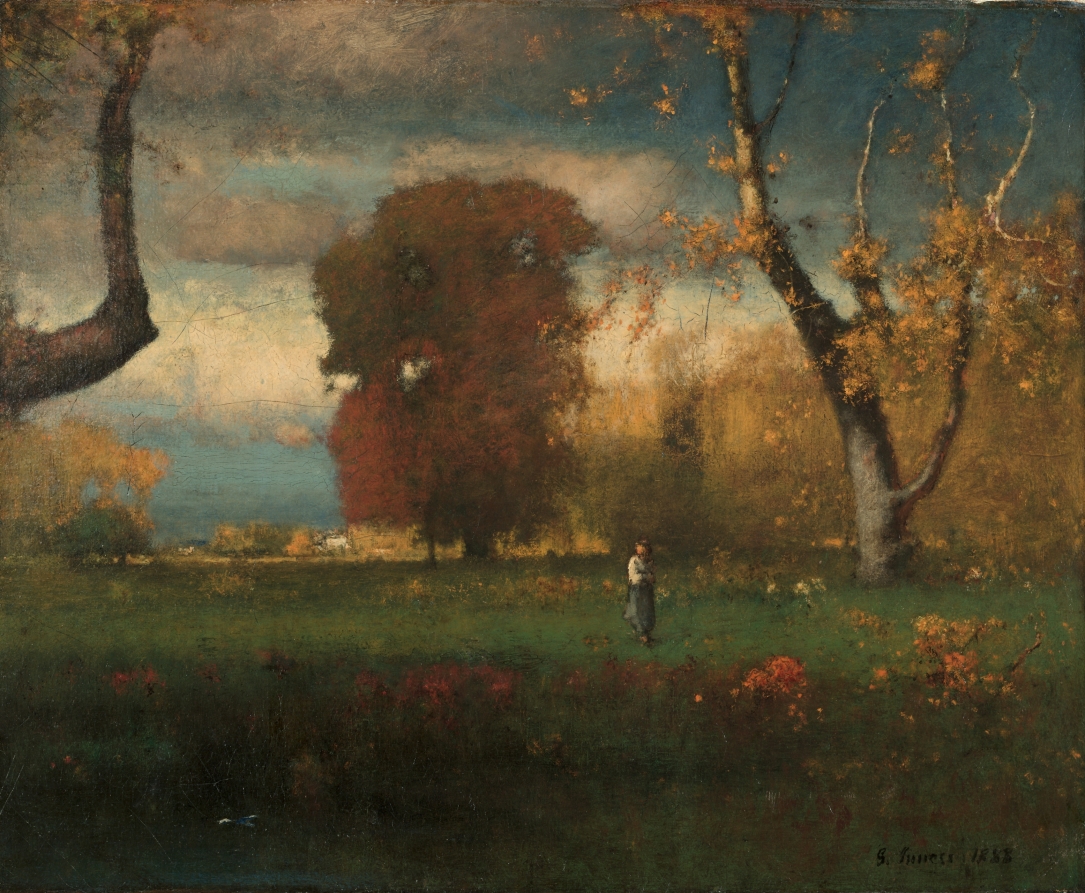
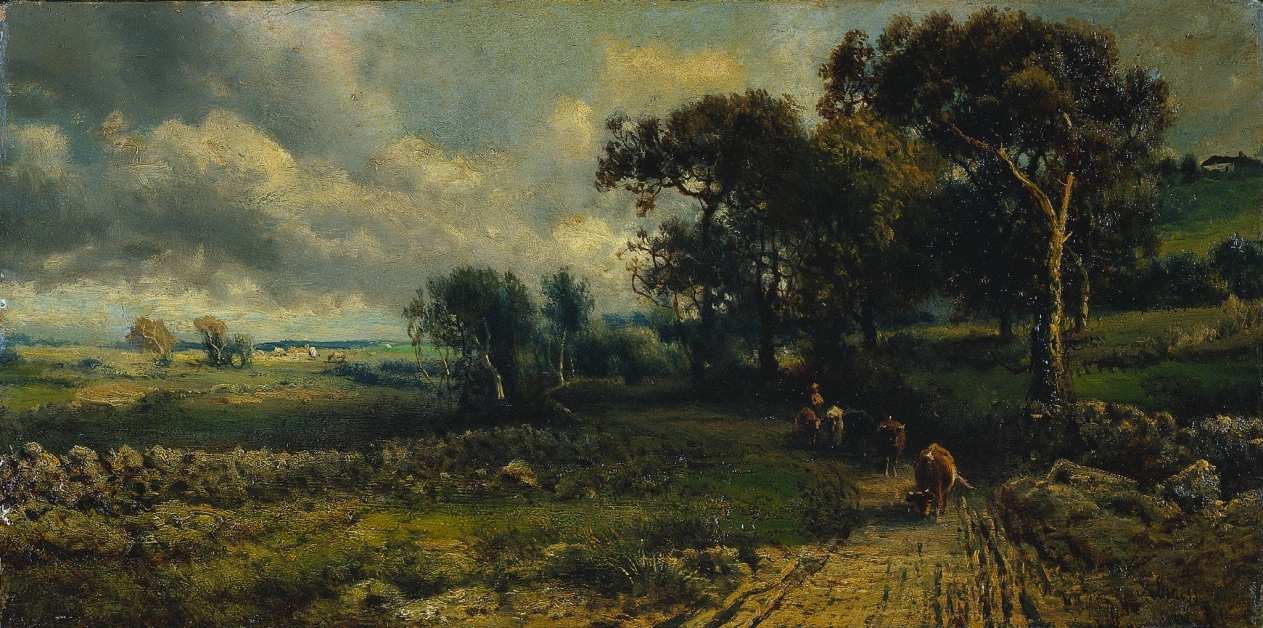
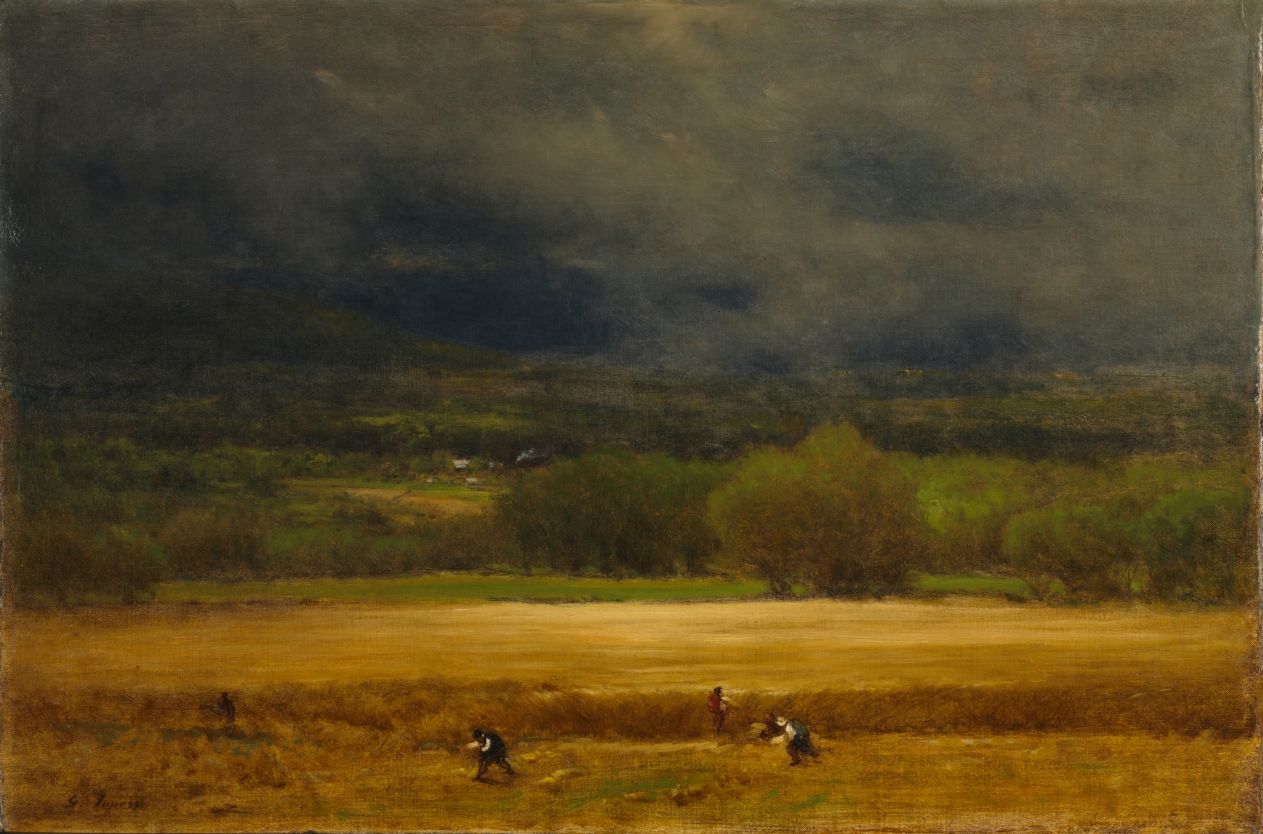
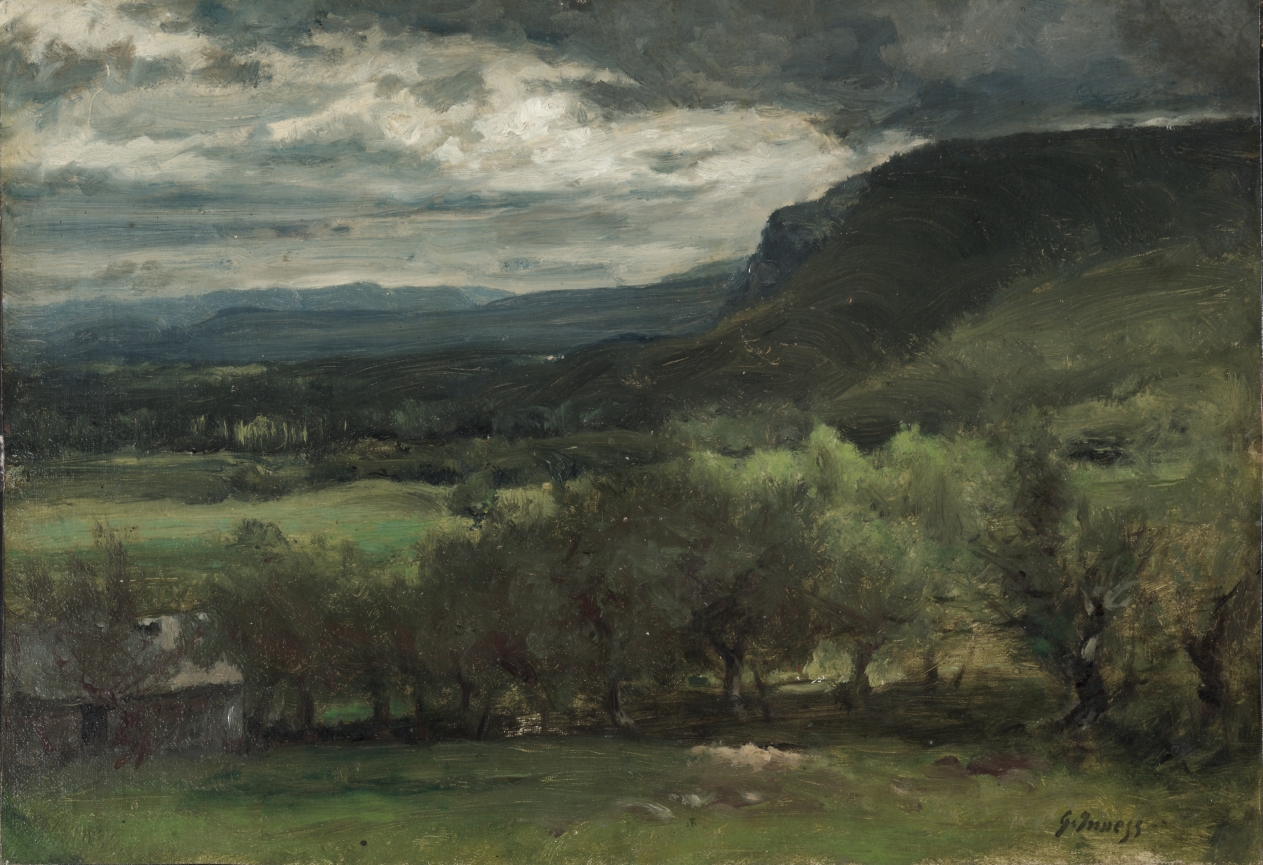
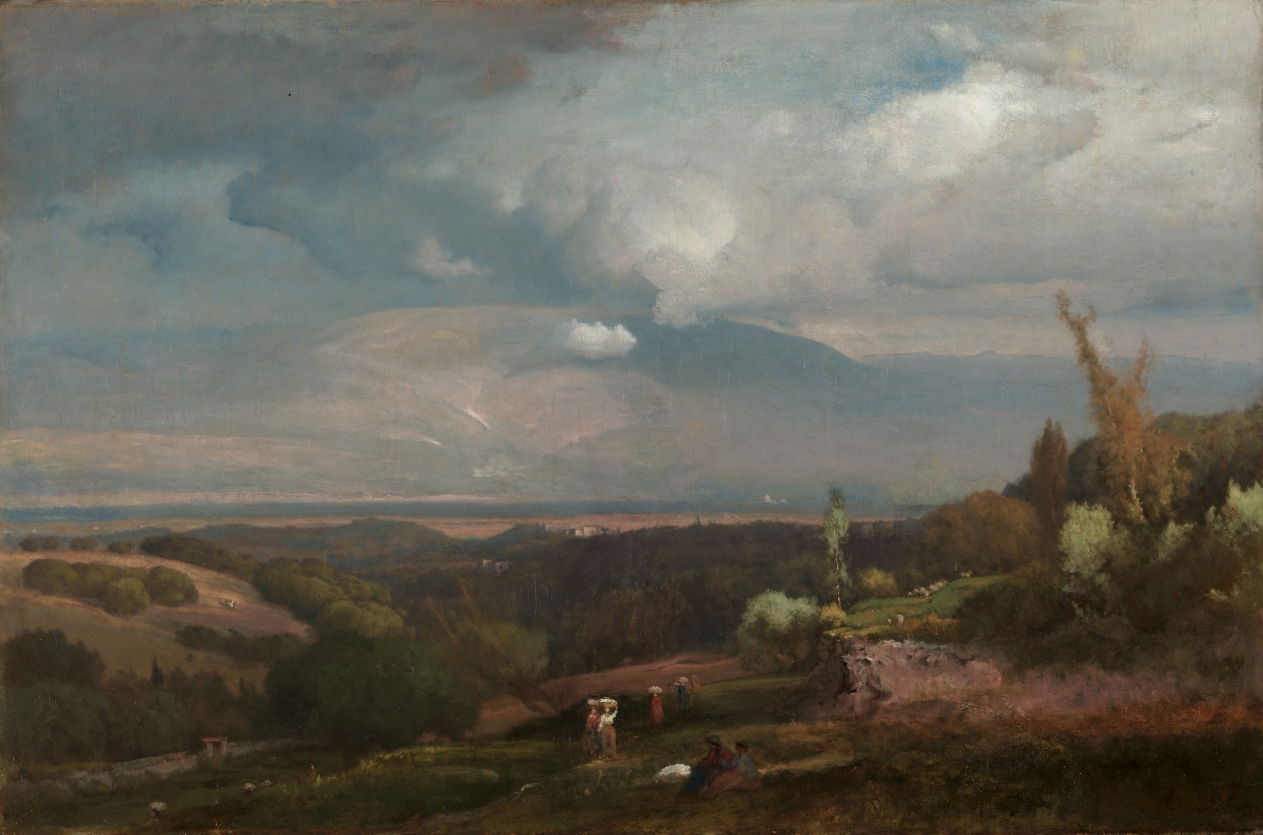
There is a particular quality of light that appears in the late paintings of George Inness, a kind of golden dissolve at the edge of afternoon, where trees lose their hard outlines and fields breathe with something close to feeling. It is a light that collectors and curators have spent well over a century trying to describe accurately, and it remains as elusive and compelling today as it was when Inness first committed it to canvas in the decades following the Civil War. Major American institutions including the Metropolitan Museum of Art, the Smithsonian American Art Museum, and the Art Institute of Chicago hold significant examples of his work, and salerooms at Christie's and Sotheby's consistently confirm his standing as one of the most financially robust and emotionally resonant figures in the American painting canon. For anyone who loves landscape painting, Inness is not simply a historical figure. He is a living argument for what paint can do. George Inness was born in 1825 in Newburgh, New York, the fifth of thirteen children in a family that would eventually settle in Newark, New Jersey. His formal training was limited but pointed: he studied briefly with the itinerant painter John Jesse Barker and later apprenticed with engravers in New York City, an experience that sharpened his sensitivity to tone and gradation. Two formative trips to Europe proved decisive. His first journey, in 1851 to 1852, brought him into contact with the old masters in Florence and Rome, and his second, in 1853 to 1854, introduced him to the Barbizon painters working in the forest of Fontainebleau outside Paris. Figures like Camille Corot and Charles François Daubigny showed him that landscape painting did not need to be a documentary exercise. It could be a meditative one. His early work clearly bears the influence of the Hudson River School, the dominant force in American landscape painting during his formative years. Artists like Asher B. Durand and Frederic Church had established a tradition of sweeping panoramic views and meticulous botanical detail that was deeply admired and widely practiced. Inness absorbed this tradition thoroughly, as paintings like his 1856 work "Spring" demonstrate, with their careful attention to season and atmosphere. But he was never entirely comfortable with the School's tendency toward grand spectacle. He wanted something more inward, more felt than documented, and the Barbizon influence gave him permission to pursue it. Through the 1860s and into the 1870s, his brushwork loosened, his palettes warmed and softened, and the spiritual dimension of his vision became increasingly apparent. The role of Swedenborgianism in Inness's artistic philosophy cannot be overstated. The painter converted to the theological teachings of Emanuel Swedenborg in the 1860s, a belief system that emphasized the correspondence between the visible world and an underlying spiritual reality. For Inness, this was not merely a private faith but a practical aesthetic program. The landscape, as he understood it, was never simply grass and sky and water. It was a membrane through which something deeper and more permanent was visible to those who looked with sufficient patience and feeling. This conviction produced paintings of remarkable emotional depth, works in which the atmosphere itself seems to carry meaning. His 1873 canvas "Montclair, New Jersey" is a beautiful example of this sensibility, capturing the New Jersey countryside he knew intimately with a tenderness that transforms the familiar into the sacred. Among the works that best represent his mature powers, "A Summer Morning" from 1882 stands as a kind of distillation of everything he had been working toward. The composition is deceptively simple, a pastoral scene suffused with warm, diffuse light that seems to arrive from no single source. The handling of paint in this period is extraordinarily assured, with Inness building atmosphere through layered, transparent glazes that reward close looking. "The Wheat Field" of 1875 and "Sunny Autumn Day" of 1892 each demonstrate the range of his seasonal and atmospheric concerns, from the productive fullness of summer harvest to the bittersweet glow of autumn. His watercolor and gouache work, represented on the platform by "Albano, Italy" from 1867, reveals a different facet of his talent: a directness and freshness of observation that complements the more heavily meditated oil paintings. For collectors, Inness occupies an enviable position in the American art market. His work appears regularly at the major auction houses and commands serious prices across a wide range of formats and periods. The earlier Hudson River influenced canvases tend to attract collectors who appreciate the tradition they inhabit, while the late, atmospheric works from the 1880s and 1890s draw those drawn to the more experimental and spiritually charged dimensions of his vision. Condition and provenance, as always, matter enormously, and works with clear exhibition histories and established scholarly documentation carry the strongest premiums. The range of subject matter available across his career, from Italian landscapes like "Approaching Storm from the Alban Hills" of 1871 to intimate domestic scenes like "Cows in a Field," means that collectors at various price points can find meaningful entry into his body of work. To understand Inness fully, it helps to situate him within a broader constellation of nineteenth century landscape painters on both sides of the Atlantic. His American contemporaries Alexander Wyant and Homer Martin shared his interest in atmospheric landscape and were collectively associated with the loose grouping later called the American Tonalists. In Europe, his sensibility aligned closely with Corot and the Barbizon painters, as well as with the quieter, more introspective strain of French landscape practice. Later painters including Dwight William Tryon and J. Francis Murphy extended many of the aesthetic principles he had pioneered, cementing his reputation as a foundational figure in the transition from the documentary ambitions of Hudson River painting to the more expressive and symbolically charged landscapes of the late nineteenth and early twentieth centuries. The legacy of George Inness grows more meaningful with each passing decade. In an era when landscape painting is once again at the center of urgent conversations about environment, perception, and the relationship between the human and the natural world, his work feels remarkably current. He understood that a painting of land and sky was always also a painting of interior life, of belief, of longing. Collectors who live with his canvases consistently report that the works change throughout the day as the light shifts, as though they contain their own internal weather. That quality, ineffable and entirely real, is what makes Inness not simply a great historical painter but an enduringly vital one. To own a Inness is to share space with one of the most searching and generous imaginations American art has ever produced.