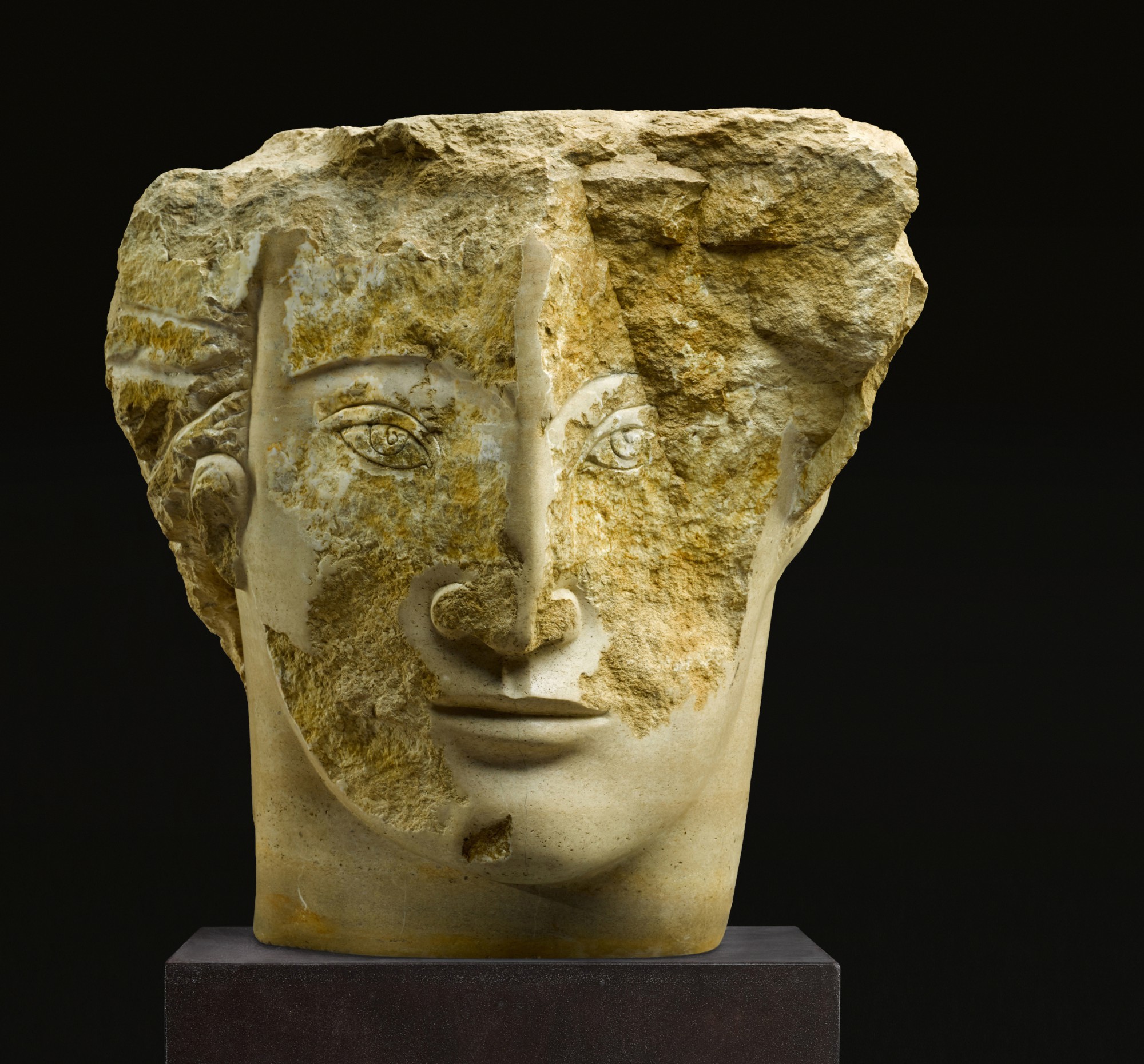
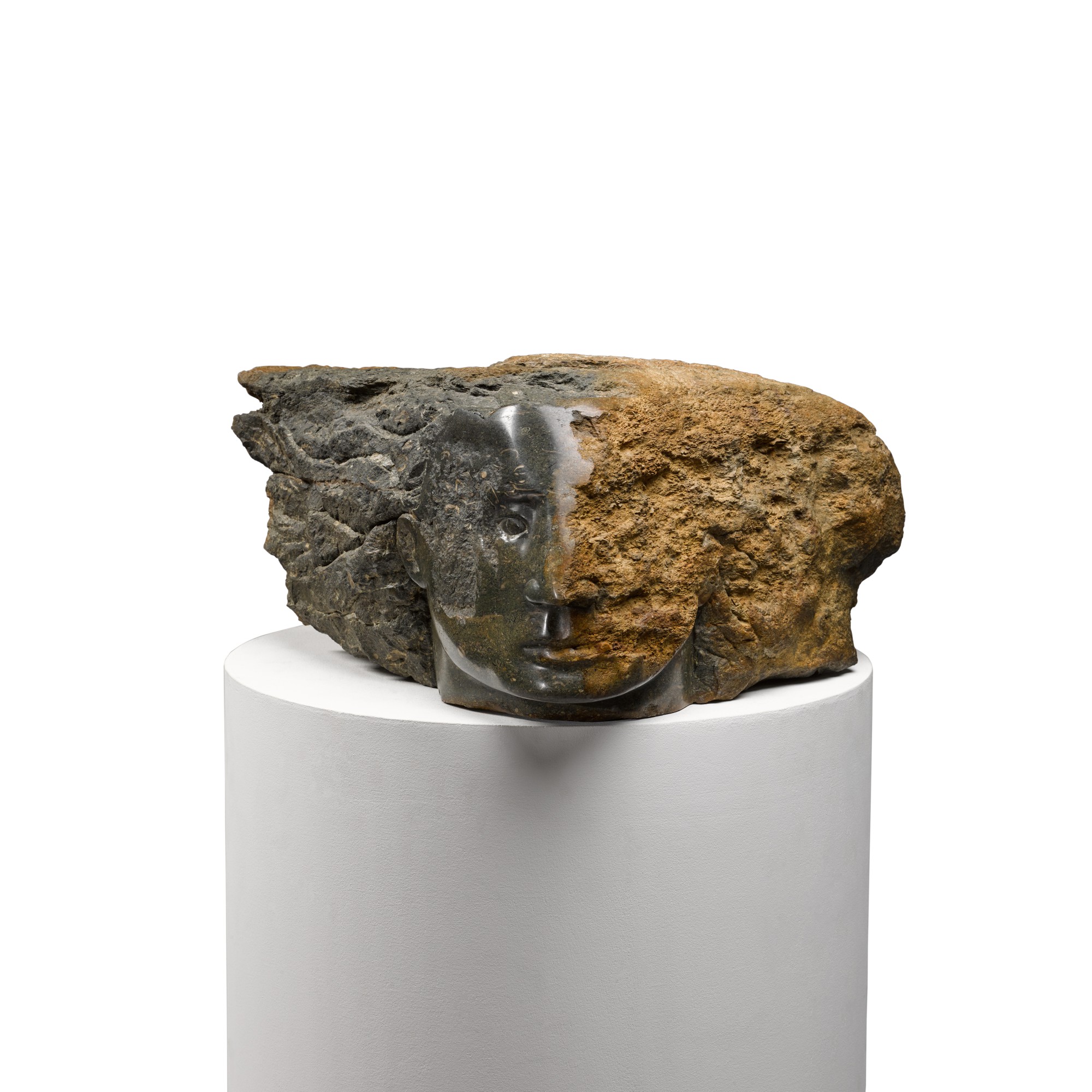
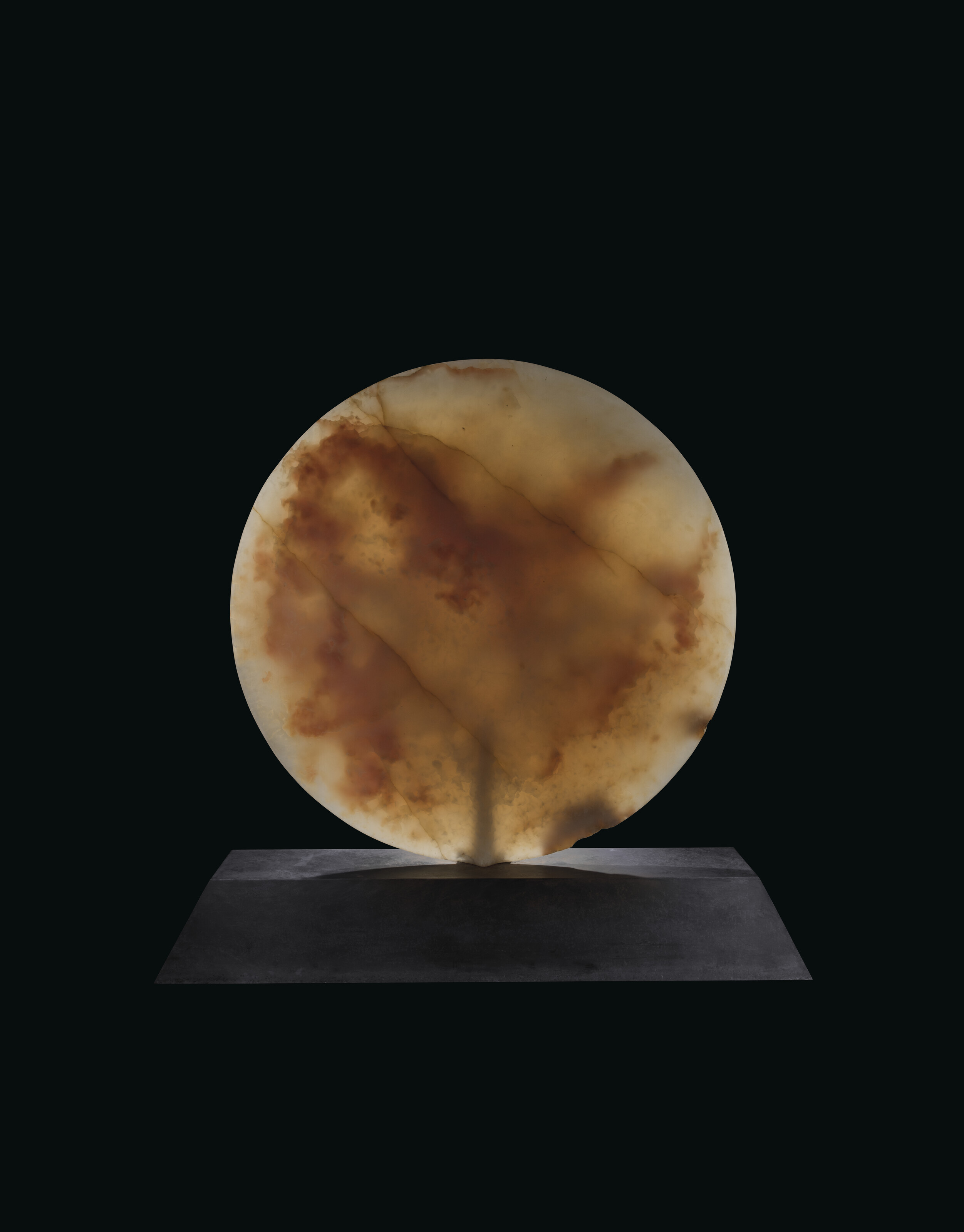
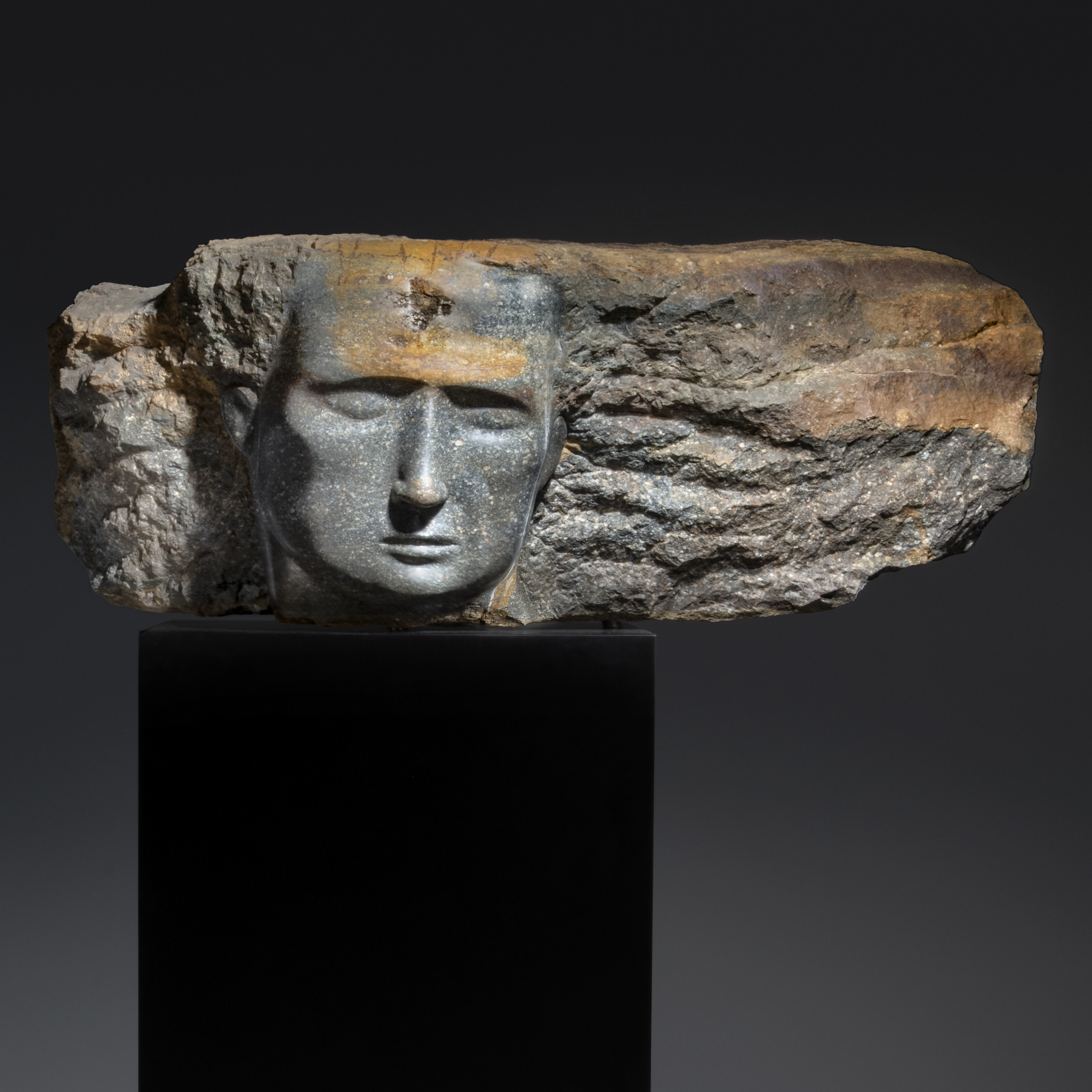
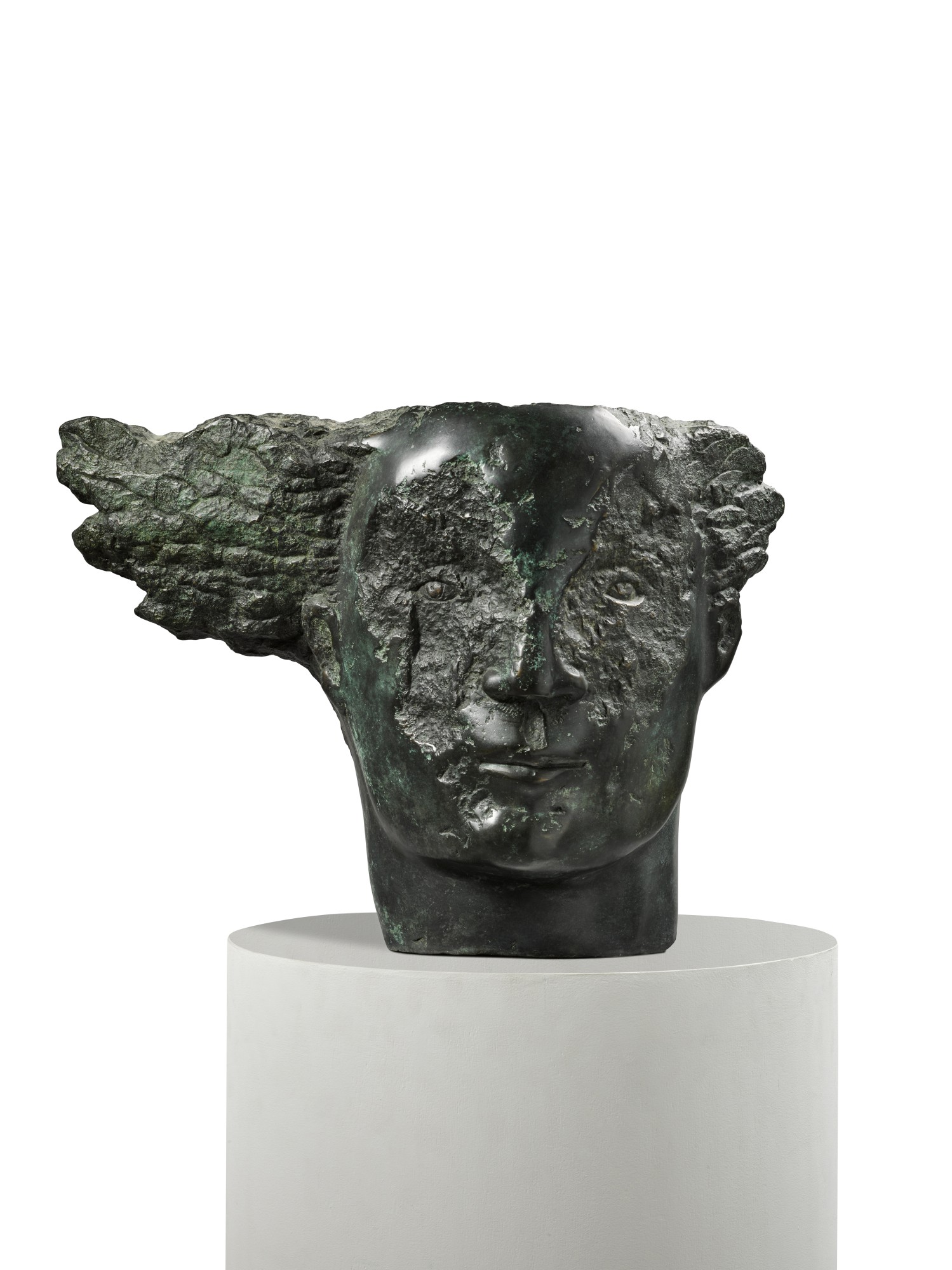
When Sotheby's and Christie's began registering serious bidding interest in large format stone sculpture, the art world took notice of a name that devotees of contemporary British art had long held in high regard: Emily Young. Her monumental carved heads and figures, wrested from ancient geological material sourced across continents, have commanded increasingly significant prices at auction over recent years, confirming what many collectors and curators already understood. Young is not simply a sculptor working in stone. She is, in the fullest sense, a custodian of deep time, giving voice to presences that feel older than history itself. Born in 1951, Emily Young grew up in an England still shaped by postwar austerity and the tremendous cultural upheaval that would follow. She was part of a generation that came of age alongside the counterculture of the 1960s and 1970s, absorbing its spiritual restlessness, its hunger for meaning beyond the material, and its instinct to look both inward and outward for answers. These formative years left a permanent imprint on her sensibility. Where many of her contemporaries turned to conceptual frameworks or industrial materials, Young turned toward something far older and far harder: stone, in its most ancient and irreducible forms. Her artistic development unfolded over decades of patient, often physically demanding work. Young does not quarry stone for convenience. She seeks out rare and ancient geological material from locations around the world, including Purbeck stone from the Jurassic coast of Dorset, marbles, and other specimens whose age can be measured in hundreds of millions of years. This sourcing practice is itself a philosophical act, a recognition that the material carries its own history and that the sculptor's task is to reveal rather than impose. The faces and figures she draws from these stones feel discovered rather than invented, as though they were always present within the rock, waiting for the right pair of hands. Among the works that have come to define her reputation, the Purbeck series holds a special place. Purbeck Freestone Warrior and Purbeck Blue Angel are exemplary in their ability to combine monumental presence with an almost meditative stillness. The Purbeck Green Marble Angel further demonstrates her sensitivity to the specific qualities of each stone, allowing the natural color and veining of the material to participate actively in the final image. Her Bronze Poet Warrior of 1999 reveals another dimension of her practice, showing that her instinct for myth and archetype translates powerfully into cast metal as well as carved stone. The Solar Disc, with its evocation of ancient cosmology and elemental energy, places her work in dialogue with prehistoric artistic traditions from cultures around the world. Across all of these works, there is a consistency of vision that is rare: a belief that the human face, rendered in enduring material, can serve as a bridge between the earthly and the eternal. For collectors, Young's work presents an unusual and compelling proposition. Stone sculpture on this scale and of this ambition is inherently rare. The physical demands of the work, the sourcing of exceptional material, the years of carving that each major piece requires, mean that her output is naturally limited. This scarcity, combined with growing institutional and critical recognition, has brought sustained attention from serious collectors across Europe and beyond. Those drawn to her work tend to share certain qualities: an appreciation for permanence in an era of digital ephemerality, a taste for the spiritual dimensions of art, and an understanding that truly great sculpture requires space, patience, and a willingness to live with a powerful presence. Her auction results at Sotheby's and Christie's reflect a market that has grown more sophisticated in its understanding of her significance, with prices tracking upward as her broader profile has expanded. Within the broader landscape of contemporary British sculpture, Young occupies a singular position. The tradition she works within has deep roots, reaching back through the twentieth century to figures such as Barbara Hepworth and Henry Moore, both of whom shared her conviction that sculpture must engage with natural form and elemental material. Yet Young's relationship with the archaic and the sacred also places her in conversation with artists working across cultures and centuries, from ancient Egyptian carvers to the anonymous creators of Easter Island's moai. Among her contemporaries, those who share her interest in materiality, spirituality, and the long view of human creativity include artists such as Anish Kapoor, whose meditations on void and surface resonate with some of Young's spatial concerns, and Andy Goldsworthy, who similarly treats natural material as a partner rather than a passive medium. Young's distinctiveness lies in her uncompromising devotion to the figurative, to the face as a site of recognition and mystery. The question of legacy is one that Emily Young's work answers quietly but with great force. In an era defined by speed, novelty, and the relentless cycling of trends, she has spent her career doing the opposite: slowing down, going deeper, and committing to materials and forms that will outlast any gallery season or critical fashion. The title Britain's greatest living stone sculptor, which has attached itself to her name with some persistence, is not merely honorific. It points to a genuine vacancy in the contemporary art world that her practice fills with extraordinary authority. There are very few artists working today who can make you feel, standing before their work, that you are in the presence of something truly ancient and truly alive at the same time. Emily Young is one of them, and the stones she has chosen to speak through will be speaking long after the rest of us have gone quiet.