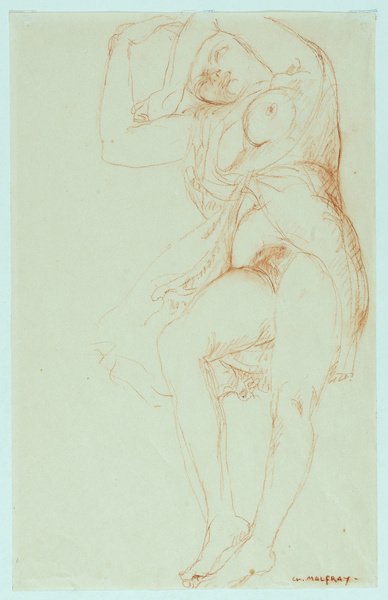
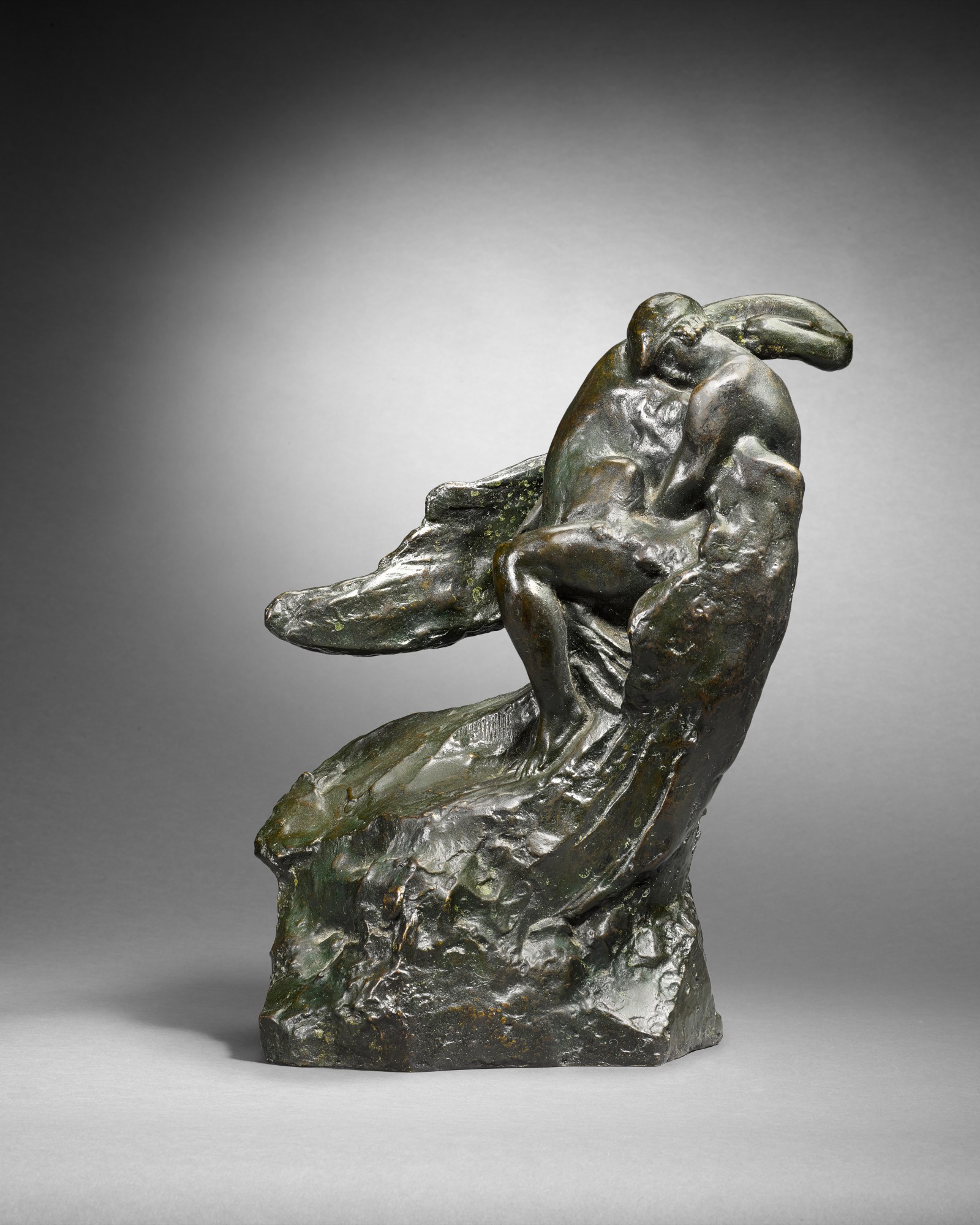
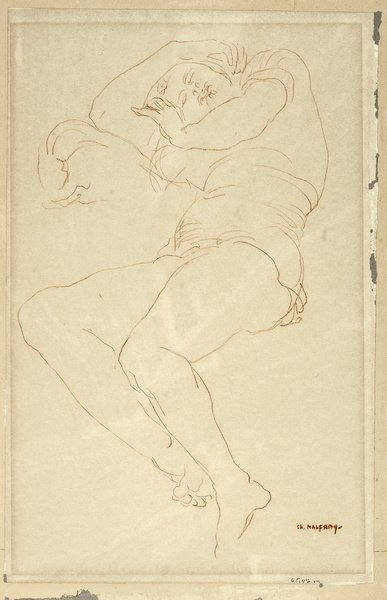
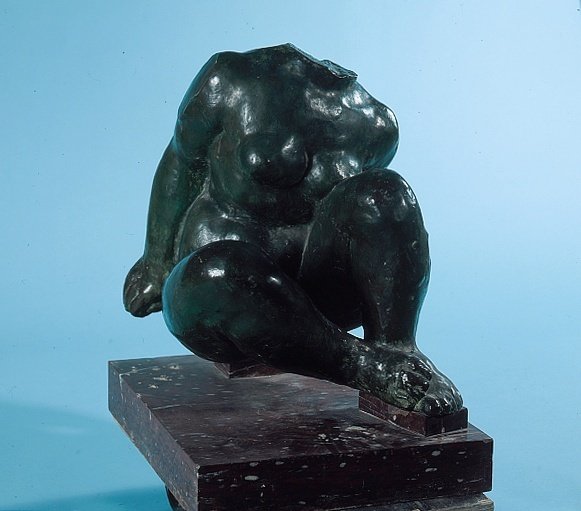
In the permanent collection of the Musée des Beaux Arts d'Orléans, a bronze figure stands with the quiet authority of something that has outlasted every argument about what sculpture should be. Charles Malfray made that figure, and others like it, during a career that burned with focused intensity between the wars. His work occupies one of the most rewarding and still underexplored positions in French modernism: the place where classical discipline and the sensual energy of the Art Deco moment meet without compromise, where neither tradition nor innovation wins at the expense of the other. Today, as collectors and institutions turn fresh attention to the sculptors who shaped the interwar decades, Malfray's name is being spoken with growing admiration. Malfray was born in Orléans in 1887, a city with deep roots in French civic and artistic life, and it was there that his earliest formation took place. He trained with the seriousness of a craftsman, moving through the rigorous French academic system before arriving in Paris, where the most vital conversations about form and modernity were being conducted. The Ecole des Beaux Arts provided the framework, but what shaped Malfray most profoundly was his sustained engagement with the sculptural tradition of Greece and Rome alongside the living example of Auguste Rodin and Aristide Maillol, two figures who had already transformed what bronze and stone could say about the human body. Malfray absorbed these lessons without becoming a disciple of either. He was, from early in his career, his own man. His development as an artist unfolded through a series of increasingly confident statements about rhythm, volume, and physical presence. Where Rodin had charged his surfaces with emotional turbulence, Malfray sought a kind of resolved stillness, a sense that the figure had arrived at its pose through inner necessity rather than dramatic gesture. This drew him closer in spirit to Maillol, though Malfray's figures carry their own particular quality: a musicality, a sense of the body as an instrument tuned to some internal vibration. He won the Prix de Rome in 1919, which brought him to the Villa Medici and immersed him in the ancient and Renaissance works that would inform his mature practice. That Roman sojourn was not a detour but a deepening, a confirmation of instincts already present in his earlier work. Among the works that best reveal Malfray's gifts, the bronzes stand out for their completeness of vision. The Baigneuse of 1930 demonstrates his ability to find monumental feeling in a figure of modest scale: the bather's pose is unhurried, self contained, the surface of the bronze holding light in ways that suggest skin rather than metal. The Danseuse à demi nue of 1938 moves the same sensibility into a more dynamic register, capturing a moment of arrested movement that feels neither frozen nor theatrical. The Femme of 1938 is quieter still, a figure that asks the viewer to slow down and attend to the subtle tensions between weight and grace. And the Leda and the Swan, in its green brown patinated bronze, engages with one of Western art's most enduring mythological subjects with a freshness that neither parodies nor merely repeats the tradition. Across all these works, what is consistent is Malfray's refusal to let virtuosity become its own subject. The technique is there to serve the form, and the form is there to serve something felt. For collectors, Malfray represents a category of artist whose rewards compound over time. He operated within a distinguished circle: Joseph Bernard, Jane Poupelet, and Henri Bouchard were contemporaries navigating similar terrain between academic inheritance and modernist possibility, and situating Malfray among them helps clarify both his distinctiveness and the broader cultural conversation he was part of. His bronzes appear at auction with a frequency that reflects genuine collector demand, and they tend to perform well precisely because they are immediately legible as quality objects while also rewarding sustained looking. The patinas on his bronzes deserve particular attention, as the relationship between surface finish and sculptural form is something Malfray understood at a level that distinguishes the best examples from later casts or lesser pieces. Condition, provenance, and the presence of foundry marks are the usual considerations, and collectors who approach his work with knowledge will find that the field remains accessible relative to the quality on offer. The art historical context around Malfray is one that rewards exploration. The interwar period in France produced a remarkable concentration of sculptors who have been underserved by the English language critical tradition, in part because the period's complexity resists easy narrative. Malfray sat between the grand official commissions of the Third Republic and the avant garde disruptions of Surrealism and abstraction, and that middle position was for a long time treated as a kind of critical no man's land. The reassessment now underway recognizes that this middle ground was in fact enormously fertile, producing work of lasting quality that the art world is still catching up to. Artists like Antoine Bourdelle and Gaston Lachaise, working in adjacent traditions on either side of the Atlantic, offer useful points of comparison for collectors and scholars trying to map the period. Malfray died in 1940, at the age of fifty two, as France was being overtaken by catastrophe. That he did not live to see the postwar world is one of those biographical facts that casts a long shadow, but the better way to understand his legacy is through what he actually completed: a body of work that demonstrates, with consistency and beauty, what a sculptor of serious ambition could achieve when classical knowledge and modern feeling were held in genuine balance. Museums in France have long honored that achievement, and the private market is increasingly catching up. To encounter a Malfray bronze is to encounter a set of convictions about the human form that have not aged, a belief that the body in space, rendered with intelligence and love, remains one of the most powerful things a work of art can offer. The collectors who have already made space for his work in their homes and collections know this. Those who have not yet discovered him are in for a genuine pleasure.